Filming Gear
One-Person Filming Kit: 10 Pieces of Gear That Keep a Solo Setup Running
A practical look at the cameras, lens, support, audio, and editing hardware that hold a solo filming workflow together in real weather.
Introduction
A filming kit is never really finished. Gear gets added when a problem becomes annoying enough, and pieces get retired when something else does the job better. What survives is usually the equipment that solves one specific problem well, whether that is a camera that keeps working after being dropped, a tripod that stays rigid in coastal wind, or a microphone that connects without a search for the right cable.
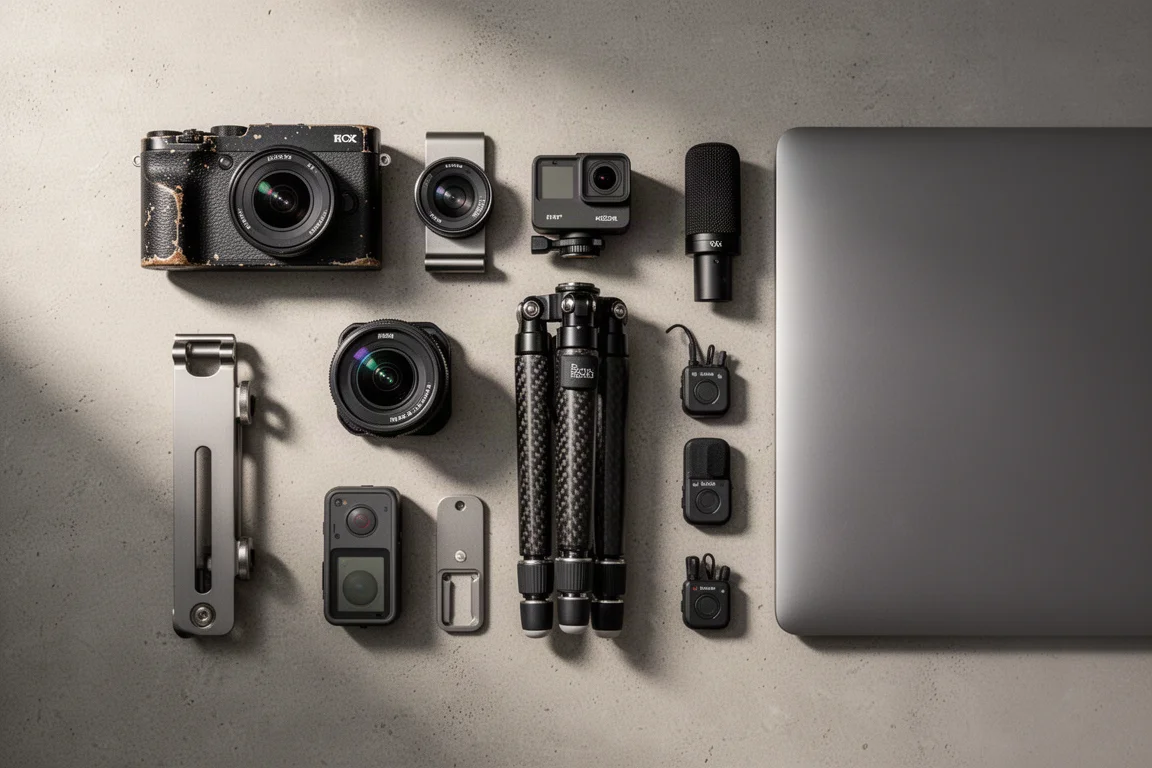
This guide covers ten pieces of gear that make up a working one-person filming setup: two camera bodies, a wide prime lens, a backpack camera mount, a travel tripod, an action camera, a phone that doubles as a backup, two audio options, and the laptop that turns everything into finished footage. Each entry explains what the item does well and where it asks for a compromise.
Panasonic Lumix GX8: The Camera That Took the Punishment
The Lumix GX8 earned its place the hard way. It spent years on trails in wet and muddy conditions and kept working, including after being dropped into a bog during a county high point outing. The marks from that day never came off the body, which says as much about the build quality as any specification sheet.
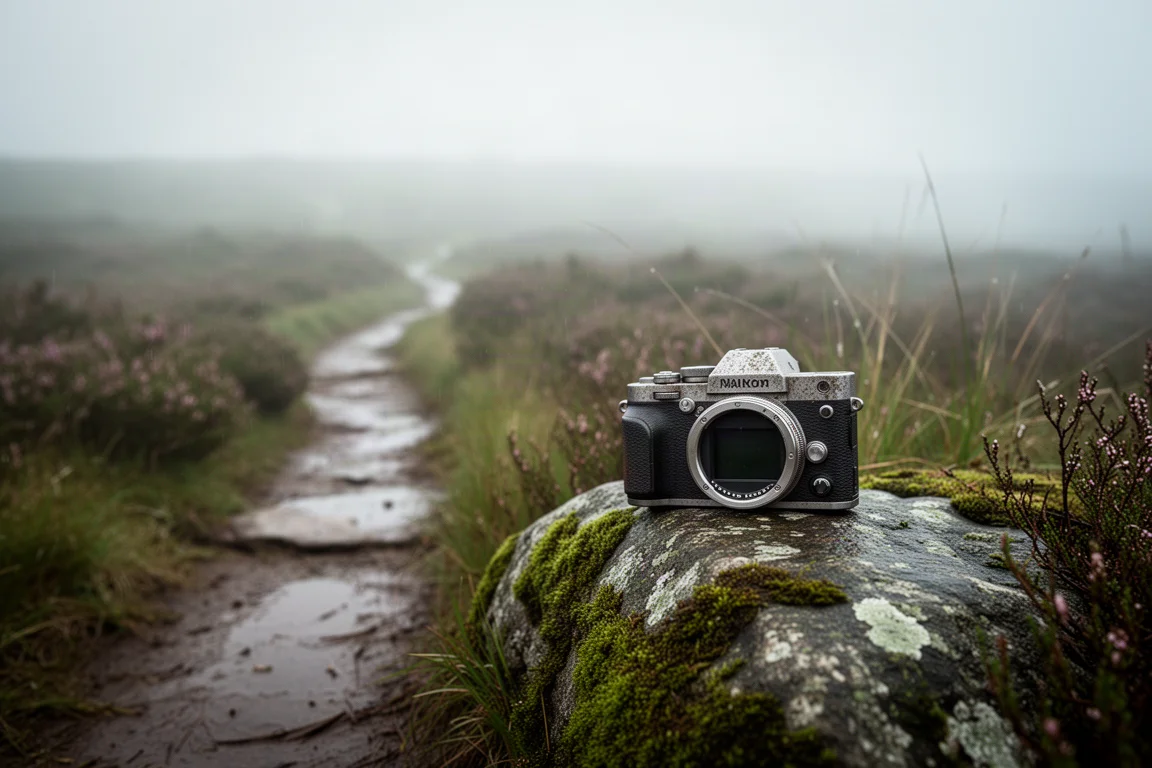
The trade-off is the sensor. The GX8 uses a cropped sensor, and that limitation is the main reason a move to full frame eventually made sense. For anyone who values a compact body that survives rough handling over maximum low-light performance, it remains a sensible choice.
Sony A7S Mark I: Full-Frame Colour Without the Fuss
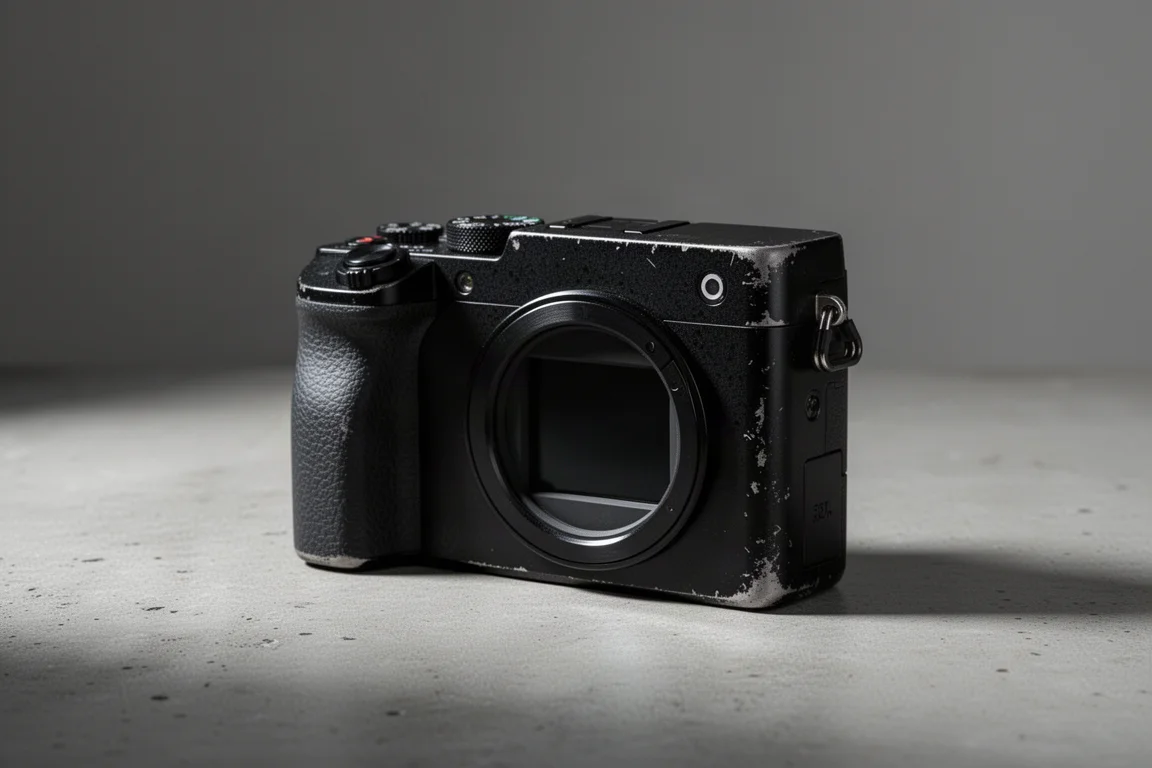
The A7S Mark I is an older full-frame body, and it was bought second-hand, so it arrived with some history behind it. Years of use have taken a toll on the grip material, but the sensor still produces colour and contrast that look good straight out of the camera, which is the main reason it stayed in the bag.
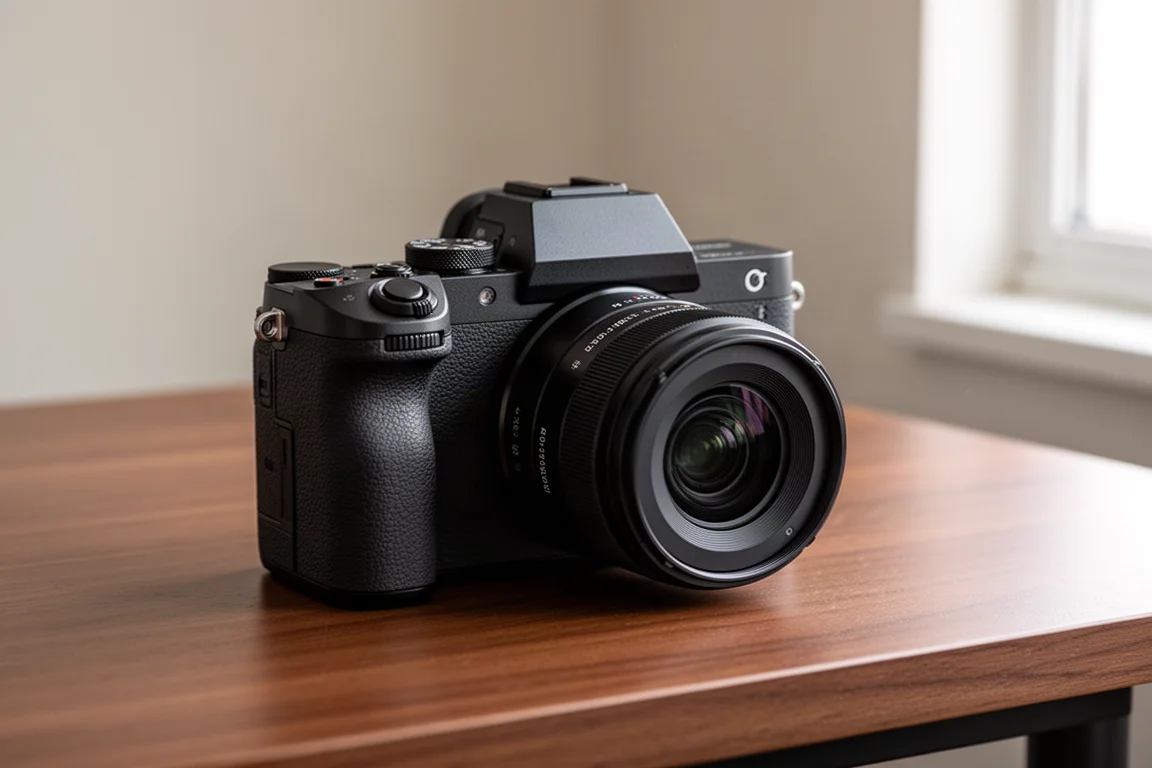
It is usually paired with a 28-70mm kit zoom with a variable f/3.5-5.6 aperture, a modest range that covers most general shooting. Two things hold it back: video tops out at 1080p rather than 4K, and the body is old enough that a more modern replacement is somewhere on the horizon. One practical advantage over the older Panasonic body is a standard-size microphone input, which makes audio connections far less fiddly than hunting for an adapter.
Samyang 24mm f/1.8: A Brighter Prime for Full-Frame
Kit zooms are flexible but slow, and a 28-70mm f/3.5-5.6 leaves very little room in low light. The Samyang 24mm f/1.8 is a third-party prime that addresses that with a much wider maximum aperture, which helps both in dim conditions and when a shallow depth of field is wanted.
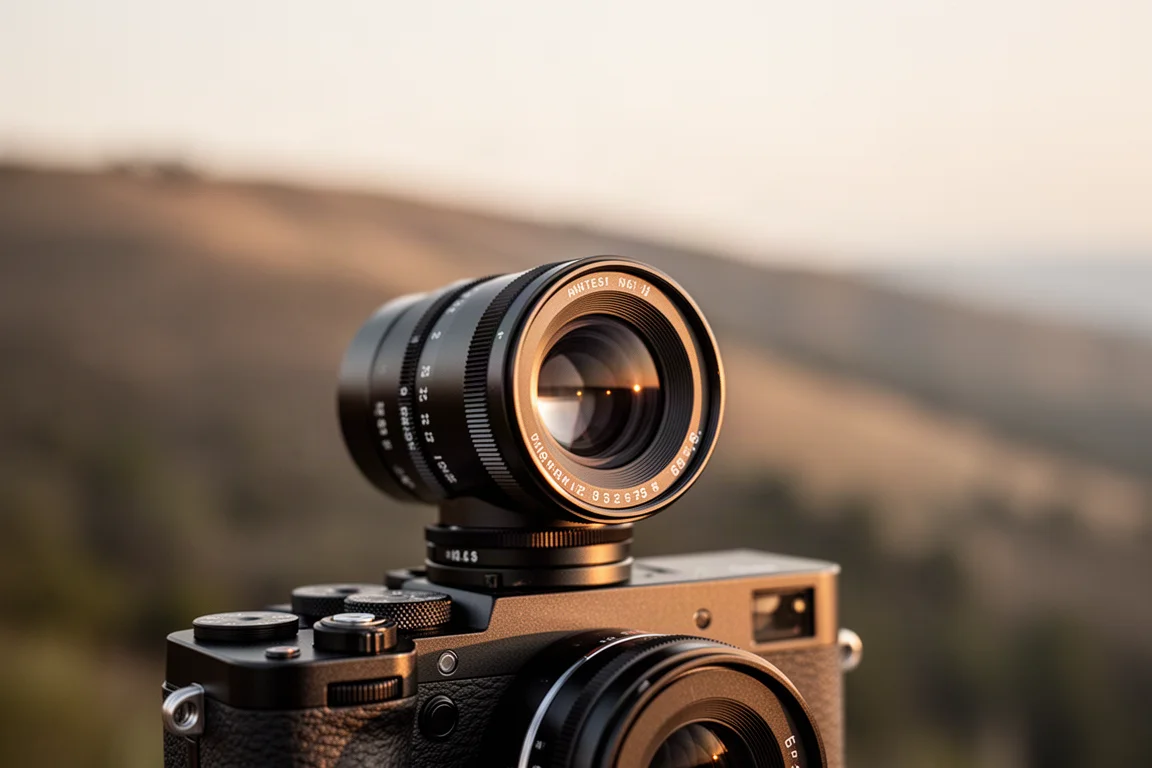
At 24mm it is wide enough for landscape and interior work while staying usable for people and detail shots. Because it is a fixed focal length, it works best as a companion to a zoom rather than a replacement, and as a third-party lens it sits outside the camera maker’s own line-up.
Peak Design Capture Clip: Carry the Camera, Not the Bulk
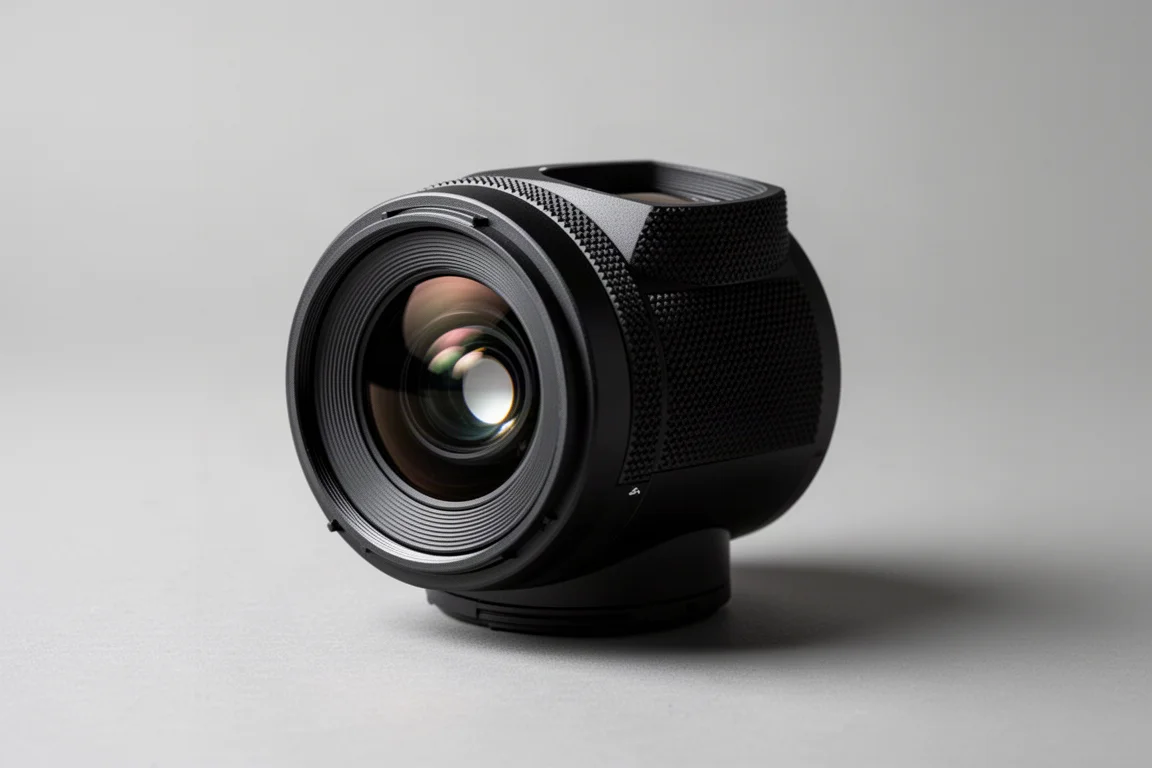
The Capture Clip mounts on a backpack strap and holds a camera plate that clicks into place, so the camera rides on the shoulder instead of inside a bag. It pairs naturally with the brand’s straps: a sling for general use and a smaller wrist strap that suits one-handed shooting and takes up far less room.
The one real annoyance is what happens when the camera is set down. With the plate attached, the body no longer sits flat, and it wobbles and tips over on hard surfaces. The workaround is a simple 3D-printed support that fits around the plate and props up the underside of the lens, keeping the camera stable on a table or a wall. A second version is in development to allow the camera angle to be adjusted rather than sitting flat.
Peak Design Travel Tripod Carbon Fiber: Stability That Packs Down
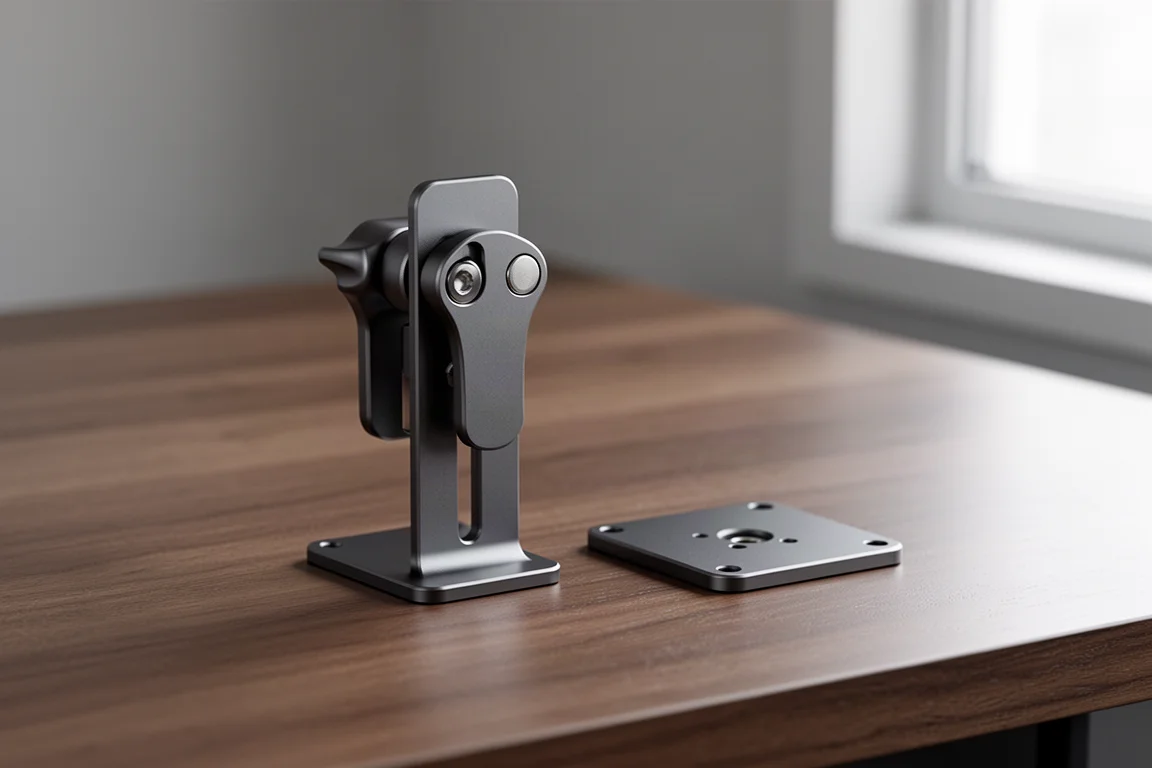
This carbon fibre travel tripod weighs around 1.27 kg. That is not a dramatic saving over a comparable aluminium tripod, and it is worth being honest about that, but the difference shows up in how it carries: it fits neatly in the hand, balances well, and packs down small enough to disappear into the side of a pack.
Rigidity matters more than weight in changeable weather, and the tripod is heavy enough to stay locked and steady with a camera mounted on a windy day. Crucially, it accepts the same plate used by the capture clip, so a tripod and a strap-mounted camera can travel together instead of competing for the same plate. An older aluminium tripod had started to come apart and could not take that plate, which is what forced the change.
GoPro Hero 11 Black: The Action Camera for Mountain Days
The Hero 11 Black has been the primary camera for mountain-focused filming since it was acquired around 2022. Image quality is strong for the size, and the rugged body has handled rough treatment, though not without damage: a fall out of a car onto concrete cracked the rear screen.
Footage is normally shot in the standard field of view rather than the widest settings, because that option is closest to an unwarped image, though it still carries the recognisable action camera look. That characteristic is the main reason it gets used less than it could, and the camera also needs regular charging to be ready when it is wanted.
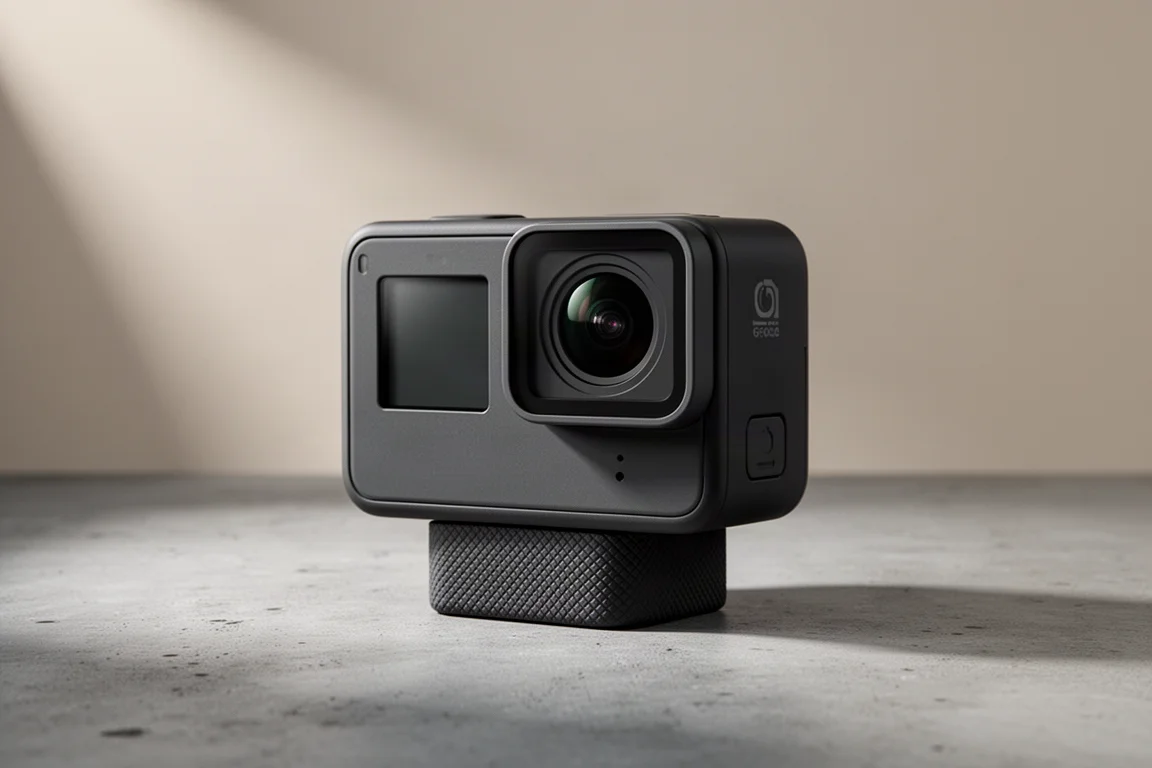
iPhone 13 mini: The Backup That Is Always Charged
A phone is not a replacement for a dedicated camera, but it is the piece of kit that is always in a pocket. The 13 mini has been in use for several years and steps in when the action camera has not been charged or when setting up something larger is not practical.
Its size is the point. A compact phone is easy to carry on every outing, which makes it a reliable fallback rather than a planned camera. For anything deliberate, a larger sensor and real controls still win.
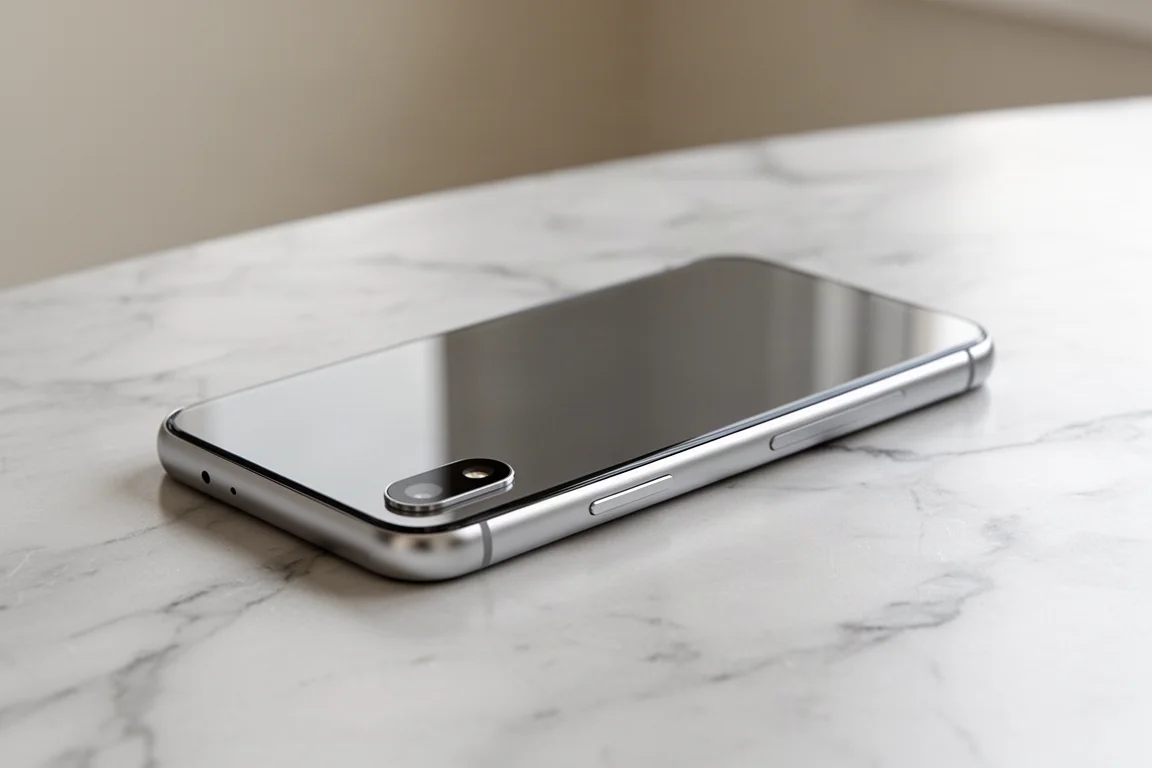
Rode Wireless GO: Compact Audio for Location Work
The Wireless GO system consists of a receiver that plugs into the camera and two transmitters, and it is used often enough to have become the default audio option. It replaced a much smaller shotgun microphone whose mounting hardware broke repeatedly, and at the time of purchase it was the smallest wireless option the brand had available.
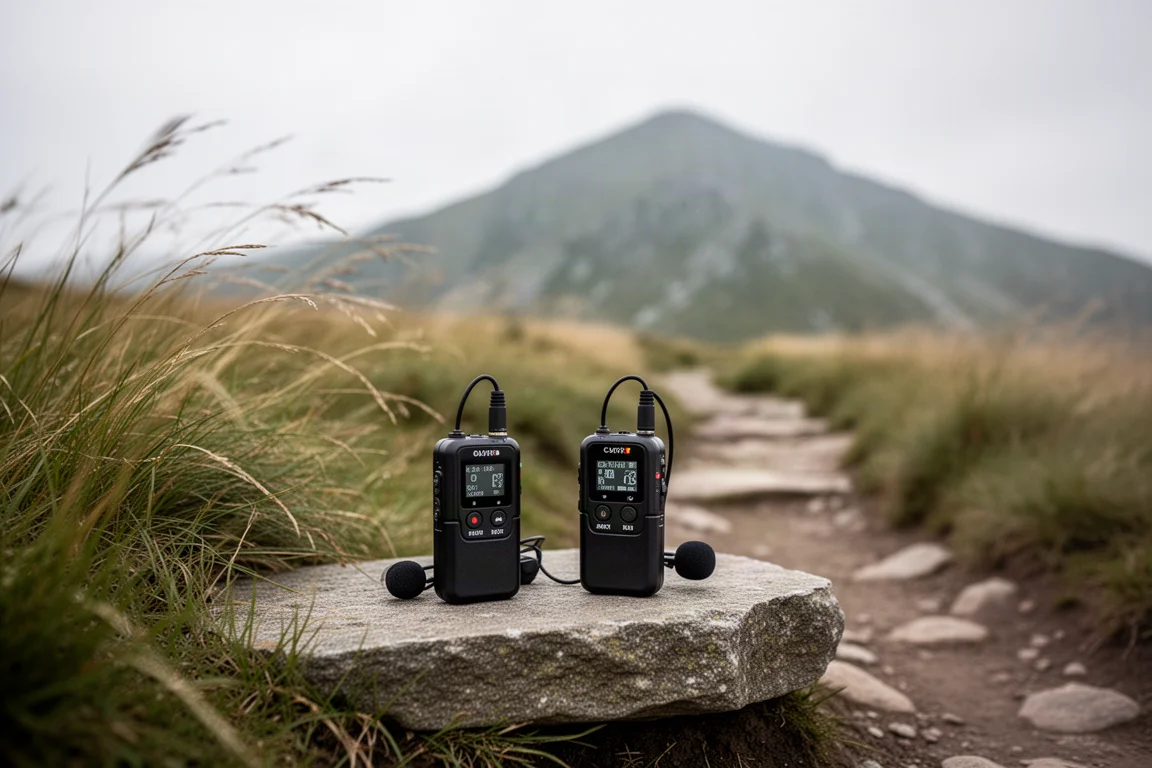
Two transmitters cover both a presenter and a second subject, or a spare in case one fails. It captures ambient trail noise nicely, which adds a great deal to outdoor footage, though it does look a little large on a compact camera body.
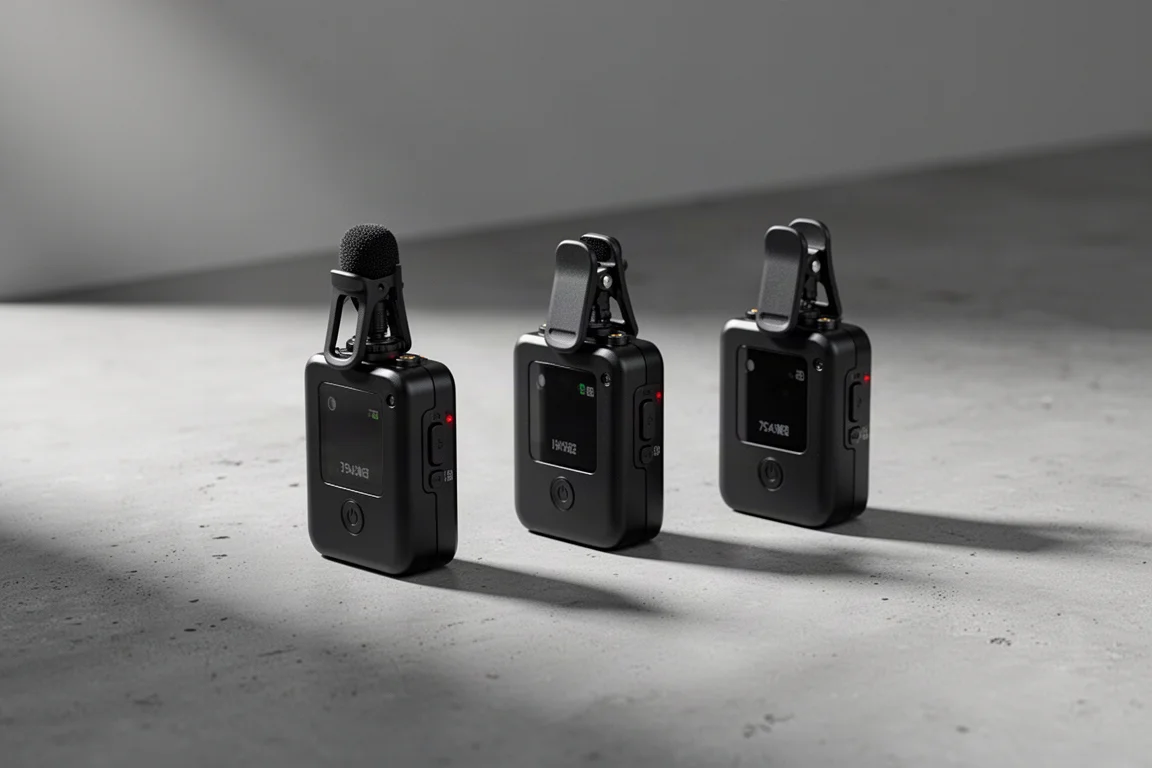
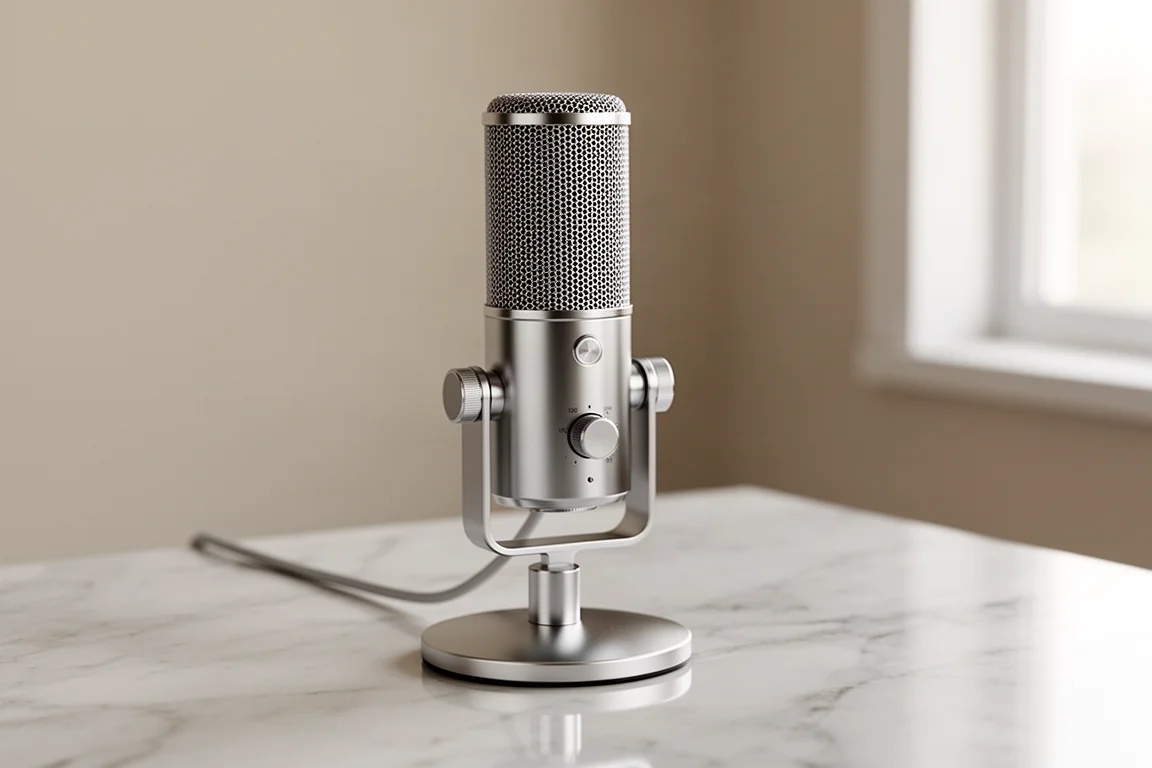
Blue Yeti: Voiceovers at the Desk
Not all audio is recorded on location. The Blue Yeti is a desk microphone used for narration recorded after a shoot, once the footage has been reviewed and the words can be written to match it.
A USB desk microphone is a simple solution for that job. It is not something to carry on a trail, but for controlled indoor recording it removes the need to set up a camera-mounted microphone and a separate recorder.
MacBook Pro M5: The Upgrade That Rebuilt the Workflow
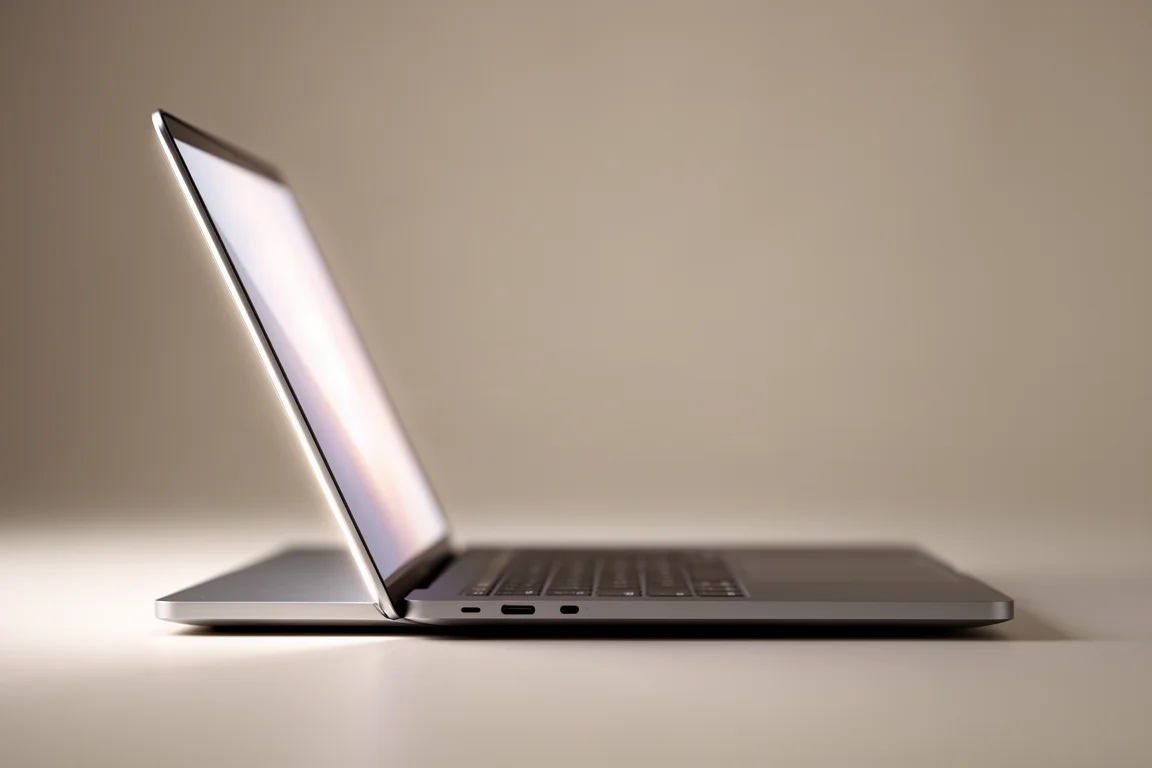
Editing hardware is easy to neglect because it rarely fails outright. In this case a 2019 Intel MacBook had become the bottleneck: editing software crashed multiple times per project, and one job included a 21-second wait for a single mouse click to register. A 2025 MacBook Pro with the M5 chip replaced it, and editing and exporting became quick again.
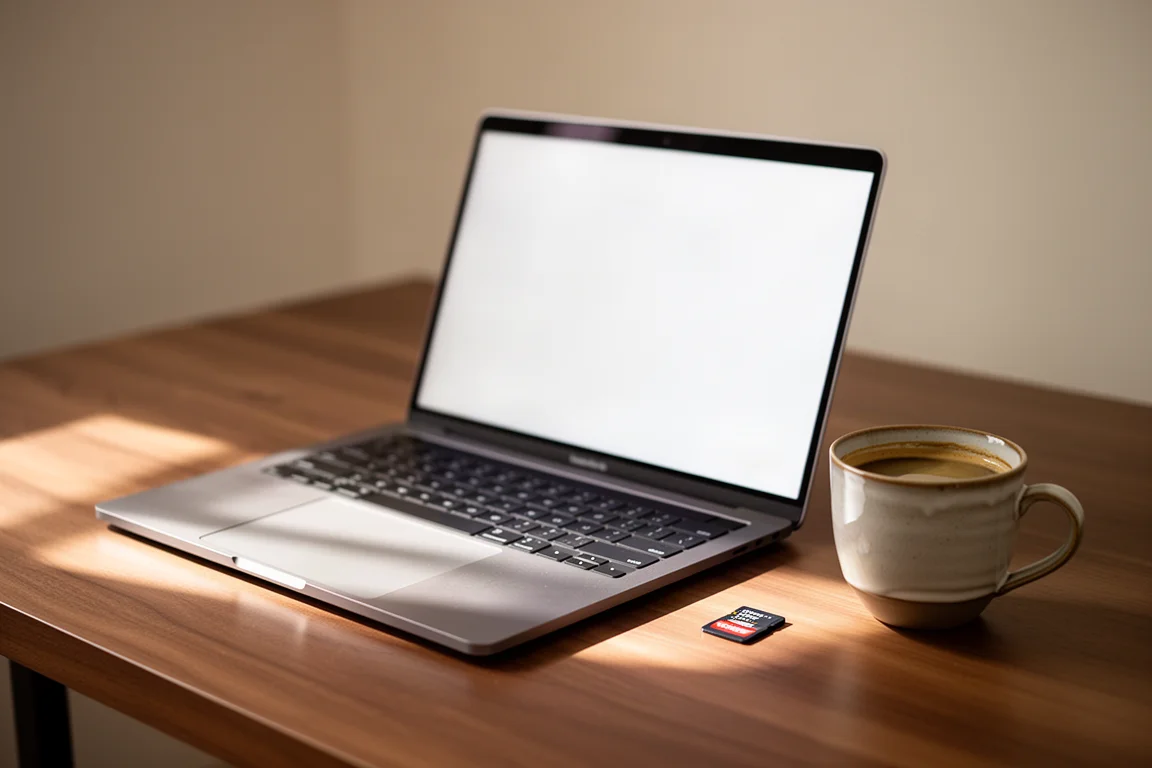
The practical wins are ports and storage. An SD card can be plugged straight into the machine rather than through a separate reader, and there is enough internal space to work without an external drive permanently attached. Storage in general has moved on: spinning hard drives that once travelled in padded cases have given way to solid state drives, which are smaller, lighter, and safer for carrying footage.
Conclusion
There is no single correct filming kit. The sensible approach is to identify the problem that slows a shoot down, then buy the piece that solves it. A camera that survives bad weather, a mount that keeps it accessible, a tripod that stays steady in wind, audio that connects without adapters, and a laptop that exports in minutes rather than hours will do more for a solo workflow than any single upgrade.
For anyone assembling something similar, the order matters less than the fit. Start with the camera and lens combination that suits how and where the work happens, add support that matches the terrain, sort out audio before chasing image quality, and treat the editing machine as part of the kit rather than an afterthought.
Further reading
Related Reviews
Filming Gear
Cameras and Microphones for YouTube Filming: A Practical Equipment Guide
A working filming kit broken down by role, from the main action camera and low-light phone to timecoded audio recorders and pocket wireless microphones.
Filming Gear
A Lightweight Filming Kit for Hiking and Backpacking: 7 Practical Picks
A compact, field-tested filming kit for hiking and backpacking content, with practical notes on cameras, audio, mounting, and trail-ready accessories.
Filming Gear
Lightweight Hiking Filming Kit: 7 Essentials for Solo Creators
A packable filming setup for hiking and backpacking content, covering the main camera, action camera, wireless audio, mounting, and trail fuel.