Headphones
Oladance OWS Sport Review: Air Conduction Open-Ear Headphones Built for Training
A wraparound air-conduction design with richer sound than bone conduction, IPX8 water resistance, and long battery life, plus how it stacks up against the Shokz OpenFit.
Introduction
Open-ear headphones used to mean one thing: bone conduction. That technology is great for staying aware of your surroundings, but it comes with compromises, especially in sound quality. Because bone conduction transmits sound by vibrating against your cheekbone rather than using traditional speakers, there is only so much bass and low-end it can produce.
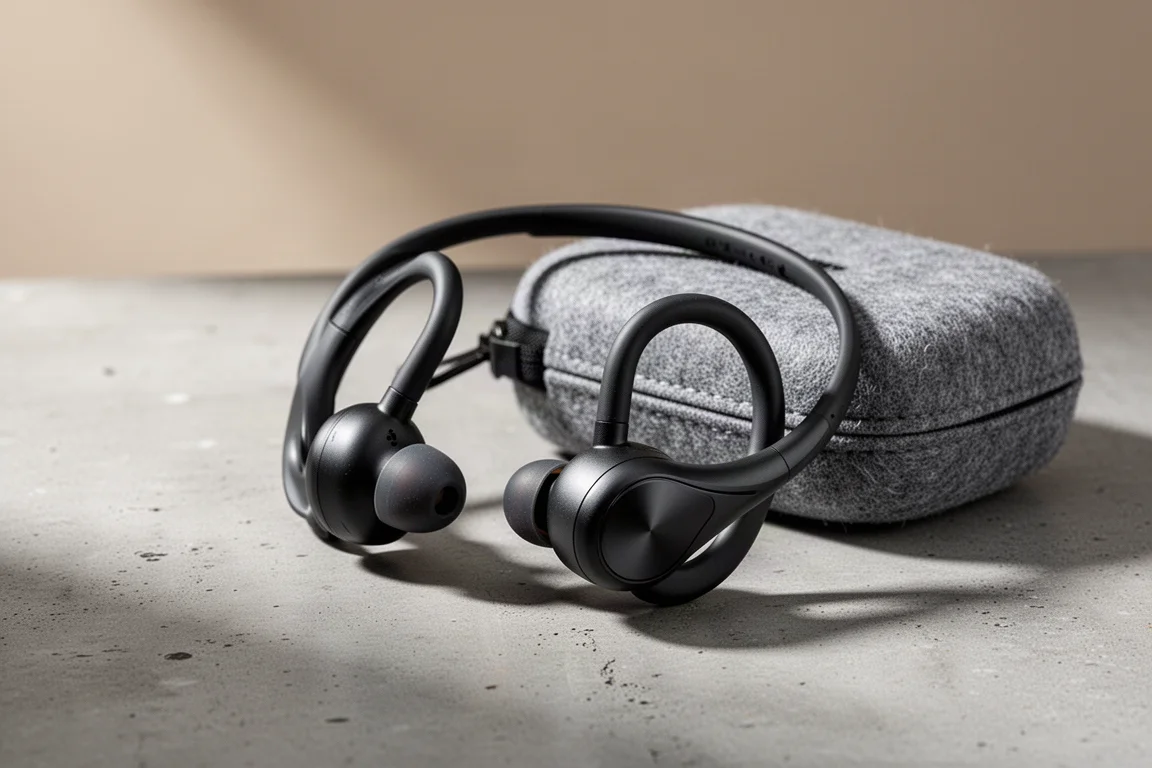
Air conduction headphones solve that. Air conduction is essentially a formal name for what speakers already do, moving air to transmit sound, and it brings a real advantage in sound quality while keeping your ears open. The Oladance OWS Sport takes everything from Oladance’s truly wireless OWS Pro and packages it into a more sport-specific wraparound design with increased water and sweat protection.
Who This Product Is For
The appeal of any open-ear headphone comes down to awareness. For running, you can listen to music or a podcast while still hearing traffic and other pedestrians. For trail running, you can hear other trail users and whatever the forest throws at you. For cycling, hearing cars around you is genuinely important.

Transparency mode on traditional earbuds keeps improving, but it is still nowhere near as good as having your ears completely open. It also struggles with wind, since the microphones piping in outside sound end up piping in the wind itself, which can sound like a hurricane inside your head.
Sound Quality
This is where the OWS Sport stands out among open-ear headphones. In general, air conduction delivers noticeably better sound than bone conduction, though not quite the fidelity of in-ear headphones. The sound here is rich with a broad range, crisp highs, and a decent low-end. It performs well across nearly all kinds of music, and music feels expansive with something of a 3D effect rather than the flatter presentation bone conduction can produce. The only area where bone conduction may sound marginally better is vocals, but overall these are nicely balanced.
There is a customizable equalizer with two presets: a surging bass profile that does increase bass, though it muddies things slightly, and a pure voice mode that genuinely enhances vocals. Cranking both the lows and highs on the custom EQ produced a very satisfying sound signature.
Compared with the Shokz OpenFit, the closest competitor, the OpenFit offers a bit more low-end while the OWS Sport provides a broader, fuller overall range. Both are very good and the difference is not night and day. On sound leakage, a common concern with open designs, these direct sound into the ear rather than outward, so very little escapes.
Battery life is rated at 15 hours, and real-world listening over several consistent days of use suggests it may actually exceed that claim. Charging uses a magnetic USB-C cable at the headphones, though the cable itself uses USB-A on the other end, which feels a bit dated. The included carrying case has a nice soft felt-like exterior but offers no charging function.
Controls and Everyday Use
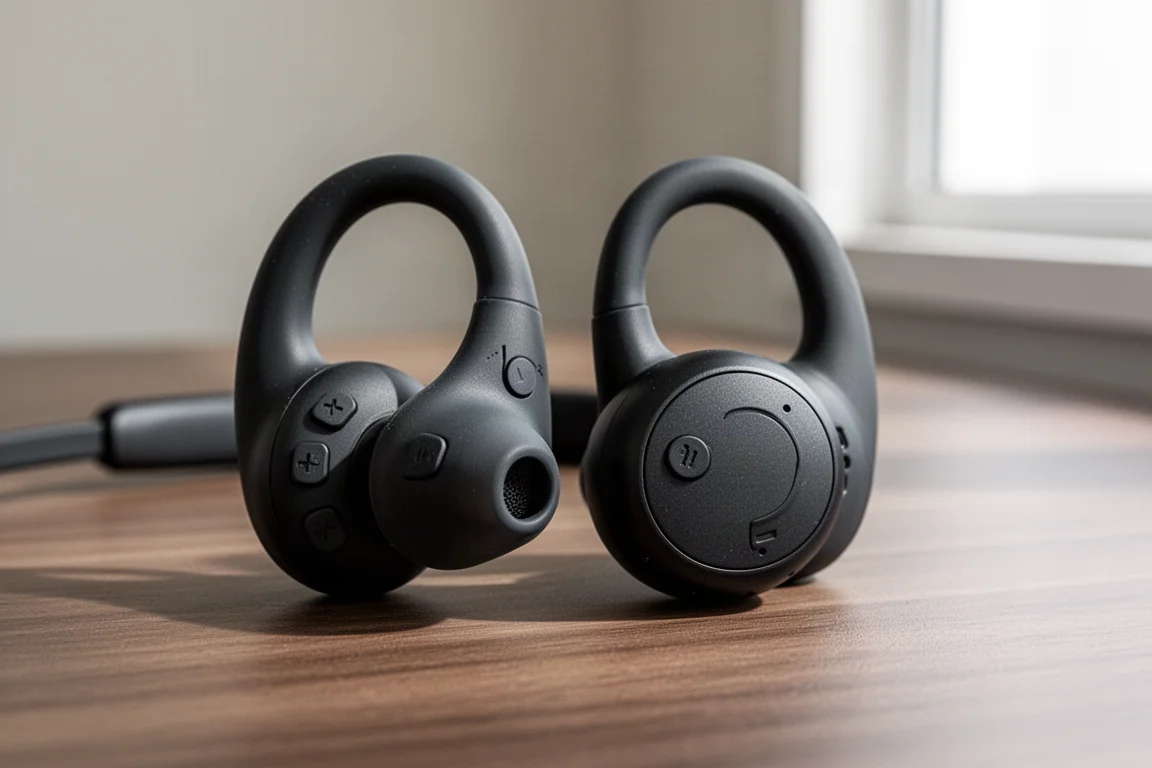
The right side has buttons for power and volume, while the left side has a multi-function button for play, pause, skipping tracks, and summoning a voice assistant. Calls can be answered and rejected, and controls are customizable in the app. These are physical buttons rather than touch-sensitive ones, which is a plus for sports use: they are easier to find by feel, and sweat is less of a problem. You can pinch the bottom of the earbud to press without pushing the earpiece into your ear.
The button placement on the speaker pod next to your ear feels slightly unusual, as controls placed further behind the ear would feel more natural on this wraparound style, but they are by no means hard to use.
Comfort, Security, and Helmet Compatibility
These are very comfortable headphones, suitable for wearing five to six hours straight. As with any over-the-ear design, some ear fatigue can set in after a few hours. They are slightly heavier than the Shokz OpenRun Pro and Shokz OpenFit, so if you are sensitive to ear fatigue you may feel it a little sooner here. On the other hand, they may suit people who find bone conduction uncomfortable, since nothing sits on the cheekbones and there is none of that tickling vibration.
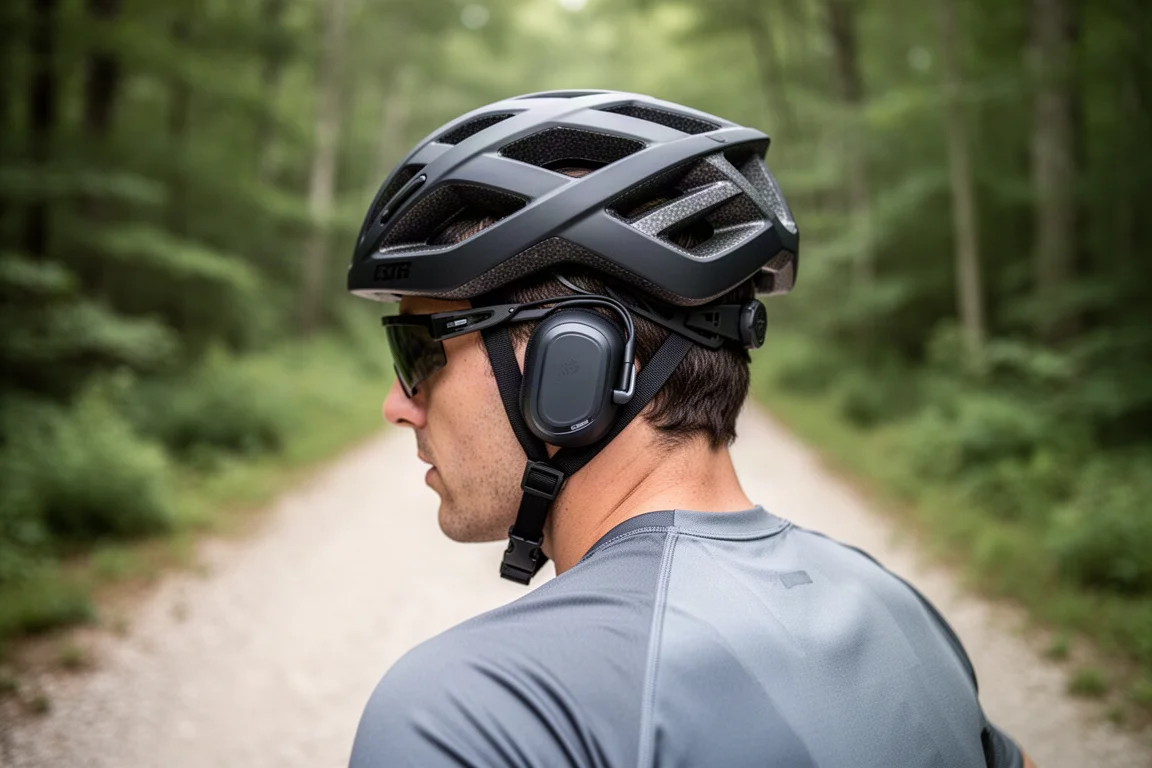
For security, this wraparound over-the-ear style is among the most secure available, making these great for running, biking, high-intensity training, and basically any activity. Compatibility is also good: hats and sunglasses sit fine on top of the earpieces, and there is plenty of room under a typical mountain bike helmet’s retention system. Where they will not work well is with snow helmets or full-face helmets, which press the earpieces into your head uncomfortably.
Water Resistance and Wind Handling
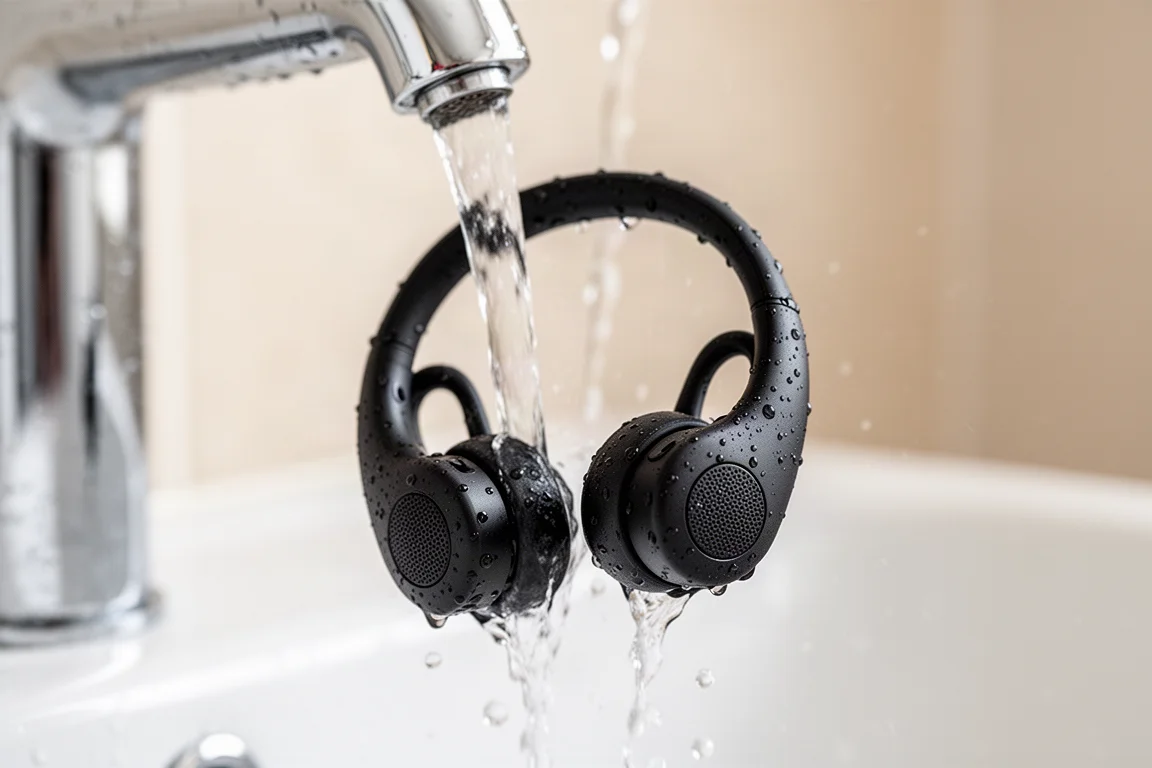
As sport-focused headphones, these carry an IPX8 water resistance rating. They can be submerged for up to 30 minutes at 1.5 meters deep, making them highly resilient against water and sweat. Note that they are not designed for swimming, as they have no onboard storage.
On wind noise, they perform well for an open-ear design. You will obviously still hear wind, but the audio piped into your ears is full enough to overcome it, and the earpieces themselves may help block some wind. Compared with bone conduction, they handle wind better simply because they produce a fuller sound. Call quality is solid indoors in a quiet room and holds up acceptably outdoors while walking around.
Buying Advice
The OWS Sport is a great option for sport-focused open-ear listening: strong sound, plenty of security, and genuinely long battery life. The Shokz OpenFit may edge it out on low-end sound and is probably more comfortable, but it raises more concern about coming loose during jarring activities, whereas the OWS Sport is simply more secure for sports. Compared with bone conduction options like the Shokz OpenRun Pro, even the best bone conduction headphones do not match air conduction for sound, though bone conduction does offer an earplug trick for effectively muting the outside world. If you have used bone conduction and always wanted a richer, fuller sound, or you want something more secure than the OpenFit or Oladance’s own OWS Pro, this fits the bill.
Conclusion
The Oladance OWS Sport makes a strong case for air conduction as the future of sports audio. It keeps the situational awareness that makes open-ear designs useful, adds noticeably better sound than bone conduction, backs it with IPX8 water resistance and battery life that may outlast its 15-hour rating, and secures firmly through any workout. If you train outdoors and do not want to choose between hearing your surroundings and hearing your music well, it deserves a place on your shortlist.
Product link
View more details for Oladance OWS Sport
This product is mentioned in the review. Check the specifications, options, and compatibility before buying.
View more details for Oladance OWS SportFurther reading
Related Reviews
Headphones
Apos Audio Caspian Review: Warm Bass, Solid Build, and a Detail Trade-Off
The Apos Audio Caspian is an easy-to-drive open-back headphone with standout bass and a warm, relaxed tuning, though mid-range and treble detail trail the competition.
Headphones
Audeze LCD-X vs LCD-XC vs LCD-3: Which High-End Headphone Fits Your Setup
A practical comparison of three Audeze planar magnetic headphones under $2,000, covering the open-back LCD-X, the closed-back LCD-XC, and the wood-ringed LCD-3.
Headphones
Audeze LCD-X vs HiFiMan Edition XS: Two Open-Back Headphones Compared
A practical comparison of the Audeze LCD-X and the HiFiMan Edition XS, covering build quality, comfort, sound signature, and which listener each one suits.