Outdoor Safety
Ocean Signal rescueME PLB1 Review: A Personal Locator Beacon Without Subscriptions
A compact one-button personal locator beacon with a 24-hour distress broadcast, a 121 MHz homing signal, and no monthly plan. Here is how it works and who it suits.
Introduction
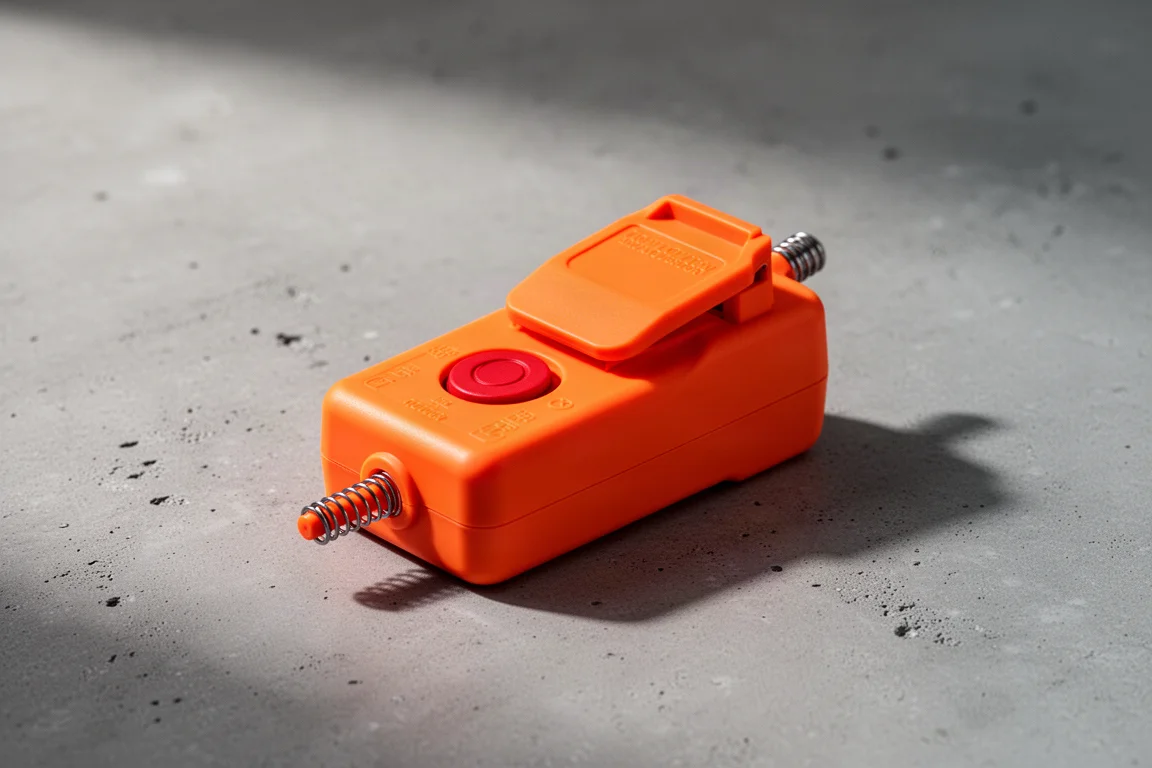
There is a category of safety gear that does exactly one job and asks for nothing in return. The Ocean Signal rescueME PLB1 is a personal locator beacon, and its entire premise fits into a single action: press one button and the device broadcasts a distress signal to a satellite network that routes the alert to rescue authorities. No pairing, no app, no monthly plan.
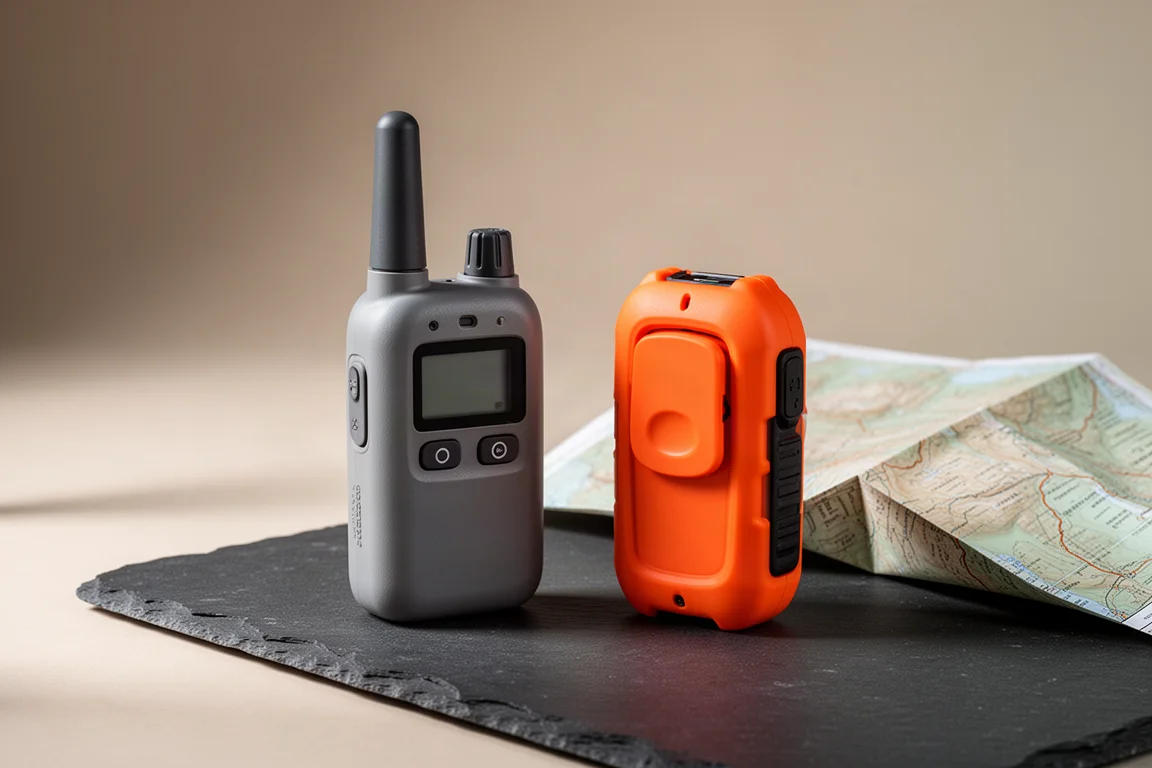
What makes the PLB1 worth a closer look is how little room it demands. It sits somewhere between a thick lighter and a light deck of cards in the hand, and it weighs roughly 116 grams, or about four ounces. For hikers, backpackers, paddlers, and anyone who travels beyond cell coverage, that combination of small size and a dedicated emergency channel is the core argument.
Who This Product Is For
The PLB1 is aimed at people who want a genuine emergency beacon without a recurring bill. If your trips take you into terrain where a phone is useless and you would rather not manage a subscription, this is the straightforward option.
It also suits anyone building redundancy into a kit. Hikers, riders, and remote travellers who already carry a satellite communicator sometimes add a beacon as a second, independent layer for the worst case.
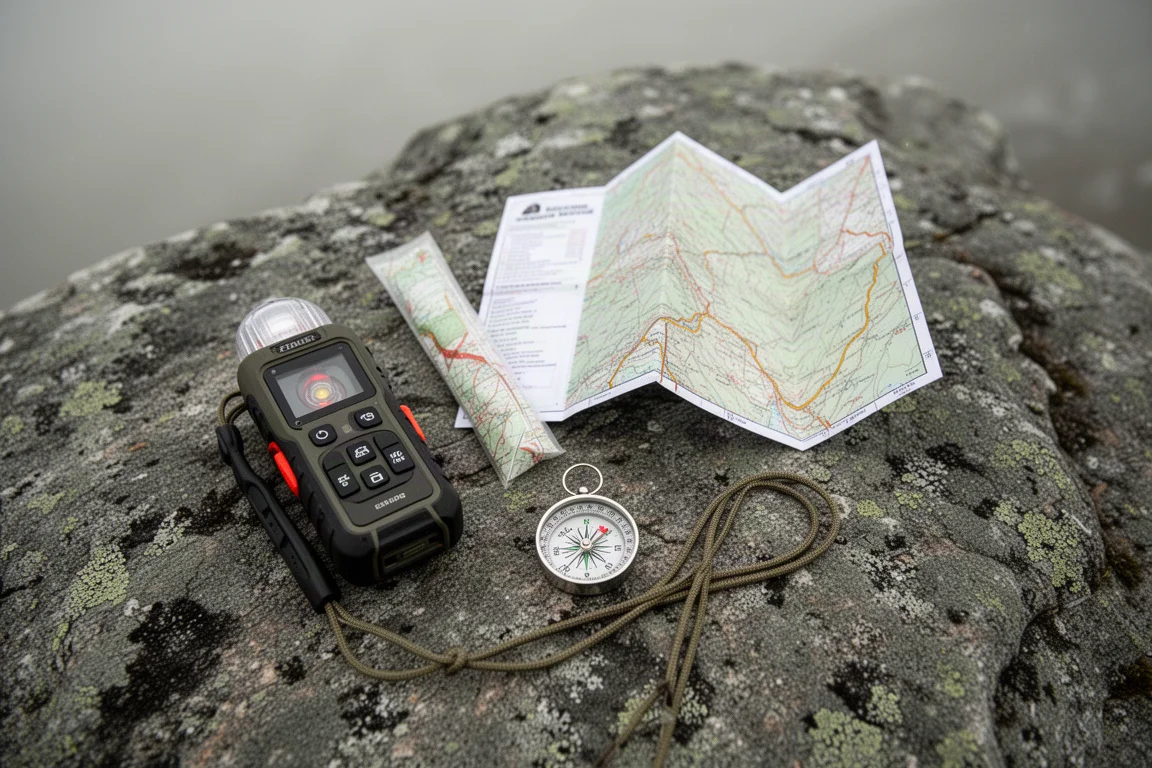
Because activation is deliberately simple, the device also works for people who do not want to learn a menu system before they need help. There is no screen to navigate and no configuration to get wrong in bad weather, which matters when the situation is already stressful.
Main Strengths
Most of the design decisions here are about preventing accidents and getting a signal out reliably.
- The antenna is wound inside the housing rather than left exposed, so it cannot catch on gear or unclip on its own.
- The distress button sits under a spring-loaded door, adding a second barrier against accidental activation.
- Transmission runs at 5 watts, a stronger broadcast than the 1.6 watts used by typical satellite communicators.
- The beacon transmits into the Cospas-Sarsat system, and three different classes of satellite are able to receive it.
- It keeps broadcasting for 24 hours or more, depending on battery life, so a single missed pass does not end the attempt.
- A strobe light and a 121 MHz homing beacon help rescuers close the final distance, especially at night.
The box includes a float pouch, a lanyard, and an adjustable rubber strap for attaching the beacon to a pack strap, pole, or similar mounting point. The float pouch is the most useful of the three: it adds a layer of protection and makes the battery door harder to reach, which further reduces the chance of an accidental activation.
Things to Consider Before Buying
The trade-offs are real and worth understanding before you commit.
The most important one is that a personal locator beacon is a one-way device. Once the button is pressed, the signal goes out and the user waits. There is no confirmation that anyone received it, no text messages, no weather updates, and no tracking.
The battery is sealed inside and designed to last seven years. When that period ends, an authorised Ocean Signal or ACR dealer replaces the battery, typically for somewhere around $150, and usually runs a full set of checks and replaces the rubber seals at the same time. Because there are no moving parts, the unit effectively comes back as new.

Registration is also required by law in the United States, and testing draws a small amount of power from the battery, so a little discipline is part of ownership. On price, expect roughly $300 to $400 depending on the sale. There is no subscription to budget for, though who ultimately pays for a rescue is a separate question that varies by jurisdiction.
How the rescueME PLB1 Works
Operation is short enough to memorise, and the instructions are printed on the side of the device and on the float pouch in case you forget.
Start by deploying the antenna: pull it out and let it stand upright, then set the unit somewhere flat. A small spool control retracts the antenna again with a clockwise twist. With the antenna up, hold the red activation button for one second. The large strobe begins flashing and a smaller status LED reports what the device is doing.
The beacon then works to acquire a GPS position. The GPS antenna is separate from the main transmitting antenna and sits on a different face of the housing, so it needs a clear view of the sky with nothing covering it. Once a fix is acquired, an LED flash confirms it and the distress transmission begins. The beacon can still function without a GPS fix, but a position is the ideal outcome.
The signal goes into Cospas-Sarsat, an international effort that dates back to 1982 and was built so that distress calls could be raised anywhere in the world. Three classes of satellite carry a Sarsat payload. Low earth orbit satellites, largely weather satellites operated by NOAA, can determine a position to within roughly five miles from the characteristics of the signal alone, which is the fallback when no GPS fix is available. Medium earth orbit satellites, the same constellation family as GPS, Galileo, and GLONASS, can also receive it. Geostationary satellites positioned along the equator complete the picture.
From there the alert is relayed to the ground. Over land it is routed to an Air Force response centre, which contacts local search and rescue teams. Over water it goes to a Coast Guard response centre. Once rescuers are in the area, the strobe is visible at night and the 121 MHz homing beacon gives them a signal to lock onto using radio direction finding.
Registration and Testing
Registration comes before anything else. It takes a couple of minutes on the registration website: enter the serial number and some details about yourself, and add notes about who you are, your experience level, and any medical conditions. Those notes are what rescuers read when a distress call arrives, so they are worth keeping current. If plans change, whether that is a multi-day route or a different group with different medical needs, updating the record takes two minutes.
Testing is handled by a dedicated button marked with a T. One test covers the battery level and the internal workings of the device. A second test checks the GPS and is only recommended once a year. The internal test is recommended monthly, and a practical compromise is every three or four months with a reminder set on a phone calendar. Every test draws a little power from the battery, which is the reason not to run them casually.
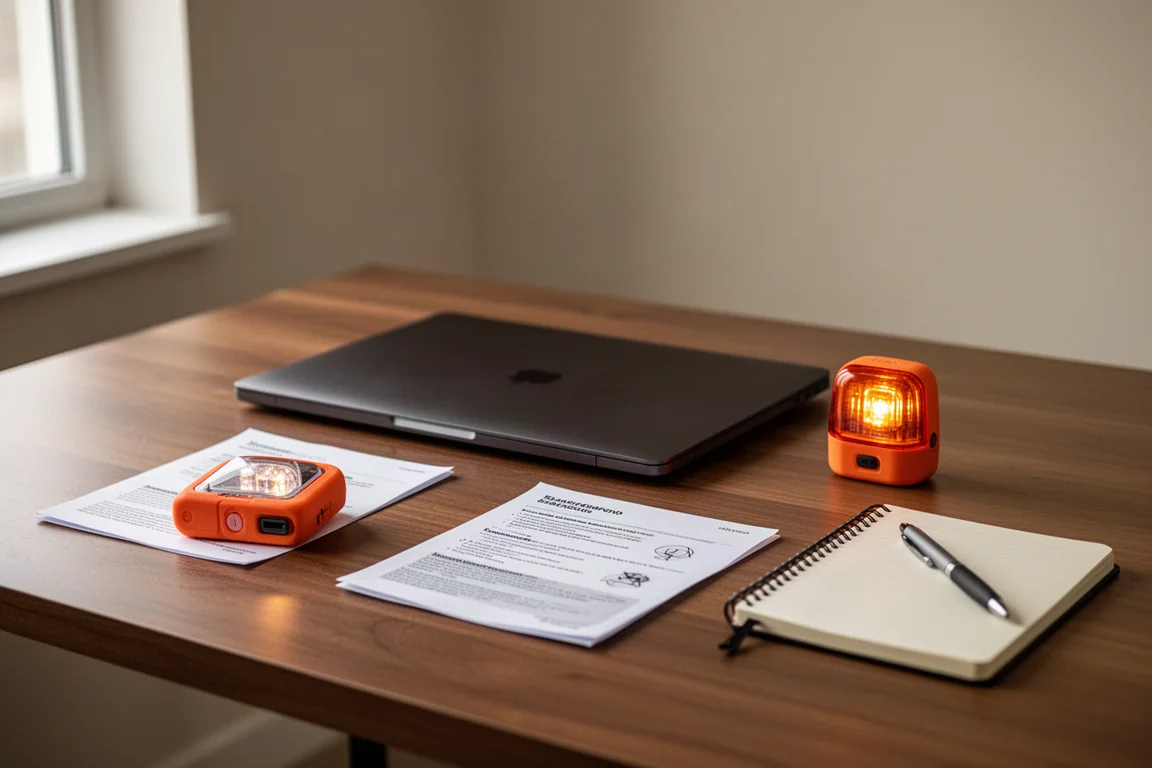
Keeping the unit in the float pouch and storing it at the bottom of a pack is a sensible default. It stays protected, the doors stay closed, and it is exactly where you expect it to be in an emergency.
How It Compares to Satellite Communicators
Devices such as an inReach or a Zoleo satellite communicator approach the same problem from a different angle, and the differences are mostly about communication rather than rescue.
A satellite communicator is a two-way system. Pressing the emergency button connects to a dispatch organisation, the IERCC, formerly known as GEOS, which reaches out to rescue authorities and can text back with questions or advice. That matters when a situation is ambiguous, when you need guidance, or when you want to notify emergency contacts. Outside of emergencies, the same devices send messages to friends and family, offer weather and tracking services, and generally act as a communicator rather than a last resort.
The cost model is different too. Satellite communicators require a monthly plan, similar to a phone contract, covering messaging, tracking, and usage. A personal locator beacon has no subscription at all: buy the hardware, register it, and store it in a pack.
There are technical differences as well. The PLB1 transmits at 5 watts against roughly 1.6 watts for a satellite communicator, and it can reach three classes of satellite rather than the single Iridium network. Battery behaviour differs as well. The PLB1 is built to broadcast for 24 hours on a sealed battery, while a communicator needs USB charging and heavy messaging use drains it faster.
Buying Advice
The decision comes down to what kind of help you want to be able to ask for. If you want one unambiguous emergency channel with no ongoing cost and no maintenance routine beyond occasional testing, the PLB1 is a strong fit. If you want to send check-in messages, receive weather, or hold a conversation with a dispatch centre during an emergency, a satellite communicator is the better tool.
On budget, the hardware runs around $300 to $400 depending on the sale, with a battery replacement of roughly $150 after seven years at an authorised dealer. Registration is free and required. Nothing else is billed in between.

Plenty of people carry both. A beacon sits sealed at the bottom of the pack as a backup with its own battery and its own satellite path, while a communicator stays within reach for everyday messaging. The two solve overlapping but not identical problems, and the PLB1 is a clean answer to the simpler one.
Conclusion
The Ocean Signal rescueME PLB1 is a small, well-protected beacon that does one thing without asking for a subscription. Its strongest qualities are the 5 watt transmission, the 24-hour broadcast window, the strobe and 121 MHz homing beacon for the final approach, and a sealed battery rated for seven years.
Its limitations are equally clear: it is one-way, it cannot send or receive messages, and the battery eventually needs a paid replacement. Buy it if you want a dependable emergency signal in your pack and nothing more. If communication is part of the plan, pair it with a satellite communicator and let each device do what it does best.
Product link
View more details for Ocean Signal rescueME PLB1
This product is mentioned in the review. Check the specifications, options, and compatibility before buying.
View more details for Ocean Signal rescueME PLB1Further reading
Related Reviews

Outdoor Safety
Best Bear Spray 2026: Five Options for Wilderness Protection
A practical comparison of five bear spray products, from compact carry options to maximum-range formulas, with clear strengths and trade-offs for different wilderness scenarios.
Outdoor Safety
Backcountry Rescue Insurance: Three Coverage Options Compared
Backcountry rescues are often free, but not always. Three coverage options, from a Garmin inReach policy to a fully funded assistance subscription, take the cost question out of calling for help.
Outdoor Safety
Garmin inReach Mini 2 vs RescueME PLB1: Which Satellite SOS Device Should You Carry?
A practical comparison of the Garmin inReach Mini 2 and the RescueME PLB1, covering seven-year SOS costs, two-way messaging, and the kind of backup each device is built to be.