Smart Glasses
Oakley Meta Vanguard Review: Smart Sunglasses With a Built-In Camera
A practical look at the Oakley Meta Vanguard: strong point-of-view video and open-ear audio, balanced against a premium price and limited battery life.
Introduction
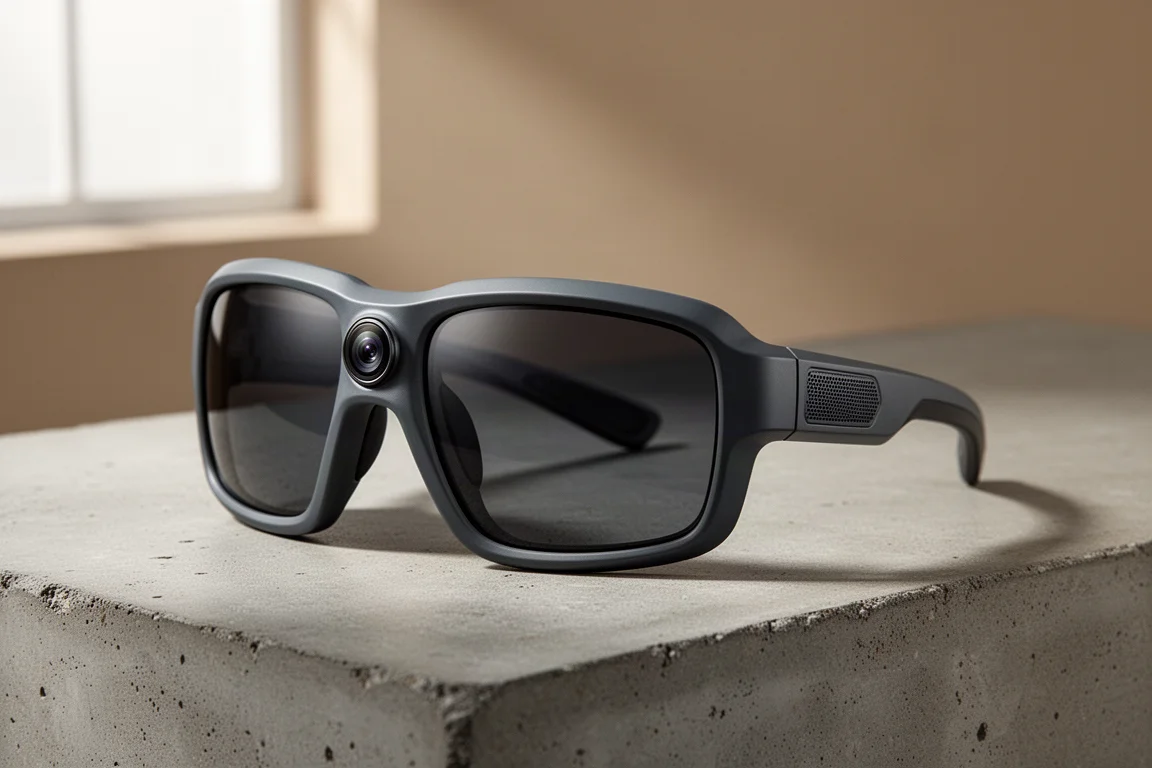
The Oakley Meta Vanguard are sunglasses with a camera, two speakers, and a voice assistant built into the frame. They look close to a normal pair of sport shades, though noticeably chunkier, and they sit a little heavier on the face than a lightweight cycling pair.
The pitch is simple: point-of-view video without mounting a camera to a helmet, body, or bike, plus music through speakers in the arms and hands-free voice control for questions, weather, and playback. Everything runs through a companion app on a smartphone.
They are also expensive, heavier than ordinary glasses, and their real-world battery life falls well short of the claimed figure. This review covers what they do well, where they fall short, and who should consider them.
Who this product is for
These glasses are aimed at riders who want to film their rides, races, or gravel sessions without adding a camera to the bike. The camera sits in the front of the frame and captures point-of-view footage discreetly, and a configurable button makes it possible to start recording without announcing a voice command in a group.

They also suit riders who like music on long training rides but want to keep an ear open to traffic. The speakers sit in the arms rather than sealing the ear canal, so surrounding sound still comes through. Anyone who mainly wants a light pair of sunglasses, or who needs a different lens tint as the light changes, will likely find a regular pair simpler and more adaptable.
Main strengths
Design, fit, and comfort
The frame is chunky compared with a lightweight performance shade, and there is a little more frame intrusion around the top of the field of view. In use, though, the fit is very good: a firm but not tight hold through the arms, no movement when riding off road, and compatibility with a range of helmet retention systems. They stayed comfortable across long days in the saddle, including six-hour rides.
The built-in camera
The camera in the front of the frame is the standout feature. It captures high-quality point-of-view video without a separate action camera on the helmet, body, or bike, and the footage looks surprisingly good for such a small lens.
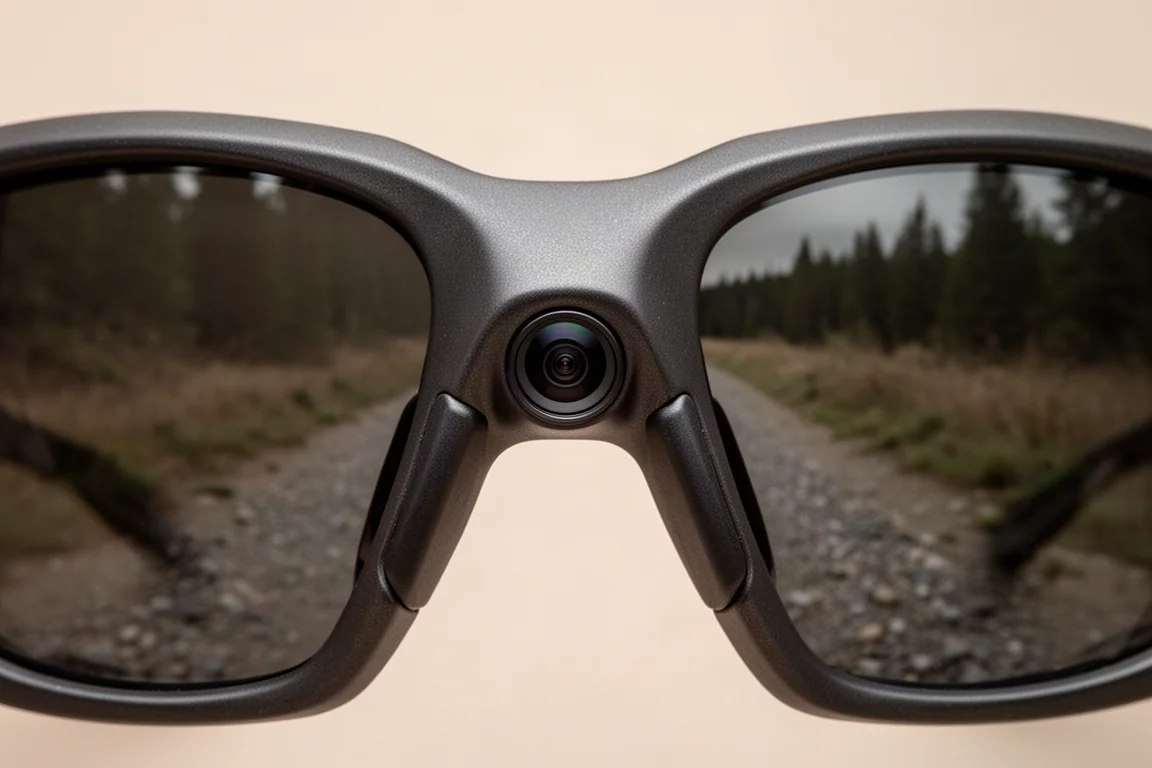
Recording is simple: press a button on the side of the frame or use a voice command. Clips can be captured at a choice of resolutions and between one and three minutes in length, which is plenty for short clips. The main limitation is orientation. Video is captured vertically only, which suits short-form social feeds but not the horizontal framing used for longer edits and television-style viewing.
Speakers and audio
Two speakers in the arms deliver strong audio quality. This is not bone conduction; the sound simply comes from the arms, and it stays clear at riding speed even with heavy wind noise. Music is easy to control with the touch pad on the right arm, and playback can also be changed by voice through compatible music apps. Crucially, the open design leaves enough ambient sound for approaching traffic to remain audible.
Riders using a compatible Garmin computer or watch can pair the glasses to hear route information, distance, and turn-by-turn directions through the speakers. For anyone who already glances at a stem-mounted computer, that is a nice-to-have rather than a reason to buy.
Controls and the companion app
The glasses switch on automatically when removed from the case. There is a power button on the left arm, a touch-sensitive pad on the right for music and volume, and two configurable buttons. Mapping one to photo capture and one to video capture makes recording discreet and quick.
The app handles the practical side: photos and video import into a gallery and upload automatically after a ride, ready to export to social platforms. Ride data can be overlaid on clips, with up to five metrics such as total ascent, time, and heart rate. Voice shortcuts, translation, wear detection, and button behaviour can all be adjusted in settings.
Things to consider before buying
Battery life and charging
This is the biggest compromise. Claimed runtime is six to nine hours depending on use, but heavy use of the camera, speakers, and voice assistant brought that down to roughly two to two and a half hours in real-world use, and even music-only use managed only about four to four and a half hours. Camera recording, particularly at higher resolution and longer clip lengths, appears to be the heaviest drain. Shorter one-minute clips at lower resolution help stretch runtime.
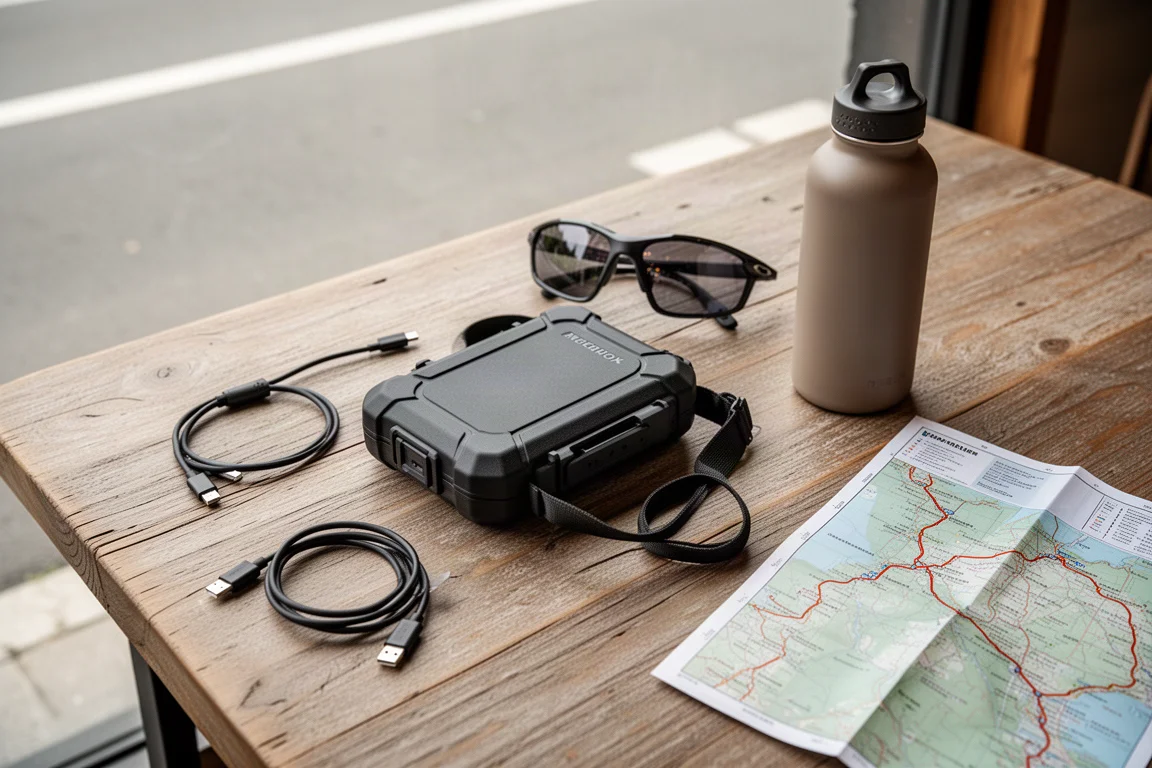
Charging is the other sticking point. The glasses only charge inside the supplied hard case, which has a USB-C port and a docking cradle. There is no cable or magnetic charging option on the glasses themselves, and the case stays at home, so a battery bank at a cafe stop cannot top them up. When the battery does run flat, they continue to work as a normal pair of sunglasses.
Price and the Meta account requirement
At around £500, these sit well above what a regular pair of performance sunglasses costs. Considering that they combine sunglasses, a camera, and speakers in one product, and that the execution feels polished rather than experimental, the price is easier to justify than the headline number suggests. It is still early-generation pricing, and it is reasonable to expect both better technology and lower prices in future versions.
Using them also means buying into the Meta ecosystem: the companion app on a smartphone and a Meta account. Some riders will be comfortable with that; others will not, and that is a legitimate part of the decision rather than a detail to overlook.
Lens options and storage
The lenses are dark tinted, with no interchangeable or photochromic options and no prescription version. In changeable or overcast conditions the tint can feel too dark, and a regular pair with swappable lenses is more flexible.
Storage is also worth thinking about. The frame is bulky, so it does not tuck into a small glasses bag or the back of a helmet as easily as a standard pair, and there is a natural worry about scratching or damaging an expensive product when it is not on your face.
Buying advice
The Vanguard makes most sense for riders who regularly film their rides and want that footage without extra hardware. For that group, the camera alone justifies the price: the footage is genuinely good, and the process of capturing it is seamless. Riders who want music without blocking out traffic will appreciate the speakers as a secondary benefit.
If you mainly want sunglasses, the calculation changes. A regular pair is lighter, offers more lens choice, and does not need charging. The limited runtime and the case-only charging make long rides a compromise, so plan around shorter sessions or lower-resolution, shorter clips.

It is also worth being honest about the ecosystem question. The glasses work well, but they require a Meta account and app, and that is a trade-off each buyer has to weigh for themselves.
Conclusion
The Oakley Meta Vanguard is an impressive first-generation product. It works well as sunglasses, the built-in camera is the most rewarding feature, and the speakers are better than the small frame suggests. The fit is comfortable over long distances, and the controls and app are straightforward.
The drawbacks are just as clear: a premium price, more weight and bulk than regular glasses, a dark fixed tint, real-world battery life well below the claim, and charging that is only possible in the supplied case. If you create or share video from your rides, they are a genuinely useful tool. If you do not, a normal pair of sunglasses remains the simpler, lighter choice.
Product link
View more details for Oakley Meta Vanguard
This product is mentioned in the review. Check the specifications, options, and compatibility before buying.
View more details for Oakley Meta VanguardFurther reading
Related Reviews
Smart Glasses
Tozo AIVU AI Glasses Review: A Privacy-First Smart Glasses Option
The Tozo AIVU AI glasses offer a green HUD in both eyes, hands-free AI assistance, and a strong focus on privacy with no image storage.
Cycling
2026 Bike of the Year and the Cycling Gear Worth Watching
A drop bar roundup for 2026 covering the Ridley Kanzo Fast 2.0, Shimano Dura-Ace Di2 R9300, Trek Checkpoint ALR Gen 3, Specialized Tarmac SL9, Garmin Fenix 9 and Insta360 X6.
Hi-Fi Speakers
Acoustic Energy AE1 40th Anniversary Review: A Modern Take on a British Classic
A compact standmount that revives a 1980s favorite with all-new parts, a warm mid-centric balance, and a price of £1,499 per pair.