Aquarium Test Kits
Nyos Nitrate Test Kit Review: Fast, Readable Nitrate Testing for Reef Tanks
A practical look at the Nyos Nitrate Test Kit, covering its six-minute procedure, 1 to 160 ppm range, colour-reading approach, and what to weigh before buying.
Introduction
Nitrate is one of the parameters reef keepers track most consistently. It accumulates as the nitrogen cycle breaks down waste produced by fish and other inhabitants, and while a modest amount supports coral health, elevated levels can fuel nuisance algae and irritate livestock. Testing regularly is one of the most reliable ways to keep a tank stable and to catch a drift before it becomes a problem.
The Nyos Nitrate Test Kit is designed around that routine. It takes roughly six minutes to run, covers a range of 1 to 160 ppm, and uses a yellow colour gradient that many aquarists find easier to interpret than the pink shades used by most nitrate kits. At around $25, it is also priced well below what the level of thought behind it might suggest.
Who the Nyos Nitrate Test Kit Is For
This kit suits reef keepers who test nitrate often enough that speed and readability actually matter. Because the procedure is short and the reading step is straightforward, it fits comfortably into a weekly maintenance session rather than feeling like a chore that gets postponed.
It is particularly useful in lower nutrient systems, where knowing whether nitrate sits at 3 ppm or 5 ppm can guide how you feed and dose. Keepers running higher nitrate levels also get value here, since the kit still gives a clear sense of how far outside the optimal range a tank has drifted. With reagents supplied for 40 tests, it covers a long stretch of regular testing before you need to think about restocking.
Main Strengths
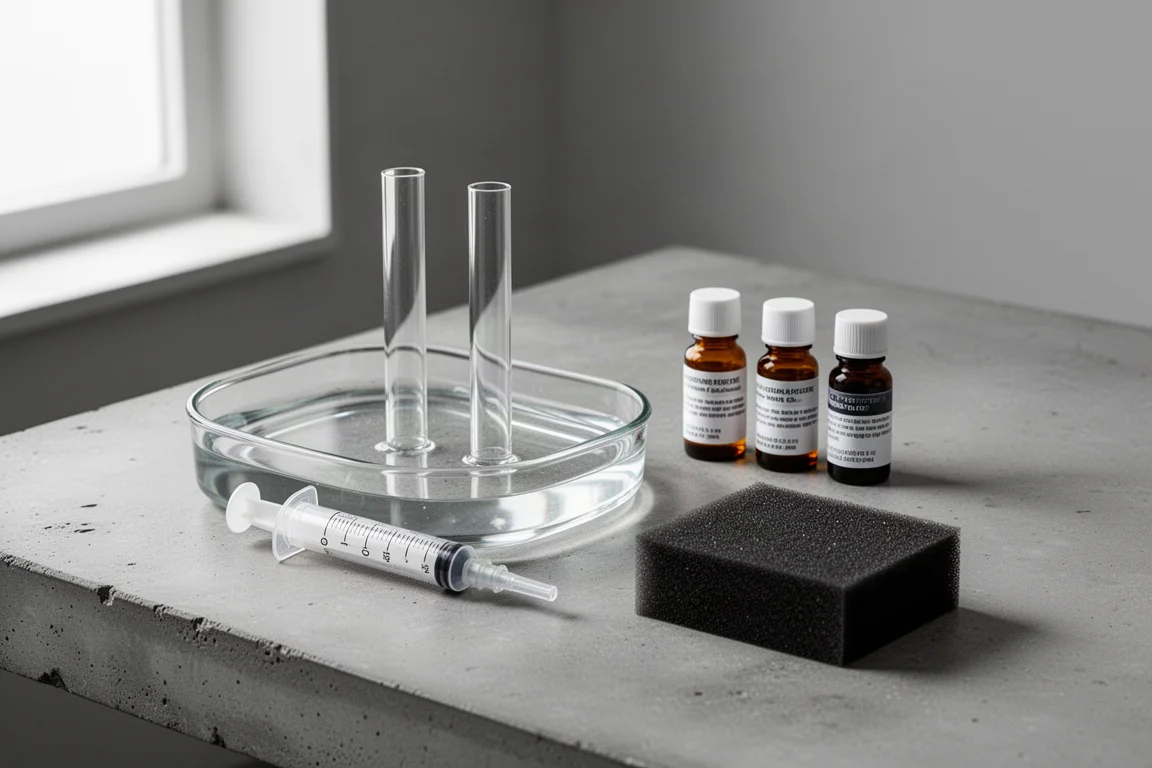
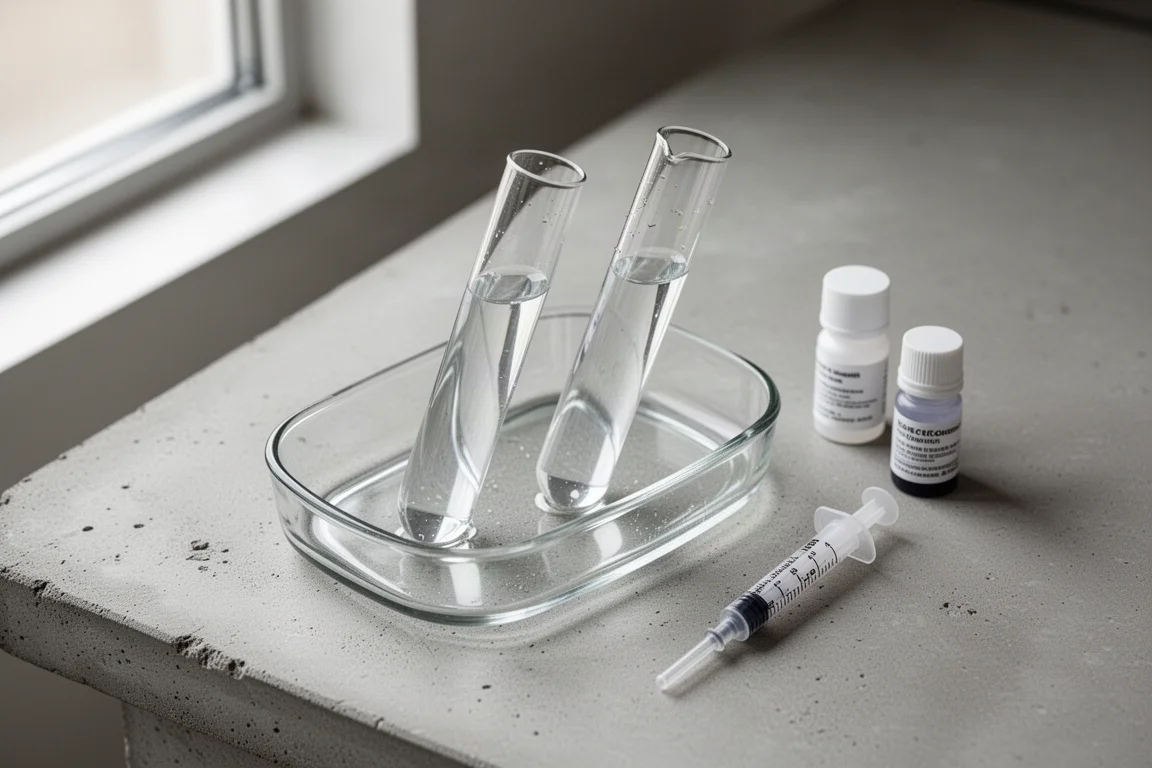
Everything needed for the test is included in the box: reagents one and two for 40 tests, a micro scoop, a 6 millilitre syringe, two cuvettes, a foam light blocker, a colour chart, and printed instructions. Nothing extra has to be sourced before the first test.
An Easy Six-Minute Test Procedure
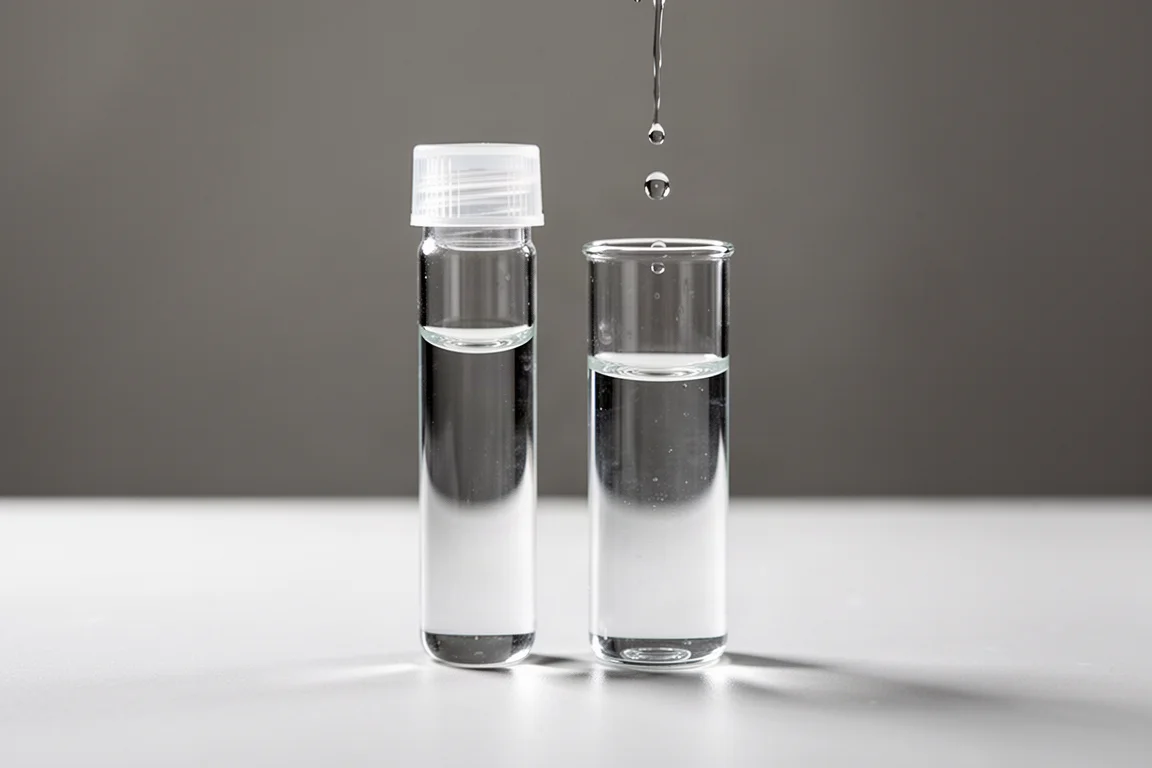
The process is short and difficult to get wrong. You collect 5 millilitres of aquarium water in each cuvette, setting aside the uncapped one as a reference. Reagent one goes into the capped cuvette and gets a swish, then a single micro scoop of reagent two is added. Cap it, shake for one minute, and wait five minutes.
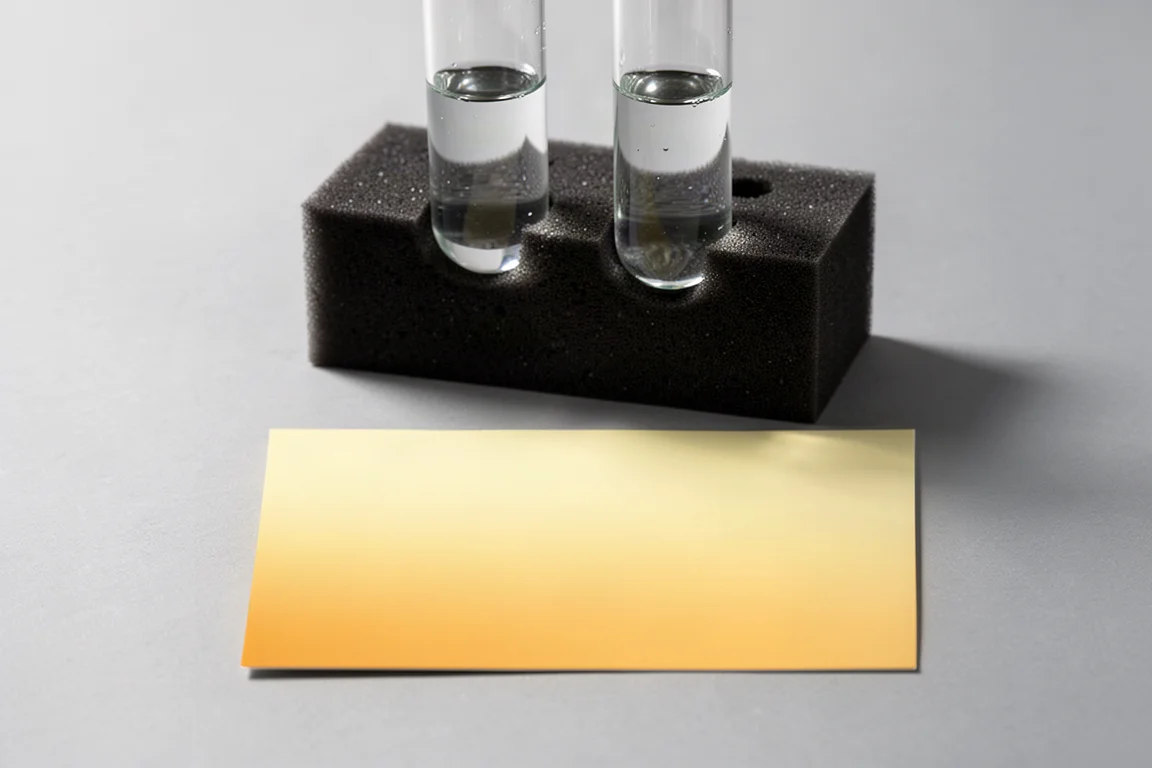
After that, both cuvettes go into the foam blocker and are compared against the chart, with the test sample positioned over the white circles and the reference over the coloured circles. It is simple enough that after running the test once, most people can work through it from memory.
The Reference Cuvette and Foam Blocker
The second cuvette of tank water is the detail that makes the biggest practical difference. Placing it over the coloured circles compensates for any tint already present in the aquarium water, which often adds a yellowish cast that makes colour comparison harder. With the reference in place, the shades on the chart are noticeably easier to judge.
The foam blocker does its own share of the work. It holds both cuvettes steady as you move across the chart and cuts out reflections and stray light, so the colours you see are closer to the colours on the card. Together, these two elements make the reading step feel deliberate rather than approximate.
A Wide 1 to 160 ppm Range
The kit reads from 1 to 160 ppm, and the chart is laid out sensibly for how nitrate information is actually used. The lower end uses smaller increments, while the higher end uses larger jumps between shades. That matches real priorities: below 25 or 40 ppm it is helpful to know the exact figure, while above that range the important thing is simply recognising that the tank is outside the optimal zone and roughly how far outside.
The yellow gradient also helps with the in-between readings. Because the shades sit closer together visually, a colour that falls between two values can be judged confidently as the midpoint. If the sample looks somewhere between 3 and 5, reading it as 4 is a reasonable call rather than a guess.
Things to Consider Before Buying
This is a colour comparison test, so the final number comes from your eyes rather than a digital display. Consistency matters: reading the chart in the same spot, under similar light, and with the foam blocker in place keeps results comparable from week to week. New users should expect the first reading or two to feel slower than later ones.
The reagents cover 40 tests, which is generous for a weekly routine but worth planning around if you test more frequently or maintain several tanks. The low-range precision that makes this kit so useful in low nutrient systems also means the increments are tightest exactly where the numbers matter most, so a steady hand and a moment of patience are worthwhile.
Buying Advice
If nitrate testing is already part of your weekly routine, this kit is easy to recommend. The procedure is short, the reference cuvette removes one of the most common sources of misreading, and the foam blocker makes the chart comparison quicker than working with loose vials on a bench. At around $25, it delivers a level of design and accuracy that is uncommon at that price.
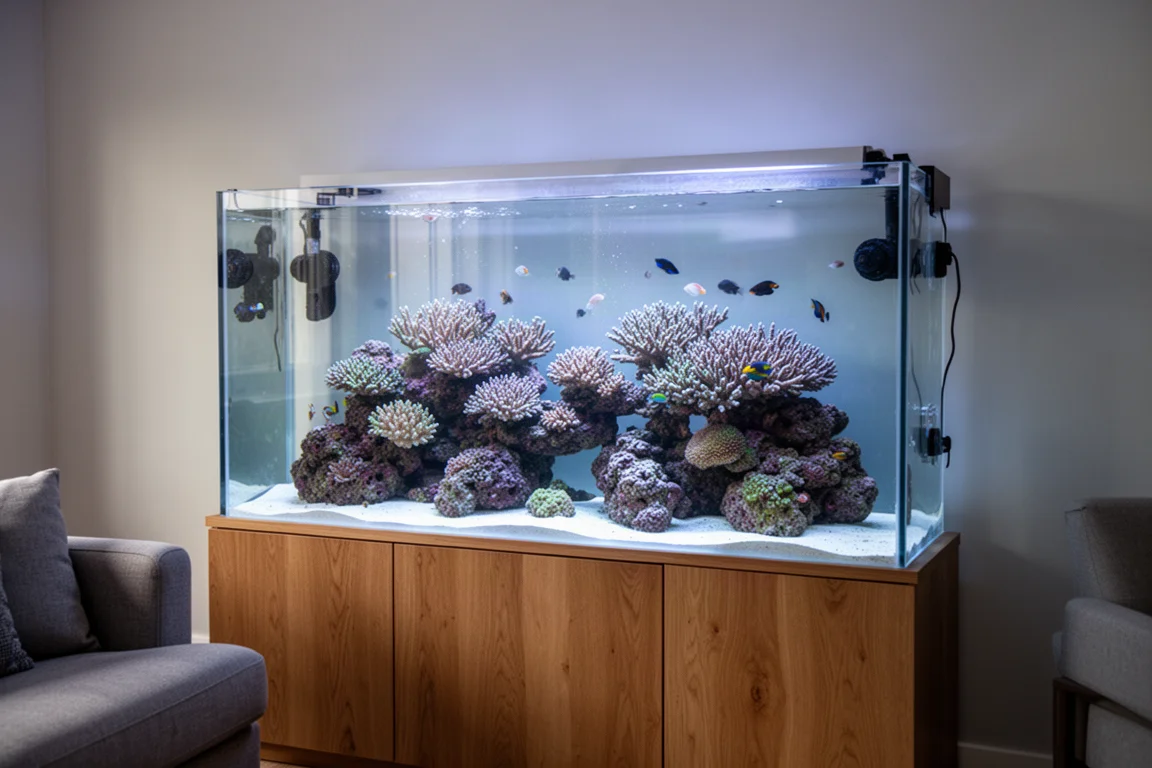
For anyone maintaining a low nutrient reef tank, the ability to distinguish between close values is the feature that justifies the purchase. For keepers running higher nitrate who mainly need a reliable indication of how far off target they are, the wide upper range covers that need without demanding a more expensive kit. Either way, it is a sensible first or replacement nitrate test to keep on the shelf.
Conclusion
The Nyos Nitrate Test Kit succeeds because it treats ease of use and accuracy as the same problem. A six-minute procedure, a reference cuvette that accounts for tank water tint, a foam blocker that controls light, and a yellow colour gradient that is easy to interpret all point in the same direction: readings you can trust without a long setup. With a 1 to 160 ppm range and a price around $25, it is a strong fit for reef keepers who want nitrate testing to stay quick, repeatable, and affordable.
Product link
View more details for Nyos Nitrate Test Kit
This product is mentioned in the review. Check the specifications, options, and compatibility before buying.
View more details for Nyos Nitrate Test KitFurther reading
Related Reviews
Aquarium Test Kits
Best Hanna Checkers for Reef Tanks: Five Digital Test Kits Explained
A practical look at five Hanna digital checkers for reef aquariums, which ones belong in every routine, and the habits that keep results reliable.
Aquarium Test Kits
Best Saltwater Test Kits for Reef Tanks: Four Kits Worth Buying
A practical guide to the reef tank parameters worth testing, plus four kits that make alkalinity, calcium, nitrate, and phosphate testing faster and easier to read.
Aquarium Test Kits
Hanna High Range Copper Checker Review: Digital Copper Testing for Aquariums
A handheld digital photometer that measures aquarium copper from 0 to 5.00 ppm in under two minutes, so copper treatments stay measurable.