Aquarium Equipment
Nyos Fish Trap Review: A Calmer Way to Catch Fish in a Reef Tank
The Nyos Fish Trap replaces the classic trapdoor and pull string with a rotating globe that floats your fish to the surface. Here is how it works, who it suits, and what to check first.
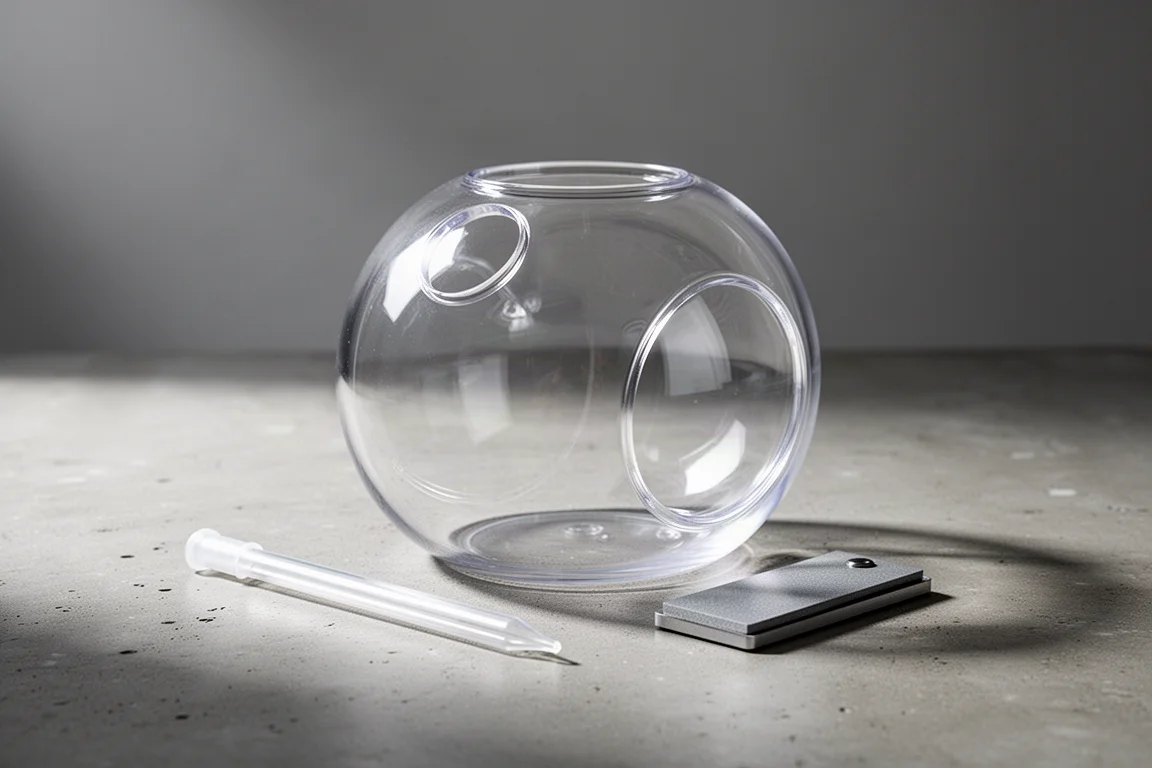
Introduction
Catching a specific fish inside a stocked reef tank has always been one of the least enjoyable jobs in the hobby. The usual design is a box with a trapdoor and a length of string. You wait for the right fish to swim in, release the string, and hope the door closes fully. Then you reach into the tank with both arms, lift the box out, and pray the fish does not slip free on the way up. It works often enough to keep people trying, and fails often enough to make the whole process exhausting.
The Nyos Fish Trap takes a different route. There is no trapdoor and no spring-loaded gate. Instead, the entire trap releases from the glass and rotates so the opening faces upward. Air held inside the rim of that opening makes the trap rise quickly and steadily to the surface, carrying the fish with it to the top of the aquarium where it is easy to reach. The approach removes most of the awkward mid-tank wrestling that makes traditional traps so frustrating.
Who This Fish Trap Is For
The trap measures just over six inches front to back, with an opening just shy of three inches in diameter. That size range suits most small reef fish, including gobies, blennies, clownfish, damsels, pygmy angelfish, and sub-adult tangs. It is a good match for anyone who needs to move a fish out of a display tank without dismantling the aquascape.
It is not built for large specimens. Adult tangs, rabbitfish, foxface, large angelfish species, and groupers are simply too big for this trap, and it is worth being honest with yourself about that before buying. If the fish you want to remove is a full-grown large-bodied species, this is not the tool for the job.
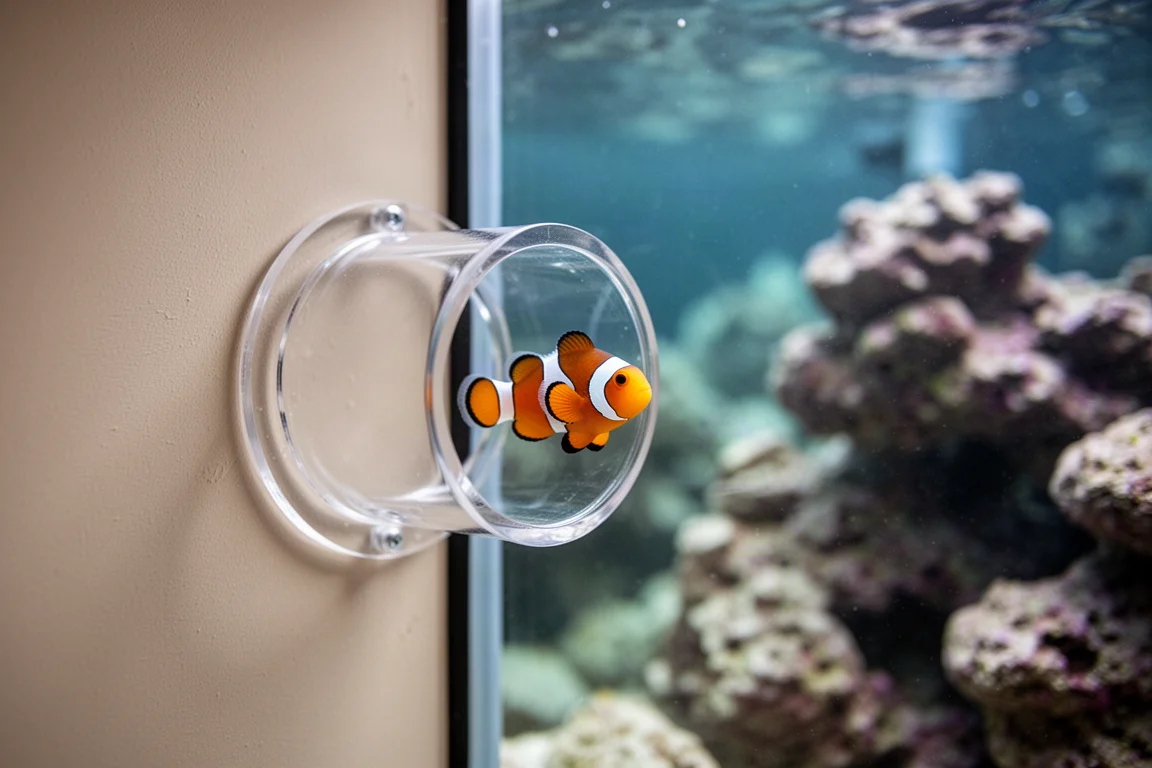
The bigger picture is that this trap suits patient aquarists. It rewards someone willing to leave it in the tank for a few days and let the fish get used to it, rather than someone hoping to catch a fish within the first hour.
How the Nyos Fish Trap Works
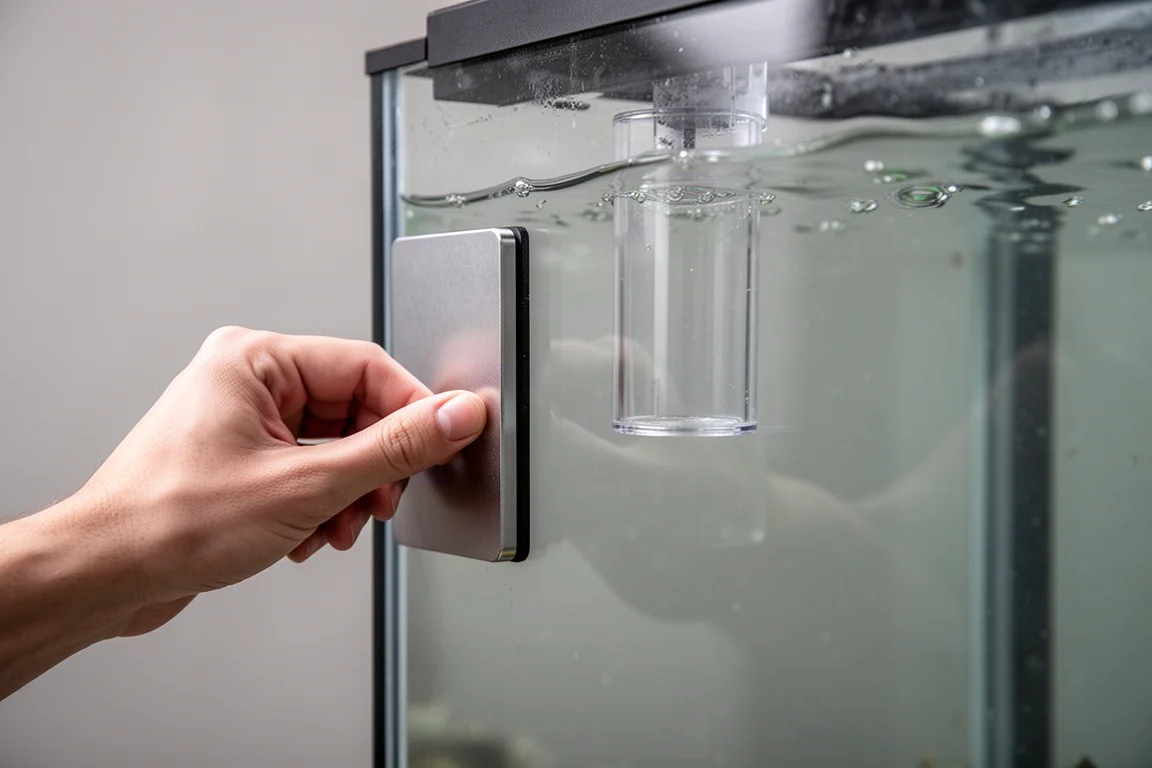
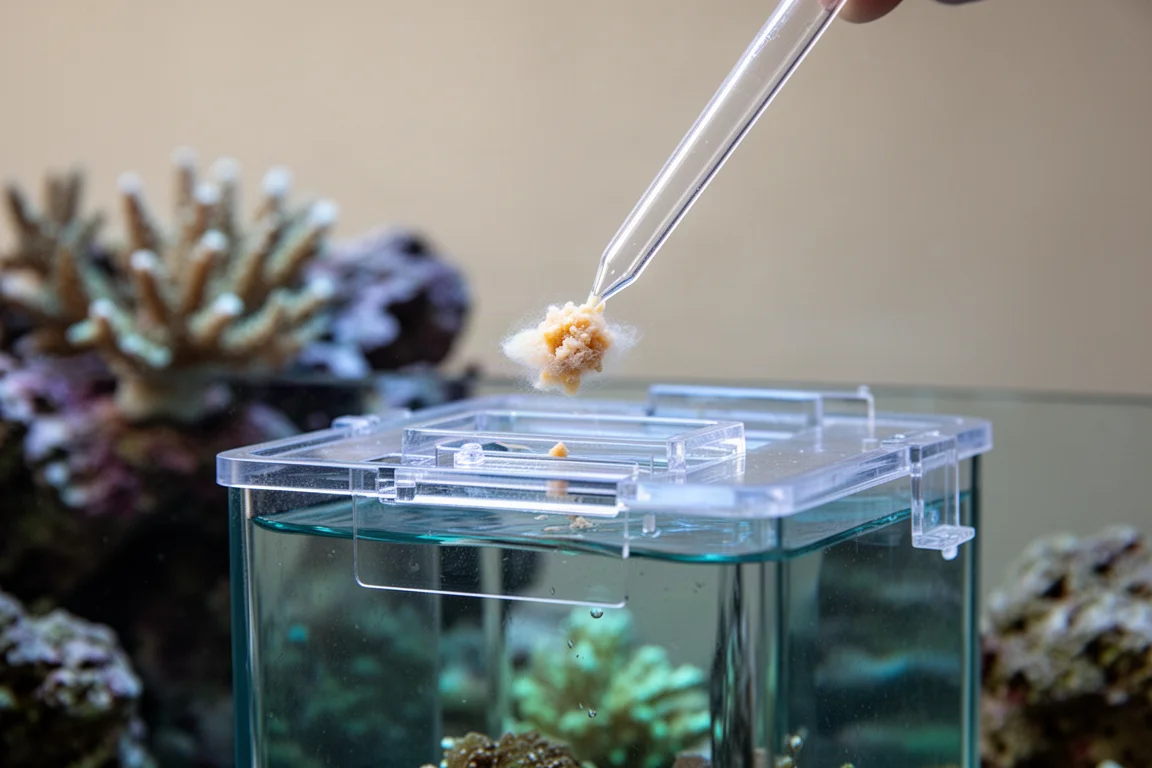
The process is straightforward. Mount the trap inside the tank, not too far from the surface, and let the magnets hold it in place. Strong magnets keep the trap firmly attached to glass up to 5/8 of an inch thick, which covers the average reef aquarium. Then use the supplied pipette to deliver food through the port at the top of the trap and wait for your target fish to enter.
Once the fish is inside, pull the magnet off the outside of the glass. The trap detaches, rotates so the opening faces up, and floats to the surface with the fish safely contained. From there, retrieval is simple.
That is the ideal sequence. Fish have their own ideas, which is why the manual included in the box is worth reading carefully. It contains a set of practical tips that make a real difference to success rates.
Main Strengths
The core design change is the strongest thing about this trap. Rotating the whole body and letting it rise to the surface removes the two most error-prone steps of traditional trapping: waiting for a door to close correctly, and extracting a heavy box from deep inside the tank while a fish tries to escape. Because the trap lifts itself, you are not reaching elbows-deep into the aquarium at the worst possible moment.
The magnet system is another genuine strength. A trap that shifts or slides on the glass while a nervous fish circles it will not catch anything, and these magnets hold firmly on glass up to 5/8 of an inch thick.
The box contents are also thoughtfully assembled. You get the trap itself, a pipette for delivering food into the trap, a magnetic algae plate that lets you clip algae inside for a herbivorous fish you are trying to catch, and the manual with its trapping tips. The algae plate in particular is a detail that shows the design was considered around real feeding behaviour rather than just the mechanics of capture.
Practical Tips for Better Trapping Results
Getting a fish comfortable with the trap matters more than anything else. Leave it in the tank for a few days and feed exclusively through the small hatch at the top. Your fish will begin to associate the trap with food rather than with a threat, which dramatically improves the odds when you finally decide to make a catch.
If your target fish prefers moving prey, use the pipette to blow the food around once it is inside the trap, so there is movement to draw the fish in. The opposite problem is just as common: if the food is being blown around too chaotically or is escaping the trap, switch off your flow pumps while you are using it. With the water calmer, the food settles and a cautious fish is more likely to go in for a bite.
For skittish fish that refuse to come out while you are standing at the tank, look at the back of the magnet. There is a small loop that lets you tie on a piece of rope or fishing line. You can then stand further away and still pull the magnet free the moment your fish enters.
Timing matters with small, fast fish. Make sure they are fully inside the trap before you remove the magnet. A fish hovering in the entrance may get a second chance to dart out before the trap rotates and carries it to the surface.
Finally, expect some competition. Boisterous fish such as tangs, rabbitfish, and even clownfish often have no fear of the trap and will happily dominate it during feeding, leaving no room for the fish you actually want. In that case you may need to remove the bold fish temporarily with the trap, reset, and then go after your original target.
Things to Consider Before Buying
The size limit is the main consideration, and it is a hard one. Small reef fish are well within range, but adult large-bodied species are not, and no amount of technique will change that.
This is also not a device that works on demand. The trap depends on a fish choosing to enter it, which means it can take days of acclimation and feeding through the hatch before a wary fish is comfortable enough to go in. If you keep highly skittish fish, or fish that rarely leave the rockwork, budget extra time and expect a few failed attempts.
It is worth noting that success comes down to the aquarist as much as the trap. Reading the manual and following its feeding guidance is what turns this from a plastic box in your tank into an effective tool.
Maintenance and Storage
Keeping the trap clean is quick. After catching and removing your fish, rinse it in tap water to clear out any leftover food or algae, wipe off any salt creep, and dry it with a towel before putting it away. Once it is dry, it is ready for storage.
If the trap has been left in the tank long enough to build up calcareous algae or coralline growth, a short citric acid bath will break that down. Rinse it afterwards, give it a wipe down, and it is ready to go back into storage. That simple routine keeps the acrylic clear and the mechanism working smoothly the next time you need it.
Buying Advice
The case for this trap is strongest for aquarists who keep small to medium reef fish and want a way to remove one of them without tearing the tank apart. The rotating, floating design solves the specific problems that make traditional trapdoor traps so unreliable, and the included pipette and algae plate support the feeding routines that make trapping actually work.
Before you buy, confirm that your target fish fits within an opening just shy of three inches across and a trap just over six inches front to back. If it does, plan for a few days of letting the fish get used to the trap and feeding through the hatch. That preparation is the difference between a frustrating week and a straightforward catch.

If your target is a large adult tang, rabbitfish, foxface, large angelfish, or grouper, this trap is not going to work, and it is better to look for a different solution. For everyone else dealing with a small fish that needs to come out, this is a genuinely practical piece of equipment to have on hand.
Conclusion
The Nyos Fish Trap is a well-considered answer to a job most aquarists dread. By releasing from the glass and floating the whole trap to the surface, it removes the guesswork of a closing door and the awkwardness of reaching deep into a tank to retrieve a catch. Strong magnets, a pipette, a magnetic algae plate, and a manual full of practical guidance round out a package that feels designed by people who have actually tried to catch a fish.
It will not suit every situation, and it will not catch a fish that refuses to enter it. But for small reef fish in an average tank, it offers a calmer, more controlled way to get the job done without breaking down your aquascape.
Product link
View more details for Nyos Fish Trap
This product is mentioned in the review. Check the specifications, options, and compatibility before buying.
View more details for Nyos Fish TrapFurther reading
Related Reviews
Aquarium Equipment
Abyzz Professional DC Pumps: A100, A200, and A400 Reviewed
A closer look at three German-made DC return pumps built for large reef systems, with titanium internals, fine flow control, and a 10-year warranty.
Aquarium Equipment
AdaptiveReef Controller Accessories: Three Tactile Upgrades for Your Reef Controller
A practical look at three AdaptiveReef add-ons that put physical switches, at-a-glance status lights, and a loud alarm within arm's reach of your reef tank.
Aquarium Equipment
Adaptive Reef Controller Boards: Basic vs Deluxe for Cleaner Aquarium Gear
A practical look at the Adaptive Reef Basic and Deluxe controller boards, what each one includes, and how to choose the right size for your tank gear.