Ski Boots
Nordica Strider 115W Review: A Hybrid Ski Boot Built for Both Directions
A women's hybrid alpine and touring boot with a 115 flex, a 100 mm mid-volume last, tech inserts, and a heat-moldable cork liner.
Introduction
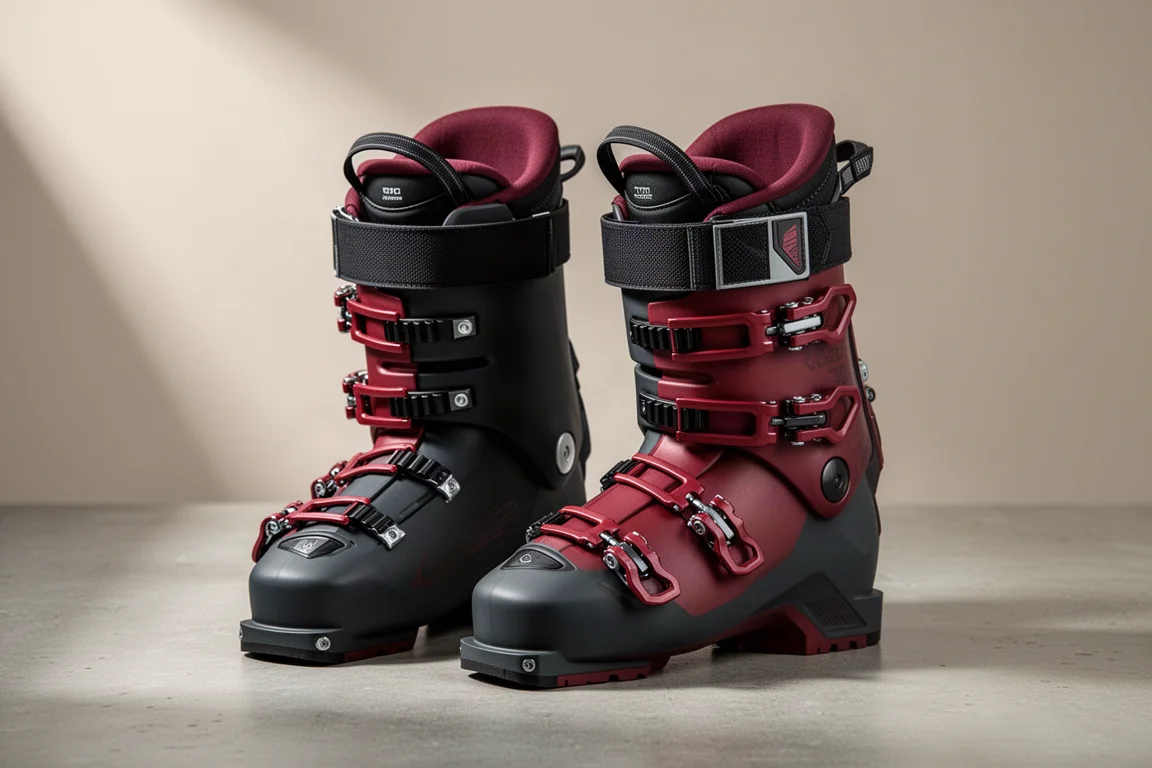
The Nordica Strider 115W sits in the hybrid category that has grown steadily over recent seasons: a boot that behaves like an alpine model on the descent while carrying the hardware needed to climb. With a 115 flex, a 100 mm last, and a mid-volume fit through the instep and cuff, it is aimed at women who would rather own one pair of boots than two.
The design leans on Nordica’s alpine boot heritage while adding touring-specific features. There is a walk mode, tech inserts at the toe, and a liner built to be heat molded, which together let the boot move between resort laps and uphill travel without changing shells.

That combination is what makes the Strider 115W worth a closer look. Instead of asking skiers to choose between a stiff in-bounds boot and a dedicated touring shell, it keeps the downhill character intact and treats uphill capability as an option that is there when you want it.
Who this product is for
This boot is for skiers who want a capable downhill boot that also has the option to tour. Because it accepts tech inserts, it can be paired with a tech binding for uphill travel, while riders who prefer to stay in bounds can run it with an alpine binding and simply never use the walk mode.
The fit is the other half of the decision. The Strider 115W uses a 100 mm last with a mid-volume fit that runs over the instep and through the cuff, so it occupies the middle of the market rather than the extremes. Skiers with feet that need a notably wide or notably narrow shell should treat the fit as something to confirm with a boot fitter rather than assume.
It is also a sensible option for anyone who wants to add a touring setup later without replacing their boots at the same time, since the same shell can serve both a tech binding and a standard alpine binding.
Main strengths
Versatility is the headline. The Strider 115W carries four lightweight micro-adjustable buckles, and the top two include climbing catches. A power strap across the cuff cinches the upper boot tight, which matters when you are trying to translate leg drive into edge pressure on firm groomers.
The buckle design is also where much of the weight saving comes from. Lighter hardware on a hybrid boot is a real benefit, because every gram on the foot is a gram you carry uphill as well as down.
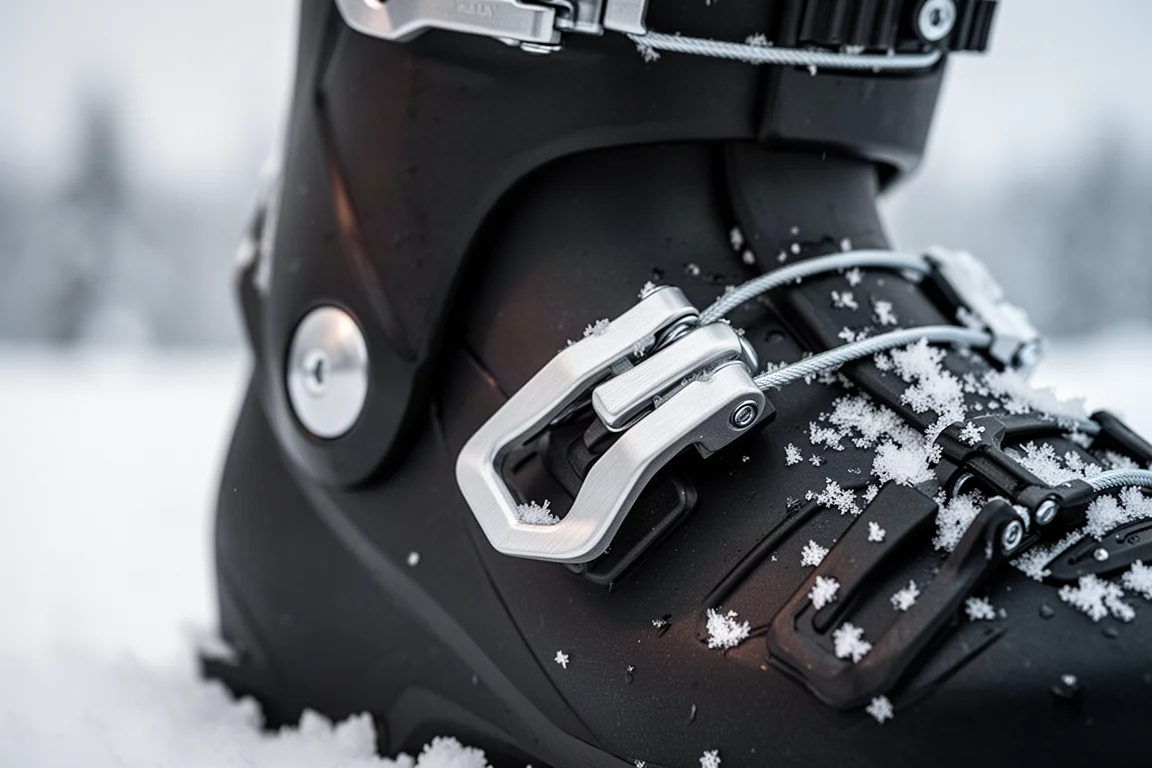
In ski mode, the connection between cuff and shell is described as solid, and that is the part of the design that has improved most across recent generations of hybrid boots. A stiff, well-connected shell is what separates a hybrid that skis well from one that only tours well.
Fit and liner comfort
The liner is a cork custom moldable design, which can be heated at a boot shop and then shaped to the foot for a much closer fit than an off-the-shelf liner typically delivers. It also includes lace eyelets, so you can snug the liner down independently and leave the shell a little more open for comfort while touring.
An articulated section at the rear of the liner lets it move freely when the boot is in walk mode, which reduces the pulling and pinching that a rigid liner can cause on the way up.
Walk mode and touring capability
A flip mechanism switches the boot between ski mode and walk mode, and the difference in range of motion between the two positions is immediately apparent. Combined with the free movement of the liner and the tech inserts at the toe, that setup allows for friction-free climbing.

When you reach the top and flip the lever back into ski mode, the shell locks into a firm connection for the descent. That reliability going downhill is the reason this style of boot has become so popular: the uphill capability is genuinely useful, and it no longer comes at the cost of downhill performance.
Things to consider before buying
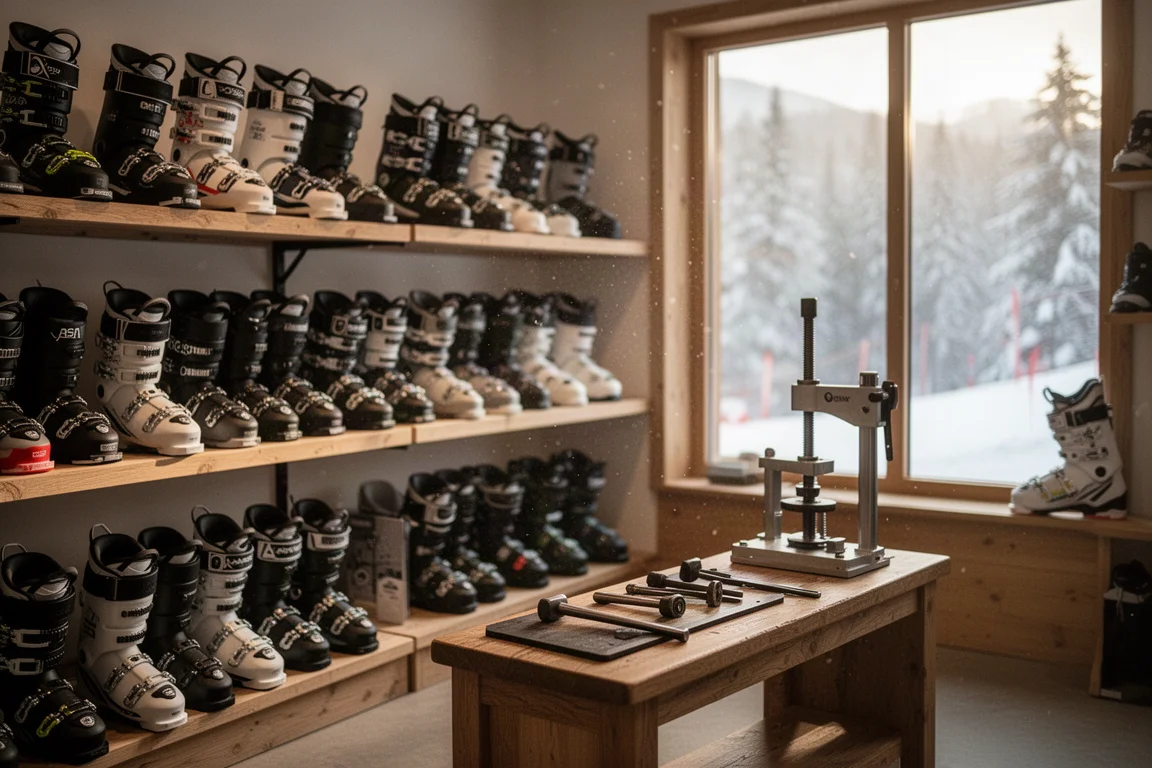
The cork liner is one of the boot’s best features, but heat molding it properly means a trip to a boot shop rather than a home setup. Budget for that fitting step, because it is what makes the liner deliver on its promise.
The 100 mm mid-volume last is a genuine middle ground. It will suit a lot of feet well and it will not suit everyone, so try the shell before committing if you can.
Think about bindings at the same time as the boot. If you plan to use the tech inserts, you will need a compatible tech binding. If you only ever ski lifts, a standard alpine binding is all you need, and the walk mode simply becomes unused capability rather than a compromise.
Buying advice
Buy the Strider 115W if you want one boot that covers a wide range of days: firm groomers in the morning, a short climb in the afternoon, and a confident descent on the way back. The 115 flex is stiff enough to drive a ski with authority while still flexing predictably, and the tech compatibility keeps the door open if your plans change.
If your skiing is entirely lift-served and you have no interest in touring, the touring hardware costs you nothing in performance, but it is also capacity you may never use. In that case, compare it honestly against a dedicated alpine boot in the same flex range before deciding.
Either way, treat the fit as the deciding factor. A hybrid boot only earns its keep when the shell and the molded liner match your foot, so start with a fitting and let the feature list come second.
Conclusion
The Nordica Strider 115W is a well-judged take on the hybrid ski boot. It brings together a 115 flex, a mid-volume 100 mm last, a heat-moldable cork liner, four lightweight buckles with climbing catches, and a walk mode with tech inserts, and it does so without sacrificing the firm ski-mode connection that makes the descent worthwhile.
For women who want the freedom to choose between the resort and the skin track on any given day, that flexibility is the whole point.
Product link
View more details for Nordica Strider 115W
This product is mentioned in the review. Check the specifications, options, and compatibility before buying.
View more details for Nordica Strider 115WFurther reading
Related Reviews

Ski Boots
2027 Ski Boot Roundup: Six 130-Flex Boots Worth Knowing
Six 130-flex ski boots for 2027, plus a low-volume liner upgrade, compared on weight, fit, flex feel, and ease of use.

Ski Boots
Armada AR One Ski Boot Review: A Three-Piece Cabrio That Finally Gets It Right
Armada's first ski boot blends three-piece Cabrio design with Atomic engineering, a heat-moldable shell, and a 100mm last that fits better than any Cabrio before it.

Ski Boots
Armada AR1 Ski Boot Review: A Cabrio and Overlap Hybrid for Park and Freeride Skiers
Armada's first ski boot pairs a three-piece cabrio shell with overlap-style buckles and a cable-driven slingshot buckle. Here is where it shines, and what to weigh before buying.