Ski Boots
Nordica HF 110 Review: A Comfort-First Rear Entry Ski Boot
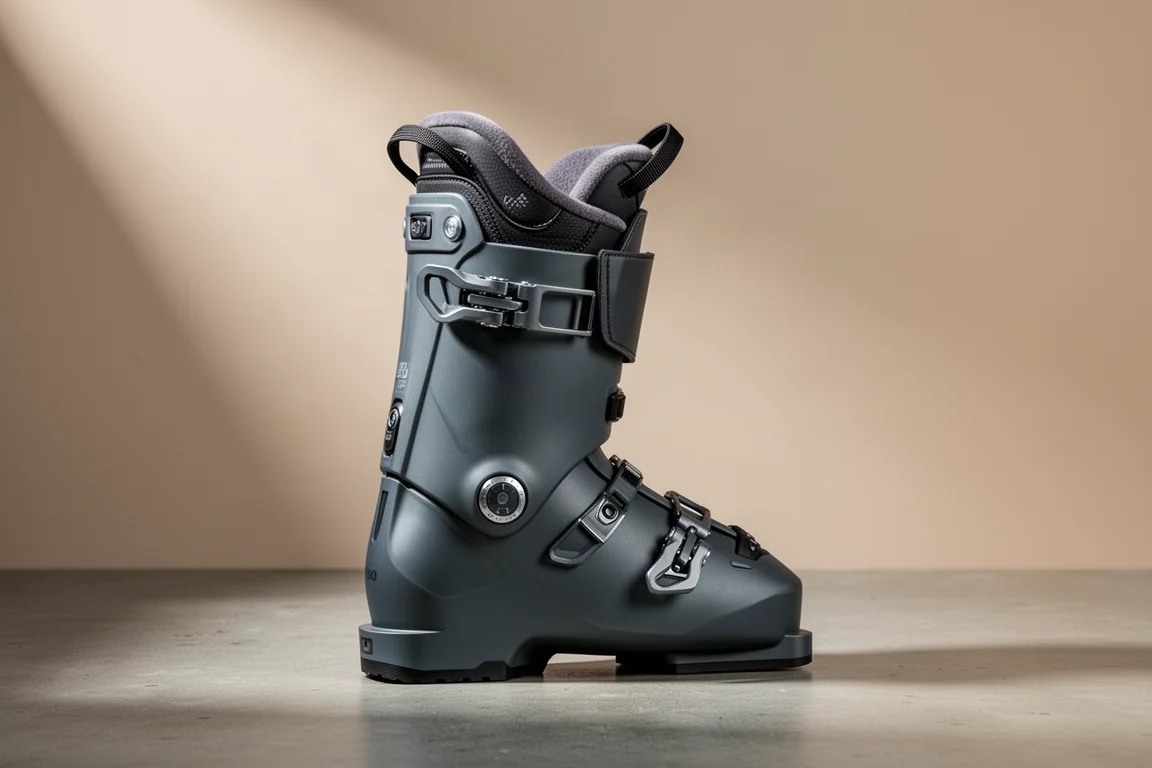
A close look at the Nordica HF 110, a 110 flex rear entry ski boot with a hinged heat moldable cork liner and a single latch closure.
Introduction
The Nordica HF 110 is a 110 flex rear entry ski boot, and it approaches a much-maligned category with more engineering than most skiers would expect. Rear entry boots have a long history, and that history is part of the reason many skiers avoid them. Nordica’s version is aimed at a different kind of buyer: someone who is finished with four buckle boots, or who simply wants a comfortable, simple boot that is easy to step into and easy to live with.
The premise is easy to follow. A rear entry shell gives up some of the precision and flex control of a four buckle overlap design, and in exchange it opens wide, accepts the foot in one motion, and closes with a single latch. For skiers whose priority is getting out on the hill and having fun rather than fighting with buckles in a cold parking lot, that is a reasonable trade.
Who the Nordica HF 110 Is For
This boot suits two broad groups. The first is skiers who are simply done with four buckle boots and want something easier to put on and take off. The second is skiers who value comfort and simplicity over maximum performance, whether that comes from nostalgia for rear entry designs or from a practical preference for fewer moving parts.
It is not aimed at skiers chasing world cup level performance. The HF 110 is built around convenience and a comfortable, forgiving fit, and that is the frame in which it should be judged. Skiers who measure a boot by how precisely it transmits power to the ski are looking at a different category entirely.
Main Strengths: The Liner Rethink
The liner is where the design work really shows. Rear entry liners traditionally came as a separate front piece and back piece, which made them awkward to handle and harder to fit well. The HF 110 uses a proper single liner with heat moldable cork, similar in approach to the liners Nordica uses in its higher-performance boots. Even at a 110 flex, it gets a stiff plastic tongue.
To make that liner work inside a rear entry shell, Nordica cut it and stitched additional material into the seam so the liner hinges. That hinge is what allows the boot to open the way it does, and it is a genuinely neat piece of engineering that separates this design from rear entry boots of the past.
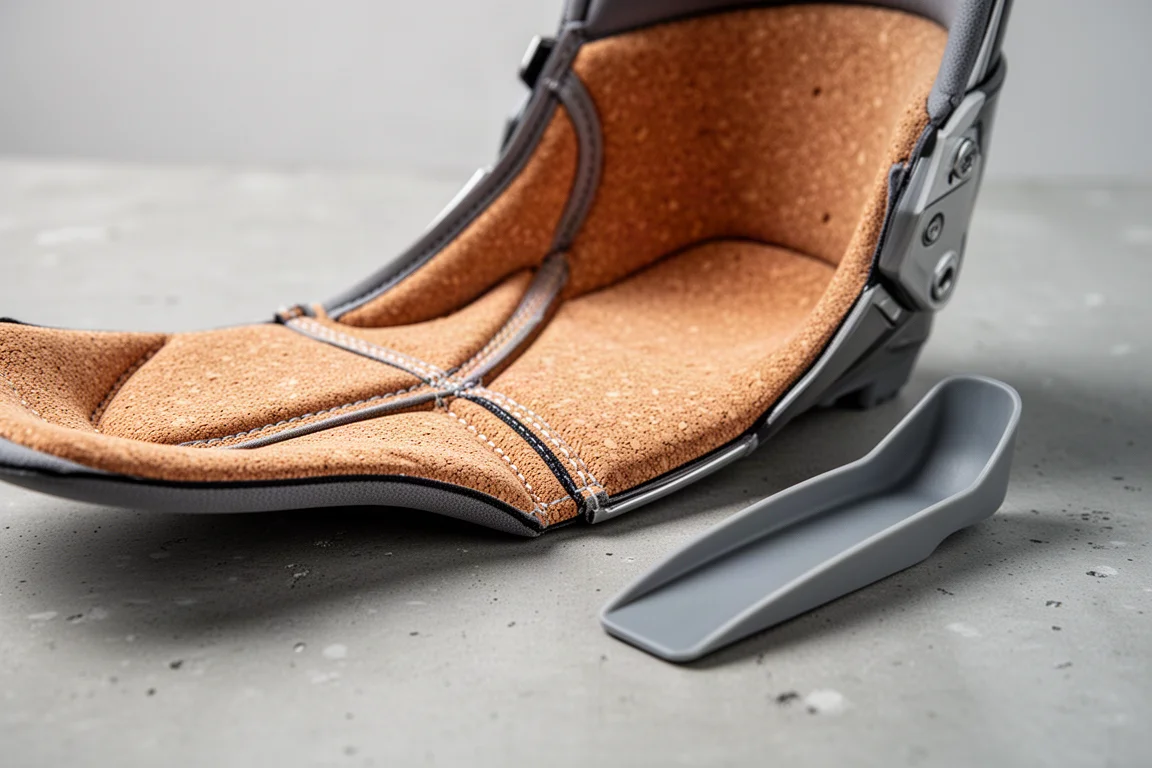
In practice, the combination matters more than any single part. A heat moldable cork liner and a stiff tongue give the boot a more substantial feel than the rear entry label might suggest, while the hinged construction preserves the convenience that defines the category.
Shell Design and the Single Latch Closure
The shell keeps the classic rear entry layout. A single latch at the back can be tightened or loosened with a small dial, and an instep buckle lets you fine tune the fit across the top of the foot. Two adjustment points instead of four make the boot quicker to manage, but they also mean less precision.
That is the honest trade-off of the design. Skiers who are used to dialing in a four buckle boot will notice the difference in flex control, while skiers who want to put their boots on and go will notice how little there is to think about.
Comfort and Convenience in Real Use
The core experience is simple: step in, use your foot to press the latch down, and ski. There is no sequence of buckles to work through and no need to lean hard into a stiff shell to get your foot seated properly.
That ease is the reason this platform has found an audience. For a skier who wants a comfortable boot for a full day on the mountain, the benefit shows up in the small moments: the start of the day, the break at lunch, and the end of the day when cold hands make buckles harder than they should be.
Things to Consider Before Buying
A few honest limitations are worth weighing before you commit.
- Performance ceiling. The HF 110 does not deliver world cup level performance, and it will not match the response of a high-end four buckle boot.
- Precision. Flex and fit adjustment are coarser than on a four buckle design, because the shell relies on one latch and one instep buckle.
- Fit philosophy. This is a comfort-first boot, so it rewards skiers who want an easy, forgiving fit rather than a race-tight shell.
- Category fit. Rear entry remains a niche choice, and skiers who want maximum edge-to-edge control will likely prefer a traditional overlap boot.
Buying Advice
Buy the HF 110 if your priority is comfort and convenience. Skiers who dread the boot-up ritual, who have trouble with stiff overlap shells, or who simply want a simpler setup will get the most from it. Skiers who want the sharpest possible power transfer to the ski should look at a four buckle design instead.
The platform has continued to develop rather than fade away, and the reception of the previous version suggests Nordica sees a future in this approach. If the description above matches the way you ski, this is a boot worth trying on before you commit.
Conclusion
The Nordica HF 110 takes the rear entry idea and gives it real engineering: a heat moldable cork liner with a stiff tongue, a hinge that lets the liner fold open, and a shell that closes with one latch and one instep buckle. It is not a performance boot, and it does not pretend to be. What it offers is a comfortable, simple way to get on the hill, and for the right skier that is exactly the point.
Product link
View more details for Nordica HF 110
This product is mentioned in the review. Check the specifications, options, and compatibility before buying.
View more details for Nordica HF 110Further reading
Related Reviews

Ski Boots
2027 Ski Boot Roundup: Six 130-Flex Boots Worth Knowing
Six 130-flex ski boots for 2027, plus a low-volume liner upgrade, compared on weight, fit, flex feel, and ease of use.

Ski Boots
Armada AR One Ski Boot Review: A Three-Piece Cabrio That Finally Gets It Right
Armada's first ski boot blends three-piece Cabrio design with Atomic engineering, a heat-moldable shell, and a 100mm last that fits better than any Cabrio before it.

Ski Boots
Armada AR1 Ski Boot Review: A Cabrio and Overlap Hybrid for Park and Freeride Skiers
Armada's first ski boot pairs a three-piece cabrio shell with overlap-style buckles and a cable-driven slingshot buckle. Here is where it shines, and what to weigh before buying.