Backpacking Chairs
No Matter Products Chair Review: An 8-Ounce Backpacking Chair That Packs Small
A close look at a carbon fiber sling chair that weighs about half a pound fully packaged, how it feels under load, and who should consider carrying it.
Introduction
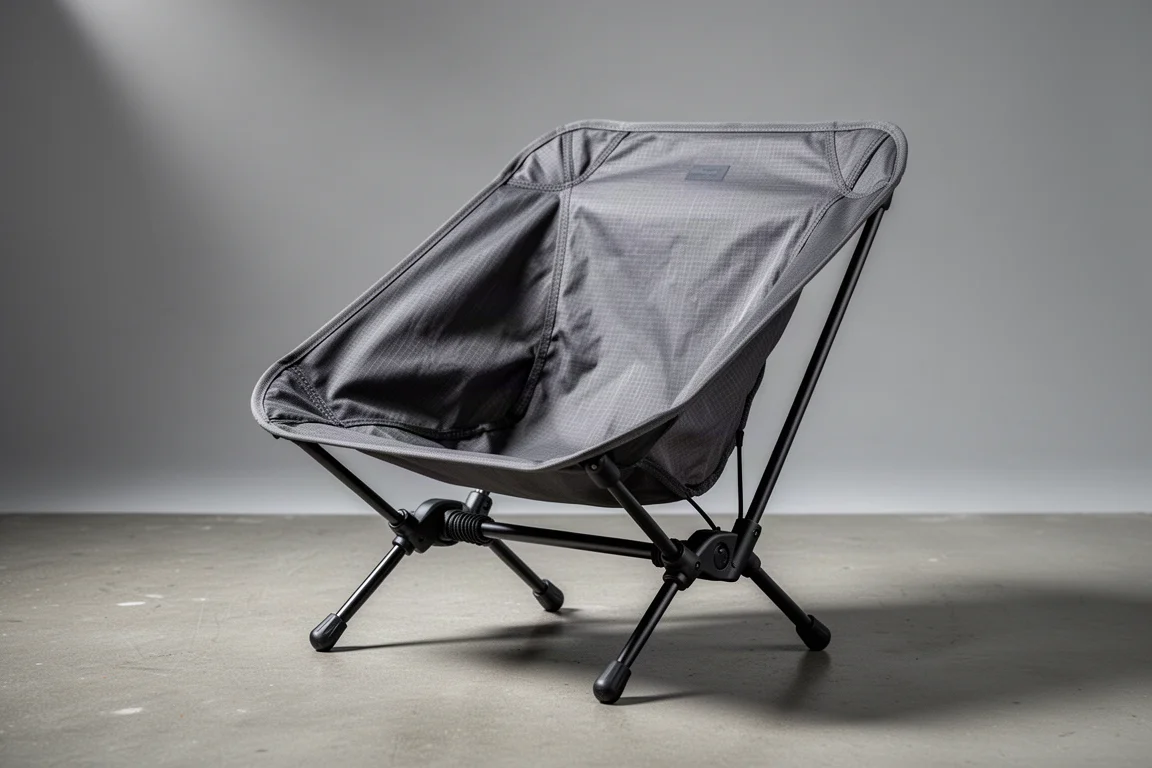
There is a stubborn trade-off in backpacking furniture. A chair that lifts you off the ground costs weight, and a chair that weighs almost nothing leaves you sitting on it. No Matter Products, a small one-man operation based in Madison, Wisconsin, has built its entire pitch around the second half of that trade-off. Its chair uses carbon fiber poles and coated ripstop nylon in a low sling design, and the maker measures it at about 8 ounces, or half a pound, fully packaged in its stuff sack.
The maker describes it as the lightest chair on the market and sums up the idea in a single line: the lightest way to take a load off. That is a specific claim in a category where the long-standing benchmark has been a low-slung chair weighing closer to 18 ounces fully packaged, so the gap here is not marginal.
This review covers what the 8-ounce figure actually buys you: how the chair assembles, how it behaves under load, where it fits on a trip, and what you give up in exchange for the number on the scale.

Everything below is based on the chair as it is currently sold, including its sale price of $89.95 and the fact that it is a ground-level design rather than an off-ground chair with legs and a seat frame.
Who This Chair Is For
This chair is aimed at backpackers who count grams and who have already made peace with sitting on the ground. If your usual camp routine is throwing a pack against a tree and leaning back on it, or dropping a folded sit pad on a rock, this is the upgrade path the design is built around. It adds roughly half a pound to your load and returns a backrest.
It also suits hikers who want a rest stop on a long day without unpacking anything complicated. The chair assembles in the same tent-pole manner as a modern lightweight shelter, and it packs small enough to disappear into a side pocket or strap onto the outside of a pack.
It is a poor fit for campers who want height, armrests, cup holders, or cushioning. There is no padding here, no seat frame, and no lounging position. Anyone shopping for a conventional folding camp chair should look elsewhere.
Main Strengths: Weight and Packability
The headline number is real and easy to understand: about 8 ounces fully packaged, stuff sack included. In practice that means the chair competes with items most backpackers already carry rather than with other chairs. It is the kind of weight you stop noticing after the first mile.
Packed down, the chair is roughly the size of a snack can. The frame is built from carbon fiber poles with elastic shock cords, so assembly follows the familiar logic of a lightweight tent: the cords hold the sections together, and a couple of poles need to be joined by hand. The fabric is polyurethane-coated ripstop nylon, and the stuff sack has a buckle built into it, which means it can be worn as a fanny pack or slung across the body on the walk into camp.
For context, the maker measures the long-standing benchmark in this category, the Helinox Chair Zero, at around 18 ounces fully packaged, with a price in the region of $180. That comparison is the whole point of this design.
The weight saving comes almost entirely from the carbon fiber. The maker estimates the carbon poles account for roughly 4 ounces of the total, and notes that an aluminium version would need thicker tubing, adding around 50 percent to the overall weight while cutting the cost by roughly half. That version does not exist yet.
Main Strengths: Comfort and Back Support
The seat is a sling, but the back is a full panel of fabric rather than a pair of webbing straps. That detail is deliberate. Under load the poles go into compression, the fabric pulls against the back panel, and the whole structure tightens. The result is a chair that feels noticeably more solid once you are sitting in it than it does when it is standing empty.
Leaning back is where this design earns its place. Because the back panel takes the load across its full width, you can put your weight backward and feel supported rather than tipped. It reads more like leaning into a chair than perching on a stool.
Side to side, there is some sway. The frame has a little lateral give, which is the honest trade-off for a structure this light and this low. It firms up when loaded, but it is not a chair for napping or for shifting around restlessly.
The coated nylon also means damp ground is less of a problem. The polyurethane coating keeps moisture from soaking straight through, so a wet pitch does not automatically mean a wet seat.
Setup and Real-World Use
Assembly is quick once you know the sequence. The shock-corded poles slot together, the cross section is held in place by a short tensioner cord, and the fabric goes over the frame. That tensioner is worth understanding: it keeps the central junction tight, which makes the chair more rigid and less likely to flop or blow over in the wind while it is empty.
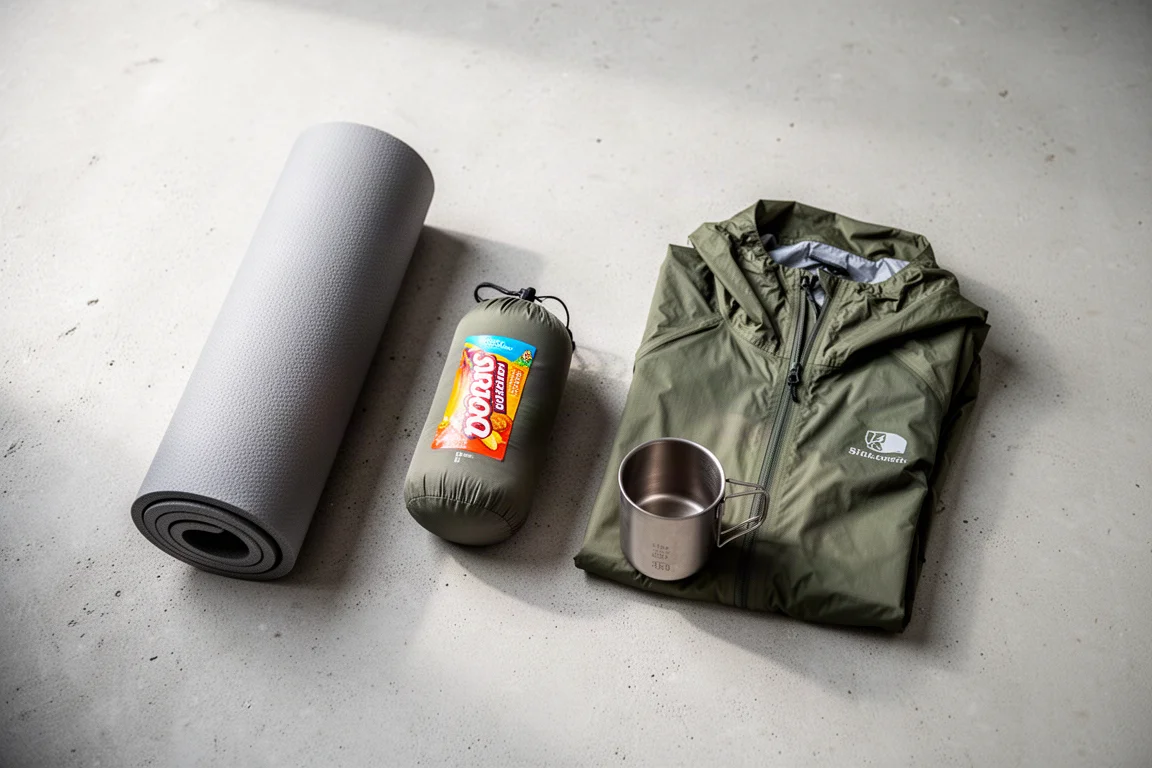
Because the chair sits on the ground, comfort depends partly on what you bring. A folded sit pad or a section of sleeping pad under the seat adds insulation and softness, and the maker frames the chair as a way to turn whatever padding you already carry into a proper seat.
Capacity is not the concern you might expect from a chair this light. The maker reports having put a 300-pound sitter in it without issue.

In use, the honest summary is that this is a seat and a backrest, not a lounge. You sit low, you lean back, and you get up easily because there is nothing to climb out of. That simplicity is exactly what makes it work at this weight.
Things to Consider Before Buying
The first consideration is the obvious one: this is an on-ground chair. There is no seat height, no padding, and no armrests. If sitting at ground level is uncomfortable for you, no weight saving will fix that.
The second is stability. There is a small amount of lateral sway in the frame. It is not unstable under load, but it is not the rigid, planted feel of a heavier chair with a wider base.
The third is price. At $89.95 on sale, the chair costs what it costs because of the carbon fiber. The maker is open about this and expects the price to come down as production scales, and has described a possible aluminium version that would weigh roughly 50 percent more while costing roughly half as much. That option is not available today.
Finally, availability is worth checking before you commit. This is a one-man operation selling directly rather than a large outdoor brand with wide retail distribution, so stock and lead times can move around.
Buying Advice
Buy this chair if you are a weight-conscious backpacker who wants a backrest at camp and has already accepted ground-level seating. At around half a pound, it is light enough that it barely competes with the rest of your kit, and the back support is genuinely usable rather than decorative.
Skip it if you want a chair that raises you off the ground, cushions you, or lets you stretch out. For that kind of comfort you will carry several pounds and pay accordingly, or you will keep leaning against your pack.
On value, the math is straightforward. The chair undercuts the benchmark in this category by a wide margin while weighing less than half as much, which is a rare combination in ultralight gear. If $89.95 still feels steep, the sensible move is to wait and see whether a heavier, cheaper version eventually arrives, and to put the money toward a good sit pad in the meantime.

Whichever way you go, pair the chair with something to sit on. A thin foam pad or a folded section of sleeping pad makes the biggest difference to how the chair feels over a long evening, and it costs you almost nothing in weight.
Conclusion
The No Matter Products chair does one thing and does it cleanly: it puts a backrest in your pack for about half a pound and roughly the size of a snack can. The carbon fiber frame and coated ripstop fabric keep it light, the full back panel keeps it supportive under load, and the price stays well below the established benchmark in the category.
The compromises are equally clear. You sit on the ground, there is a little sway side to side, and there is no padding unless you bring your own. For backpackers who already travel that way, those are easy terms to accept. For everyone else, a conventional camp chair remains the better answer.
Product link
View more details for No Matter Products Chair
This product is mentioned in the review. Check the specifications, options, and compatibility before buying.
View more details for No Matter Products ChairFurther reading
Related Reviews
Backpacking Chairs
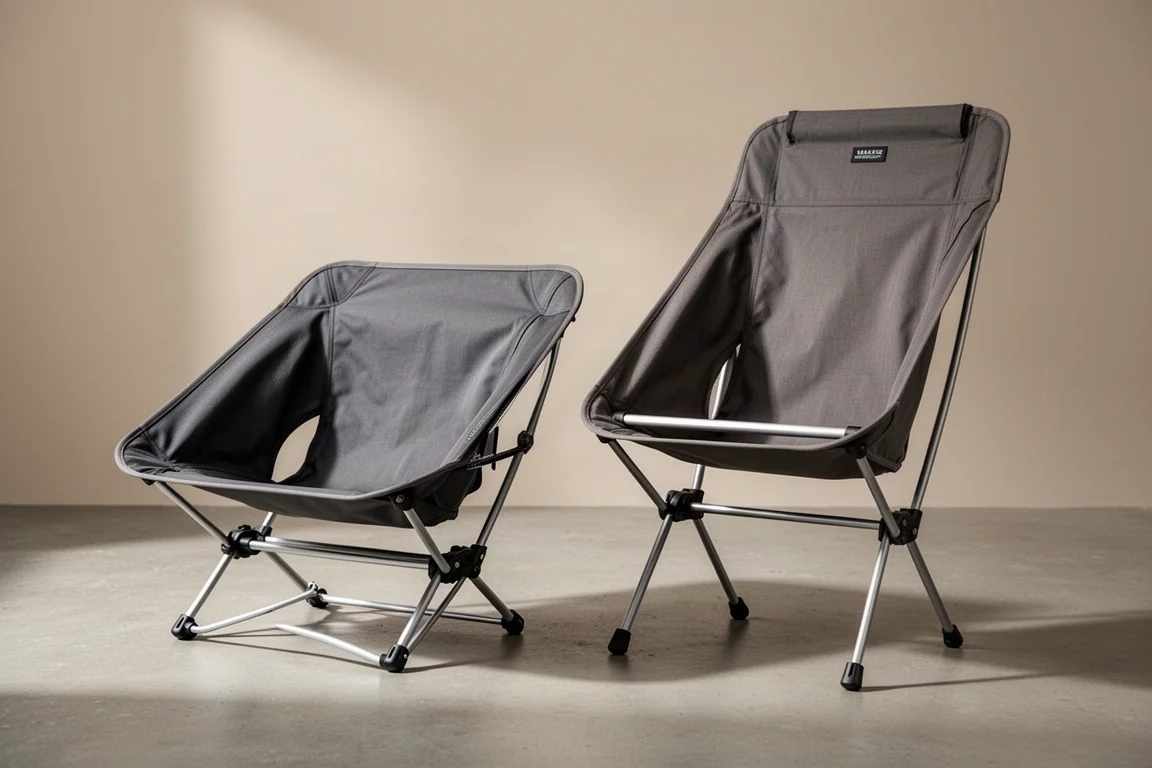
Get Out Gear Trek Chair vs Helinox Chair Zero: Which Backpacking Chair Is Worth the Weight?
A three-way comparison of the Get Out Gear Trek Chair, the Helinox Chair Zero, and the Chair Zero High-Back, covering weight, comfort, setup, durability, and value.
Backpacking Chairs
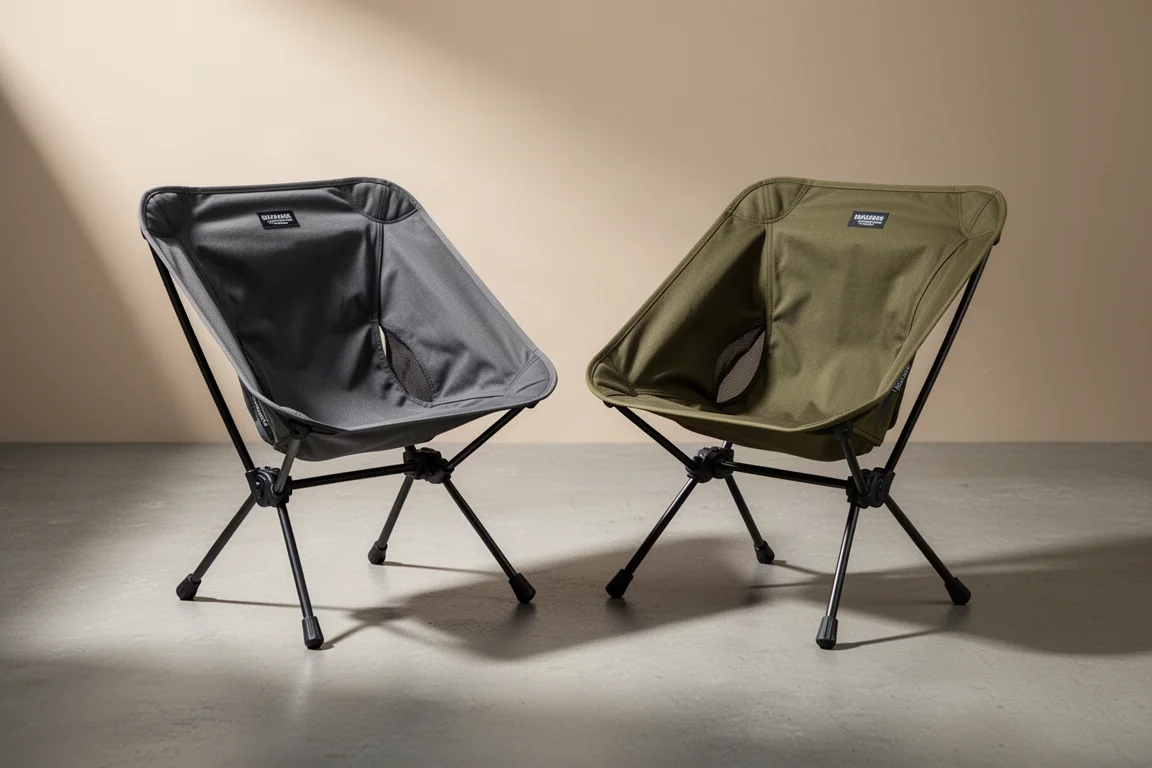
Helinox Chair vs REI Co-op Flexlite Air Chair: Two Lightweight Backpacking Chairs Compared
Two one-pound backpacking chairs share the same aluminum frame material, but they differ in seating posture, upfront price, and how much the replacement seat fabric costs.
Backpacking Chairs
Best Backpacking Chairs Compared: Five Ultralight Options From Budget to Premium
A practical comparison of five folding ultralight backpacking chairs, from a $50 budget lounger to a $180 feature-rich option, with clear comfort, weight, and price trade-offs.