Camping Lanterns
Night Eyes 300 RL and 314 Lantern Review: Two Rechargeable Camping Lanterns Compared
A practical look at the Night Eyes 300 RL and 314 rechargeable lanterns, covering light modes, runtime, power bank use, and the durability questions worth weighing before buying.
Introduction
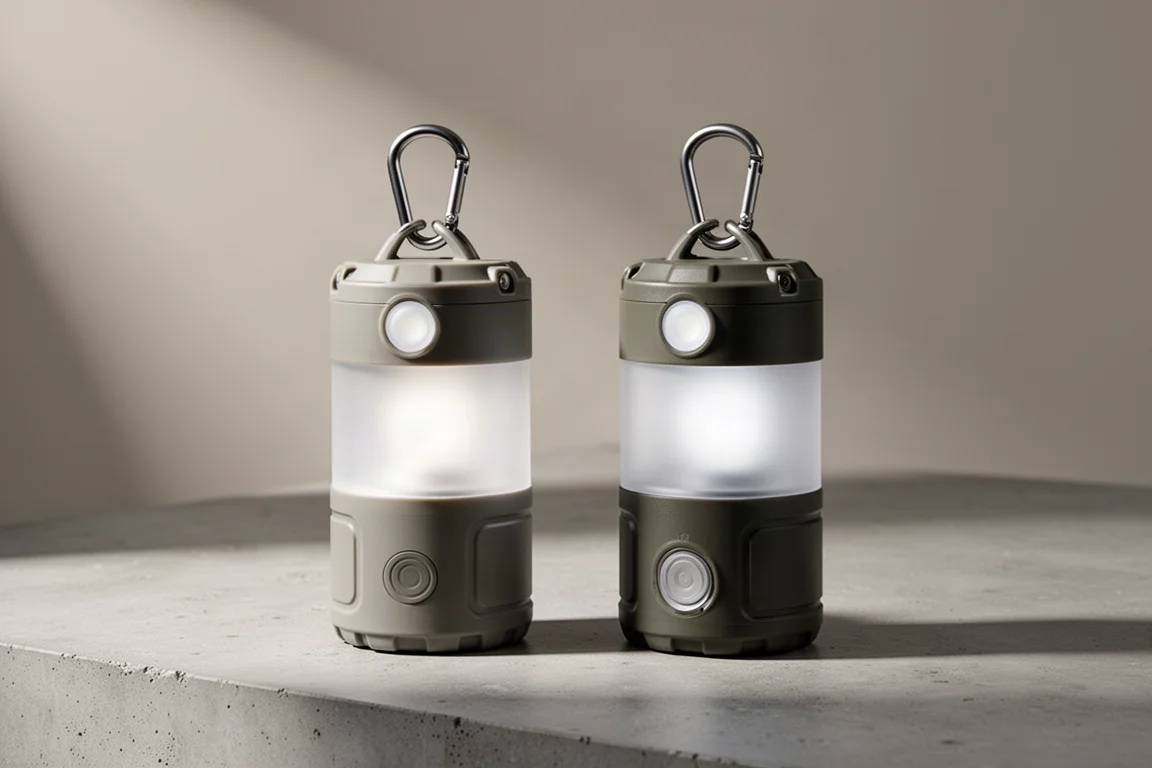
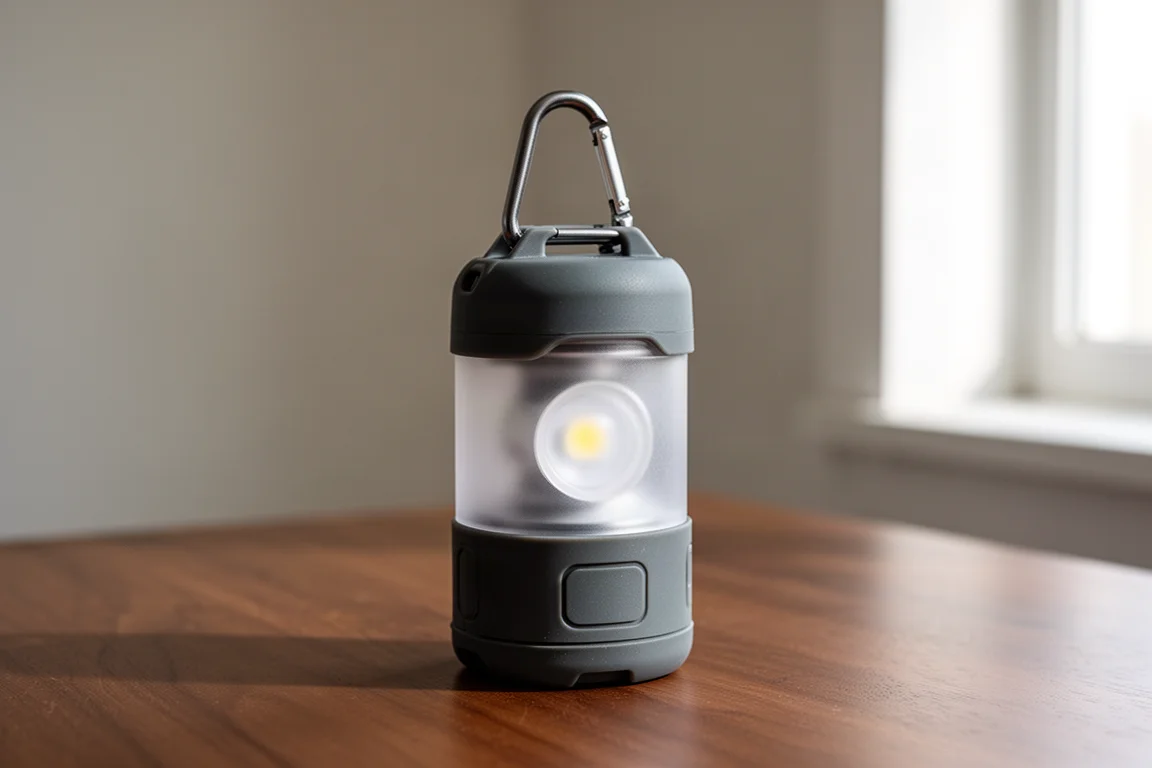
Rechargeable lanterns sit in a useful middle ground between a hand torch and a full campsite light. The Night Eyes 300 RL and its newer sibling, the Night Eyes 314, are both built around that idea: a compact hard plastic body, a single white LED in the centre ringed by six red LEDs, and a battery that can top up a phone in a pinch.
Both models share most of their hardware, so the choice between them comes down to a small set of differences. The 314 adds a lockout mode and slightly more output, while the 300 RL is the older version, still widely available and a little cheaper.
Shared Design and Controls
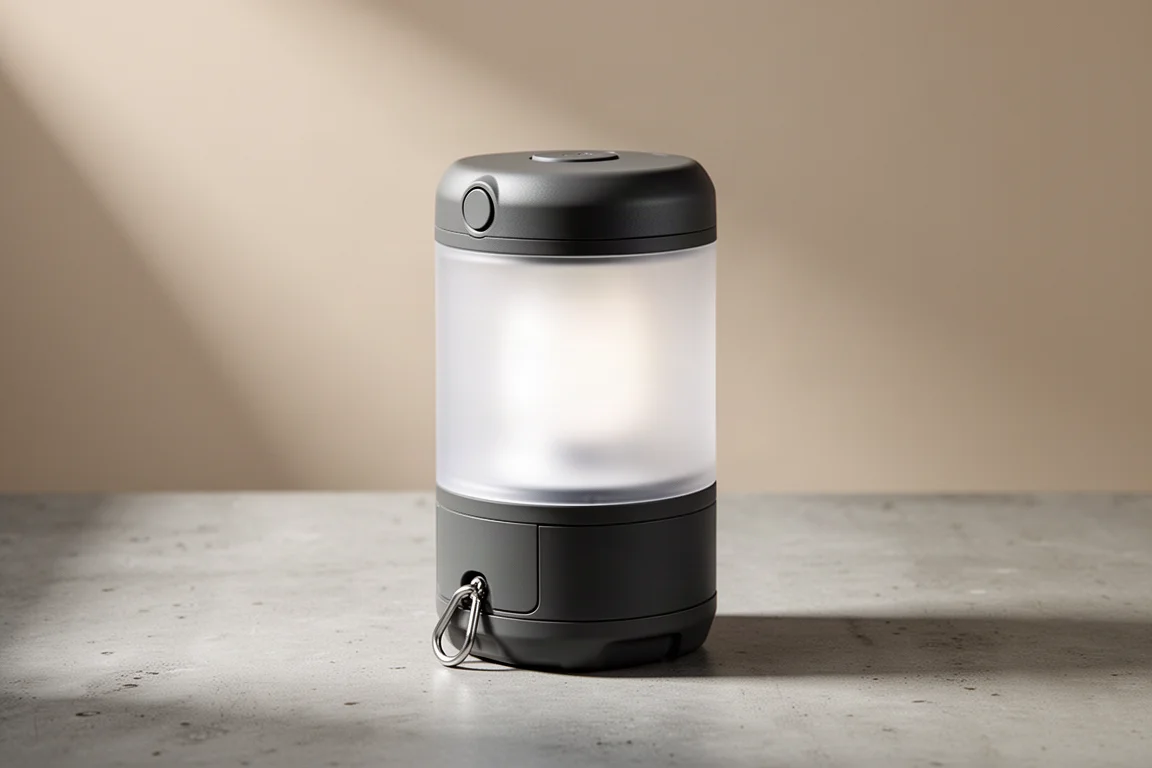
Both lanterns use the same physical formula. The body is hard plastic with a slightly rubberised look, standing 7.9 inches tall and roughly 3.8 inches wide, and weighing 11.9 ounces. A stiff-spring carabiner at the top makes it easy to hang from a tent loop or a pack strap. Around the top there is a reflector and a plastic shield that wraps the full circumference, which helps spread the light rather than firing it in a single direction.
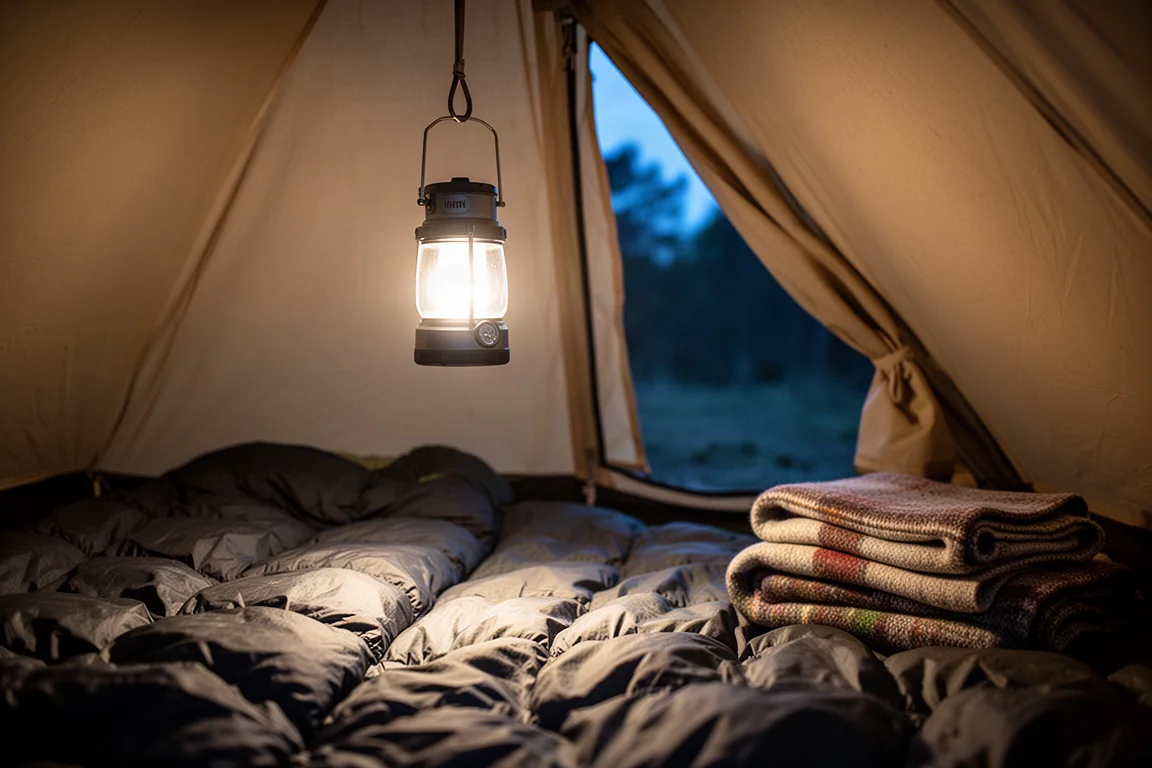
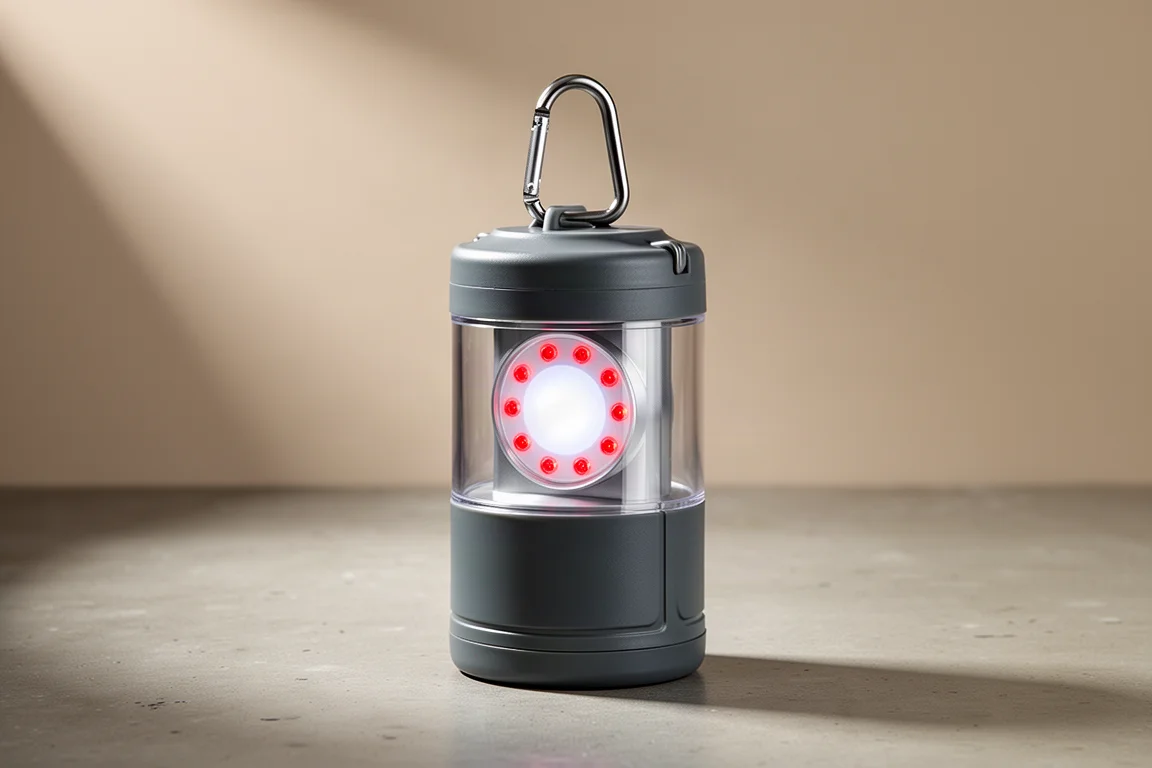
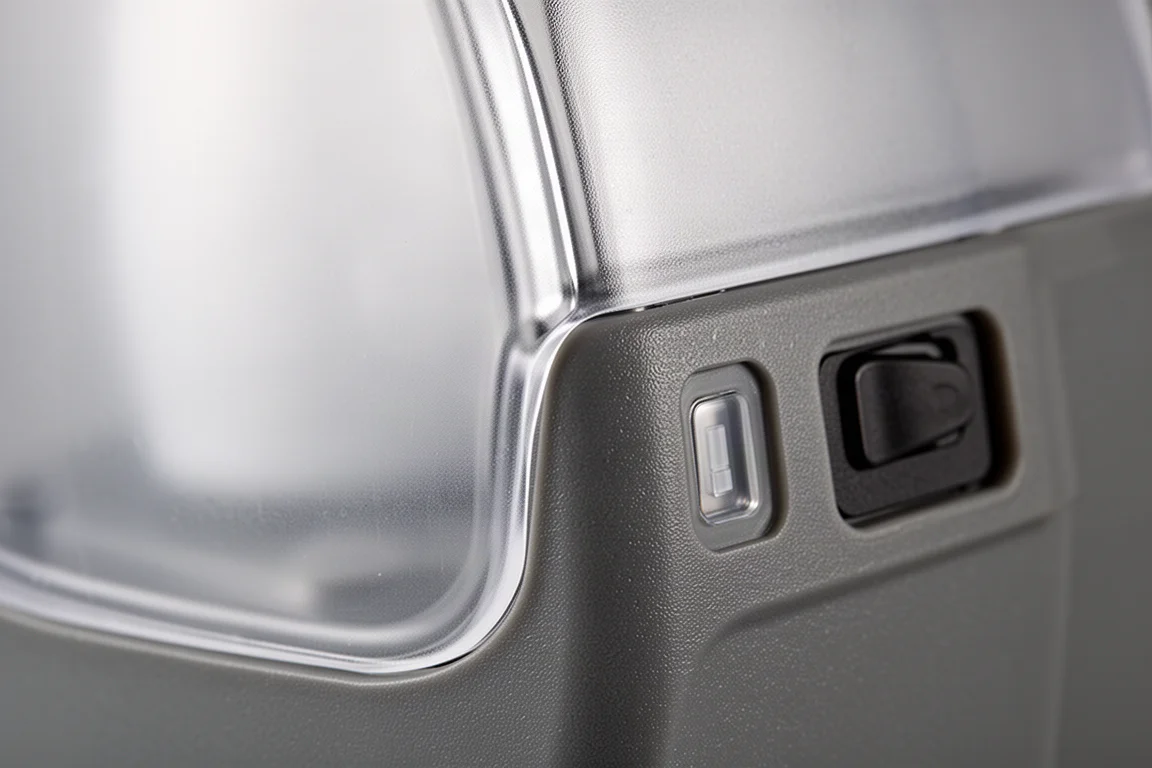
Inside, one white LED sits at the centre with six red LEDs around it. A single button on the lower body runs everything: a quick tap switches the white light on and cycles through the output levels, and a press and hold brings up the red LEDs. Both lanterns ship with a micro USB charging cable and a white carry bag that doubles as a diffuser, and both run on a 2600 mAh lithium polymer battery.
Night Eyes 300 RL: Light Output, Modes, and Runtime
The 300 RL delivers 300 lumens on high with a five hour runtime from a full charge. Medium drops to 75 lumens and stretches to 20 hours, while low runs 15 lumens for a claimed 110 hours. The red mode is rated at 18 lumens for 27 hours. For a lantern this size, the high setting puts out a genuinely useful pool of light, and the lower levels stay usable rather than fading into a token glow.
The 300 RL does not have a lockout, and that is the one control gap worth flagging. Inside a packed bag the button can be knocked, and the lantern can quietly run for hours. It does not get hot, but the battery drains.
Charging from empty takes about three and a half hours over micro USB, which is reasonable for a battery of this size. A power indicator beside the port turns red when roughly two hours of high-mode runtime remain. The lantern is IPX4 rated for splashing and impact resistant to three feet.
Night Eyes 300 RL: Power Bank Use and Everyday Handling
The full-size USB port turns the lantern into a small power bank. The caveat is capacity: 2600 mAh will not fully recharge most phones. Expect something in the region of half to three quarters of a phone charge depending on the model. That is enough for an emergency top-up, not enough to plan a trip around as a primary power source.
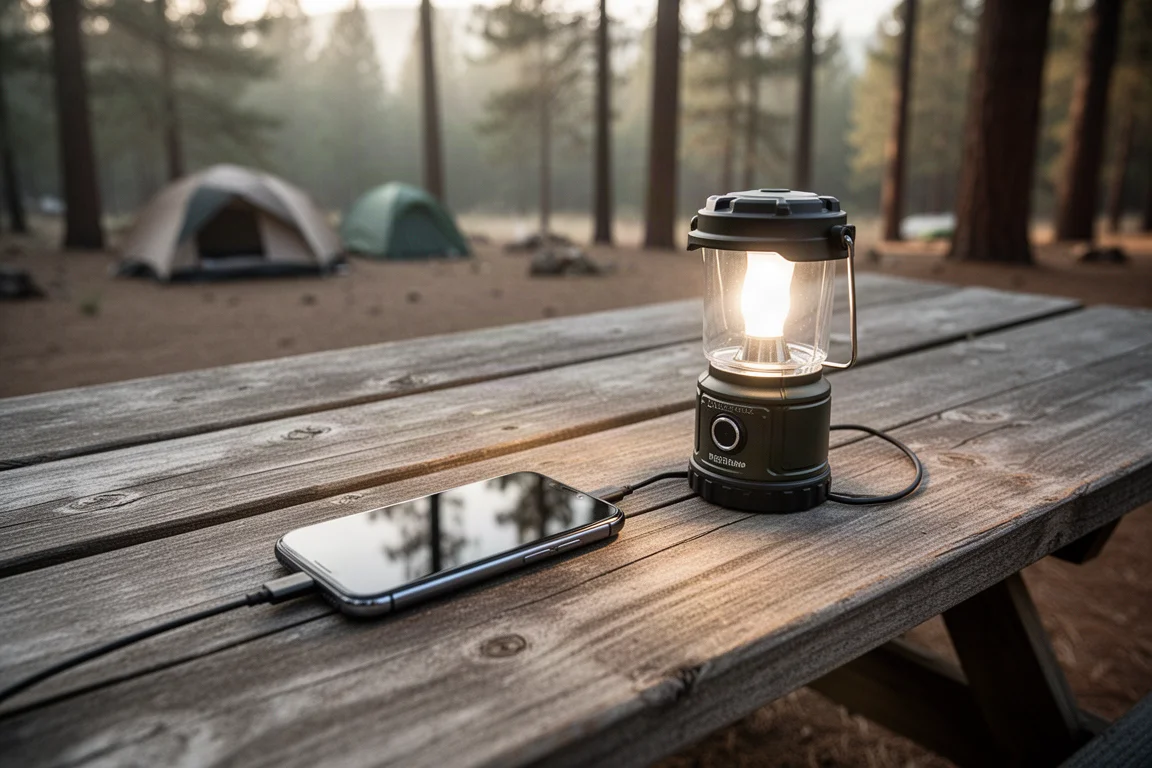
In everyday use the lantern is straightforward. The red mode is pleasant for winding down in a tent in the evening, a gentler way to transition toward sleep than the white LED. The diffuser bag is optional in practice, since dropping to a lower output level achieves a similar softening effect for most situations.
Night Eyes 314: What Changes in the Newer Model
The 314 is almost identical to the 300 RL. Output rises to 314 lumens, and the headline addition is a lockout mode that stops the button being pressed in transit, which addresses the 300 RL’s most irritating trait. The price moves from around $40 to around $45, and the 314 is positioned as the current version of the design.
Everything else carries over: the same 2600 mAh battery, the same micro USB charging, the same USB output for charging other devices, the same 7.9 by 3.8 inch footprint, the same hard plastic body, and the same red LED array around a central white LED.
Build Quality and Durability: The Main Question Mark
This is where the Night Eyes lanterns need the closest look. The body is impact resistant to three feet and IPX4 rated against splashing, but the internal plastic reflector is a weak point. On a unit that has been well cared for and never dropped, that reflector can develop cracks over time, which raises reasonable questions about how the assembly holds up across years of use.
Durability complaints about these lanterns are also common enough to be a genuine consideration. Reported failures include LEDs going out, batteries losing capacity or dying altogether, and the top section breaking off. Those reports cover both the 300 RL and the 314. The battery is sealed inside the housing, so once it fails the lantern cannot be brought back with a simple swap.
Price, Value, and Alternatives
At around $40 for the 300 RL and around $45 for the 314, both lanterns sit above the cheapest rechargeable options on the market. Comparable lanterns can be found for roughly $20 or less, so the Night Eyes models are priced on the higher side for what they are.
There is also a 400 lumen version in the range, but it is a different product: it is not rechargeable and it does not include batteries, so it is not a direct substitute. The same lantern design also appears under other brand names, including a version that matches the 300 model but sells for more, around $50. If you come across that one, there is little reason to pay the premium for the same hardware.
Availability is worth a thought as well. The 314 is the current version, and the 300 RL may be discontinued, so the older model could become harder to find over the next year or two.
Overall Buying Advice
If you want a compact rechargeable lantern with a white mode, a red mode, and a bit of emergency power bank capability, both Night Eyes models cover the brief. The 314 is the better buy of the two when the price gap is small, purely because the lockout mode removes the accidental drain problem and output is marginally higher. The 300 RL still makes sense if you find it discounted.

Go in with realistic expectations about capacity and durability. The 2600 mAh battery will not keep a phone alive for days, and the long-term reliability record is mixed. Treated as a well-featured tent and campsite lantern that occasionally charges a phone, rather than a rugged expedition light or a serious power bank, it does its job well. Checking the returns policy before ordering is a sensible step given the volume of durability reports.
Conclusion
Both lanterns are simple, easy to operate, and pleasant to live with: one button, three white output levels, and a red mode for the end of the evening. The light output is strong on high, the lower settings run for a very long time, and USB charging keeps things convenient.
The 314 is the version to pick if you are buying new, mainly for the lockout. The 300 RL remains a solid choice at the right price. In both cases, the durability record is the reason to buy with your eyes open rather than the reason to avoid them entirely.
Further reading
Related Reviews
Camping Lanterns
Barebones Railroad Lantern Review: A Vintage-Style Lantern That Beats Its Own Specs
A detailed look at the Barebones Railroad Lantern, covering measured brightness and runtime, charging behavior, weather resistance, and what to know before buying.
Camping Lanterns
Best Rechargeable LED Camping Lanterns 2026: 12 Lanterns Compared
Twelve rechargeable LED camping lanterns measured for brightness, run time, features, ease of use, durability, and portability, with clear picks for every kind of camper.
Camping Lanterns
BioLite AlpenGlow 500 Review: A Versatile Rechargeable Camping Lantern
A rechargeable camping lantern with thirteen lighting modes, a 6,400 mAh power bank, and long measured runtimes, plus the warranty and safety trade-offs worth weighing first.