Cycling Gear
New Race Bikes and Gravel Gear: Five Standout Products to Consider
A practical look at five new cycling products: two carbon road race bikes, a pair of SPD power meter pedals, a road pedal system built for easy engagement, and a fast gravel race tire.
Introduction
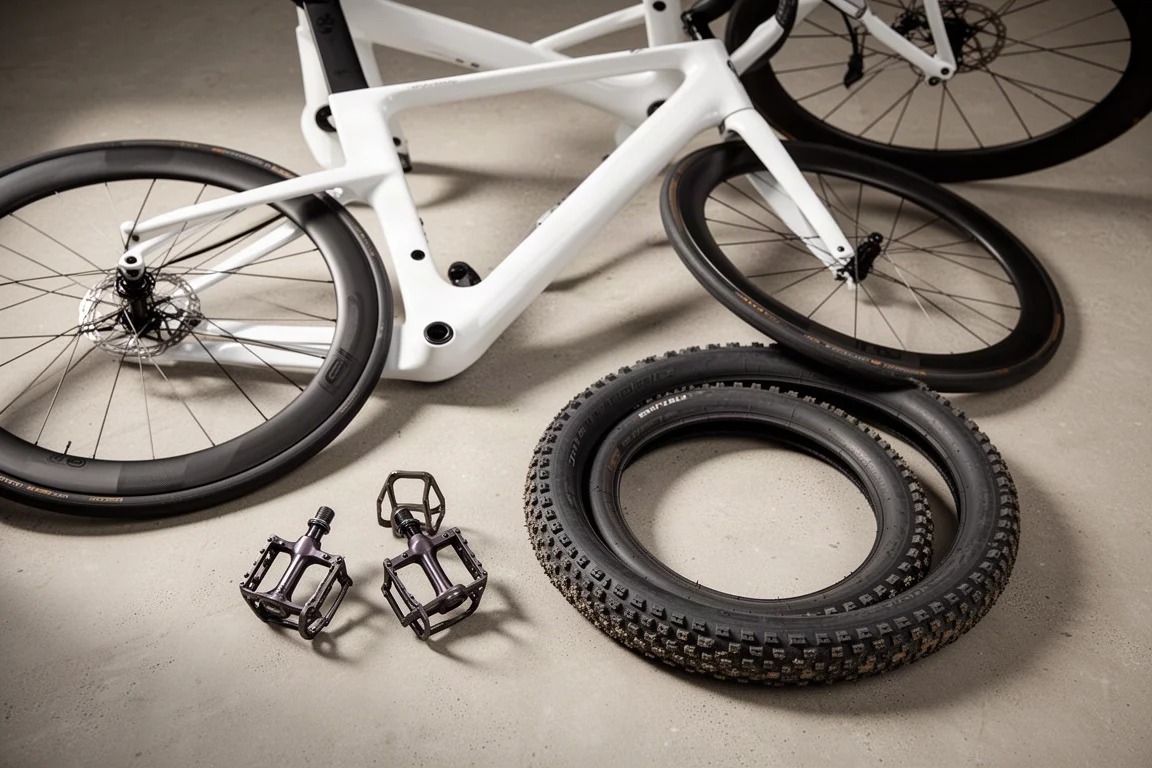
Race bikes and gravel gear tend to arrive in waves, and this season has produced a genuinely varied set of new products. Two carbon road race bikes take very different approaches to price and specification. A pair of SPD-compatible power meter pedals brings dual-sided data to gravel and mountain bikes without an external pod. A road pedal system is built around making clip-in easier. And a long-running gravel tire range has finally been given a full overhaul.
Each of these products has a clear purpose, and understanding who each one is for matters more than comparing headline numbers. What follows is a practical look at what each product offers, where it fits, and what is worth weighing before buying.
Details such as frame weight, cockpit design, battery serviceability and tread pattern all shape how a product feels after the first few months of ownership, so those are the areas covered in each section below.
What to Weigh Before You Buy
For road race bikes, the useful questions are weight, aerodynamics, cockpit design and tire clearance. A frame that is 40 grams heavier rarely changes the experience on its own, but a cockpit that can be adjusted with standard parts is a real advantage for riders who fine-tune their position. Wider tire clearance matters too, since many riders now run 32 mm or more on rough tarmac.
For pedals, look at accuracy claims, battery life, charging standard and whether worn or damaged parts can be replaced. A pedal that can be serviced lasts far longer than one that has to be discarded after a single knock.
For gravel tires, speed and grip pull in opposite directions. A smooth centre section rolls quickly on hardpack and road, while taller shoulder lugs provide the bite needed in mud and loose corners. Installation effort is worth checking as well, particularly on hookless rims.
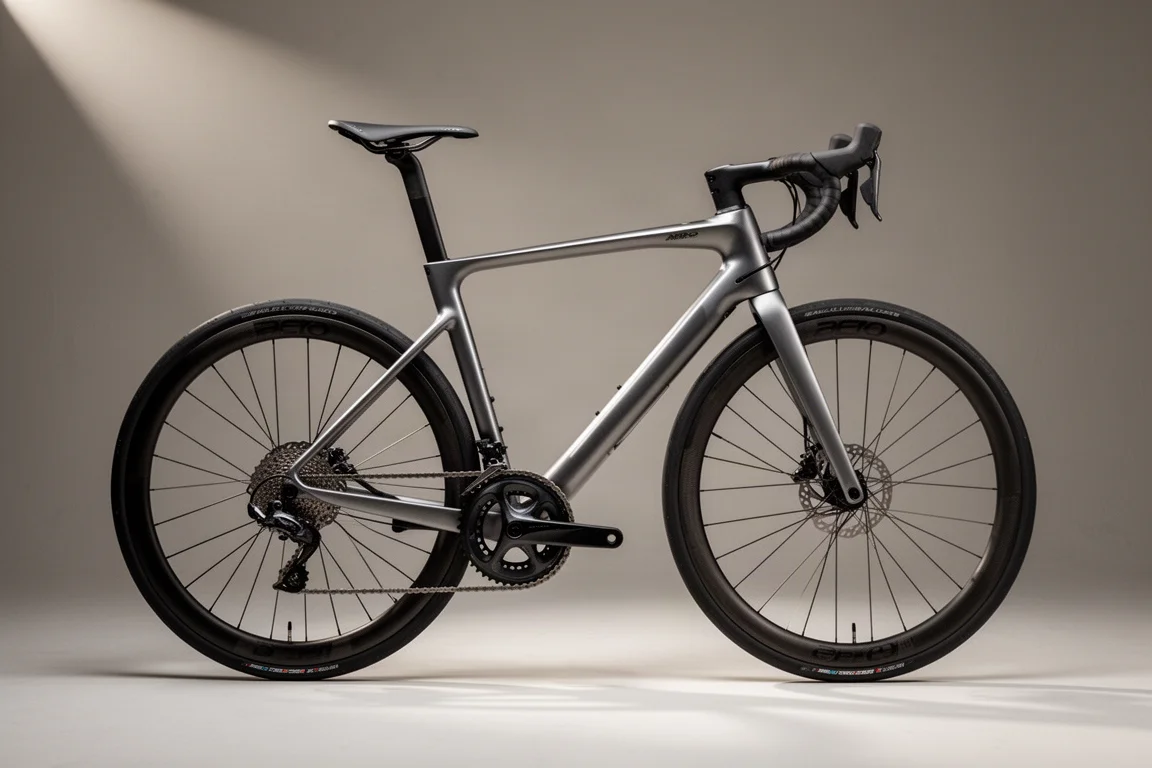
Van Rysel RCR: Aero Race Performance at a Lower Price
The Van Rysel RCR is the brand’s flagship race bike, developed with a university in Lille and launched at the Sea Otter Classic in California. Since then it has become a popular choice, with a sponsored pro team taking wins across the calendar and batches of stock selling out quickly.
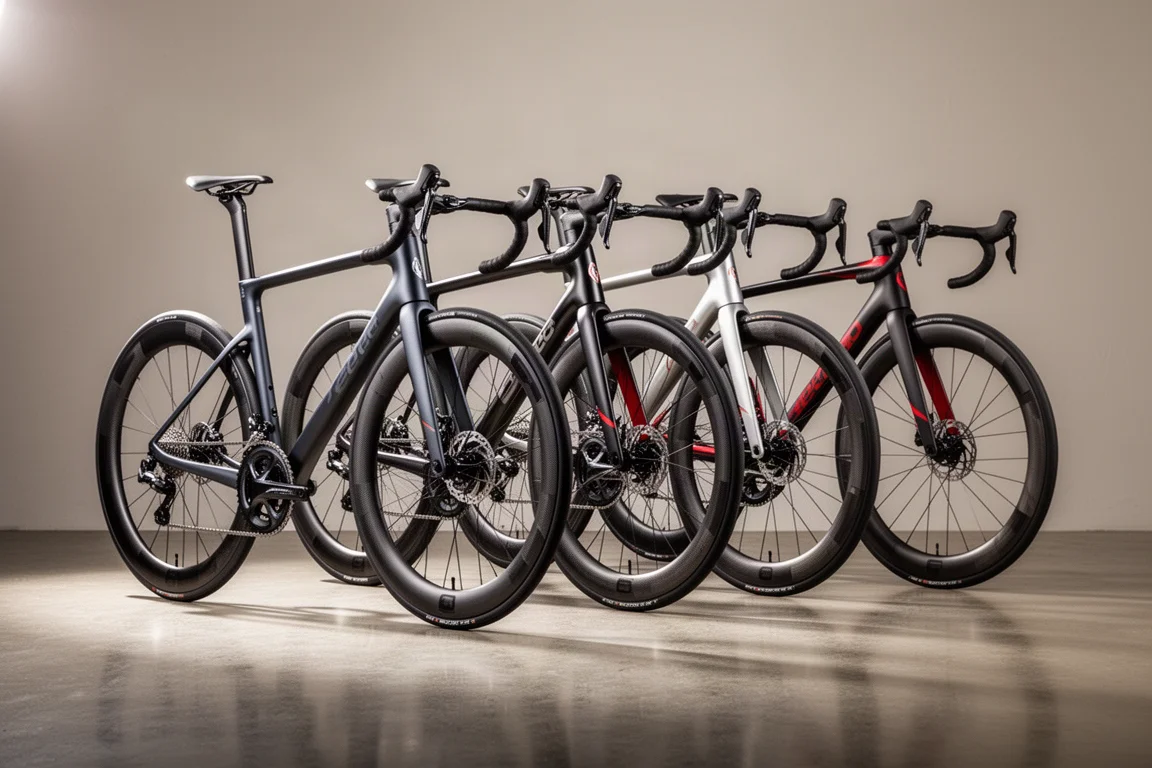
The build covered here is the standard RCR with a SRAM Rival AXS groupset, retailing at £4,500 in the UK. That specification includes a power meter, Zipp 303s carbon wheels with Michelin Power Cup tires, and Deda finishing kit. The frame carries the same aero shapes and features as the Pro level model, with the main difference being the carbon fiber used in construction. The Pro frame is claimed at 790 g, while the standard frame is claimed at 830 g, a gap of 40 g. Complete, the bike weighs 8 kg without pedals.
One detail that suits the target rider is the two-piece handlebar and stem rather than a one-piece carbon aero cockpit. Brake hoses still run under the stem and into the frame, so the front end stays clean, but swapping the stem or bar is far simpler. The bike is available in white or blue, in a wide range of sizes, and stock is currently listed on the brand’s website.
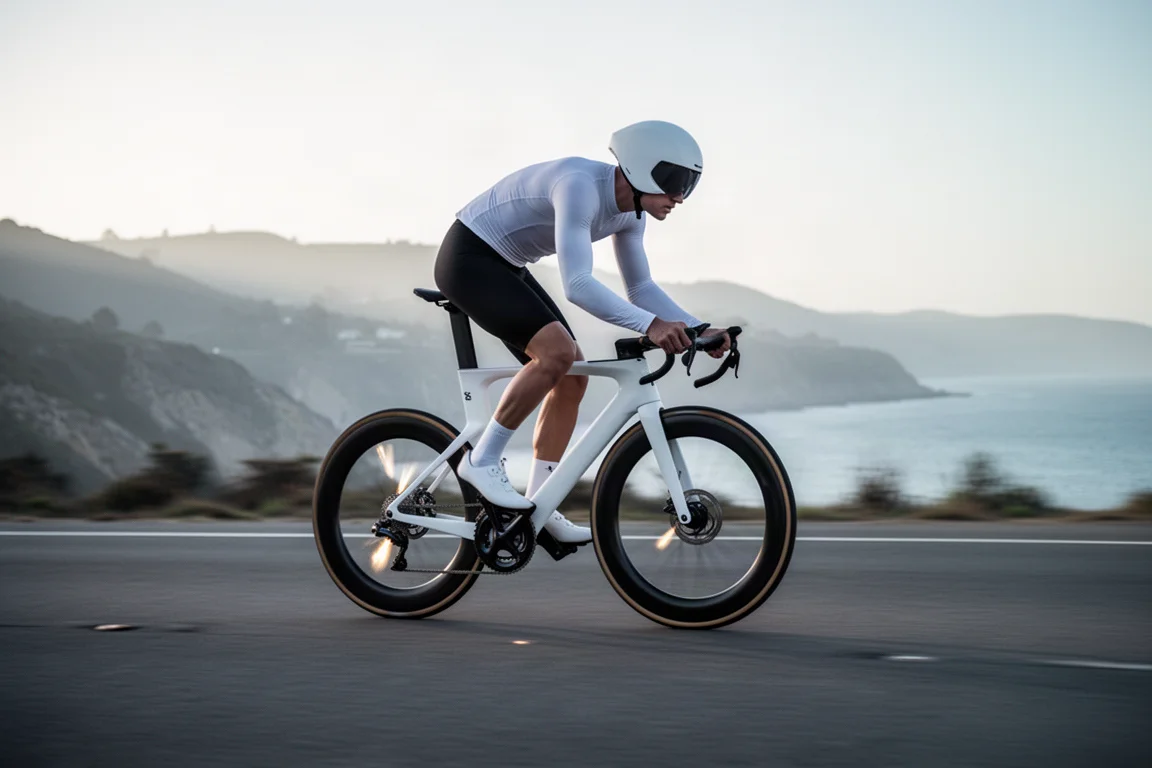
Stiffness and ride feel will differ from the Pro model, though those differences are unlikely to be obvious without riding both back to back. For riders who want aero race geometry and a workable cockpit without paying flagship money, the standard RCR is a sensible starting point.
Ridley Falcon RS: A Lightweight Aero All-Rounder
Ridley is a Belgian brand with a long history, and the Falcon RS is its attempt at a lightweight aero all-rounder in the mold of the Specialized Tarmac SL8. The claim is that it is as light as the brand’s Helium climbing bike while being as aero as the Noah. The frame is claimed at 830 g, which is on par with other top-level carbon race frames.
The build covered here runs an Ultegra Di2 groupset with deep-section DT Swiss wheels and Vittoria Corsa tires, and weighs 7.4 kg. A 105 Di2 version is also available at a lower price. In the UK the Ultegra Di2 build retails at £8,200.
The most distinctive feature is the aero diffuser where the fork crown blends into the frame, a kink in the profile designed to manage airflow from the fork into the frame. Ridley claims this reduces drag by 10 percent compared with a regular fork at 50 km/h. Other useful details include a UDH rear dropout, which keeps the frame compatible with future groupsets, and clearance for 34 mm tires, wider than the 32 mm typical of a race bike. Geometry sits close to the Tarmac SL8, with stack and reach perhaps slightly higher and longer.
Favero Assioma MX-2: SPD Power Meter Pedals Without the Pod
Favero’s new MX-2 pedals bring power measurement to gravel and mountain bikes with Shimano SPD compatibility. The Italian brand’s road pedals place the electronics in an external pod, and the MX-2 removes that entirely by housing everything inside the spindle. The result is a cleaner look and nothing to catch on rocks or trail debris.
Price is a major part of the appeal. The dual-sided version retails at £600 or $760, while a single-sided option is £400 or $500. By comparison, the Garmin Rally XC200 sits at $1,200 or £1,000. The pedals do not feel like a budget product: the aluminium bodies have a solid, reassuring weight, they are fully sealed and rated IP67 against water ingress, and the cage, body and spindle can all be replaced after a crash or a hard knock.
The battery is built into the pedals and cannot be removed, and charging happens through a port on the collar. Claimed battery life is 60 hours, which covers several weeks of riding for most people. Charging uses micro USB rather than USB-C, though a cable is included. The pedals are Shimano SPD compatible and cleats come in the box, so most gravel and mountain bike shoes work straight away.
The power meter is claimed to be 1 percent accurate up to 3,000 watts. Cycling Dynamics data is available through the brand’s own smartphone app, including platform centre offset and power phase, which shows where in the pedal stroke the most power is applied. Seated and standing detection is included as well.
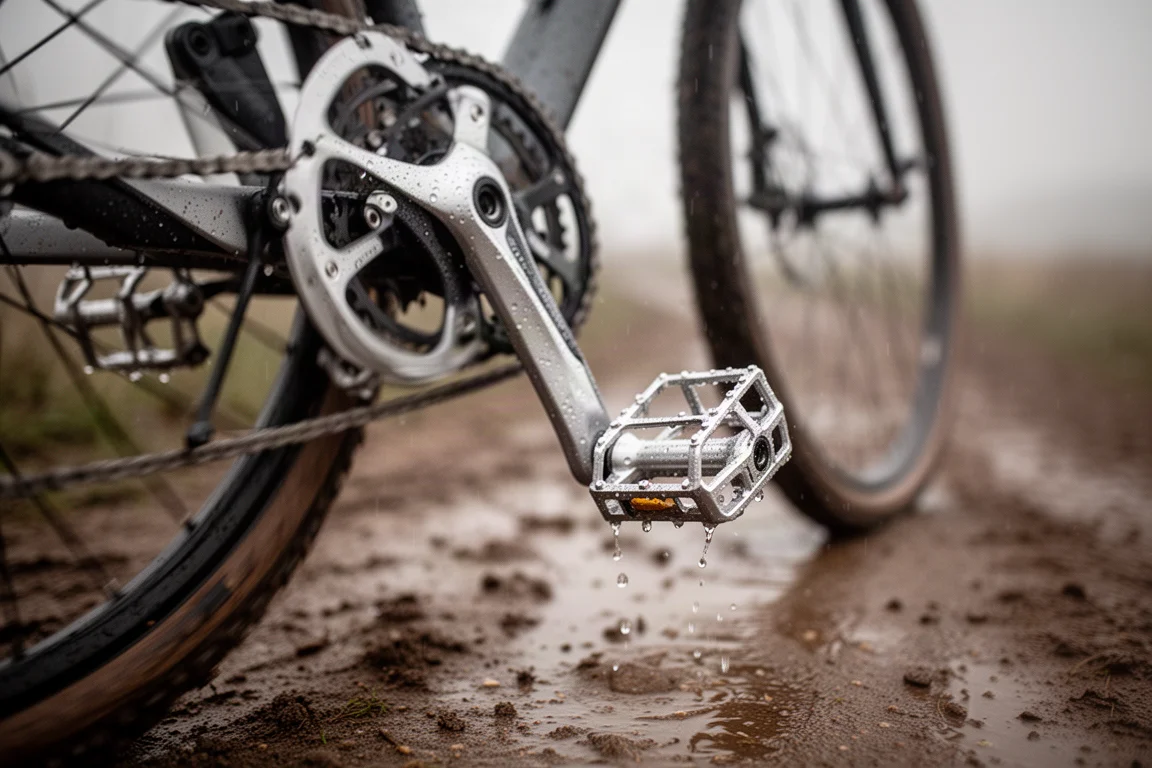
Being able to service and repair a power meter pedal rather than replace it makes a meaningful difference over several seasons, and the absence of a pod is a genuine practical benefit on rough ground.
Time XPRO 12: Road Pedals Built Around Easy Engagement
Time is a French pedal brand that has been owned by SRAM for around three to four years, and this year it launched a refreshed road and mountain lineup. The road range includes five models, with the XPRO 12 sitting just below the range-topping SL. It retails at £300, which places it firmly in the top end of the pedal market.
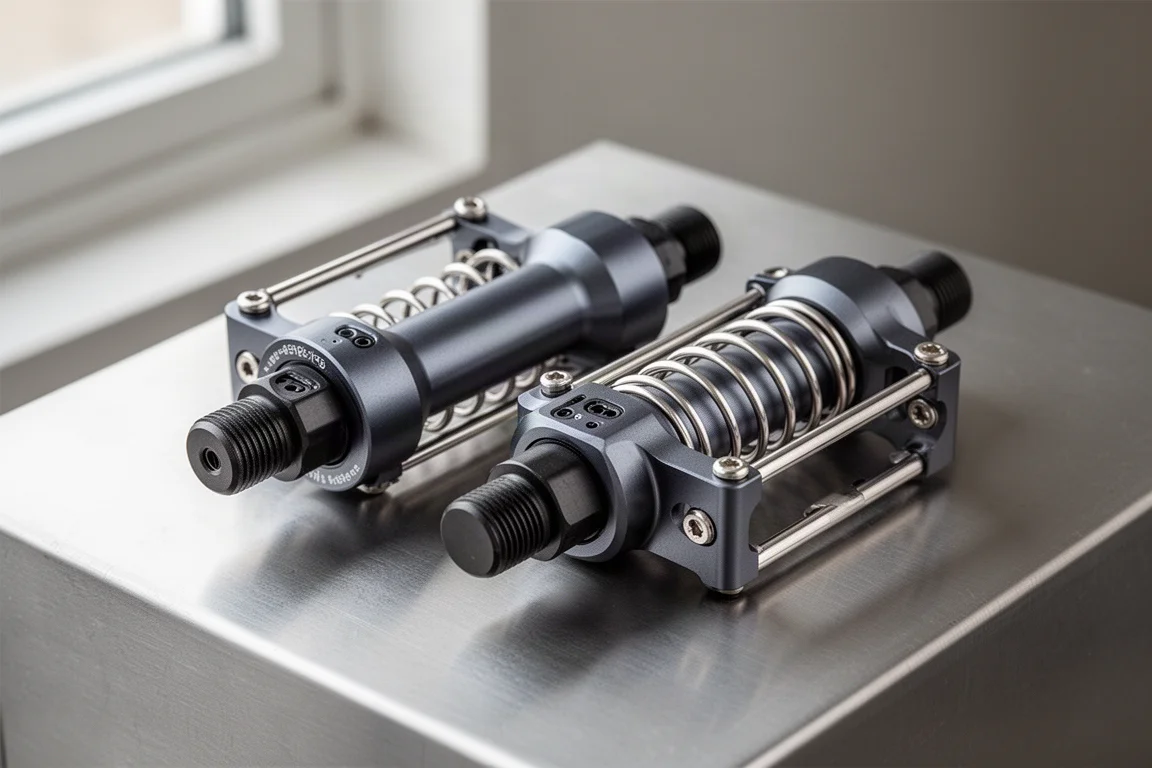
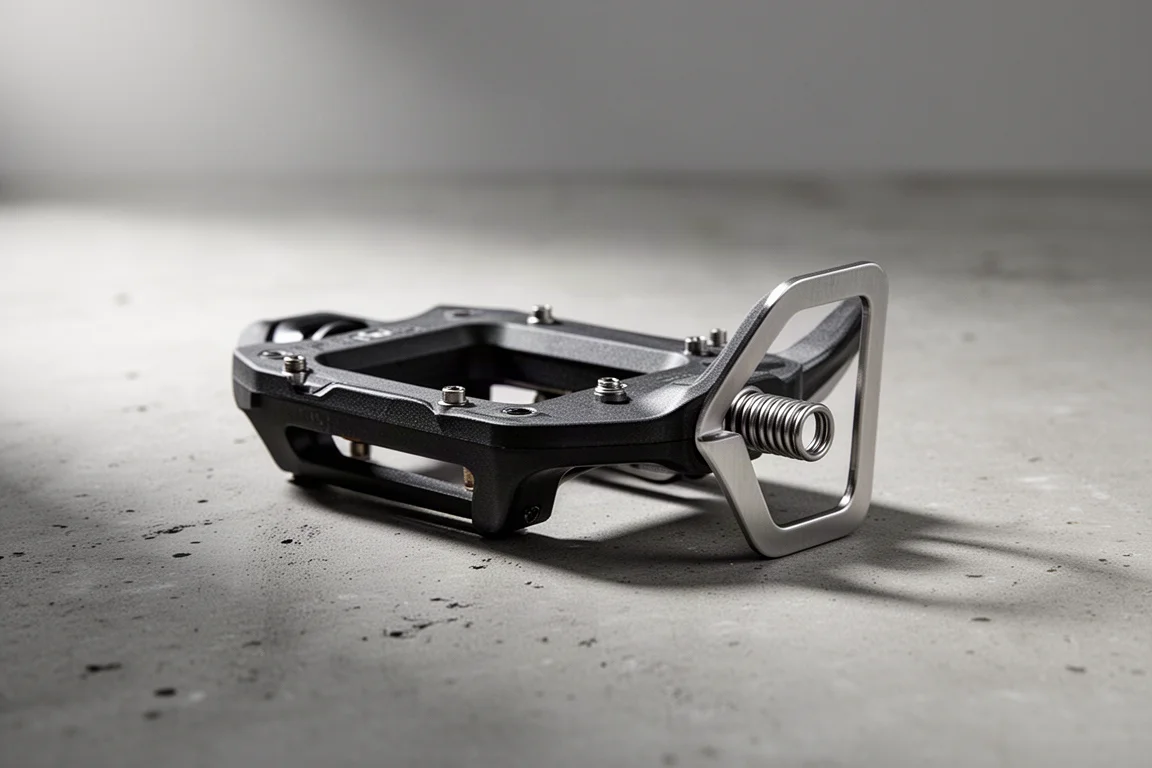
The defining feature is the ICLIC retention system. A small lever holds the mechanism open and ready, so pushing a cleat into the pedal meets no resistance, and the mechanism then snaps up to hold the cleat in place. With many other systems the cleat has to push the mechanism open before it closes again, which takes more effort. The cleat offers up to 10 degrees of angular float and 2.5 mm of lateral float.
Axle width is another point of interest for bike fitters and riders with specific fit needs. The XPRO 12 comes in a regular 53 mm width, with a narrower 51 mm and a wider 57 mm option available.
Panaracer GravelKing X1: A Fast Gravel Race Tire
Panaracer was one of the earliest brands to embrace gravel, and the GravelKing was a default choice when few gravel tires existed. Rival brands have since expanded the market considerably, and the range had been quiet on updates. The GravelKing X1 is the first genuinely new tire in a long time and arrives alongside a full revamp of the line.
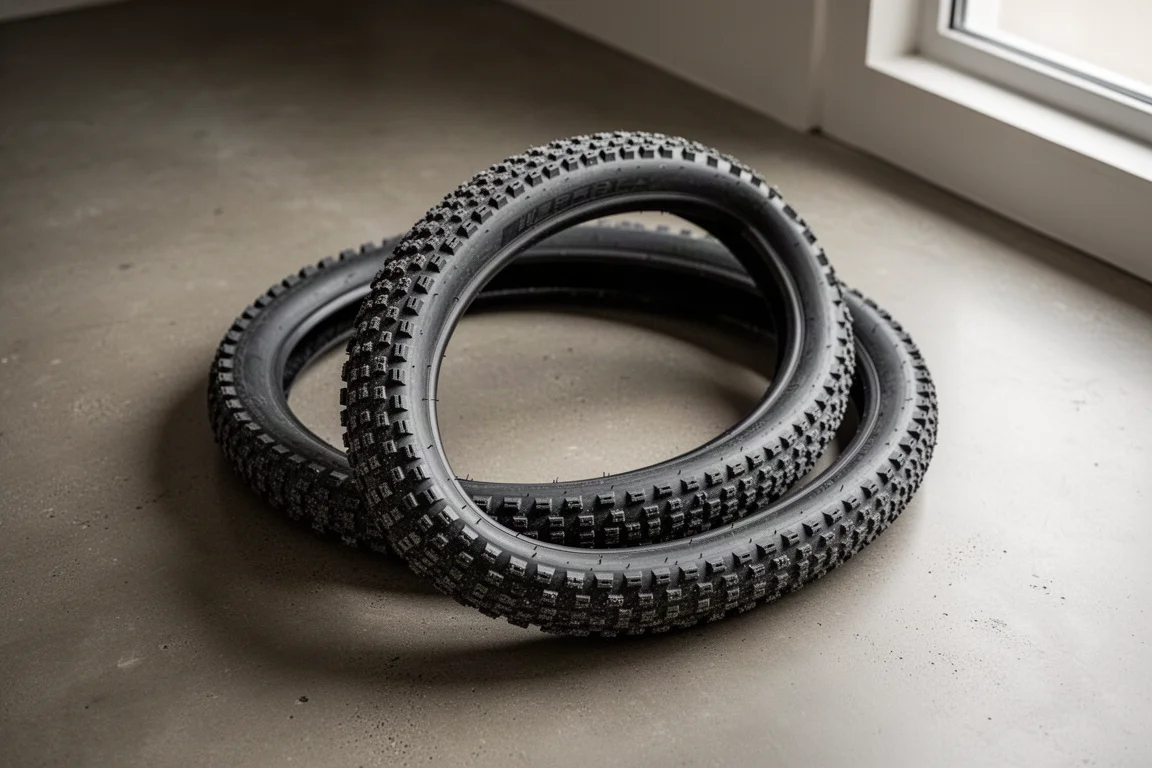
The X1 is a gravel race tire built to be fast, even though its chunky appearance suggests otherwise. A smooth centre line handles straight-line speed, while angular shoulder lugs provide grip in loose and slippery corners. The open tread pattern should shed mud effectively, and the fast centre section should roll well on the road sections between trails.
A new bead design is intended to make installation easier using only a track pump, and the tire is hookless compatible. The regular TLR version starts at £55 and comes in 35, 40 and 45 mm widths, with 45 mm the widest option. A Plus version adds more reinforcement material under the tread for extra puncture protection.
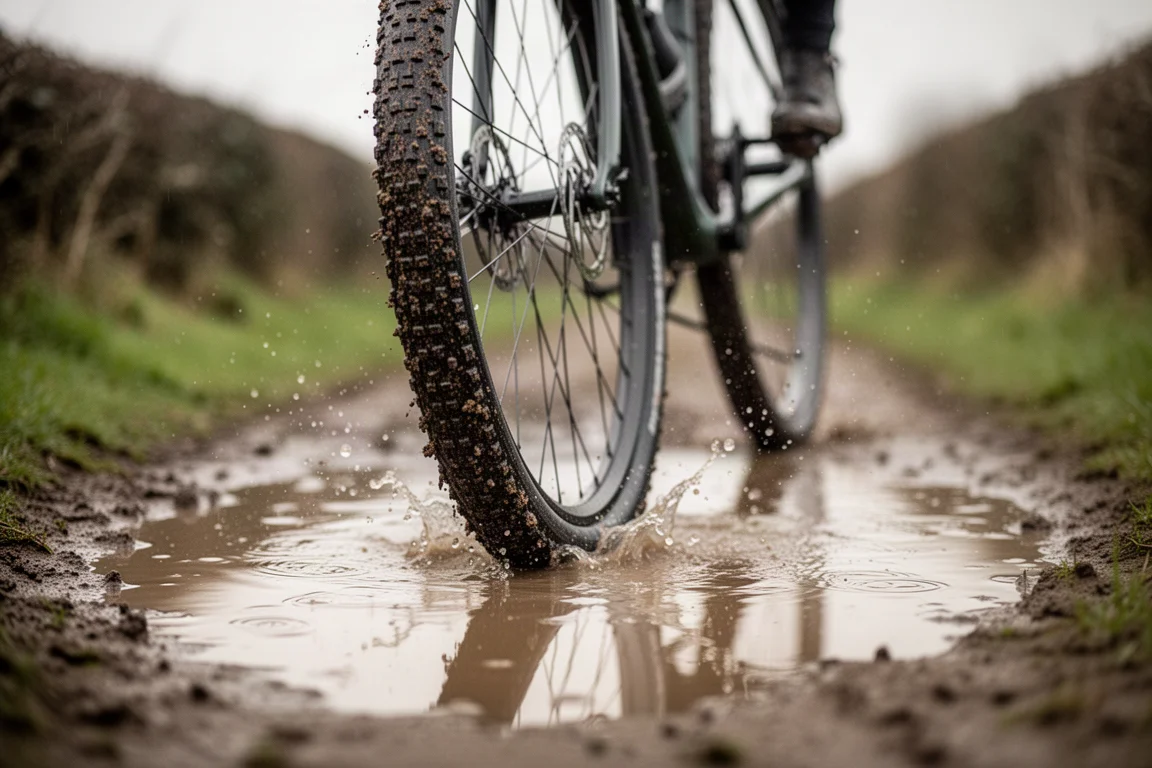
For riders in damp, muddy conditions, the combination of a quick centre and aggressive shoulders is a practical compromise, and the 45 mm option adds comfort without much of a penalty in aerodynamics or weight compared with 40 mm.
Buying Advice
Start with the riding you do most. If aero road performance matters and budget is a consideration, the Van Rysel RCR delivers the flagship frame shapes with a cockpit that is easy to adjust. If a lighter, more premium build is within reach, the Ridley Falcon RS adds wider tire clearance and a distinctive fork design.
For training data on gravel or mountain bikes, the Favero Assioma MX-2 offers dual-sided power, SPD compatibility and repairable hardware. Riders who value easy clip-in and adjustable float on the road should look at the Time XPRO 12, keeping the £300 price in mind. For gravel racing, the Panaracer GravelKing X1 pairs a fast centre line with mud-shedding shoulders, and the Plus version is worth considering where punctures are a recurring problem.
Conclusion
Each of these five products solves a specific problem rather than chasing a specification sheet. The Van Rysel RCR makes aero race geometry more attainable, the Ridley Falcon RS pairs low weight with aero detailing, the Favero Assioma MX-2 brings serviceable SPD power to gravel, the Time XPRO 12 rethinks how a cleat engages, and the Panaracer GravelKing X1 updates a familiar gravel tire for faster racing.
Further reading
Related Reviews
Cycling Gear
8 Cycling Products Riders Keep Coming Back To
Eight cycling components and accessories with clear strengths, honest trade-offs and long-standing reputations among riders and mechanics.
Cycling Gear
Aero Helmets and Bottle Setups Tested: Six Options Ranked by Measured Watt Savings
Wind tunnel data on six aero helmets and bottle setups, with real watt savings, practical trade-offs, and guidance on what is worth buying first.
Cycling Gear
Aero Road Bikes and Fast Tires Worth Watching in 2026
Four aero road bikes and one fast road tire, with the real strengths, the open questions, and what to check before you buy.