Aquarium Lighting
Neptune GRO Refugium Light Review: Even Coverage Without an Apex
A 20 Watt flat-panel refugium light with 84 low-power LEDs, IP64 protection and no Apex requirement, sized for a standard 12 by 18 inch sump chamber.
Introduction
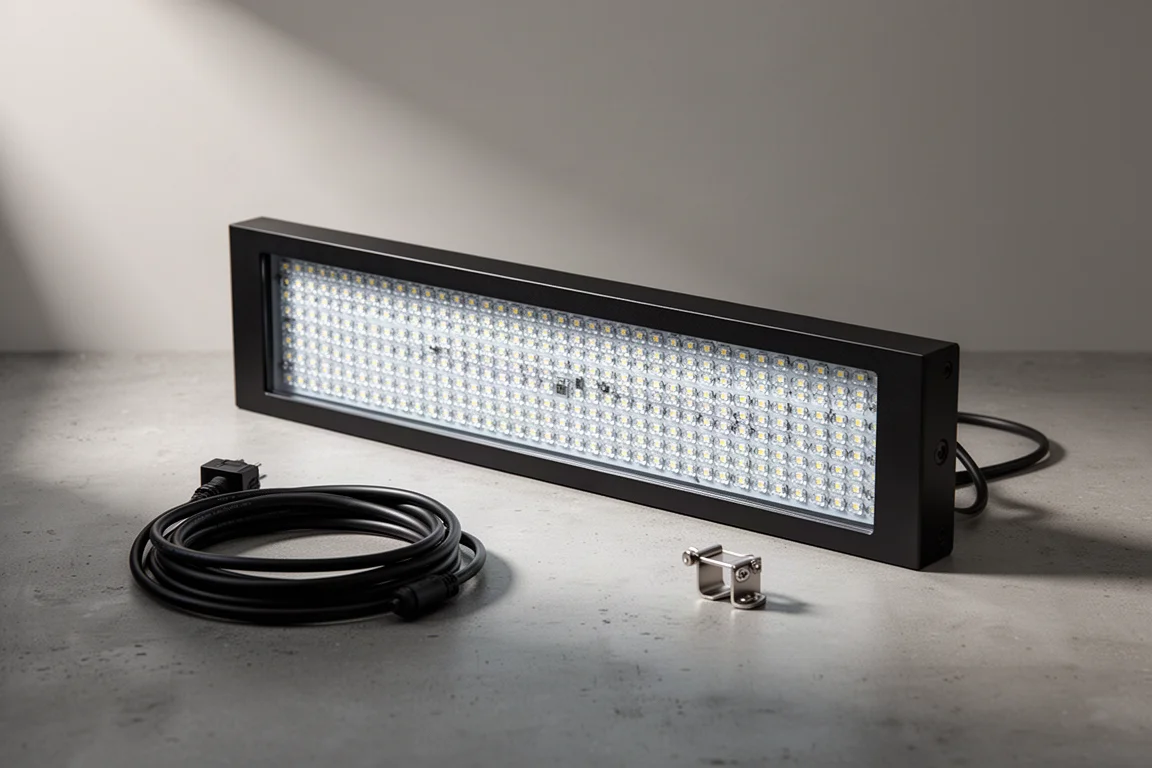
The Neptune GRO Refugium Light takes a different approach to growing macroalgae in a sump than most fixtures in its class. Instead of concentrating output into a handful of high-powered diodes, it spreads 84 low-power LEDs across a flat panel spanning roughly six to nine inches. The result is a wide, even blanket of light over the refugium, and it arrives as one of the lowest-cost options in its wattage class.
It also runs without an Apex controller. A single power supply is enough to get it going, which keeps the refugium independent from the rest of the tank’s control hardware. Apex owners can wire it into existing equipment later if they want scheduling and pH-linked control.
This review covers what the light does well, where its 20 Watt output fits, and how to choose a mounting height for a standard refugium.
Who This Product Is For
This light suits reefers running a refugium inside a sump, and it is at its best in a 12 by 18 inch chamber. Neptune lists coverage for an 18 by 24 inch refugium area, but a 12 by 18 inch fuge is where edge-to-edge evenness is strongest.
It is equally relevant where space under the tank is tight. Because of the IP64 water-resistant design, the fixture can sit as close as two inches above the water surface, so the light does not need a generous air gap to be safe.
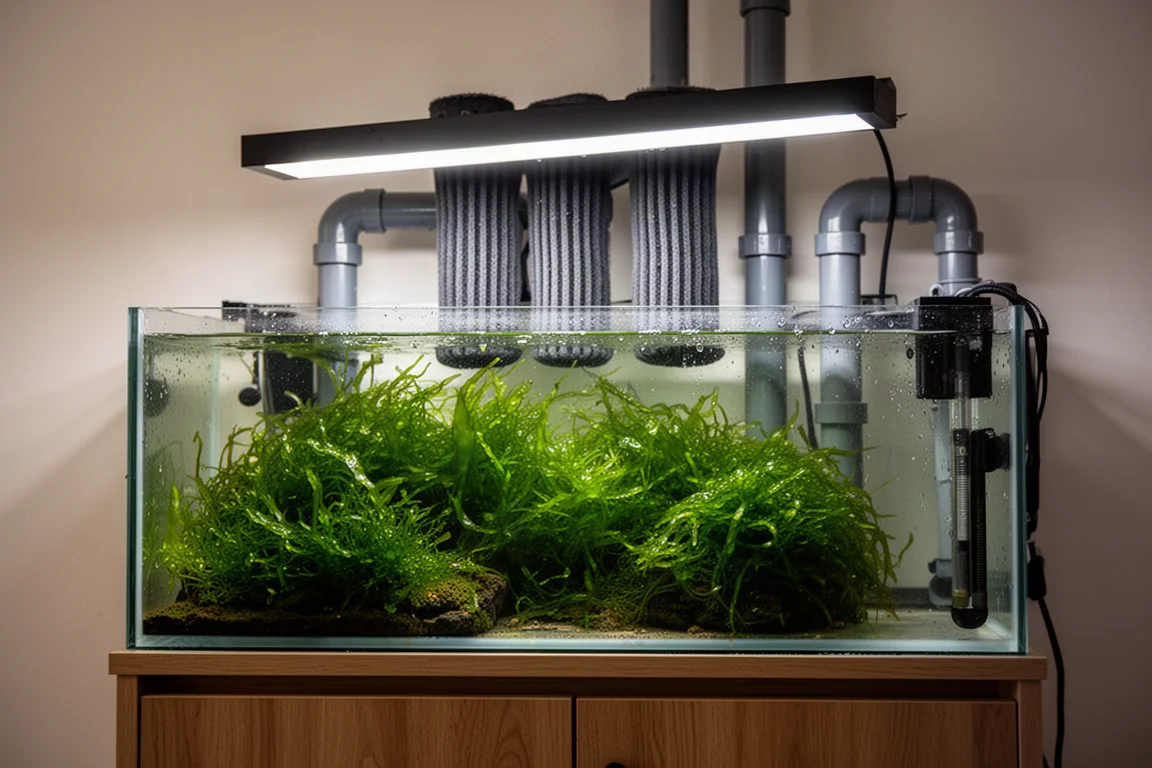
Anyone who prefers to keep a refugium off their controller will find the setup simple. The GRO does not require an Apex to operate, and a separate power supply is all that is needed, so the fixture can be added to a running system without extra modules, outlets or programming.
Main Strengths
Three areas do the most to separate this fixture from a typical refugium light: the way it spreads light, how it handles a wet sump environment, and the spectrum it produces.
Even, Flat-Panel Light Spread
Most refugium lights build their output around high-powered single-point LEDs or a small cluster. The GRO instead uses 84 low-power LEDs across a flat panel six to nine inches wide, which produces a more even spread of light even at very low mounting heights.
That design reduces three common problems. Single-point hotspots that can burn or stunt macroalgae growth are avoided, light spill outside the sump is limited, and unwanted algae growth on the protein skimmer body and in pump chambers becomes less likely. Coverage stays inside the refugium where it belongs.
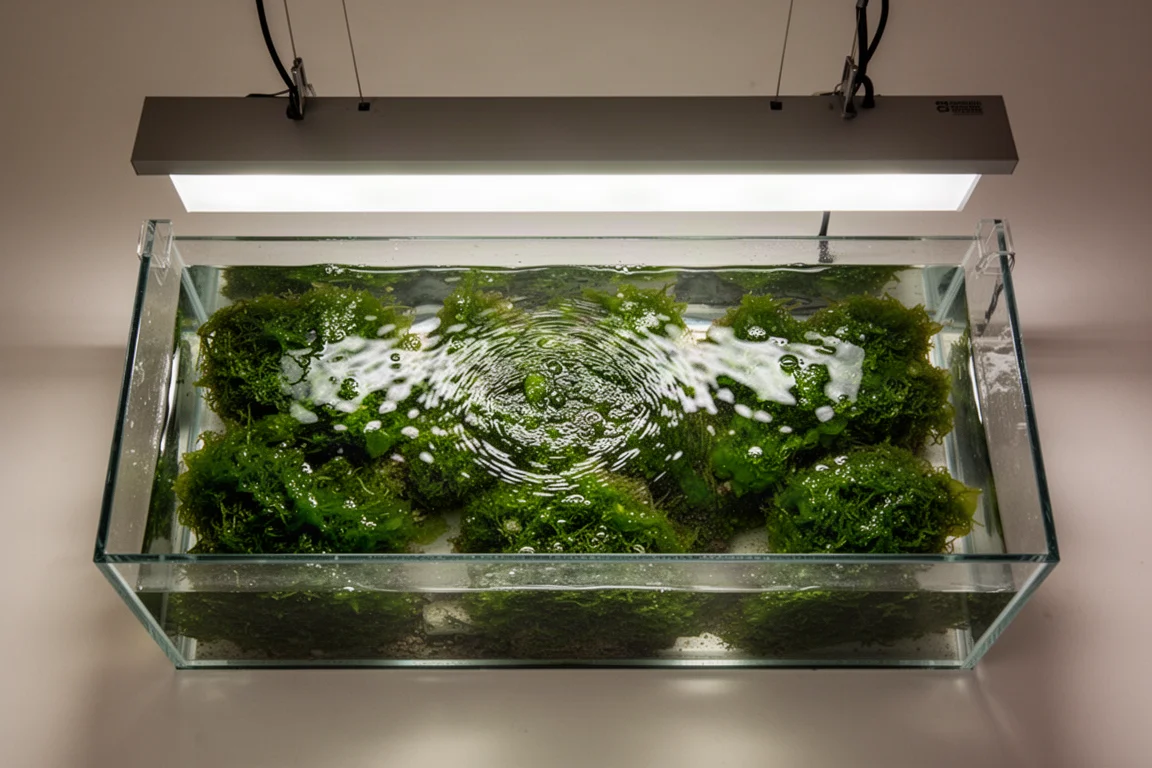
Because the light is already distributed across the panel rather than gathered in one spot, the fixture does not need much clearance to reach an even result, which is what makes low mounting positions practical in a crowded cabinet.
Water Resistance and Mounting Flexibility
The GRO carries an IP64 rating, meaning it is protected against water and salt spray. In practice that removes the worry of salt creep damage and opens up mounting positions that would be risky for a less protected fixture.
There are two ways to install it. A clamp mount attaches the light to any flat surface on or around the sump. A pipe mount attaches it to standard one-inch PVC piping or three-quarter-inch fittings such as elbows and tees, which is useful when space around the refugium is limited and a conventional bracket will not fit. Neither option requires a DIY workaround.
Heat is a non-issue at this output. Running at 20 Watts, the light produces almost no heat, so there is no cooling fan and no moving parts to get salty or wet. That translates into less maintenance and longer-lasting performance.
Spectrum and PAR Performance
For reefers who care about the numbers, the spectrum lands close to what macroalgae need. Chlorophyll A production is commonly understood to peak around 662 and 429 nanometers, and chlorophyll B around 642 and 445 nanometers. Spectrometer readings put the GRO’s peaks at 625, 660 and about 450 nanometers, which sits near those ideal ranges.
Output was measured in air rather than underwater, since macroalgae tends to float near the surface. At 14 inches, which is higher than most reefers would mount a refugium light, the center reading is just over 55 PAR. Moving down through 12, 10, eight and finally two inches, readings run from 75 up to 550 PAR.
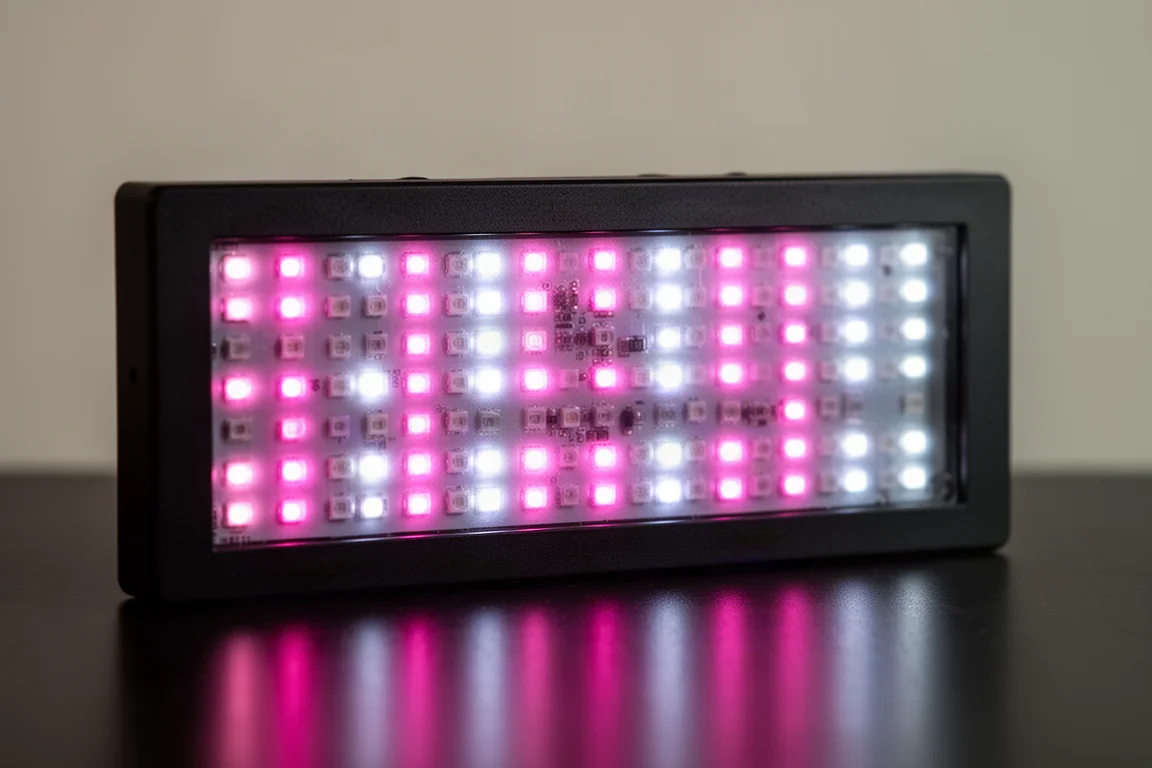
Since the fixture uses all 20 Watts instead of dimming down from a higher output, intensity is adjusted by raising or lowering the mounting height. That keeps the full wattage working for the refugium at all times.
Things to Consider Before Buying
The main trade-off is raw output. At 20 Watts, the GRO sits well below more expensive refugium lights that can run 70 Watts higher. For a standard 12 by 18 inch refugium that is usually an advantage rather than a limitation, because there is less wasted output to dim away. On a considerably larger refugium, or in a system that wants maximum growth speed, a higher-wattage fixture may be the better match.
The Apex-related features are optional extras rather than included ones. Scheduling tied to tank pH trends, and running the light from a DC24 port on an energy bar, 832, FMM or 1Link module, all depend on already owning that hardware. Without it, the light simply runs from a power supply, and intensity is set by mounting height rather than dimming.
Buying Advice
For a standard 12 by 18 inch refugium, about six inches above the water surface is the recommended balance between output and spread. Lower the fixture for more intensity in a smaller area, or raise it for wider coverage with less punch.
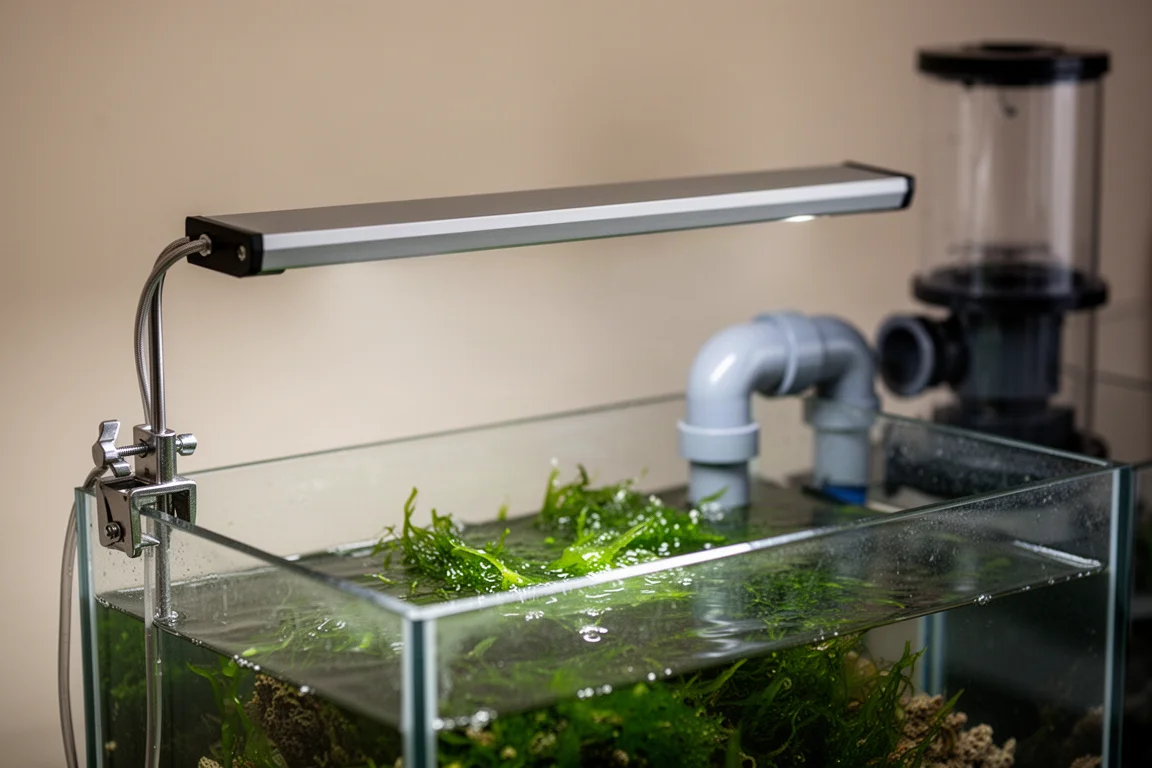
If the sump has a flat rim or panel available, the clamp mount is the quickest route. Where space around the refugium is tight, the pipe mount keeps the fixture attached to existing PVC. For anyone starting without an Apex controller, a power supply is the only extra item needed, and at around $20 it is a modest addition to the overall cost.
Conclusion
The Neptune GRO Refugium Light makes a clear case for itself in a standard sump refugium. A flat panel of 84 low-power LEDs delivers even coverage at low mounting heights, the IP64 build handles salt spray and tight spaces, and the spectrum lines up closely with the peaks macroalgae rely on.
Its 20 Watt output is the honest limit. For a 12 by 18 inch fuge, though, that is a sensible amount of light rather than a compromise, and the lack of an Apex requirement keeps the setup simple and affordable. Reefers who want more raw power or controller-linked scheduling should plan around those needs, but as an even, low-maintenance refugium light, the GRO covers the job.
Product link
View more details for Neptune GRO Refugium Light
This product is mentioned in the review. Check the specifications, options, and compatibility before buying.
View more details for Neptune GRO Refugium LightFurther reading
Related Reviews
Aquarium Lighting
AI Blade LED Lights Review: A Versatile Strip Light for Reef Tanks
A practical look at the AI Blade LED line, including the value-focused Grow spectrum, mounting options, app control and PAR performance.
Aquarium Lighting
AI Hydra 32 and Hydra 64 Setup Guide: Mounting Heights, Spacing, and Add-On Lighting
A practical reef lighting guide covering optimal mounting heights for the AI Hydra 32 and Hydra 64, spacing for even coverage, and when add-on lighting is worth it.
Aquarium Lighting
AI Prime Review: A Compact Reef Light That Grows With Your Tank
A small, modular reef aquarium LED that reaches LPS and soft coral PAR levels over a 60-gallon cube, plus the spacing, mounting height, and control habits that make it work.