Speaker Kits
Neil Blanchard Designs WB4 Review: A $200 DIY Single-Driver Transmission Line Speaker
A close look at the Neil Blanchard Designs WB4, a do-it-yourself single-driver speaker kit with a transmission line cabinet, no crossover, and a sound that does not behave like a conventional two-way.
Introduction
Most speakers at this price follow the same formula: a box, a woofer, a tweeter, and a crossover network holding them together. The WB4 from Neil Blanchard Designs does not. It is a do-it-yourself kit built around a single full-range driver mounted in a transmission line cabinet, and a complete build lands in the region of $200 once plans, drivers, and wood are accounted for. That combination produces a presentation that genuinely does not sound like a conventional two-way speaker, and for listeners who want something that does not sound like everything else on the shelf, the difference is the entire point.
Who This Kit Is For
This kit suits a specific kind of buyer. You need to be comfortable with a modest amount of work: gluing and clamping a cabinet, and soldering a short run of wire from the binding posts to the driver. That is the full extent of the electrical work, because there is no crossover to assemble. Neil Blanchard Designs sells a flat pack of precut Baltic birch panels, so you do not need to cut wood yourself or own a full workshop to get started.

It also suits households looking for a shared project. A build like this works well as a holiday break activity with kids or grandkids, and the finished speaker is something you keep rather than something you assemble once and forget. Buyers who already own basic tools, clamps, and a bottle of wood glue will find the practical barrier to entry low.
Design and Build Approach
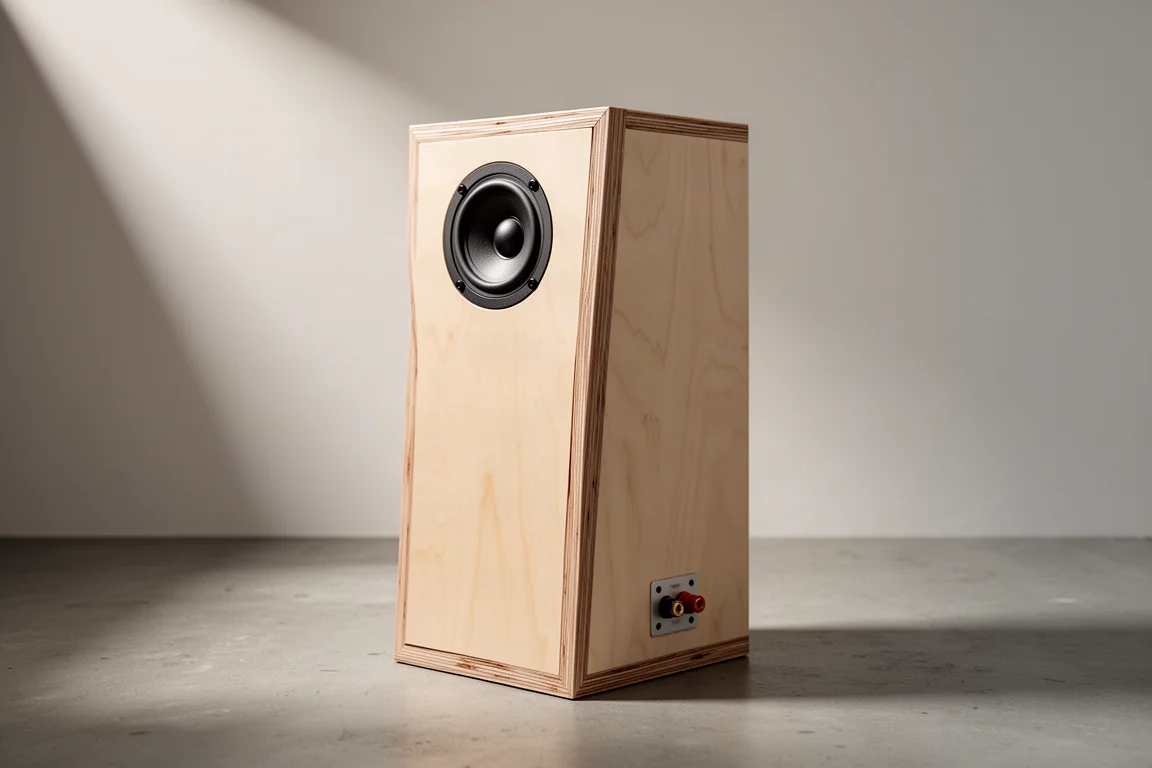
The WB4 is the least complex design in the Neil Blanchard Designs catalogue, and the simplicity is deliberate. A single driver covers the entire frequency range, which removes the crossover point that normally sits between a woofer and a tweeter. The enclosure is a transmission line: an internal folded path that lets the rear wave travel through a labyrinth before it exits, extending bass response far below what a driver of this size would normally manage on its own. The cabinet is built from Baltic birch, and because it is real wood, a light application of teak oil or a similar finish is enough to make it look the part.
Plans are sold separately at $50, and the driver and wood are purchased independently. With the plans, a pair of drivers, and Baltic birch, a complete build comes in around $200. An optional baffle step filter can be added to the design, which raises the cost slightly. Neil Blanchard Designs also produces upgrade kits for other loudspeakers, so these plans sit within a wider catalogue of do-it-yourself designs.
Main Strengths
Two strengths stand out immediately, and both come directly from the single-driver layout.
The first is cohesion. Because one driver reproduces everything, imaging is remarkably solid. Instruments and voices hold their positions between and even outside the speakers with a precision that is unusual at this price. There is no crossover handoff to blur the transition between drivers, and on a bass-heavy track like the Beastie Boys’ “Intergalactic” the presentation stayed dynamic, punching hard without the driver bottoming out.
The second is bass extension. The transmission line is tuned to around 40 Hz, which is startling for a cabinet this size and a driver this small. Material with energy in the 80 to 100 Hz range, where a great deal of popular music lives, is handled with real weight and control.
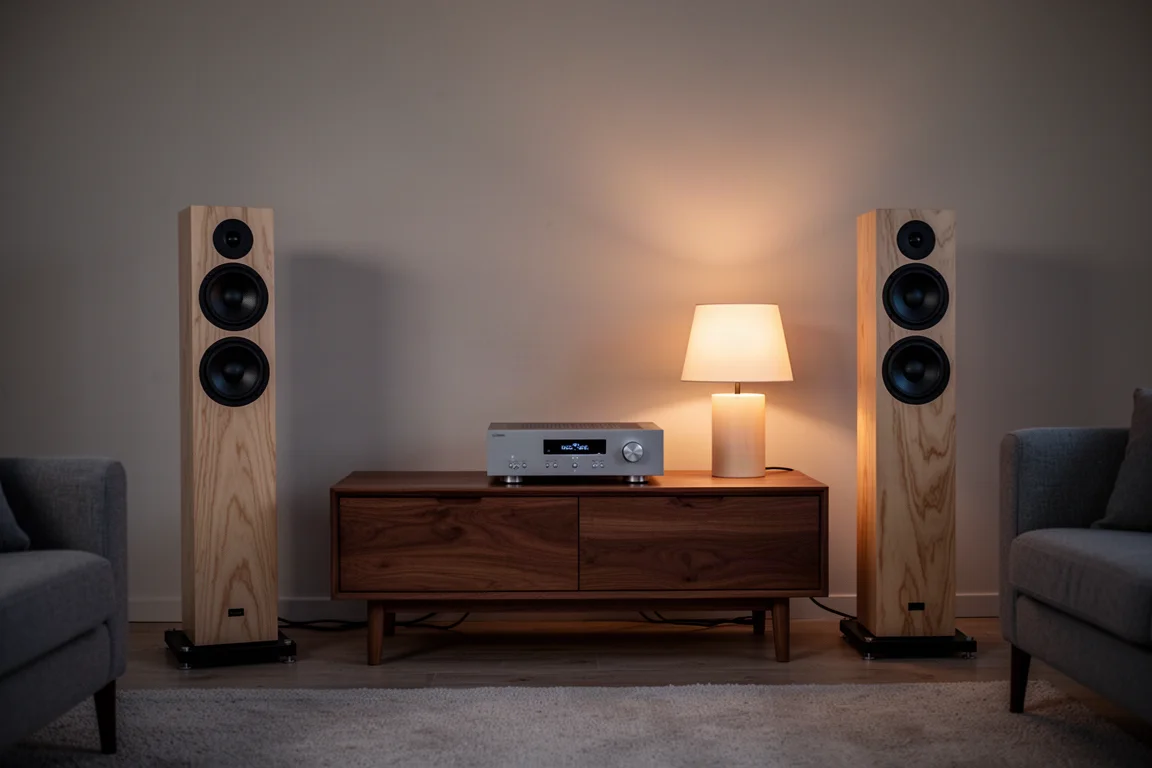
Mid-range character is the third strength, and it is the hardest to describe. Voices are not rendered with the last word in clarity, but they never sound veiled either. Adele’s “Hello” pulls the listener in rather than pushing them away, and Alanis Morissette’s “Uninvited”, a recording that can turn sharp and sibilant, came through with detail and without harshness.
Sound Characteristics in Practice
Tonality is where the WB4 separates itself from anything conventional. The 4 to 6 kHz region behaves as though it is flat or slightly recessed, which tames the edge that many recordings carry. The top end is airy and at the same time slightly rolled off, and that combination works like a piece of sandpaper on rough recordings. Most material sounds good, some sounds excellent, and a small number of tracks lose a little bite.
The trade-off is that a poor recording stays a poor recording. Weezer’s cover of “Africa” opens with a heavy kick drum and a wash of cymbals, and the cymbals came across as harsh and unnatural rather than natural and open. Bob Marley’s “Redemption Song” revealed another quirk: the vocal sat noticeably forward of the acoustic guitar, and the finest detail in the guitar was not fully resolved. Even so, the way the music was laid out was pleasing and unlike anything a conventional two-way speaker produces.
Things to Consider Before Buying
Size and placement deserve thought before you commit. The WB4 is fairly deep and tall for a desktop speaker. On a desk the driver lands close to ear level, which works well, but the cabinet is large enough that many listeners will prefer small stands beside the desk rather than the desk itself. On floor stands, height matters: with the wrong stand the driver ends up above ear level, which shifts the tonal balance.
Output is realistic rather than enormous. The speaker played comfortably at 75 dB and above, but it was not pushed hard, because the driver is the only moving part and overdriving it is the obvious risk.
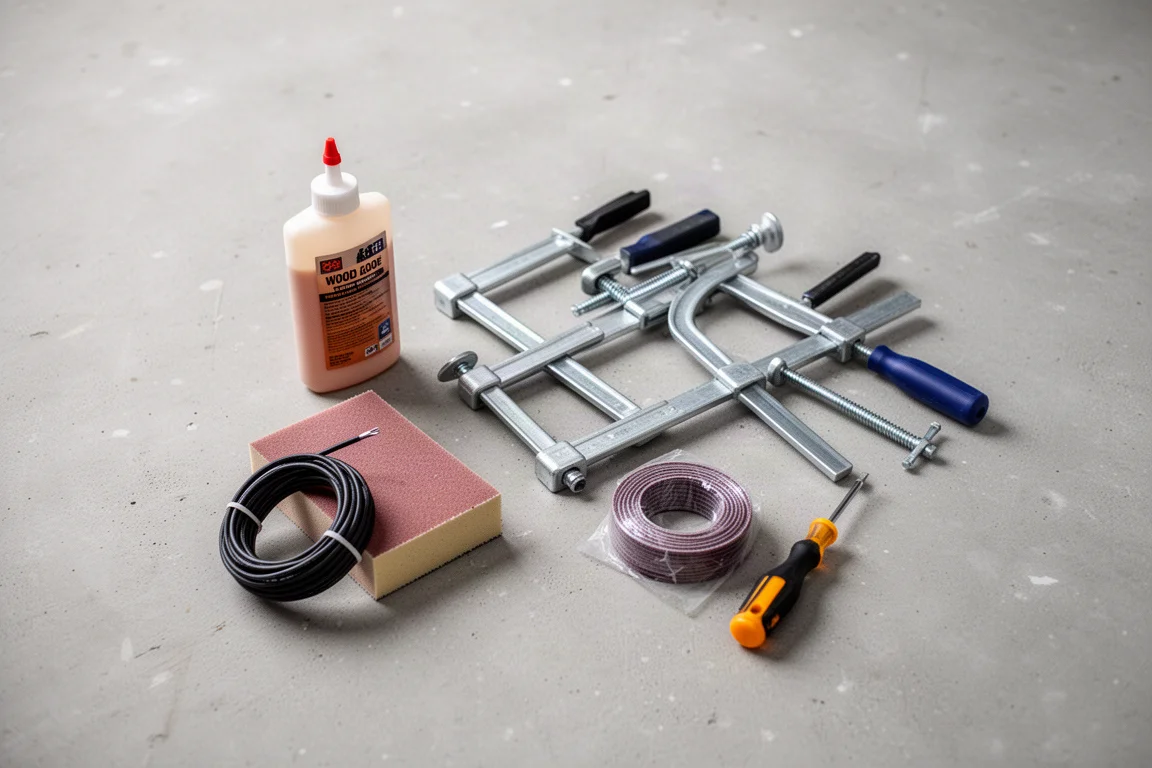
The kit also requires tools and consumables beyond the parts: glue, clamps, and basic finishing supplies. Good clamps are worth buying rather than the cheapest available, since a sloppy cabinet joint is the one part of the build that cannot be fixed later.
And because you are building it yourself, the WB4 will never be the right choice for someone who simply wants to unbox a speaker and plug it in. A certain appetite for experimentation is part of the ownership experience.
Setup and Amplifier Matching
The WB4 was used with a Cambridge integrated amplifier and with a WiiM Amp Pro, and it responded well to both. Sensitivity is not a concern in a small room, and the single driver gives an amplifier nothing complex to drive.
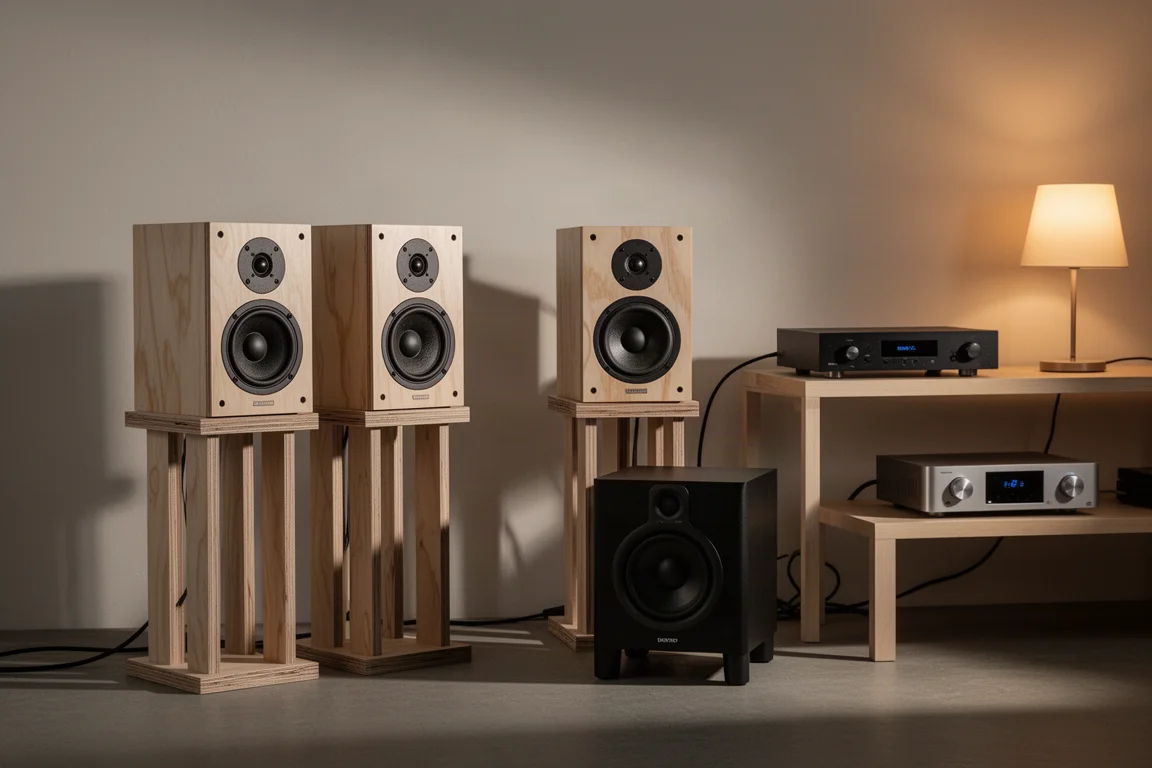
The more interesting option is a high-pass filter. With a WiiM Amp or WiiM Ultra, a high-pass filter can be applied to the WB4 and the low bass handed over to a subwoofer. That lets the driver work inside its comfort zone, raises the usable output, and preserves the cohesive single-driver presentation in the range where it is strongest.
Buying Advice
At roughly $200 all in, the WB4 is one of the most affordable ways to hear a transmission line design, and it is the least complex build in the Neil Blanchard Designs range. Buy it if you want a project, you are comfortable with glue, clamps, and a small amount of soldering, and you are curious about how a single full-range driver presents music. The plans are the entry point at $50, and the rest of the cost is spread across the drivers and the Baltic birch.
Skip it if you want a finished speaker, if you need high output in a large room, or if you are unwilling to experiment with placement and stand height. This is not a speaker that competes with conventional two-ways on their terms. It is a speaker that does a small number of things other speakers cannot, and it does them at a price that makes the experiment easy to justify.
Conclusion
The WB4 is a genuinely different loudspeaker rather than a cheaper version of a familiar one. Its cohesion comes from having no crossover, its bass extension comes from the transmission line, and its forgiving top end comes from a driver that smooths the rough edges off ordinary recordings. Those qualities will not suit every room or every listener, but for anyone willing to spend a weekend with glue and clamps, it is a rewarding way to hear music through a different lens.
Product link
View more details for Neil Blanchard Designs WB4
This product is mentioned in the review. Check the specifications, options, and compatibility before buying.
View more details for Neil Blanchard Designs WB4Further reading
Related Reviews
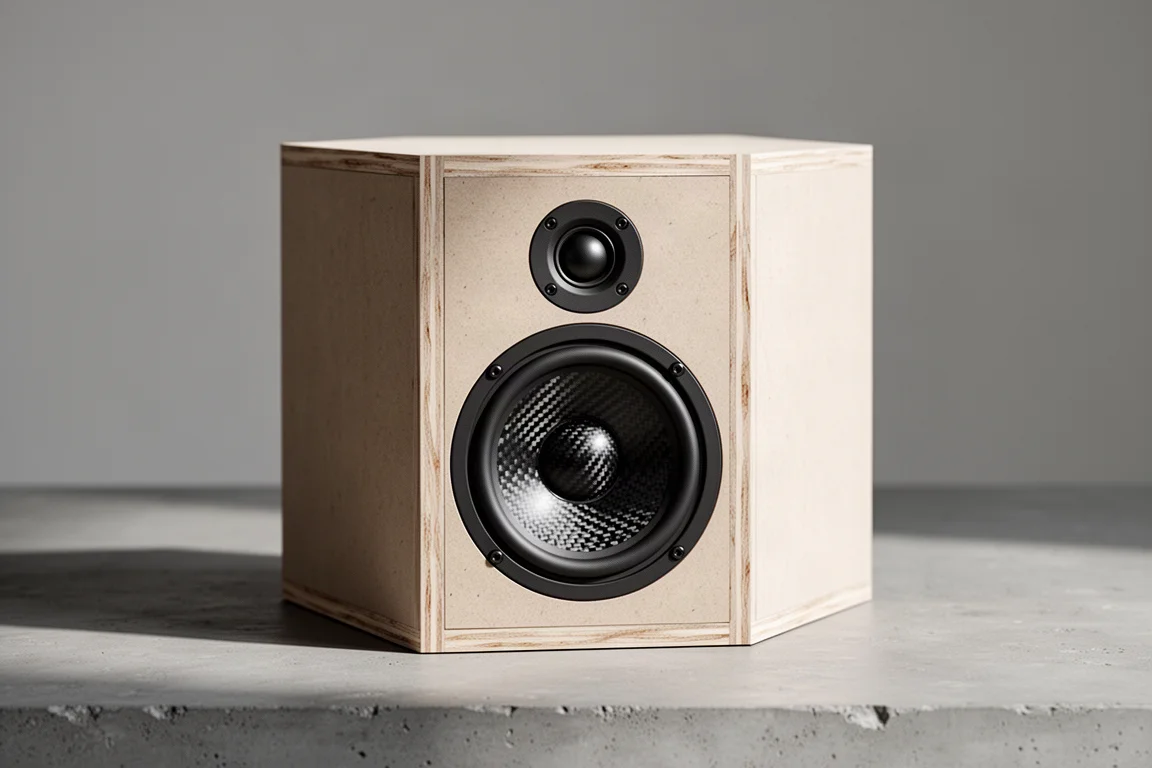
Speaker Kits
CSS Audio Torii Review: The Most Affordable CSS Audio Speaker Kit
The CSS Audio Torii is a compact two-way speaker kit with a labelled crossover board, an optional CNC flat pack, and bass that belies its cabinet size.
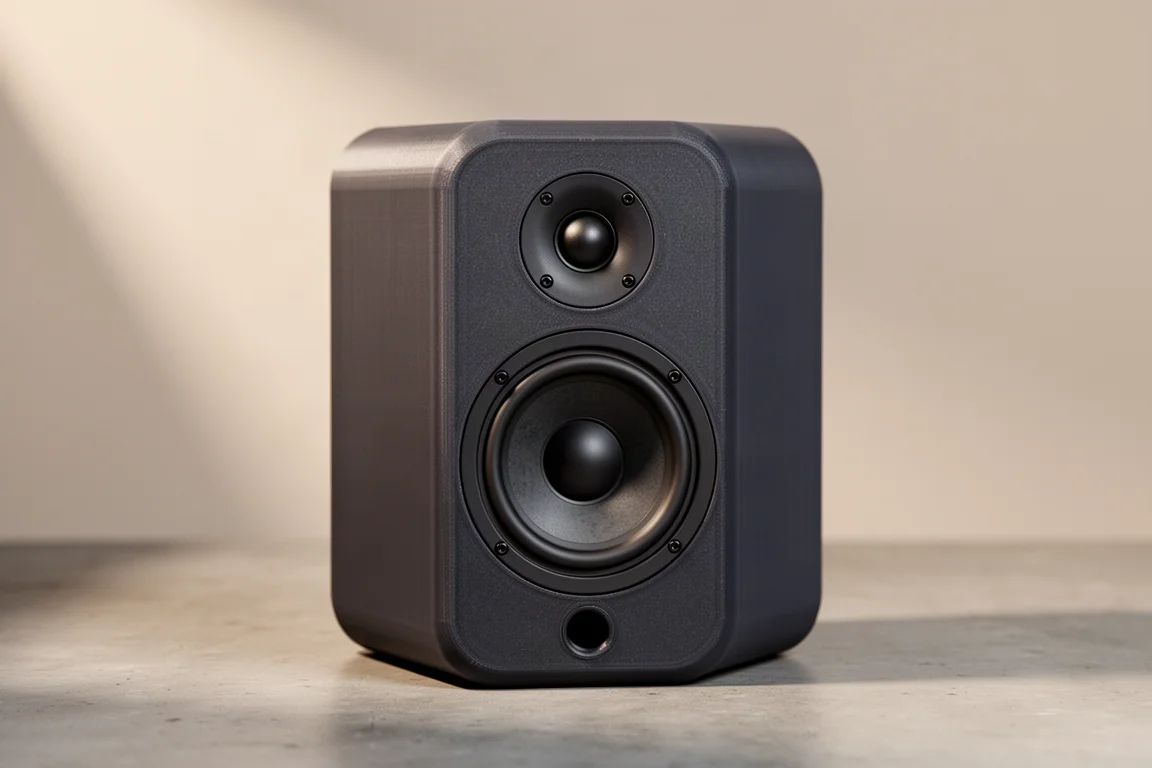
Speaker Kits
Deposition Sound FDM 5 Review: A 3D Printed Speaker Kit Worth Building
A close look at the Deposition Sound FDM 5, a 3D printed two-way bookshelf speaker kit with punchy bass, a very neutral mid-range, and a few clear trade-offs.
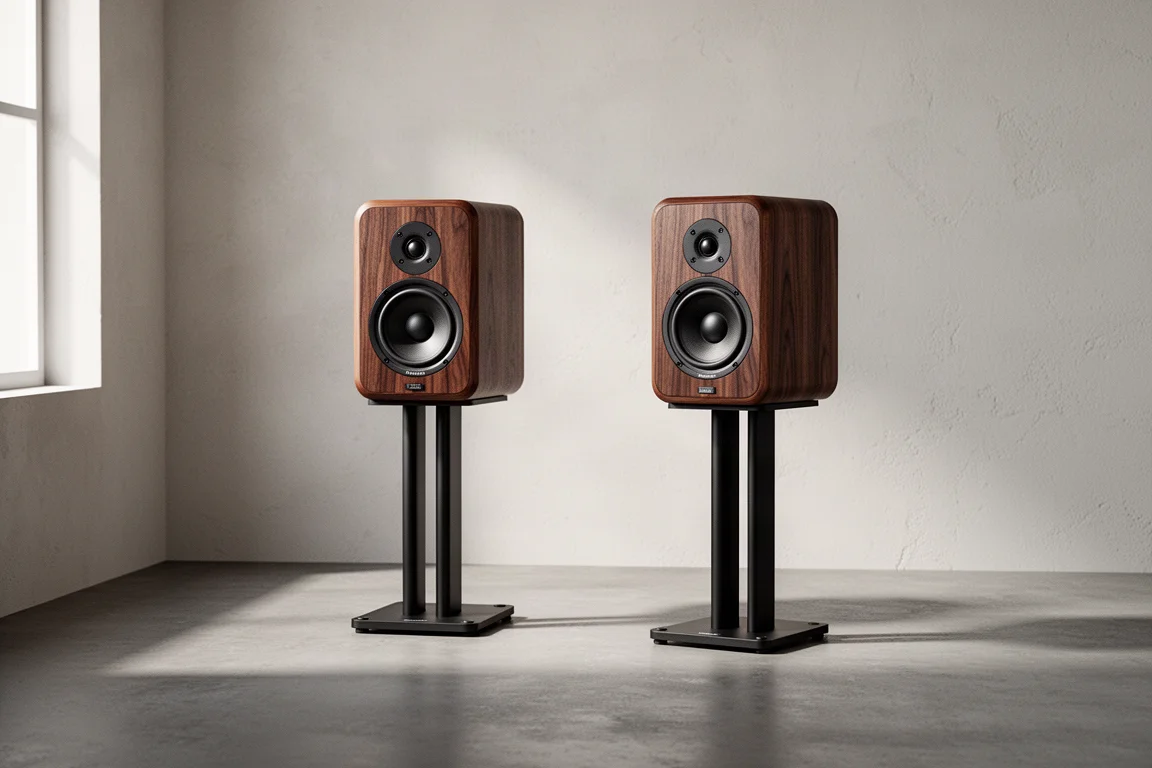
Speaker Kits
GR Research X-LS Encore Review: Deep Soundstage for Under $1,000
A kit speaker that pairs a smooth, non-fatiguing tone with a soundstage that punches well above its price, provided you are ready for a more demanding build.