Hiking Backpacks
NatureHike 60+10 Backpack Review: Light, Roomy, and Hard to Wear
A lightweight nylon 60+10L roll-top pack with strong materials and a harness that most hikers will struggle to live with.
Introduction
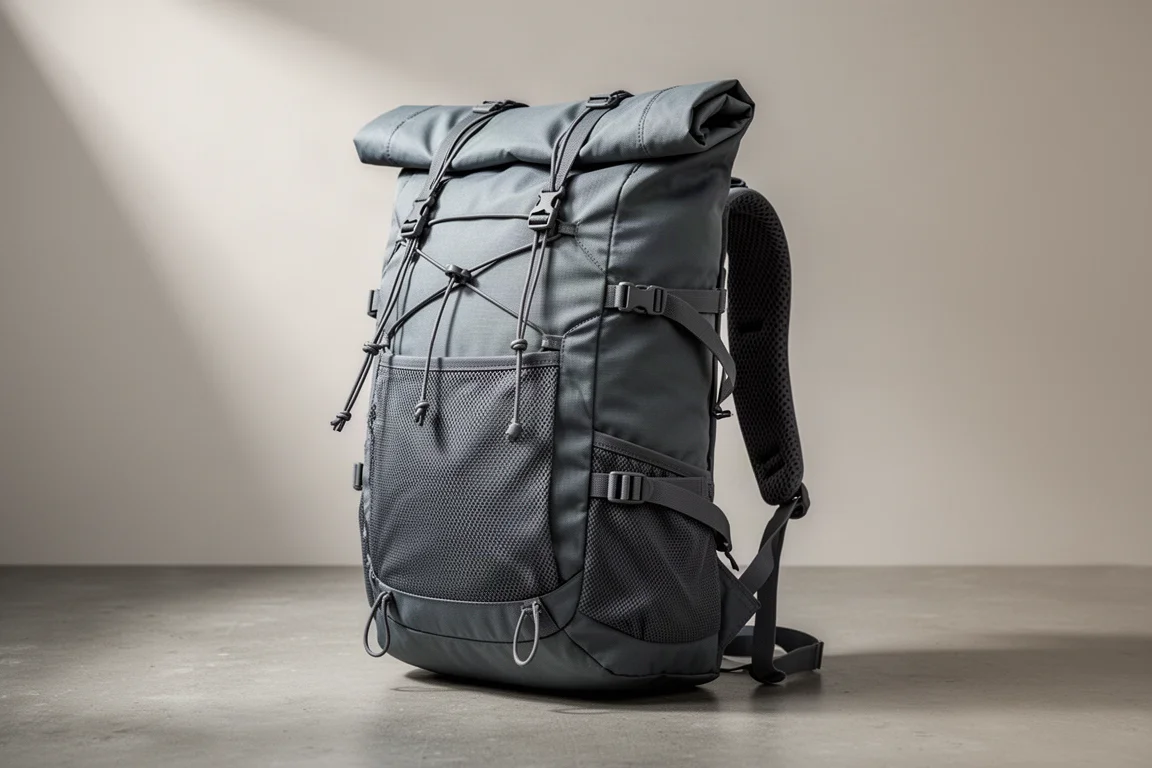
The NatureHike 60+10 is one of the cheapest routes into a large, lightweight roll-top hiking pack. The nylon version weighs about 2.5 lb and retails for $110, though it is commonly found for around $90. It is a tall, narrow pack with a roll-top closure, a lot of usable volume, and a rain cover included in the box.
NatureHike actually offers three packs in this family: a 40+10, the 60+10 in nylon, and a second 60+10 built from a different fabric. Weights and prices vary across them. This review covers the nylon model, which is the version most buyers will come across. It is sold in two colors, a grey that NatureHike labels black, and a blue option.
Materials are a genuine high point. The body is nylon, the zippers are YKK, and the stitching is tidy throughout. That is unusual at this price, where packs in the same bracket often use polyester instead. The frame is roughly an inch thick and rigid, which makes loading the pack straightforward.
The problem is the harness, and it is a large one. The pack is comfortable for almost nobody, and the issues involved cannot be corrected with strap adjustments. Anyone considering this pack should read the fit details before ordering.
Who This Backpack Is For
On capacity alone, the 60+10 makes sense for hikers who want maximum volume at minimum weight. The pack measures 26.3 inches by 10.2 inches with a depth of 7 inches, and the maximum loadout weight is 30.8 lb. The extra 10 liters expand upward rather than outward, so a fully loaded pack gets taller, not wider. That suits long, narrow loads and keeps the profile slim on the trail.
The critical constraint is torso length. The harness is built around a torso of roughly 18 to 20 inches, a figure based on physical measurement of the pack rather than a published number, since NatureHike does not list torso sizing. That is a narrow window. Hikers well outside it, whether taller or shorter, are likely to find the pack sits badly no matter how the straps are set.
NatureHike describes the pack as unisex. In practice the harness suits men better. The gap between the two shoulder straps measures about three inches, and that is where a wearer’s neck sits. The resulting pressure is especially awkward for women, whose chest falls directly in the area the sternum strap occupies.
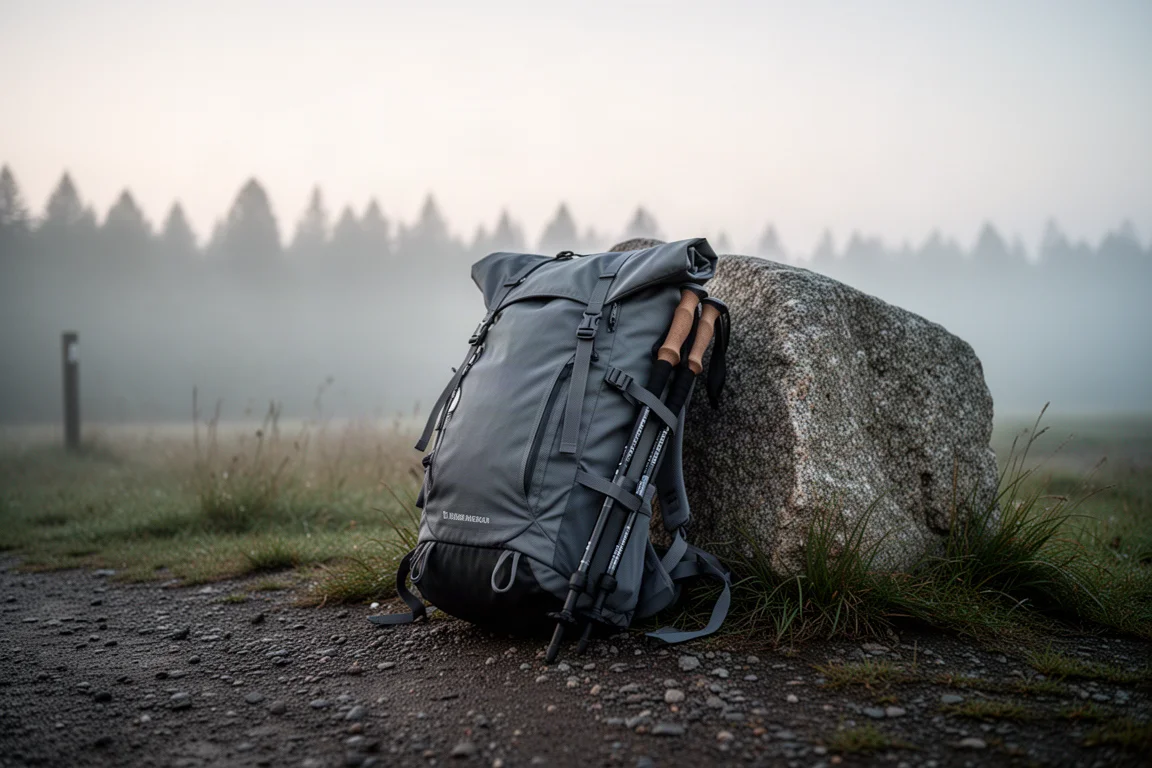
So the realistic buyer is narrow: someone whose torso lands inside that range, who wants a light, roomy, inexpensive pack, and who is willing to accept real compromises in carrying comfort in exchange for capacity and material quality.
Main Strengths
Quality for the money is the pack’s strongest argument. Nylon construction, YKK zippers, and clean stitching give it a level of finish that is not guaranteed at this price. It feels well made, and the materials should hold up better than the polyester used on many packs around $80.
The frame deserves credit too. At about an inch thick it is rigid and dense, giving the inside of the pack a solid foundation for packing gear. Ultralight packs often flex and sag under load, and this one does not.
Space and expandability are generous. The 60+10 format offers a large main cavity that grows upward when needed. The compression straps on the sides and across the top work well and can be used to cinch the load down or to lash on additional gear, including trekking poles or a tripod, using the loops at the bottom and the shock cord on the sides.
The large mesh front pocket is excellent for wet gear, and the shoulder harness pocket is big enough for a phone. A rain cover is included, stored behind a dedicated zipper near the drainage grommet at the base, and it works well when the weather turns.
Things to Consider Before Buying
The drawbacks here are extensive, and most of them come back to fit and carrying comfort. NatureHike markets the pack for climbing, travel, camping, commuting, school, sports, gym use and more, which is an ambitious claim for a pack with this harness.
Harness Spacing and Neck Comfort
The distance between the two shoulder straps is roughly three inches. When the pack goes on, a normal neck is wider than that gap, so the harness spreads apart and the padding presses into the sides of the neck. The padding is thick, stiff, and coarse, which makes the contact rougher than it needs to be.
Because the straps have to pull outward, the back of the pack is pushed away from the wearer. The result is a pack that feels uncomfortable even when it is barely loaded. Wearing it over a jacket or a sweater is the only way it becomes tolerable, and that is not a solution on warm days.
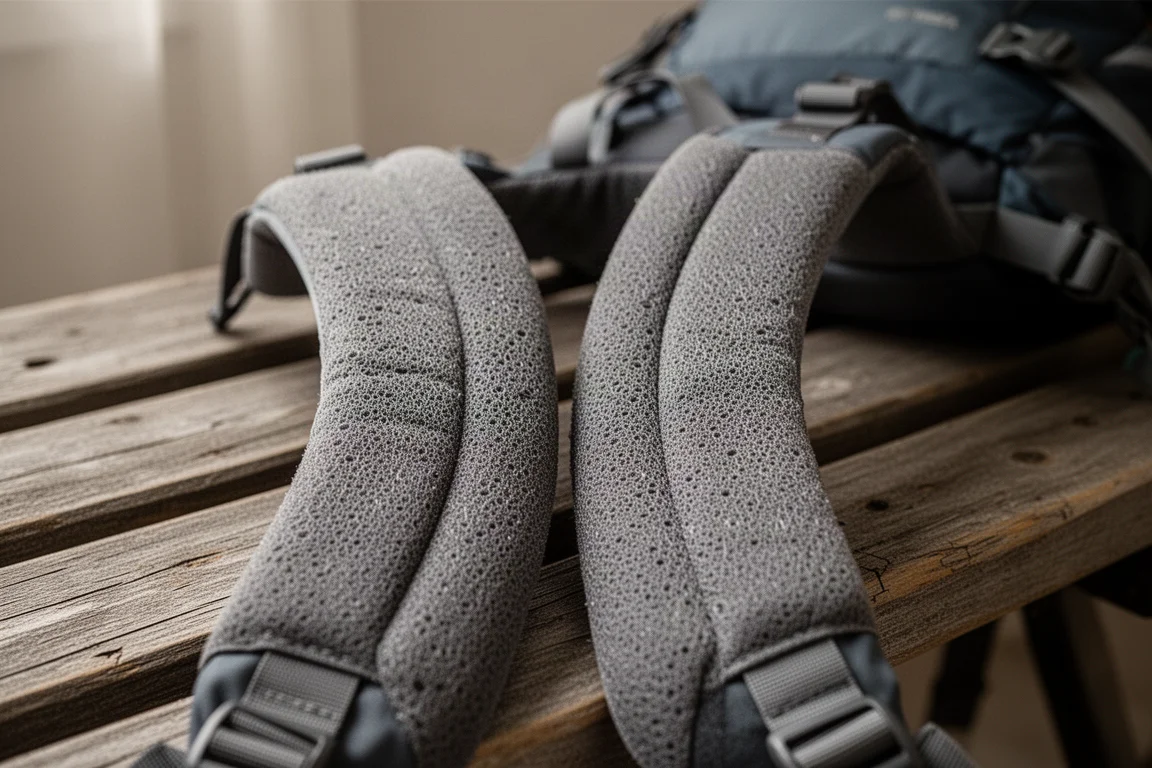
For most hikers this alone is disqualifying. Carrying discomfort that appears with a single sleeping bag inside the pack is not something that improves once the pack is fully loaded for a multi-day trip.
Torso Length and Fit Range
The 18 to 20 inch torso range is the second major limitation. NatureHike does not publish torso sizing, so buyers have no easy way to confirm whether the pack will fit before it arrives. Taller and shorter hikers are both likely to find that the pack sits incorrectly, and the harness spacing compounds the problem rather than offsetting it.
Sternum Strap and Hip Belt Pockets
The sternum strap sits very low, close to the bottom of the chest rather than across the sternum. It cannot be raised, because the harness pocket is sewn directly to the shoulder strap, so the strap only adjusts downward from an already low position. A sternum strap is what keeps a load stable and stops the pack from shifting, so its placement matters.
There is also inconsistency between units. Some packs reportedly arrive without a sternum strap at all, leaving buyers to source or make one themselves. If you order this pack, check the contents on arrival.
The hip belt pockets are small and tighten further once the belt is cinched. A protein bar will fit. Most phones and keys will not. The harness pocket handles a phone well, but small water bottles are awkward, since getting one back in place takes both hands.
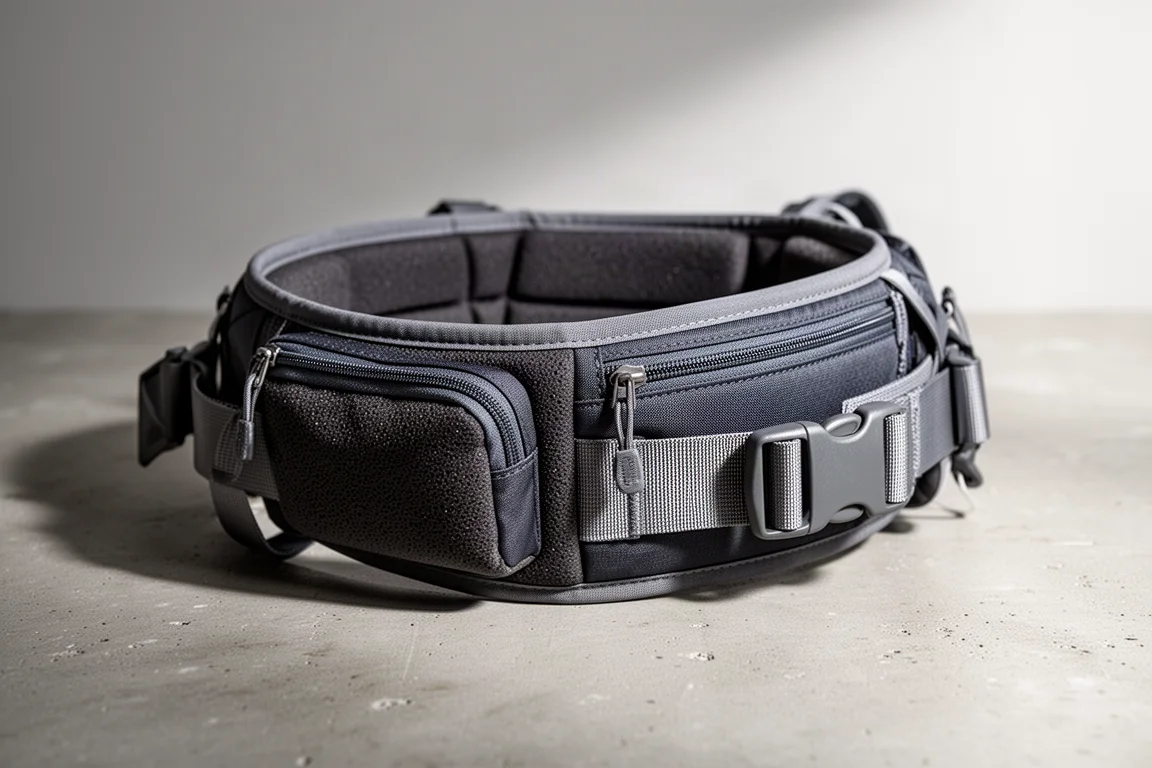
Individually these are minor annoyances. Together they make the pack feel like it was never tested on a trail, which is a fair description of the harness as a whole.
Hydration, Ventilation and Access
There is no internal hydration sleeve and no clips, so a bladder cannot be secured inside the main cavity. It has to sit loose on top of your gear, which means carrying a hydration bladder with this pack is impractical even though the pack is hydration compatible with hose ports on both sides.
Side water bottles are also difficult to reach while the pack is worn. In practice you have to take the pack off to get a bottle out and to put it back.
Ventilation is poor. The back panel is completely flat, with a dense foam surface and only a small section of lumbar padding. On a hot day there is nowhere for moisture to go, so a shirt gets wet and stays wet.
Buying Advice
At around $90, this is difficult to recommend. The materials, the rigid frame, the generous capacity, and the included rain cover are all genuinely good, and if the harness matched a wider range of bodies it would be a compelling budget ultralight option. The three-inch neck gap, the fixed low sternum strap, the tiny hip belt pockets, and the flat back panel are not minor details. They affect every hour of carrying.
It is worth noting what the same money buys elsewhere. Around $80, polyester packs from other brands are common, and they trade some material durability for a more conventional, often more comfortable harness. For most hikers, all-day comfort matters more than a fabric specification, and this pack’s shortcomings sit squarely in the comfort column.
If you do decide to try it, confirm two things. First, that a sternum strap is included, since some units reportedly ship without one. Second, that your torso measurement falls inside the 18 to 20 inch range. Because the fit problems cannot be corrected through adjustment, ordering outside that range is a gamble.
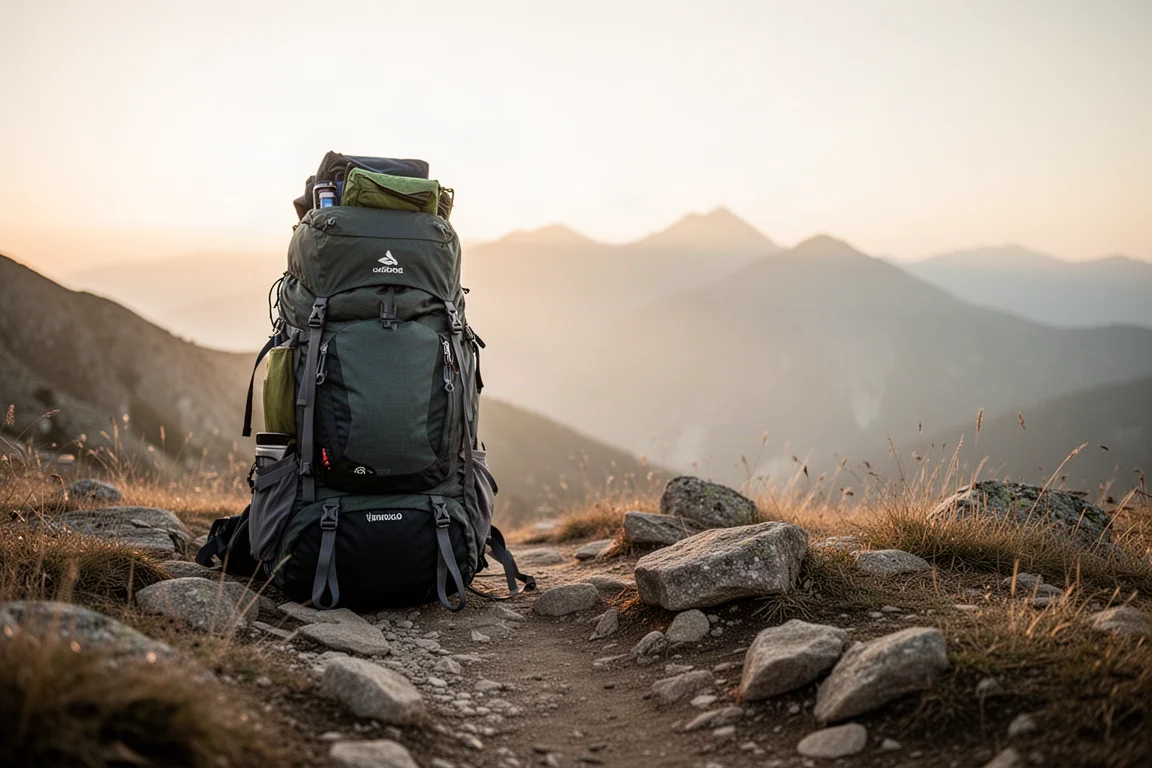
The pack does have a solid foundation in its storage design. The front mesh pocket, the compression straps, and the interior volume are all well executed. It is the half of the pack that touches your body that lets it down, and that is the half that decides whether a backpack is worth owning.
Conclusion
The NatureHike 60+10 gets the easy parts right and the hard parts wrong. Nylon construction, YKK zippers, a rigid frame, a large expandable cavity, and a working rain cover make it look like excellent value on paper, and for a moment it feels like one.
Then you put it on. The harness spacing presses into the neck, the sternum strap cannot be moved to where it belongs, the hip belt pockets hold almost nothing, a hydration bladder has no proper home, and the flat back panel traps heat. None of that is fixable with adjustment.
For a narrow group of buyers whose torso sits in the 18 to 20 inch range and who mostly want cheap volume and light weight, the pack can still make sense. Everyone else should look elsewhere before spending $90 on a backpack they will not enjoy carrying.
Product link
View more details for NatureHike 60+10 Backpack (Nylon)
This product is mentioned in the review. Check the specifications, options, and compatibility before buying.
View more details for NatureHike 60+10 Backpack (Nylon)Further reading
Related Reviews
Hiking Backpacks
Decathlon MT 900 70+10 Backpack Review: Big Capacity, Heavy Weight, High Price
A feature-dense 80-liter hiking backpack with excellent build quality, ten pockets, and dual loading, held back by a six-pound weight and a $210 price.
Hiking Backpacks
Martingtop 65L MOLLE Hiking Backpack Review: Capacity and Value, Undone by Hardware
A 65-liter tactical-style internal frame pack with MOLLE webbing, an adjustable torso, and a rain cover, held back by slipping hardware and a flexible frame.
Hiking Backpacks
Osprey Rook 65L First Look: Osprey's Most Affordable 65L Backpack
A detailed first look at the Osprey Rook 65L, the least expensive 65-litre pack Osprey makes at $190, covering its suspension, storage layout, weight, materials, and the trade-offs to weigh before buying.