Road Bike Handlebars
Narrow vs Wide Handlebars: ENVE SES Aero and ENVE Compact Wind Tunnel Data
A wind tunnel comparison of a narrow ENVE SES Aero handlebar and a 40 cm ENVE Compact round bar, covering drag savings, angled hoods, and the real-world trade-offs.
Introduction
Handlebar width has become one of the more debated fit choices in road cycling. Narrow bars with flared drops are turning up on race bikes, and the question is whether narrower hoods and angled hoods genuinely reduce drag, or whether the difference is too small to matter outside a wind tunnel.
To find out, a comparison was run in a wind tunnel at a specialist sports engineering facility, using a rider on an aero road bike. Two ENVE handlebars were put through their paces: a narrow aero model and a conventional round bar. The runs measured the power required to hold 30 km/h and 40 km/h at two yaw angles, with hands both on the hoods and in the drops.
How the Wind Tunnel Test Was Set Up
The bike was built up without brakes or gears so that handlebars could be swapped quickly between runs, which kept the rest of the setup as consistent as possible. Each test covered two speeds, 30 km/h and 40 km/h, and two yaw angles, 0 degrees and 10 degrees, with data collected on the hoods and in the drops.
The metric was straightforward: the power required to ride at a given speed. Lower drag shows up as less power needed, which is a result most riders can relate to even if they never pin on a number.
Holding an identical position across a run turned out to be the hardest part of the day. Even small shifts in posture can affect drag readings, which is a useful reminder that wind tunnel numbers are best read as directional rather than absolute.

The two handlebars compared here share the same 42 cm width in the drops, which is deliberate. It isolates what happens when the tops and hoods get narrower, since descending stability stays broadly comparable between them.
ENVE SES Aero Handlebar: Narrow Hoods, Wide Drops
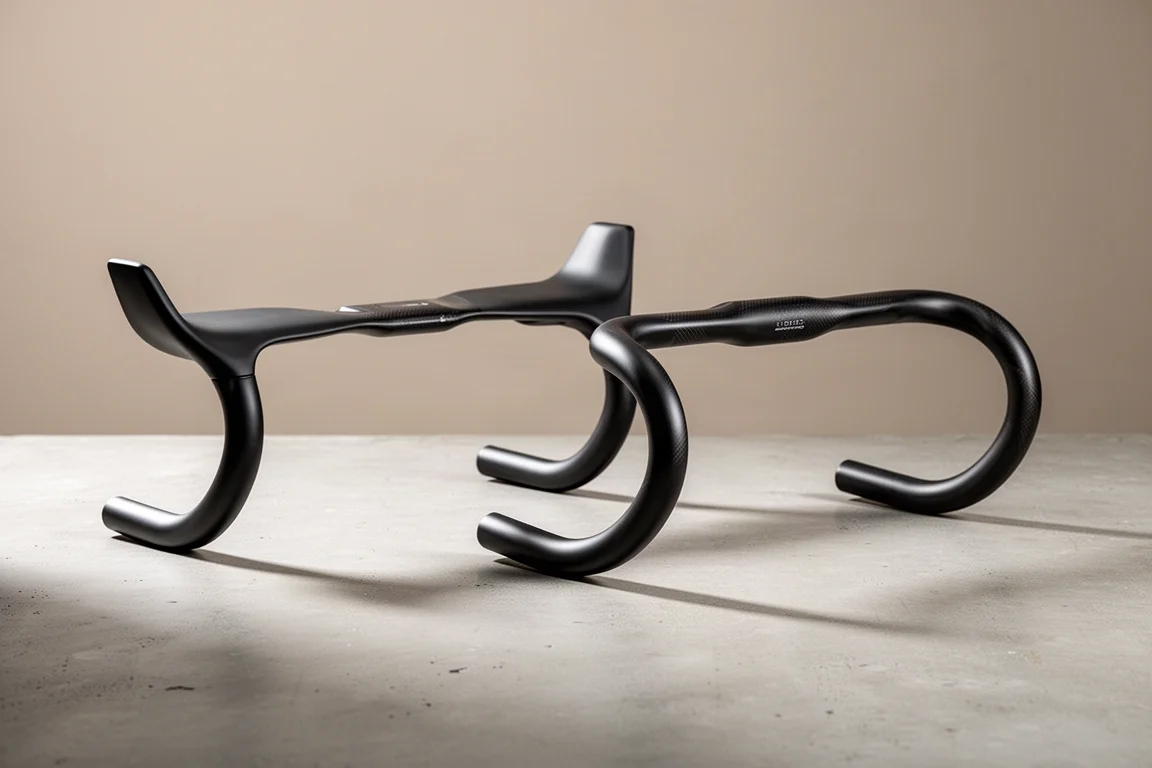
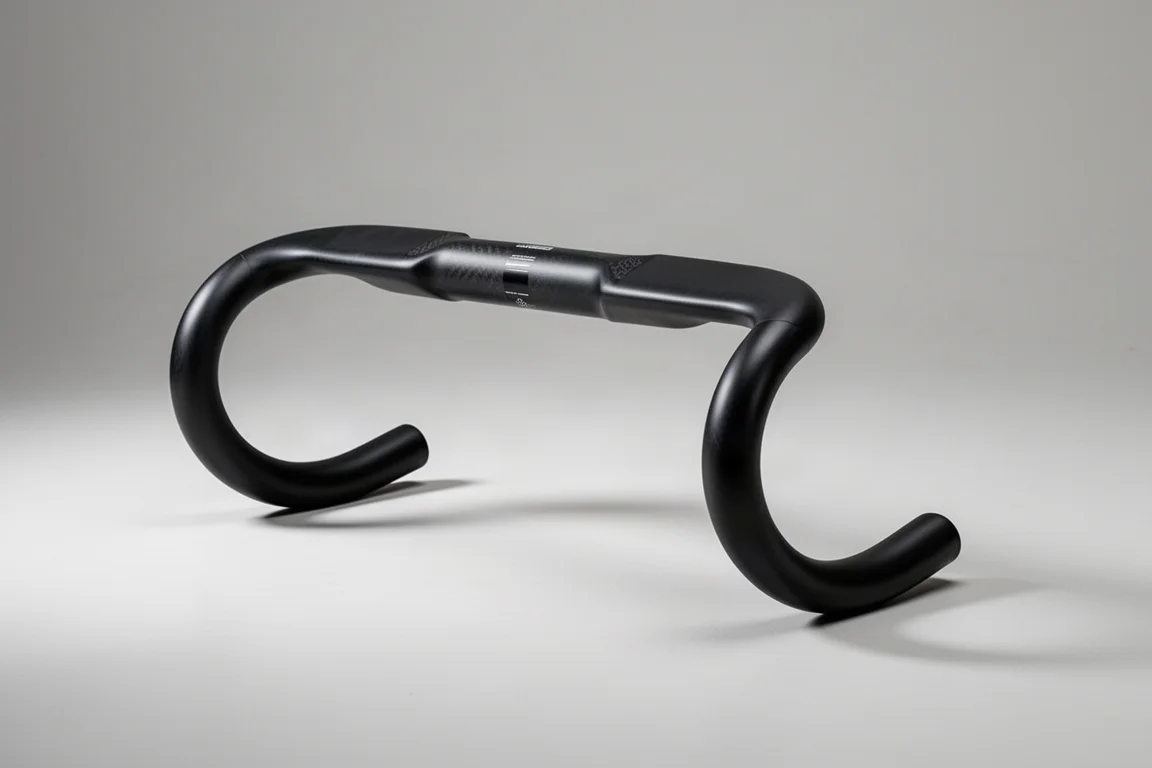
The ENVE SES Aero is the narrow option in this comparison. It measures 37 cm across the hoods and tops, while the drops remain at 42 cm thanks to a flared shape that sweeps outward below the hoods.
That flare is the practical part of the design. Riders get a narrow, low-drag platform on the hoods for long stretches of steady riding and climbing, plus a wider 42 cm stance in the drops for descending, where grip width contributes to stability and confidence.
It is aimed at riders who want to spend most of their time in a narrow position without giving up the control they rely on when the road points downhill or the pace lifts.
ENVE Compact Handlebar: The 40 cm Baseline
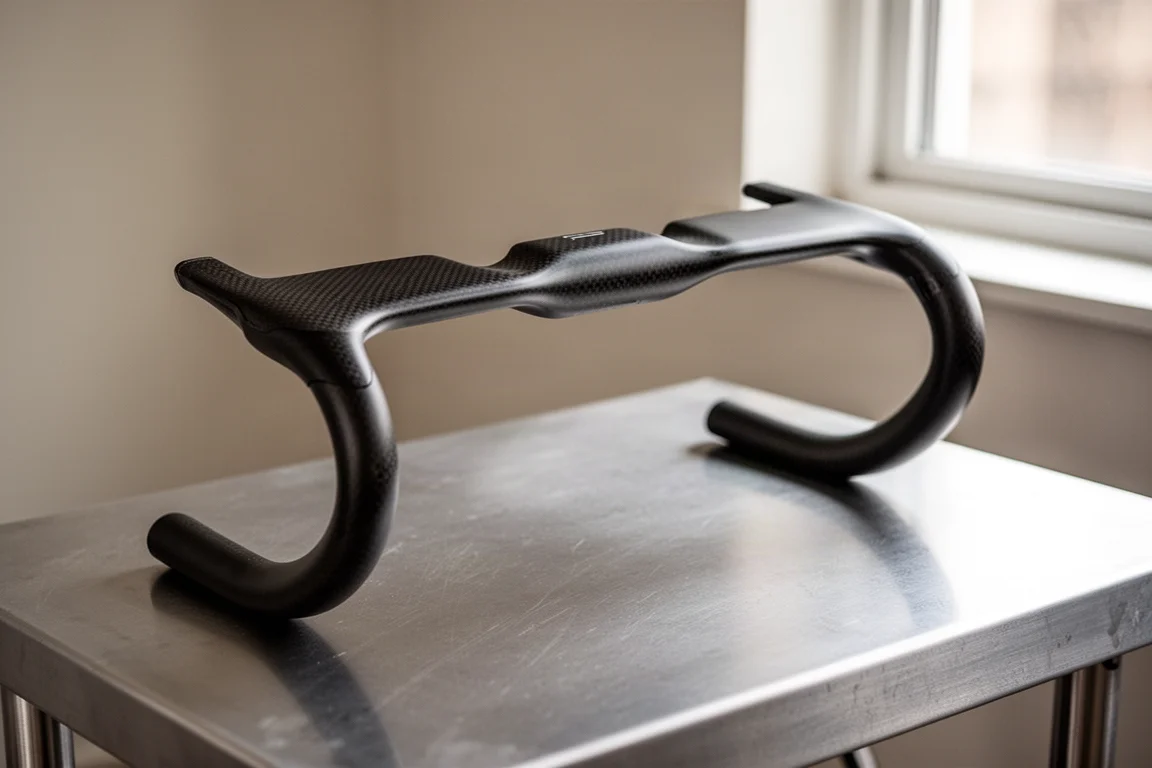
The ENVE Compact is a conventional round-profile bar, measuring 40 cm across the tops with 42 cm drops. It served as the reference point for the whole test.
Round handlebars like this remain the default on most road bikes because they are predictable. The tube profile is uniform, the bend is familiar, and the width stays consistent from the tops through to the hoods.
That consistency is exactly what makes it a fair baseline. Any difference in the numbers can be attributed to the narrow hoods and aero shaping of the other bar rather than to a change in drop width.
What the Wind Tunnel Data Shows
On the hoods, the narrow aero handlebar reduced drag considerably compared with the 40 cm top, 42 cm drop round bar. The saving reached as much as 20 watts at 40 km/h, and there was still roughly a 10 watt difference at 30 km/h.
For a single component swap, that is a substantial gap, and it helps explain why narrow hood setups have spread through the professional ranks.

In the drops, the difference between the two bars was smaller, though the aero bar still showed lower drag. With hands in the drops, both handlebars present the same 42 cm width, so the front-facing shape and area are much closer, which explains why the gap narrows.
Do Angled Hoods Make a Difference?
The final part of the test looked at hoods angled inward by roughly 10 degrees compared with straight hoods. Across every speed and yaw angle tested, the angled position produced a measurable improvement, though the gain was small next to the difference between the two handlebars.
The honest reading is that angled hoods are a marginal gain. For riders who care about every last watt, it is worth testing. For everyone else, it is a detail unlikely to change how a bike feels.
One observation from the session is worth repeating: the narrowest setup combined with angled hoods felt too narrow for comfort, and a partial tilt was preferred over a full inward angle. Fastest in the tunnel and fastest on the road are not always the same thing.
Comfort and Handling Trade-Offs
Wind tunnel data says nothing about how a handlebar feels after three hours, how it steers through a fast corner, or how it behaves in gusty conditions. Those questions need road testing, and they matter at least as much as a drag figure.
The trade-off is easy to state: the narrow hood position is faster, but it also brings the hands closer together, which changes steering input and can feel less stable to riders accustomed to wider bars.

There is a case for narrow bars that has nothing to do with racing, though. Lower drag means less power required to hold a given speed, so on long rides and sportives the savings show up as energy left in the tank for the final climb or sprint. The same applies in a headwind, where cutting drag reduces the effort needed to keep moving at the same pace.
Buying Advice: Choosing Your Handlebar Width
The choice comes down to what you are optimising for. If you race, ride fast group spins, or simply want to reduce the effort required at speed, the narrow hood geometry on the ENVE SES Aero is the more compelling option, and the tunnel data backs up the width difference.
If familiarity matters more, or if you have never found wider bars uncomfortable, the ENVE Compact is the safer pick. It is a straightforward round bar with consistent width, and it will feel immediately natural.
For riders sitting on the fence, the middle path is the one the testing suggested: keep a position you can hold for hours and, if you want the aero benefit, start by tilting the hoods in slightly rather than jumping straight to the narrowest setup available.
Conclusion
The testing points in one clear direction. A narrow aero handlebar produced meaningfully less drag than a conventional round bar, particularly on the hoods, with up to 20 watts at 40 km/h and around 10 watts at 30 km/h. Angled hoods added a smaller but consistent gain.
What the numbers cannot answer is comfort, and that is where the decision really lands. The ENVE SES Aero suits riders willing to trade some familiarity for speed and energy savings, while the ENVE Compact remains the dependable choice for anyone who wants predictable handling above all.
Further reading
Related Reviews
Cycling Components
7 Bike Fit Products Fitters Avoid: What to Check Before You Buy
Seven bike components that regularly cause knee, foot and saddle problems, with the specific concerns behind each one and what to look for instead.
Cycling Components
AliExpress Bike Parts: 8 Brands Worth Knowing Before You Order
A practical guide to buying bike parts from AliExpress, covering eight established brands, realistic shipping and tax expectations, customer service, and how to avoid counterfeit components.
Cycling Components
AliExpress Race Bike Build Review: What 20,000 Miles Revealed
A long-term look at a budget race bike build, covering an Elves Falath Pro frame, a Sensah Empire Pro groupset, Elite Wheels carbon rims, and Continental GP5000 tires.