Aquarium Gear
Nano Reef Tank Setup: The Gear That Gets Beginners to a Stable Tank
A practical guide to the aquarium, pumps, rock, sand, and adhesives behind a beginner-friendly nano reef build, with the reasoning behind each pick.
Introduction
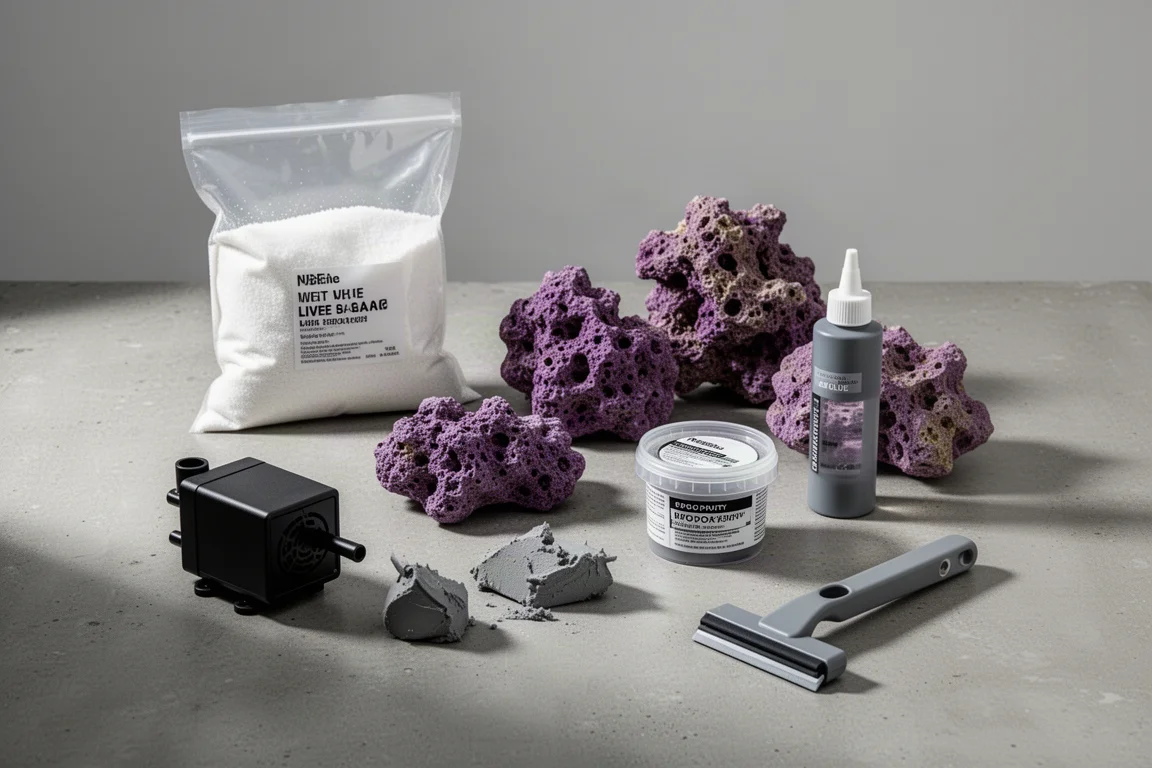
A nano reef tank rewards careful choices more than expensive ones. A 45-gallon all-in-one system only needs a handful of components to run well: a return pump setup sized to the tank, dry reef rock that gives bacteria a home, live sand that supports the creatures living in it, adhesives that hold the rock structure together, and a scraper that keeps the glass clear.
This guide covers the gear that makes a beginner-friendly nano reef build straightforward, along with the reasoning behind each choice so you can decide what fits your own tank.
How to Evaluate a Beginner Nano Reef Setup
Water turnover is the first thing to get right. Current thinking favours turning the tank volume over roughly three to five times an hour, which works out to about 135 to 225 gallons per hour in a 45-gallon system. Older advice pushed for ten to fifteen turnovers an hour, and that much flow stripped organic compounds and food particles out of the water that sensitive organisms such as corals actually need.
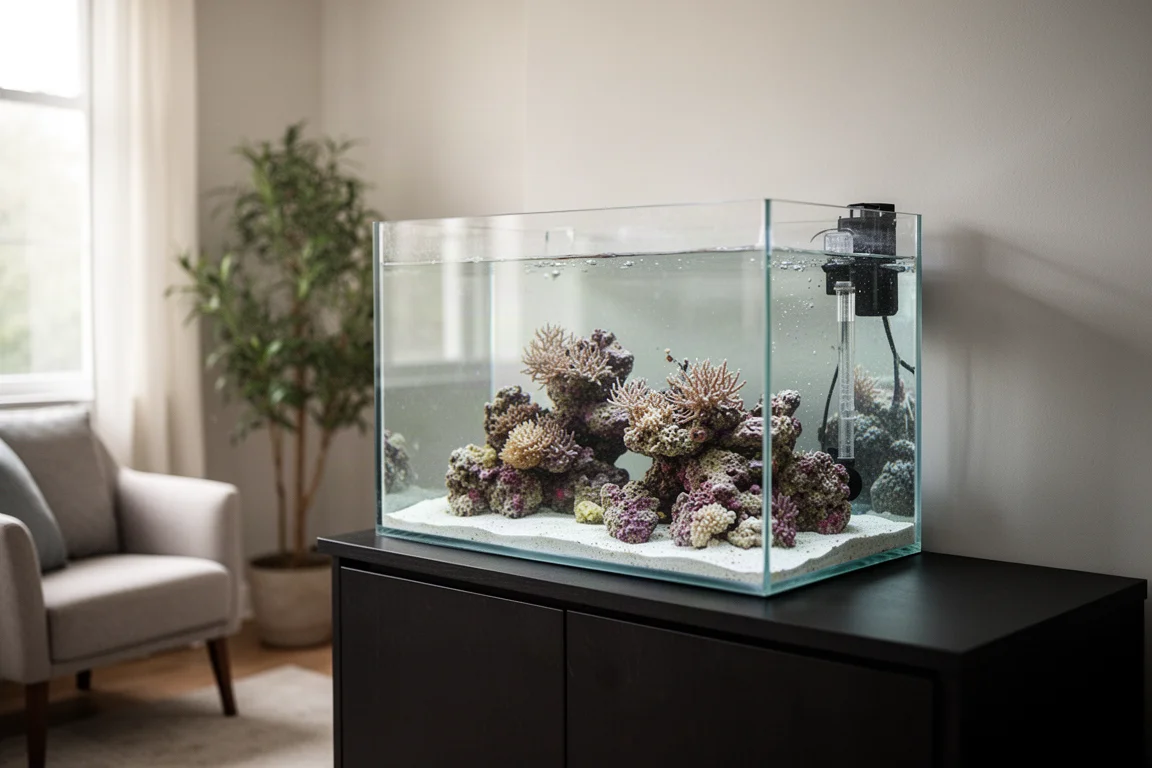
Rock and sand do most of the biological work. Porous rock invites beneficial bacteria to colonise its surface, converting dangerous ammonia into less harmful nitrite and nitrate. A sand bed adds surface area for the same bacteria, gives burrowing animals somewhere to live, and helps buffer water parameters when it is made of aragonite.
Simplicity also wins in small tanks. A minimal rock structure that leaves room for corals and macroalgae to grow into looks better over time than a tall, densely packed arrangement.
The Foundation: JBJ RF45 Aquarium
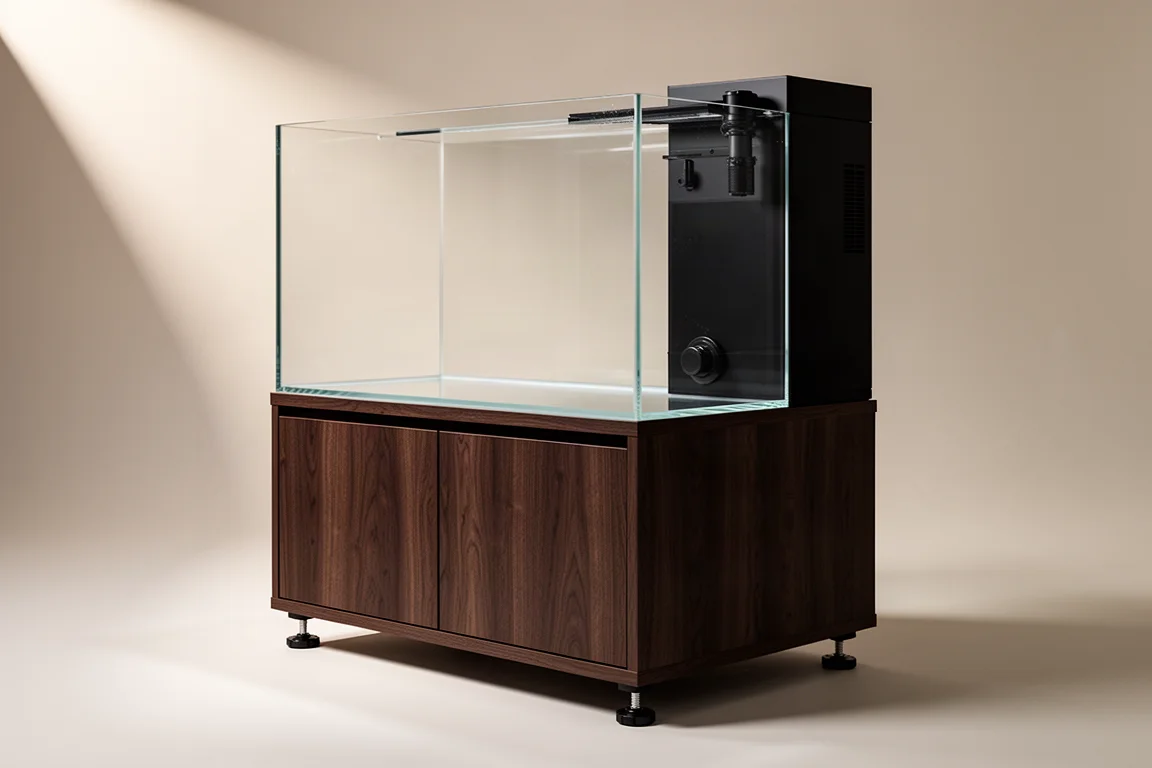
The JBJ RF45 is a 45-gallon all-in-one system with a rear filtration chamber, a glass display measuring roughly 15 inches by 25.5 inches on the inside, and a cabinet stand with four adjustable feet. It arrives with two AC return pumps already installed, along with the flexible tubing and 90-degree output elbows that connect them to the display.
For a first tank, that completeness matters. The overflow, return plumbing, and filtration chamber are already solved, so a beginner can focus on pumps, rock, and sand rather than on drilling glass or planning a sump.
Quiet Return Pumps: AI Axis 40
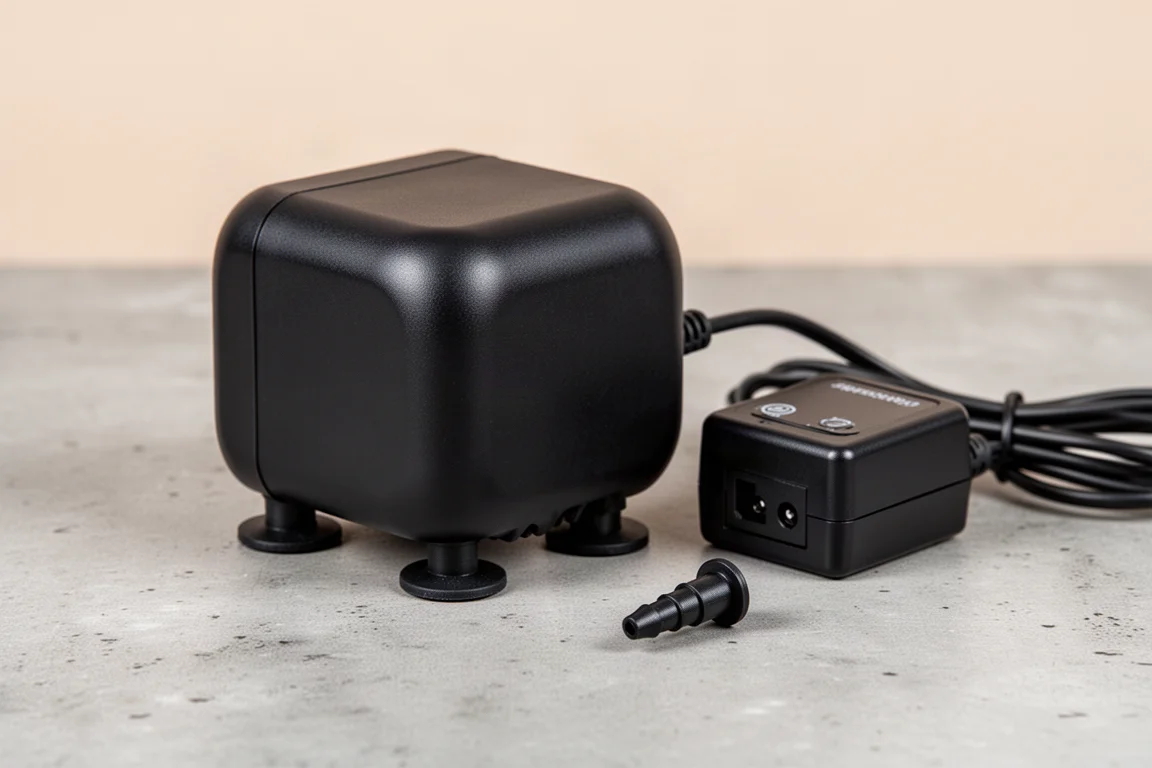
The stock AC pumps are functional, but AC motors carry a constant vibration hum that becomes tiring in a room you spend time in. Swapping to controllable DC pumps removes most of that noise, and the AI Axis 40 is a good fit for this tank for three practical reasons.
First, it runs on the Mobius app, which matters later when matching lights and wave makers are added, since everything can be managed from one place. Second, its shape suits the narrow rear chamber better than most return pumps. Third, its 3/4-inch barb output nozzle lines up exactly with the flexible tubing the tank already uses.
Setup is simple. Press the rubber feet into the base, push the smaller of the two nozzles into the output, and slide the pump into the rear chamber. The bottom cover can be pulled free for cleaning later, which makes maintenance easier. Keep the original AC pumps as backups rather than discarding them.
Sizing deserves attention. A pair of high-output pumps rated at 800 gallons per hour each would push roughly 40 turnovers an hour through a 45-gallon tank, far beyond what the system needs and a common beginner mistake. Two smaller pumps reach the three to five turnover target with room to spare.
Dry Reef Rock: CaribSea Life Rock
Reef rock is any rock, quarried or human-made, designed for saltwater aquariums. It is typically calcium carbonate, the same material corals use to build skeletons, and it is highly porous so beneficial bacteria can colonise the interior as well as the surface.
Wet rock, harvested from the ocean and shipped damp, arrives with bacteria and other organisms already in place. It can be excellent for experienced keepers, but it also brings unwanted organisms that take experience to manage. Dry rock avoids that trade-off and is the safer starting point for a beginner, even though it arrives without an established bacterial population.
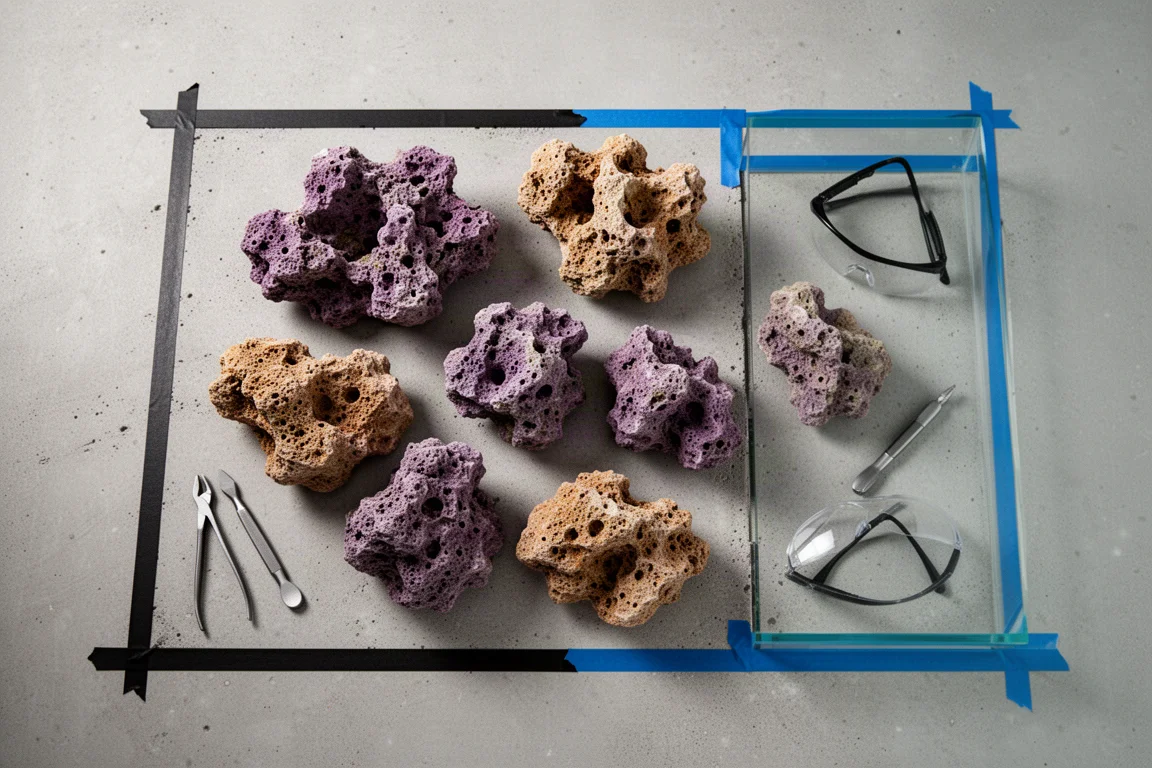
CaribSea Life Rock is human-made dry rock with a coralline colour finish and a broad range of shapes and sizes. The claimed bacterial spores did not produce an obvious advantage in practice, but the colour reads as natural and the shape variety makes building a stable structure much easier. Real Reef Rock and Marco Rocks are two other dry options that also work well.
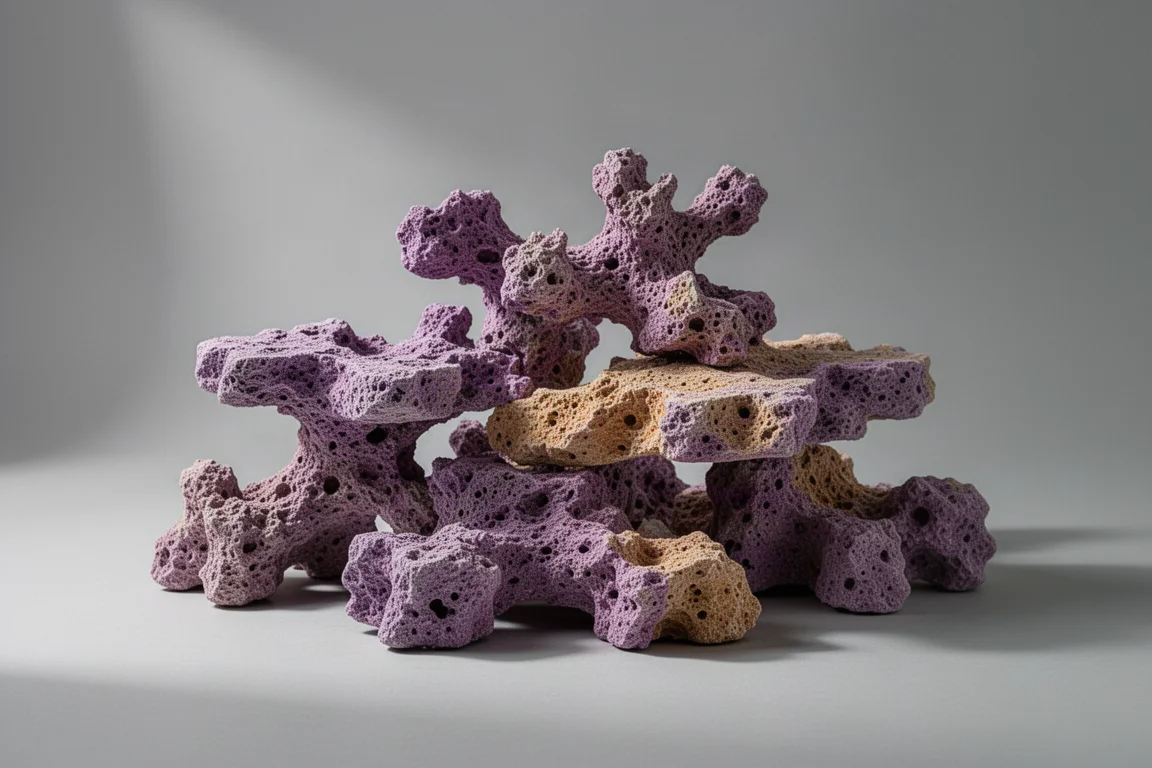
Nano-Sized Pieces: CaribSea Nano Life Rock
Buying more rock than the tank needs is a deliberate strategy, not waste. Extra pieces give more options when building the structure, and the leftovers stay useful.
A 10-pound box of CaribSea Nano Life Rock supplies smaller pieces that suit a minimal aquascape or fill gaps between larger rocks. Save any pieces that break in transit as well. Small rubble is the best way to hide glue and epoxy seams once the structure is built, and that detail makes the finished scape look far more natural.

Live Sand: CaribSea Ocean Direct Original Grade Sand
Sand choices come down to three decisions: wet or dry, colour, and grain size. In a small tank, wet sand is the clear answer. CaribSea Ocean Direct Original Grade Sand is harvested from the ocean and packaged with ocean water, so it arrives populated with a diverse range of beneficial bacteria that help stabilise a new tank.
Grain size matters just as much. Sugar-fine sand blows around with even modest flow, while crushed coral traps food and waste and can contribute to long-term water quality problems. Original grade sits in the middle, which suits sand-sifting animals and burrowing species such as pistol shrimp and gobies.
Black sand is worth avoiding for a different reason. The magnetic Hawaiian black variety gets picked up by magnetic algae scrapers and dragged across the glass. A 40-pound bag of original grade sand is enough for a two-inch bed across the display of a 45-gallon tank, and the bag includes a water clarifier pouch for use when seawater goes in.
Two handling notes are worth remembering: never rinse the sand, since rinsing washes away the bacteria, and keep it wet. If the sand bed goes in well before the water does, covering the tank with plastic wrap limits evaporation.

Aquascaping Epoxy: Tunze Coral Gum
Epoxy and superglue do different jobs in an aquascape. Epoxy is very strong once cured and forms a rigid structure between rocks, but it is not sticky while it is being worked, which is why superglue is used alongside it. Superglue makes the epoxy adhere to the rock and provides an immediate bond, while the epoxy supplies long-term strength.
Tunze Coral Gum is a two-part putty that is easier to knead and mould than stick-type alternatives and has noticeably less odour. Knead two equal portions together until the colour is uniform, then work quickly because curing starts as soon as the parts are combined.
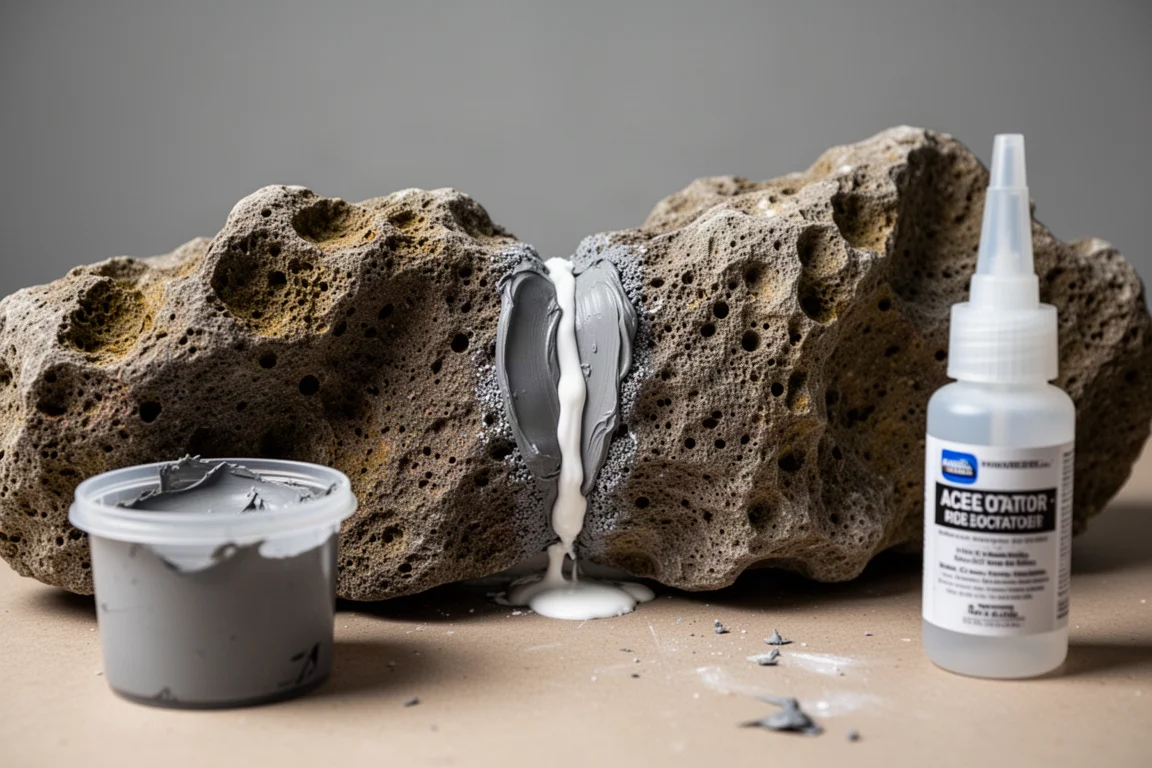
Push the epoxy into nooks and crannies between the rocks rather than relying on surface contact, since the putty needs to lock the pieces together once it hardens. Pressing small pieces of rubble rock into the surface before it sets gives the joint a more natural texture. Full curing can take up to 24 hours, though the structure is usually strong enough to move after a couple of hours.

Superglue: Bulk Reef Supply Extra Thick Superglue
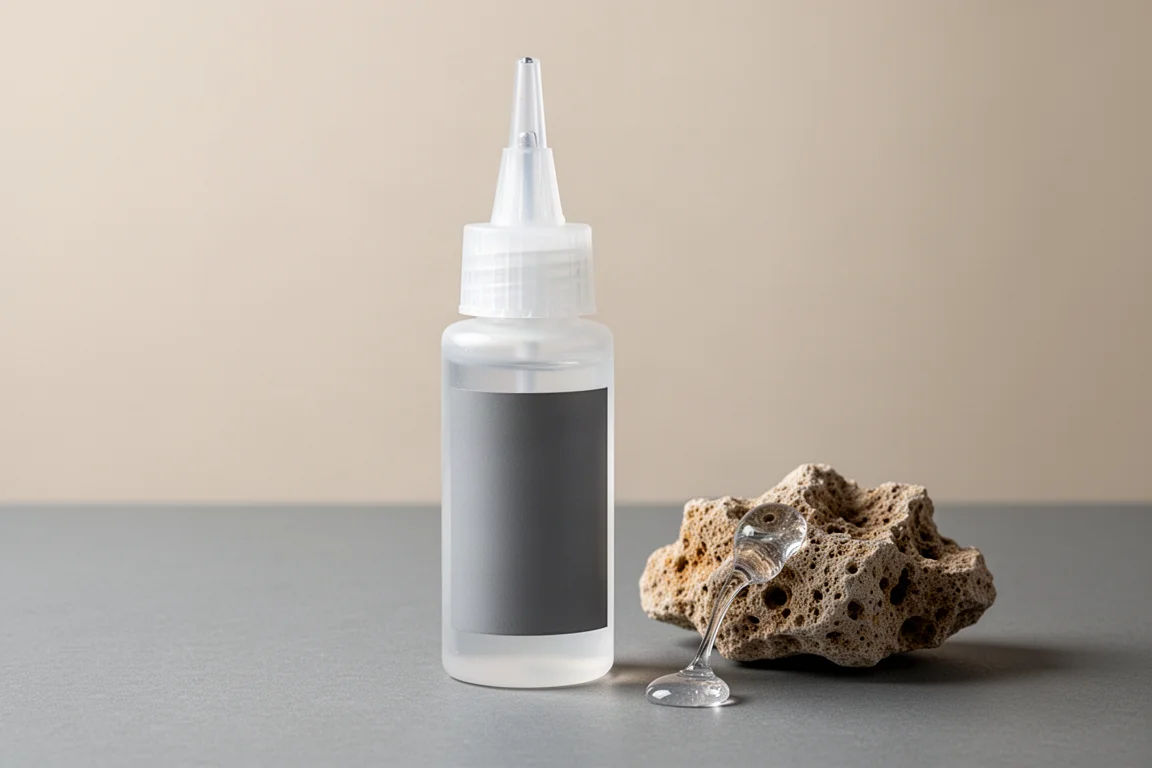
The technique for securing two rocks is superglue, then epoxy, then superglue. The first layer bonds the epoxy to the rock, the epoxy provides structural strength, and the final layer holds everything in place while it cures. A spray of accelerator hardens the superglue on contact and gives the joint immediate stability while the rest of the structure is built.
Extra thick cyanoacrylate is easier to control than thin glue because it stays where it is applied. Bulk Reef Supply’s bottle is far larger than a single aquascape requires, but the surplus goes toward mounting coral fragments later. One caveat: dried superglue is white, so exposed seams stand out until they are covered with rubble rock or colonised over time.
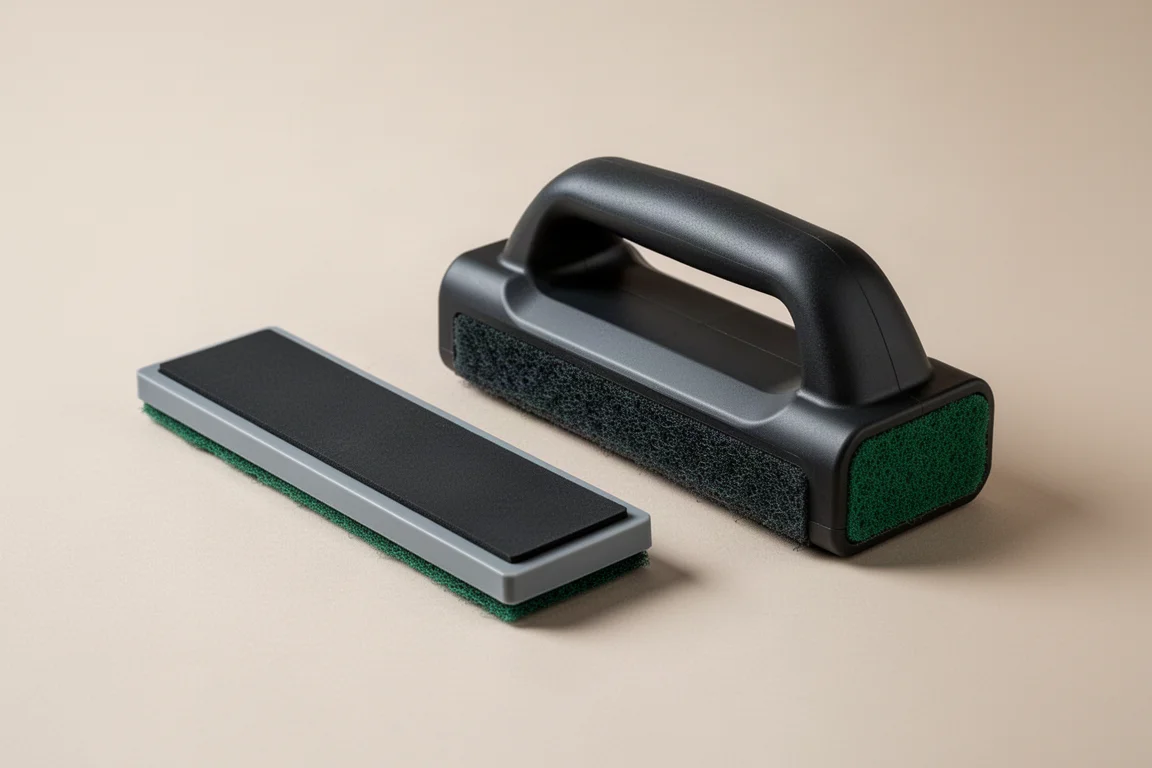
Algae Control: Flipper Float Magnetic Algae Scraper
Magnetic scrapers make weekly glass cleaning quick, but they need clearance to work. Leaving a one-inch gap between the rock structure and the glass panels means the scraper can pass freely around the display without disturbing the scape.
That gap also protects the glass. Sand trapped between the two halves of a magnetic scraper is one of the most common ways aquarium glass gets scratched, which is the same reason magnetic black sand is best left out of a setup that relies on a magnetic cleaner.
How to Plan Your Aquascape
Decide what the tank is for before building the rock structure, because the answer shapes everything. A minimal scape of two separate islands suits a tank that will be filled with fast-growing macroalgae and corals, and it keeps anemones on their own rock so they are less likely to wander across the sand bed toward the coral.
Aim for a slope that runs from larger rock at the rear right down to smaller pieces at the front left. This creates a sense of depth and improves the viewing angle from the room. Keep the vertical space relatively open so coral and macroalgae have somewhere to grow, and leave caves, nooks, and crannies for timid fish to hide in and for anemones to anchor their feet.
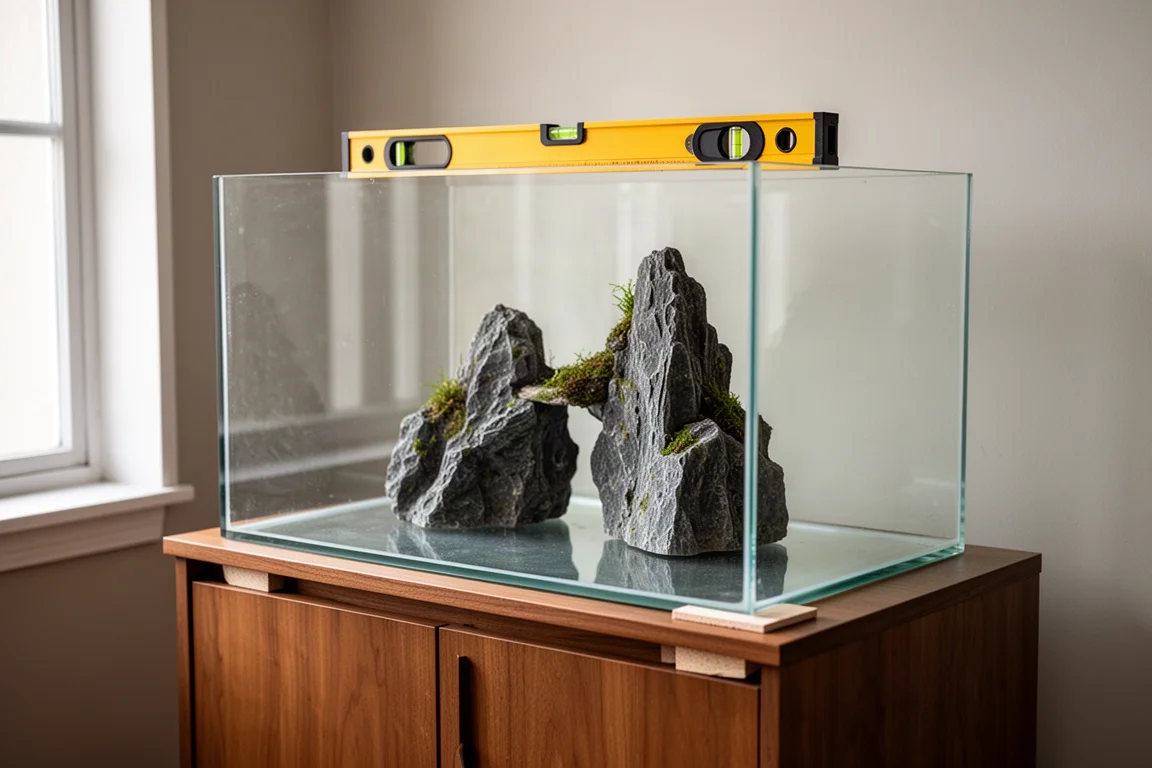
Set the rock directly on the glass bottom rather than on top of the sand. Sand-dwelling and sand-sifting animals gradually shift the bed, and a structure resting on sand can settle unevenly. Once the rock and sand are in, level the cabinet stand with composite shims rather than wood, since wood absorbs water and can throw a level tank out of alignment over time.
One last habit is worth copying: clear the area around a finished scape, step out of the room, and walk back in to look at it with fresh eyes. A few passes of that catch problems a long build session hides.
Conclusion
A beginner nano reef tank does not need much: a complete all-in-one aquarium, two quiet controllable return pumps sized to roughly three to five turnovers an hour, dry reef rock in a couple of sizes, wet aragonite sand, epoxy and superglue for a stable structure, and a magnetic scraper for routine glass care. Choosing each piece with the tank’s end goal in mind is what separates a setup that struggles from one that settles in and fills out.
Further reading
Related Reviews

Backpacking Gear
Building a 10 lb Base Weight: An Ultralight Backpacking Gear List
A practical walkthrough of the ultralight pieces behind a 10 lb base weight, from a 765 g pack and a roomy one-person tent to a full camp chair and a dependable water filter.

Road Bikes
10 New Road Bikes Worth Watching: Aero, Titanium, Steel and Endurance Standouts
A practical roundup of 10 new road bikes, from aero flagships chasing single-watt gains to titanium, steel and endurance platforms built for real roads.
Saltwater Aquarium Setup
10 Questions About Cycling a Saltwater Aquarium: What You Need to Know
Essential questions and answers for cycling a reef tank or saltwater aquarium, from biome building to light management and bacterial supplements.