Cycling Accessories
Muc-Off Tubeless Repair Kit Review: A Bar-End Plug Kit for Bigger Punctures
A close look at the Muc-Off Tubeless Repair Kit, a bar-end mounted plug system that handles the punctures sealant alone cannot close, and what to weigh before buying.
Introduction
A flat tyre can end a ride in seconds. For riders who have moved to a tubeless setup, most small punctures never become a problem at all: the sealant inside the tyre closes the sort of narrow cuts caused by glass, flint or thorns. It is the bigger holes that cause trouble, when air escapes faster than the sealant can seal it.
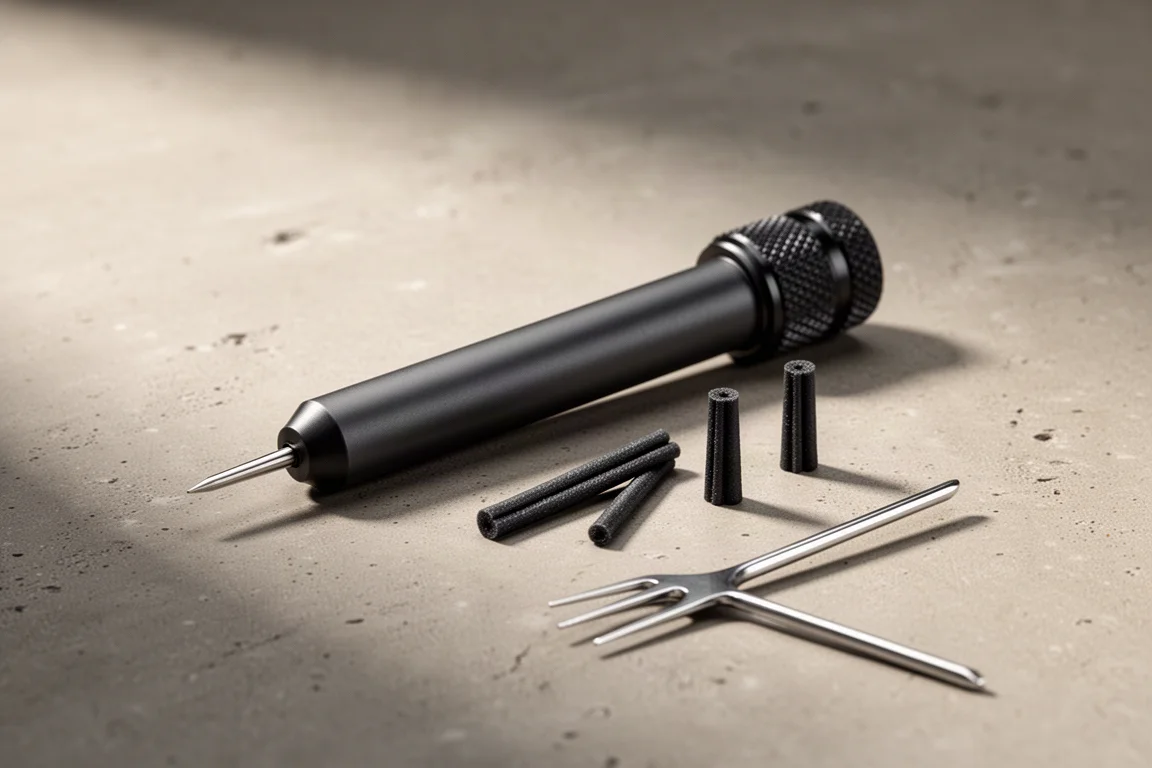
That is the gap a tubeless repair kit is designed to fill. The Muc-Off Tubeless Repair Kit is one of the more thoughtfully packaged examples, largely because the tool stores inside the ends of the handlebar rather than in a pocket or saddle bag. This review covers what the kit contains, how the plugging process works in practice, and where a plugged tyre still makes sense.
What Comes in the Kit
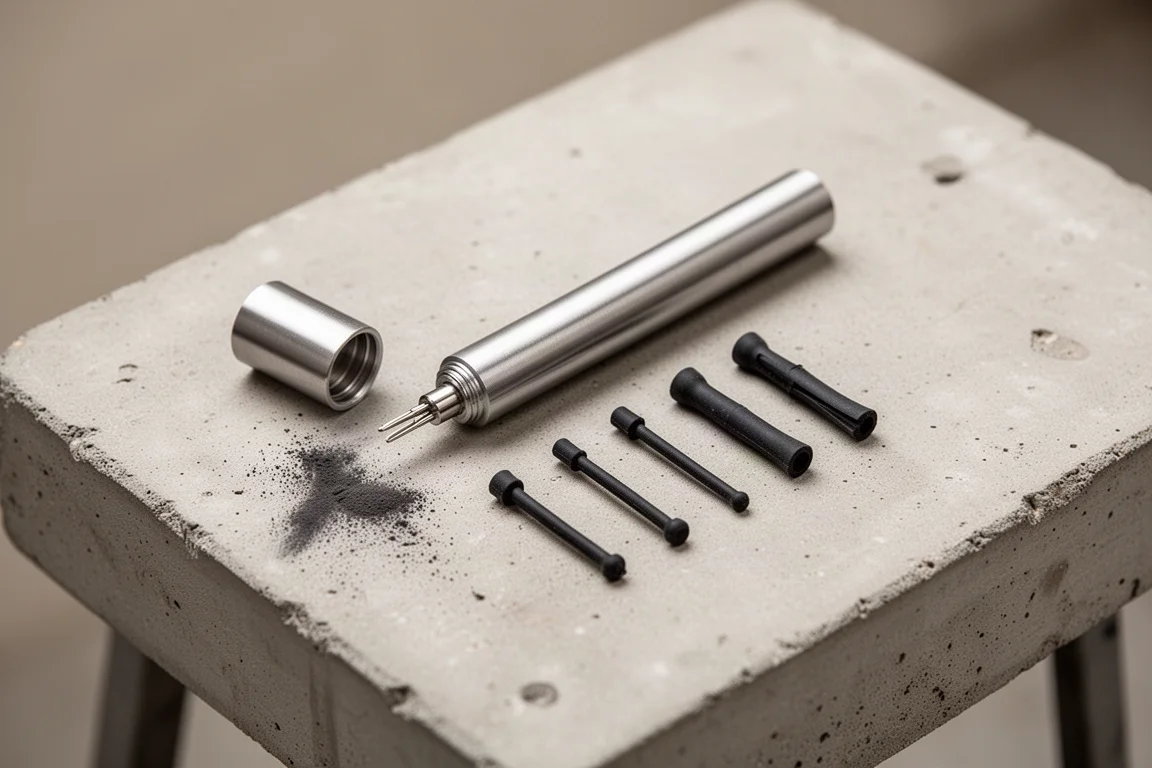
Unscrewing the barrel of the tool reveals the working parts: a small pronged insertion tool and a supply of sticky plug strands, supplied in three thicknesses. A thin strand suits road tyres, a medium one suits gravel tyres, and a thicker one is intended for mountain bike tyres. Matching the strand to the size of the hole is the guiding principle, so a road puncture calls for the smallest option.
A printed instruction booklet is included in the box, which matters for anyone attempting a repair for the first time. The strands themselves are straightforward to prepare: one is peeled away from the strip, threaded through the prong, and folded back on itself. The tool can be loaded ahead of time and capped, so it sits ready to use before anything goes wrong.
Who This Kit Is For
This kit is aimed at riders who already run tubeless tyres and want a compact way to handle punctures that sealant cannot close. Because the tool lives inside the handlebar, it suits road, gravel and mountain bikes alike, and it removes the need to remember a separate repair pouch on every ride.
It is also a sensible option for riders who flatten tyres regularly, whether from road debris or trail hazards. Anyone still running inner tubes will find the kit irrelevant until they switch to a tubeless system.
Main Strengths
The bar-end storage is the standout idea. Keeping the tool permanently on the bike means it is present when it is needed, rather than left at home with the rest of the ride kit. For riders who dislike carrying extra bulk in a jersey pocket or saddle bag, that alone is a meaningful advantage.
The three strand sizes give the kit wider reach than a single-size plug tool. A thin strand for 28mm road tyres, a medium one for gravel, and a thick one for wider mountain bike tread covers most tubeless setups a rider is likely to own. Colour options are available too, so the kit can be matched to the bike.
Things to Consider Before Buying
On a thin, slick road tyre, the repair is less invisible than on a treaded tyre. A plug can be trimmed flush using the tool, but a slight bump may remain. On a knobbly mountain bike or gravel tyre, excess material can simply be left in place to wear down and blend into the tread over time, so the concern is largely specific to smooth road rubber.
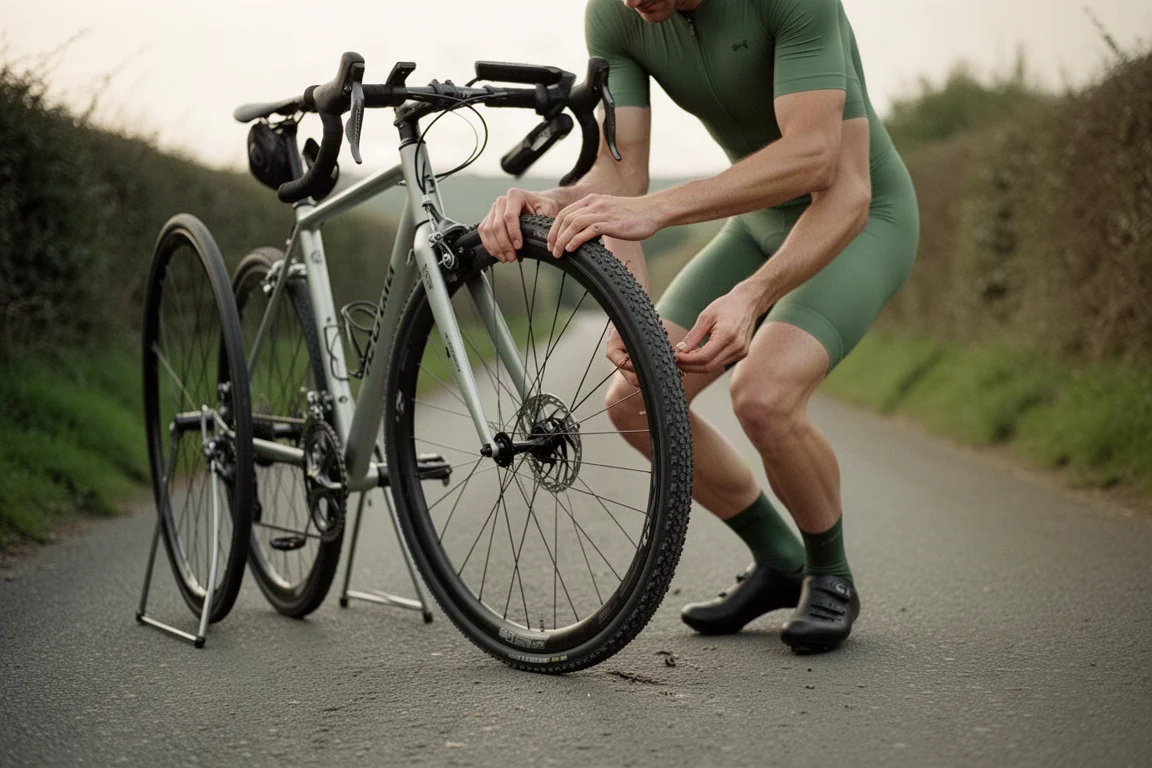
Pressure matters as well. The kit is used here on 28mm tyres run at roughly 60 to 65 psi, a comparatively low figure. Tyres pumped considerably harder are a different proposition and the tolerance for a plug is narrower.
Finally, judgement plays a role in how permanent the fix is. On training tyres, a plug can be left in for the long term. On a best set of tyres kept for racing, some riders will prefer to fit a new tyre afterwards and keep the plugged one as a spare.
Plugging a Puncture in Practice
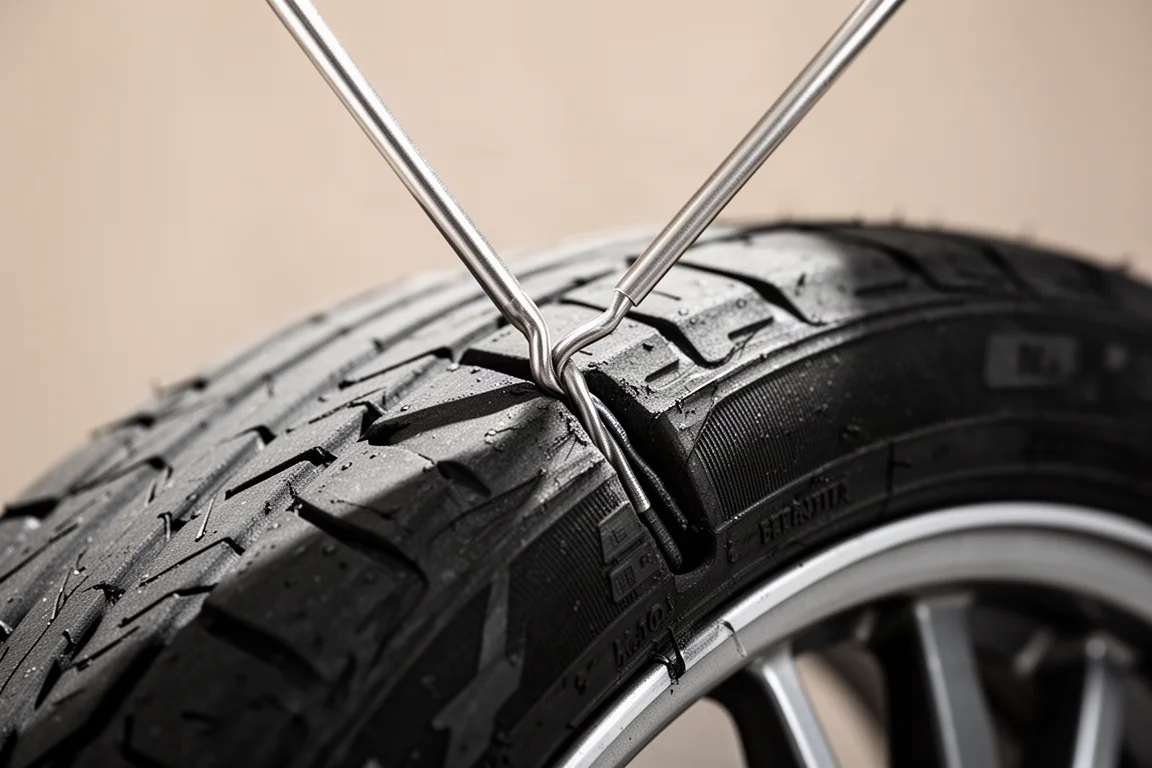
The process is quick once the tool is loaded. The pronged tool is pushed into the hole to roughly the halfway point, then twisted and pulled back out, leaving the plug strand behind in the tyre. Air stops escaping immediately, and the hole is closed.
Cutting a hole in a tyre deliberately takes real effort, and the casing beneath the tread can make it a genuine fight, but that is a controlled demonstration rather than a real puncture. In the field, the bike itself gives leverage for pushing the tool home.
Trimming comes next. On a slick road tyre, the protruding ends are cut back flush so the surface stays smooth. On a gravel or mountain bike tyre with a tread pattern, leaving them to wear in is an accepted approach. After that, the tyre is simply reinflated and the ride continues, with no need to abandon the route or write the tyre off.
Long-Term Use and Durability
Plugs are not always a stopgap. Multiple plugs accumulated over several years in gravel and mountain bike tyres have continued to hold up without further attention, which suggests the material bonds into the tyre over time and the repair becomes effectively permanent.
The deciding factor is how a rider feels about a plug sitting in a road tyre. On wider, lower-pressure tyres with a tread pattern, the repair is essentially unnoticeable. On a smooth road tyre, a small raised patch may be perceptible at first and tends to flatten out over a few miles.
Buying Advice
For riders on tubeless setups, this kit earns its place because of where it lives rather than what it does. A plug tool that is always mounted to the bike is more likely to be there when a puncture actually happens, and the three strand sizes mean one kit covers road, gravel and mountain bikes.
The most important question is tyre type. If the plan is to plug gravel or mountain bike tyres, the repair is clean, durable and easy to forget about. If the tyre in question is a race-day road tyre, it is worth treating the plug as a way to finish the ride and reach home, then deciding whether to refit a fresh tyre and keep the repaired one for training.
Conclusion
The Muc-Off Tubeless Repair Kit solves a specific and familiar problem: the puncture that is too large for sealant alone. Bar-end storage, three plug sizes and a clear trimming method make it a practical addition to any tubeless rider’s setup, with the main caveat being how noticeable a trimmed plug is on a thin, high-pressure road tyre. For gravel, mountain bike and everyday road use, it is a straightforward and reassuring thing to have on the bike.
Product link
View more details for Muc-Off Tubeless Repair Kit
This product is mentioned in the review. Check the specifications, options, and compatibility before buying.
View more details for Muc-Off Tubeless Repair KitFurther reading
Related Reviews
Cycling Accessories
7 Inexpensive Everyday Products That Are Brilliant for Cyclists
Seven cheap household products that solve real problems for cyclists, from portable bike washing and dry shoes to clean bottles and protected paintwork.

Cycling Accessories
Amazon Cycling Accessories Worth Buying: Five Practical Picks
A basket of low-cost cycling accessories judged on real-world use, from a dash cam style camera and light combo to bone conduction headphones and one tool best left on the shelf.
Cycling Accessories
Electric Bike Pumps Compared: AS2 Pro Tiny Pump vs AS2 Pro Max
A practical look at two battery-powered bike pumps: what they do well, where they fall short, and which one suits which kind of rider.