Camping Heaters
Mr. Heater Buddy Review: A Dependable Propane Heater for Cold Weather Camping
A close look at the Mr. Heater Buddy, covering its 4,000 and 9,000 BTU output, fuel efficiency, safety shut-offs, and the hose detail worth understanding before you buy.
Introduction
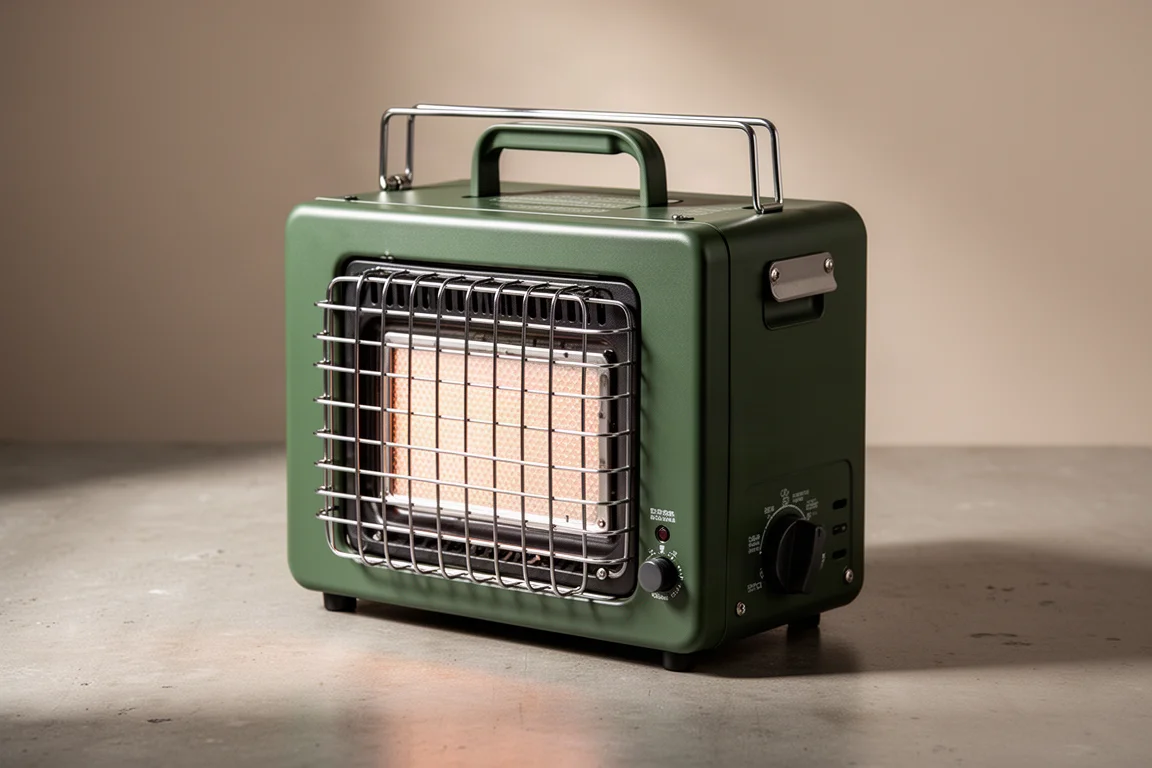
Fall has arrived and winter is close behind, which makes it a good moment to think about portable heat. The Mr. Heater Buddy is one of the best known propane heaters for camping and emergency backup, and it has earned that reputation through years of use in tents, vehicles, truck beds with camper shells, off-grid cabins, and homes during power outages. This article looks at what the standard Buddy does well, where it asks for some planning, and the one accessory detail that matters far more than most buyers expect.
Who this product is for
The Buddy is aimed at campers, overlanders, and cabin users who want a compact heat source that runs on propane and moves easily between a tent, a vehicle, and a workshop. It also makes sense as emergency heat when the power goes out. At roughly ten pounds without fuel, with a folding carry handle and molded finger ridges on top, it is genuinely easy to carry and to load in and out of a vehicle.

It is a poorer fit for very small tents and small vehicles. On high, the standard Buddy puts out 9,000 BTUs, which is more than a tight space needs. Buyers in that situation will get more comfort from a smaller heater, and a compact unit can also be paired with the Buddy for a fast warm-up on a cold morning.
Main strengths
The Buddy’s appeal comes down to a handful of things: it is built well, it is simple to run, it puts out serious heat, and it holds up over a long service life.
Build quality and long-term reliability
The heater feels solid in the hand. The fit and finish is clean, and nothing about the body, the handle, or the control dial feels flimsy.
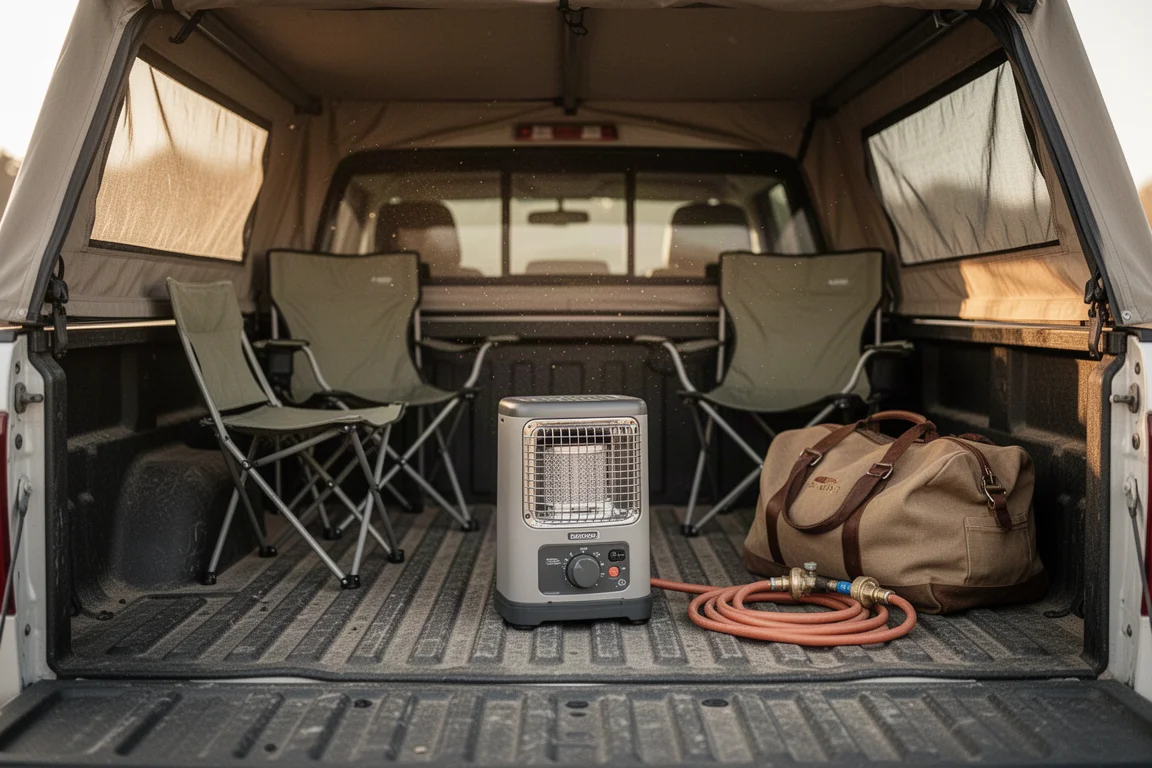
Across roughly ten years of use in tent camping, SUV camping, truck bed camping, off-grid cabins, and emergency power outages, the platform has proven durable, with a single failure that traced back to a hose rather than to the heater itself. That is a strong record for a piece of gear that gets thrown in a truck bed and set on the ground without a case.
Heating output and fuel efficiency
There are two heat settings: 4,000 BTUs on low and 9,000 BTUs on high. That range covers a lot of ground, from taking the chill off a tent to warming a larger space in a hurry. On a one-pound propane cylinder, expect around six hours of runtime on low and about three hours on high. Switching to a 20-pound tank with an optional hose extends runtime dramatically. Fuel is inexpensive as well, with a one-pound cylinder costing roughly five dollars.
Safety systems
Two safety systems are built in. An accidental tip-over shut-off cuts the heater if it is moved too aggressively, and a low oxygen sensor shuts it down when oxygen levels drop in an enclosed space.
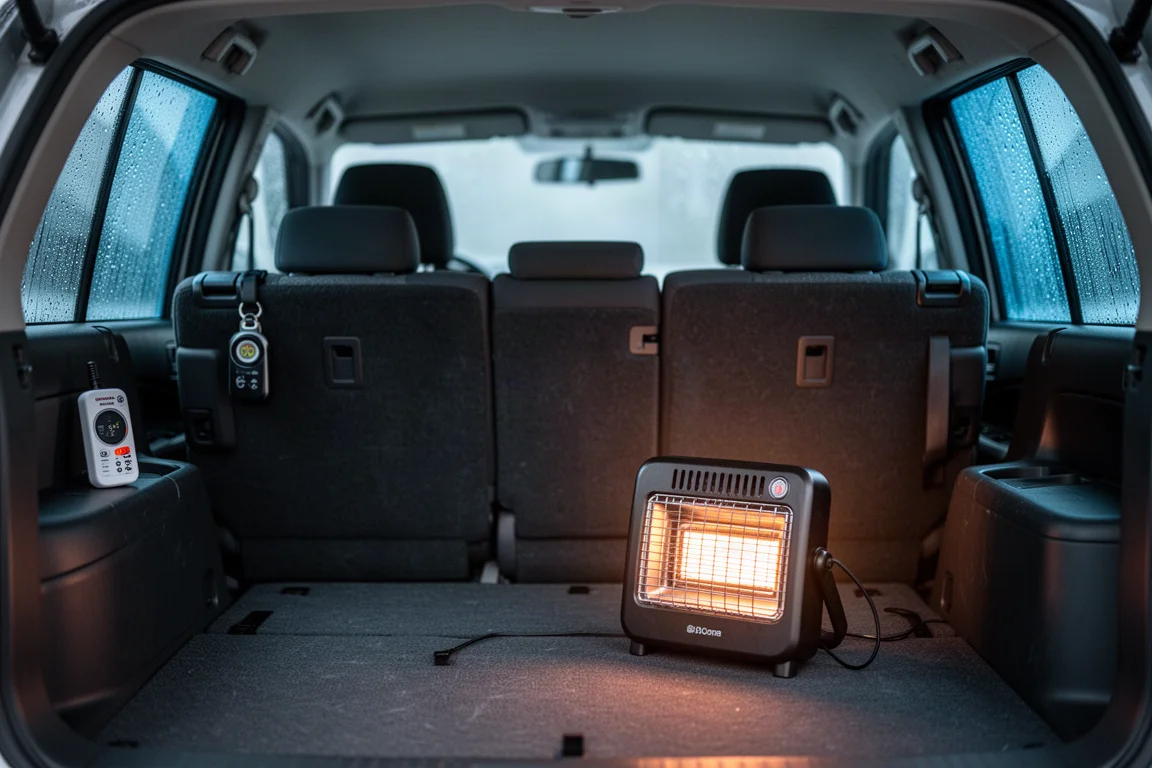
Both have been seen working in practice, including a test inside an enclosed vehicle where the heater shut itself off once oxygen dropped. For anyone heating a tent or a vehicle, that behavior is the difference between a feature list and real peace of mind.
Quiet operation and cold weather performance
The Buddy is a quiet heater. Most of the time the only sound is a slight hiss as fuel moves through the system, with an occasional soft popping noise that is never loud enough to keep anyone awake. Cold weather performance is equally reassuring: the heater runs down to roughly 0 degrees Fahrenheit without trouble, at elevations around 6,000 feet and lower. The push-button igniter has fired reliably as well.
Things to consider before buying
The most important consideration is the hose. The Buddy runs on propane only, using either one-pound cylinders or a 20-pound tank. Some hoses designed for 20-pound tanks require a fuel filter and some are sold as not needing one. Hoses made with a rubber compound that contains oil can leach that oil into the fuel, and without a filter the oil gets burned through the system and gums it up. A hose used without a filter is what ultimately damaged an earlier unit and led to a replacement. Leaving the filter permanently attached, even when running one-pound cylinders, is the safer habit. It looks slightly awkward because the canister sits further out, but the fuel connection port swings inward and outward, so the heater still sits level and operates normally.
Propane combustion also releases water vapor. In a tent, that means meaningful condensation, and moisture buildup can be a real problem in genuinely cold conditions. Plan ventilation and moisture management accordingly.
Finally, the Buddy is powerful enough that it can be too much for small tents and small vehicles. In those spaces the experience becomes a cycle of running the heater until it is too warm, shutting it off, and firing it up again once the space cools. A smaller heater is a better primary choice there.
Whenever the Buddy is used inside a tent, a vehicle, or any enclosed space, it needs airflow and intelligent use. A carbon monoxide monitor is a sensible addition.
Buying advice
The Buddy carries a retail price of around $130, and it has been available for roughly $78 on Amazon. At that lower figure it is easy to justify, particularly for anyone who camps in shoulder seasons, overlands in cold conditions, or wants a backup heat source at home.
If the plan is short trips with a few hours of runtime, one-pound cylinders are the simplest route, and keeping the fuel filter attached costs nothing but a little visual awkwardness. For longer trips or genuinely cold weather, a 20-pound tank and a compatible hose deliver far more runtime and a much lower fuel cost per hour.
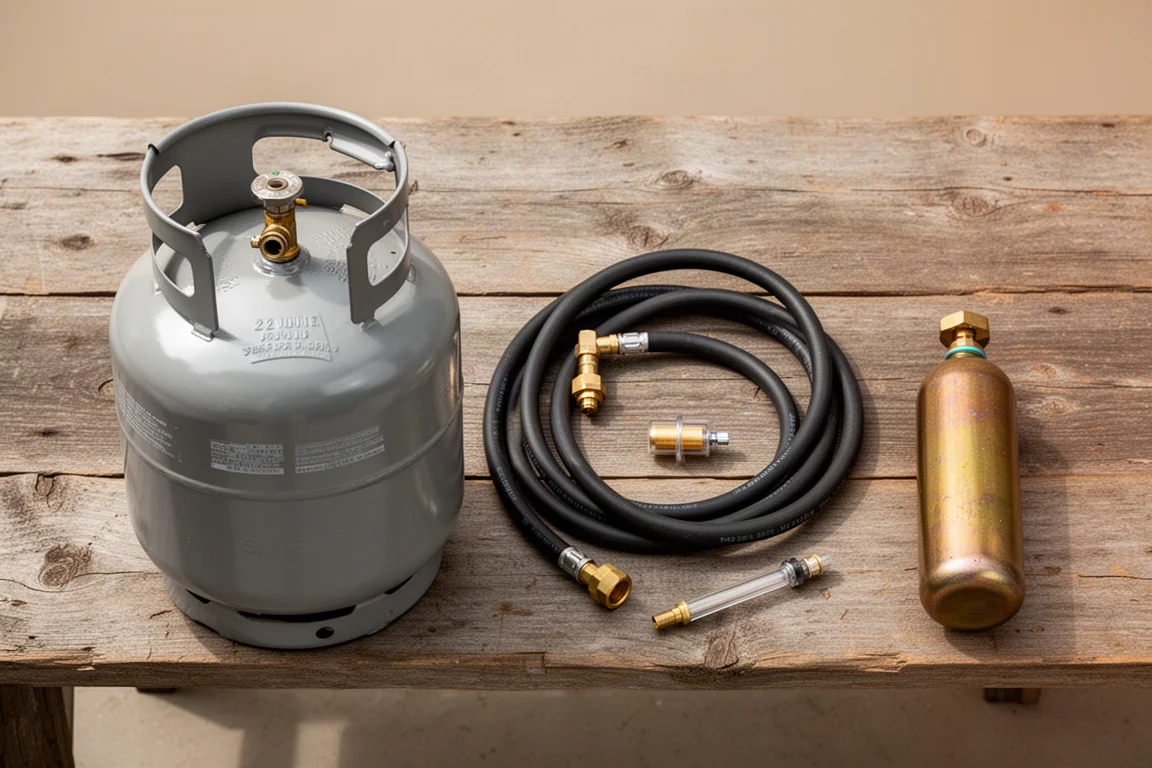
Whichever route you take, treat the filter as part of the system rather than an optional extra, and give the heater airflow wherever it runs.
Conclusion
The Mr. Heater Buddy remains a durable, compact, and versatile propane heater that covers tent camping, vehicle camping, truck camping, cabin use, and emergency backup. Its heat output, fuel efficiency, safety systems, and quiet operation are all strengths, and its limitations are predictable ones: condensation, a hose and filter detail that needs attention, and more heat than the smallest spaces can use. Buyers who match it to the right environment will find it a dependable companion through the coldest months.
Product link
View more details for Mr. Heater Buddy
This product is mentioned in the review. Check the specifications, options, and compatibility before buying.
View more details for Mr. Heater BuddyFurther reading
Related Reviews
Camping Heaters
Kovea Cupid Heater Review: Compact Butane Warmth for Small Spaces
A long-term look at the Kovea Cupid, a compact 3,333 BTU butane heater built for small tents, vehicles, and cabins, including its strengths, its trade-offs, and who should buy it.
Camping Heaters
Kovea GigaSun Heater Review: Extreme Propane Heat for Emergencies and Off-Grid Use
A close look at the Kovea GigaSun, a propane heater with extraordinary output, a stainless steel build, and a heat level that suits emergency backup better than tent camping.
Camping Heaters
Portable Butane Heater Stove Combo Review: A Two-in-One for Car Camping
A fold-out butane heater that converts into a stove, rated at 4,400 BTU with a 7 minute 42 second boil time and a $57 price tag.