Aquarium Lighting
MQ-510 vs MQ-210x: Which PAR Meter Do LED Reef Tanks Actually Need?
A $538 blue sensor and a $373 black sensor, compared for LED reef tanks. Where the accuracy gap is real, and where it barely matters.
Introduction
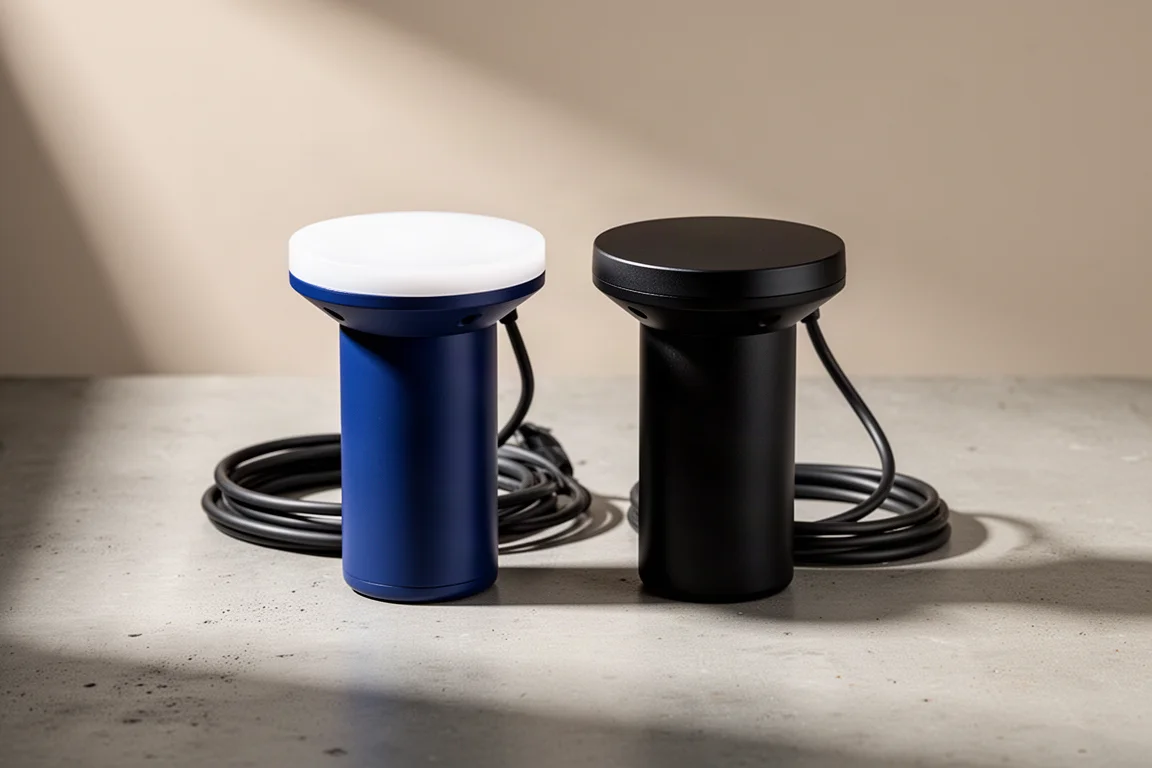
Reef keepers shopping for a PAR meter quickly run into a familiar piece of advice: the blue sensor is the accurate one, and the black sensor is the compromise. The blue sensor here is the MQ-510, which retails for $538. The black sensor is the MQ-210x, at $373. That $165 gap exists for a real reason, but it is a narrower reason than most buyers assume.
Roughly 95 percent of hobbyists run LED lighting over their tanks, so the LED accuracy question is the one that matters to almost everyone. The honest answer is that the cheaper sensor handles that job well for the vast majority of tanks, and the more expensive one earns its price only for a specific kind of buyer.
What Separates These Two Sensors
Both the MQ-510 and the MQ-210x measure PAR, the light energy that actually drives photosynthesis in corals and plants. Where they diverge is spectral accuracy, and the clearest way to see that is on a spectrum graph.
On those graphs, a solid line tracks the sensor’s reading against a dashed black reference line representing true output. The closer the solid line hugs the dashed line, the more accurate the sensor. The MQ-510 is quite accurate across all wavelengths. The MQ-210x is less accurate across the same range.
That difference in line behavior is the entire justification for the price gap. Nothing else about the two units separates them in a way that changes day-to-day use.
The Accuracy Question: Reading the Spectrum Graph
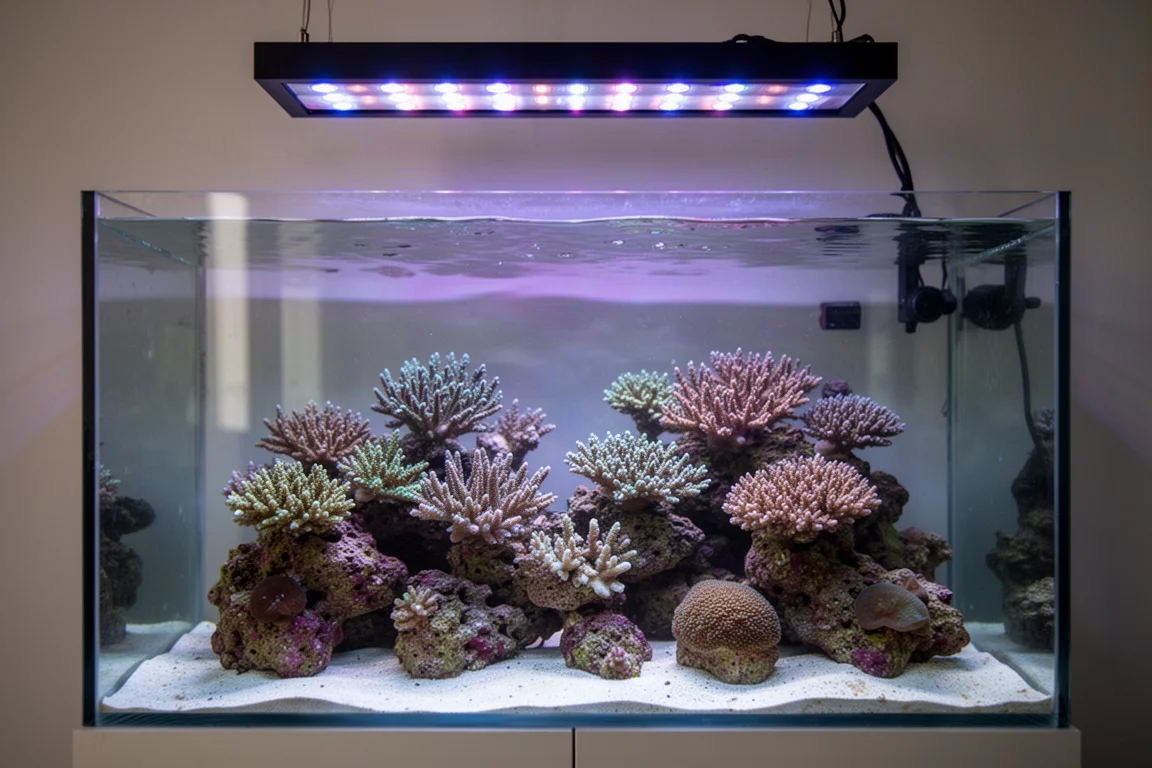
Spectral accuracy only matters if the errors land where your light actually produces output. For a reef LED such as the EcoTech Radions, the most power output sits between 400 and 500 nanometers, which is exactly the blue and violet region that drives coral growth.
That is where the black sensor’s behavior becomes interesting. It slightly underreads PAR from 400 to 425 nanometers and slightly overreads from 425 to 500 nanometers. Those two errors pull in opposite directions, so across the full band they average out to an error range of no more than 10 to 15.
In other words, the MQ-210x is least accurate at the edges of its range, and the reef lighting most people own sits right in the middle of that range, where the errors largely cancel each other out.
MQ-510: The Blue Sensor for Maximum Accuracy
The MQ-510 is the reference-grade option. It tracks output closely across all wavelengths, so its readings stay trustworthy whether you are measuring a blue-heavy LED array, a mixed spectrum fixture, or something further outside the usual reef range.
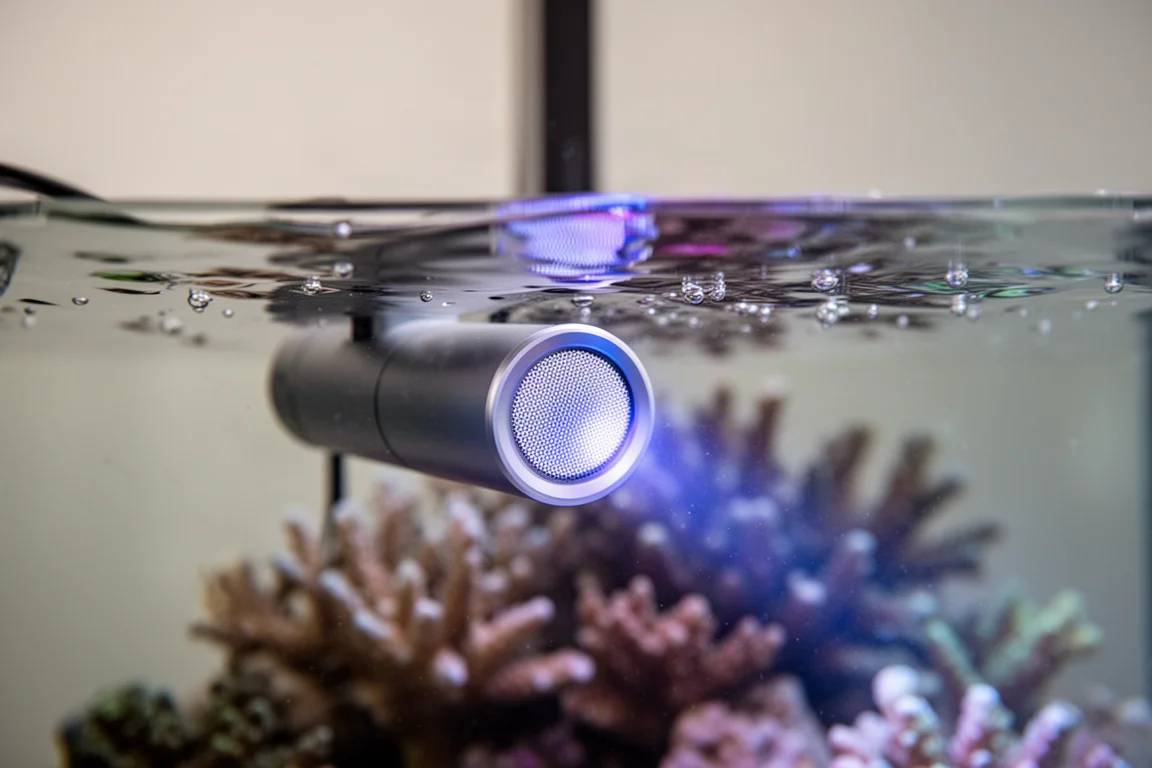
For a keeper running multiple tanks, testing fixtures for a club or a store, or working with uncommon spectra, that consistency is the whole point. It removes a variable from the measurement and lets you compare numbers between different lights without wondering whether the meter itself is skewing the result.
The trade-off is simple. You pay $165 more than the black sensor for accuracy that most LED reef tanks will never expose as a problem.
MQ-210x: The Black Sensor for Everyday Reefkeeping
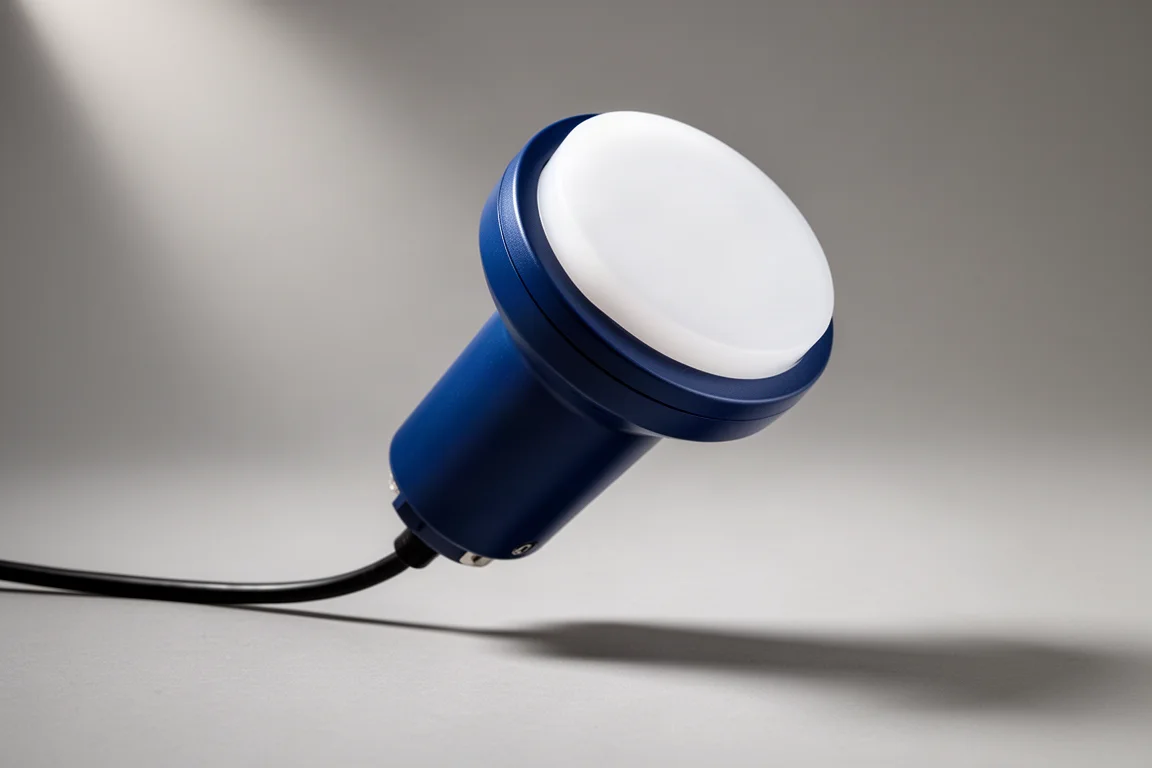
The MQ-210x is the black sensor, and at $373 it covers the same core job: measuring PAR so you can set light intensity with real numbers instead of guesswork. Its weakness is spectral accuracy at the extremes, but for a tank lit by a typical reef LED, that weakness is small and predictable.
That is the part of the discussion that usually gets lost. The black sensor is not inaccurate in a way that will send your corals into shock. It is fractionally less precise in specific wavelength bands, and those bands happen to be where its errors offset one another.
Does a 10 to 15 Percent Difference Matter in Practice?
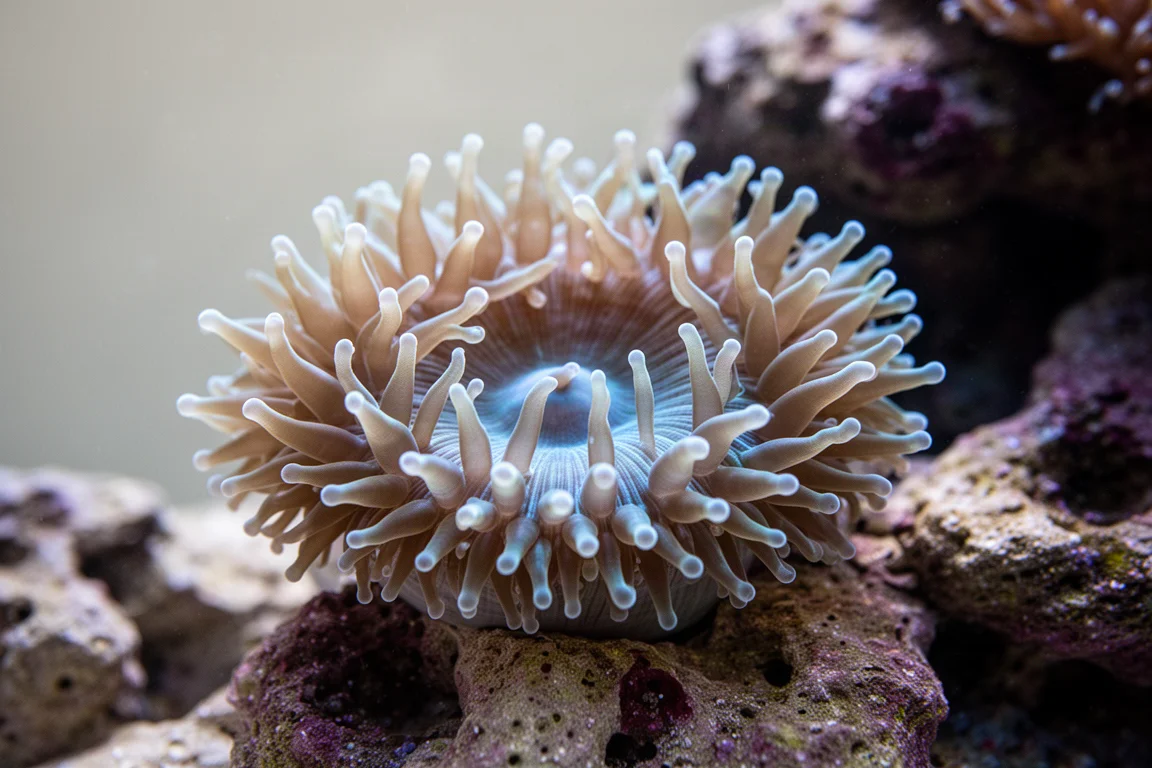
It helps to put the number in context. If your LPS corals need 100 PAR but are actually receiving 115 PAR, that is not a problem worth $165 to solve. LPS corals tolerate a meaningful PAR range, and a reading that lands 10 to 15 percent off sits well inside the margin most keepers already work with.
Where the gap starts to matter is a tank run close to a threshold: a demanding system pushed to its upper limit, or a keeper chasing precise, repeatable numbers across many measurements. In those cases the extra accuracy is a genuine working tool rather than a luxury.
Price Versus Accuracy: What the $165 Buys
Strip the decision down and it comes to a single question: does 10 percent greater accuracy matter to you? If it does, spending the additional $165 on the MQ-510 is the right call. If it does not, the MQ-210x will work just fine.
The prices are the clearest signal here. A $538 sensor is built for people whose work depends on the reading being as close to true as possible. A $373 sensor is built for everyone else, and the difference between the two does not change what most tanks need.
Buying Advice: Matching the Sensor to Your Lighting
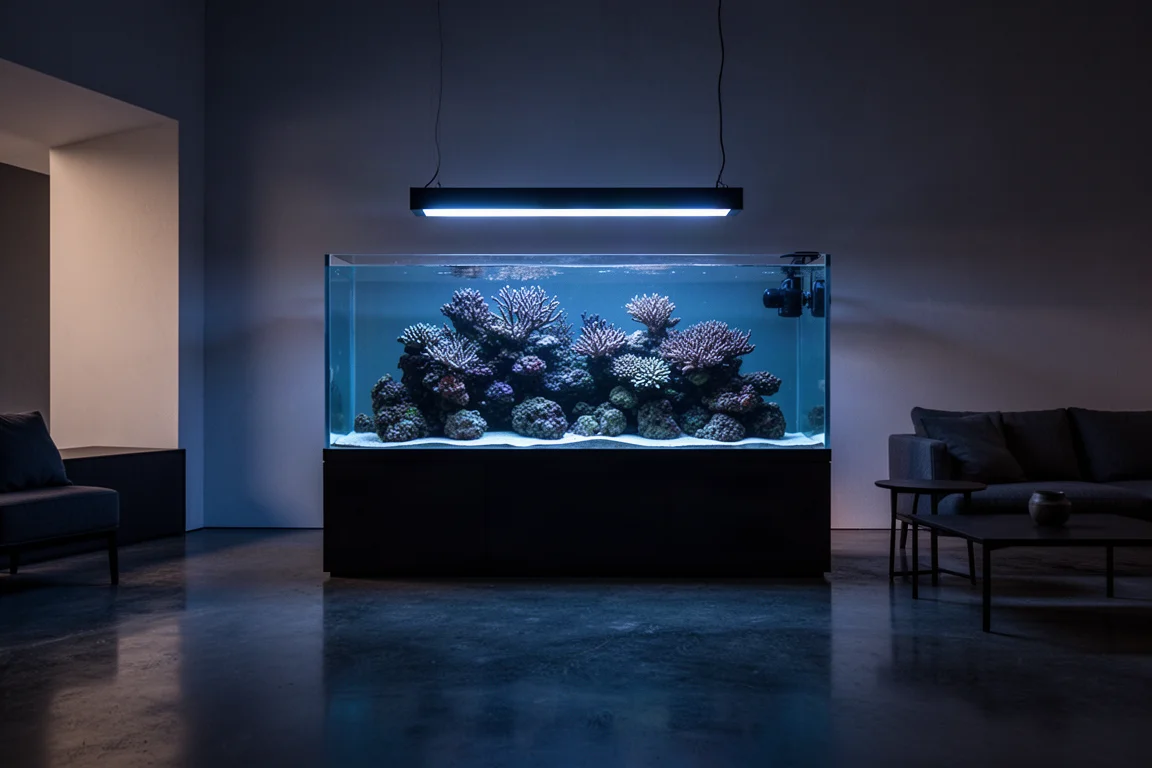
Start with your lighting, not the meter. If your tank runs LED fixtures and your goal is to set intensity, check PAR at different depths, and confirm your corals are getting what they need, the MQ-210x covers that job at a lower price, with error that averages out across the band your lights actually use.
Choose the MQ-510 if you need readings that stay accurate across wavelengths outside the usual LED reef band, if you compare many different fixtures, or if your corals sit close enough to a limit that a 10 to 15 percent spread is meaningful. That is a real need, just not a universal one.
Either way, the decision should follow the tank you actually keep, not the assumption that the more expensive sensor is automatically the correct one.
Conclusion
The MQ-510 is the more accurate sensor, and its $165 premium is justified for buyers who genuinely need that precision. For the roughly 95 percent of hobbyists lighting their tanks with LEDs, the MQ-210x delivers usable, dependable PAR readings at a lower price, with errors that largely cancel out across the wavelengths reef LEDs produce most.
Buy the sensor that matches your tank. For most people reading this, that is the black one.
Further reading
Related Reviews
Aquarium Lighting
AI Blade LED Lights Review: A Versatile Strip Light for Reef Tanks
A practical look at the AI Blade LED line, including the value-focused Grow spectrum, mounting options, app control and PAR performance.
Aquarium Lighting
AI Hydra 32 and Hydra 64 Setup Guide: Mounting Heights, Spacing, and Add-On Lighting
A practical reef lighting guide covering optimal mounting heights for the AI Hydra 32 and Hydra 64, spacing for even coverage, and when add-on lighting is worth it.
Aquarium Lighting
AI Prime Review: A Compact Reef Light That Grows With Your Tank
A small, modular reef aquarium LED that reaches LPS and soft coral PAR levels over a 60-gallon cube, plus the spacing, mounting height, and control habits that make it work.