Sim Racing
MOZA SRP2 Pedals Review: A Versatile Upgrade for Sim Racers
The MOZA SRP2 pedals offer granular brake adjustment, Hall effect sensors, and a versatile design that works on carpet, tile, or a cockpit.
Introduction
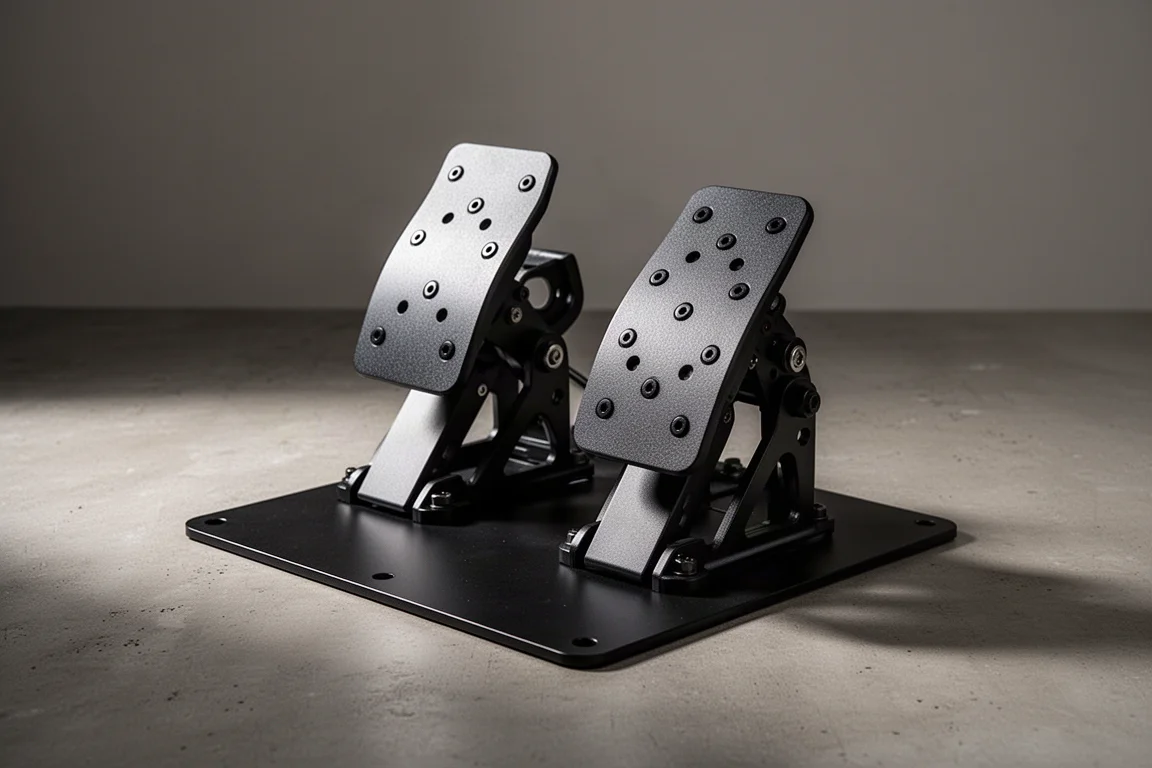
The MOZA SRP2 pedals arrive as the second generation of the brand’s entry-level pedal set, and they bring a number of meaningful refinements over the original SRP pedals. With a focus on versatility, these pedals are designed to work whether you are running them on carpet, tile, or bolted to a dedicated cockpit. The SRP2 set includes a throttle and brake pedal, with an optional clutch pedal available separately, and it aims to deliver a solid foundation for sim racers at an accessible price point.
Who the MOZA SRP2 Pedals Are For
These pedals are aimed at sim racers who are starting out with their first rig or looking to upgrade from very basic entry-level pedals. The design prioritizes flexibility, so you can use them on the floor without a cockpit or wheel stand, or mount them to a more rigid setup as your sim racing hobby grows. The adjustable preload and pedal angle options mean you can tailor the feel to suit your driving style, whether you prefer a softer street car feel or a stiffer race car setup.
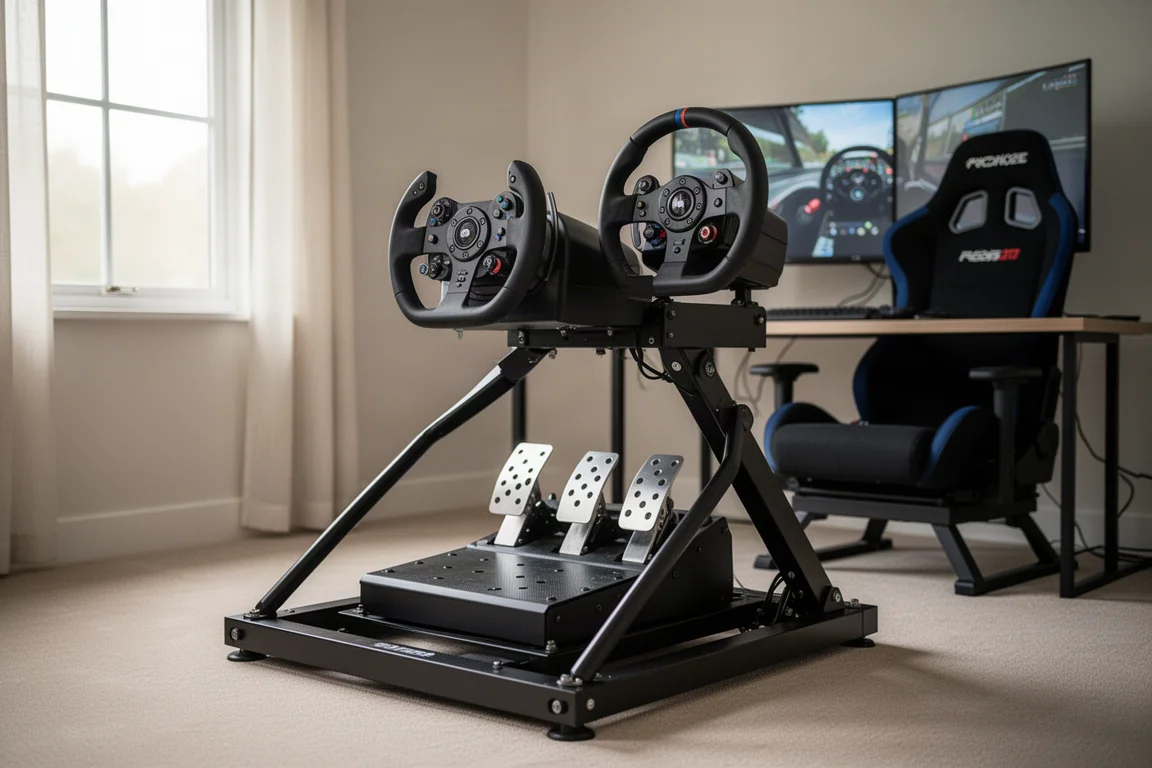
If you already own a set of original SRP pedals and are happy with their performance, the SRP2s offer incremental improvements rather than a dramatic leap forward. However, if you feel limited by the adjustment options on your current pedals, the SRP2s provide significantly more versatility in how you can dial in the brake feel and pedal positioning.
Hardware and Build Quality
The SRP2 pedals are constructed primarily from high strength steel with a powder-coated finish. While the marketing materials mention aerospace grade CNC machined aluminum, the actual construction uses steel for most components, with only the small cylinders on the back of the unit being made of aluminum. This discrepancy does not impact performance, as the pedals show no meaningful flex when properly bolted down to a cockpit or wheel stand.
The pedal pads themselves have been updated compared to the originals. They now feature a slightly more textured finish and small holes for adjusting pedal position. While the pressed steel construction with powder coating is a step down aesthetically from the CNC machined anodized aluminum of the originals, the new pads offer a slight improvement in grip, particularly for those who race with socks.
The pedals offer a range of adjustment options. You can move each pedal laterally across the front of the base with 32 mm spacing from hole center to hole center, and you can also offset the pedal pads by 15 mm in either direction. The pedal face can be raised or lowered by 15 mm, and there are now three angle adjustment points using the included 2.5 mm Allen key, offering 10 degree and 25 degree offsets. This is a significant improvement over the original SRP pedals, which had no angle adjustment at all.
Brake System and Adjustability
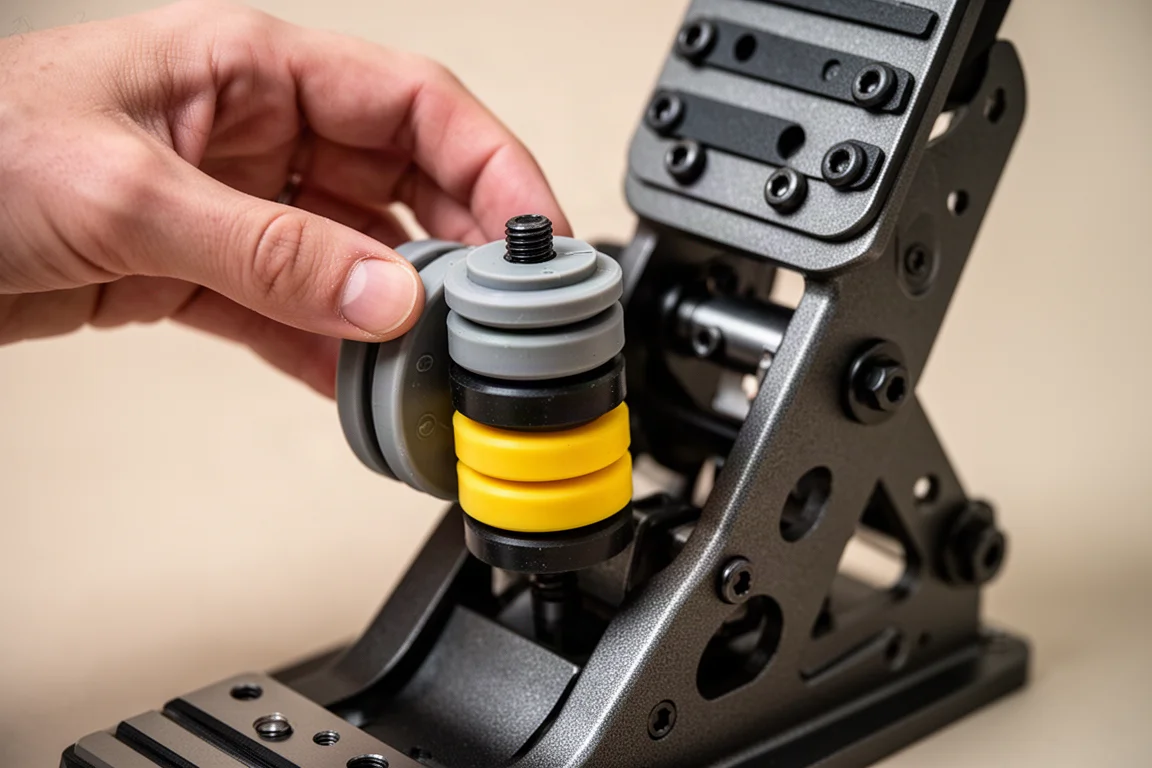
The most significant change between the SRP and SRP2 pedals is in the brake design. The SRP2 uses a 100 kg load cell combined with a Hall effect position sensor, allowing for a hybrid input mode that averages between the two sensors. The brake pedal features an elastomer stack with eight individual inserts that can be swapped out independently to fine-tune the feel.
Out of the box, the pedals come with gray elastomers rated at 60R shore, along with three black elastomers rated at 70R and four yellow ones. This allows you to adjust the brake feel anywhere from a relatively soft street car setup to a stiffer GT or formula style configuration. The adjustment process is completely toolless, which is a nice touch.
One minor concern is the short cable on the brake cylinder, which could be accidentally damaged when removing and reinstalling the assembly. However, the overall design is robust, and the pedals operate smoothly and quietly with no grinding or binding.
Software and Configuration
The SRP2 pedals work with the MOZA Pit House software, which provides a familiar interface for managing all connected MOZA devices. The pedal tab allows you to set minimum and maximum thresholds for each pedal, create and save presets for different games, and adjust nonlinear response curves.
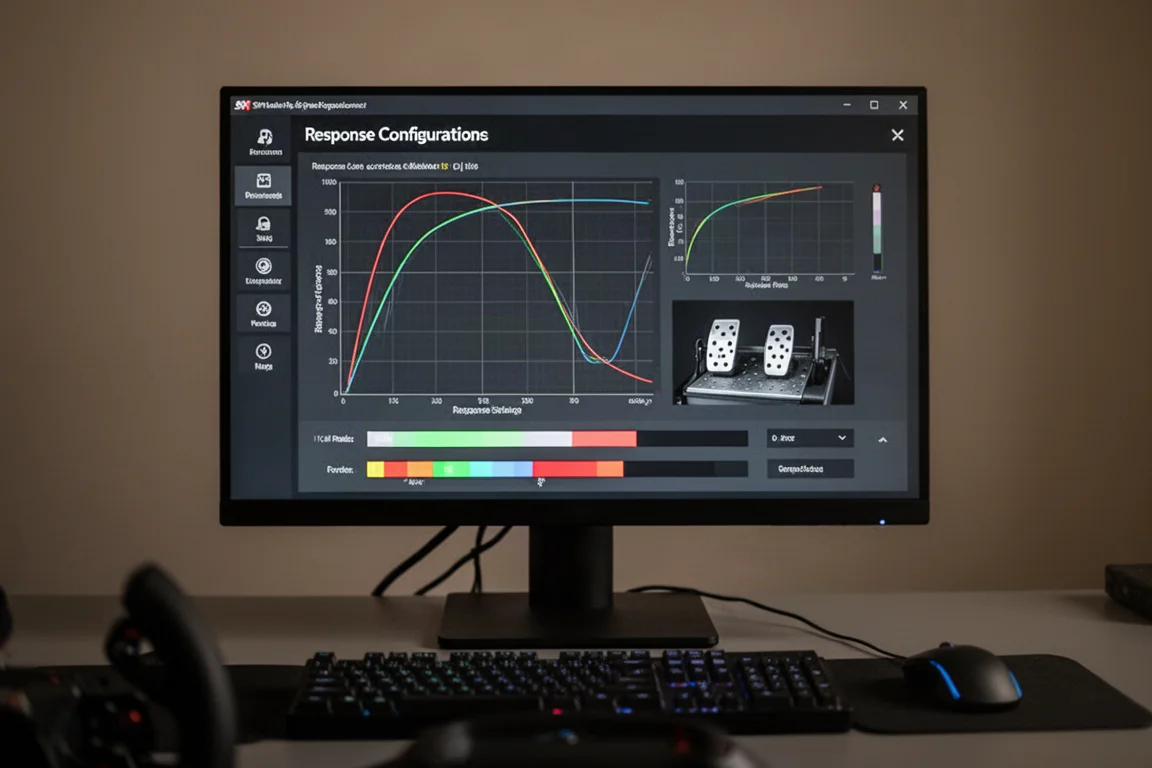
The calibration process is straightforward. You can set a dead zone by releasing the pedal to a specific point before ending calibration, or you can manually set minimum and maximum values from the home screen. The software also includes a center output ratio feature that lets you blend the load cell and Hall effect sensor inputs on the brake pedal, which can help smooth out any inconsistencies in the elastomer stack compression.
Driving Experience
In practice, the SRP2 pedals deliver a versatile and consistent driving experience across different racing styles. Whether you are driving formula cars, GT cars, or street cars, the pedals provide enough adjustment to dial in a feel that works. Heel and toe driving is comfortable, and the load cell integration is well executed.
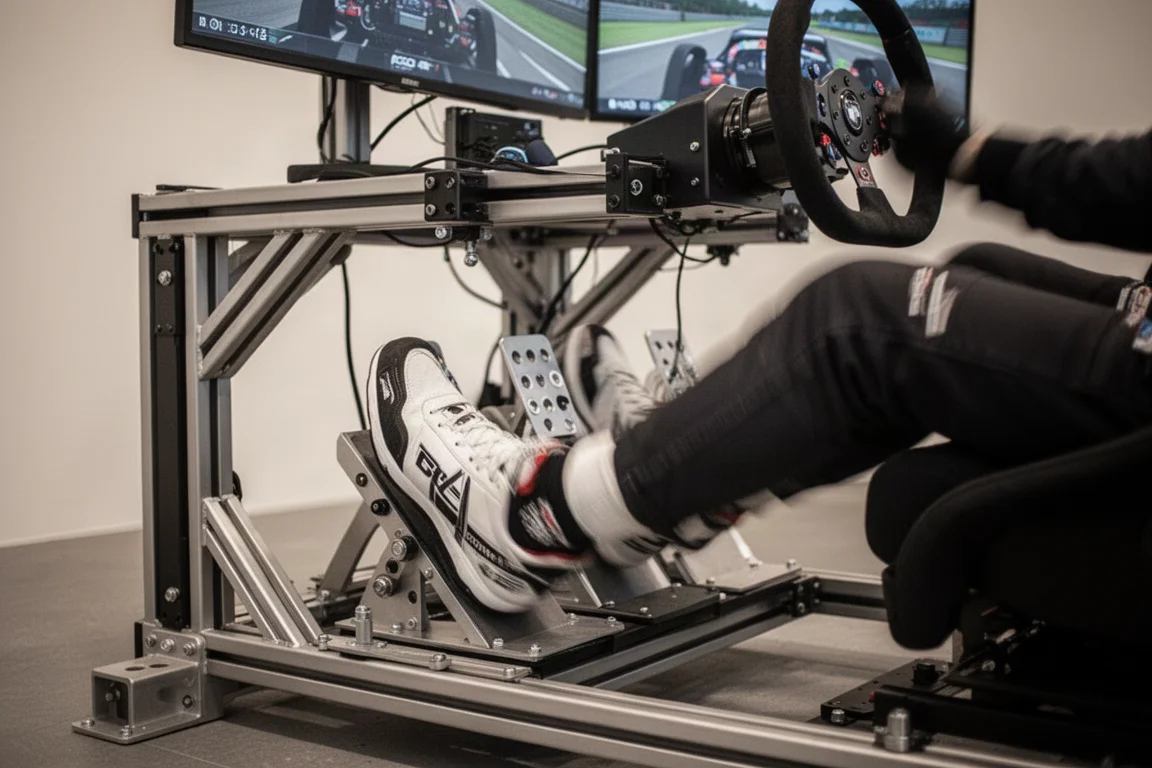
The load cell allows you to modulate braking force beyond the mechanical travel of the pedal, which is a key advantage over position-based systems. You can push to your threshold point and then apply additional force without the pedal moving further, giving you precise control over trail braking.
One limitation is the lack of throw adjustment on any of the pedals. You can adjust the preload, but the physical travel distance is fixed. This may not suit everyone, but it is not a significant issue for most driving styles.
Buying Advice
The MOZA SRP2 pedals are priced at $149 USD, €159, £139, or $299 AUD for the two-pedal set. The optional clutch pedal adds $45.90 USD, and the rear support bracket for floor use costs an additional $29 USD. This pricing positions the SRP2s as a strong value option for entry-level sim racers.
If you are looking for your first set of pedals or upgrading from very basic equipment, the SRP2s offer excellent value for money. They are versatile enough to work on carpet or tile without a cockpit, and they continue to perform well when mounted to a more rigid setup. The granular brake adjustment and multiple pedal positioning options make them suitable for a wide range of driving styles.
If you already own a set of original SRP pedals and are satisfied with their performance, the SRP2s offer only incremental improvements. The additional versatility is welcome, but it is not a game-changing upgrade. However, if you feel limited by the adjustment options on your current pedals, the SRP2s are a worthwhile consideration.
Conclusion
The MOZA SRP2 pedals represent a positive step forward for the brand. They offer a well-rounded package with solid construction, meaningful adjustment options, and a versatile design that adapts to different setups and driving styles. While they are not endgame pedals, they are not likely to be a limiting factor in your performance. For the price, they deliver a compelling combination of features and value that makes them easy to recommend for sim racers at the entry level and beyond.
Product link
View more details for MOZA SRP2 Pedals
This product is mentioned in the review. Check the specifications, options, and compatibility before buying.
View more details for MOZA SRP2 PedalsFurther reading
Related Reviews
Sim Racing
Asetek Initium Direct Drive Bundle Review: A Strong Entry Point With a Standout Pedal Set
The Asetek Initium bundle brings a 5.5 Nm upgradeable wheelbase, a functional round wheel, and a surprisingly capable pedal set to a crowded entry-level direct drive market.
Sim Racing
ConSimPit Ecosystem Overview 2026: Wheelbases, Pedals, and Wheels
A detailed look at ConSimPit's sim racing ecosystem, covering wheelbases, pedals, and steering wheels with honest observations on quality and value.
Sim Racing
Cube Controls Astra Review: A Lightweight Sim Racing Wheel That Nails the Fundamentals
The Cube Controls Astra is a lightweight aluminum sim racing wheel that focuses on build quality and driving feel over extra features.