Tents
Mountainsmith Lyken 1-Person Tent Review: A Low-Profile Bivy Shelter for Cooler Weather
A close look at the Mountainsmith Lyken one-person tent, covering its real-world dimensions, setup options, materials, and the ventilation trade-offs worth weighing before you buy.
Introduction
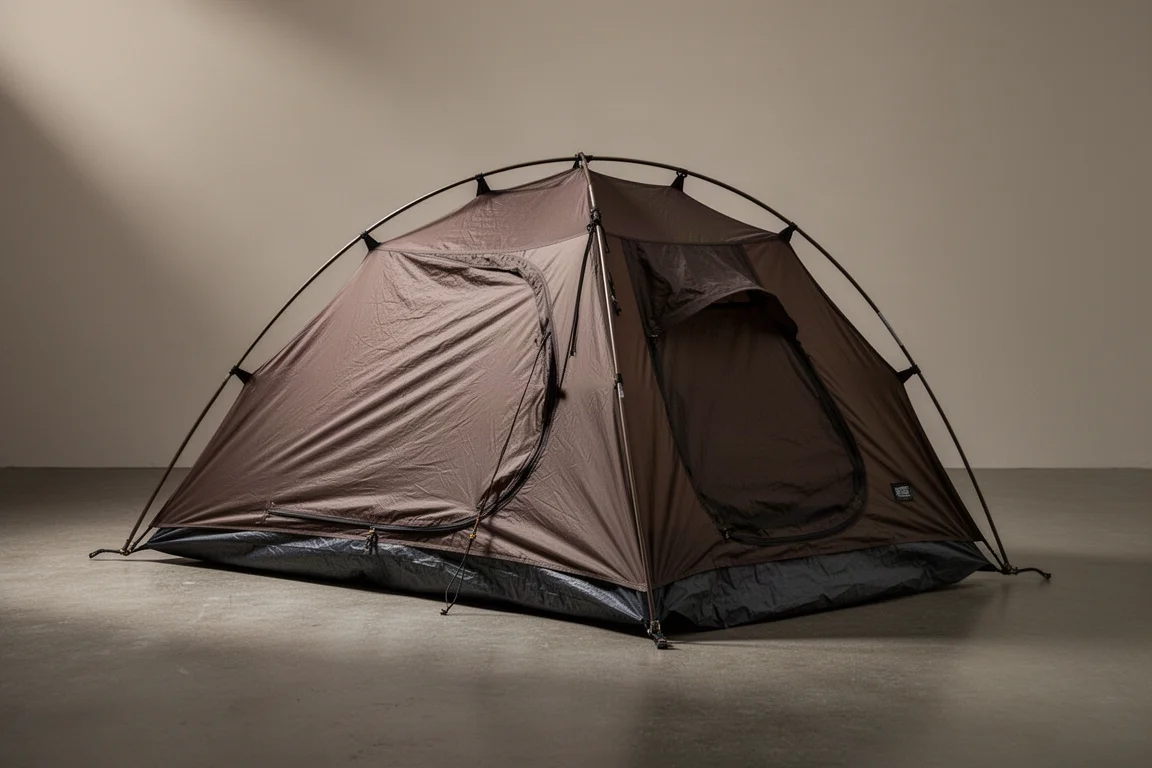
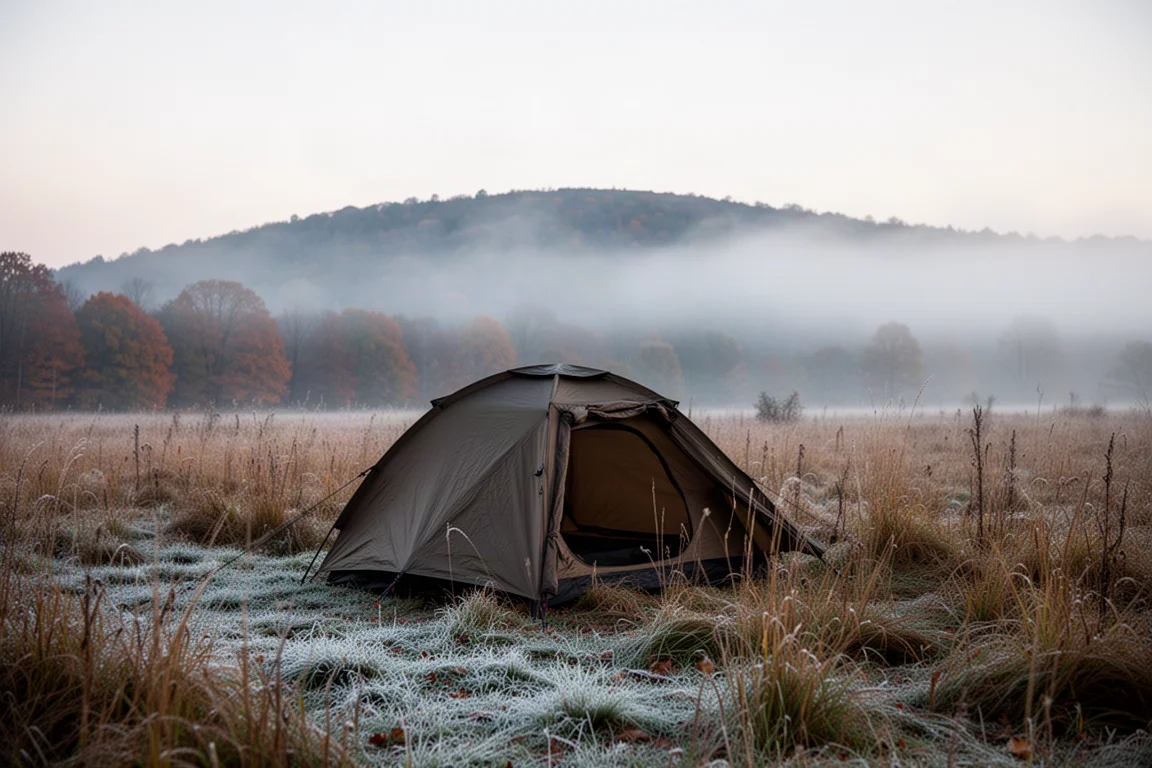
The Mountainsmith Lyken is a one-person, bivy-style shelter built around a low profile and a dark earth-tone fly. It is a non-freestanding design, which means it has to be staked out before it will stand, and it is aimed at campers who want a compact, unobtrusive tent rather than a tall freestanding model. It also comes up often as an alternative to the Snugpak Ionosphere, a low-profile one-person shelter whose price has climbed considerably over the years.
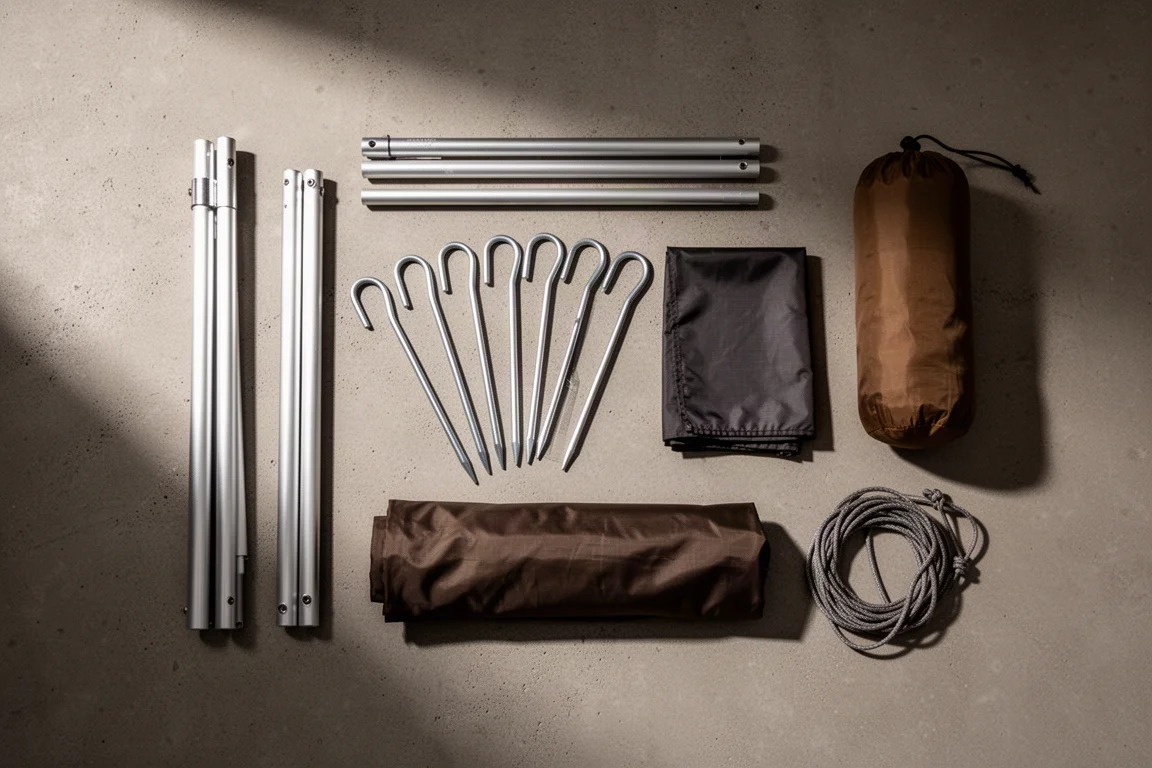
The Lyken arrives as a complete package: tent body, fly, footprint, two poles, ten shepherd hook stakes, and a storage bag. Setup is straightforward, and the footprint is cut to match the tent body exactly, so there is no tucking or trimming involved. For a bivy-style tent, the front door is unusually large and the peak sits high enough to make entry and exit noticeably easier than on many low-profile shelters.
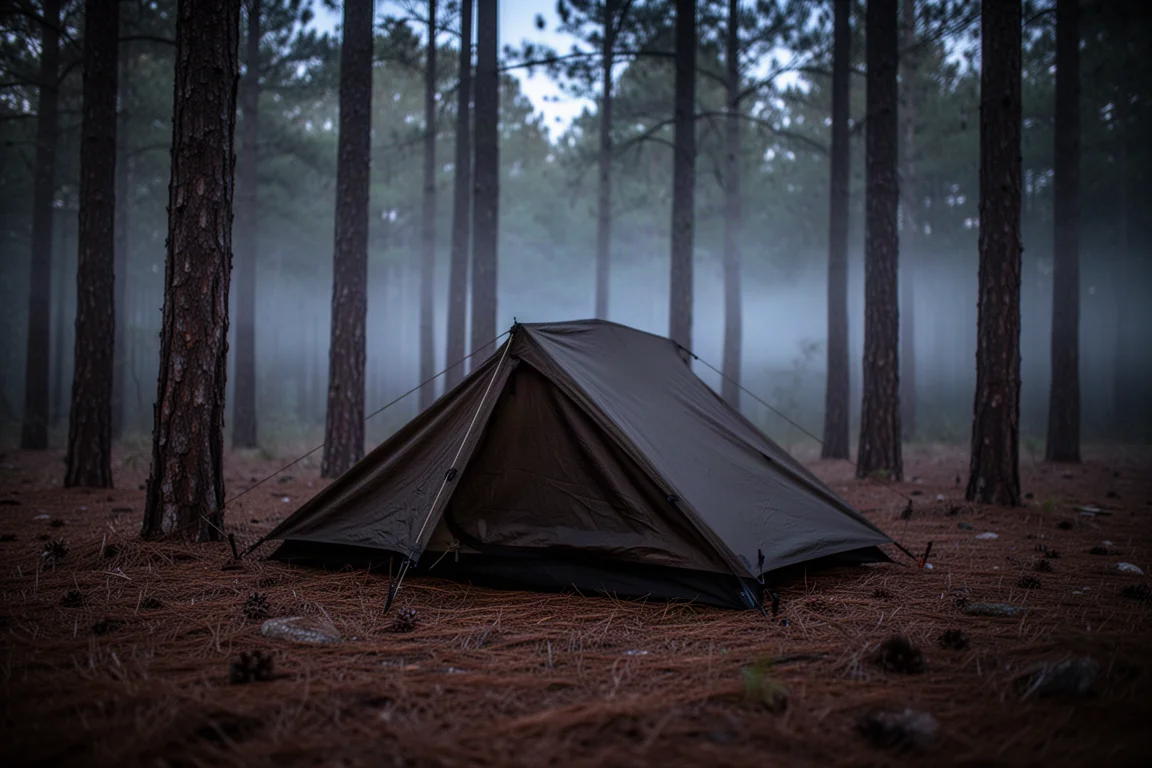
At a glance, the Lyken looks like a purpose-built stealth camping shelter. The fly is dark and muted, and the overall shape stays close to the ground. The questions that matter most are how it handles airflow, condensation, and rain, and those are the areas worth watching closely over a full season of use.
Who This Tent Is For
The Lyken is sized for one person plus a modest amount of gear. In real-world measurements, the interior length suits campers under 6 ft 8 in, and the peak height is around 3 ft, which is tall for a bivy-style shelter. The width tapers toward the footbox, narrowing to roughly 2 ft there, so shoulder room is best near the head end. There is enough space inside for one person and a pack or a few loose items, but there is virtually no vestibule space, so anything you bring has to live inside the tent or outside it.
Because of how much fabric covers the body and fly, this is a warmer shelter. It fits fall trips and the transition between winter and spring, when cooler nights make heat retention less of a drawback. It is not a tent to choose for hot summer days.
Stealth camping is the clearest use case. The dark, muted fly and low profile help the tent sit quietly in a wooded setting, and the staked pitch means it can be placed in spots where a freestanding tent would be awkward.
Main Strengths
The door is the standout feature. It is large and the peak is high, so getting in and out is easier than with most low-profile shelters. The interior length is generous for a one-person bivy design, and there is more usable room inside than the shape suggests.
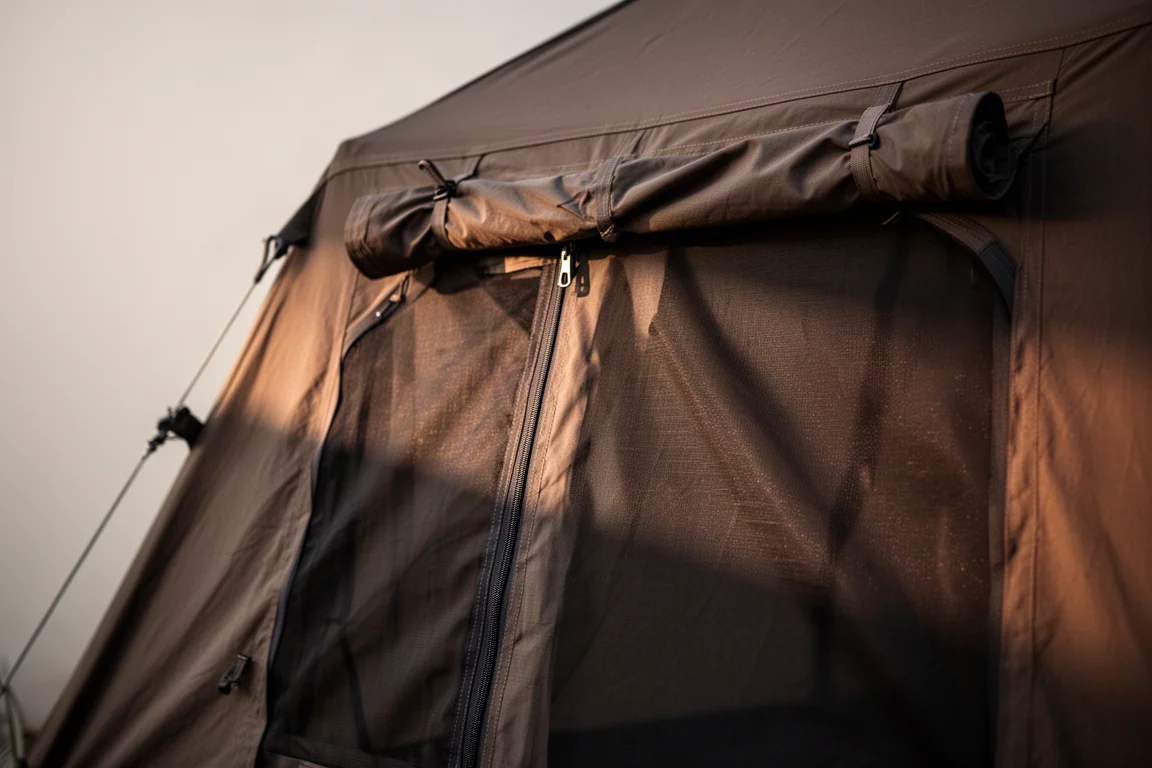
The fly color is another real strength. It is dark and earth-toned, and it blends into natural surroundings well, which is exactly what a stealth camping shelter should do. Two guy lines, one on each side, help hold the fly down in wind, the door can be tied back for easy access, and a storm flap covers the door zipper.
The package is complete as well. A footprint is included and cut to match the tent body, the floor is a bathtub design, and all the seams are taped. The tent is covered by a lifetime warranty, although the brand is not widely known and warranty service experience is not established here.
For campers who want a simple, low-slung shelter that goes up with stakes and a couple of poles, the Lyken covers the basics well. The advantages are practical rather than flashy: easier entry, more length, and a color that disappears into the treeline.
Setup and Included Components
Setup is one of the simpler parts of the Lyken experience. The body clips to the poles, the clips are easy to work with, and the whole shelter comes together quickly once the corners are staked.
The included ground sheet is cut to match the body, so it does not need folding or tucking, and buckles connect both the body and the ground sheet to the fly. That gives you a few ways to pitch it. You can run the body, ground sheet, and fly together for a full three-layer setup. You can leave the body out and connect the fly directly to the ground sheet for a lighter, faster shelter. You can also pitch the body on its own without the fly, although that is the least common option in practice.
Because the tent is non-freestanding, the poles only hold their shape once the shelter is staked out. Ten shepherd hook stakes and two aluminium poles are included, along with a storage bag that measures roughly 23 in long by 7 in by 7 in when packed.
Materials and Specifications
The fly is a 185T polyester with a 2,000 mm hydrostatic head rating. The tent body is 185 polyester as well. The floor combines 85D and 190T polyester materials with a 5,000 mm hydrostatic head rating, and the footprint is made from polyester. The poles and stakes are aluminium.
Total weight comes in at 4 lb 6.2 oz, which is heavy for a one-person tent. Much of that comes down to the materials chosen and the number of buckles on the shelter.
Mesh is limited. There is mesh at the door, one panel, a strip, and a partial strip at the back, and the layout repeats on the other side of the tent. The entire top of the tent and most of the front are covered in fabric. Mesh is one of the more expensive materials to manufacture and install in a tent, so substituting fabric lowers cost, but it also adds weight, reduces airflow, and holds in heat.
Those numbers describe a shelter that should handle wet ground well, thanks to the bathtub floor, taped seams, and included footprint. The fabric-heavy body is the trade-off, and it is the main reason airflow and condensation remain the open questions with this tent.
Things to Consider Before Buying
Weight is the first thing to accept. At 4 lb 6.2 oz, this is a heavy one-person shelter, and the fabric and hardware explain why. If low pack weight is a priority, this tent asks for a compromise.
Ventilation deserves honest expectations. There is limited mesh, there are no vents once the tent is sealed, and the fly drops nearly to the ground. In hot weather, the fabric holds heat and blocks airflow. On cold, still nights, condensation is a realistic concern. Campers who sleep warm or camp in humid conditions should factor this in.
Finishing is the second consideration. The tent shows loose threads in places, and the fly arrived with two dark stains near the door that were present straight out of the box. At around $90 to $100 that is easier to accept. At the full retail price of $180, it is harder to justify.
A few smaller points are worth noting. The brand describes the fly as green, though in person it reads as coyote brown. There is virtually no vestibule, so wet gear has nowhere sheltered to sit outside the sleeping area. And while the warranty is stated as lifetime, the brand is not a widely known name, so service experience is difficult to predict.
Buying Advice
At the sale prices this tent has been listed at, roughly $90 to $99, the Lyken is a sensible value for the right camper. At the $180 full retail price, the loose threads and factory stains carry more weight, and the limited mesh becomes harder to overlook.
Match the shelter to the season. If your trips run through fall, or sit in the window between winter and spring, the heat retention that makes this tent a poor summer choice works in your favor. If you camp in hot, humid conditions, a shelter with substantially more mesh will be more comfortable.
It is also worth deciding whether a non-freestanding pitch suits the places you camp. This tent must be staked out, so it needs ground that will hold stakes. In exchange, it packs down compactly and sits low, which is exactly what stealth camping calls for.
A two-person version of the Lyken is available for campers who want the same low-profile approach with more room. For a solo camper who wants a simple, dark, staked shelter for cooler nights, the one-person Lyken is worth considering, as long as ventilation expectations are set realistically from the start.
Conclusion
The Mountainsmith Lyken gets several important things right. The interior length suits most campers, the door is large and easy to use, the footprint is included, seams are taped, the floor is a bathtub design, and the dark earth-tone fly is well suited to stealth camping. It also comes with a lifetime warranty.
The trade-offs are just as clear. It is heavy for a one-person tent, the body and fly use more fabric than mesh, there are no vents when it is sealed, and the finishing shows loose threads and factory stains. It is a shelter for cool-weather trips and low-profile campsites, not for hot summer nights.
If the price is right and the season fits, the Lyken is a reasonable buy for a solo camper who values a quiet, low-slung pitch over light weight and maximum airflow.
Product link
View more details for Mountainsmith Lyken 1-Person Tent
This product is mentioned in the review. Check the specifications, options, and compatibility before buying.
View more details for Mountainsmith Lyken 1-Person TentFurther reading
Related Reviews
Tents
Black Dog Instant Setup 5 to 8 Person Tent Review: Fast Pitch, Serious Weather Problems
A quick-pitching Black Dog tent that goes up in seconds, but wet-weather testing revealed seam leaks, an overstated capacity claim, and awkward doors.
Tents
Lightfighter Dragoon Review: An Eight-Person Four-Season Military Shelter
The Lightfighter Dragoon is a 57-pound, eight-person expedition tent built for extreme weather. Here is what its materials, size, and setup demands mean for real buyers.
Tents
Lone Rider Motorcycle Tent Review: A Big Shelter That Stays Dry
A double-wall motorcycle tent with two large awnings, two entry points, and enough interior height to stand up, plus the pack size trade-off to weigh first.