In-Ear Monitors
Moondrop Kato Review: Refined Single-Driver Sound With Two Tuning Nozzles
The Moondrop Kato is a single dynamic driver in-ear monitor with swappable nozzles, a comfortable seal, and a cohesive sound that holds up across genres.
Introduction
The Moondrop Kato is a wired in-ear monitor built around a single dynamic driver, priced at around $180. That places it above the company’s well-known Starfield, which sits closer to $120 or $130, and the extra spend shows up in the materials, the accessory set, and the tuning options.
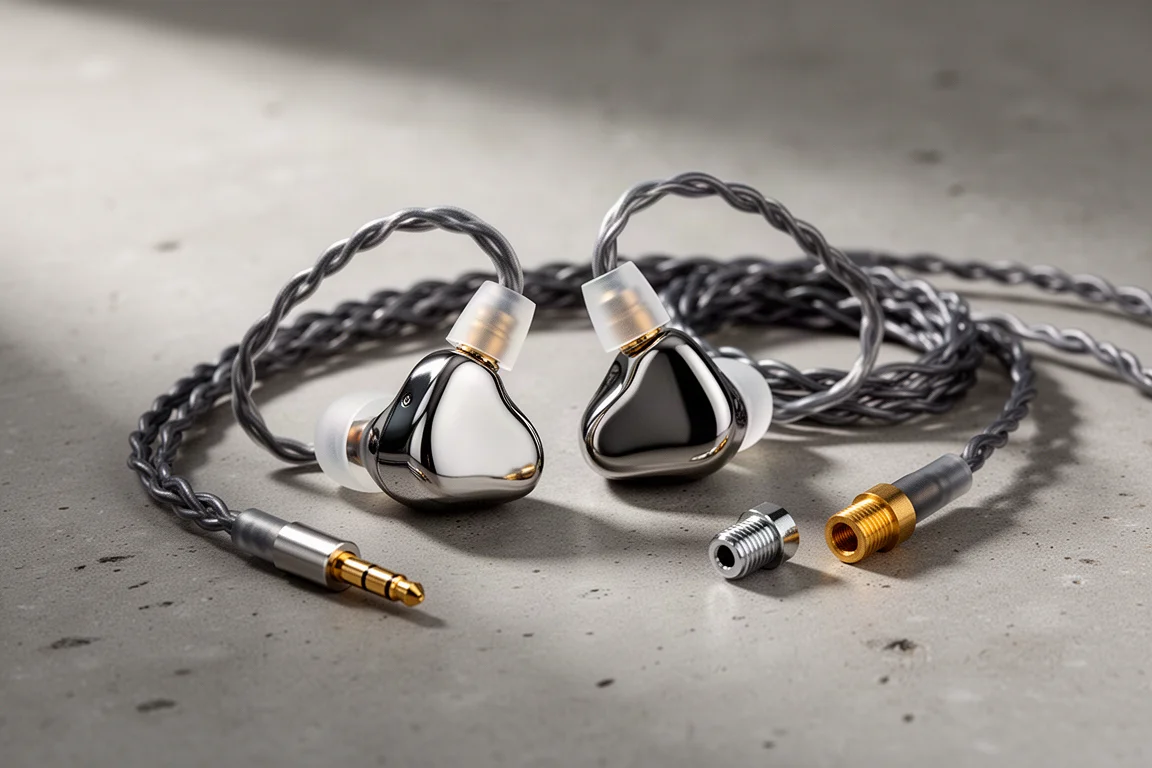
What sets the Kato apart from most earphones in its class is the pair of screw-in nozzles included in the box. One is stainless steel, the other a warm orange brass. Swapping them shifts the weight of the low end, so the same pair can lean neutral or lean a little thicker and heavier.
What Comes in the Box
The packaging is generous. An outer sleeve slides off to reveal a box with two doors that open outward, and inside there is printed artwork, a card explaining correct insertion, and a postcard.
The accessory set is where the Kato justifies its price. You get a soft carrying pouch and a hard carrying case, a set of foam ear tips, and a set of silicone ear tips that feel noticeably softer and more pliable than typical silicone tips. There is also a braided two-pin cable with a 3.5 mm termination and a small metal splitter carrying the Moondrop name. Both interchangeable nozzles ship in the same box.
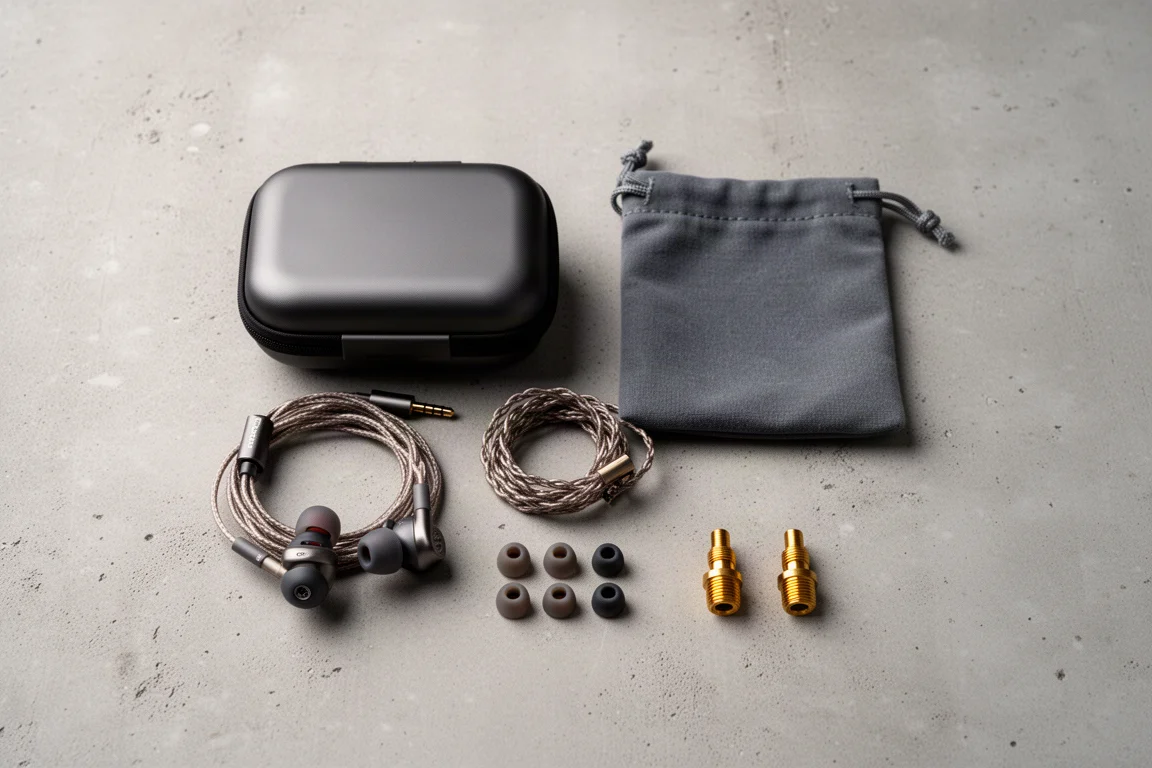
In practice the silicone tips seal quickly and without the usual fiddling. Listeners who normally wear a medium tip may find they need a large here, likely because the material compresses further under pressure. The result is a stable seal that holds without constant adjustment, and the tips are comfortable enough that aftermarket replacements are optional rather than necessary.
Who the Moondrop Kato Is For
This is a sensible choice for listeners who want one versatile wired IEM rather than a collection. The single dynamic driver keeps the sound cohesive from top to bottom, which is a real advantage if you have found multi-driver designs hard to blend.
It also suits anyone who wants tuning flexibility without buying a second pair. The stainless steel nozzle keeps things even, while the brass nozzle adds body at the bottom for warmer recordings or for listeners who simply prefer more low-end weight. Because the Kato runs well from something as simple as a phone’s 3.5 mm adapter, it does not demand a costly portable DAC to sound its best.
Sound Quality and Tuning
The Kato’s presentation is wide. Instruments and effects that sit far outside the centre of a mix land clearly to the sides, and the sense of space is broader than what the Tin HiFi P1 delivers, even though that model remains strong on detail and clarity.
Bass is the most obvious departure from strict neutrality. There is a mild boost down low, and kick drums come across a touch thicker than usual. Sub-bass is handled surprisingly well: low passages that often disappear entirely on lesser earphones are at least audible and identifiable here. Electric bass also comes through cleanly, and the extra low end does not bleed into the midrange.

The mids stay present and detailed rather than being pushed back, so vocals keep their weight and their position in the mix. The treble lifts slightly, enough to add air and detail without turning harsh. Cymbal decay is a good example of what that buys you: long, ringing hits are rendered with a natural tail instead of being cut short. The overall signature sits closer to neutral with a gentle lift at both ends than to a pronounced V-shape.
Turning the volume up is where the tuning proves its worth. The Kato stays composed rather than becoming shouty or fatiguing, and detail does not collapse under the extra level. Instrument separation is a particular strength on dense material, where layered guitars and drums stay distinct instead of blurring into one mass.
Design, Fit, and Cable
The shells are shiny metal and built to feel solid in the hand. The cable is braided, resists tangling, and terminates in a standard 3.5 mm plug. It uses a two-pin connection rather than MMCX, which means the cable does not rotate freely at the housing. That is a matter of preference rather than a flaw, and two-pin is common across the category.
How the Kato Compares With Other IEMs
Within the same brand, the Moondrop Starfield is the closest reference point: it is well regarded in its own right, but it leans warm where the Kato stays cleaner and more spacious. The Tin HiFi P1 concentrates on the top end and is less even across the full frequency range, while the QoA Adonis, which sells for around $280, sounds broadly similar to the Kato at a considerably higher price.

Against that context, the Kato lands in a strong position. It is not the cheapest option, but it brings tuning options, a better accessory package, and a more complete sound than several rivals that cost more.
Things to Consider Before Buying
The bass lift is mild but real. Listeners who want a strictly flat, reference-style response should plan on the stainless steel nozzle and should still expect a little extra weight at the bottom.
The two-pin cable connection is worth knowing about if you prefer the rotating MMCX style. Tip sizing also deserves attention: if you normally take a medium, test a large before settling in, because the included silicone tips run smaller in practice than their stated size suggests. Finally, at around $180 this is not a budget purchase, so it makes the most sense if you value the nozzle system and the accessory set rather than just the sound.
Buying Advice
The Kato makes the most sense as a single, do-everything wired IEM. It handles grunge, hard rock, metal, and electronic material without strain, and the two nozzles let you nudge the low end to taste rather than living with one fixed tuning.

If you already own the Starfield and want a wider stage and a cleaner top end, the Kato is a logical next step. If you are coming from a cheap bundled pair of earphones, it is a substantial jump in build, comfort, and resolution, and it will not require a separate amplifier to perform. Buy it for the combination of a cohesive single-driver sound, a comfortable seal, and tuning flexibility that few earphones at this price offer.
Conclusion
The Moondrop Kato is a refined, well-equipped in-ear monitor with a cohesive sound, a wide stage, capable sub-bass, and two tuning options that make it easy to live with across genres. At around $180 it asks for a real commitment, but the hard case, the excellent silicone tips, and the swappable nozzles make that commitment easier to justify.
Product link
View more details for Moondrop Kato
This product is mentioned in the review. Check the specifications, options, and compatibility before buying.
View more details for Moondrop KatoFurther reading
Related Reviews

In-Ear Monitors
7Hz Salnotes Dioko Review: Planar Magnetic Clarity at $99
A close look at the 7Hz Salnotes Dioko, a $99 planar magnetic in-ear monitor with strong midrange clarity, a wide soundstage, and a bright treble tuning that rewards equalization.

In-Ear Monitors
7Hz Timeless Review: A Planar IEM With Uncommon Presence
A planar in-ear monitor with a boosted low end, standout percussion and tonality, and a few traits worth weighing carefully before you buy.

In-Ear Monitors
BLON JoJo Review: A Punchy Budget IEM That Keeps Its Composure
The BLON JoJo pairs a 10 mm dynamic driver with a lively, clean tuning that holds together on dense, layered tracks. Here is what to know before buying.