Speakers
MonAcoustic Platimon VC1 and VC2 Review: A Two-Part Speaker System With Real Flexibility
A close look at the MonAcoustic Platimon VC1 bookshelf module and the VC2 extension module, covering tuning modes, setup demands, amplifier matching, and value.
Introduction
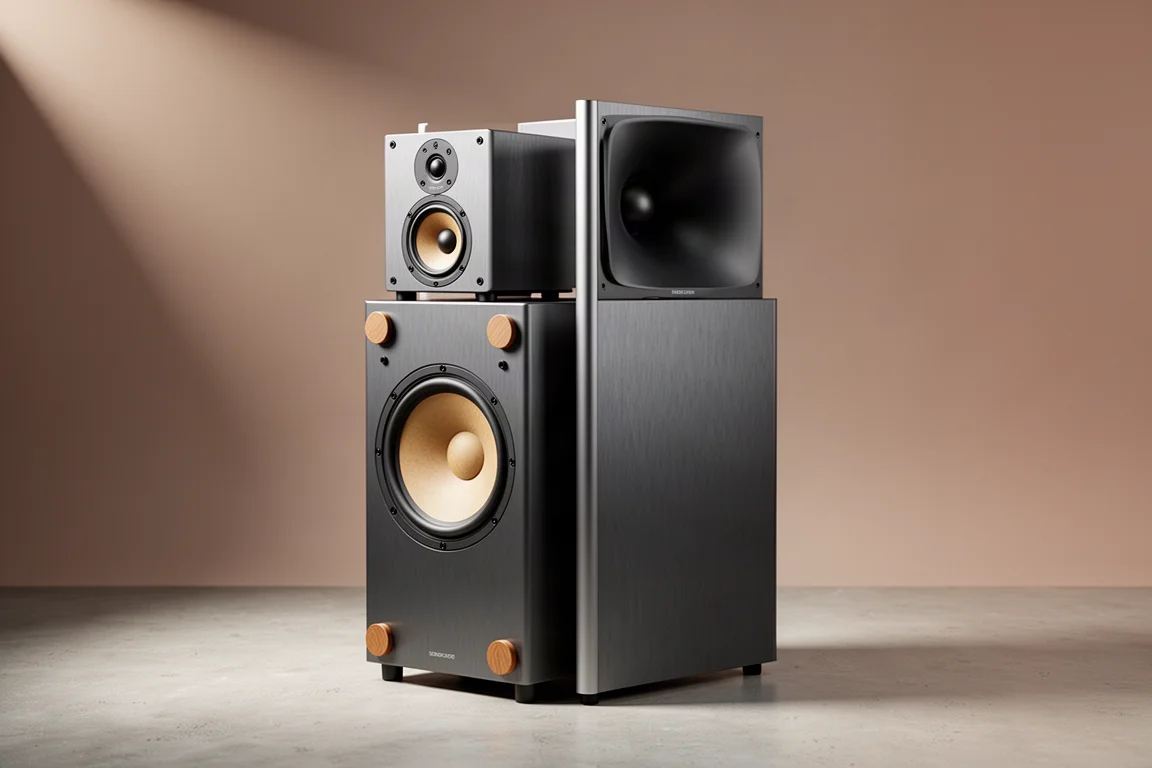
The MonAcoustic Platimon is built around an unusual idea: split the loudspeaker into two separate modules and let the owner assemble the version that suits the room and the rest of the system.
The upper module, the Platimon VC1, is a bookshelf-sized speaker that has been used as a main speaker for roughly three years. The lower module, the Platimon VC2, arrived later and adds a dedicated woofer section along with a broad set of tuning controls. The VC1 costs $6,000 and the VC2 costs $11,000, which puts a combined system at around $17,000.
This article covers what each module contributes, how the tuning options change the sound, what setup demands to expect, and who the combined system actually makes sense for.
How the Platimon Two-Part System Works
Both modules share a cabinet philosophy built around aluminum rather than wood or composite. MonAcoustic chose aluminum to approximate the acoustic character of Oompingo, a rare and expensive tonewood prized in speaker design for its rigidity and musical character. The approach relies on aluminum panels combined with specific internal linings and targeted tuning choices to reach a similar result.
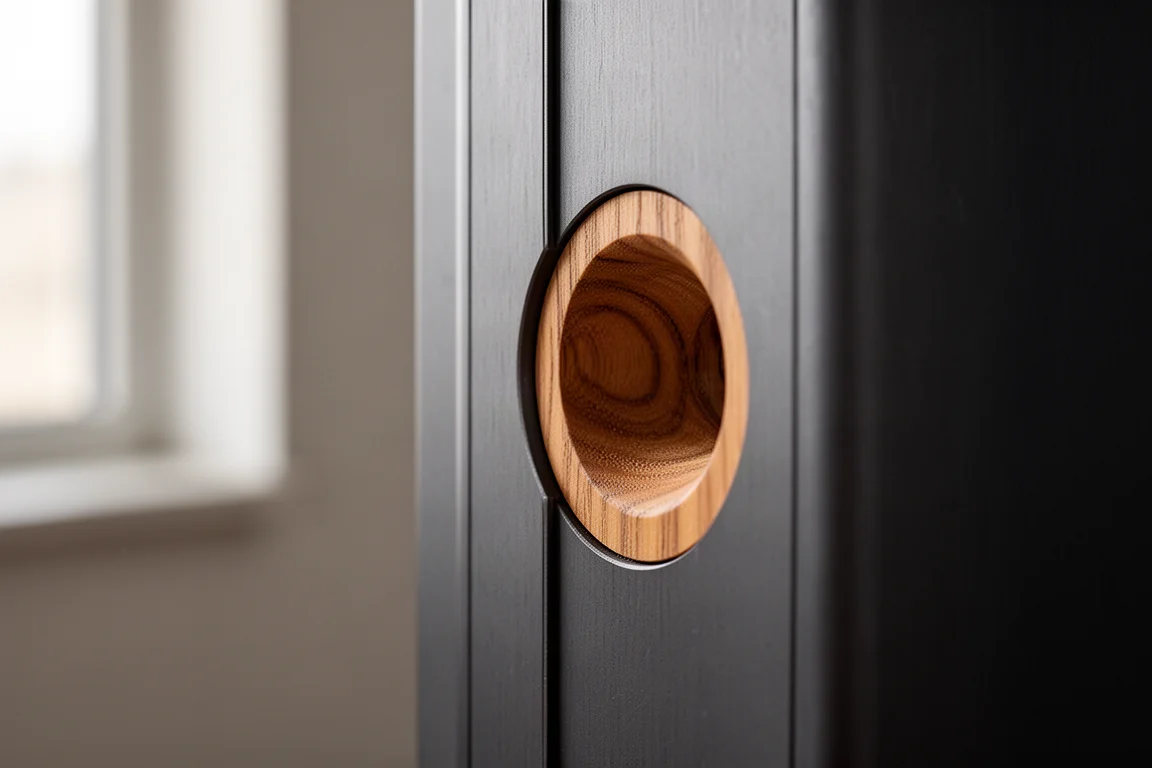
The VC2 extends that idea with real Oompingo plugs that double as tuning ports. It also adds an in-house designed 8-inch paper woofer and a beryllium dome super tweeter behind a large waveguide.
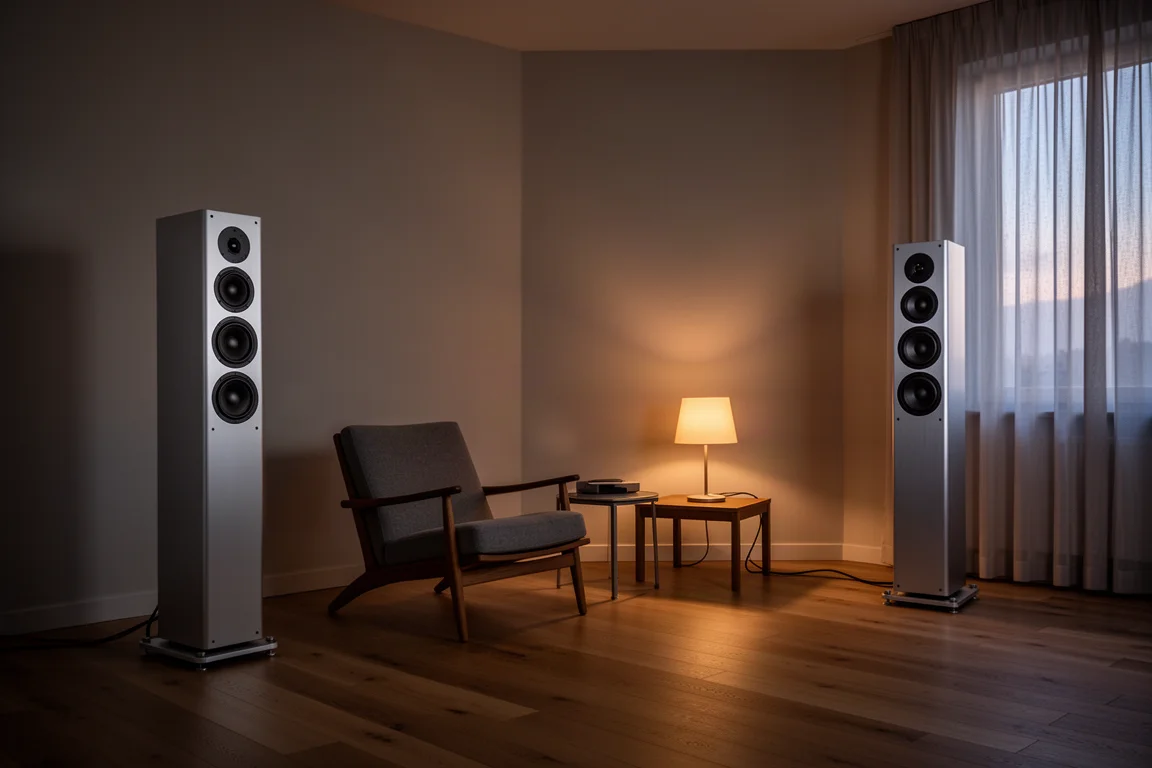
Together, the two modules form a slim tower that reaches down to 20 Hz. The system is also unusually configurable: tweeter modes, wiring modes, and multiple ports all give the owner levers to adjust the presentation without changing hardware.
MonAcoustic Platimon VC1: The Bookshelf Foundation
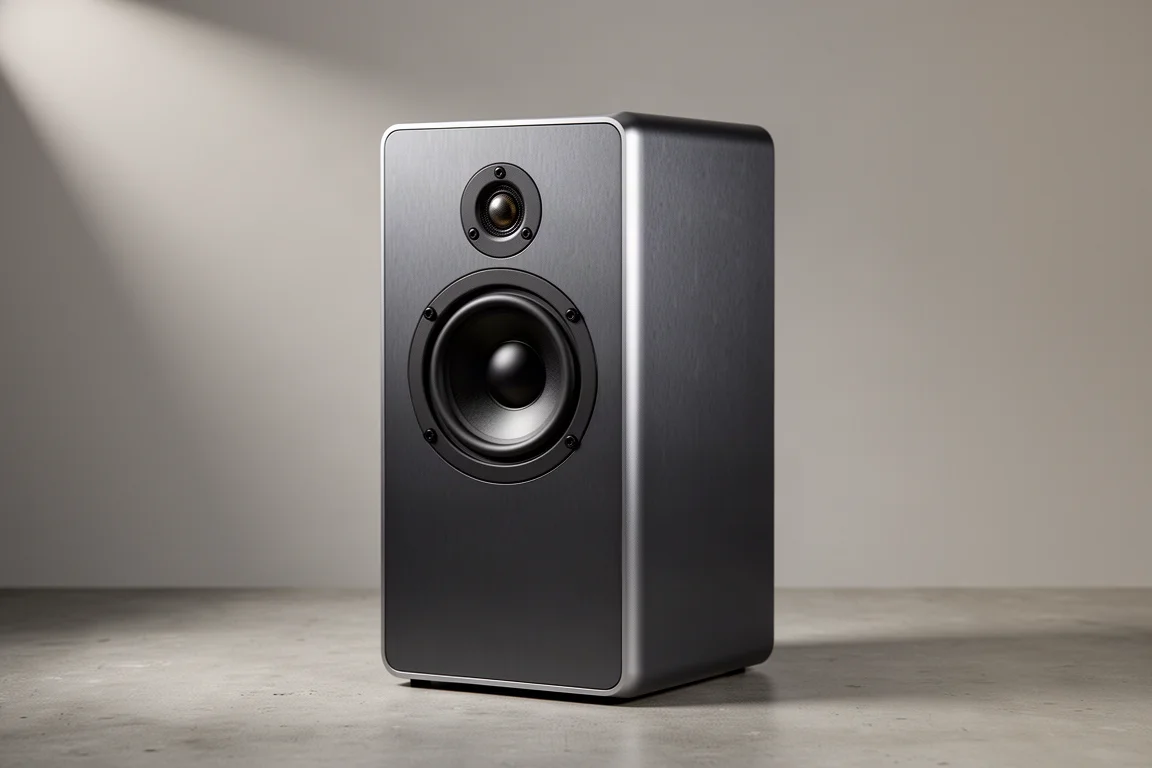
The VC1 establishes the character of the Platimon sound. It is a compact aluminum cabinet with an airy, transparent presentation, strong imaging, and a sense of instruments floating in space. That openness is what makes it a credible long-term speaker rather than a short-term novelty.
It is also the lower-cost half of the system, and it can be run on its own with a subwoofer for listeners who want deeper bass without adding the VC2. That route is a perfectly valid way into the Platimon sound, and it costs considerably less than the full stack.
MonAcoustic Platimon VC2: The Extension Module
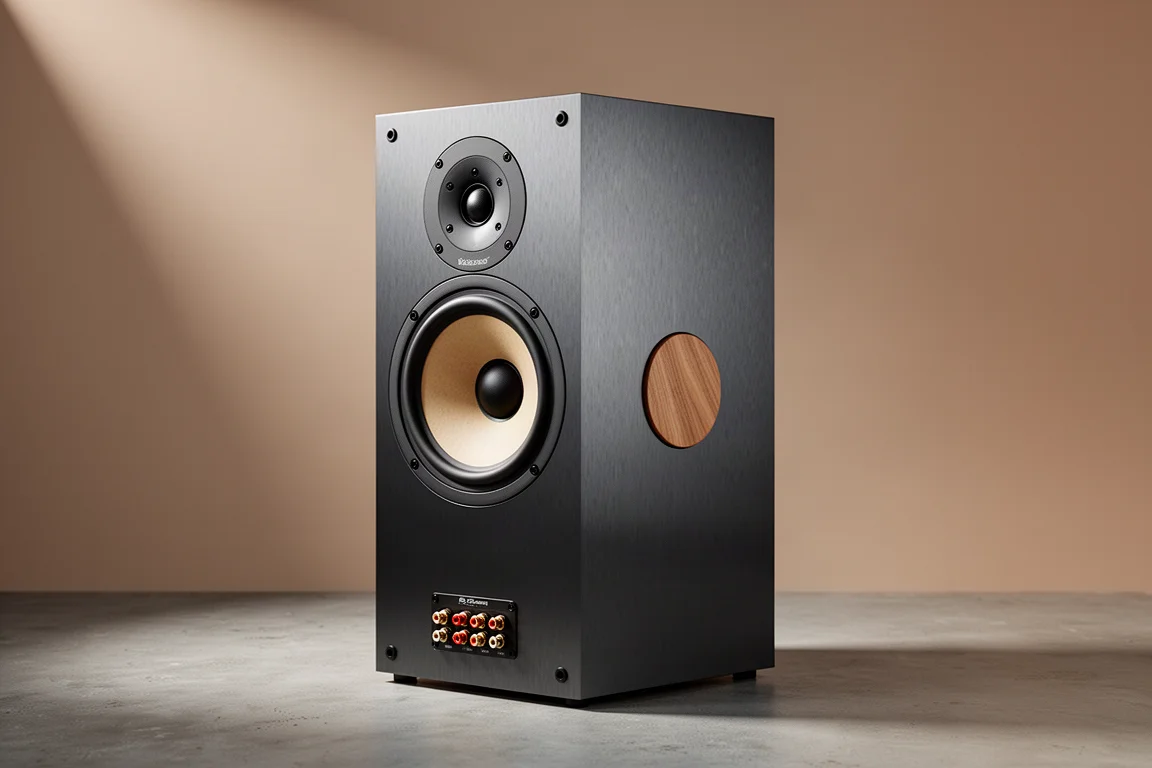
The VC2 is where the system becomes genuinely different from a bookshelf speaker plus a subwoofer. It houses MonAcoustic’s first in-house designed 8-inch paper woofer, with pieces of Oompingo wood on the backing to shape resonance and add character.
That detail matters because the design goal was not the lowest possible distortion. The woofer is tuned to work with resonances deliberately, producing a rich, textured low end with more nuance than a conventional paper cone. Because both modules were designed together, the integration sounds more homogeneous than a third-party subwoofer can manage, even when that subwoofer is dialed in carefully.
Like the top module, the VC2 has a left and right distinction, a result of an asymmetrical port design.

Bass output is substantial. The combined system reaches down to 20 Hz, and the VC2 includes several ports that can be plugged to control boom in smaller rooms or in near-wall placements.
Tuning Options: Super Tweeter and Harmonic Tweeter Modes
The front of the VC2 carries a beryllium dome super tweeter with a large waveguide. It has three states: off, super tweeter, and harmonic tweeter.
With the super tweeter engaged, the top end extends past 23 kHz and the presentation becomes noticeably airier and more spacious. Imaging tightens, the stage grows wider and deeper, and the sound stays sweet rather than bright, which matters for listeners who are sensitive to hard treble. Switching it off pulls the sound closer to the plain VC1 character, with more bass but a more constricted sense of space.
Harmonic tweeter mode works differently. Rather than extending frequency, it alters ambience and harmonics, which changes the overall character of the sound rather than the range it covers.
- HT1 is the warmest and richest option, with strong texture, a full mid-range, and forgiving high frequencies.
- HT2 sits in the middle, balancing texture with transparency.
- HT3 moves to the opposite end, emphasizing clarity and openness over texture. It is the most transparent and detail-forward setting, and also the most clinical.
For most listeners, the super tweeter setting will be the natural default, with HT2 as a strong second choice. HT1 suits warm-leaning systems and long listening sessions, while HT3 appeals to anyone chasing maximum transparency.
Wiring Modes and Sensitivity
The Platimon can be run as a 3.5-way or a 4-way speaker, changed simply by moving the jumpers. Connecting them to the top binding post of the VC2 gives the 4-way configuration. Connecting them to the bottom post gives the 3.5-way.
The two modes behave differently. The 4-way is the more neutral and balanced option, and it presents an easier impedance load for amplifiers, though sensitivity drops to 89 dB. The 3.5-way is the livelier choice, adding mid-bass energy around the 100 Hz to 150 Hz region and a slight lift in the high frequencies, with higher sensitivity at 91 dB.
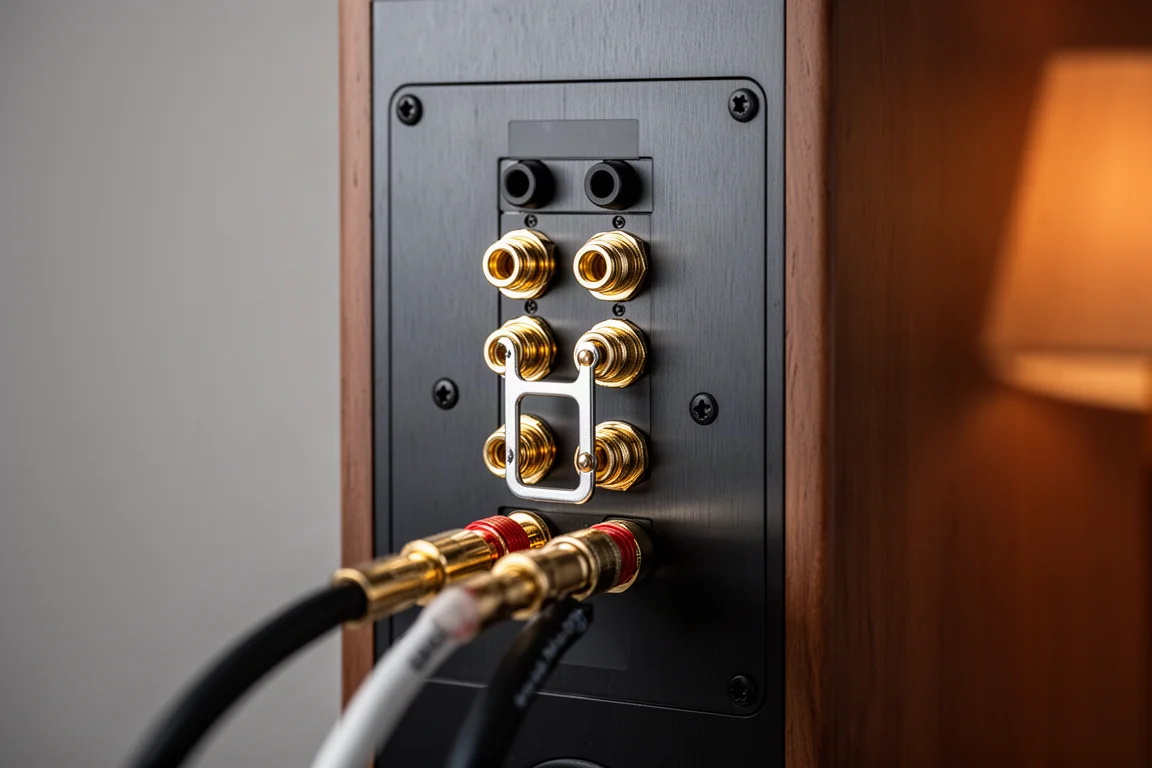
Neither mode is a gimmick. The choice comes down to whether the priority is a neutral balance across the range or a more energetic, fun presentation.
Setup, Placement, and Amplifier Matching
This is not a plug-and-play speaker. The VC2 has a left and right distinction, so the modules need to go on the correct sides. Toe-in matters a great deal: aiming the speakers directly at the listening position produces a very large stage but can become overstimulating, while a slight outward angle keeps the stage wide and reduces fatigue. Distance from the rear wall is equally important, and the ports can be plugged when the speakers sit close to a wall to keep the bass controlled rather than boomy.
Amplifier matching depends on the mode chosen. The 4-way configuration with the super tweeter engaged pairs well with warm or dark sounding amplifiers, and the Eversolo F10 is a strong example of that synergy. The HT1 harmonic setting moves in the opposite direction and benefits from a neutral or brighter amplifier instead, since too much warmth can make the presentation sound closed in. For listeners who want to switch between settings regularly, a neutral amplifier such as the Accuphase E3000 keeps every mode usable. The practical approach is to settle on one preferred configuration and match the rest of the chain to it.
Price, Value, and Who It Suits
The VC1 is $6,000 and the VC2 is $11,000, putting the combined system at roughly $17,000. That is a significant sum, and it is the clearest drawback of the design.
It is also worth being clear about what the Platimon is not. Measured response stays within roughly plus or minus 5 dB, so this is not a perfectly linear loudspeaker, and anyone who prioritizes flat response can find that for considerably less money. The Platimon is tuned for a specific character instead.
What the system offers in return is range. Few speakers can move from dark, rich, and textured to clinical, open, and transparent while remaining the same speaker. For a listener who wants both a wide, airy soundstage and a full, punchy, textured low end without choosing between them, that flexibility is the entire point. The VC1 alone is the sensible entry point. The VC2 is for owners who have already decided this is the sound they want and want to take it further.
Conclusion
The MonAcoustic Platimon VC1 and VC2 work best when they are understood as one system rather than two separate products. The VC1 provides the airy, transparent foundation, and the VC2 adds the bass weight, texture, and tuning flexibility that turn it into something far more complete.
The cost and the setup demands are real. So is the payoff for the right listener: a speaker that can be shaped to the room, the amplifier, and the music without giving up the qualities that made the VC1 worth keeping in the first place.
Further reading
Related Reviews
Speakers
13 Under-the-Radar Speakers Still Worth Buying
Thirteen speakers that quietly stayed in production while newer models took the spotlight, from budget bookshelf pairs to a full-size tower.
Speakers
Arendal 1528 Monitor 8 Review: A Three-Way Standmount With Serious Dynamic Headroom
A three-way standmount speaker with extremely low distortion, high output capability, and deep bass for its size, plus the setup details worth knowing before buying.
Speakers
Arendal 1723 Monitor S Review: A Compact Monitor With Serious Ambition
A close look at the Arendal 1723 Monitor S, a compact MTM monitor with a waveguide-loaded tweeter, an HDF cabinet, and flexible ported or sealed operation for music and home theater.