Floorstanding Speakers
MoFi SourcePoint V10 Master Edition Review: Full-Range Floorstanders Without a Subwoofer
A large full-range floorstanding speaker with deep bass, wide radiation, and very low distortion, plus the room and setup requirements to weigh first.
Introduction
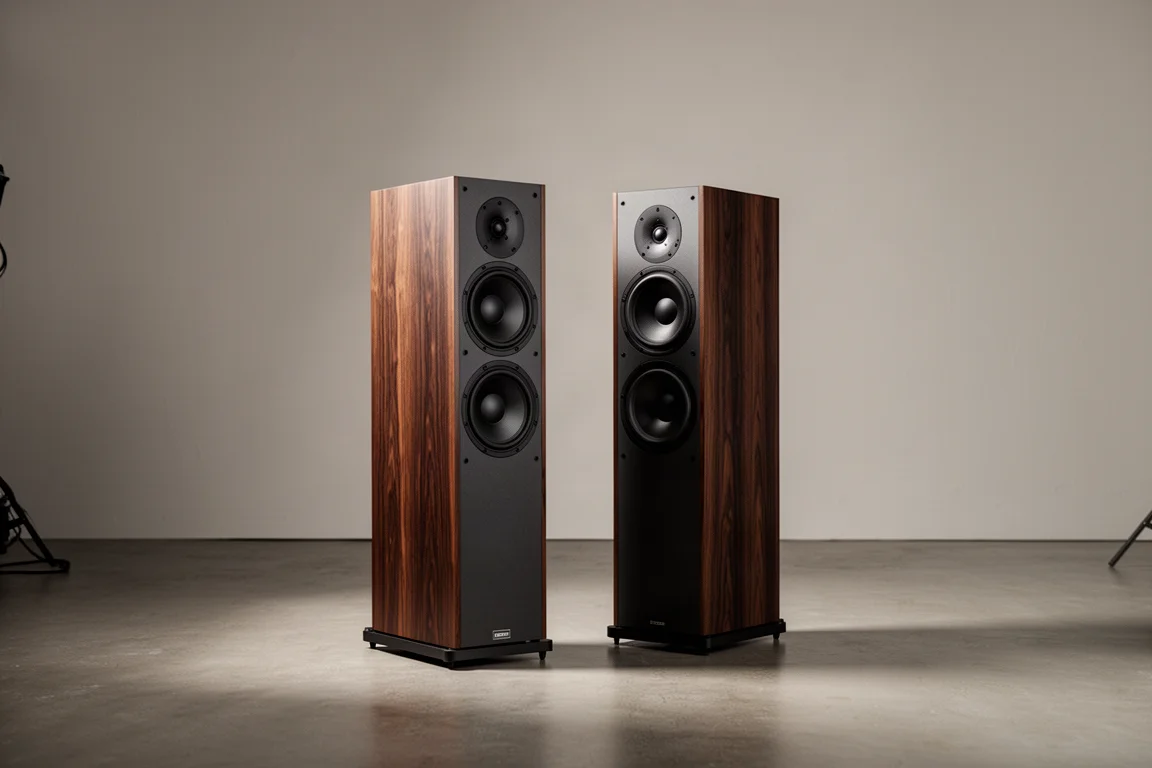
The MoFi SourcePoint V10 Master Edition is a new floorstanding loudspeaker built around a design led by Andrew Jones, and it first appeared in April at a hi-fi show in Chicago. It is a tall, heavy, full-range tower that takes the place of both a main speaker and, for most listeners, a subwoofer.
At roughly $8,000 per pair it sits in serious territory, and its physical presence matches the price: about 49 inches tall and around 160 pounds per cabinet. What makes it worth considering is how much it delivers once it is in place, particularly the bass depth, the width of its radiation, and how little its character changes as the volume climbs.
Who This Speaker Is For
This is a speaker for listeners who have the room for it and want full-range sound without adding subwoofers or spending time on bass equalization. If your current system is a bookshelf pair or a mid-sized tower, the jump in scale is significant, and the speaker suits a space where it can sit well clear of the wall behind it and where the listening seat is a comfortable distance back.
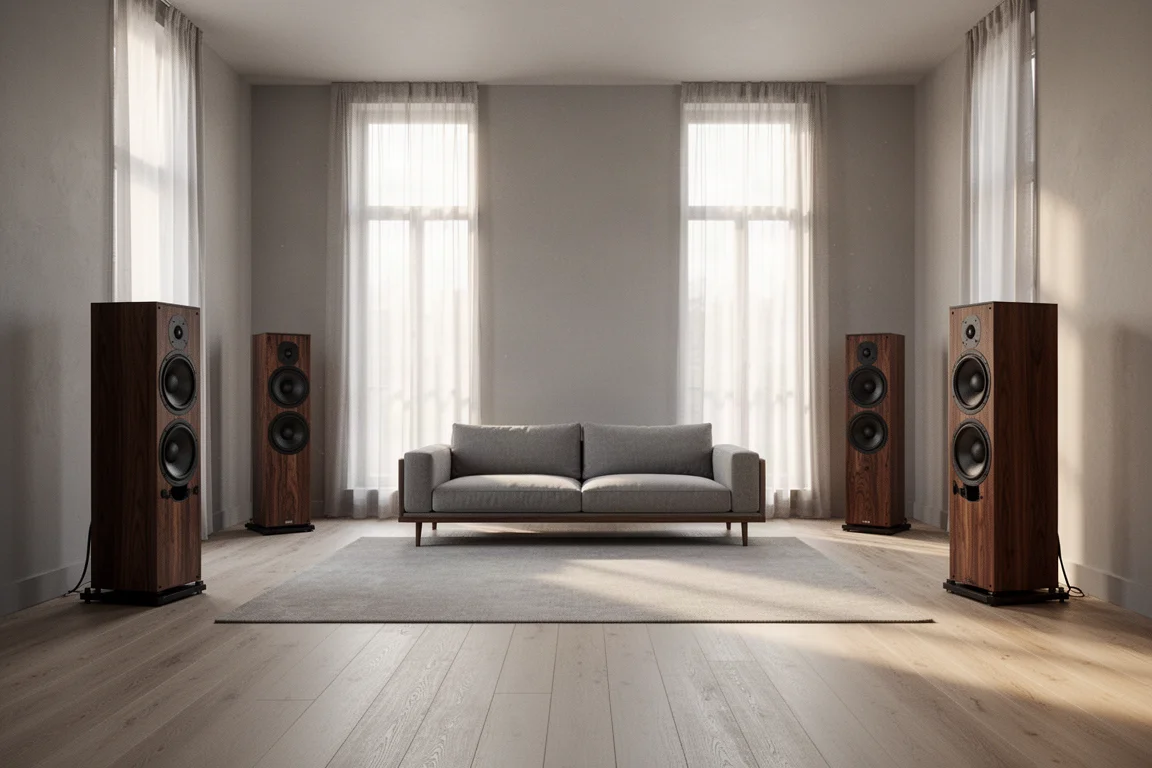
It also rewards listeners who care about the spatial side of playback. The presentation is not a flat rectangle of sound stretched between the two cabinets; it spreads outward and around the listening position in a way most conventional towers do not.
Main Strengths
The SourcePoint V10 Master Edition stands out in four areas: bass extension, radiation and staging, driver integration, and the flexibility of its treble adjustment.
Bass Depth Without a Subwoofer
In-room extension reaches down to about 30 Hz, and the rolloff is gradual rather than peaky. That matters because the low end arrives as usable depth instead of a bloated hump in the mid-bass. With a speaker that reaches this low cleanly, deep bass notes and mid-bass punch are heard as separate layers rather than one blurred mass.
The practical benefit is integration. A speaker that already covers the bottom octaves removes the gain, crossover, and phase alignment work that subwoofer setups demand. Place the cabinets at least about two feet from the wall behind them and the bass stays controlled rather than thickening.
Imaging and a Spherical Soundstage
Imaging is precise, which points to well-matched drivers between the two cabinets. More unusual is the shape of the presentation. Instead of a defined box with hard edges, the sound spreads as a wide sphere around the listening position, and horizontal radiation is broad at roughly plus or minus 60 degrees. That gives listeners far more freedom in where they sit than a narrow, locked-in sweet spot allows.
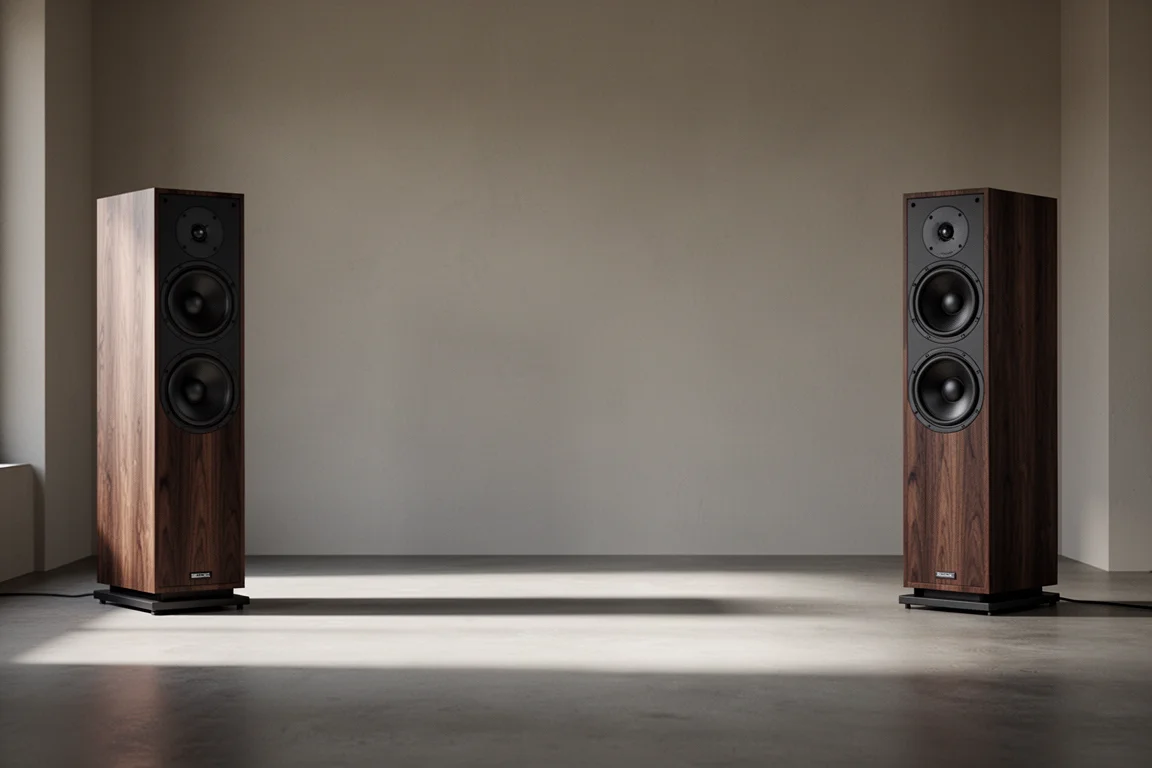
That combination of precision and width is what makes long listening sessions comfortable. You are not pinned to a single seat to keep the image intact, and the sense of the performance filling the room holds up even when you move.
Crossover Integration and Dynamics
Driver integration is another area where this speaker avoids a common large-tower problem. Sound does not shift between individual drivers as it moves across the stage, and there is no audible seam between the midrange, mid-bass, and treble. Dynamic range is generous as well. Pushed to an average of around 100 dB at about ten feet away, the speaker showed no signs of strain or a rising distortion signature that pulled attention away from the music.
Treble Tuning Without Equalization
A three-position switch on the back adjusts treble attenuation. The high setting applies no attenuation, medium trims roughly 1.5 dB, and low removes another 1.5 dB, giving about 3 dB of total adjustment. Combined with positioning, that covers a wide range of room conditions without touching an equalizer.
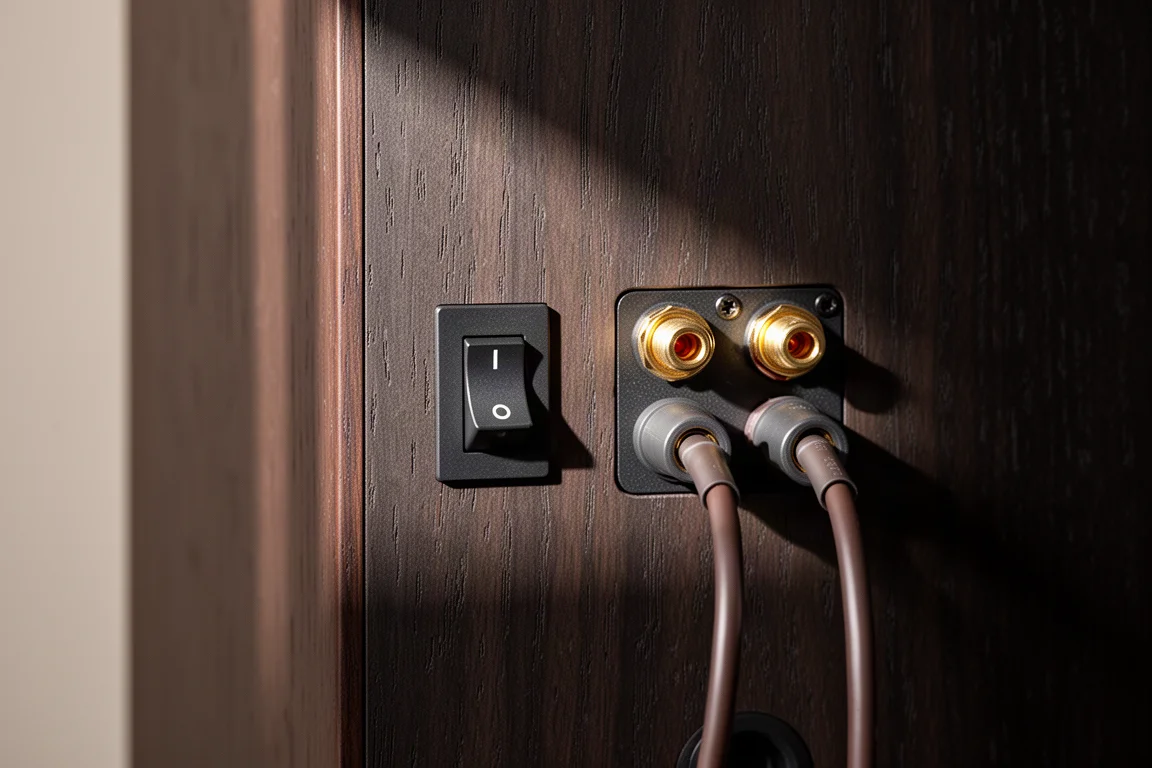
Setup benefits from a slight toe-out. Aiming the speakers about 10 to 15 degrees behind the listening position smooths the upper midrange and treble, so a directly on-axis setup is not the target to chase. Measured sensitivity averages around 89 dB.
Things to Consider Before Buying
Two things deserve attention before committing: the physical demands of the speaker and the measured behavior of its response.
Size, Weight, and Placement
At about 125 cm (49 inches) tall and roughly 72 to 73 kg (160 pounds) per cabinet, moving and positioning these speakers is a two-person job. They need a large room, at least about two feet of clearance from the wall behind them, and a listening position far enough back to let the drivers integrate properly.
Measured Nonlinearities and Amplifier Pairing
Measured response is not perfectly flat. There is a dip around 300 Hz that appears to come from the enclosure, a mild saddle near 80 Hz, and small variations within about a decibel in the higher frequencies. Multi-tone testing shows some peaking around 4 kHz, though it did not translate into audible grain or compression through the midrange. Harmonic distortion stays below about 1 percent at both 86 dB and 96 dB, and long-term compression across repeated 30-second pink noise runs is negligible, as is short-term dynamic compression.
Impedance is friendlier than the size suggests. Minimum impedance is about 5.3 ohms with a minimum EPDR of 3.1, so the speaker is not a difficult load. Amplifier damping factor makes almost no difference through the midrange and treble. The exception is the bass region: amplifiers with high output impedance, such as some tube designs, can give up a little bass thump in the 50 to 60 Hz range.
Buying Advice
This is a speaker to buy when the room and the budget are both in place. It costs around $8,000 per pair and takes up the kind of floor space that changes how a room feels. In return, it removes the need for a subwoofer in most systems, and for bass equalization if you would rather not deal with either.
Pair it with an amplifier that is comfortable driving a moderate load and matching becomes a non-issue. If your room is on the smaller side, or you are coming from a compact stand-mount speaker and want something that visually disappears into the space, this is not that product. If you have the space and want a full-range floorstander that behaves like a complete system on its own, the V10 Master Edition is the more rewarding path.
Conclusion
The MoFi SourcePoint V10 Master Edition is a large speaker that earns its footprint. Deep bass down to about 30 Hz in room, wide radiation that fills the space around the listener, very low distortion, and near-zero compression add up to a presentation that is hard to match without adding subwoofers and careful tuning. The measured response carries small imperfections, and the cabinets demand real room and real effort to place. For listeners with the space, that trade is a good one.
Product link
View more details for MoFi SourcePoint V10 Master Edition
This product is mentioned in the review. Check the specifications, options, and compatibility before buying.
View more details for MoFi SourcePoint V10 Master EditionFurther reading
Related Reviews
Floorstanding Speakers
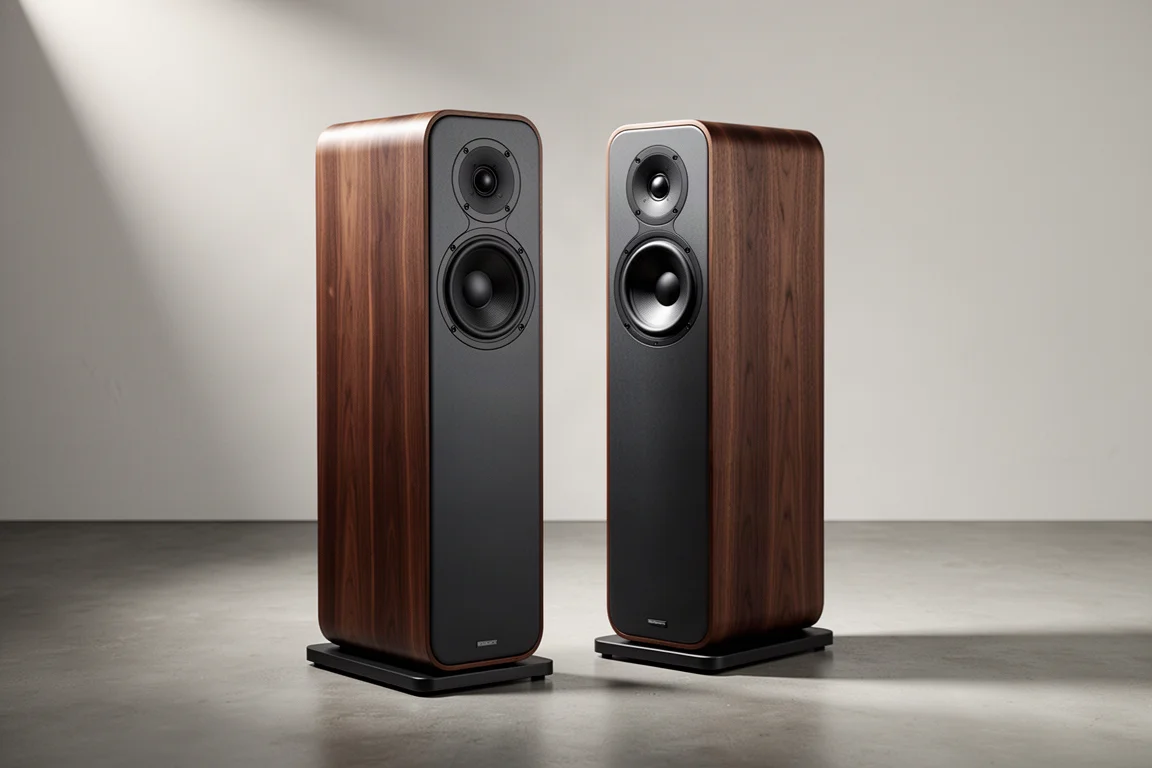
Acoustic Energy AE109 Mark II Review: A Refined Floorstander at £699
The Acoustic Energy AE109 Mark II is a slim, warm sounding floorstander that delivers clarity, midrange body and strong imaging in small to medium rooms.
Floorstanding Speakers
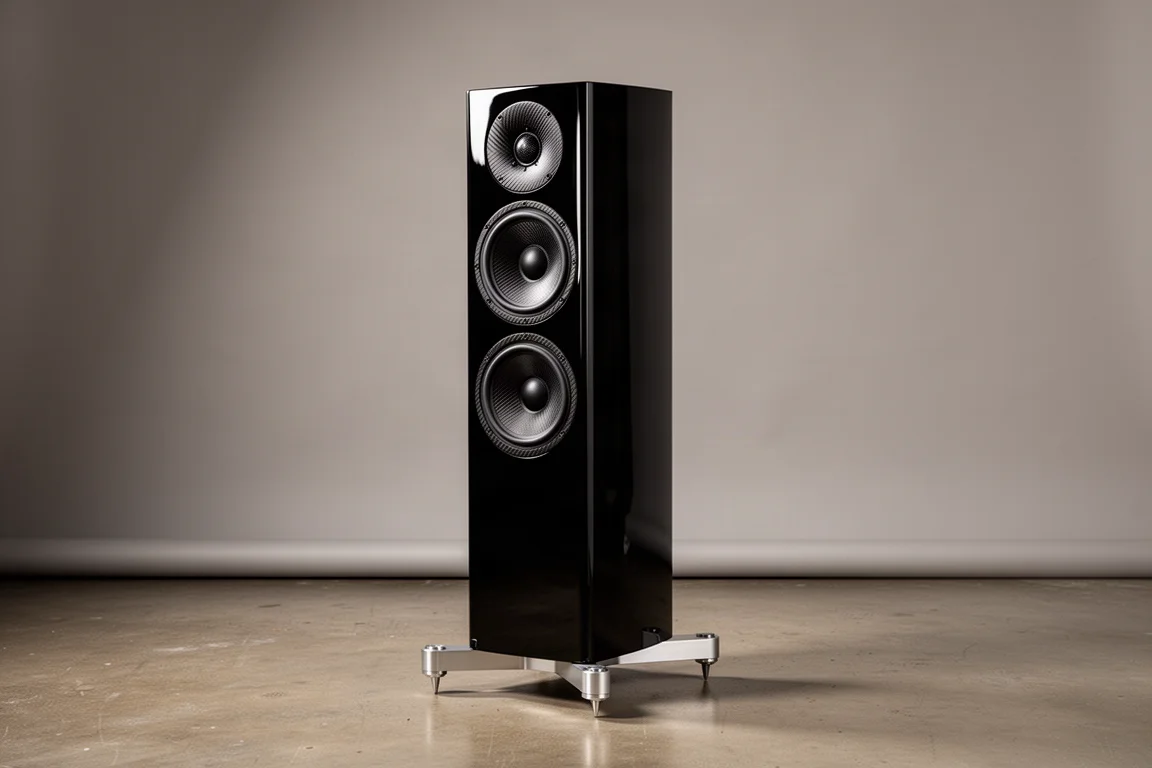
Acoustic Energy AE509 Review: A Slim Floorstander With Deep, Defined Bass
A practical look at the Acoustic Energy AE509, a slim floorstanding speaker with carbon fibre drivers, deep and well-defined bass, and an easy-going character that rewards careful system matching.
Floorstanding Speakers
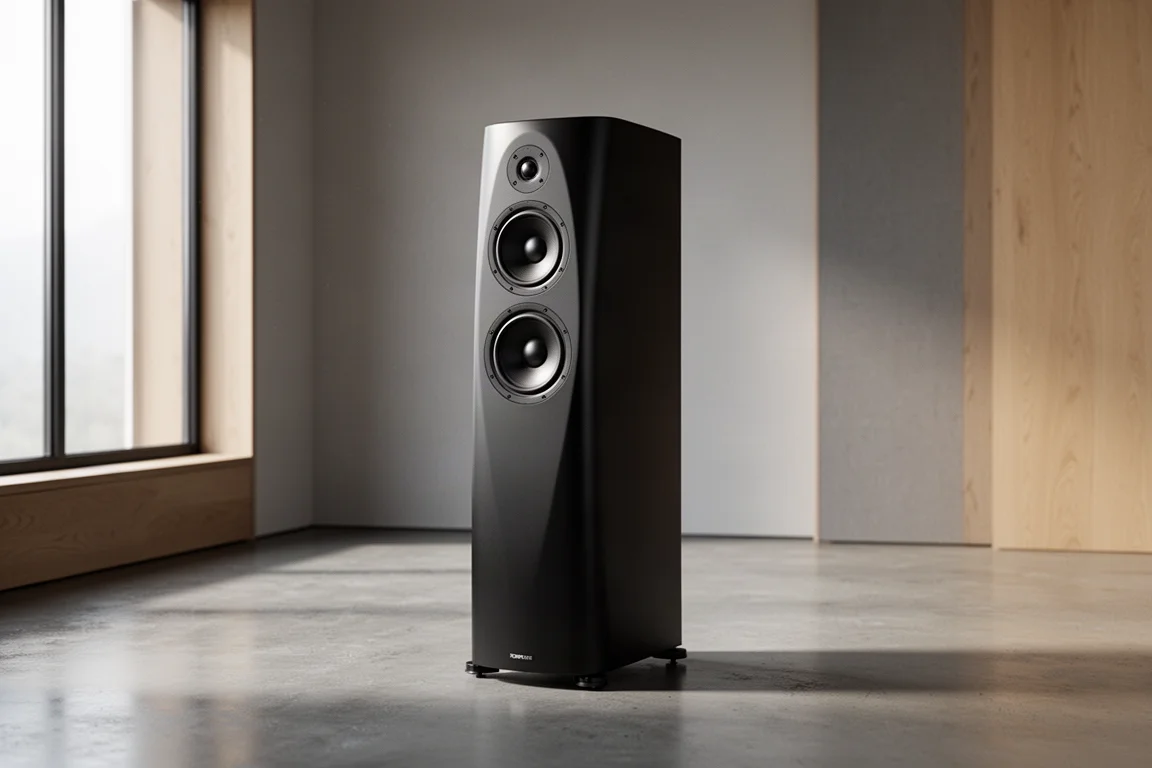
Arendal 1528 Tower 8 Review: Reference Neutrality With Real Demands
A close look at the Arendal 1528 Tower 8, a nearly five-foot, 200-pound floorstander that rewards generous space, serious power, and high listening levels with reference-grade neutrality.