Speakers
MoFi SourcePoint 10 Master Edition Review: A Coaxial Standmount With Adjustable Treble
The MoFi SourcePoint 10 Master Edition keeps the coaxial driver and adds a three-position treble switch plus a redesigned impedance network. Here is what that means before you buy.
Introduction
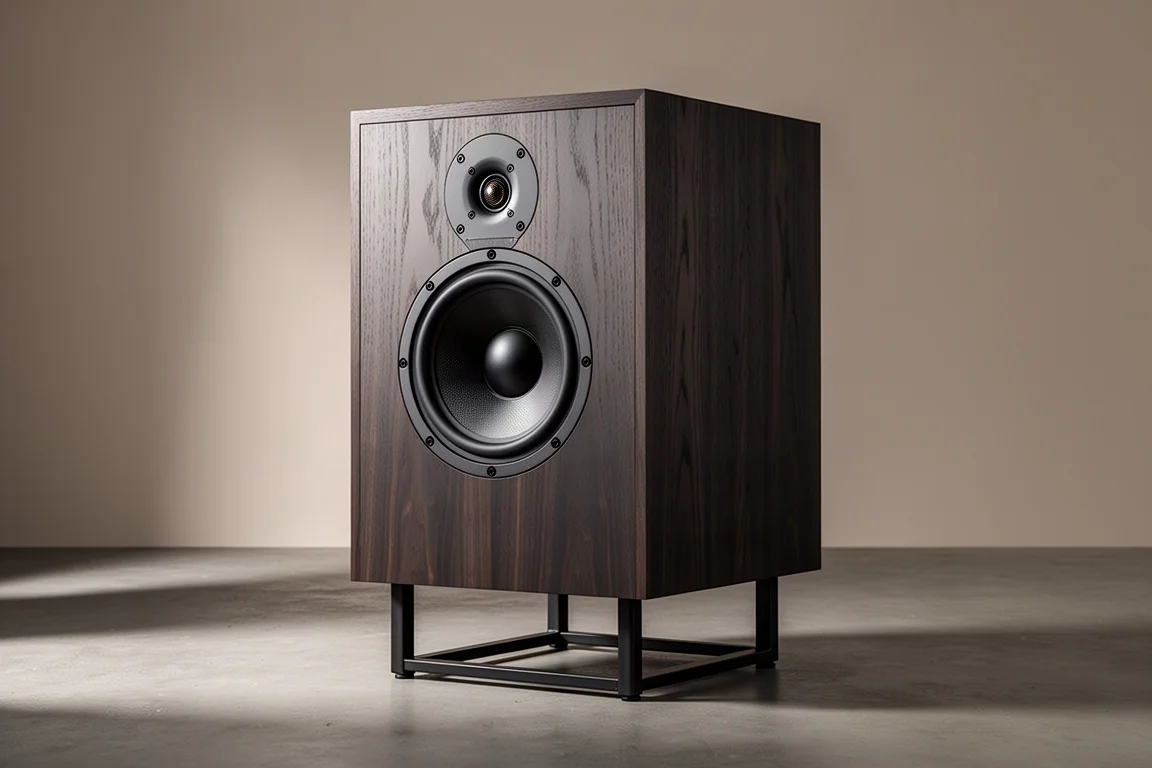
The MoFi SourcePoint 10 Master Edition is a revised version of the SourcePoint 10 standmount loudspeaker. The cabinet and the 10-inch coaxial driver carry over, but the crossover has been reworked in two ways that matter in daily use: a switch on the rear panel that adjusts the treble level, and a redesigned impedance network built to behave more consistently from one amplifier to the next.
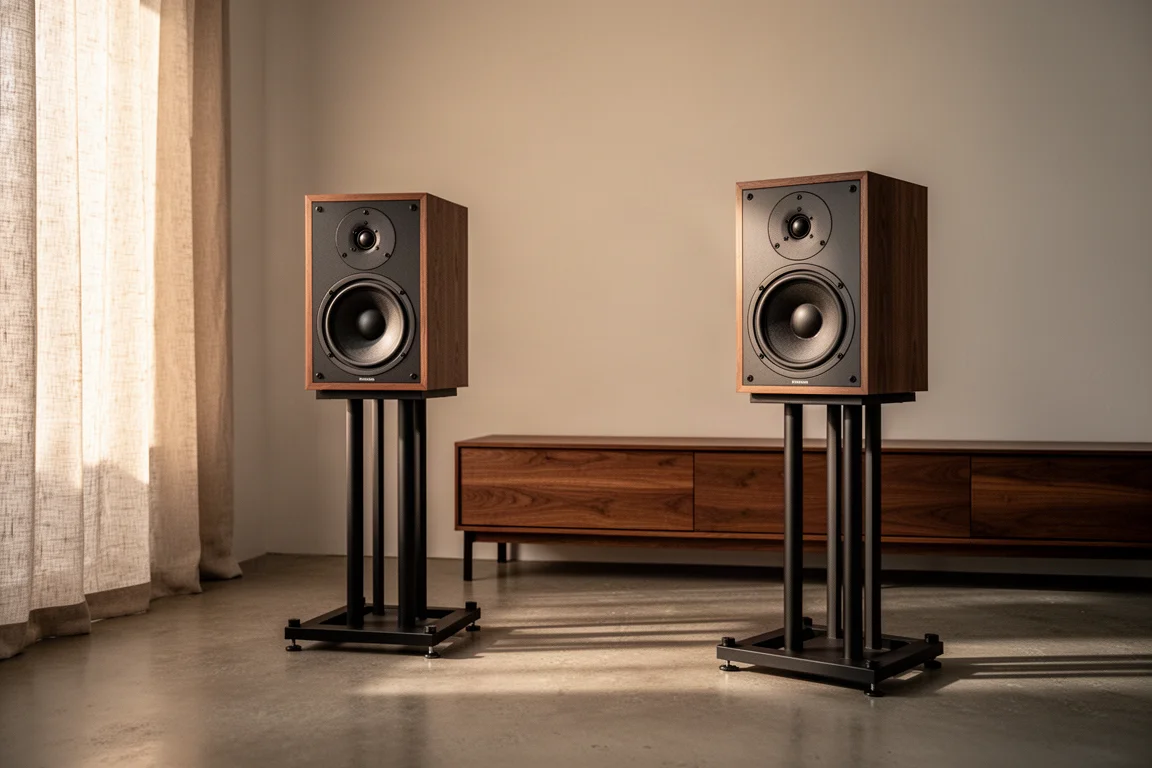
The Master Edition costs roughly $500 more per pair than the original SourcePoint 10. Owners of the original can also buy the updated crossover as a kit and swap it in, which keeps the upgrade path open for anyone who already owns the speaker.
Who the MoFi SourcePoint 10 Master Edition Is For
This speaker suits listeners who want a neutral, uncoloured presentation and the ability to shape the top end without reaching for equalisation. The three-position treble switch covers the practical range: low and mid for an honest balance, high for a little extra detail when you are listening quietly late in the evening and do not want to push the volume.
It also suits anyone building a system around a coaxial design. The point-source arrangement sends sound out from a single point in space rather than splitting it between a tweeter and a separate midwoofer, which shows up in imaging and in the sense of space around instruments.
Buyers who mostly listen to hip-hop or who use their system for film effects should plan on adding a subwoofer, because the low-frequency extension is unchanged from the original version. A larger model in the line is planned with the same 10-inch coaxial driver plus additional bass drivers and passive radiators on the back, aimed at listeners who want deeper low end.
Main Strengths
Two changes define this edition, and both are practical rather than cosmetic.
Treble Control That Fixes the Original’s Brightness
The headline feature is the switch on the back of the crossover. It offers high, mid, and low settings for the high-frequency region, and it directly addresses the most common complaint about the original SourcePoint 10, whose treble sat roughly 2 to 4 dB hotter than neutral. Set to high, the Master Edition closely mimics that original voicing and will still sound bright. Set to low or mid, the balance settles into something far more even.
That flexibility is worth more than it sounds. Most of the time the low or mid setting is the one that keeps tonality honest across a wide range of recordings, and flipping to high becomes an occasional tool rather than a permanent compromise. If you want a slightly more forward, detail-forward presentation for a quiet late-night session, the option is there without any menu diving or room correction software.
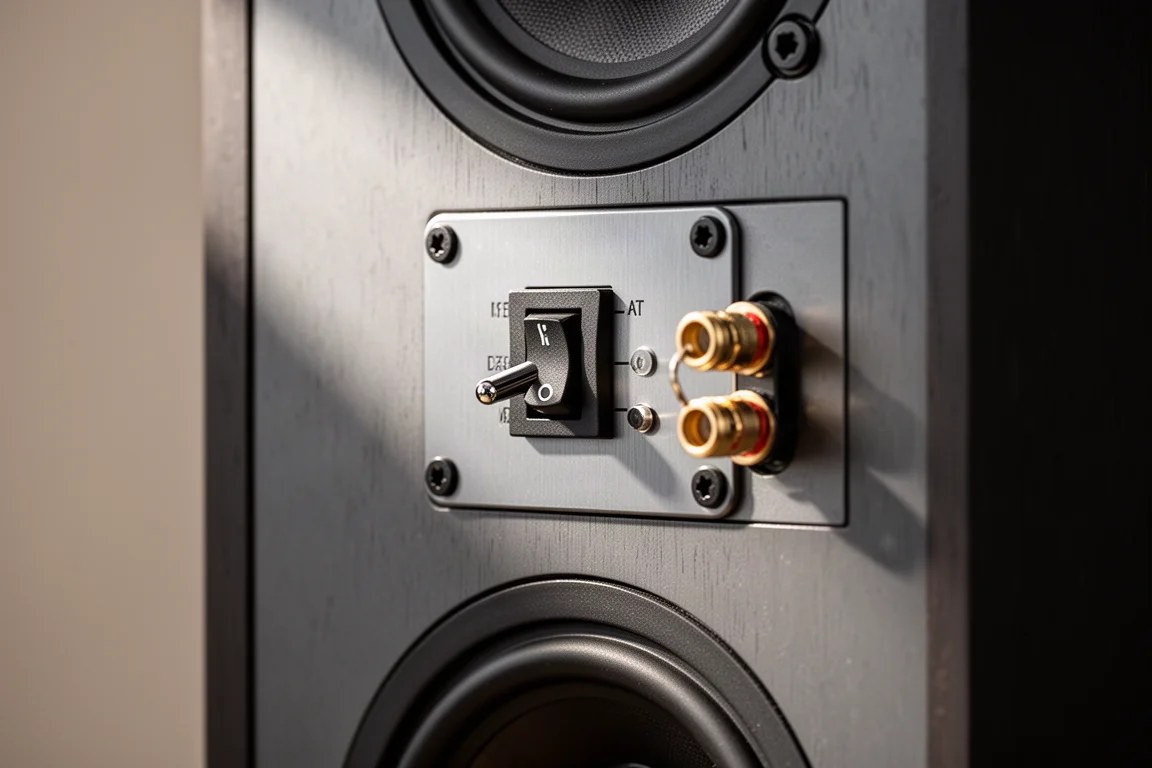
For anyone who previously preferred the smaller SourcePoint 8 because the 10 was simply too forward in the highs, this switch is the reason to reconsider the larger model.
A Redesigned Impedance Network
The second change is the impedance network. On the original, the crossover region between the tweeter and the midwoofer produced a tall impedance peak, and a peak like that can cause variability when the speaker is driven by a high-impedance output amplifier. In practice, that means the tonal character of the speaker can shift noticeably depending on which amplifier is connected.
The Master Edition flattens the impedance in that region. The result is a speaker that colours the sound less and stays more consistent across different amplifiers, which is a real benefit if you swap gear, run more than one system, or simply want the speaker to behave predictably with whatever you already own.
Neutral Tonality and an Enveloping Sound Stage
Tonality is the strongest argument for this speaker. With the switch at low or mid it comes across as genuinely neutral rather than warm, bright, or sibilant. Average sensitivity measures about 89.2 dB, F3 sits at 57 Hz, and F10 at 40 Hz. Higher up the frequency range there are some dips and peaks on axis, and turning the speaker about 10 degrees off axis softens their severity.
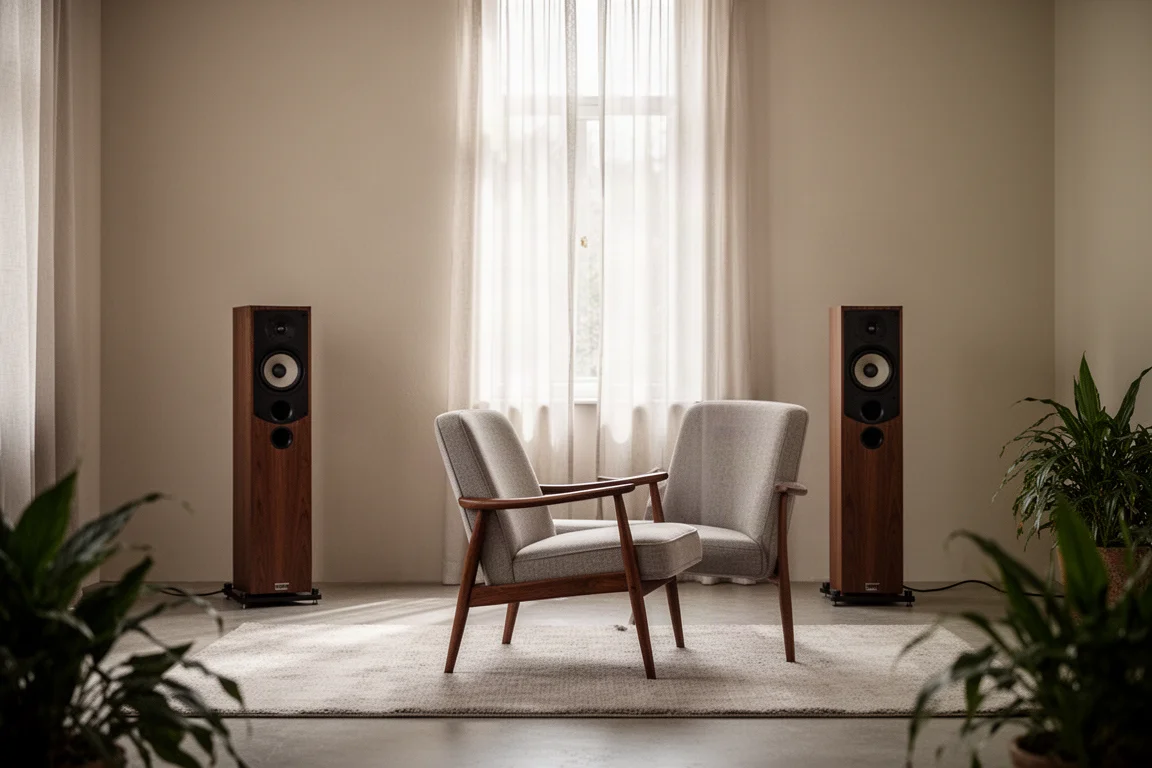
The sense of space is where this design separates itself from conventional two-way and three-way boxes. Rather than a flat wall of sound sitting in front of the listener, the presentation is a large, spherical field that wraps around the speakers. Compared directly against several standmounts in the region of $1,200 per pair, the MoFi was clearly ahead on envelopment, and the true point-source behaviour is the most likely reason.
That impression is reinforced by the measurements. Horizontal and vertical radiation profiles are closely matched on axis and off to the side, so the total sound power sent into the room stays very even, and the early reflection directivity index slopes in a linear fashion. When those curves behave, tonality tends to hold together, the sound stage feels more cohesive, and imaging becomes more precise.
Dynamics, Compression, and Output
This is a low-compression design, and that shows up in two everyday situations. At quiet levels, transients stay quick, so a kick drum still lands with a proper thump instead of smearing. As you raise the volume from around 75 dB to 90 dB, the bass keeps pace with the mids and highs rather than falling behind, which is exactly what you want from a speaker with no built-in limiter.
Multi-tone distortion stays below the 3 percent mark until roughly 4 kHz, and the midrange does not take on the grainy, compressed character that usually accompanies higher distortion figures. Output capability is generous as well, with sustained listening in the low 90 dB range at around 10 feet away.
Things to Consider Before Buying
Low-frequency reach is the one area that has not changed. In-room response typically lands somewhere around 40 to 50 Hz depending on the room, and the speaker will not deliver deeper or harder-hitting bass than the original. For hip-hop and for film sound effects, a subwoofer is the sensible addition.
Placement matters more than usual here. Keep the speakers at least a foot away from the wall behind them, and around two feet of clearance produced the best balance of fullness and control, avoiding the boomy quality that creeps in when a speaker sits too close to a boundary. As with most coaxial designs, aiming them straight at the listening position is not ideal. Toe-in of roughly 10 to 20 degrees, so they fire slightly outward into the room or just behind your head, gives the most even result.
Budget is the other consideration. The Master Edition runs about $500 more per pair than the original version, so it is worth being clear about which of the two changes actually matters to you.
Buying Advice
If you already own the SourcePoint 10 and the treble has always felt too forward, and you have no way to correct it with equalisation, the upgraded crossover kit is a straightforward and worthwhile purchase. It delivers both of the improvements described here for far less than the cost of a new pair.
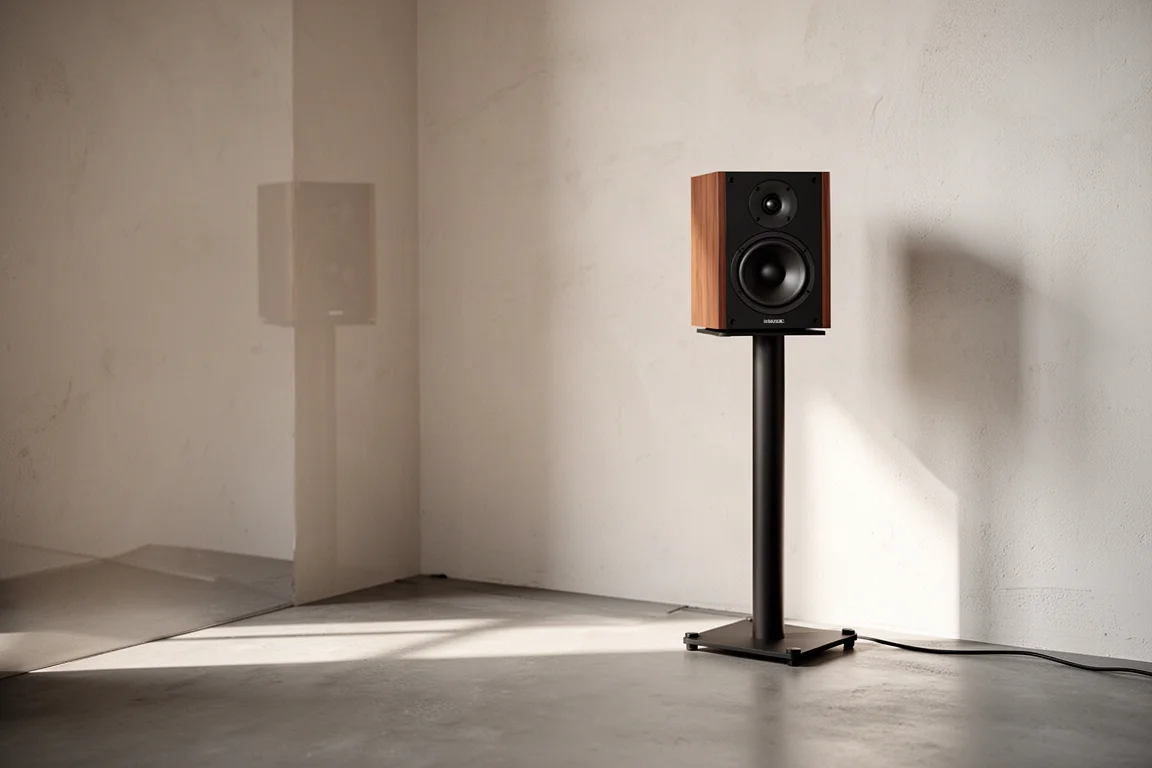
If you are buying new, the Master Edition is the version to choose. The switch and the flatter impedance curve make it easier to match to a room and an amplifier, and the extra outlay is small relative to the flexibility you gain. Listeners who want this level of neutrality and envelopment but need real low-frequency depth should budget for a subwoofer alongside the speakers, or wait to see how the larger model in the line is priced.
Conclusion
The MoFi SourcePoint 10 Master Edition is the same coaxial standmount at heart, with two well-judged fixes layered on top. The three-position treble switch turns the original’s forward top end into a choice rather than a limitation, and the flattened impedance makes the speaker far less dependent on the amplifier behind it. Add neutral tonality, a wide and enveloping sound stage, low compression, and healthy output, and you have a speaker that is easy to recommend to anyone who wants accuracy first and does not need the lowest octave from the cabinet itself.
Product link
View more details for MoFi SourcePoint 10 Master Edition
This product is mentioned in the review. Check the specifications, options, and compatibility before buying.
View more details for MoFi SourcePoint 10 Master EditionFurther reading
Related Reviews
Speakers
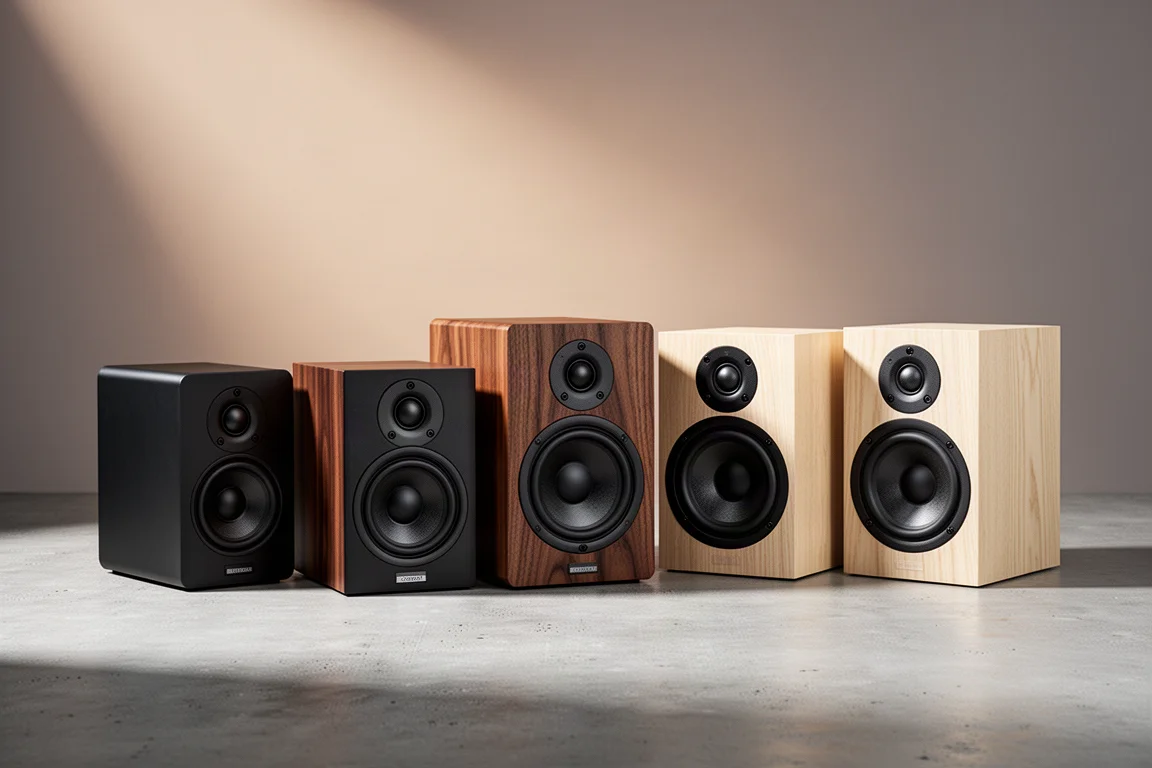
13 Under-the-Radar Speakers Still Worth Buying
Thirteen speakers that quietly stayed in production while newer models took the spotlight, from budget bookshelf pairs to a full-size tower.
Speakers
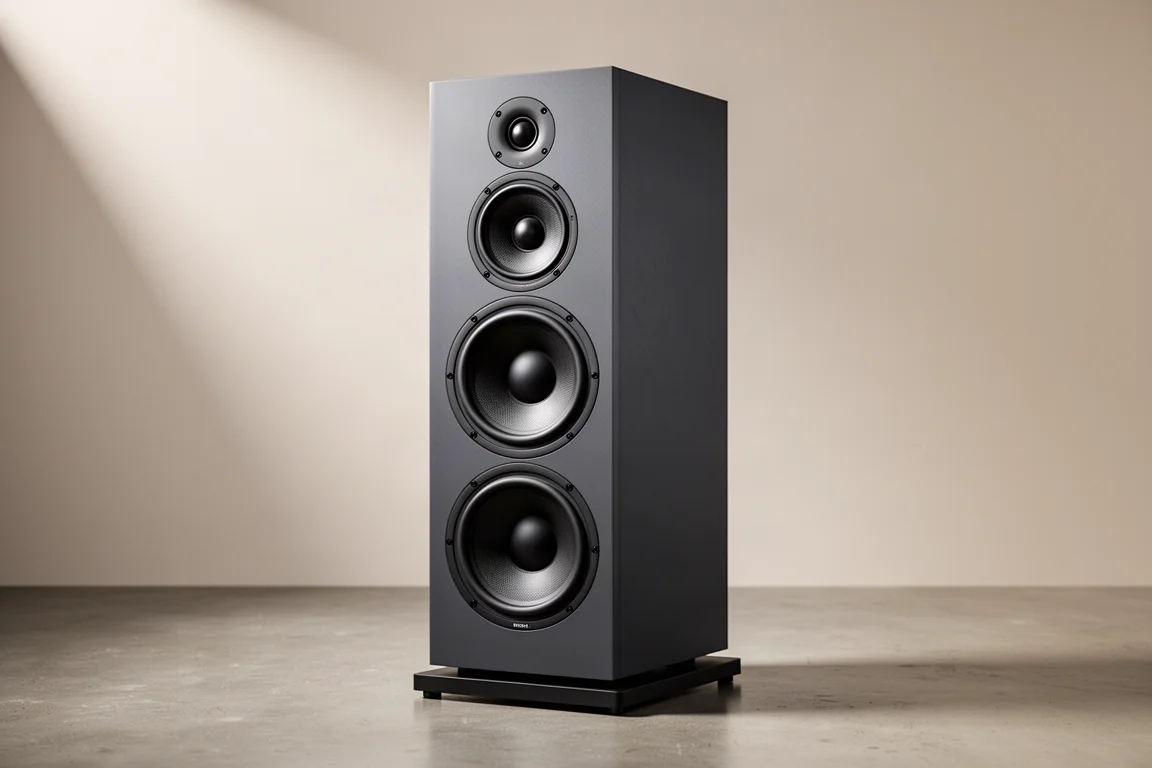
Arendal 1528 Monitor 8 Review: A Three-Way Standmount With Serious Dynamic Headroom
A three-way standmount speaker with extremely low distortion, high output capability, and deep bass for its size, plus the setup details worth knowing before buying.
Speakers
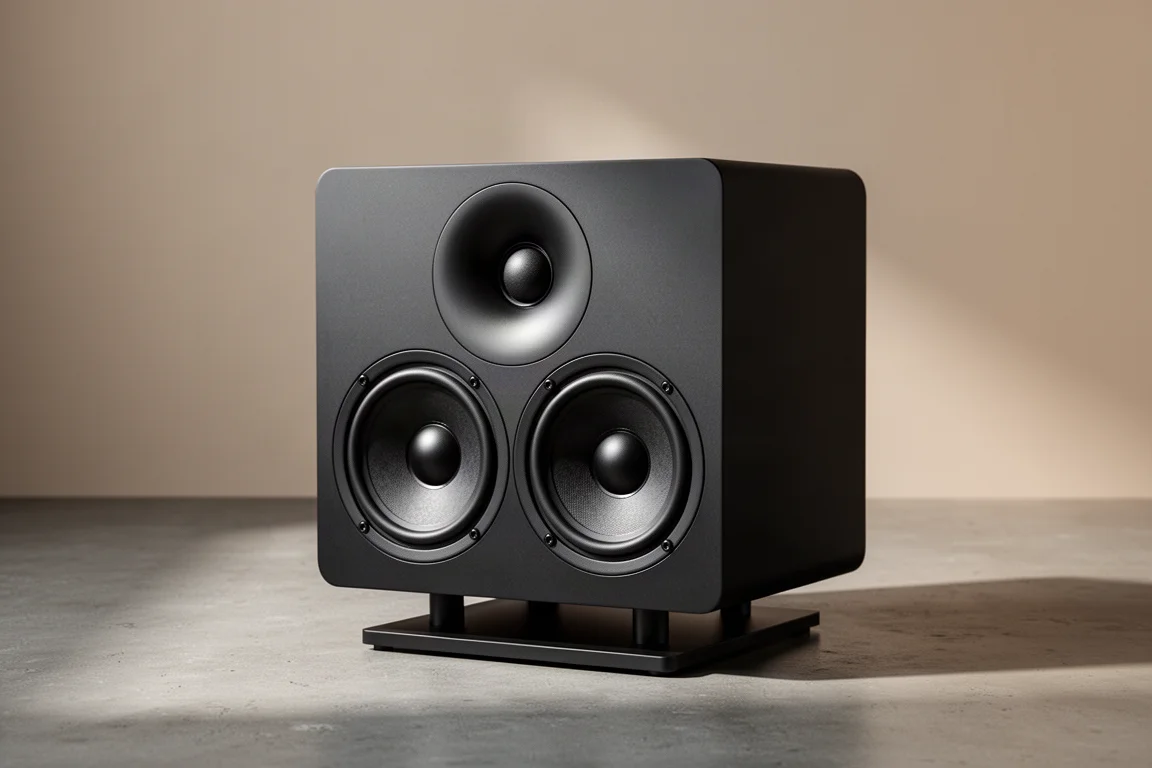
Arendal 1723 Monitor S Review: A Compact Monitor With Serious Ambition
A close look at the Arendal 1723 Monitor S, a compact MTM monitor with a waveguide-loaded tweeter, an HDF cabinet, and flexible ported or sealed operation for music and home theater.