Work Lights
Three New Milwaukee M18 Rover Flood Lights: Which One Fits Your Work?
A closer look at Milwaukee's latest M18 Rover lineup: a compact USB flood light, a clamp light with strong magnets, and a dual power 3-panel workhorse.
Introduction
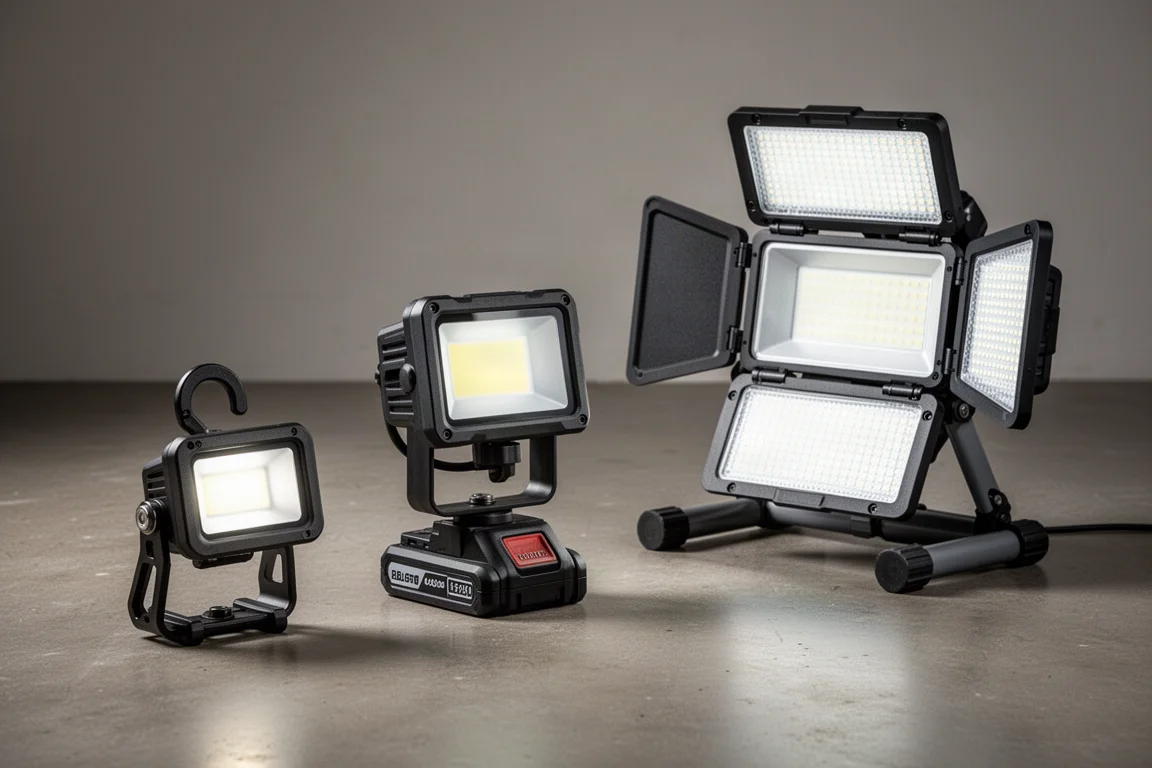
Milwaukee has added three new flood lights to its M18 Rover lineup, and each one fills a slightly different role. There is a compact model with USB output for charging your devices, a clamp-style light with strong magnets for attaching to pipes and lumber, and a dual power three-panel flood light that can run on battery or AC power. All three are simple to operate, built around the same M18 battery platform, and aimed at people who need dependable light wherever the job happens to be.
Here is how they break down.
The Compact: M18 Rover Flood Light with USB (2359-20)
The compact flood light, model 2359-20, is a bare tool priced around $79. It is genuinely small, and it comes with a rafter hook that makes it easy to hang from a ceiling or framing member and shine light straight down. If you do not need the hook, it removes easily with two T8 bolts.
It has four modes: high, medium, low, and an ultra-low mode at 85 lumens that works like a nightlight for moving around a space. Milwaukee rates it around 1,000 lumens, and it is a Trueview light, meaning it renders reds and purples more accurately and simulates daylight, which matters a lot when you are tracing wires or distinguishing colored conductors.
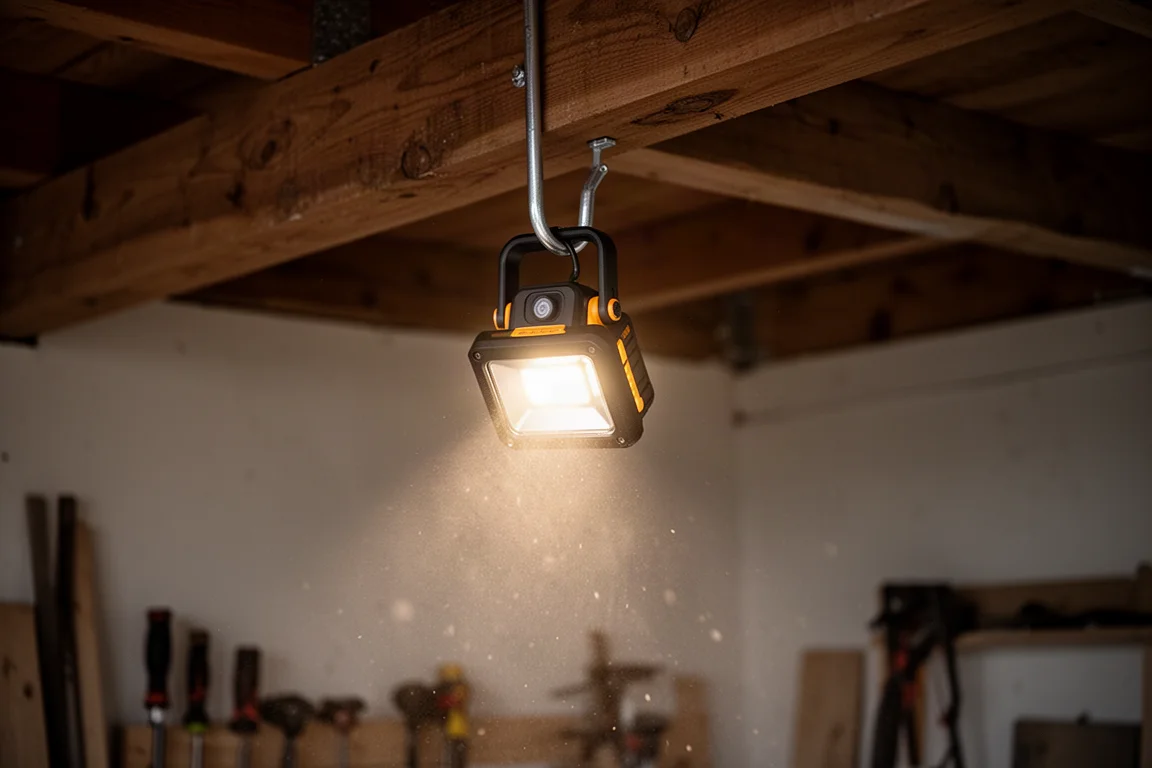
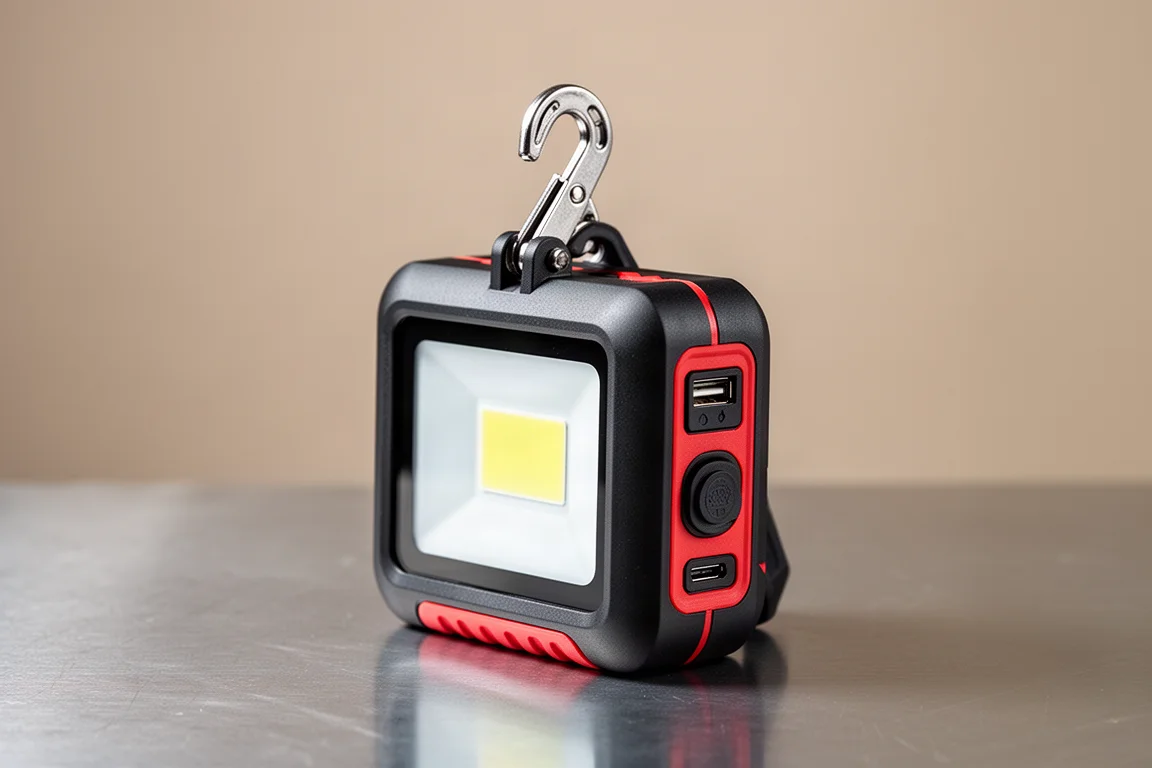
Operation is about as simple as it gets: one button for power and mode changes, another for the USB output. The USB side includes both USB-A and USB-C ports under a rubber grommet, and these are outputs only. You can run a phone, a laptop, or other devices from the light’s battery, but it will not charge the M18 battery itself. For a small light that lives in a PACKOUT box or stays in the truck for HVAC calls and quick jobs, this is a very practical package.
The Clamper: M18 Rover Clamp Light
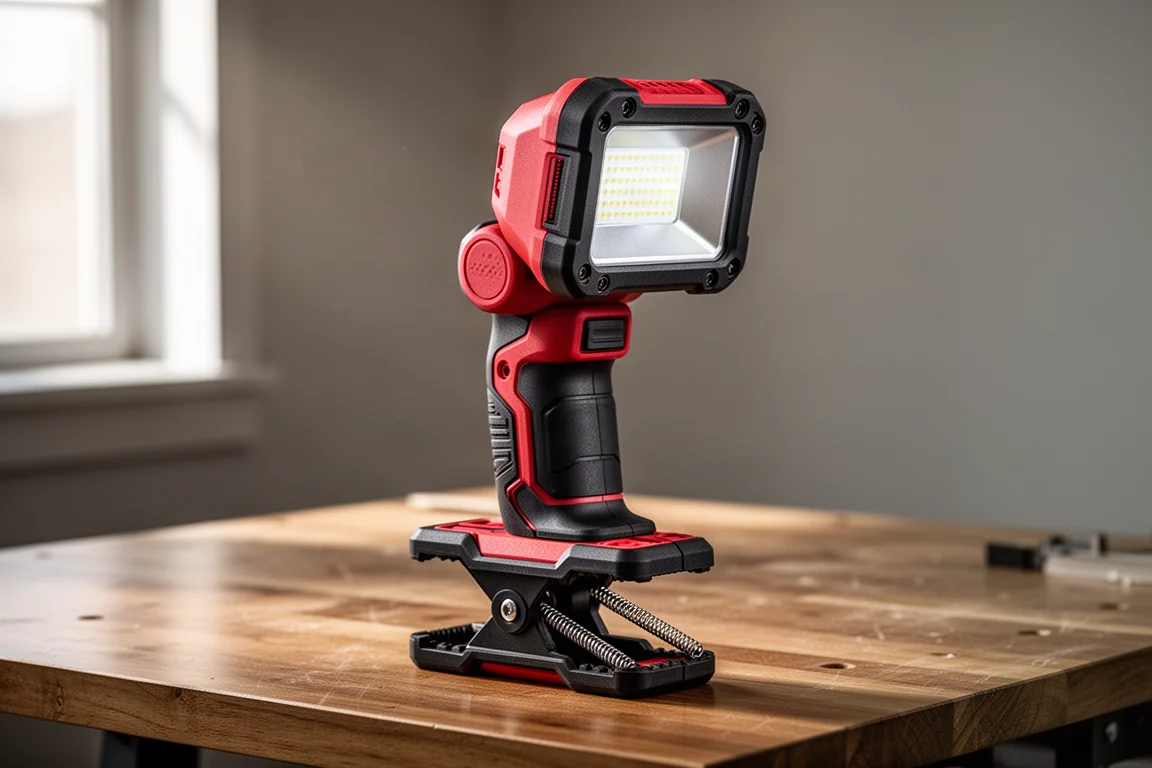
The clamp-style Rover light puts out 2,000 lumens and earns its keep through where it can go. The clamp accepts 1-inch tube, 3-inch tube, and grabs onto dimensional lumber, so you can point it backward, forward, or angle it just about anywhere. It also carries some serious magnets on the back. Milwaukee demoed one stuck to a metal tool bench strong enough to slide the bench around, and while a hard yank will pull it free, it is the kind of hold you would trust on a job site.
On the battery side there is a protective safety piece that keeps the battery from making contact, and the light accepts any M18 battery. A 5Ah battery is a comfortable fit; a 12Ah one gets a little tight but still clears the roll cage. Runtime is respectable: about 6 hours on high at 2,000 lumens, 12 hours on medium at 1,000 lumens, and 24 hours on low at 500 lumens with a 5Ah pack.
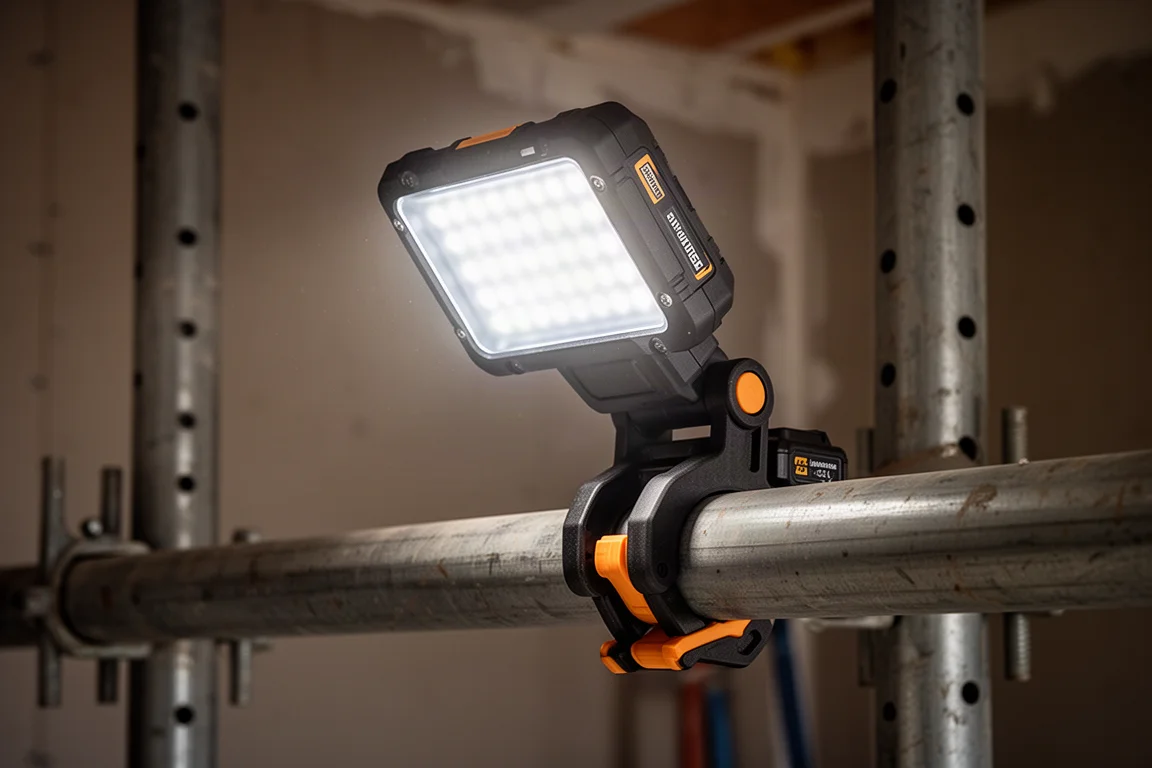
One thing to know up front: this light is surprisingly heavy, and it gets heavier with larger batteries. If a featherweight light is what you want, this is not it. But that weight is part of why the clamp and magnets hold so well, and it stays exactly where you put it. For construction work, that combination makes a lot of sense.
The Workhorse: M18 Rover Dual Power 3-Panel Flood Light
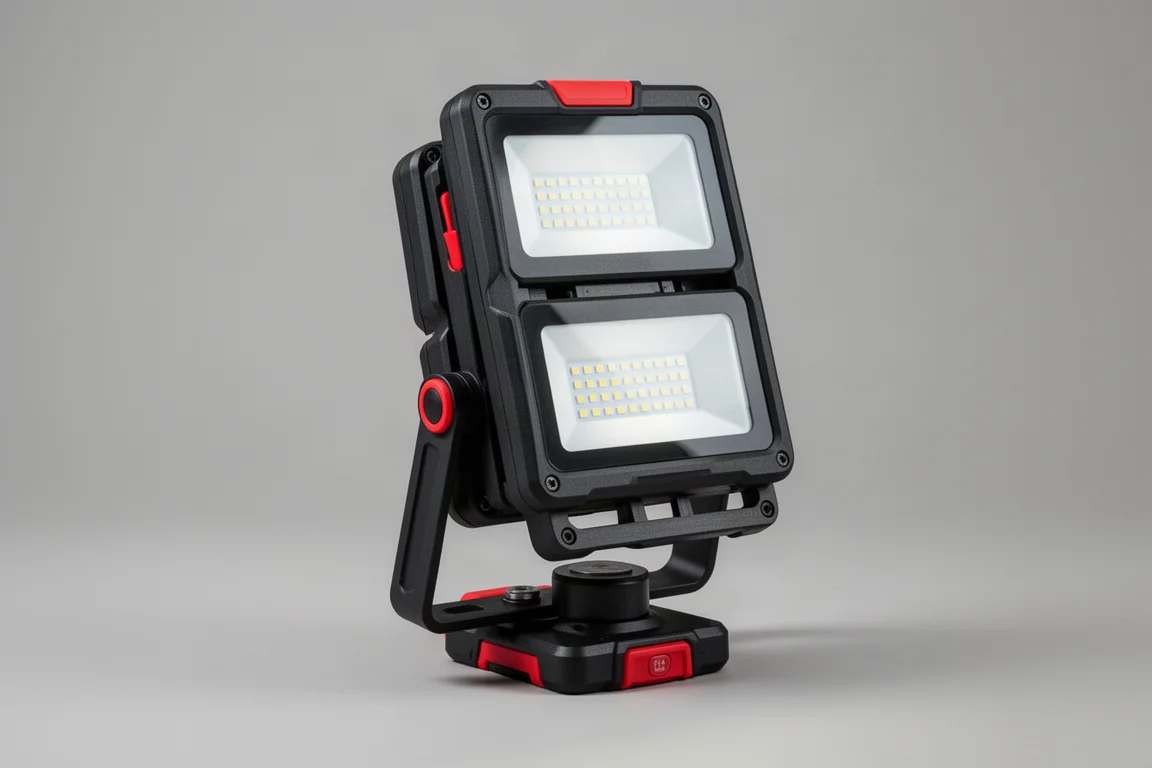
The dual power three-panel flood light is the big brother of the group at 4,500 lumens. It runs on an M18 battery or on AC power, though the AC input powers the lights only and will not charge the battery. Controls are three buttons: power, a mode button that cycles the panels, and a brightness button with high, medium, and low levels.
The panel arrangement gives you real flexibility. You can run all three panels, just the center light, or the two outer panels, and the whole assembly swivels through a wide range so you can throw light in nearly any direction, close to a full 360 degrees. There are magnets on the bottom as well, strong enough to hold the light in place, though they release a bit more easily than the clamp light’s, and a hanger lets you suspend it too.
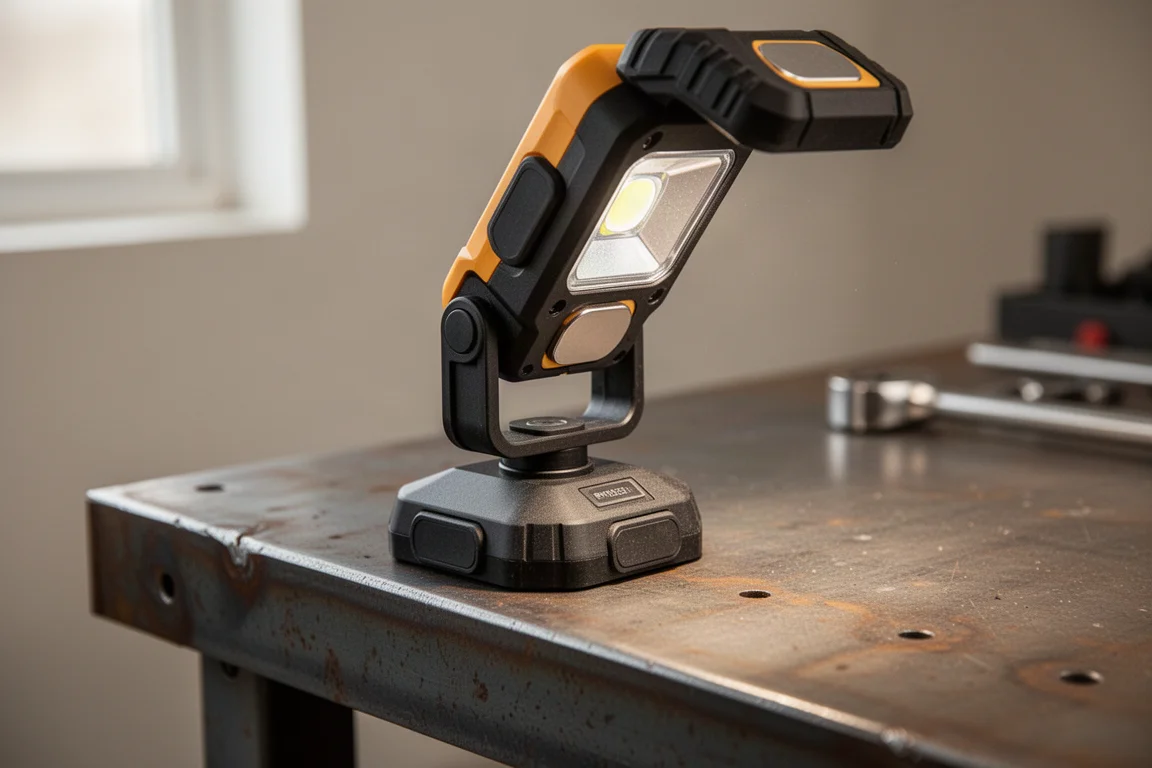
This light stows flat, clips into place, and is rated to survive a 9-foot drop, which is significant for a light that weighs somewhere in the range of 10 to 15 pounds. Runtime depends heavily on battery size: a 5Ah battery gets you roughly 3 hours on high, while a 12Ah battery is enough to cover a full 8-hour workday. It carries Milwaukee’s 5-year warranty, and it is IP54 rated for dust and water resistance. If you slam it around or drop it, it powers right back on and keeps working.
Brightness and Runtime Compared
Side by side, the differences are easy to see. The compact puts out around 1,000 lumens on high, dropping through medium, low, and an 85-lumen ultra-low mode for moving around in the dark. The clamp light steps up to 2,000 lumens on high, then 1,000 and 500. The dual power three-panel light tops the group at 4,500 lumens with all panels on, with flexible panel modes in between.
Runtime scales with size. The compact is easy on its battery; the clamp light delivers up to 24 hours on low with a 5Ah pack; and the three-panel light trades runtime for raw output, which is where a larger battery pays off. Pairing any of these with Milwaukee’s supercharger means quick turnarounds between sessions, particularly with a 12Ah or the newer Forge batteries.
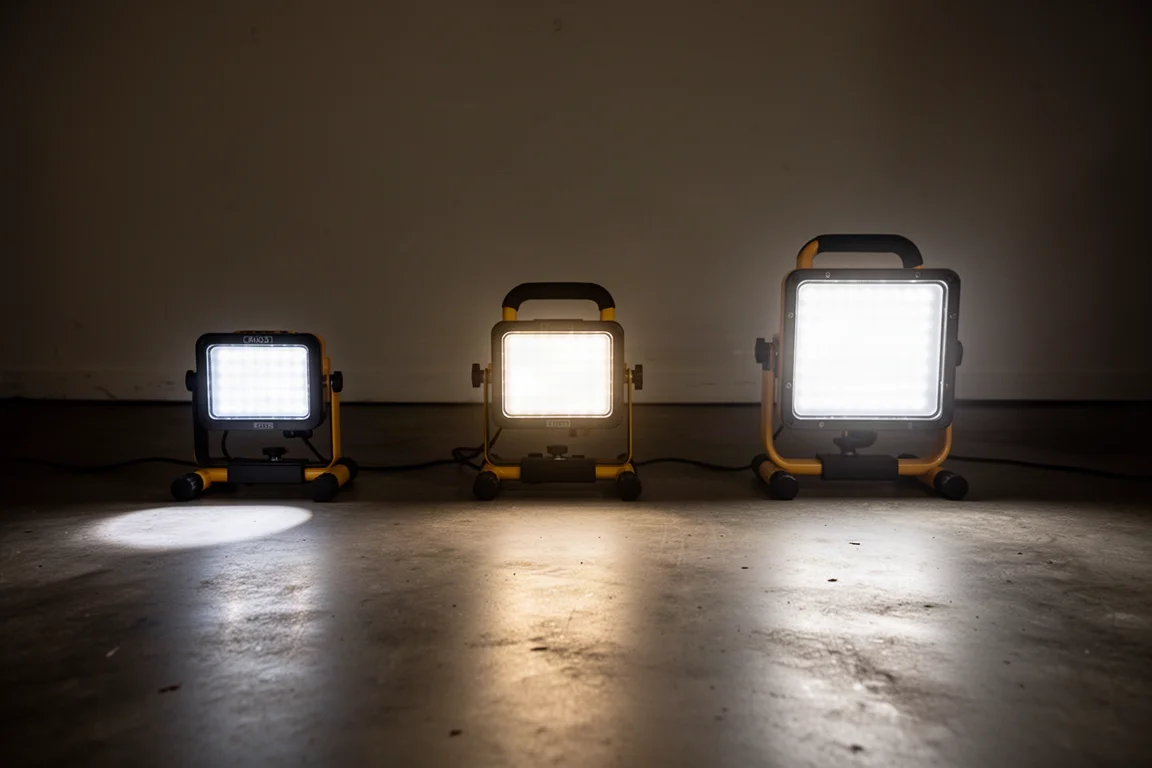
None of these are the flashlights of a decade ago. The light output, the folding designs, the handles, the magnets, the clamps, and the simple controls all reflect a new era of job site lighting.
Which One Should You Buy?
If you want something small to keep in the truck or toss in a PACKOUT box for tight spaces like HVAC work, the compact with USB output is the easy pick at around $79. If you need a light that grabs onto pipe, framing, or lumber and stays put, the clamp light at around $129 is the standout, magnets included. If you need to flood an entire work area for a full day, the dual power three-panel light at around $179 is the one that does it, with the bonus of AC power when batteries are scarce.
All three share the M18 battery platform, simple controls, and rugged construction, so the decision mostly comes down to how much light you need and where you need to put it.
Conclusion
Each of the three new M18 Rover flood lights fills its own niche: a compact USB light for portability and device charging, a clamp light for mounting flexibility and strong magnetic hold, and a dual power three-panel flood light for maximum output and all-day runtime. Pick based on where the light needs to live and how bright it needs to be, and any of the three should hold up well to real job site use.
Further reading
Related Reviews

Work Lights
Milwaukee M12 Rover Review: A Compact Work Light That Goes Where You Do
The Milwaukee M12 Rover is a compact, versatile work light with three brightness levels, multiple mounting options, and USB-C charging for your devices.
Work Lights
Best Folding Work Lights Compared: Budget Picks to Tool Truck Tough
Seven folding work lights tested for real lumen output, runtime, charging, and drop durability, from a $20 Amazon seller to Snap-on.
Work Lights
Best Hinged Work Lights: 7 Options for Aiming Light Exactly Where You Need It
From classic Maglite designs to modern dual-hinged stick lights, seven work lights that make it easy to aim a beam into tight spaces.