Power Tool Batteries
Milwaukee M18 Forge Batteries Compared: 6Ah, 8Ah and 12Ah Tested
Milwaukee's new Forge batteries bring tabless 21700 cells, side-mounted screws and real ventilation to the M18 range. Here is how the 6Ah, 8Ah and 12Ah stack up.
Introduction
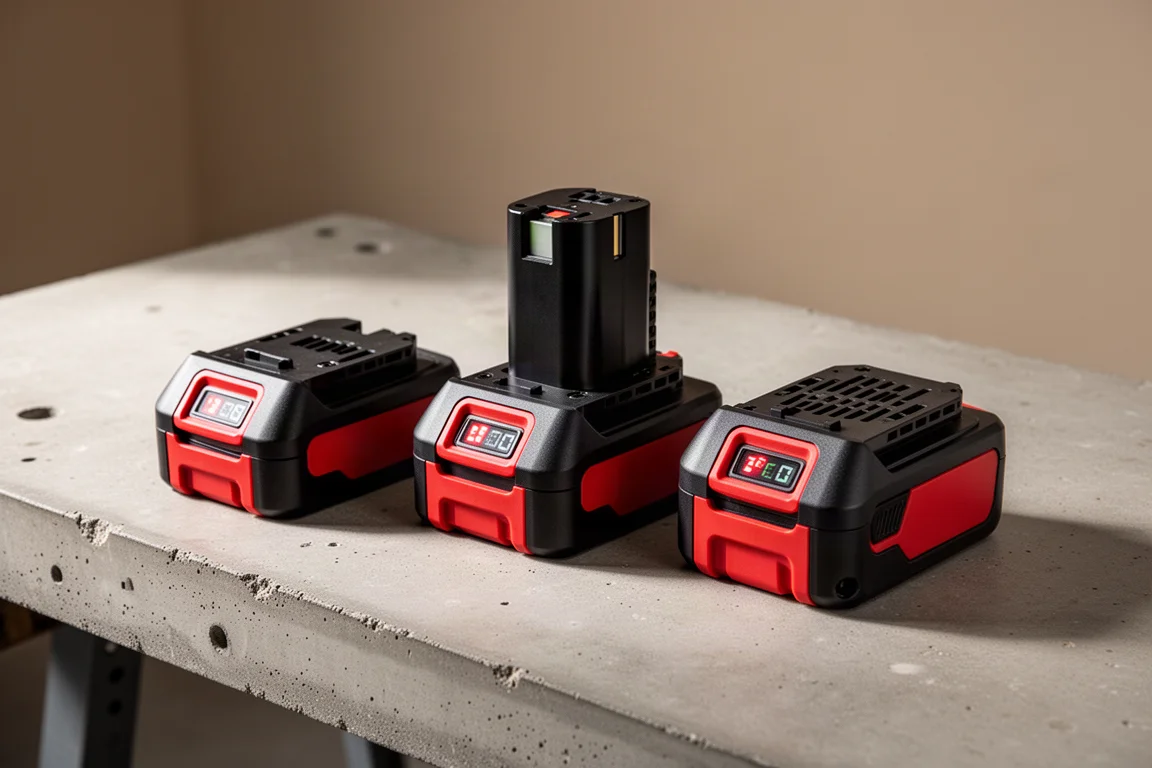
Milwaukee’s Forge lineup is the most interesting change to the M18 battery range in years. The new 8Ah and 12Ah Forge packs sit alongside the earlier 6Ah Forge, and while they share a name, they use noticeably different internal technology. After spending time with all three, plus a standard 12Ah High Output for comparison, the differences come down to three things: how the cells are built, how the packs are screwed together, and how air moves through them while charging.
If you are deciding between the standard High Output batteries and the newer Forge packs, this breakdown should make the choice much easier.
What Makes the Forge Range Different
The headline change is inside the cells. The new 8Ah and 12Ah Forge batteries use tabless 21700 cells (Ampace JP40), rated for 45 amps continuous and 60 amps peak. Tabless cells let energy leave the cell faster and with less heat buildup compared to traditional tabbed cells, which means more power to the tool, less wasted energy as heat, and in theory a longer battery life and more charge cycles.
It is worth being clear about what tabless cells do not do: they do not add runtime. A 12Ah battery is a 12Ah battery regardless of cell technology. The benefit is power delivery, cooler running, and battery longevity.
The earlier 6Ah Forge is a different beast. It uses stacked lithium pouch cells instead of cylindrical cells, similar to the approach some competitors have taken. Pouch cells can be packed tight, but cylindrical cells leave natural gaps that make the Forge’s new airflow system far more effective, which is one reason Milwaukee went tabless cylindrical for the larger Forge packs.
Build Quality and Construction
The construction differences are easy to appreciate even if you never open a pack. Older M18 batteries, including the High Output line and the 6Ah Forge, hold the case together with screws driven up through the bottom into the top shell. If those screws strip out of the plastic under heavy use, the bottom can separate from the pack and end up on the floor while the top stays with the tool.
The new 8Ah and 12Ah Forge batteries fix this with long screws driven in from the sides, four on each side, doubling the screw count of the 6Ah Forge and locking the internals firmly together rather than leaving them loose inside a clamshell. Smaller screws at the bottom add further reinforcement.
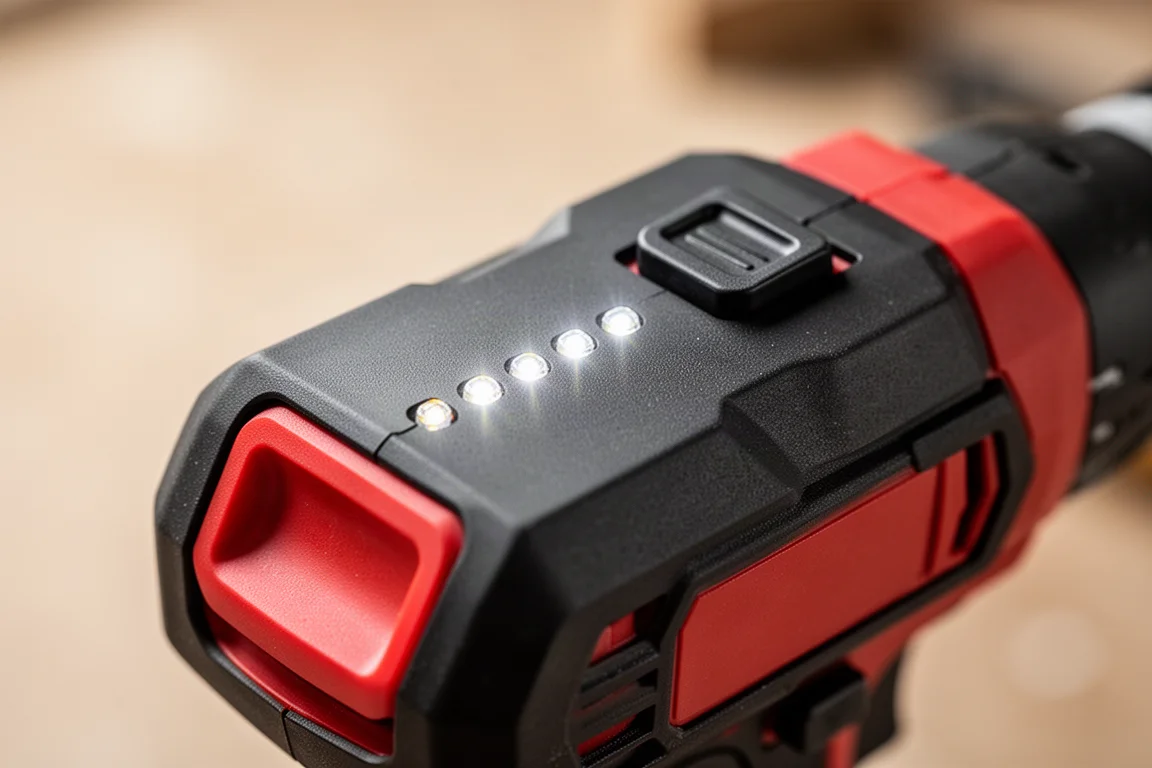
Ventilation is the other big upgrade. The 8Ah and 12Ah Forge have a large array of vents on the top and bottom, which line up with Milwaukee’s Supercharger fan system. Airflow through a battery during fast charging matters, because heat is what shortens battery life and, in the worst case, creates safety problems. The older High Output packs have only a few small holes in the base and nothing on top, so the fan effectively does nothing for them.
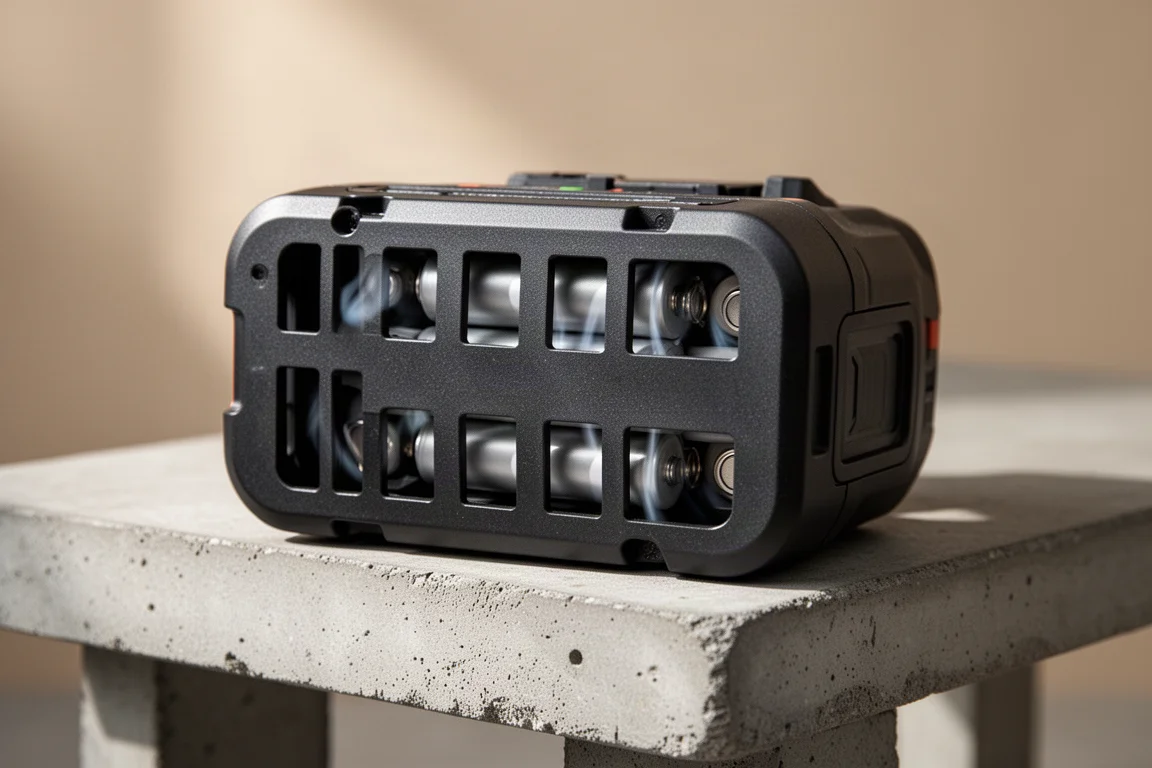
Inside, the Forge 12Ah also presents far better than the standard High Output: a smaller control board, neatly connected cells, and a rubberized over-molding on the top and base that makes the buttons easier to push and the fuel gauge lights easier to read. The case plastic is PA66 with 25% glass fill. It is arguably the best-looking M18 battery Milwaukee has produced.
Runtime and Heat Testing
On the runtime side, the story is straightforward. In a side-by-side drain test on a 36V vacuum at full power, the 12Ah Forge and the standard 12Ah High Output both depleted at essentially the same speed, cutting out together at around 37 and a half minutes. That matches expectations: same amp-hour rating, same runtime.
Heat is where they diverge. After the test, the Forge ran noticeably cooler, measuring roughly 33 to 34 degrees Celsius on the sides compared to 37 to 38 degrees on the High Output, with a similar gap on the base thanks to the vents. The Forge also retained a slightly higher voltage after full drain. Cooler running is exactly what tabless cells and ventilation are supposed to deliver, and it shows.
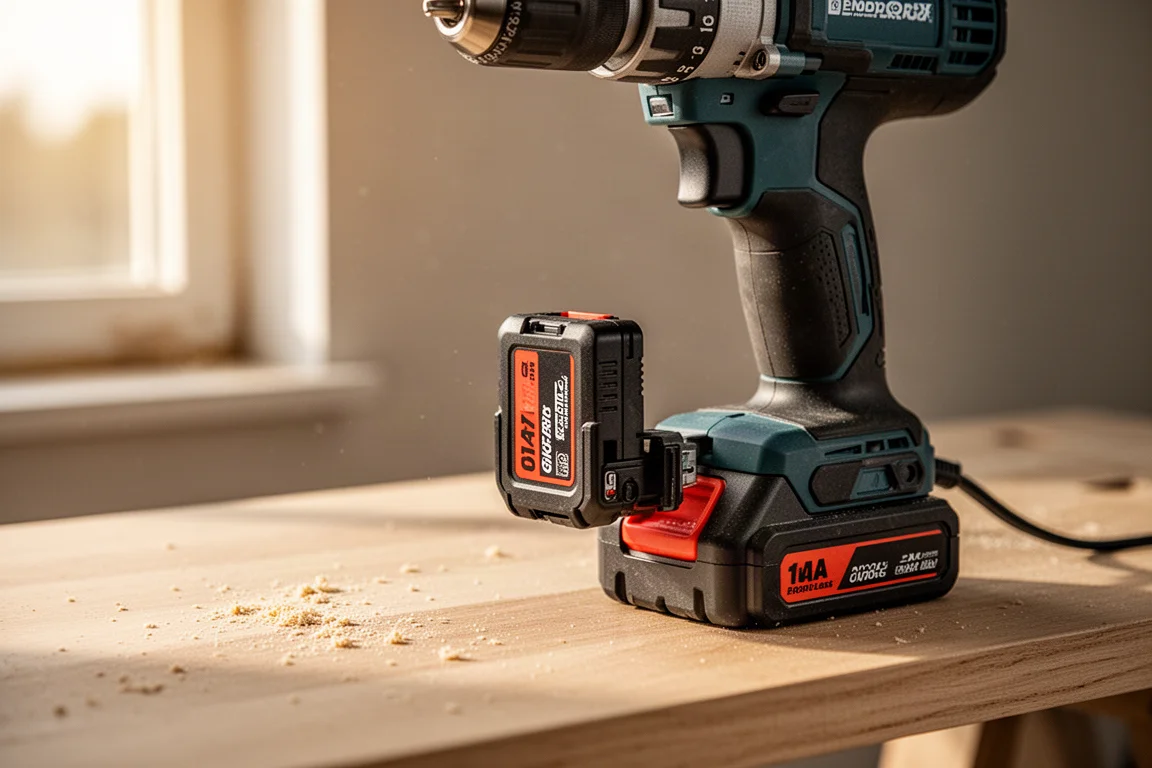
In a drilling test with a 35mm bit using the latest M18 hammer drill, the 6Ah Forge and 8Ah Forge felt very similar to each other, with the 12Ah Forge showing just a bit more authority in demanding cuts. Weight tells its own story: the 6Ah Forge weighs 948g versus 1,076g for the 6Ah High Output, and the 8Ah Forge comes in around 1,185g, only slightly heavier than the 6Ah High Output while delivering a third more runtime. The 12Ah Forge shaves roughly 50g off the 1,553g High Output equivalent.
Charging is handled well too. Milwaukee lists the 8Ah and 12Ah Forge at the same charge time on the Supercharger: 38 minutes to 80% and 45 minutes to 100%. In testing, a first charge of the 8Ah Forge completed in about 38 and a half minutes, and the 12Ah Forge surprised by matching that figure almost exactly.
Which Forge Battery Should You Buy?
Milwaukee claims the tabless Forge packs deliver around 50% more power than the equivalent High Output batteries, which is a substantial jump if you drive demanding tools like hammer drills, saws and grinders hard.
If you want one battery that balances weight, runtime and power, the 8Ah Forge is the standout. It is barely heavier and barely larger than a 6Ah High Output, yet adds two extra amp-hours of runtime, cooler running, and the new vented construction. For heavy-duty applications where you want maximum capacity without stepping up in bulk, the 12Ah Forge is the flagship choice, and it charges as fast as the 8Ah. The 6Ah Forge remains a good lightweight option, though its pouch-cell design is a different path than the tabless packs and lacks the same airflow advantages.
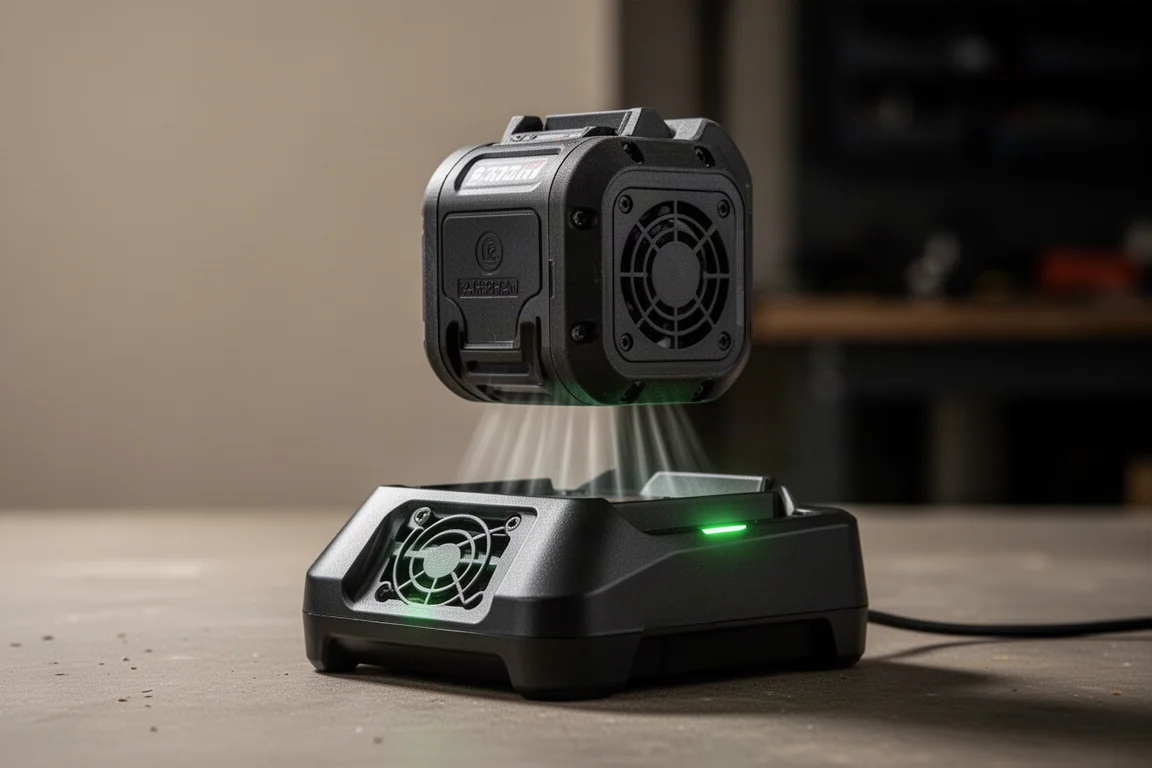
One note for buyers outside North America: M18 battery shells differ between regions, and batteries that look different from your local stock are not automatically counterfeit. Regional designs are legitimate, and the less common shells are simply less familiar to some markets.
Conclusion
The Forge 8Ah and 12Ah are a genuine step forward for the M18 platform: tabless cells for more power and less heat, a much stronger screw-together housing, and real ventilation that finally lets the Supercharger do its job. The 12Ah High Output still holds its own on raw runtime, but if you are buying new, the Forge lineup is where Milwaukee’s battery technology is clearly headed.
Product link
View more details for Milwaukee M18 Forge 8Ah Battery
This product is mentioned in the review. Check the specifications, options, and compatibility before buying.
View more details for Milwaukee M18 Forge 8Ah BatteryFurther reading
Related Reviews
Power Tool Batteries
9Ah M12 Batteries Tested: Which Aftermarket Pack Is Actually Worth Buying?
We measured real capacity, voltage sag, and tool performance from four aftermarket 9Ah M12 batteries against Milwaukee's XC 5.0 High Output pack. One budget option stands out.
Power Tool Batteries
DeWalt DCBP520 5Ah PowerStack Battery Review: Big Power in a Pouch-Cell Pack
The largest PowerStack battery yet promises pouch-cell output with 5Ah of capacity. We break down its size, weight, voltage sag, and real tool performance.
Power Tool Batteries
DeWalt PowerStack 5Ah vs XR 5Ah: What a Heat Gun Runtime Test Revealed
Two DeWalt 5Ah batteries ran a DeWalt heat gun back to back. Same capacity, very different power delivery, heat, and voltage behavior.