Power Tool Batteries
DeWalt PowerStack 5Ah vs XR 5Ah: What a Heat Gun Runtime Test Revealed
Two DeWalt 5Ah batteries ran a DeWalt heat gun back to back. Same capacity, very different power delivery, heat, and voltage behavior.
Introduction
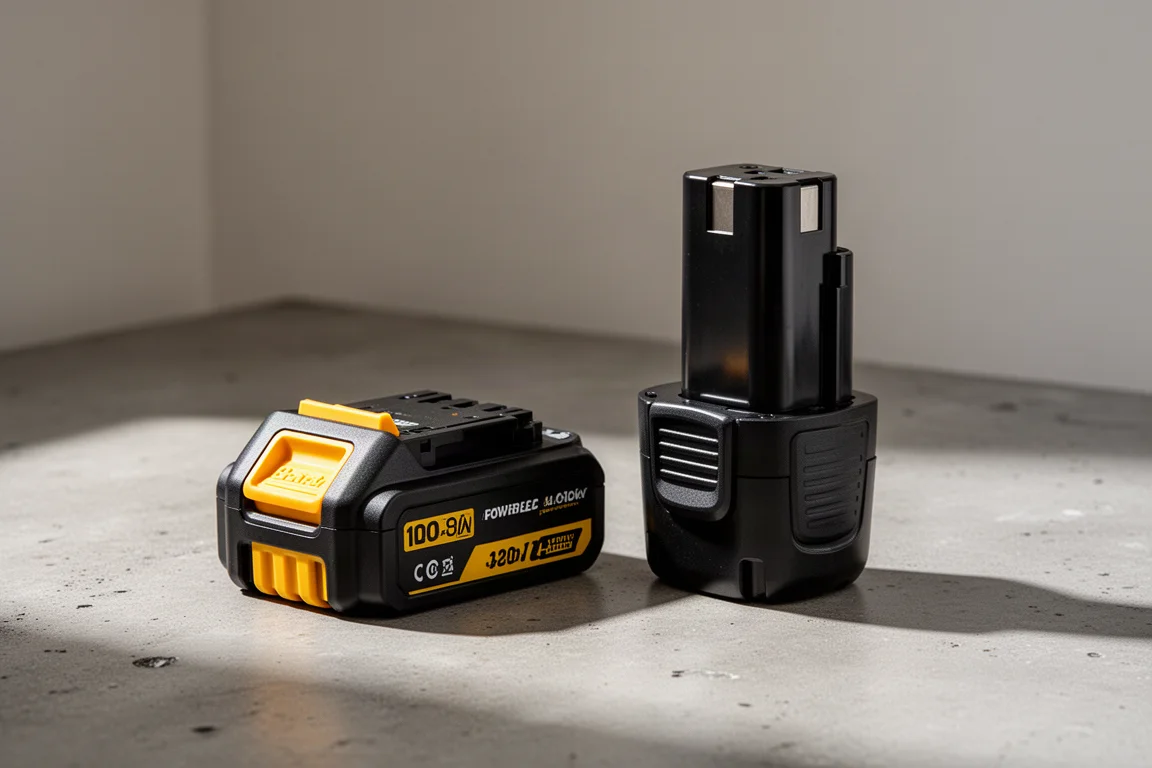
A question keeps coming up among DeWalt users: does the newer PowerStack 5Ah battery outlast the long-standing XR 5Ah battery? On paper, the answer should be simple. Five amp hours is five amp hours, so both packs should deliver the same total runtime. A back-to-back test with the DeWalt heat gun set out to check exactly that, using voltage measurements at the start and end of each run and identical batteries in identical condition.
The result is more interesting than a simple winner. Runtime turned out to be nearly identical, but the way each battery delivers its power could not be more different.
How the Test Was Set Up
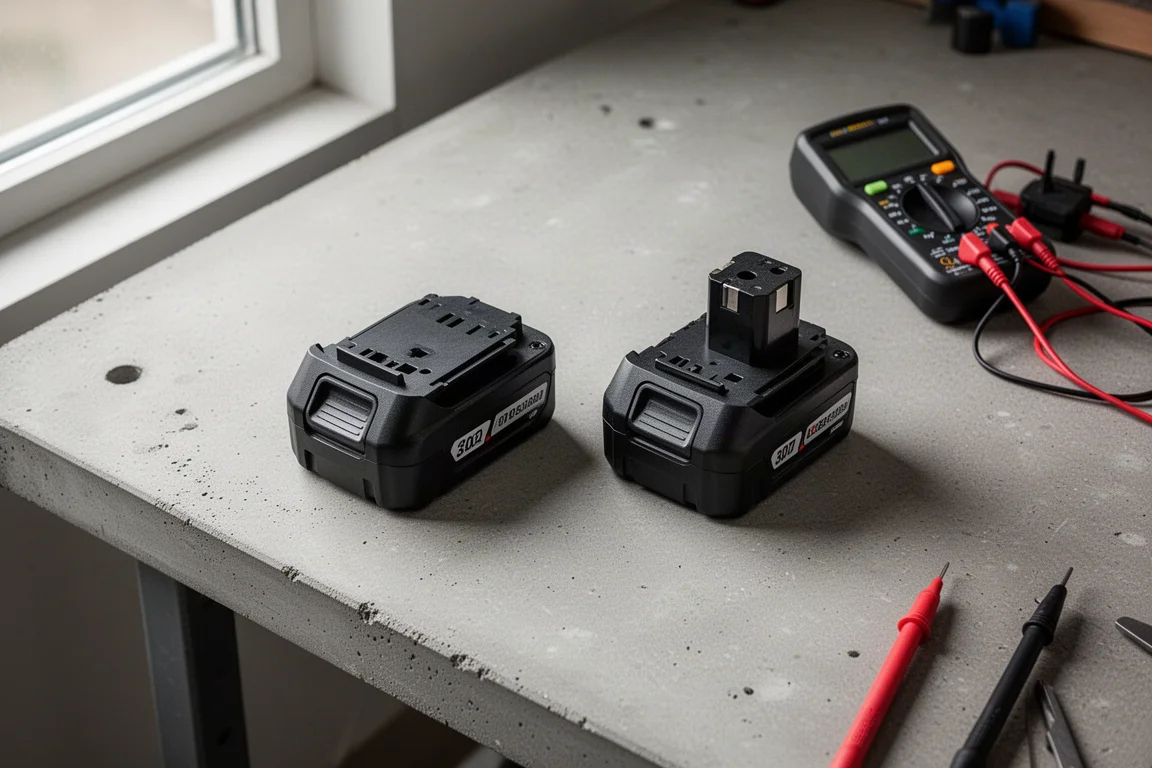
Both batteries used in this comparison are 2022 units in essentially brand-new condition, with exactly three discharge cycles each, making them as close to identical as a real-world comparison allows. Before the runs, the heat gun was pre-warmed so both batteries would face the same load conditions.
Voltage was measured at the start and finish of each run, and runtime was clocked with the same heat gun as the load. The PowerStack started at 20.57V, while the XR measured slightly higher at 20.79V, a small difference in starting voltage that turned out to matter far less than what happened at the end.
The Contenders
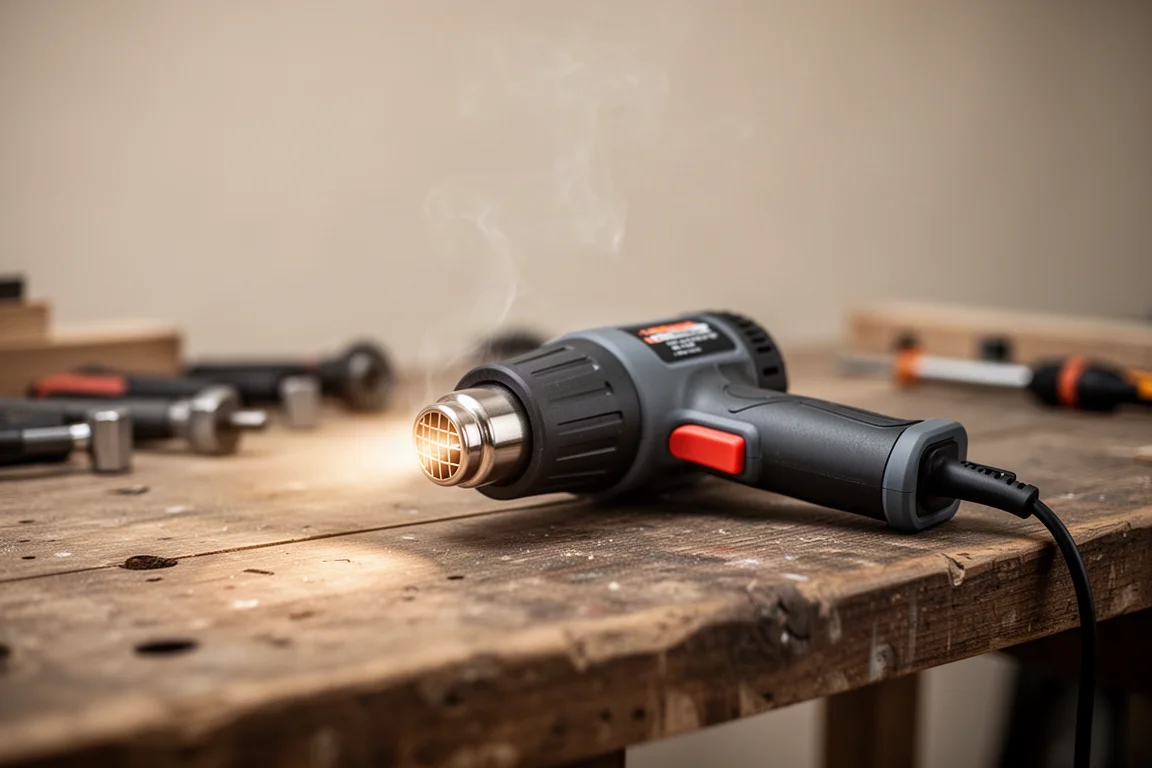
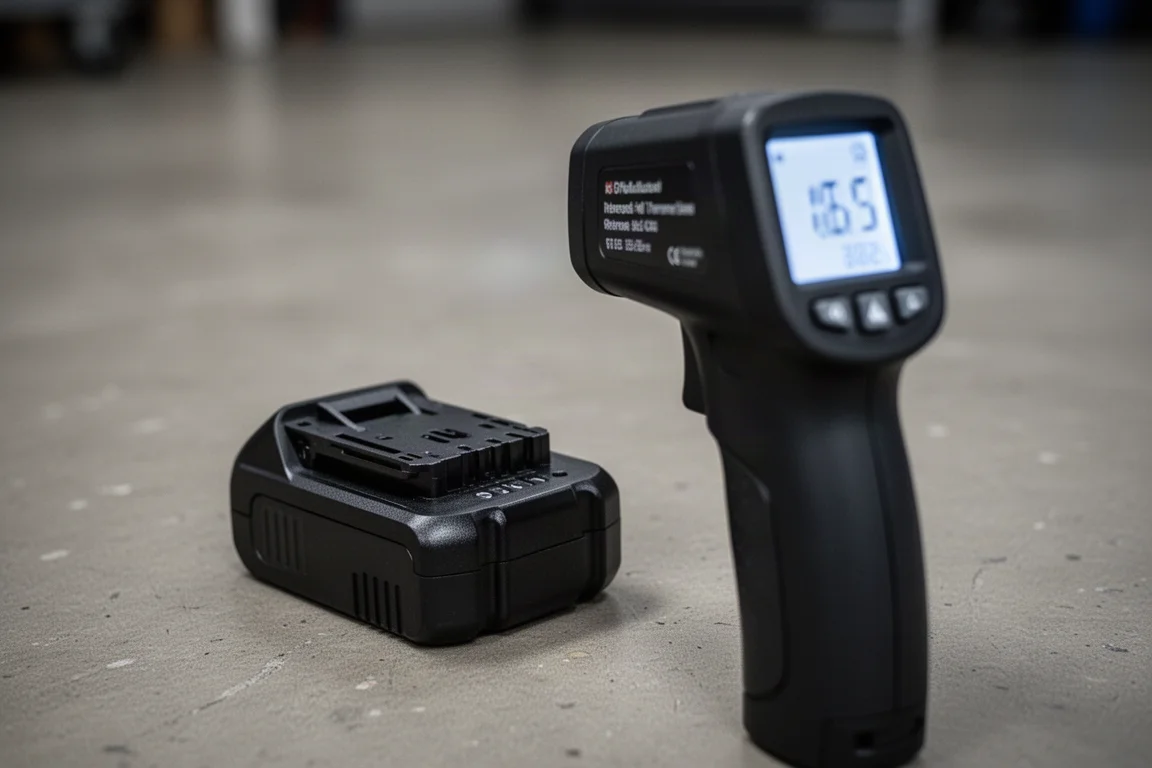
The DeWalt heat gun is a demanding test load. It pulls hard on a battery continuously, and you can hear exactly what is happening: as voltage sags, the blower motor audibly slows down. That makes it an ideal tool for exposing how each battery holds its voltage under sustained drain.
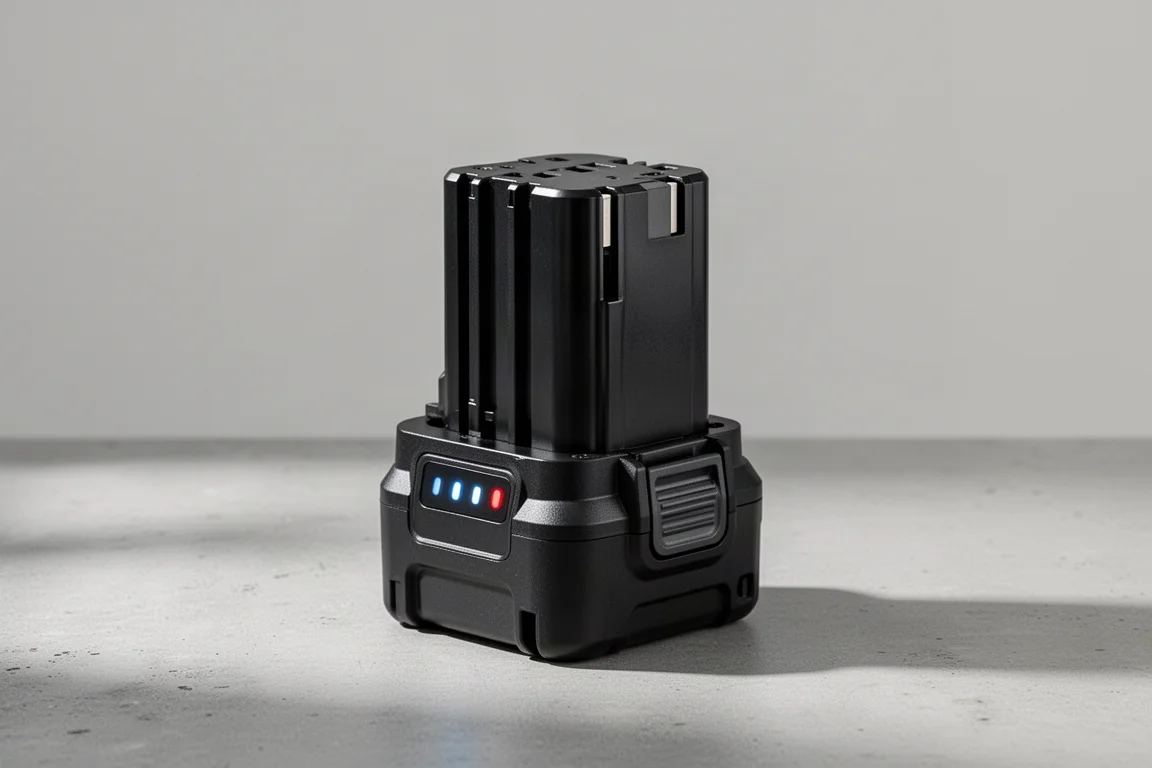
DeWalt PowerStack 5Ah Battery
The PowerStack ran for 16 minutes 35 seconds, finishing at a resting voltage of 16.35V. What stood out was the power delivery. The heat gun kept its performance almost all the way through the run, with no noticeable slowdown until roughly the last 30 seconds to a minute. The pack stayed surprisingly cool for the workload, peaking around 86 to 94 degrees depending on where it was measured, cooler than many packs under similar stress.
DeWalt XR 5Ah Battery
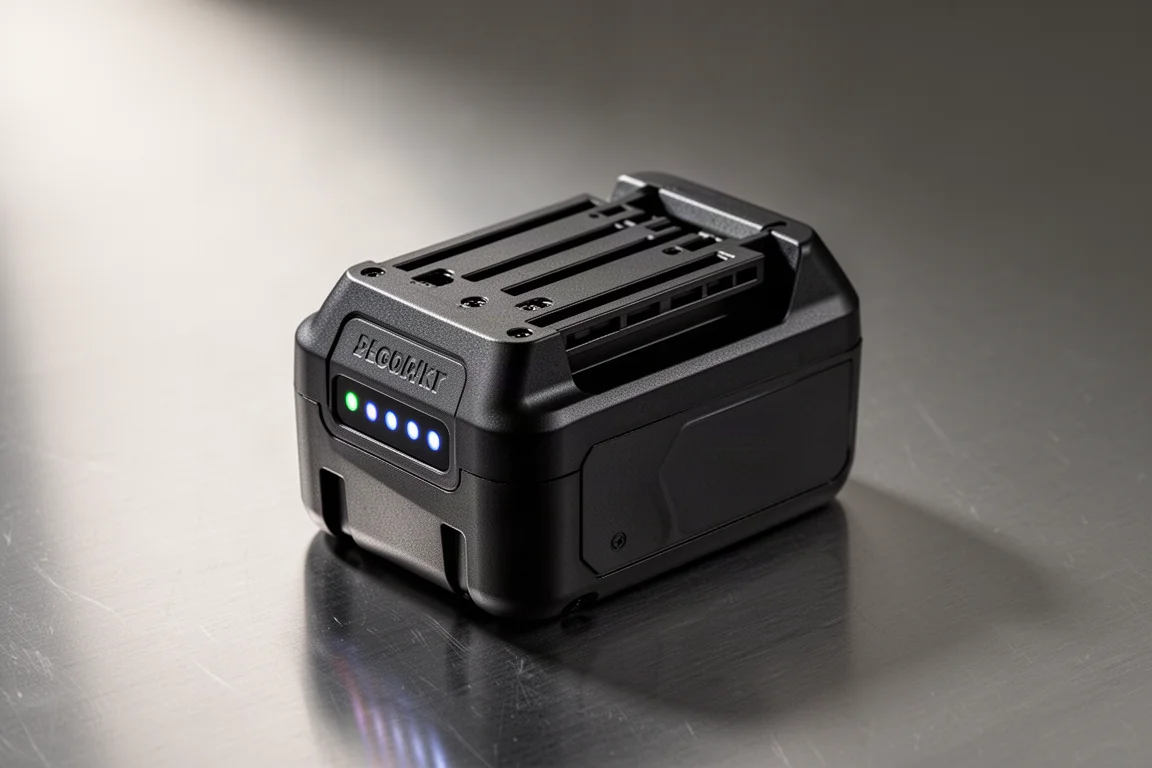
The XR 5Ah actually edged out the PowerStack on total runtime, hitting 17 minutes before cutting off. But the way it got there told a very different story. By the 8-minute mark, the heat gun was already audibly slowing, and the ending voltage dropped to just 12.6V, a far deeper sag than the PowerStack showed. Thermally it was a different animal too, with readings up to 120 to 122 degrees, a huge difference in heat.
Runtime and Power Delivery Results
Here is the surprising part. The common understanding of lithium-ion batteries is that they hold their voltage nearly flat until the very end of a discharge, then drop off quickly. The XR behaved closer to that expectation in total runtime but sagged dramatically in usable power much earlier, giving full output for only about the first 8 minutes. The PowerStack delivered strong output out to roughly the 15-minute mark.

In practical terms, that means roughly doubled usable power output in the second half of the run while keeping essentially the same total runtime. The ending voltage gap, 16.35V versus 12.6V, is significant, and the thermal difference of roughly 30 degrees is not trivial either. Five amp hours is five amp hours, but what you get out of that capacity clearly differs between these two packs.
Which Battery Should You Buy
The PowerStack is an excellent battery, and it is an expensive one. It is also slightly more compact. If your work involves high-drain tools like heat guns, grinders, or saws, the sustained power delivery and cooler running make a genuine difference you can feel in the tool. The XR remains a proven value choice for everyday tools where peak power matters less, and its slightly longer total runtime in this test speaks to solid efficiency on moderate loads.
Conclusion
This comparison disproved the assumption that runtime tells the whole story. Both batteries lasted to nearly the same mark, but the PowerStack held its voltage and power output dramatically longer into the discharge and ran far cooler. For heavy-duty applications, that sustained delivery is the real difference worth paying for. A follow-up test against the 6Ah pack, tracking voltage sag as it drains, would be the natural next step.
Further reading
Related Reviews
Power Tool Batteries
9Ah M12 Batteries Tested: Which Aftermarket Pack Is Actually Worth Buying?
We measured real capacity, voltage sag, and tool performance from four aftermarket 9Ah M12 batteries against Milwaukee's XC 5.0 High Output pack. One budget option stands out.
Power Tool Batteries
DeWalt DCBP520 5Ah PowerStack Battery Review: Big Power in a Pouch-Cell Pack
The largest PowerStack battery yet promises pouch-cell output with 5Ah of capacity. We break down its size, weight, voltage sag, and real tool performance.
Power Tool Batteries
DeWalt PowerStack 1.7Ah vs DeWalt 4Ah Compact: Which Battery Should You Buy?
Two DeWalt compact batteries put through real cutting and drilling work to see where the tiny PowerStack matches the 4Ah compact and where runtime still wins.