Power Tool Batteries
DeWalt DCBP520 5Ah PowerStack Battery Review: Big Power in a Pouch-Cell Pack
The largest PowerStack battery yet promises pouch-cell output with 5Ah of capacity. We break down its size, weight, voltage sag, and real tool performance.
Introduction
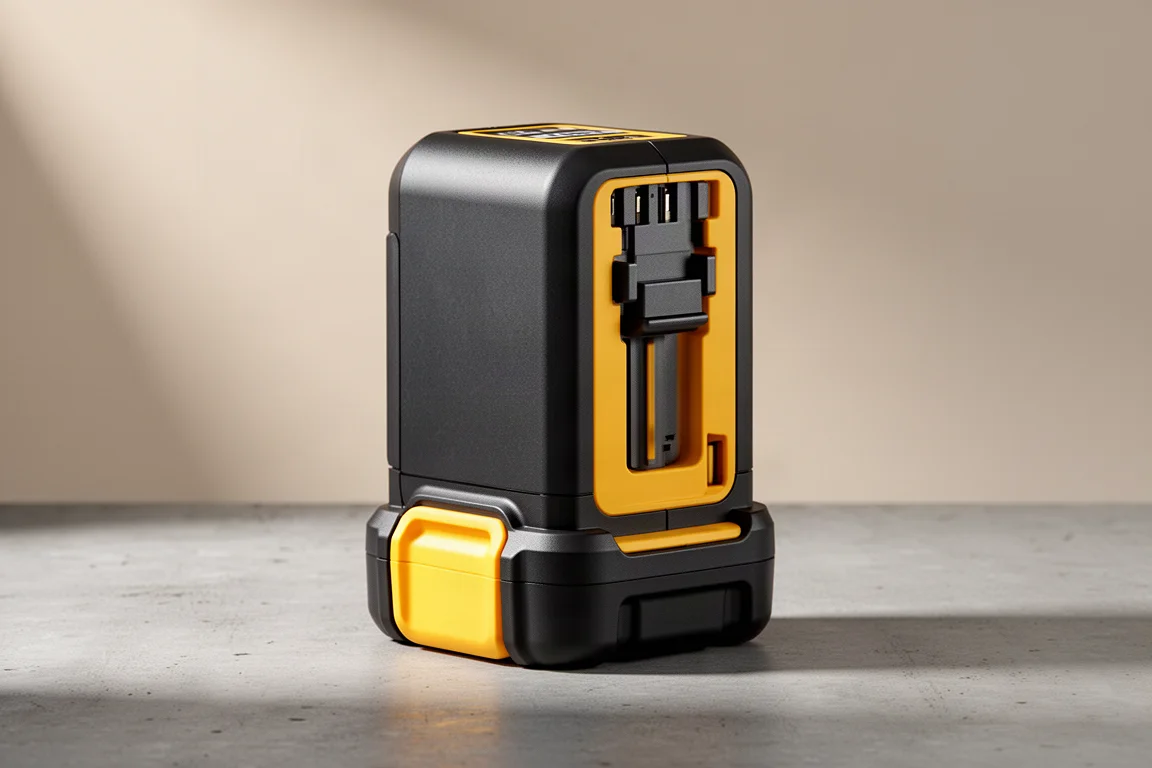
DeWalt’s PowerStack line has always been about pouch cells instead of cylindrical ones, trading familiar 18650 and 21700 hardware for a flat-pouch format that promises better energy density and higher current delivery. The DCBP520 is the latest and largest model in that lineup, a 5Ah pack built on the same pouch-cell platform as the original 1.7Ah PowerStack that launched a year earlier.
The pitch is straightforward: this should behave like a high-output 21700-based 6Ah battery while being smaller and lighter, and last up to two times longer in charge cycles. The reality, based on hands-on load and dyno testing, is a bit more nuanced. Here is where the DCBP520 actually fits in the 20V Max and FlexVolt lineup.
Price and First Impressions
Out of the gate, the price is attention-grabbing. A single pack runs around $230 to $235, which drops to roughly $175 per battery in a two-pack that is not currently on sale. That places it well above standard 5Ah XR packs and even above many 6Ah options.
Right away, the size is surprising for a pack whose platform is supposedly all about energy density and compact form factor. Compared to the original PowerStack, it looks big, and it is noticeably larger than the 5Ah XR battery that remains the default choice in countless workshops.
Size and Weight: Bigger Than You Might Expect
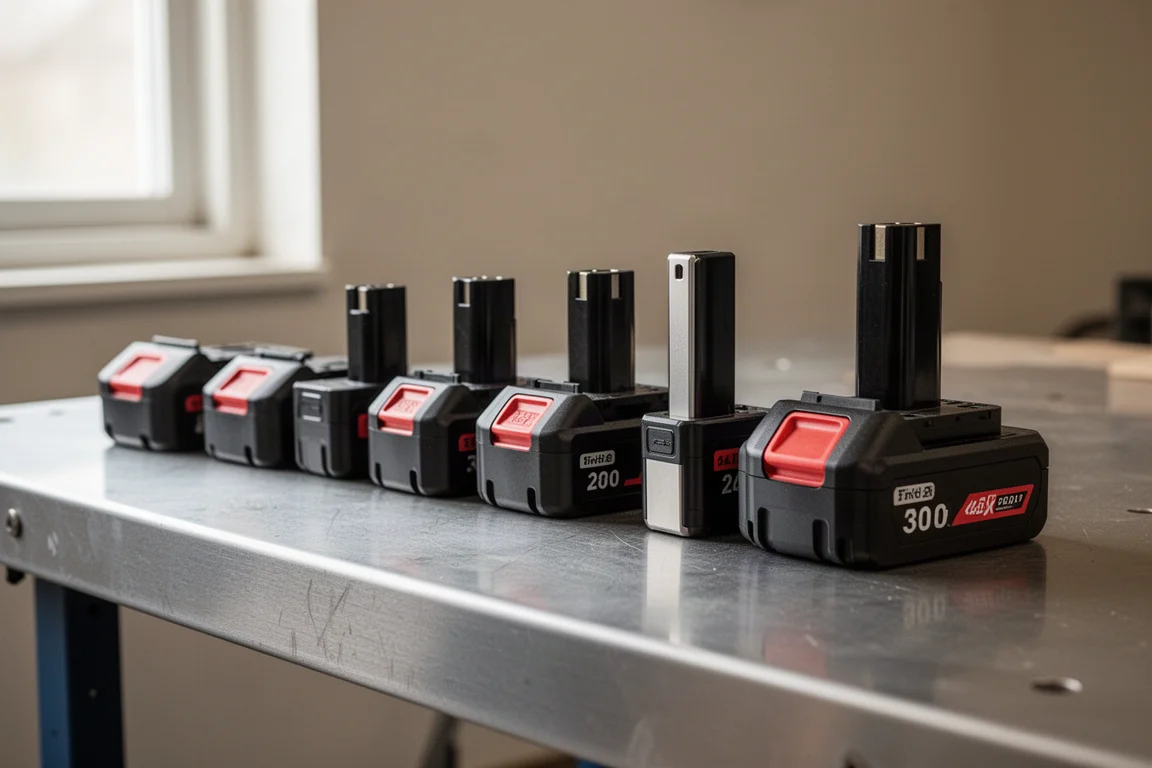
Measured by water displacement, the 5Ah XR comes in at about 450cc, while the new PowerStack 5 lands just over 500cc. That makes it larger than the XR it nominally replaces, though still smaller than the 650cc 6Ah XR. The extra volume sits out front, where it protrudes past the tool’s base and can feel a bit clumsy in the hand, especially since the height profile is actually reasonable.
Weight tells a similar story. The original 1.7Ah PowerStack weighs 0.688 lb, the 4Ah compact 1.19 lb, the 5Ah XR 1.39 lb, and the new 5Ah PowerStack 1.64 lb. It is lighter than 6Ah options, but heavier than the 5Ah XR in every direction DeWalt’s marketing does not emphasize. Where the original PowerStack messaging leaned hard on size and weight, this one leans on capacity instead.
Voltage Sag Under Load
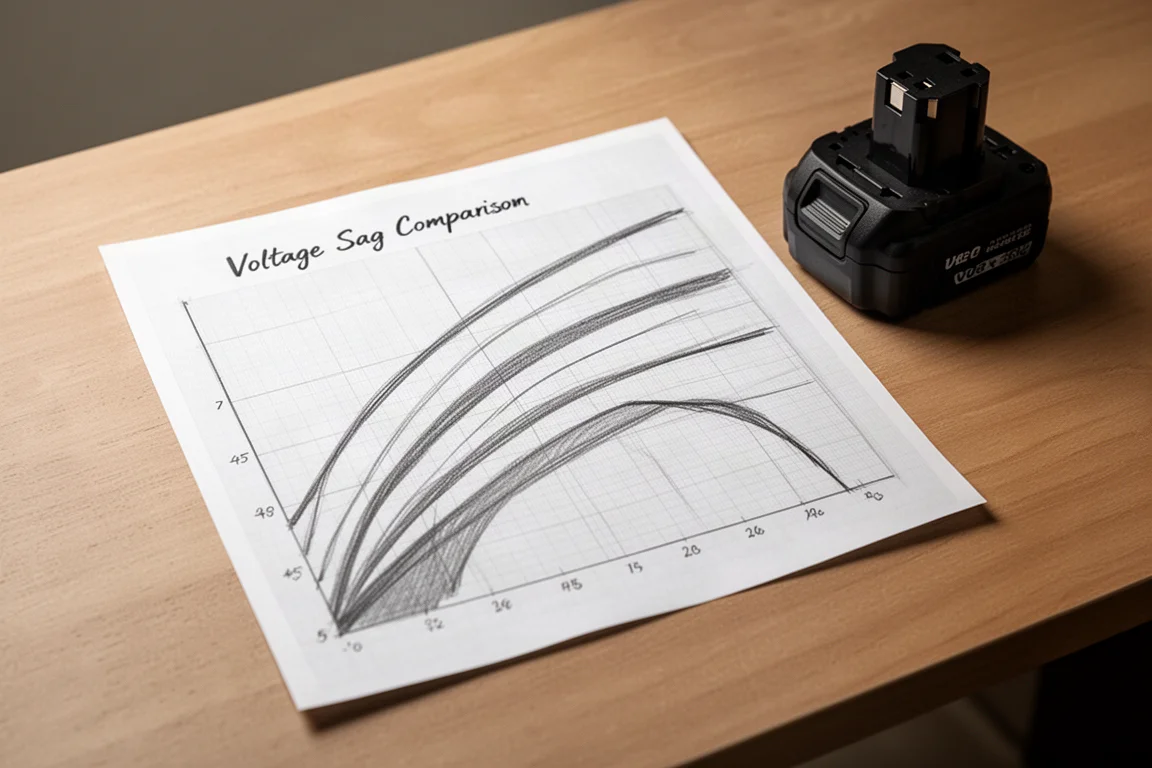
Strapping each pack to a battery tester and pulling 700 watts for 10 seconds, roughly what a small microwave draws, gives a clear read on voltage sag. The original 1.7Ah PowerStack sags more than the 4Ah and 5Ah XR packs, mostly on capacity grounds. The 6Ah XR shrugs at the load, while the 6Ah FlexVolt, packed with 2,000mAh 18650s, makes a bit less.
The new 5Ah PowerStack produces an interesting curve, landing around or overall better than the 6Ah FlexVolt despite less weight and size. For context, the 9Ah FlexVolt with its Samsung 30T 21700 cells remains a juggernaut and arguably one of the best batteries on the market for any brand, and the 15Ah FlexVolt barely sags at anything. The DCBP520 cannot match those heavyweights, but it holds its own in the mid-tier where most real work happens.
Dyno Results: DCF899 and DCF900 High Torque Impacts
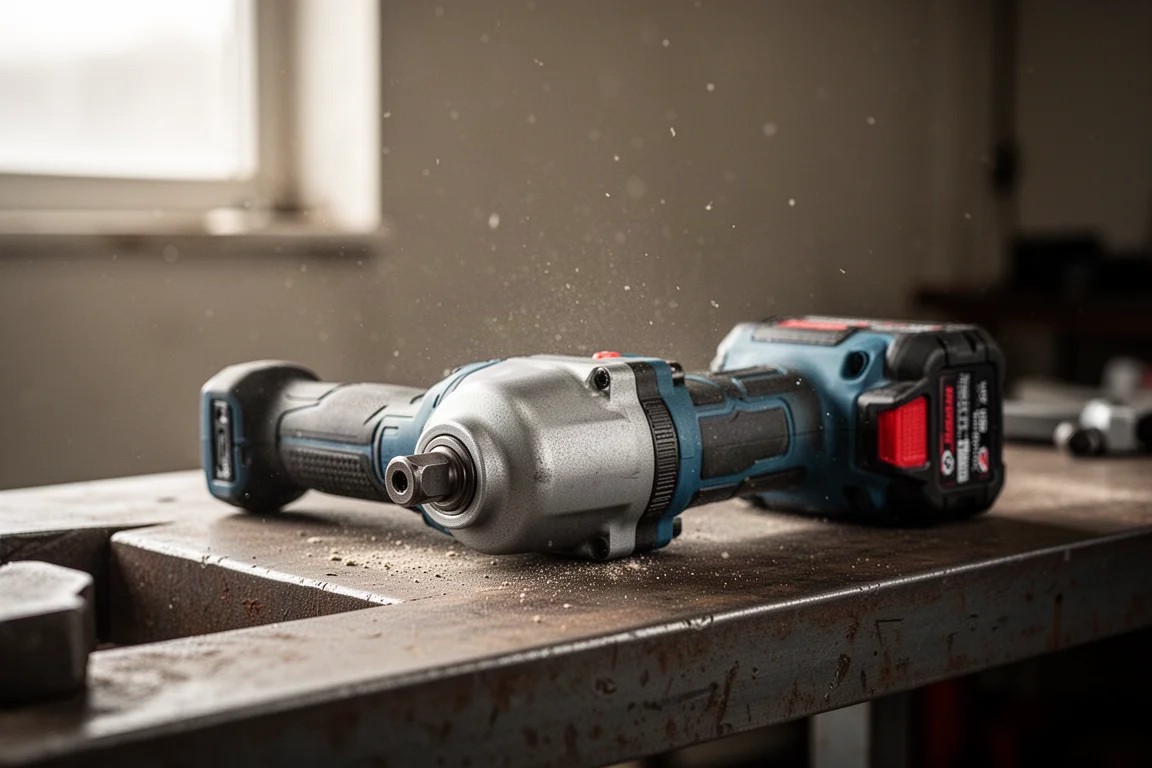
On the dyno with the DCF899 high-torque impact, a tool that predates high-performance batteries yet benefits from them noticeably, the 5Ah PowerStack hit 670, just barely beating the 6Ah XR where the curves are extremely tight. That is a meaningful result considering its voltage appeared lower during the run, suggesting the pouch-cell format is genuinely delivering very high current, helped by wider tab contacts.
The DCF900, the most powerful half-inch impact measured, drew even more. In reverse, the 5Ah PowerStack posted 875, finishing just below the 15Ah FlexVolt and keeping pace with the 6Ah XR. Keeping up with a pack four times its size, weight, and price is no small feat. The 9Ah FlexVolt still edged it out at 893.
In forward runs the picture shifted slightly: the PowerStack managed 916, landing above the FlexVolt and below the 6Ah XR that time. The DCF900 is a handful on a dyno, so run-to-run variance is expected, and the honest takeaway is that these three packs are closely matched on this tool.
Cutoff Tool Test and Final Verdict on Performance
The DCS438 cutoff tool offered a cleaner, more directly loaded comparison. With a 6Ah XR, this tool previously peaked at 500 watts, up from 370 on lesser packs. The new PowerStack climbed steadily through 440, 450, 460, 470, 480, 490, and hit 500 watts exactly, cutting out at the same ceiling as the 6Ah XR. That cutoff is a protection limitation of the tool, not the battery. At 490 watts the PowerStack spun 13,300 RPM, essentially matching the 6Ah XR’s 13,200.
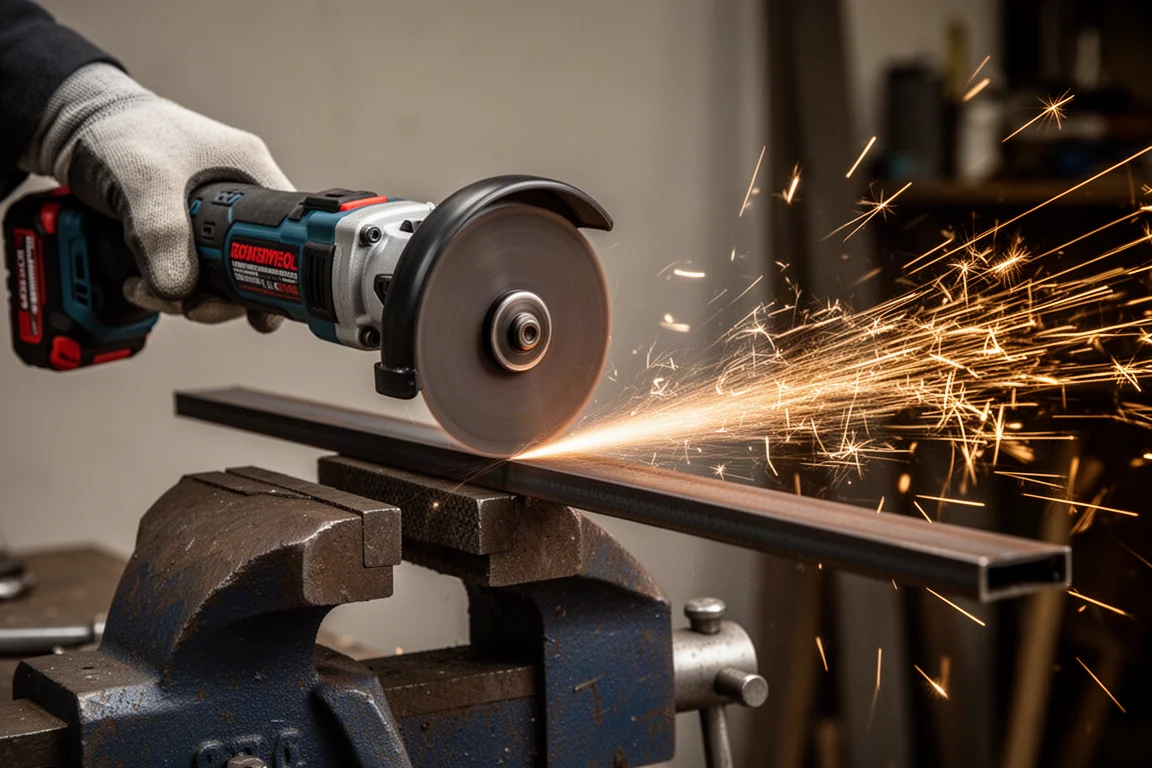
That test captures the overall conclusion well: the DCBP520 performs essentially like a 21700-based 6Ah battery, possibly slightly better on brief current spikes like hitting a knot in wood, thanks to the instant amperage pouch cells can supply. It does all this while being about 24% smaller by volume and 24% lighter than a 6Ah XR, with a similar footprint but a thinner profile.
Things to Consider Before Buying
The advertised two-times lifespan claim is hard to verify in the short term, but if it holds, it strengthens the value case. The current obstacle is price: at roughly $230 to $235 solo or $175 per pack in a two-pack, it costs more than two times a 6Ah XR in some places. If money were no object, this should logically replace the 6Ah XR as the go-to dual-battery choice for high-draw tools. Whether the premium is worth it depends on how much you value the smaller, lighter package and the longer cycle life.
Buying Advice
For owners of DeWalt’s high-torque impacts and demanding tools like cutoff tools, the DCBP520 is a genuine powerhouse and arguably the best 5Ah-class option for output. For everyone else running standard drills and drivers, the much cheaper 5Ah XR still makes more sense. The encouraging news is what this pack signals for the future: pouch-cell performance is scaling up, and a higher-capacity model is presumably on the way.
Conclusion
The DeWalt DCBP520 5Ah PowerStack is exactly what a performance-focused battery should be: 6Ah-class output in a smaller, lighter, theoretically longer-lasting pack. Its stumbling block is a price tag that has not caught up with its ambition. If you spend your days on high-draw tools, it is a compelling upgrade; if you are simply topping up a drill collection, stick with the XR line for now.
Product link
View more details for DeWalt DCBP520 5Ah PowerStack Battery
This product is mentioned in the review. Check the specifications, options, and compatibility before buying.
View more details for DeWalt DCBP520 5Ah PowerStack BatteryFurther reading
Related Reviews
Power Tool Batteries
9Ah M12 Batteries Tested: Which Aftermarket Pack Is Actually Worth Buying?
We measured real capacity, voltage sag, and tool performance from four aftermarket 9Ah M12 batteries against Milwaukee's XC 5.0 High Output pack. One budget option stands out.
Power Tool Batteries
DeWalt PowerStack 5Ah vs XR 5Ah: What a Heat Gun Runtime Test Revealed
Two DeWalt 5Ah batteries ran a DeWalt heat gun back to back. Same capacity, very different power delivery, heat, and voltage behavior.
Power Tool Batteries
DeWalt PowerStack 1.7Ah vs DeWalt 4Ah Compact: Which Battery Should You Buy?
Two DeWalt compact batteries put through real cutting and drilling work to see where the tiny PowerStack matches the 4Ah compact and where runtime still wins.