Cycling Tires
Michelin Power Gravel vs Michelin Jet XC2: Mountain Bike Tires for Gravel Bikes
Two Michelin tires at opposite ends of the gravel spectrum, compared on the same wheels and the same 5.9 km mixed course.
Introduction
Gravel riders have been experimenting with mountain bike tires for a while now, and the real question is whether it is a genuine step forward or a short-lived trend. Two Michelin options sit at opposite ends of that conversation. The Power Gravel is a conventional gravel tire built in a range of widths, while the Jet XC2 is a 2.25 inch mountain bike race tire in the narrowest size the company makes. Both were ridden back to back on the same wheels and the same 5.9 km mixed course, covering smooth champagne gravel, a steady climb, a long flat section, rough boulder strewn trail, rooted singletrack and a fast road finish.
The results are less dramatic than the debate suggests, but the differences that do appear are consistent and worth understanding before spending money.
How These Two Tires Compare
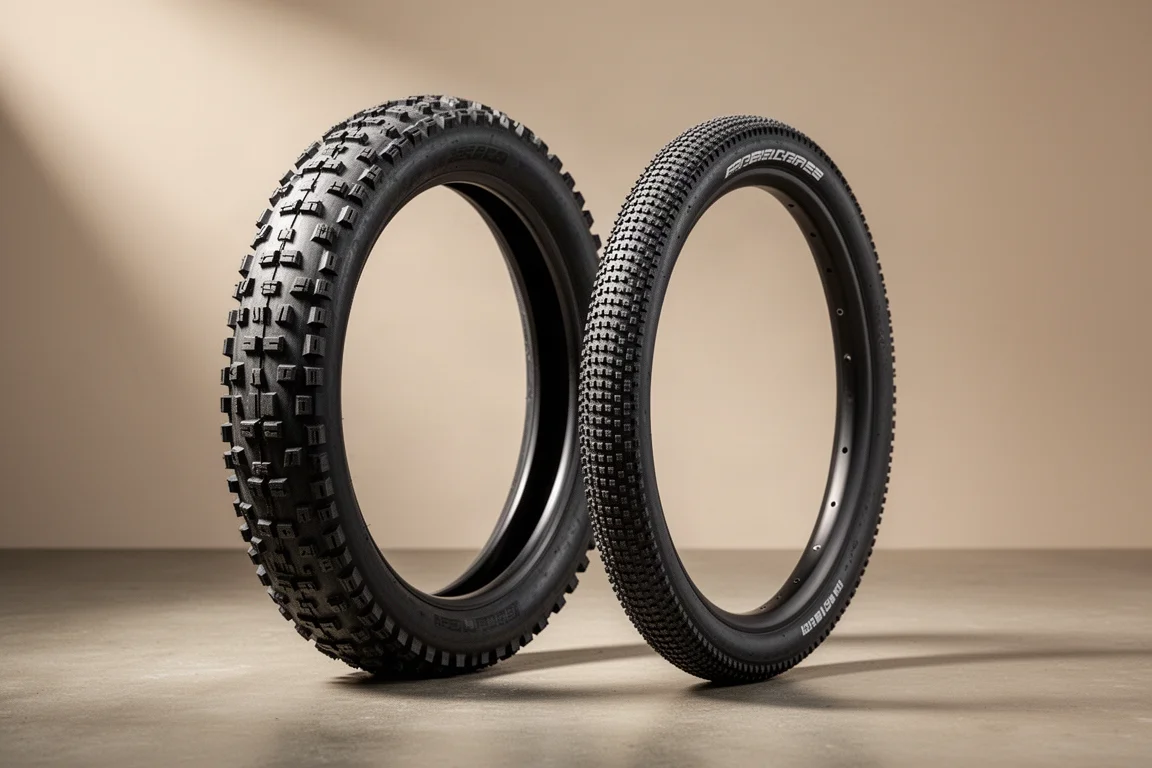
The two tires differ most obviously in volume and tread. Mounted on a 25 mm internal width rim, the Jet XC2 measures 56.4 mm, while the Power Gravel in 47 mm measures 47.6 mm and the 57 mm version comes in slightly undersized at 54 mm. Weight follows the same pattern: the mountain bike tire and the 57 mm Power Gravel both sit at around 700 g, compared with roughly 600 g for the 47 mm Power Gravel.
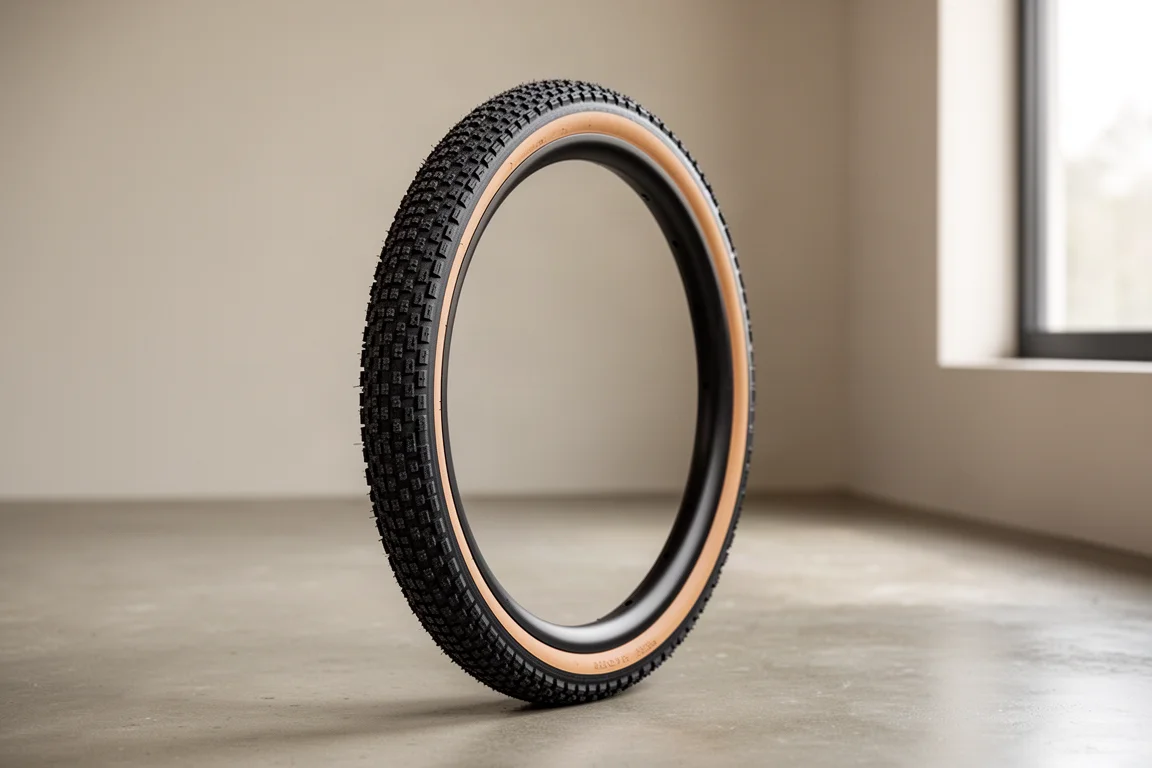
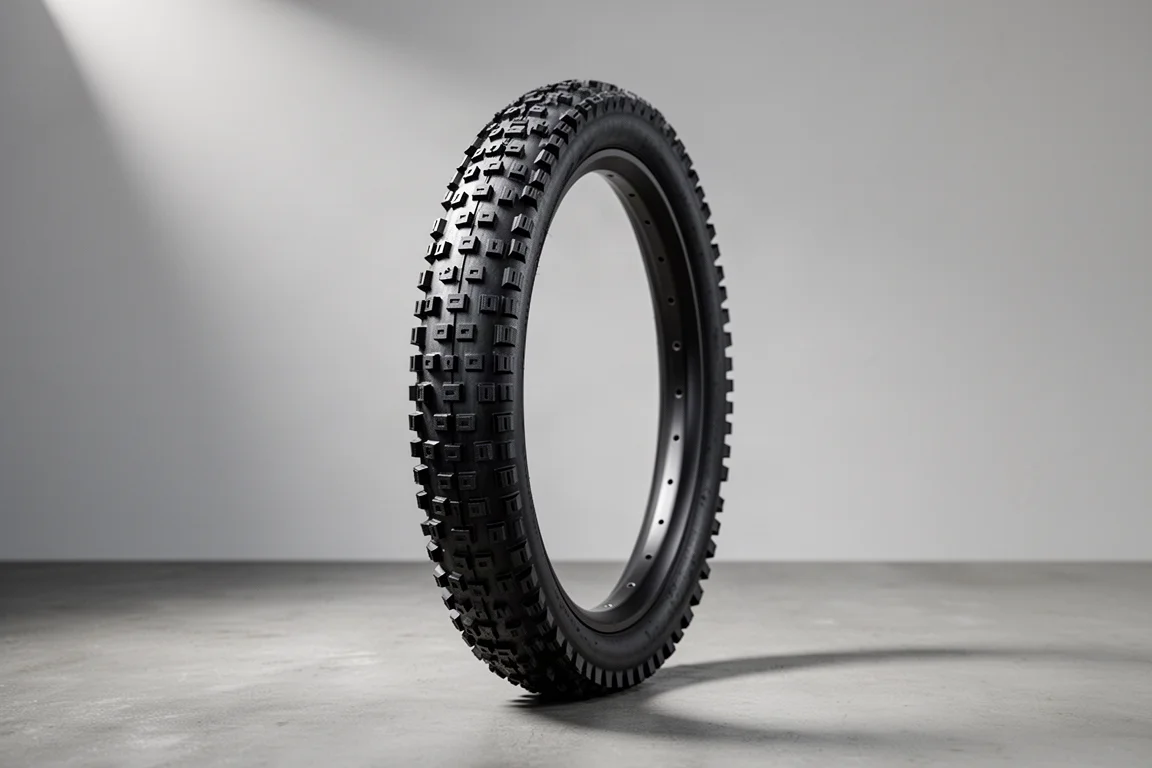
Tread is the other clear split. The Jet XC2 uses a taller, more aggressive block pattern intended for loose and rocky surfaces, while the Power Gravel keeps a faster rolling, closely spaced tread aimed at hardpack, pavement and gravel. Width and sidewall options also differ. The Power Gravel is offered in narrower and wider sizes with tan or black sidewalls, which makes it easy to match a frame and a riding style. The Jet XC2 is a mountain bike tire first and foremost, and its narrowest size is still far larger than anything a gravel frame is typically designed around.
Michelin Power Gravel: Fast Rolling All-Rounder
The Power Gravel is the more conventional choice for a gravel bike, and it is the easier one to live with. Its fast rolling tread works well on hardpack, on pavement and on gravel, and tubeless installation is straightforward. The range of available widths means it can be matched to a frame’s stated clearance, and the tan or black sidewall options let riders tune the look of the bike. Construction is durable, holding up over months of mixed-surface riding without signs of premature wear. On road, both the 47 mm and 57 mm versions roll noticeably better than the mountain bike tire.
Michelin Jet XC2: Big Volume Grip for Rough Trails
The Jet XC2 is a mountain bike race tire pressed into gravel duty. At 2.25 inch it is the narrowest size in the line, yet it still measures 56.4 mm once mounted, which is a large jump in volume over any conventional gravel tire. That volume, combined with a much more aggressive tread pattern, is what makes it so effective on rough ground. On rocky descents it delivers grip and traction that neither gravel width can match, and it gives noticeably more confidence when the bike is sliding and scrabbling for purchase on loose rock.
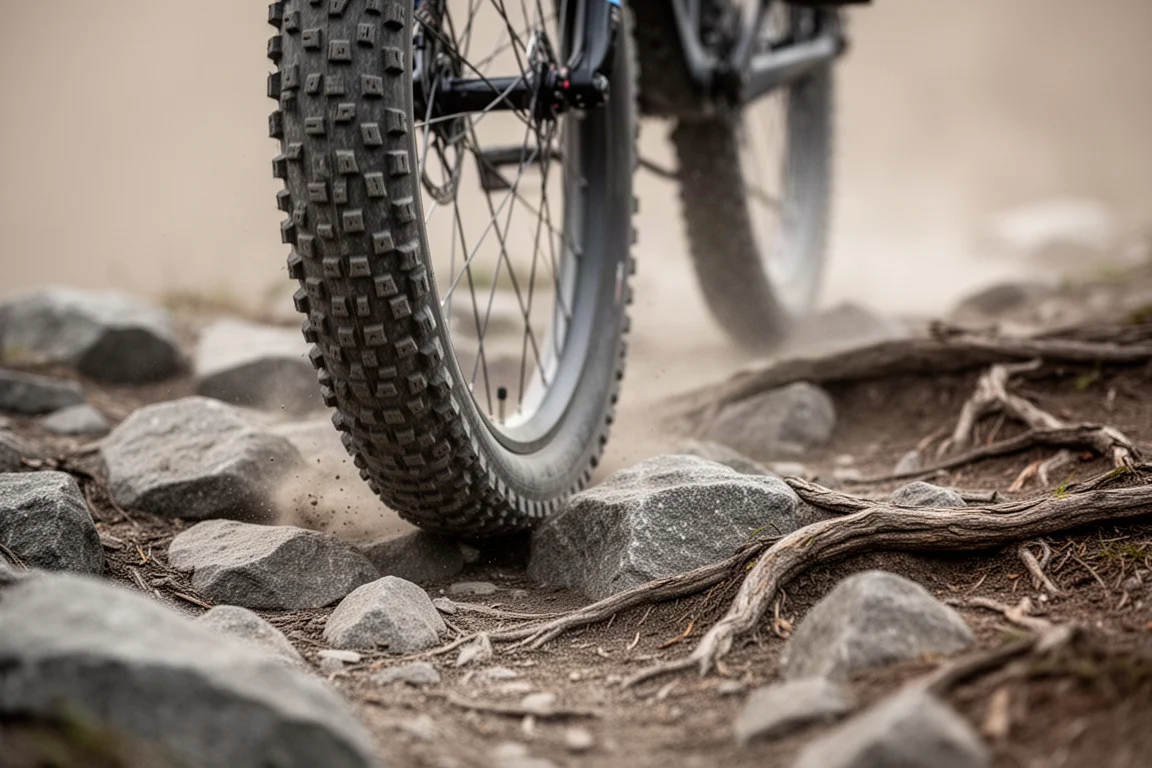
Volume is only part of the story. The construction and the tread pattern also play a role, which is why the Jet XC2 feels more planted than a 57 mm gravel tire of almost identical width. It is also more comfortable and more forgiving over roots and embedded rocks. It is surprisingly capable away from the rough stuff as well: on a flat road at around 20 mph the extra drag is audible but not especially obvious, and it rolls smoothly on pavement and hard dirt.
Real-World Speed: Test Run Results
All three setups were timed on the same 5.9 km course in a single morning, with tire pressure matched across runs and effort held near 180 watts, which produced an average speed of roughly 25 km/h. The mountain bike tire recorded 14 minutes 34 seconds at an average of 181 watts. The 57 mm Power Gravel recorded 14 minutes 23 seconds at 177 watts, and the 47 mm Power Gravel recorded 14 minutes 24 seconds at 174 watts.
Those numbers are close enough that the difference is not conclusive on its own, and real-world riding always carries variables that a controlled test cannot remove. What they do show is that the mountain bike tire is not dramatically slower over a mixed course, and that the two gravel widths sit within a second of each other. Pushing harder on the road is where the bigger tire starts to give ground, and the more speed a rider carries, the more of a handicap it becomes relative to the 47 mm and even the 57 mm options.
Clearance, Weight, and Handling Trade-Offs
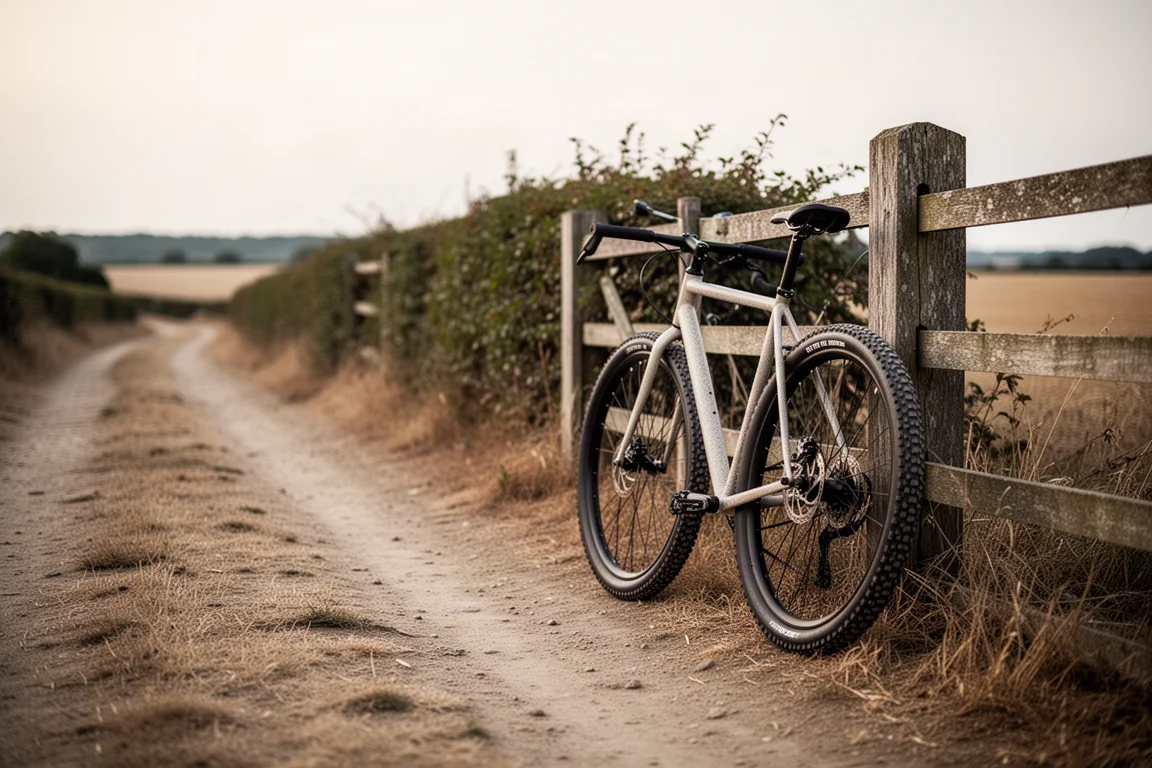
Clearance is the first thing to check before fitting a mountain bike tire to a gravel frame. The bike used for this comparison officially accepts a 50 mm tire, and the 56 mm Jet XC2 leaves very little room at the fork and even less at the chainstays. In dry, dusty conditions that is workable. In mud it is not: a modest amount of build-up would jam the tire, which rules the setup out for wet autumn and winter riding in most climates.
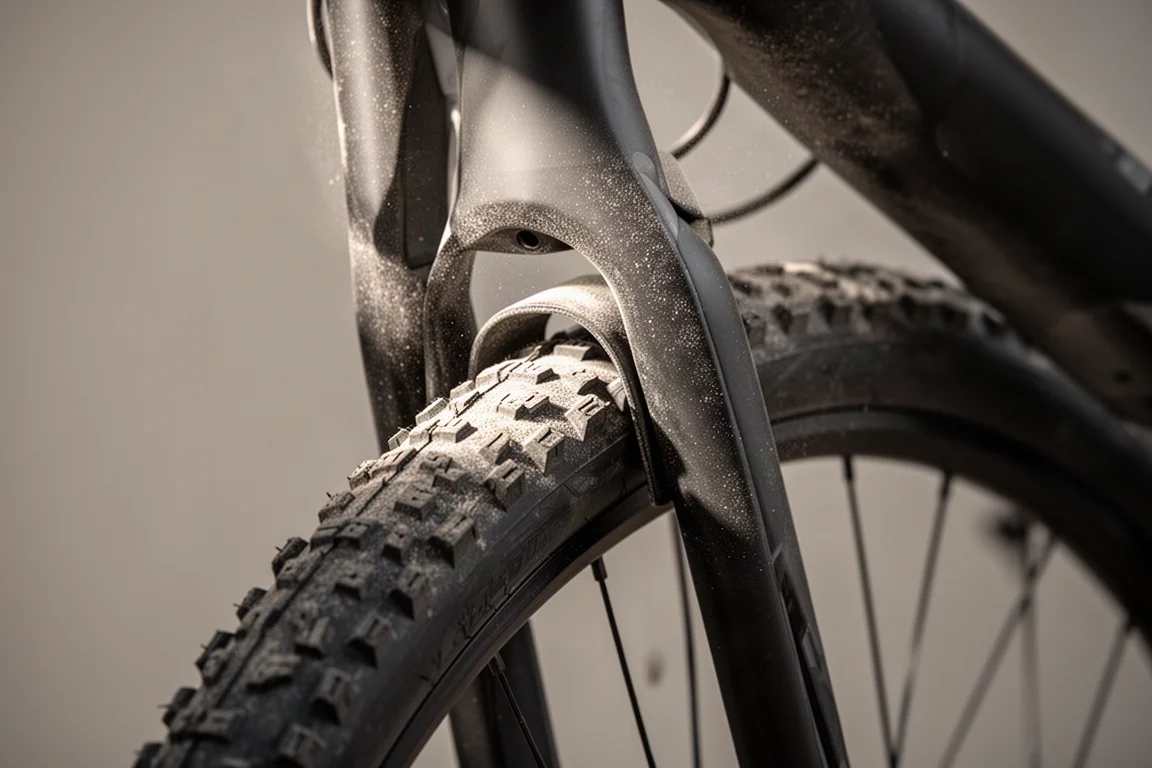
Weight and geometry are the other considerations. The bigger tire adds roughly 200 g to the complete bike compared with the 47 mm option, and the larger outside diameter affects steering. The front end feels heavier and less nimble, with a tendency to flop away from the centre line at low speed. It is something a rider can adapt to over time, but it is a genuine downside on a frame that was not designed around that volume, and it is worth weighing against the extra control the tire provides.
Which Tire Suits Which Rider
If the priority is road speed and smooth gravel, the Power Gravel is the simpler and more efficient answer. The 47 mm version stands out as a sweet spot: light, quick on the road, still capable enough for moderate rough surfaces, and with more clearance for mud than any larger option. A 45 to 50 mm gravel tire remains the right choice for most riders splitting their time between pavement and smooth dirt.
The Jet XC2 makes sense for riders who spend a meaningful share of their time on chunky, rocky trails and are willing to accept slower road pace, extra weight and tighter clearances in exchange for control. It is a strong argument for a bike designed around that volume, where clearance and handling are not compromised. The gap between the two also hints at room for a middle ground, though narrow mountain bike tires are increasingly rare as mountain bikes have moved toward 2.2 to 2.4 inch widths.
Overall Buying Advice
Start with the frame. Check the stated maximum tire width and how much room is left at the fork, chainstays and seat tube, then think honestly about the surfaces you ride and the seasons you ride them in. If mud is part of the picture, the wider mountain bike tire is likely to remain a dry-weather experiment rather than a permanent setup.
For mixed-surface riders, a mid-width gravel tire in the 45 to 50 mm range delivers most of the benefit of the bigger tire with none of the clearance or handling penalties, and it saves around 200 g. Riders whose local trails are genuinely rocky and rooty will get more from the Jet XC2, provided the frame has the room and they can accept the slower road manners. Neither choice is wrong; they simply suit different terrain and different priorities.
Conclusion
Mountain bike tires on gravel bikes are less a fad than a niche that works well in specific conditions. The Jet XC2 is genuinely impressive on rough, rocky ground and far less of a handicap on the road than its size suggests. The Power Gravel remains the more versatile option for most riders, and the 47 mm version is the easiest to recommend for a mixed diet of pavement and gravel.
Further reading
Related Reviews
Cycling Tires
Best All-Season Road Bike Tires 2026: 9 Tested Options for Year-Round Riding
A practical guide to nine all-season road tires, from fast and supple to tough and durable, based on thousands of kilometers of real-world riding.
Cycling Tires
Best All-Season Road Tires: Nine Tubeless Picks for Grip, Speed and Durability
A practical guide to nine all-season road tires, from supple race-bred options to hardier models built for winter mileage and puncture protection.
Cycling Tires
Best Road Tubeless Tires 2026: Five Fast Options Compared
A rolling resistance lab test plus real world fitting and ride notes on five premium road tubeless tires, from the fastest to the ones with clear trade-offs.