Cycling Tires
Mountain Bike Tires on a Gravel Bike: Michelin Jet XC2 vs Power Gravel
A real-world comparison of a 2.25 inch mountain bike tire and two dedicated gravel tires, with timed test results, clearance notes, and practical buying advice.
Introduction
Gravel bikes have spent the past few seasons creeping toward wider tires, and the latest step in that direction is more radical than a few extra millimetres of rubber. A growing number of riders are fitting full mountain bike tires to gravel bikes and treating the result as a legitimate all-terrain setup. The obvious question is whether that is a durable direction for gravel riding or a short-lived experiment.
To find an answer, a gravel bike was ridden for several months with a 2.25 inch mountain bike race tire before being put through a back-to-back timed comparison against dedicated gravel tires. Every run used the same wheels, the same course, and the same morning.
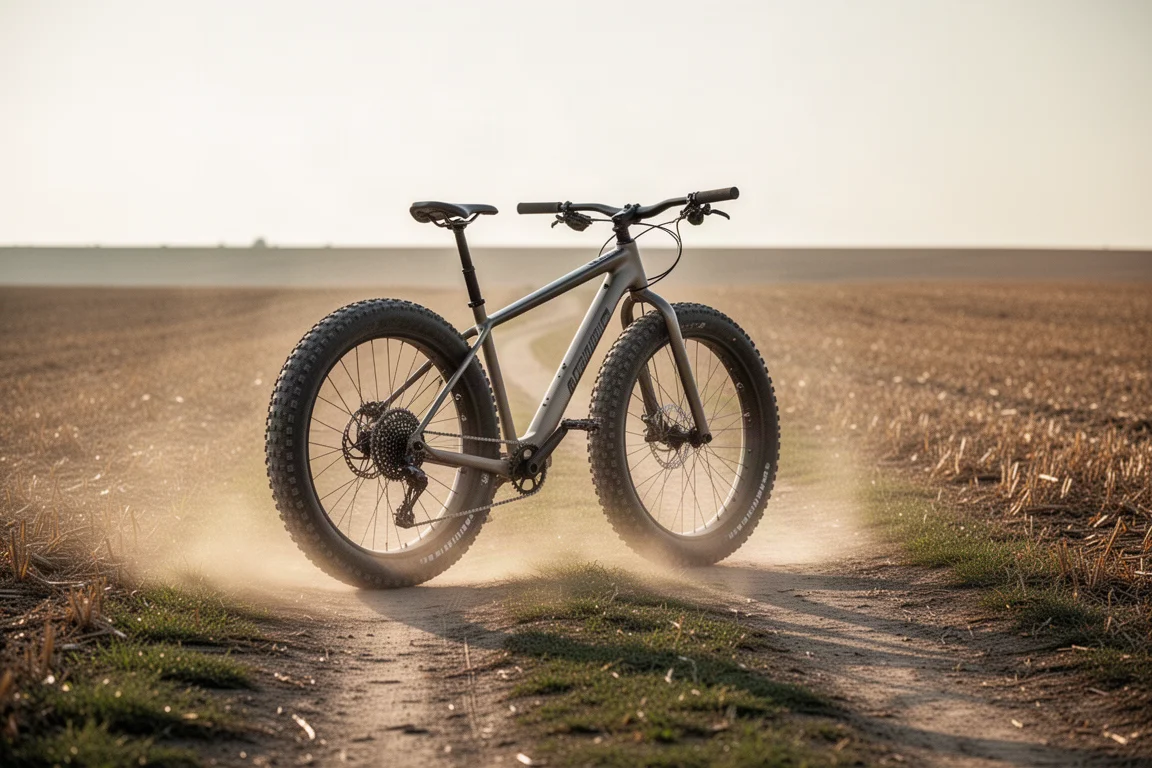
The short version: the mountain bike tire was far more capable on rough, rocky terrain than expected, and noticeably less of a penalty on the road than expected. It also introduced two real drawbacks that matter more than a handful of seconds on a stopwatch.
What Was Tested and How
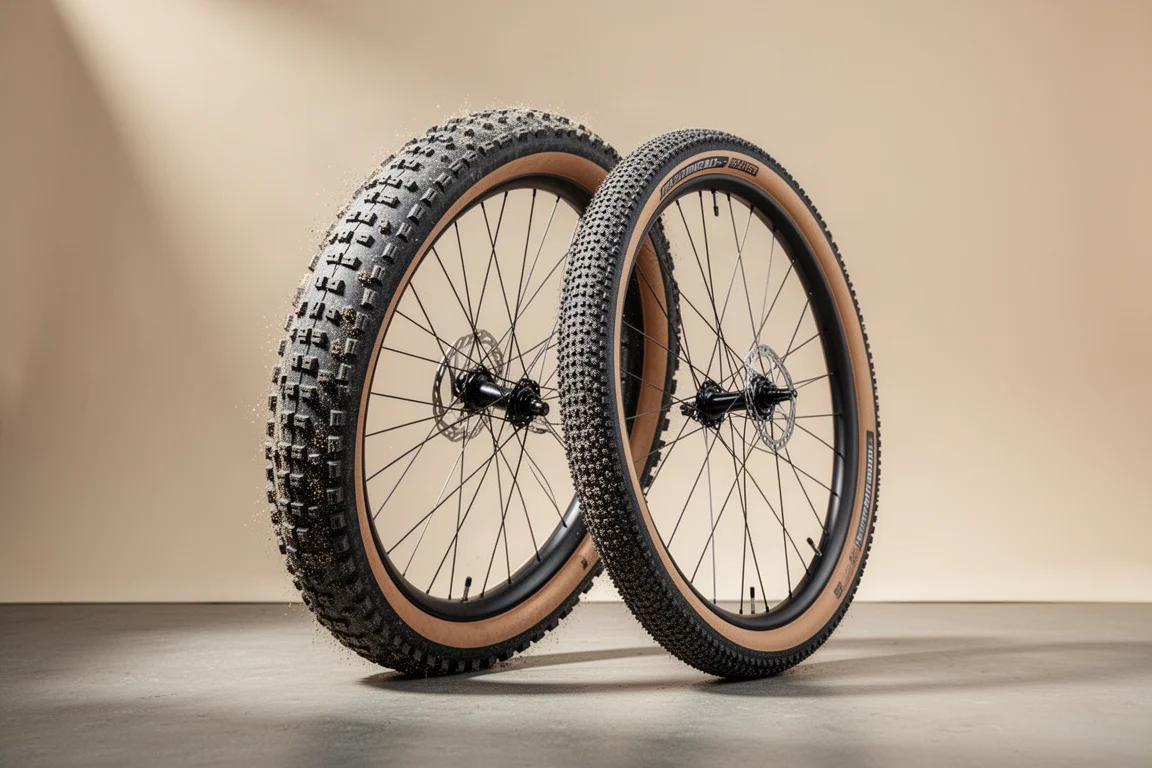
Three tires went onto the same set of wheels with a 25 mm internal rim width. The first was the Michelin Jet XC2 in 2.25 inches, the narrowest size that tire is produced in. The other two were Michelin Power Gravel tires, one in 47 mm and one in 57 mm.
Measured widths on those rims were revealing. The Jet XC2 came out at 56.4 mm, the 47 mm Power Gravel at 47.6 mm, and the 57 mm Power Gravel at 54 mm, narrower than its stated size. The test bike is officially rated for a 50 mm tire, which sets the context for everything that follows.
The test course measured 5.9 km and was built to cover the terrain a mixed-surface rider actually meets. It opened with smooth gravel and a steady climb, moved onto a long flat section, then hit a rough trail strewn with rocks and boulders. From there it climbed smooth singletrack with dirt and tree roots, before finishing on mostly road with rolling climbs and a fast descent.
Every run happened on the same morning, with tire pressures set using a pressure calculator and a target of around 180 watts, which produced an average speed close to 25 km/h. This is a real-world test rather than a laboratory measurement, so the numbers are best read as a practical guide rather than a definitive ranking.
Michelin Jet XC2: The Mountain Bike Option
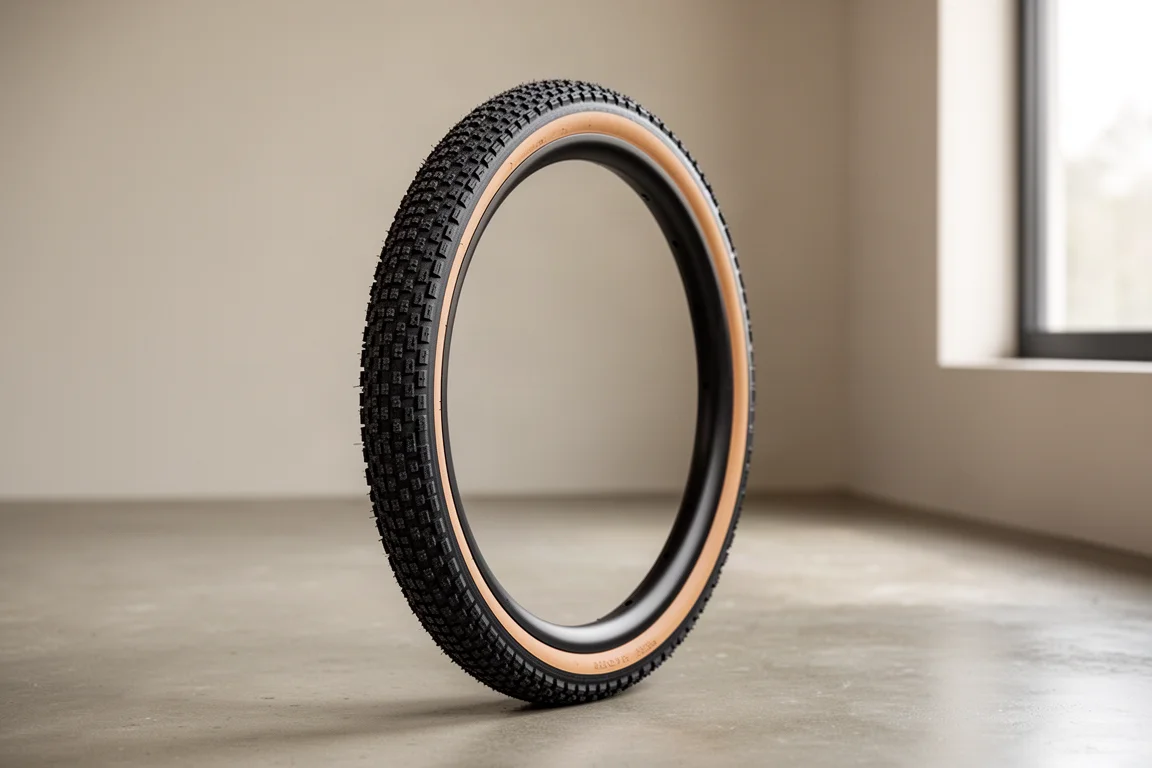
The Jet XC2 is a mountain bike race tire, and at 2.25 inches it is the narrowest version Michelin offers in that line. On the test wheels it measured 56.4 mm, which is worth remembering: a tire sold as 2.25 inches behaves like something closer to 56 mm once it is seated on a modern wide gravel rim.
Its timed run came in at 14 minutes and 34 seconds with an average power of 181 watts. That time became the benchmark for the other two tires.
The strengths showed up clearly on the roughest part of the course. On the rocky, boulder-strewn trail, the Jet XC2 delivered noticeably more grip and control than either gravel tire, with a more aggressive tread pattern and a construction that felt calmer when the bike was scrabbling for traction. It also handled road and smooth dirt far better than a knobby tire might suggest.
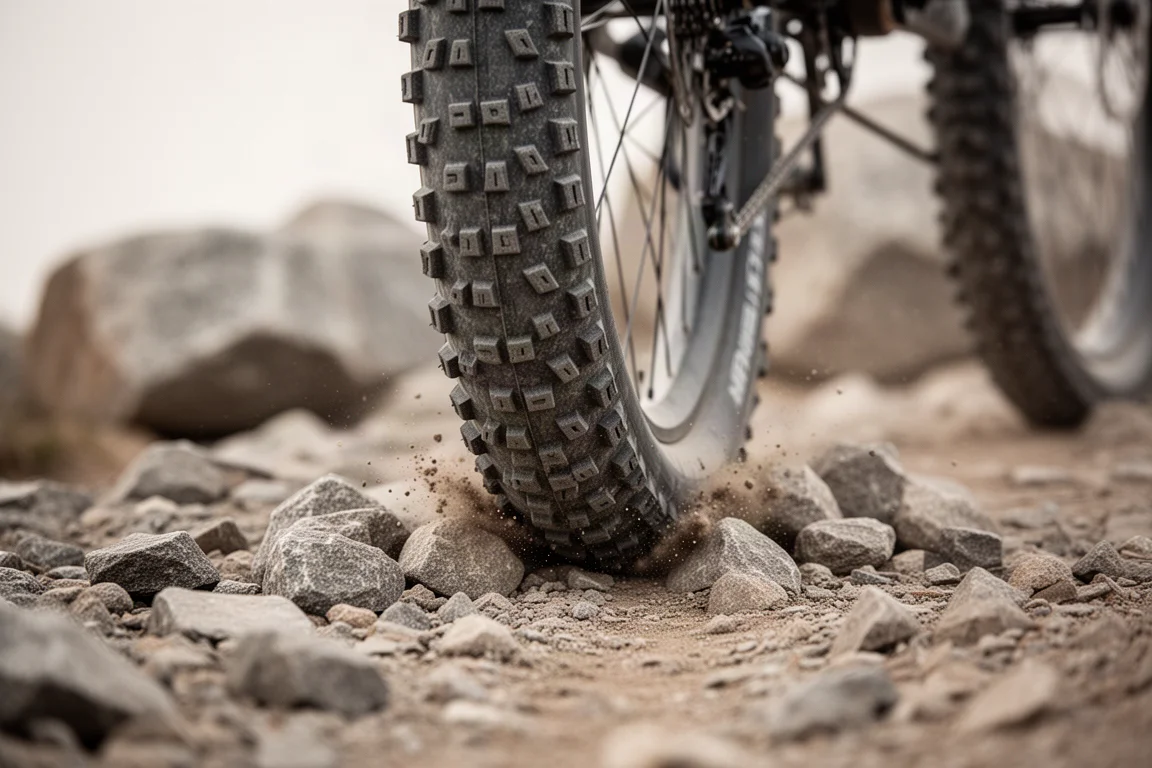
Weight is part of the picture. The Jet XC2 sits at roughly 700 g, about 100 g more than a 47 mm Power Gravel tire, which adds up to around 200 g across the bike. That extra rotating mass is felt more on acceleration than at a steady pace.
Michelin Power Gravel: The Dedicated Gravel Tire
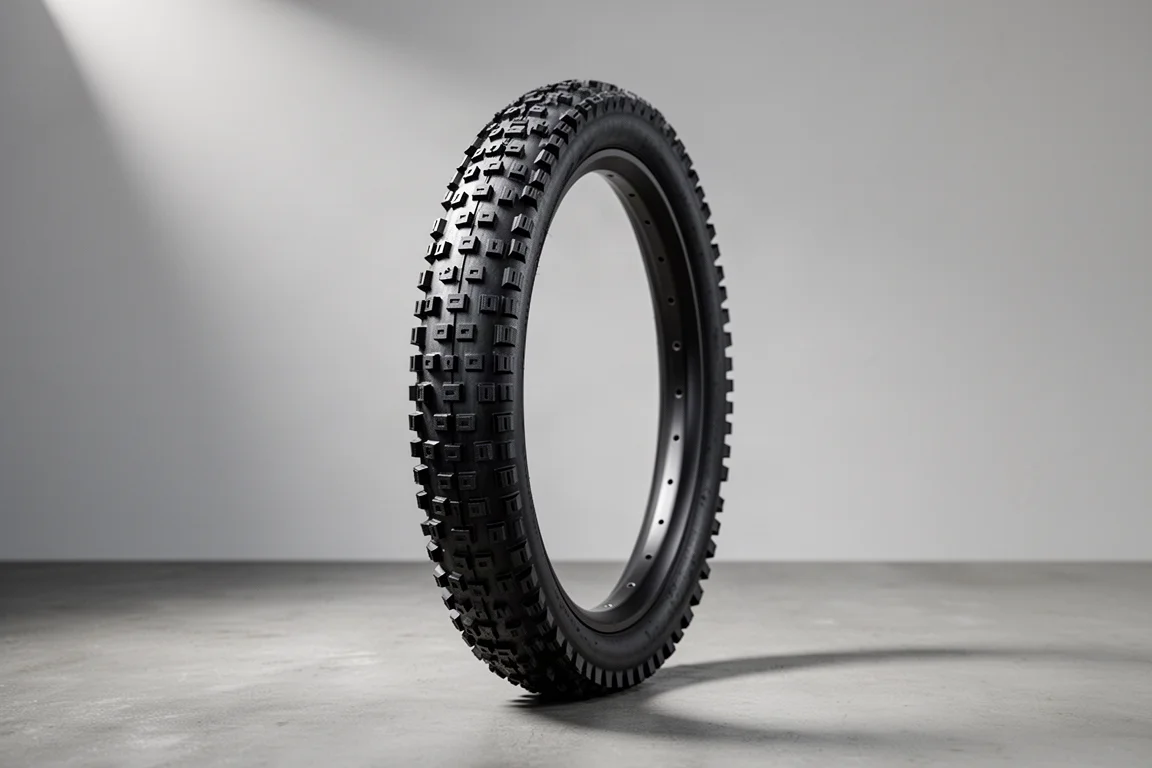
Michelin Power Gravel is the conventional answer to mixed-surface riding, and the test covered it in two widths. The tread pattern is built to roll fast, and it performs well on hardpack, on pavement, and on gravel. Tubeless installation was straightforward in testing, and the tire is available in several widths with a choice of tan or black sidewalls. Construction has proved durable so far, holding up to repeated use as a control tire across a range of gravel bikes.
The timed results were close. The 57 mm Power Gravel completed the course in 14 minutes and 23 seconds at an average of 177 watts, while the 47 mm version took 14 minutes and 24 seconds at 174 watts. The two are effectively inseparable on time, but the smaller tire needed less power to get there, which is the more meaningful detail.
Weight separates them more clearly. The 57 mm tire is around 700 g, while the 47 mm version is around 600 g, a saving of roughly 200 g across both wheels.
Road Speed, Grip, and Rolling Feel
Where the gravel tires clearly won was on the road. Both the 47 mm and 57 mm Power Gravel rolled better than the mountain bike tire on tarmac, which is the expected outcome given the tread. What was less expected is how small the gap felt. At a steady pace, the Jet XC2 was not dramatically slower on flat road, and it rolled well on smooth dirt too. The extra drag was audible, and the penalty grew as speed increased, but it did not turn the bike into a slog.
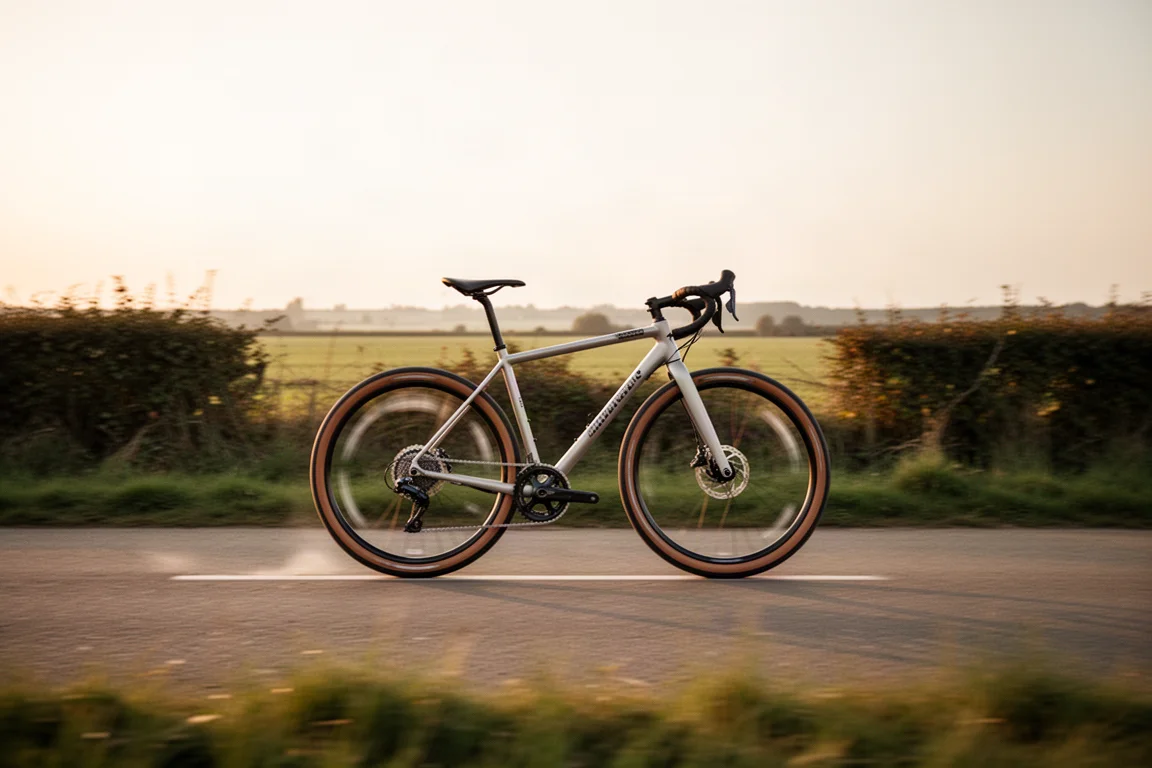
On the chunky, rocky terrain the order reversed. The mountain bike tire had a clear advantage on the technical descent, with the 57 mm gravel tire reasonably close behind and the 47 mm version well adrift of both. That is a useful reminder that width alone does not explain grip. The Jet XC2 and the 57 mm Power Gravel measured within a couple of millimetres of each other, yet the mountain bike tire felt more reassuring, most likely because of its larger volume, its construction, and its deeper tread.
Across the whole 5.9 km course, the spread between the fastest and slowest setup was 11 seconds. In real-world riding on mixed surfaces, tire choice is far less about raw speed than about which terrain you want the bike to feel best on.
Clearance, Handling, and Weight
The first genuine drawback is clearance. On a frame rated for 50 mm tires, a 56.4 mm mountain bike tire leaves very little room at the fork and even less at the chainstay. In dry, dusty conditions that is workable. Once mud is involved, the tire would very likely jam against the frame, which rules the setup out for a wet autumn and winter.
The second drawback is handling. Fitting a taller, wider tire changes the bike in ways the frame was never designed for. The larger outside diameter alters fork trail, and the result is steering that feels heavier and less precise. The bike became less nimble and tended to drift off its central steering line. It is possible to adapt to the behaviour over time, but it is not an improvement.
Weight is the third consideration. Both the Jet XC2 and the 57 mm Power Gravel sit around 700 g, against roughly 600 g for the 47 mm tire, so the bigger options add about 200 g to the complete bike.
Buying Advice: Matching Tire to Rider
For most riders who split their time between road and smooth gravel, a 45 to 50 mm gravel tire remains the sensible choice. The 47 mm Power Gravel was the standout of this test: it rolled better on the road than the wider options, weighed less, and left enough space around the frame for mud clearance. The performance gap on rocky terrain was real but modest, and it is unlikely to be the deciding factor for riders who only occasionally meet rough ground.
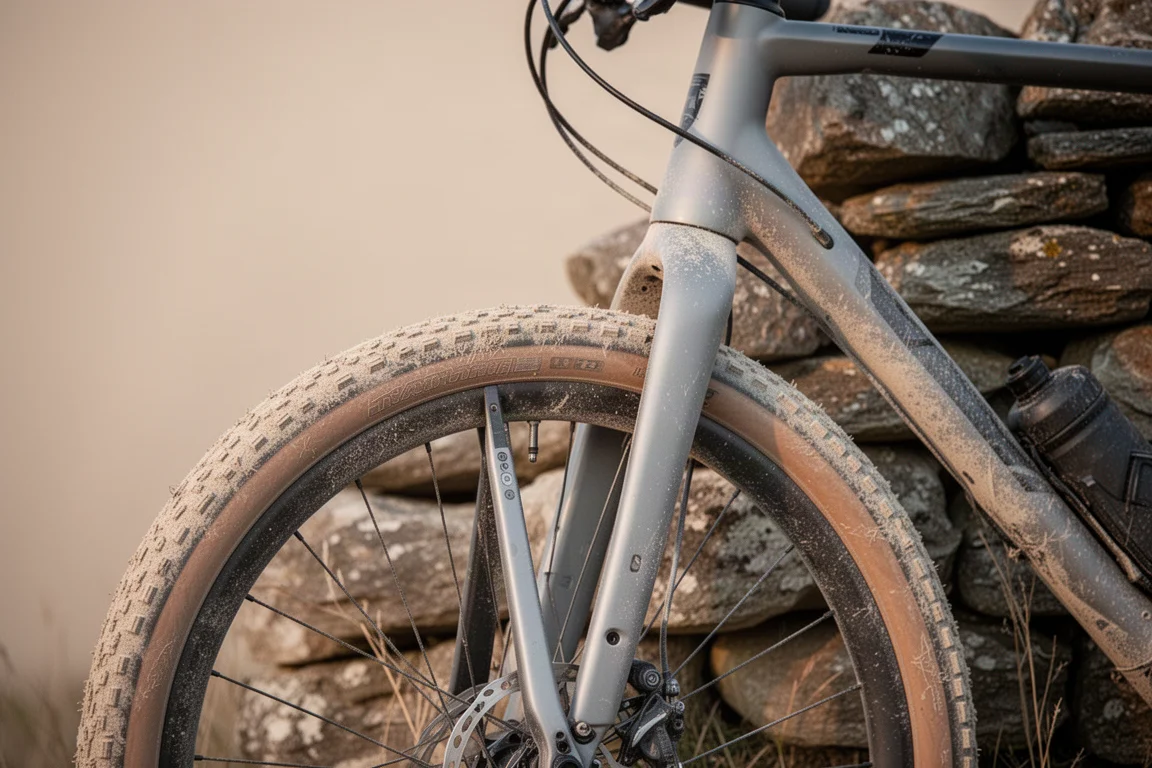
Mountain bike tires make sense in a narrower set of circumstances. They reward riders whose local terrain is genuinely rocky, loose, and rooty, and whose frames offer enough clearance to run them safely. Even then, on a frame like the one tested here, they are a fair-weather setup, because the mud clearance simply is not there.
There is a reasonable argument for something in between: a tire with more volume and tread than a gravel tire but narrower than the 2.2 to 2.4 inch widths that dominate mountain biking today. Narrow mountain bike tires around 2 inches have largely disappeared from the market, so that middle ground is not currently easy to find.
Conclusion
The experiment produced a more balanced result than the debate usually allows. Mountain bike tires on a gravel bike are not the free upgrade that the most enthusiastic advocates suggest, and they are certainly not a pure downgrade either. On rough, rocky trails they add genuine control and confidence. On the road they give up less than expected. Against that, they demand frame clearance most gravel bikes do not have, and they change the way the bike steers.
For riders who mostly mix tarmac with smooth gravel, a 45 to 50 mm gravel tire such as the Michelin Power Gravel remains the more versatile choice, and the 47 mm width is the easiest to live with. For riders whose riding is dominated by rough, technical surfaces and whose frames can take the width, the Michelin Jet XC2 shows what a mountain bike tire brings to a drop-bar bike. Matching the tire to the terrain, rather than following the trend, is what makes the difference.
Further reading
Related Reviews
Cycling Tires
Best All-Season Road Bike Tires 2026: 9 Tested Options for Year-Round Riding
A practical guide to nine all-season road tires, from fast and supple to tough and durable, based on thousands of kilometers of real-world riding.
Cycling Tires
Best All-Season Road Tires: Nine Tubeless Picks for Grip, Speed and Durability
A practical guide to nine all-season road tires, from supple race-bred options to hardier models built for winter mileage and puncture protection.
Cycling Tires
Best Road Tubeless Tires 2026: Five Fast Options Compared
A rolling resistance lab test plus real world fitting and ride notes on five premium road tubeless tires, from the fastest to the ones with clear trade-offs.