Headphones
Meze Poet Review: A Planar Magnetic Headphone With a Voice of Its Own
The Meze Poet pairs a custom planar magnetic driver with premium materials and a spacious, engaging sound. Here is what to know before buying.
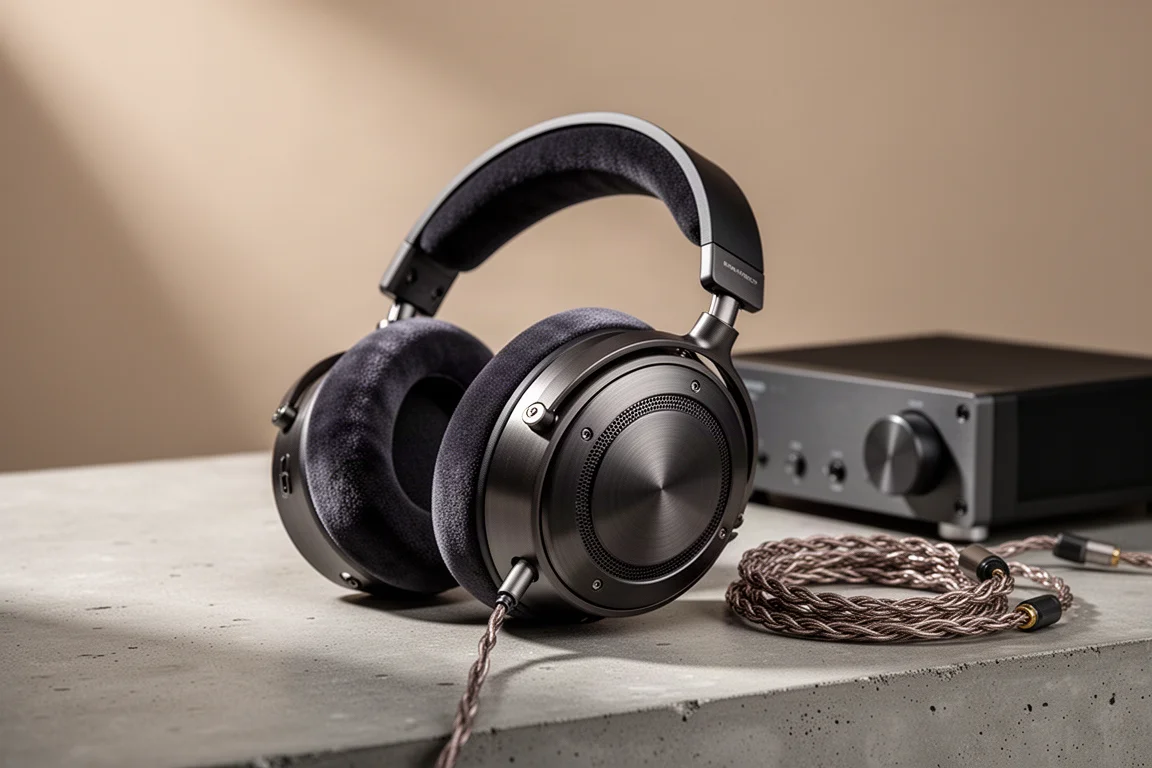
Introduction
Most headphones kept on a desk use a dynamic driver, a piston-like diaphragm that pushes air much the way a speaker cone does. The Meze Poet takes a different route. It is built around a planar magnetic driver, a flat diaphragm moved by an electromagnetic array instead of a voice coil, a design whose principles trace back to electromagnetic actuator research from the space race era, where contactless and friction-free movement mattered for precision instruments.
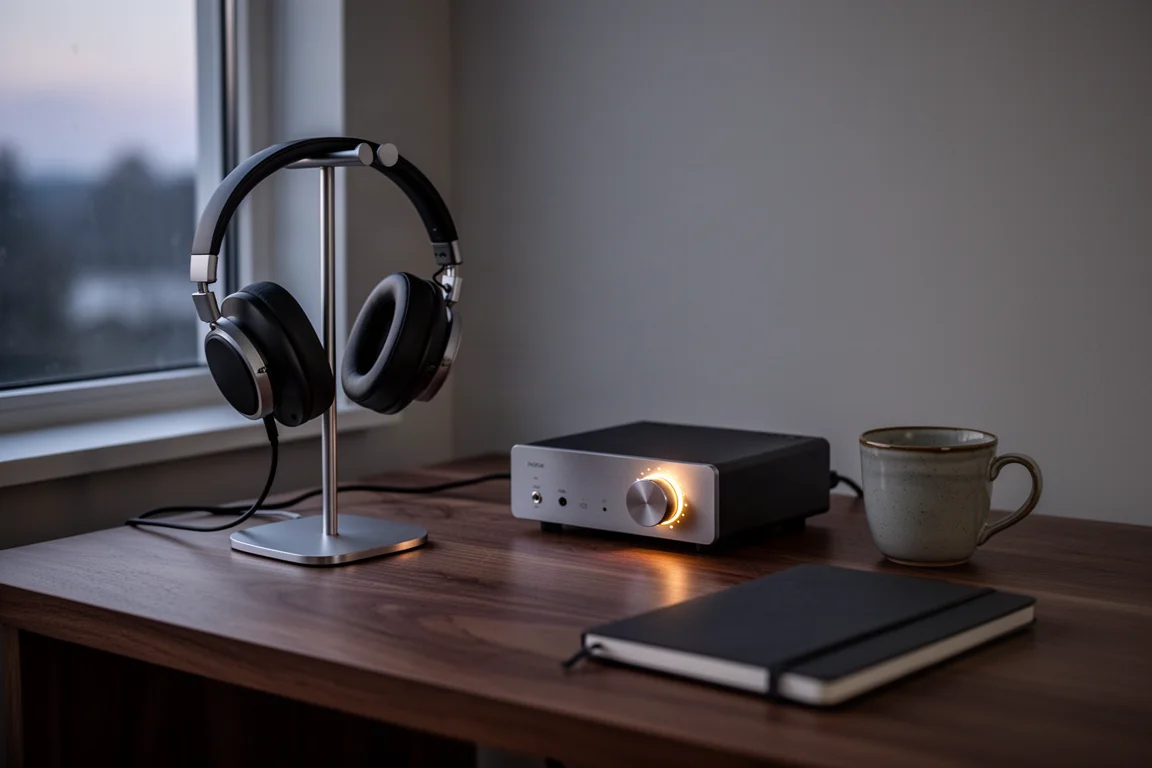
That heritage shapes what this headphone is: an open-back, flagship-class model with a driver developed exclusively for Meze, a price of roughly $2,000, and a sound that leans toward character rather than strict neutrality.
Who the Meze Poet Is For
This is a headphone for listeners who sit down with music rather than wear headphones while doing something else. It suits a desk setup with a dedicated amplifier, a quiet room, and a habit of paying attention to recordings instead of background noise. Anyone who wants active noise cancellation, a commute-friendly design, or a pair that runs happily from a phone should look at a different category entirely.
It is also a sensible entry point for anyone curious about planar magnetic headphones but wary of the format’s reputation. Older planar magnetic designs were famously power hungry and needed expensive amplification to reach listenable volume. The Meze Poet is more sensitive and easier to drive than those designs, and it is even more sensitive than a conventional dynamic-driver audiophile headphone in some respects, so lower-powered amplifiers remain a realistic option.
Main Strengths: Driver Design and Sound Quality
The driver is the centre of the story. It is produced by Ruhro exclusively for Meze, and it departs from the trace layout used in the vast majority of planar magnetic headphones. Where most drivers use a snake-like spiral conductor pattern, this one uses circular spiral patterns that progress toward the bottom of the diaphragm, with the spiral coil handling mids and highs while the upper traces handle bass. A metal material called AMTS then tunes the sound leaving the driver array before it reaches the ear.
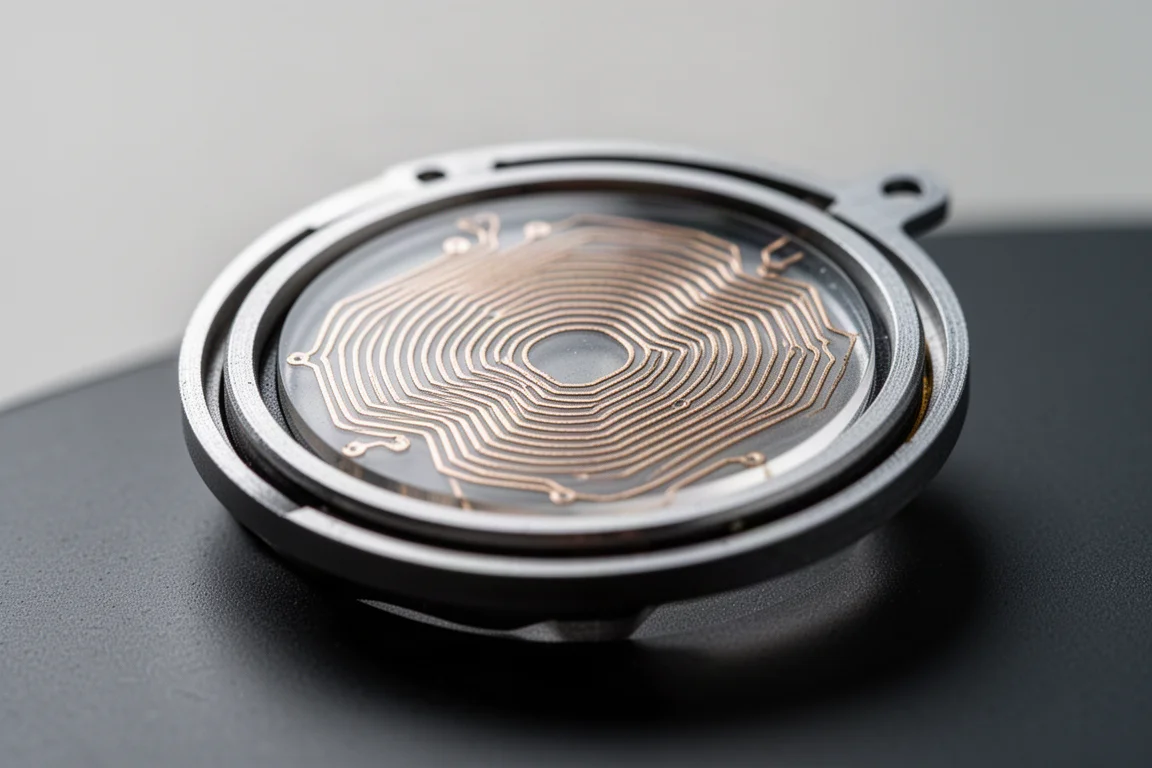
That extra engineering shows up in the listening. The first quality that stands out is space: the presentation is airy, open and spacious, helped along by the open-back design. The headphone is articulate and transparent, and the bass is a genuine highlight. It is linear, textured and well controlled, with dynamics that do not feel like a compromise next to a good dynamic driver.
It is worth being clear about the tuning. This is not a flat, reference-neutral headphone. It has its own voice, a fun and engaging one, and that voice changes noticeably depending on the amplifier behind it.
Amplifier Pairings and Power
Pairing matters more than raw power here. The Meze Poet is easy enough to drive that it does not demand an exotic amplifier, but it still deserves a dedicated desktop unit rather than a phone output. Three routes make sense at different budgets.
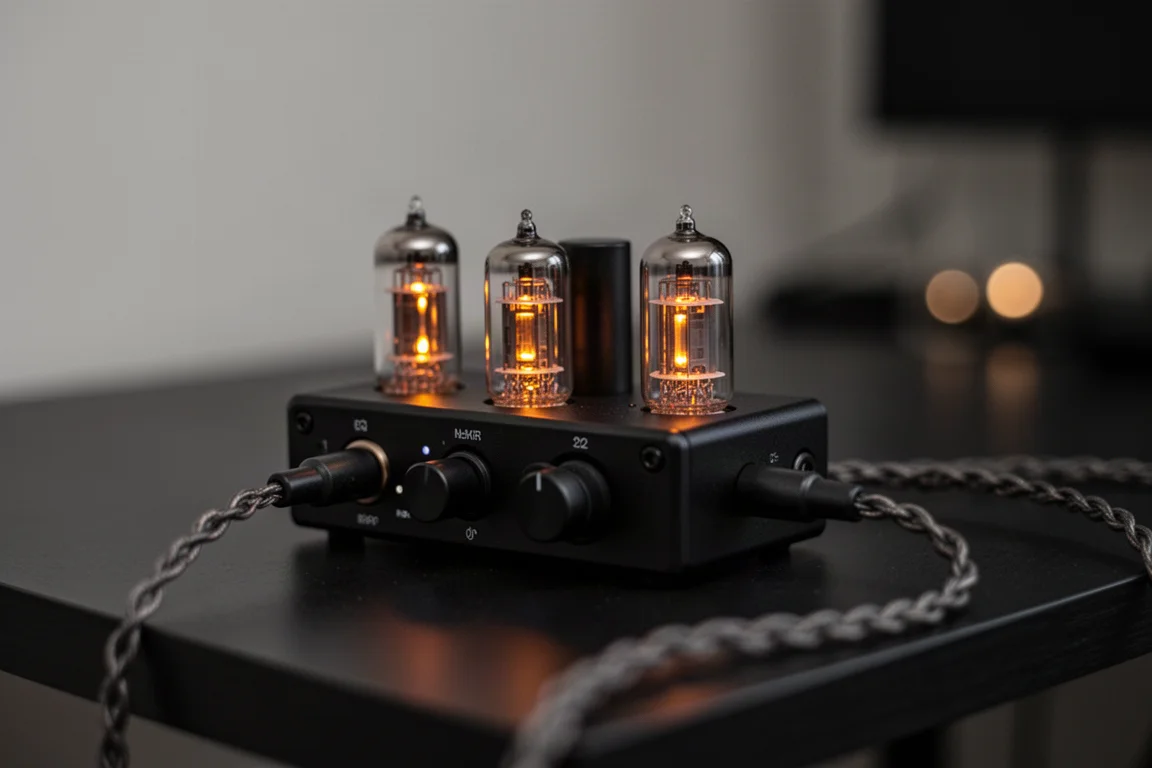
The DNA Alpha Pro is the one-box option. It is a truly balanced design that combines four channels per side to push the noise floor down further, and it runs a near-zero output impedance. It also includes a true analog preout and a wide range of headphone plug options, which becomes useful later if you add powered speakers or different cables.
The Gremlin is the budget entry at about $120. It is a fully balanced, class A tube amplifier, and its one limitation is that it has no DAC inside, so you need a separate DAC to feed it from a streamer or computer. A matching R2R DAC, the Druid, has been released as a companion option. A portable alternative is the Shanling EC0T, a battery-powered portable CD player with a tube stage and an R2R deck inside for around $512, which can also serve as a standalone DAC.
At the top end sits the Burson Conductor Voyager at $3,800, which costs more than the headphone itself. It brings dedicated power supplies, 10 watts of class A power, a built-in DAC and preamp capability. That headroom is overkill for this headphone alone, but it future-proofs a system for practically any other headphone you might add later.
The character of the sound shifts with the amplifier type. With a tube amplifier the presentation becomes less transparent and less clean, but more inviting, warm and musical, closer to a silky, velvety tone. With a solid state amplifier such as the DNA Alpha Pro, you get the transparent, clean, fast version of the headphone. Both are legitimate outcomes; the choice comes down to personal preference.
Build Quality, Materials, and Comfort
Build quality and materials are among the best in this field. The ear pads are plush and comfortable, the weight is reasonable given the materials used, and a hand-braided cable is included, which removes an immediate upgrade cost that many headphones in this class carry.
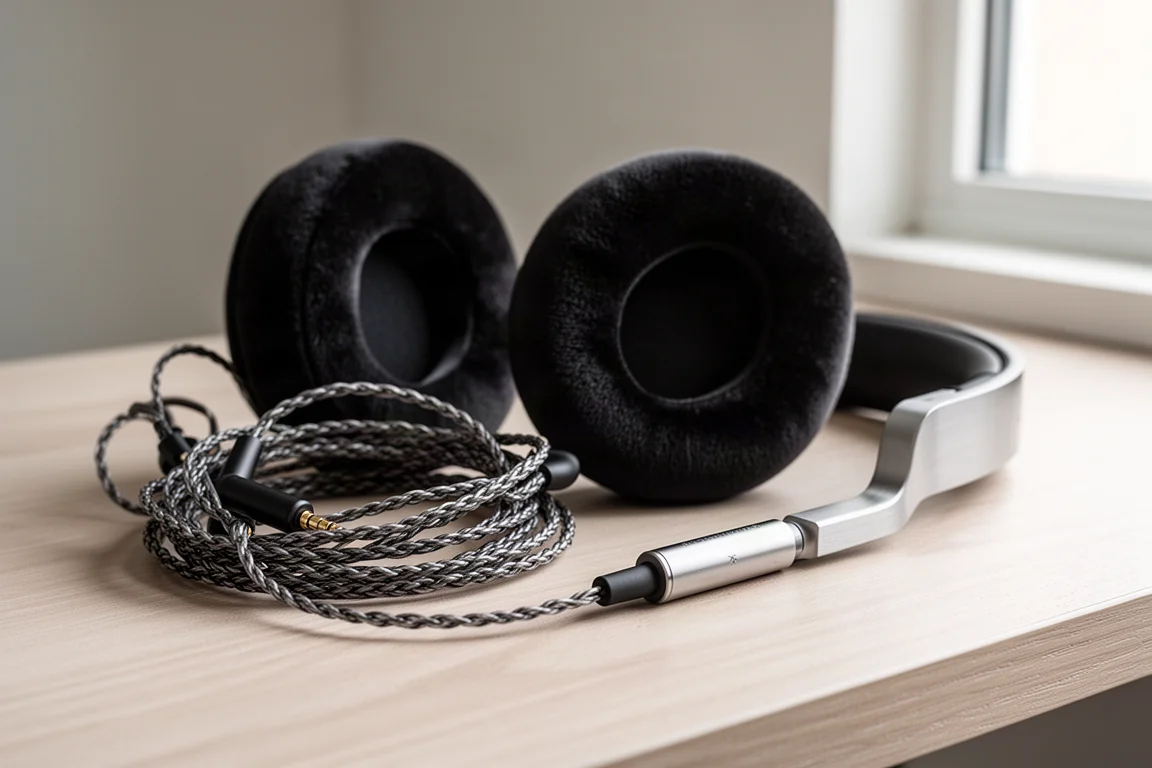
Comfort held up well over long listening sessions on a medium-sized head, and the ear pads stayed comfortable throughout. The mechanism does apply a fair amount of clamping force, though, and the ear cup interior is compact, so head size and ear size are the two variables worth checking before committing.
Things to Consider Before Buying
Two fit considerations stand out. First, the clamping force is on the stronger side, and listeners with larger heads may find it too much for long sessions. Second, the compact ear cups leave limited room inside. Ears that fit fully inside are fine, but larger ears may rest against the upper part of the cup, which can create a hot spot over time. If either situation sounds familiar, try the headphone before buying.
The open-back design is the other thing to plan around. Sound leaks out of the cups and outside noise comes in. There is no noise cancelling here, and it is not a headphone for shared rooms, busy offices or travel. It is a quiet-room headphone.
Finally, the tuning is deliberate rather than neutral, and it responds strongly to amplification. If you want a strictly flat reference sound, this is not the tool for that job. If you want an engaging, spacious presentation that rewards a good amplifier, it is a strong candidate.
Buying Advice
Budget for the whole chain rather than the headphone alone. The Meze Poet is around $2,000, and the amplifier you choose will change how it sounds as much as any cable or accessory.
A sensible starting point is the Gremlin at about $120 paired with a separate DAC, which keeps the total modest while still giving the headphone proper class A tube power. If you would rather have one box and a cleaner, more transparent result, the DNA Alpha Pro covers amplification, preamp duties and connection options in a single unit. The Shanling EC0T adds a portable, battery-powered option with a tube stage and R2R deck for around $512. Step up to the Burson Conductor Voyager at $3,800 only if you want maximum headroom and expect to build a larger headphone collection.
It is also worth keeping the market in perspective. Planar magnetic headphones now start around $150 to $200, so the money here goes toward a custom driver, premium materials, build quality and a specific tuning rather than the driver technology alone.
If head size or ear size is a concern, buy from a seller with a straightforward return window so you can test the fit properly during the first week.
Conclusion
The Meze Poet is a serious headphone with a clear personality. Its custom planar magnetic driver delivers an airy, spacious and transparent presentation with linear, textured bass, and the build quality and materials sit at the top of the field. It is easier to drive than the planar magnetic headphones that gave the format its difficult reputation, which makes it far more approachable than the price alone suggests.
The trade-offs are equally clear. The clamping force and compact ear cups will not suit every head or ear shape, the open-back design rules out noisy or shared environments, and the tuning is characterful rather than flat. Match those realities to your own setup and listening habits, and the Meze Poet is an easy headphone to enjoy for a long time.
Product link
View more details for Meze Poet
This product is mentioned in the review. Check the specifications, options, and compatibility before buying.
View more details for Meze PoetFurther reading
Related Reviews

Headphones
Apos Audio Caspian Review: Warm Bass, Solid Build, and a Detail Trade-Off
The Apos Audio Caspian is an easy-to-drive open-back headphone with standout bass and a warm, relaxed tuning, though mid-range and treble detail trail the competition.
Headphones
Audeze LCD-X vs LCD-XC vs LCD-3: Which High-End Headphone Fits Your Setup
A practical comparison of three Audeze planar magnetic headphones under $2,000, covering the open-back LCD-X, the closed-back LCD-XC, and the wood-ringed LCD-3.
Headphones
Audeze LCD-X vs HiFiMan Edition XS: Two Open-Back Headphones Compared
A practical comparison of the Audeze LCD-X and the HiFiMan Edition XS, covering build quality, comfort, sound signature, and which listener each one suits.