Headphones
Meze Liric Review: Premium Closed-Back Headphones With Open-Back Space
A practical look at the $2,000 Meze Liric, a closed-back planar magnetic headphone built around space, layering, and natural detail.
Introduction
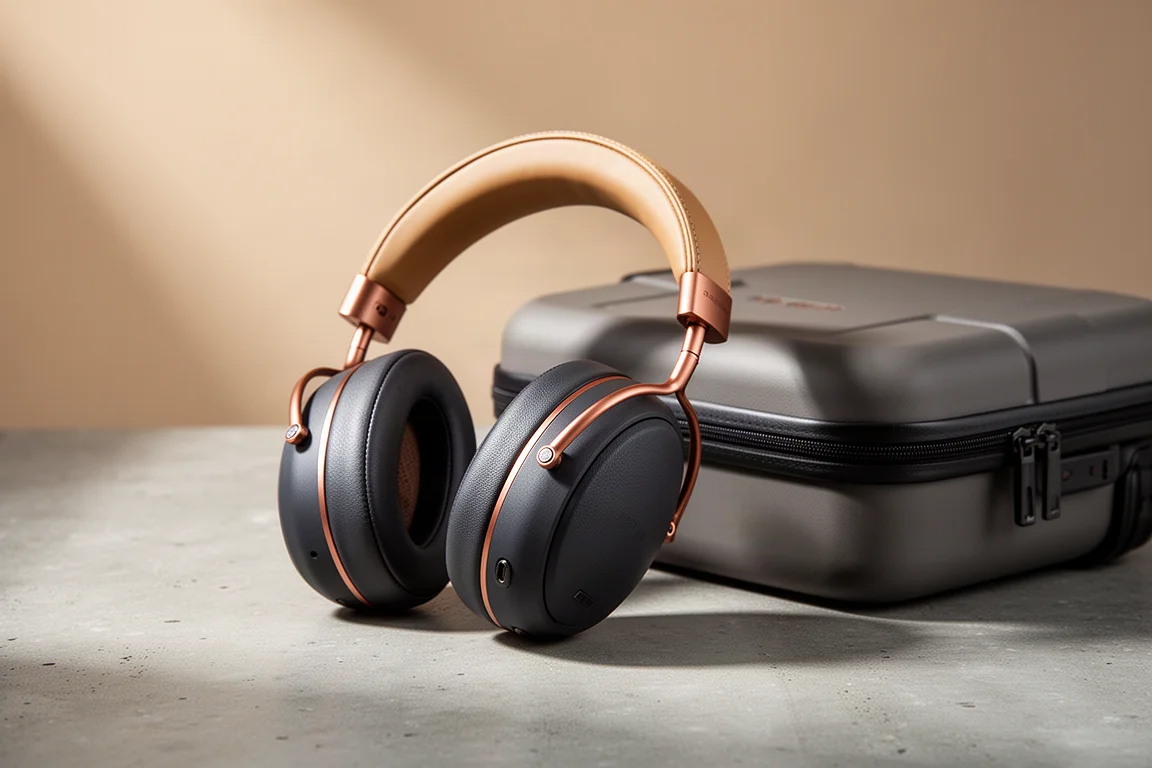
The Meze Liric is a closed-back headphone priced at $2,000, and that figure shapes every part of the conversation around it. Buyers at this level are not shopping for a first pair of headphones. They are looking for a specific combination of tuning, build quality, comfort, and long-term satisfaction that justifies the outlay.
What makes the Liric interesting is the direction Meze chose. It is not simply a closed-back version of the company’s open-back Elite model. The Liric is more linear, with less warmth through the mids and lower registers and a much stronger emphasis on space, placement, and layering.
That tuning decision is the heart of the headphone’s character, and it is also the reason it will not suit every listener. The sections below cover what arrives in the box, how the headphone is built, how it sounds, and where the genuine trade-offs sit.
Who the Meze Liric Is For
This is a headphone for listeners who need closed-back isolation but do not want to give up the sense of space that usually comes with an open-back design. It rewards attention: the more carefully you listen, the more layering and nuance comes through.
It also suits listeners who value a neutral, natural presentation over a warm or romanticized one. Vocals are clear and apparent rather than smoothed over, and the top end is genuinely impressive.
It is a harder sell for anyone who wants prominent bass, for anyone shopping on a limited budget, and for anyone who expects a $2,000 headphone to avoid plastic in its construction.
Design and Build Quality
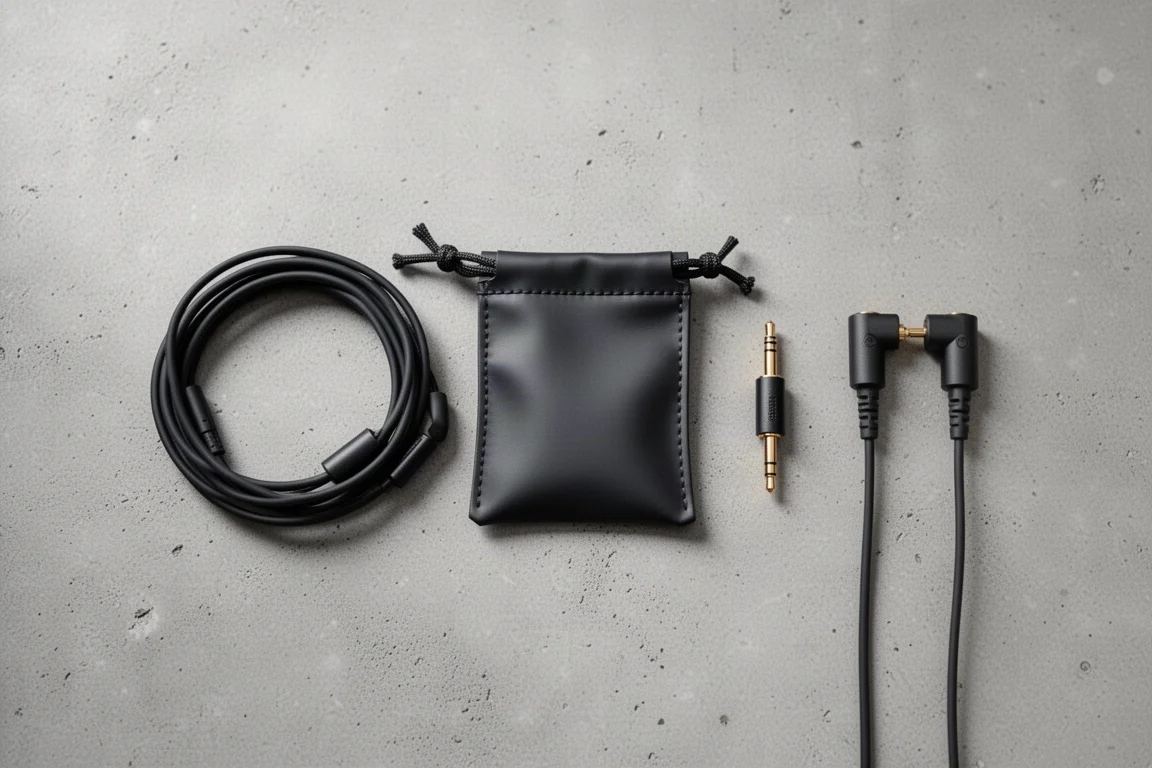
The package is generous. The headphone ships in a hard case with a stripe running down the front, a soft lining, and elastic retainers for the cables. Two cables are included, both terminated in 3.5mm at each ear cup, both with a rubberized coating that resists tangling, one around four feet and the other longer than six feet. A balanced cable is also available for buyers who want one. A small vinyl pouch, a 6.35mm adapter, and a twin-output adapter for connecting two headphones to a single jack round out the accessories.
The headphone itself follows Meze’s usual approach to finish. The outer ear cup surfaces use leather or a leather-like material, the tolerances between parts are tight, and ear cup extension runs on a friction design rather than a detented slider. Some of the structure is plastic, while one component is finished in a copper-toned metal that adds a welcome accent.
The headband carries the model name on top, with generous padding and notches at the end and across the middle. The curve is shaped so it spreads load across a wide area of the head, and the headphone is fairly light overall, so long sessions do not produce hot spots.
The ear pads appear to be vegan leather, and the driver is visible through the opening. Cable changes are straightforward because the connection at the ear cup is a standard 3.5mm socket, which means third-party cables with 3.5mm terminations fit without modification. That is a practical improvement over earlier Meze designs that use a recessed socket and limit aftermarket options.
Visually, the Liric is understated rather than flashy. That restraint will appeal to some buyers and disappoint others who expect a more overtly luxurious look at this price.
Driver Technology and Power Requirements
Meze developed the Liric’s driver in collaboration with Rinaro, the same partnership behind the Elite. The underlying technology has an unusual history: it originated in the former Soviet Union, in Ukraine, and was later refined for acoustic use.
The driver in the Liric is a planar magnetic design split into two sections that reproduce different frequency ranges, similar in concept to a two-way speaker. The lower section handles the mids and highs, while the larger upper section produces the bass. The result behaves less like a single full-range driver and more like a multi-driver system inside a headphone.
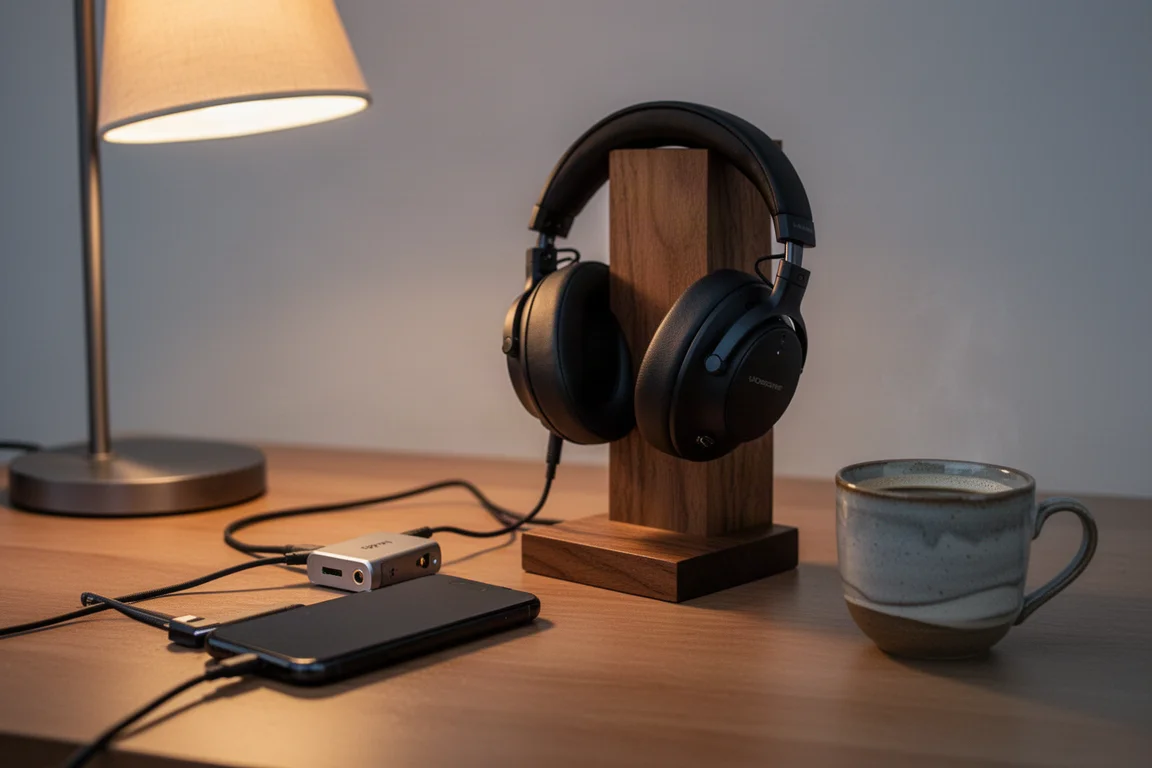
Driving them is not difficult. The Liric is rated at 100 dB sensitivity and 30 ohms, so it works from modest sources. It performs well from a roughly $60 dongle DAC, from an Apple Lightning to 3.5mm adapter, and from a $250 discrete R2R dongle DAC, with the better source delivering an audible improvement in sound quality and scale.
Balanced connections are supported on some sources, including 4.4mm Pentaconn and 2.5mm outputs. Running balanced adds a modest benefit in separation, a slightly larger presentation, and a small gain in imaging, but it is not a requirement. The Liric sounds strong from an inexpensive dongle and scales well as the rest of the chain improves.
How the Meze Liric Sounds
The Liric is more linear than the Elite. Bass and mid-range warmth are reduced, and the mid-range is neutral and clear rather than cold, sitting slightly forward compared to the Elite but still balanced against the rest of the spectrum.
Bass is present, controlled, and detailed, but it is not on display. Listeners who want a thick low end may find it light, while those who prefer neutrality will find it well judged. For context, it has noticeably more bass than the HiFiMan Sundara and considerably less than the Audeze LCD-X. Equalization is possible, though it is not really necessary.
Vocals sound natural and uncolored, without added romance. The top end is excellent: the opening 16th notes on Nina Simone’s “Sinnerman” come across as tactile, clear, and natural, and the cymbal decay on a Weezer cover of “Africa” hangs in the air far longer than expected.
Soundstage and Imaging
This is where the Liric separates itself. The presentation feels closer to an open-back headphone than a closed-back one, and the staging and imaging can outperform some open-back models, even when those comparisons involve far less expensive headphones.

Detail is layered rather than flat. Instruments occupy distinct positions with air around them, and the sound never collapses into a wall of noise. It is a mature, nuanced presentation that becomes more impressive the longer you listen.
Things to Consider Before Buying
The first consideration is price. At $2,000, the Liric sits in a bracket where buyers can assemble an entire system, including headphones and a dedicated DAC and amplifier, for the same money.
The second is construction. The headphone is beautifully assembled with tight tolerances, but plastic features in the build, and some buyers will question that at this price. The understated styling may also feel too restrained for those who want their investment to look as expensive as it costs.
The third is tuning. The Liric favors space, layering, and neutrality over bass weight and warmth. If a rich, bass-forward signature is the priority, this is not the headphone for that goal.
Alternatives and Buying Advice
If the Liric’s price is out of reach, several closed-back alternatives share parts of its character. The Dan Clark Audio AEON RT Closed costs roughly a quarter of the price at around $500. It is very comfortable and pleasant to listen to, but it offers less detail and a smaller stage than the Liric.
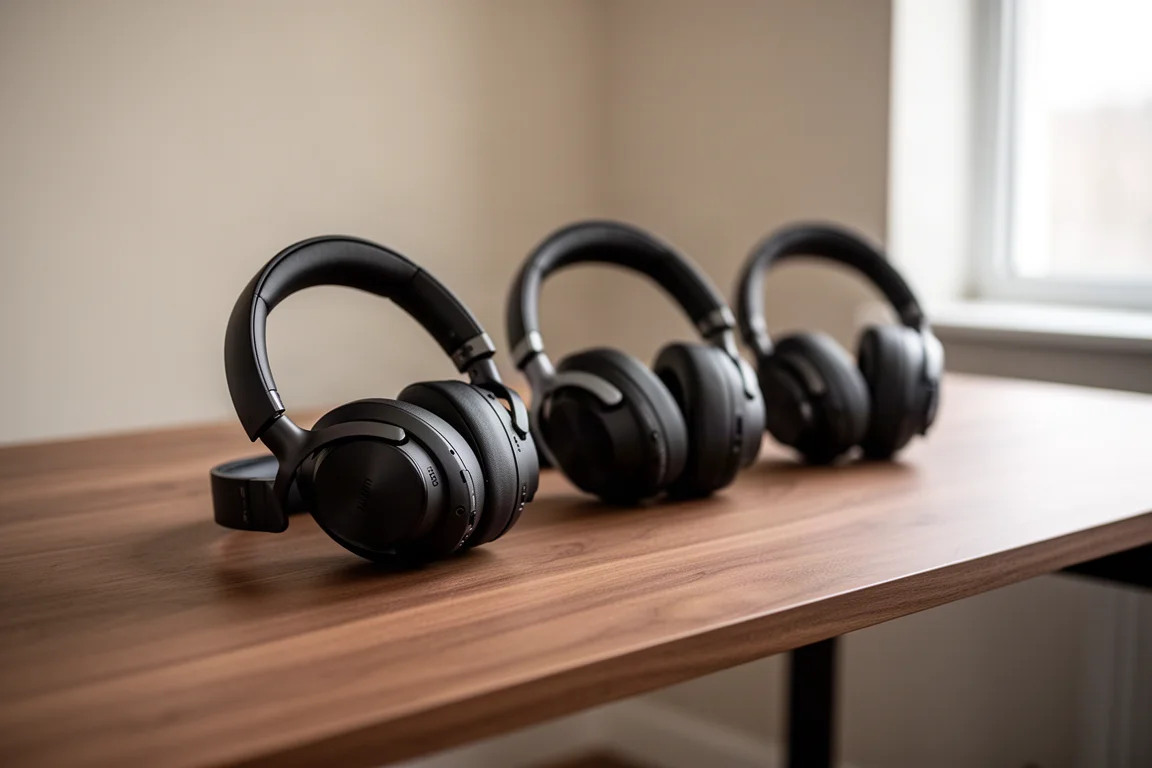
The Drop + Dan Clark Audio AEON Closed X sits in the same price region, around $500, and has been known to drop to $450 or less during sales. It is another reasonable route into a closed-back planar sound.
At the budget end, the AKG K361 costs around $100 and shares a broadly similar tonal character, with staging and imaging that are genuinely good for a closed-back headphone at that price. Listeners who want more bass can look at the AKG K371 instead.
None of these replaces what the Liric does. Its combination of a balanced signature with a large, layered sense of space is the reason it stands apart, and that is what the extra spend buys.
Conclusion
Among closed-back headphones, the Meze Liric delivers a rare combination of balance, space, and layering, backed by comfortable ergonomics and tight build tolerances. It is easy to drive, so it performs well even from modest sources while still rewarding a better chain.
The reservations are real. A $2,000 price is a significant ask, plastic appears in the construction, and the tuning will feel lean to listeners who want warmth and bass weight. For buyers with the budget who need closed-back isolation without losing an open, spacious presentation, the Liric delivers something few closed-back headphones manage.
Product link
View more details for Meze Liric
This product is mentioned in the review. Check the specifications, options, and compatibility before buying.
View more details for Meze LiricFurther reading
Related Reviews
Headphones
Apos Audio Caspian Review: Warm Bass, Solid Build, and a Detail Trade-Off
The Apos Audio Caspian is an easy-to-drive open-back headphone with standout bass and a warm, relaxed tuning, though mid-range and treble detail trail the competition.
Headphones
Audeze LCD-X vs LCD-XC vs LCD-3: Which High-End Headphone Fits Your Setup
A practical comparison of three Audeze planar magnetic headphones under $2,000, covering the open-back LCD-X, the closed-back LCD-XC, and the wood-ringed LCD-3.
Headphones
Audeze LCD-X vs HiFiMan Edition XS: Two Open-Back Headphones Compared
A practical comparison of the Audeze LCD-X and the HiFiMan Edition XS, covering build quality, comfort, sound signature, and which listener each one suits.