Headphone Amplifiers
McIntosh MHA200 Review: An All-Tube Headphone Amplifier With Balanced Outputs
A close look at the McIntosh MHA200, an all-tube headphone amplifier with balanced inputs and outputs, four impedance settings, and a neutral class A triode sound.
Introduction
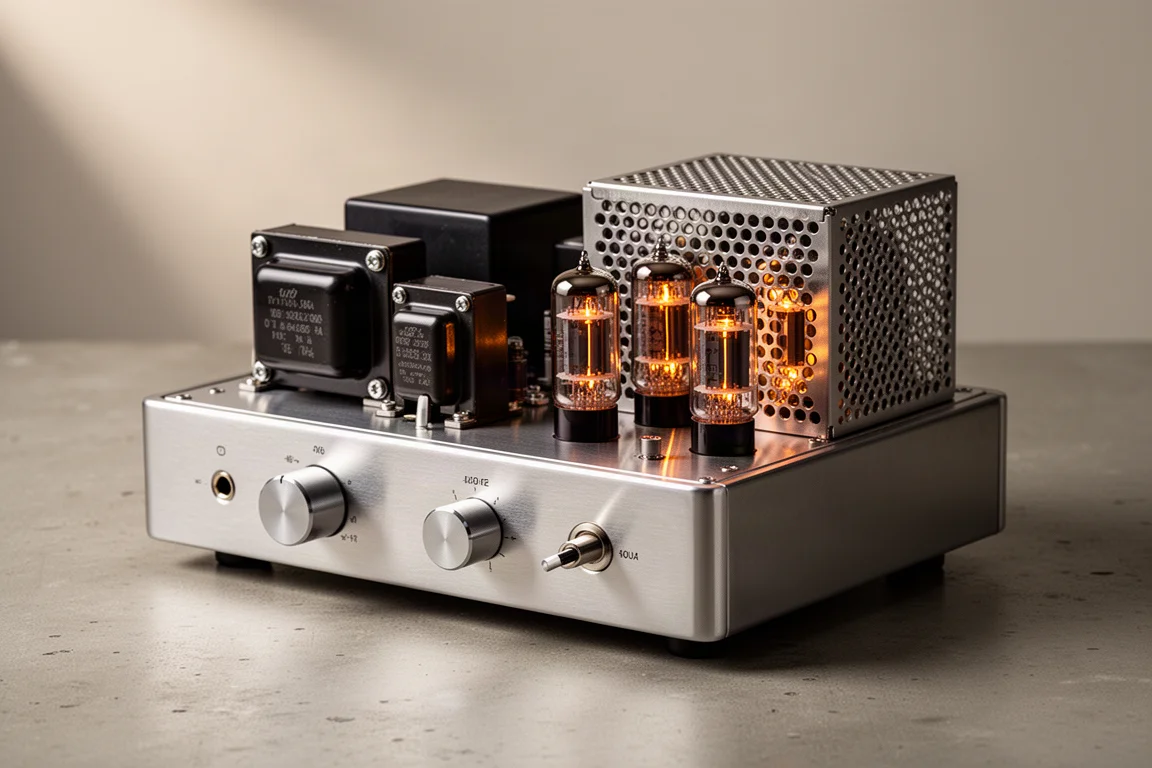
The McIntosh MHA200 is an all-tube headphone amplifier from a company that has spent nearly 75 years building high-performance audio components in the United States. Its chassis speaks the same visual language as the brand’s classic tube amplifiers, including the MC275 and the MC1502, and it adds balanced inputs and balanced outputs to a compact desktop footprint measuring 6 1/8 inches by 9 1/8 inches.
It is a purely analog design with no built-in DAC, so it is meant to sit at the end of a system rather than replace a digital source. That single design decision shapes almost everything about who should buy it and how it should be set up.
Who this product is for
The MHA200 is aimed at listeners who already own serious headphones and want to hear more of what those headphones can actually do. Impedance settings of 32, 100, 250 and 600 ohms cover essentially every headphone model on the market, so both low-impedance dynamics and demanding high-impedance designs can be matched properly.
Because there is no digital stage inside, the amplifier suits listeners who already have a DAC, a turntable, or a preamplifier, integrated amplifier, or receiver to feed it. Anyone whose preamp or integrated amp offers balanced outputs has a particularly good reason to consider it, since balanced XLR inputs are available alongside a standard pair of RCA inputs.

Owners of high-impedance headphones that feel under-driven on ordinary desktop gear are the clearest fit, and so are listeners who want to compare several pairs of headphones with more resolution than a typical headphone output can reveal.
Design and build quality
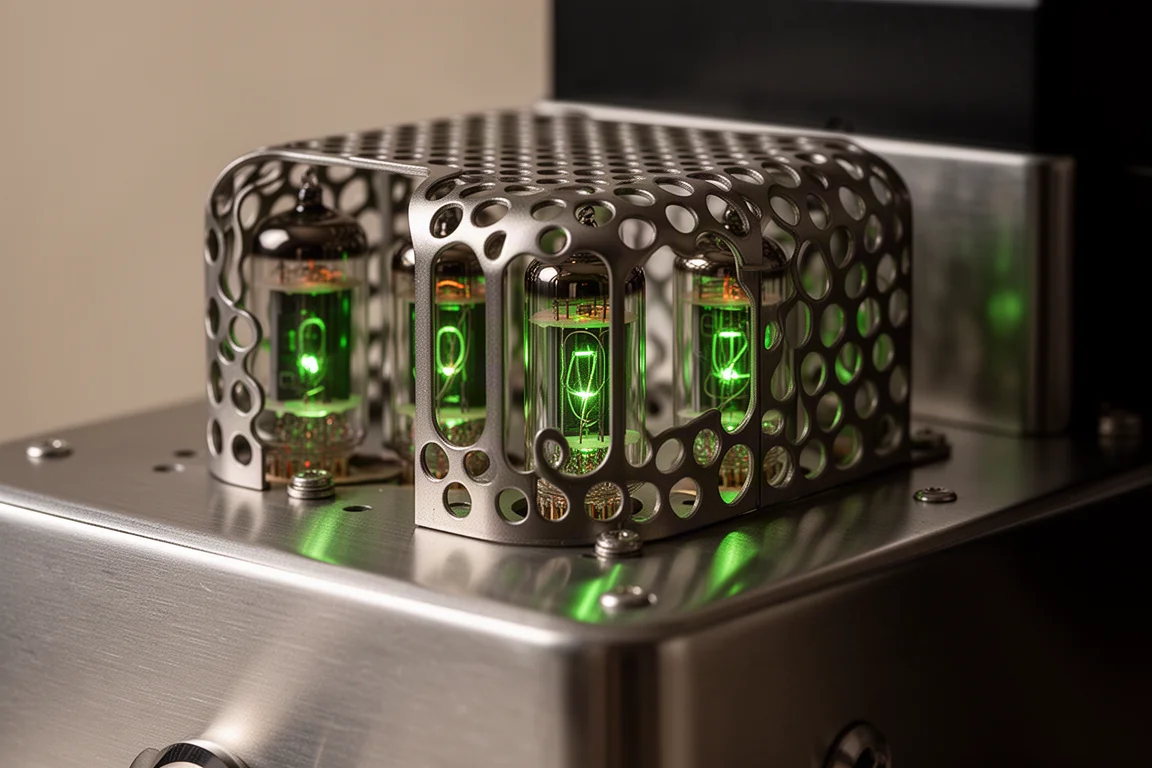
Build quality is the first thing that registers. The chassis is polished stainless steel, finished with the kind of attention to detail that suggests decades of service rather than a few years of ownership. On the left side sit two output transformers and a power transformer, while the right side houses four tubes behind an included cage that keeps curious fingers away. Power the amplifier up and those tubes come alive with a green glow.
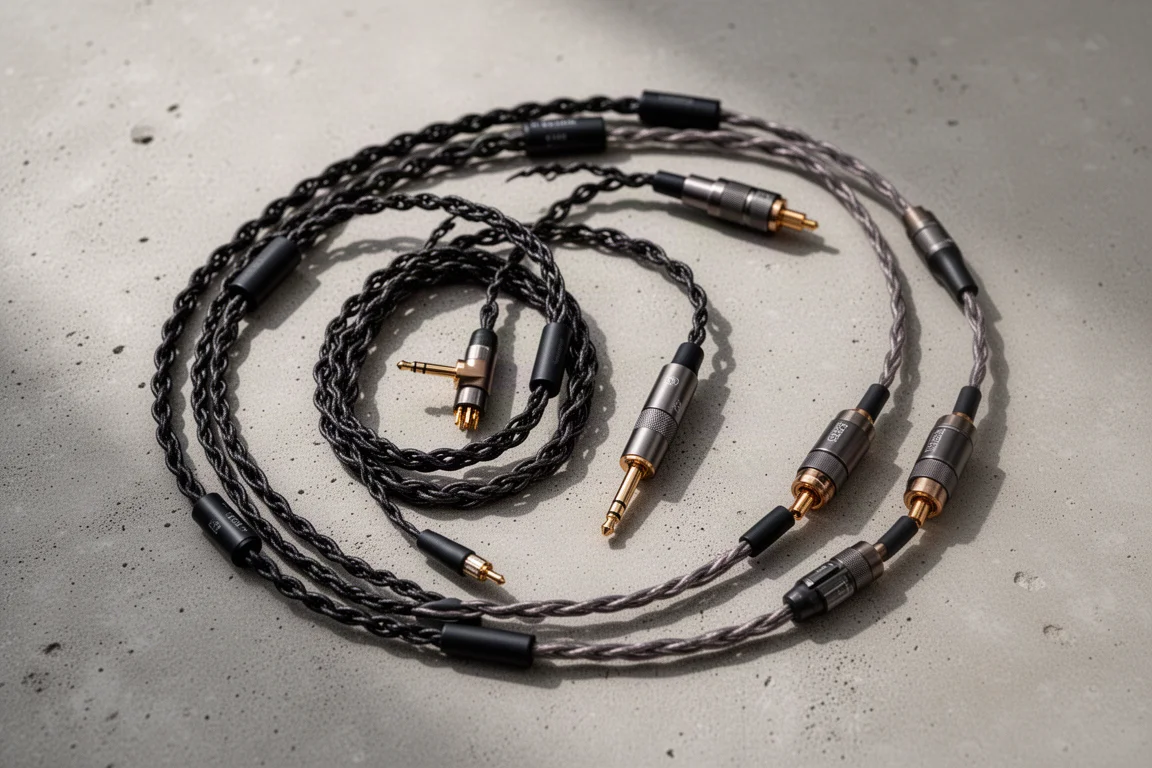
The layout is straightforward. The left knob adjusts impedance to match your headphones, and the right knob handles volume. Connectivity is unusually generous for a headphone amplifier: a pair of three-pin balanced XLR connectors, a four-pin balanced XLR connector, and a 1/4-inch stereo headphone jack. Between them, those outputs cover virtually every headphone connector in common use.
Main strengths
The MHA200 is an all-tube design from input to output. A pair of 12AT7 vacuum tubes amplifies the incoming audio signal, while another pair of 12BH7A tubes provides the power to drive headphones with low distortion. The output stage is a push-pull pure class A triode design with unity-coupled output transformers, a configuration more commonly found in ultra-expensive, lower-power tube power amplifiers than in headphone gear.
The power and distortion rating is the headline specification. The amplifier is rated to deliver 500 mW at 0.5% distortion at every impedance level. That is enough power for any headphone well beyond extremely high listening levels, and it is rare to see a specification held at full power across all impedance settings.
In listening, the class A triode design produced a sound that came across as extremely neutral rather than warm or lush. Familiar tracks revealed new layers in the mix, and subtle emotional shifts in instruments and voices felt clearer and more present than usual, including passages that previously sounded strained.
Sound performance
The amplifier was run with a McIntosh C22 preamplifier and both vinyl and streaming sources, paired with the Focal Clear MG, Focal Stellia and Audeze LCD-X headphones. Compared with the very good headphone circuit built into the C22, the MHA200 was a clear step beyond rather than a marginal improvement.
Going fully balanced mattered as well. With the Audeze LCD-X, which was the only pair on hand with an optional balanced cable, switching from the quarter-inch connection to the four-pin XLR balanced output lifted another layer away: the sound became noticeably more effortless and at ease, with detail that was barely audible before. Balanced inputs produced a similar improvement, though a smaller one than balanced headphone cables.
A side effect of that resolution is how clearly the differences between headphones emerged. The three pairs sounded more distinct from one another than they had on other amplifiers, which makes the MHA200 useful for anyone comparing headphones as well as enjoying them.
Things to consider before buying
There is no built-in DAC, so a source is mandatory. If you want to switch between several sources, the MHA200 will not do it for you, and a preamplifier, integrated amplifier, or receiver is the practical way to handle that switching before feeding its outputs into the amplifier’s inputs.
The volume control takes some getting used to. It has a center detent that provides a reference point when a preamp or integrated amp with a variable output is connected. Volume stays low until the knob approaches roughly the 12 o’clock position, and fine-tuning at low levels can be fiddly with such a small control. A useful technique is to pinch the knob with a finger or thumb resting on the center, which makes small adjustments much easier.
Price is the other consideration. This is not an inexpensive amplifier, although it is built to last for decades, and there are considerably more expensive options in the world of high-performance headphone amplification.
Buying advice
Match the impedance setting to the headphones you actually use, and take advantage of balanced connections wherever your headphones and source allow it, since that is where the amplifier gives the most back. Feed it from a source you trust, ideally one with balanced outputs.

It is also worth being honest about the rest of your system. If your headphones are modest, or if your source is a laptop headphone jack, the MHA200 will have less to work with and the value case becomes harder to make. If you own a serious pair of headphones and a source that can do them justice, the amplifier is a long-term purchase rather than a short-term upgrade, and the neutral, revealing character means it will keep showing you more as the rest of your system improves.
Conclusion
The McIntosh MHA200 is the best headphone amplifier of its kind for listeners who want a pure tube signal path, flexible impedance matching, and balanced connections in a compact chassis. Its 500 mW at 0.5% distortion across every impedance setting, its push-pull class A triode output stage, and its neutral rather than syrupy voicing make it a compelling match for high-end headphones.
The trade-offs are clear and manageable: no built-in DAC, no source switching, and a volume control that rewards a little practice. For the right system, those are small concessions against an amplifier designed to serve for decades.
Product link
View more details for McIntosh MHA200
This product is mentioned in the review. Check the specifications, options, and compatibility before buying.
View more details for McIntosh MHA200Further reading
Related Reviews
Headphone Amplifiers
Creative Labs Sound Blaster X5 Review: A Flexible USB DAC and Headphone Amp
The Sound Blaster X5 pairs a fully balanced dual-DAC headphone amp with DSP, mixing, recording, and console audio in one compact USB-powered enclosure.
Headphone Amplifiers
Fosi Audio K5 Review: A Tiny Budget DAC Amp for Travel, Gaming, and Hotel Listening
A compact USB-C DAC amp with tone controls, optical and coaxial inputs, and a clean mid-forward sound that suits efficient headphones and IEMs.
Headphone Amplifiers
Fosi Audio SK01 Review: A Tiny Headphone Amp That Doubles as a Three-Band EQ
A compact $72 audio box with treble, mid-range, and bass controls, a loudness button, and a capable headphone stage. Here is where it earns its place.