Camping Shelters
MC2 Mount Bivvy Tent Review: Great Build, Unusable Interior
A close look at the MC2 Mount bivvy tent, from its excellent materials and fly-first pitch to an interior most adults cannot lie down in, plus how the Snugpak Ionosphere compares.
Introduction
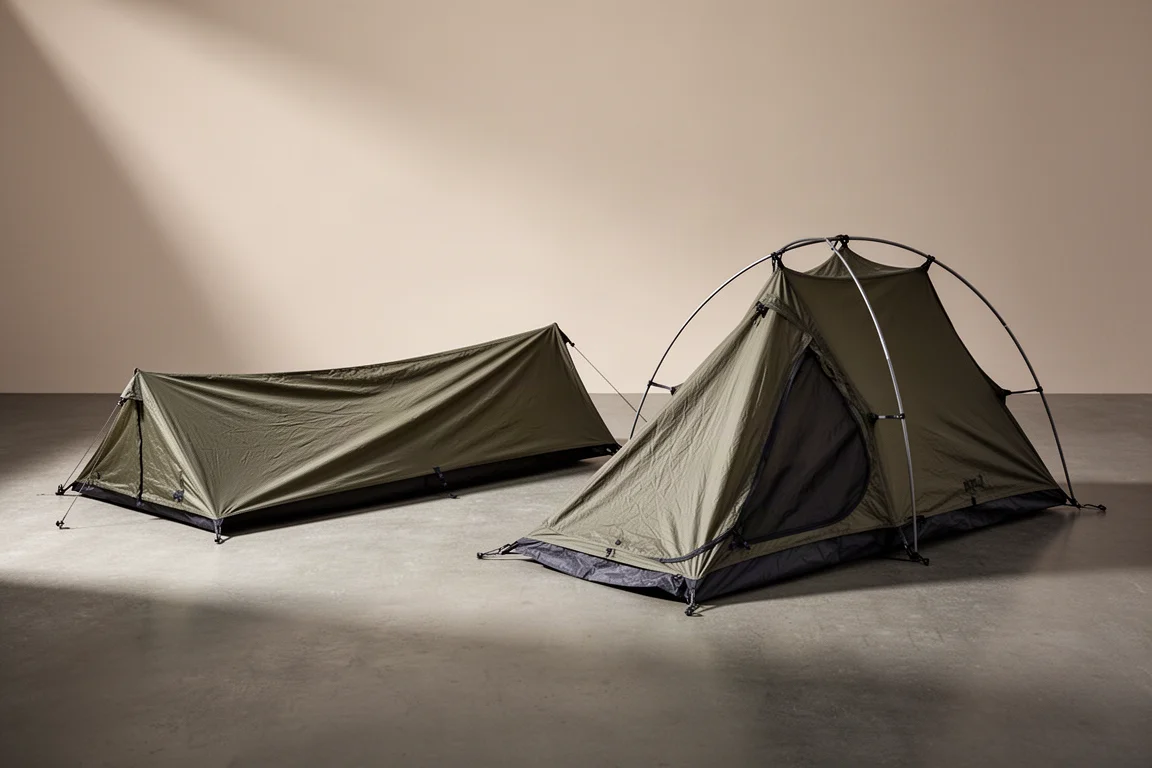
MC2 Mount has built a following on a simple formula: tents made with high-quality materials and unusual designs, sold at prices that undercut much of the market. The MC2 Mount Bivvy Tent looked like another example of that formula, a lightweight one-person shelter with a fly-first pitch, a very compact packed size and a price of around $100.
Then the shelter went out on an overnight trip, and the formula broke down. The problem is not the materials or the stitching. It is that an average adult cannot lie down inside it.
This review covers what the MC2 Mount Bivvy Tent does well, where its usable space and pitching behaviour fall apart, and how it compares with the Snugpak Ionosphere, a shelter whose two-pole design shows what a bivvy interior can look like when it is shaped properly.
How We Assess a Bivvy Tent
A bivvy shelter should be judged on how it behaves during a real night out, not on the numbers printed on a product page. The measurements that matter are the usable ones: the length you can actually lie in, the height above your face, and the width across your shoulders and feet. External dimensions describe the fabric, not the space.
Pitch quality comes next. A shelter should tension cleanly, hold its shape when the fabric wets out, and stay stable in wind without constant re-adjustment. Ventilation matters just as much, because a low shelter that seals against the ground traps moisture, and condensation inside a bivvy is the difference between a dry night and a wet one.
Finally, there is fit. A bivvy works when you can lie flat on your sleeping pad with your head and feet clear of the walls, and roll over without fighting the fabric.
MC2 Mount Bivvy Tent: Materials and Build Quality
The materials are genuinely good for the money. The fly is a 20D silnylon with a 3000 mm hydrostatic head rating, and the floor is a 210D Oxford polyester, also rated at 3000 mm. The poles and stakes are aluminium, which helps hold the total weight at 2.5 lb, and the packed size is a genuinely compact 15 in by 5.5 in.
Construction is where the shelter impresses most. There are no loose threads, the zippers run smoothly, and the fabric is reinforced in the places that take the most stress. Set against a $100 price, the build quality is excellent.
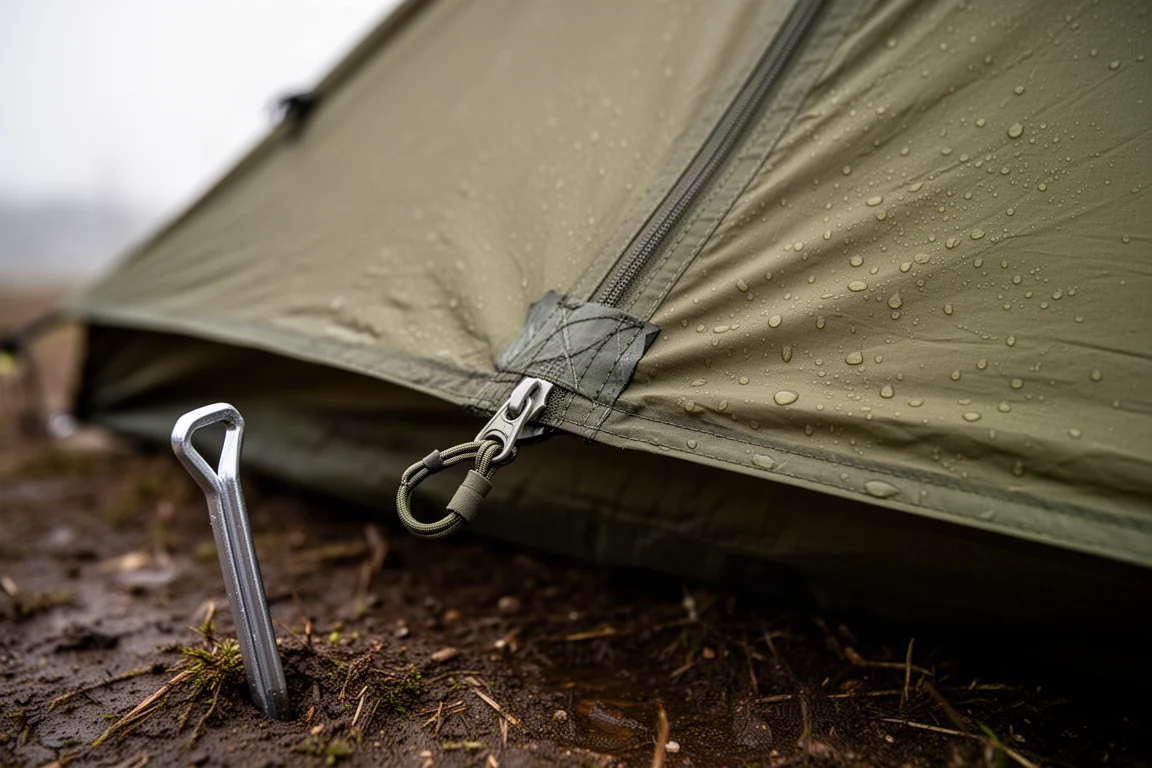
The fly-first pitch is the other real strength. The inner is pre-attached to the fly, so the shelter can be erected with the fly outermost and the sleeping area stays dry in rain. For a bivvy at this price, that is a thoughtful piece of design.
MC2 Mount Bivvy Tent: Usable Space and Pitching Problems
The interior is where the shelter stops working. Usable length measures roughly 63 in, or 5 ft 3 in. Maximum interior height is about 27 in and maximum width about 30 in, and every surface angles inward from those points. The head end drops away sharply and the foot end narrows almost to a point.
That geometry has consequences. A sleeping pad jams at the foot of the shelter, and once you are inside, your toes have to curl to fit while the mesh rests against your head. Anyone taller than roughly 5 ft 3 in will not fit, and even at that height the shelter is a squeeze.
The dimensions published on the product listing describe the outside of the shelter rather than the space you get. The listing quotes 98.4 in of length, 49.2 in of width and a maximum height of 31 in. Measured usable space inside the inner is far smaller, and that gap is the single most important thing to understand before buying.
Pitching is nearly as problematic. Because the fly and the inner are joined, every stakeout point carries an extra layer of adjustment, which makes setup fiddly and makes a taut pitch very difficult to achieve. The silnylon fly stretches and sags once it gets wet, and the shelter resists correction.
Ventilation follows the same pattern. The fly reaches almost to the ground, which blocks the airflow that normally passes underneath it, and the two vents do very little. With the door closed, condensation collects on the inside of the fly. Because the fly lies directly on the inner, that moisture ends up against the sleeping area, and in wind it drips onto whoever is inside. Waterproofing was never tested, because the shelter is not usable for most people in the first place.
Buyer feedback left on the product listing repeats the same themes: an extremely small interior, no room for feet, and condensation heavy enough to feel like rain.
Snugpak Ionosphere: The Design Benchmark at Today’s Price
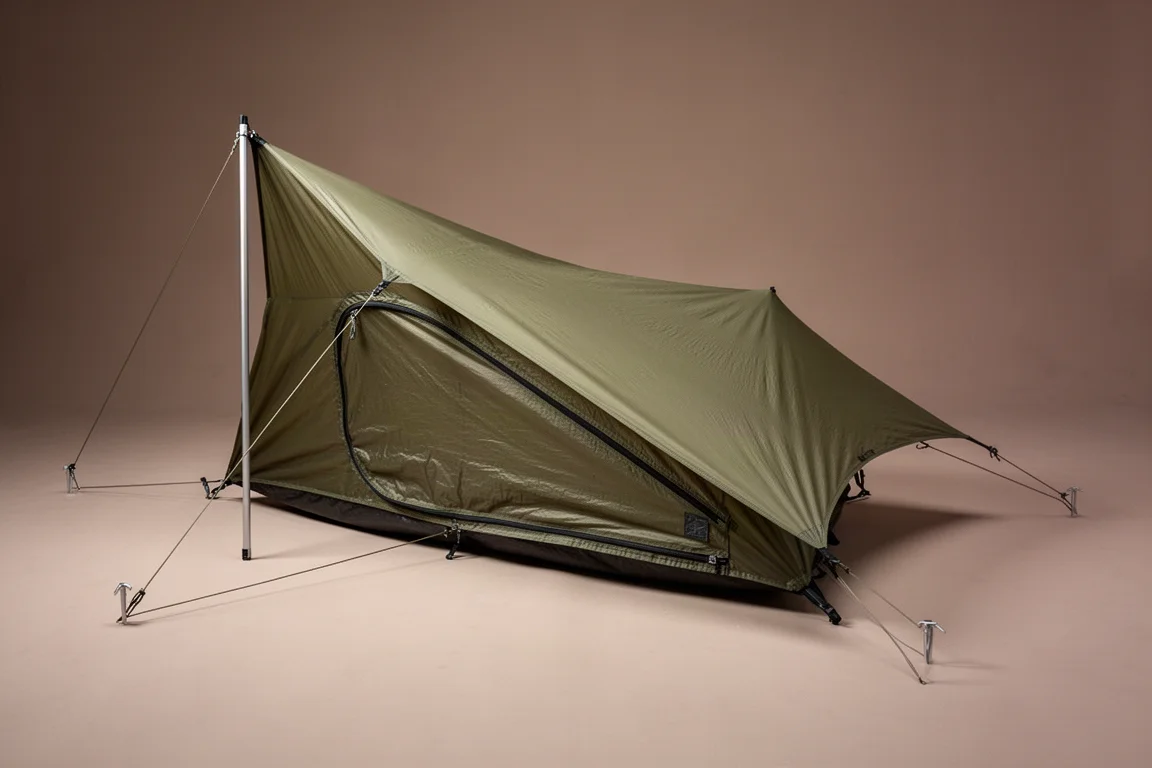
The Snugpak Ionosphere is the comparison that makes the MC2 Mount’s shortcomings obvious. It is the same category of one-person bivvy shelter, but its structure differs in a way that matters: two poles, a larger one at the head and a smaller one at the foot, spread the body of the shelter outward and open up usable interior space.
That layout shows how much room a bivvy can offer without becoming a full tent. It is the kind of interior the MC2 Mount needed.
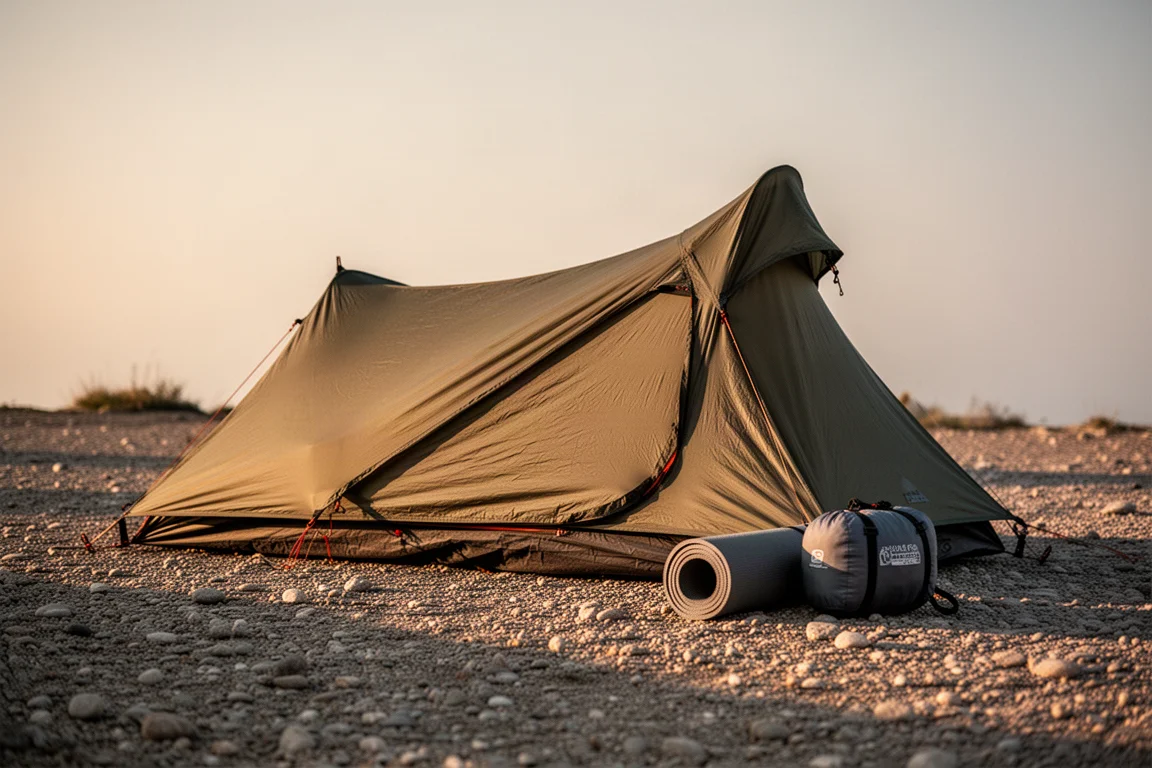
The difficulty with the Ionosphere is price. It was once available for around $100, and it now sells for about $300 while using an inexpensive polyester fabric. At that figure the value argument no longer holds, and the shelter is hard to recommend even though its design is sound.
Condensation, Ventilation, and Real-World Comfort
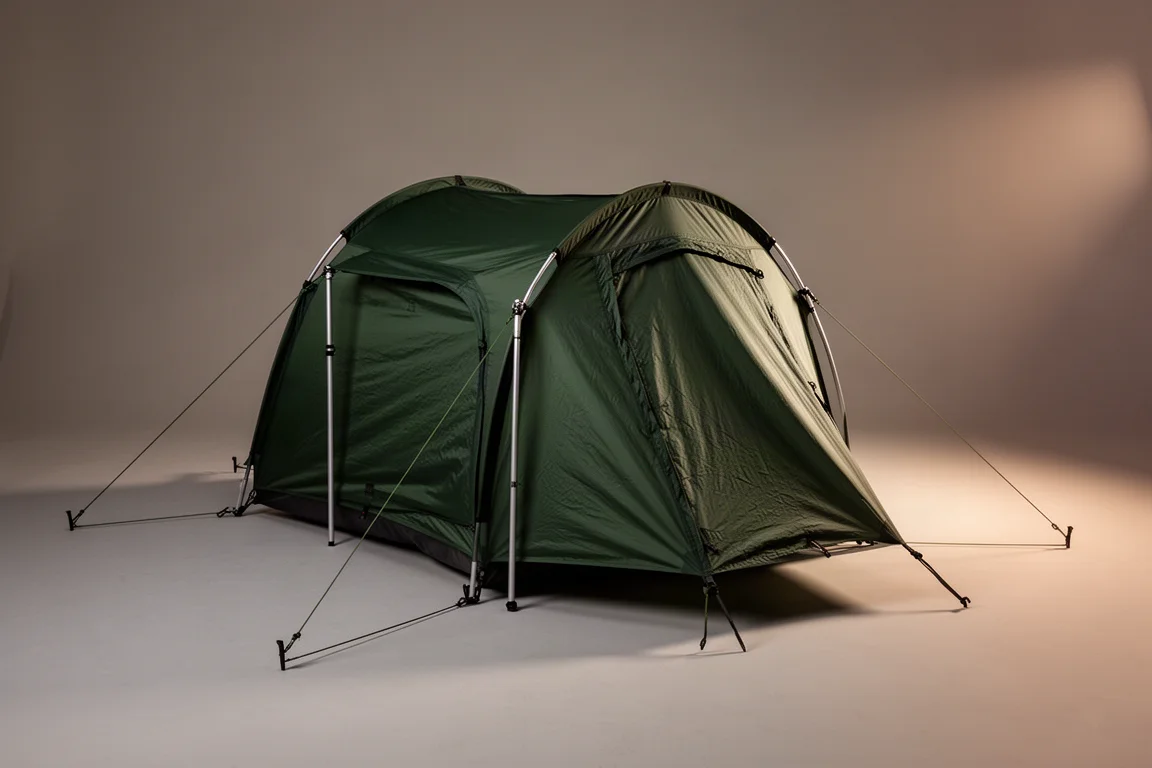
Condensation is the quiet failure mode of low shelters. Airflow in a bivvy depends on air moving under the fly and through the inner, and a fly that reaches the ground shuts that path down. Once moisture forms on the fly and the fly touches the inner, the inside of the shelter becomes damp, no matter how good the waterproof ratings look on paper.
Mesh that presses against your head or feet makes this worse. It transfers moisture straight onto a sleeping bag, and it leaves no room to move. A bivvy should feel close, but it should not compress you.
Buying Advice
Check usable interior dimensions before anything else. Add your own height to the thickness of your sleeping pad, then compare that number with the real interior length rather than the external length. If a listing only publishes outside measurements, treat the interior as unknown.
Test pitch a shelter at home before relying on it. A fly-first design is genuinely useful in rain, but only if the shelter tensions properly and stays taut once the fabric wets out.
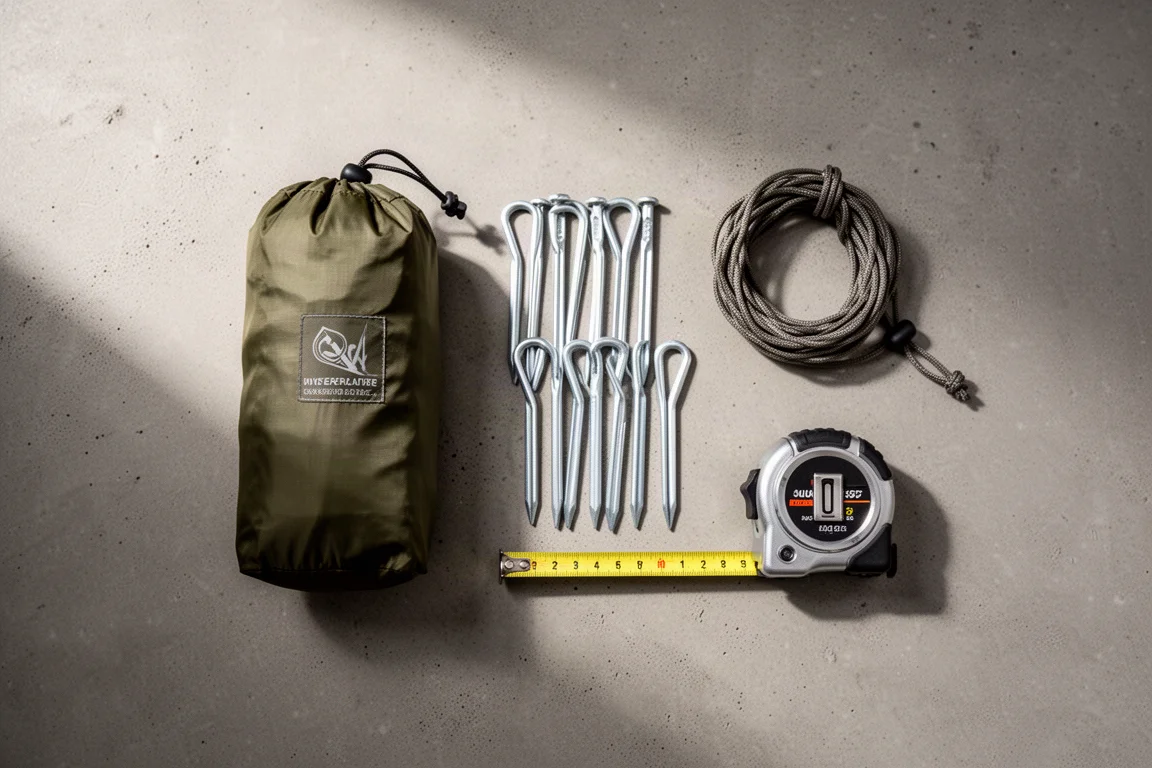
If you are well under 5 ft 3 in and want the lightest, most compact option at a low price, the MC2 Mount Bivvy Tent’s materials, 2.5 lb weight and 15 in by 5.5 in packed size are real strengths. For most adults, though, the interior makes the shelter unusable, and the $100 is better spent elsewhere. The Snugpak Ionosphere demonstrates the right approach to interior volume, but at around $300 in an inexpensive polyester it no longer represents good value.
Conclusion
The MC2 Mount Bivvy Tent is a well-made shelter built around a design that does not work. Excellent materials, clean construction, smooth zippers and a genuinely useful fly-first pitch cannot compensate for an interior most adults cannot lie down in, published dimensions that describe the outside of the shelter rather than the space inside, and condensation that has nowhere to go.
If you are shopping for a one-person bivvy, let fit lead the decision. Measure the usable space, confirm the shelter pitches taut, and check that air can move underneath the fly. On those three points, the MC2 Mount Bivvy Tent falls short, and the Snugpak Ionosphere is a better design at a price that is difficult to justify.
Further reading
Related Reviews
Camping Shelters
Alps Mountaineering Stealth 1 Bivy Review: A Waterproof Claim That Does Not Hold Up
The Alps Mountaineering Stealth 1 Bivy carries a 2,000 mm hydrostatic head rating and a waterproof claim, but sustained rain exposure and build quality concerns make it difficult to recommend.
Camping Shelters
AquaQuest Safari Hybrid 20 ft x 13 ft Tarp Review: Two Years Under a Very Large Roof
A long-term look at the AquaQuest Safari Hybrid 20 x 13 tarp, covering build quality, weather protection, setup realities, and who should buy one.
Camping Shelters
Backcountry Light Mesa 3 Hot Tent and Floor SL Tarp Review
A practical look at the Backcountry Light Mesa 3 four-season hot tent and its optional Floor SL Tarp, covering materials, stove jack design, packed weight, pricing, and the trade-offs to weigh before buying.