Camping Shelters
MC2 Mount Bivvie Tent vs Snugpak Ionosphere: Which One-Person Shelter Makes Sense?
A practical comparison of two one-person bivy shelters: one built beautifully but far too small inside, and one with a roomier layout at a much higher price.
Introduction
Bivy shelters are bought for one reason: to keep a single person dry with as little weight and bulk as possible. That makes interior space the one thing a bivy cannot compromise on, because there is no second occupant to absorb the squeeze and no vestibule to retreat into.
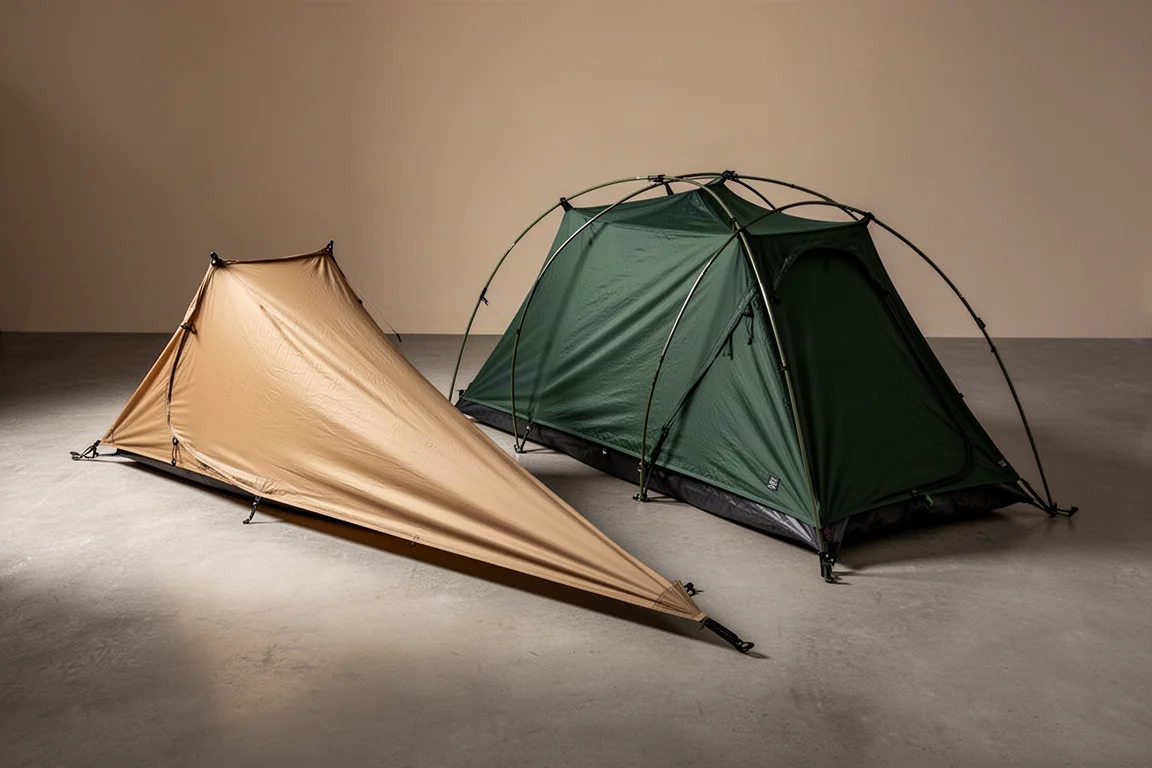
The MC2 Mount bivvie tent and the Snugpak Ionosphere approach the same brief very differently. One is inexpensive, carefully built, and shaped in a way that leaves almost no usable room. The other has a genuinely workable interior but now sits at a price that is hard to justify. This comparison walks through what each shelter actually delivers so you can decide where your money is best spent.
What Matters in a One-Person Bivy Shelter
Three things decide whether a bivy shelter works in practice: usable interior length and height, how the fly and inner interact when the weather turns, and whether the shelter can be pitched taut and adjusted without a fight.
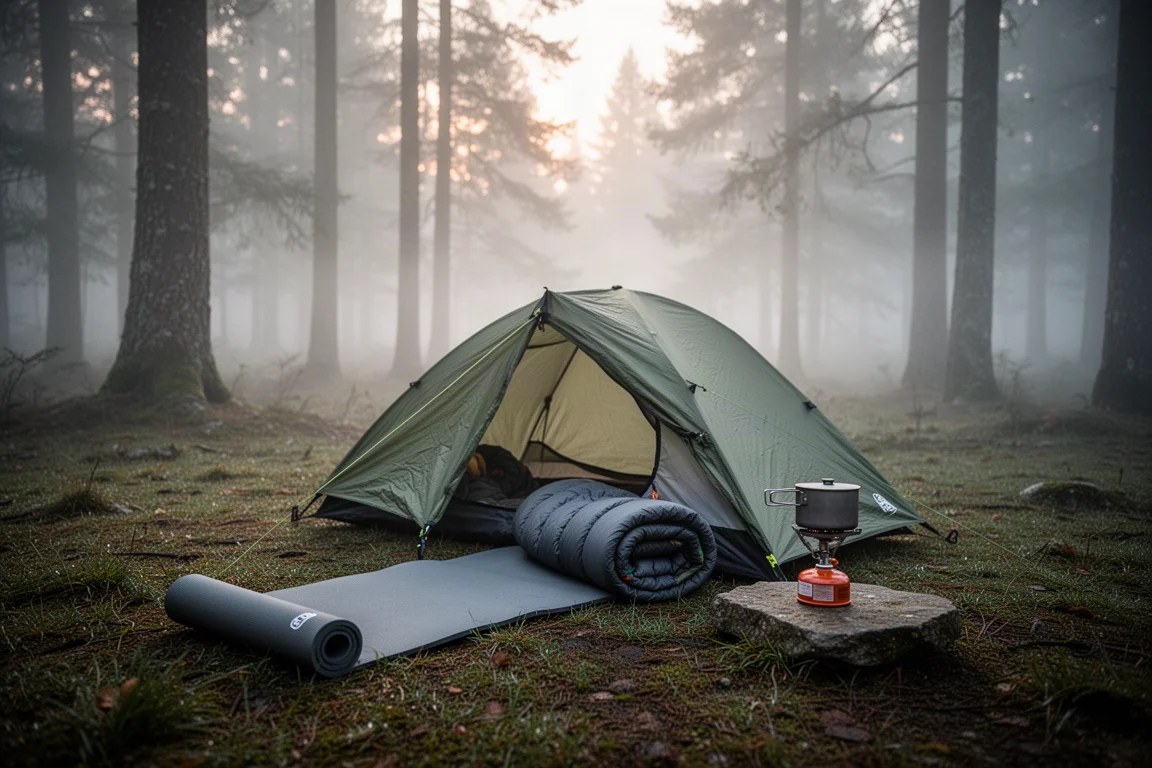
Listed dimensions are the least reliable guide of all. Exterior measurements describe the footprint of the fly, not the space your body occupies once a sleeping pad is inside. A shelter can look long on paper and still compress your feet and head the moment you lie down. For that reason, treat any published length figure as a starting point rather than a promise.
Ventilation matters just as much. Air moving under the fly and through the inner is what keeps condensation from building overnight. When a fly sits close to the ground, that airflow is reduced, moisture collects on the inside of the fly, and from there it ends up on you.
MC2 Mount Bivvie Tent: Build Quality and First Impressions
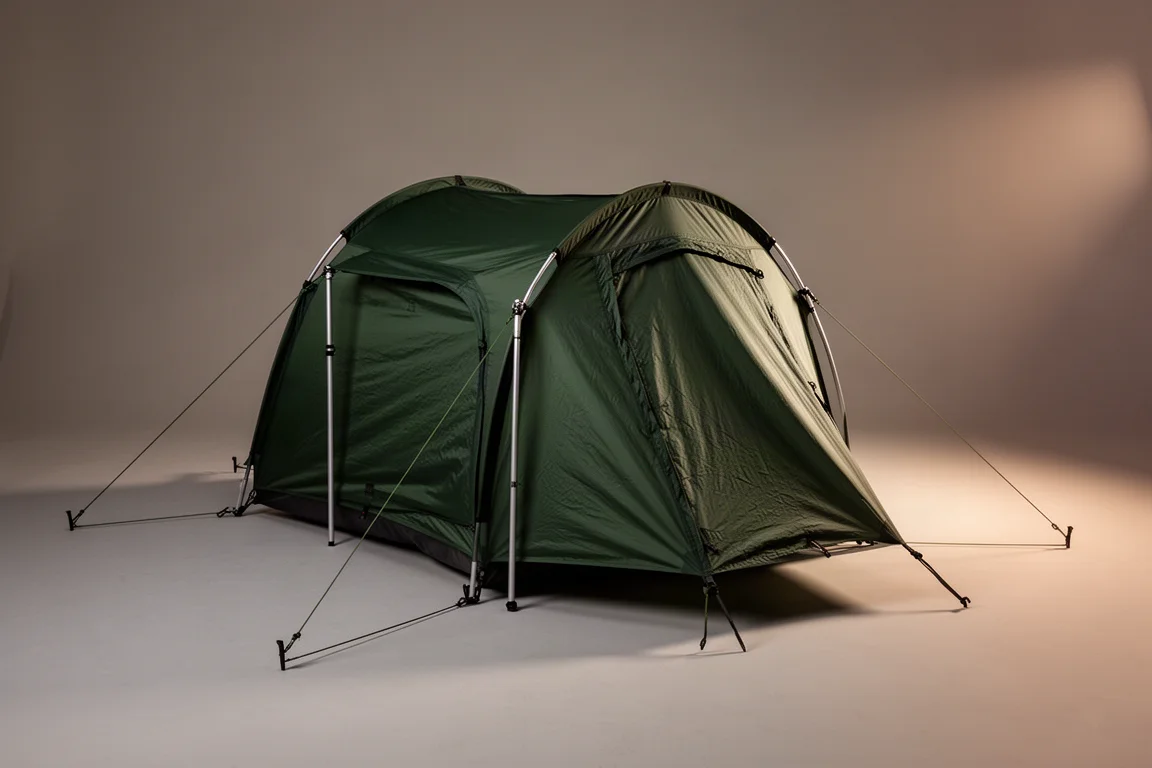
MC2 Mount has built a reputation on tents that use good materials at low prices, often with unusual designs. The bivvie tent follows that pattern on paper: a fly-first pitch that lets the inner stay dry while the shelter goes up in rain, a single door, and a pre-attached inner that saves a step in bad weather.
The build itself is genuinely strong. There are no loose threads, the zippers run smoothly, the fabrics feel substantial, and the shelter is reinforced in the places that take stress. At 2.5 lb it is light for what it is, and the packed size of 15 in by 5.5 in is easy to live with in a pack. The fly is a 20D sil nylon with a 3,000 mm hydrostatic head rating, the floor is 210D Oxford polyester with the same 3,000 mm rating, and the frame and stakes are aluminium.
Those are the numbers of a shelter that should work. The problem is the shape.
Inside the MC2 Mount Bivvie Tent: Space, Pitch, and Ventilation
Climb in and the interior tells a different story. Usable length is about 63 in, or 5 ft 3 in, with a maximum interior height of roughly 27 in and a maximum width of about 30 in. Every one of those surfaces angles inward. The foot end slopes down almost to a point and the head end drops away sharply, so the widest part of the shelter is nowhere near where your body actually sits.
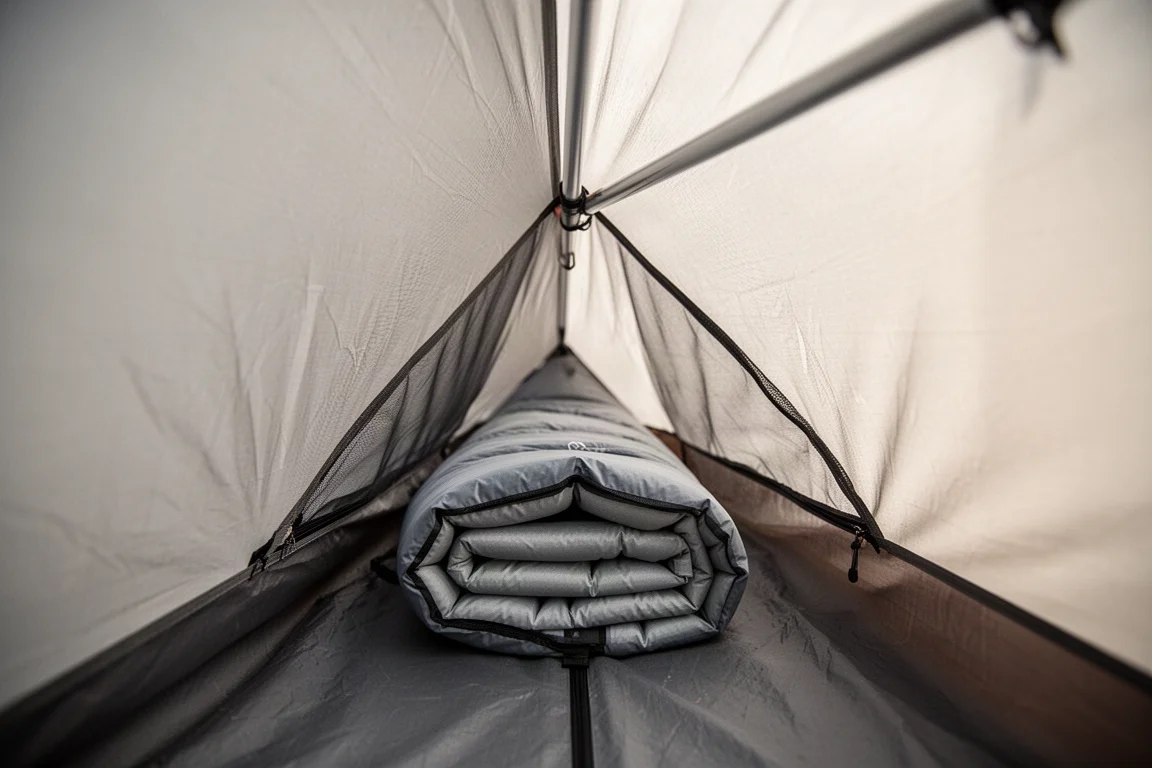
The practical result is compression rather than shelter. A sleeping pad catches in the narrow foot box. Feet have to be curled to fit, and at the head end the mesh rests against your face. Anyone taller than about 5 ft 3 in is likely to be wedged rather than accommodated, and even at that height the fit is tight enough to make a full night of sleep unlikely.
Pitching is its own struggle. The fly and inner are connected, which makes the fly-first setup possible but also makes every adjustment harder. Each stakeout point carries an additional layer of adjustment, and the unusual cut at the foot, where the body narrows to a point and the sides flare outward, resists a taut pitch. The centre pole at the foot adds little space and pulls the fly onto the inner.
That last point drives the ventilation problems. The fly reaches almost to the ground, cutting the airflow that would normally pass underneath it, and the two small vents do very little to compensate. With the fly lying directly on the inner, condensation that forms on the fly is transferred straight into the sleeping area. In wet weather the sil nylon fly also stretches and sags, and because the fly and inner are joined, correcting that sag is difficult once the shelter is standing.
Snugpak Ionosphere: A Better Shape at a Higher Price
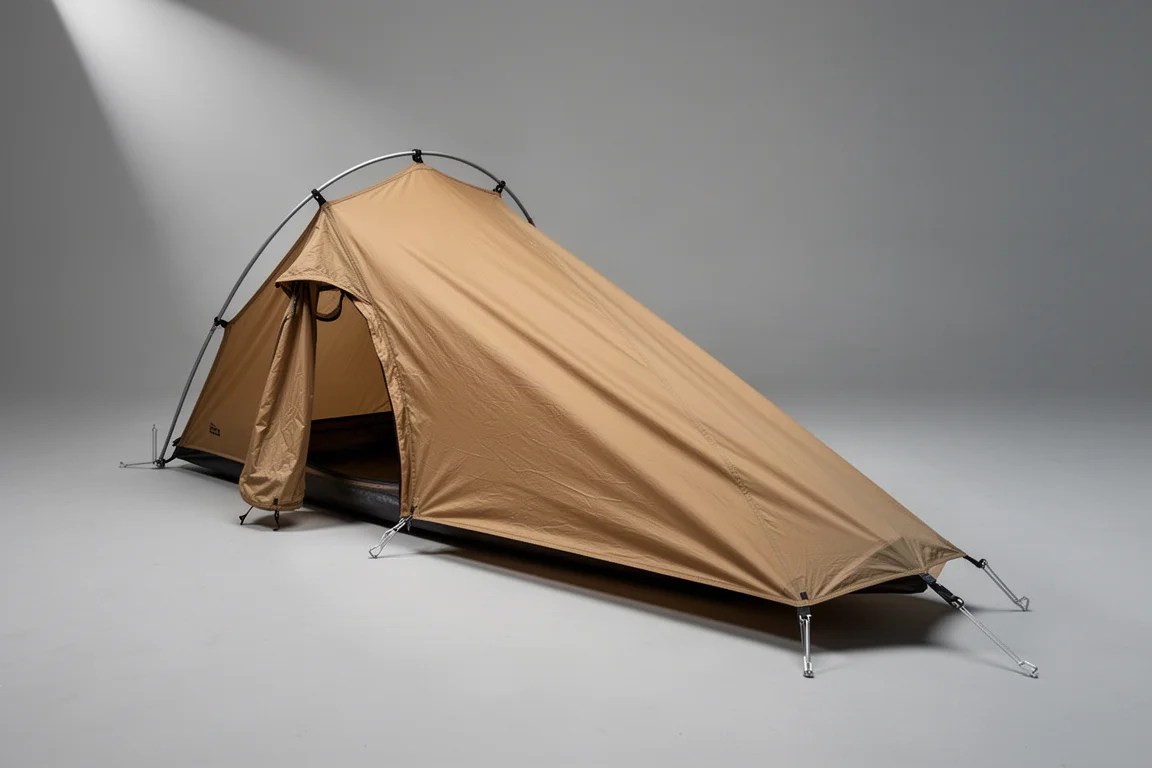
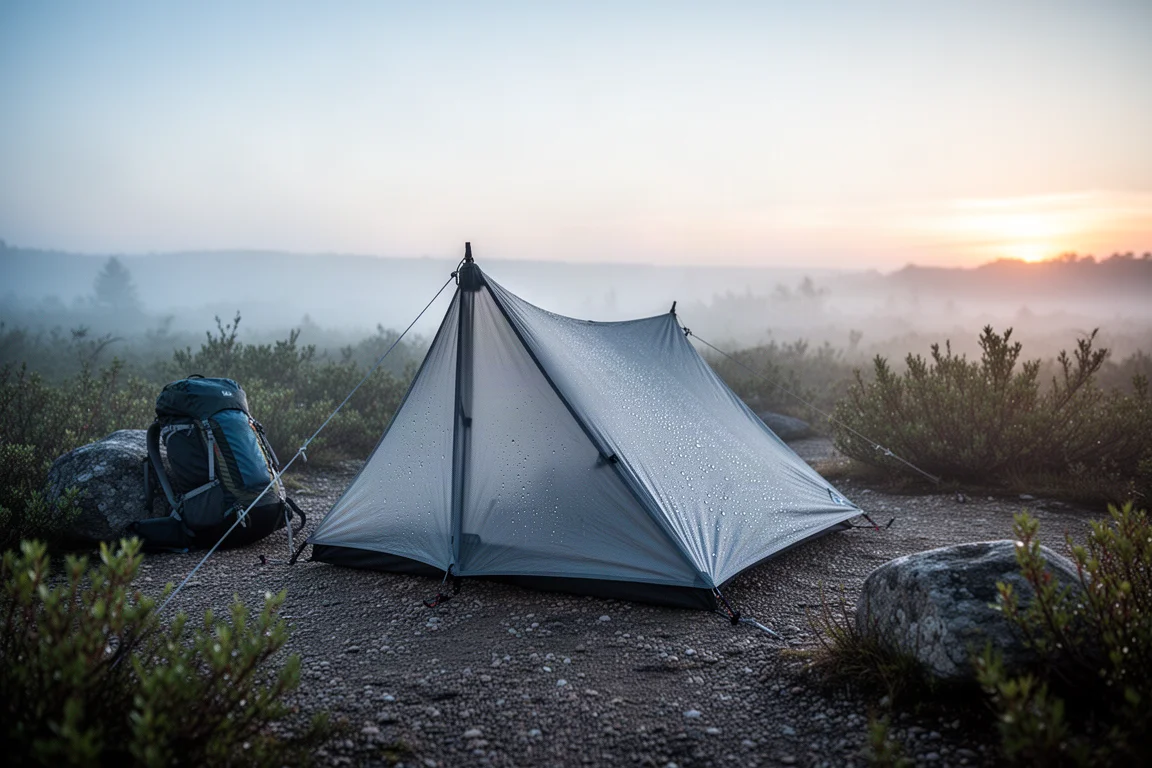
The Snugpak Ionosphere solves the space problem with geometry. Two poles, one large at the head and one smaller at the foot, spread the body of the shelter outward instead of letting it taper to a point. The result is a bivy that gives a single occupant meaningfully more room than its exterior silhouette suggests.
That layout is the benchmark for this category, and it is the reason the MC2 Mount shelter looked promising before it arrived. The catch is price. The Ionosphere could once be picked up for around $100. It now sells for roughly $300, and at that figure the value case weakens considerably, particularly given that the fabric is an inexpensive polyester. A well-shaped interior is worth paying for, but the current asking price makes it a harder recommendation than it used to be.
Usable Space Versus Listed Dimensions
The MC2 Mount listing quotes a length of 98.4 in, a width of 49.2 in, and a maximum height of 31 in. Those figures describe the outside of the fly. Measured inside, where a person actually lies, the usable length is around 63 in, the maximum height around 27 in, and the maximum width around 30 in.
That gap is not a rounding difference. It is the difference between a shelter that looks generous in a product photo and one that cannot hold an average adult. When comparing one-person shelters, ask for interior measurements at the sleeping position rather than the exterior footprint. Buyer feedback on the MC2 Mount listing repeats the same themes: the shelter is extremely small, there is no room for feet, condensation builds up heavily inside, and the published dimensions do not match what arrives.
Materials, Weather Protection, and Field Notes
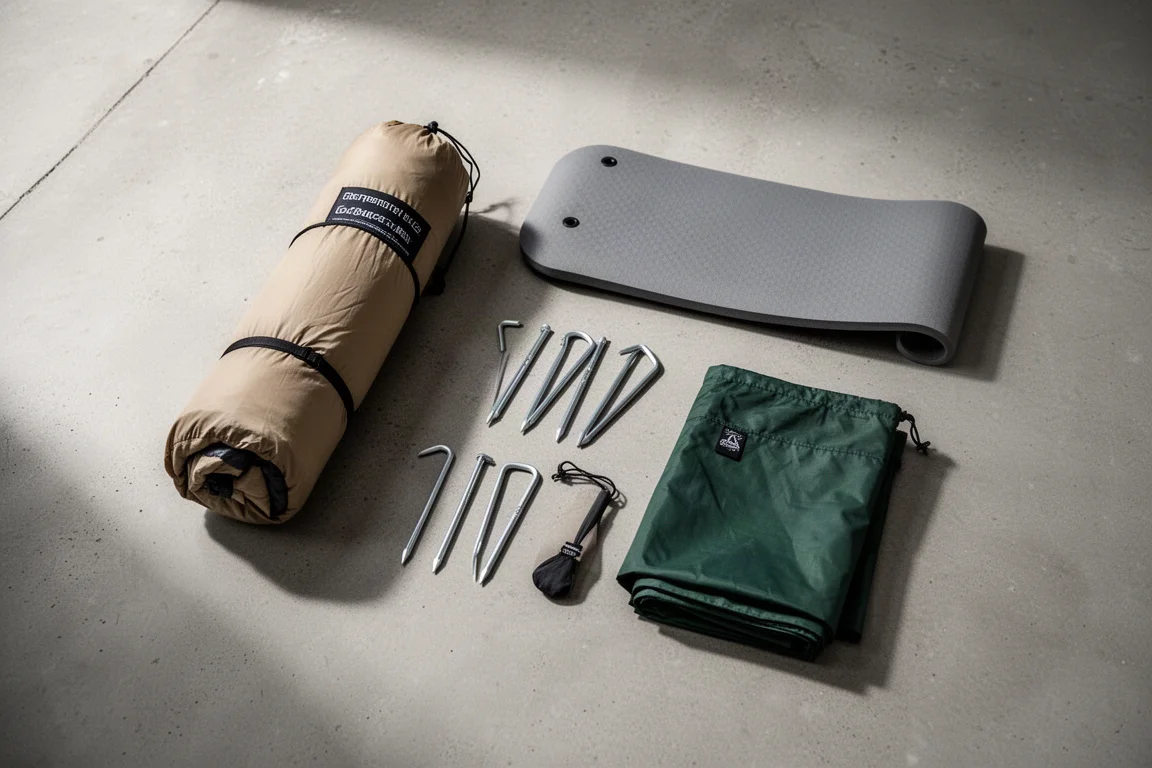
The materials on the MC2 Mount shelter are not the weak point. A 20D sil nylon fly and a 210D Oxford polyester floor, both rated to a 3,000 mm hydrostatic head, are respectable specifications for a shelter at this price, and aluminium poles and stakes keep the weight down.
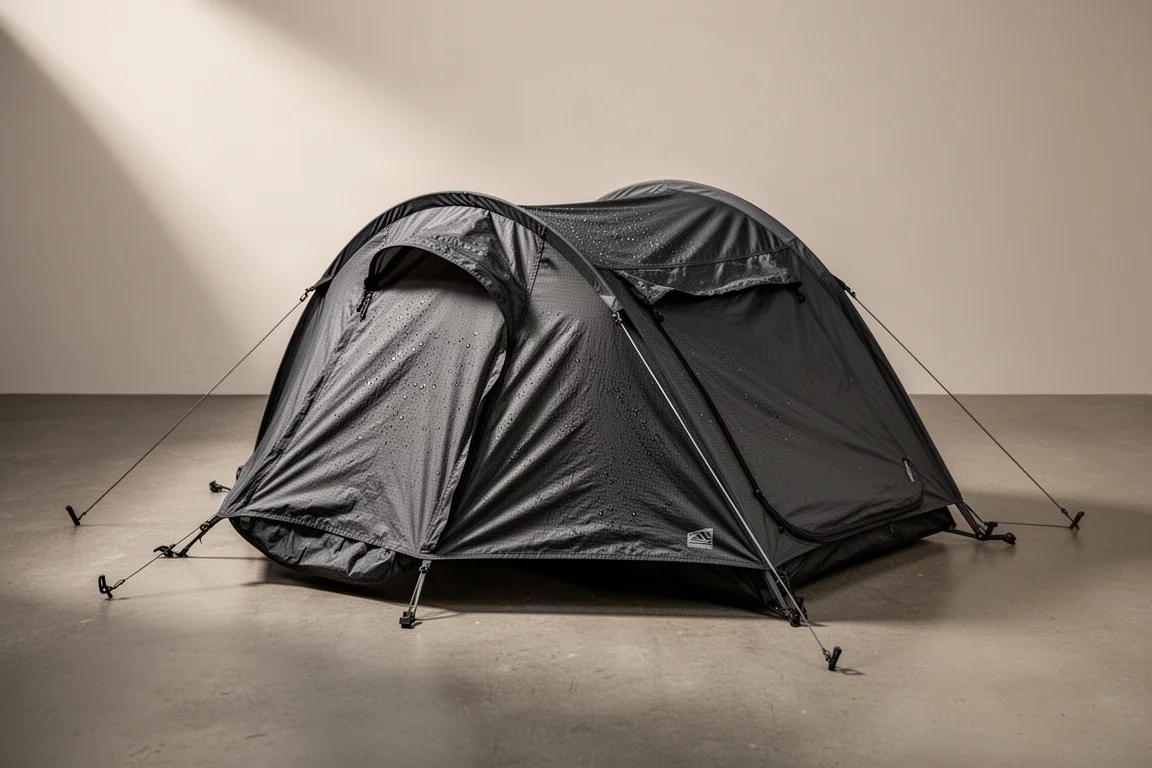
Weather performance, however, cannot be separated from design. Because the fly sits so close to the ground and lies against the inner, moisture that condenses on the fly ends up inside the sleeping area, and wind will shake it loose onto the occupant. High headline waterproof ratings do not change that outcome. A shelter that cannot be slept in comfortably is not made usable by a hydrostatic head number.
Buying Advice: Matching a Shelter to Your Trip
If you are shopping for a one-person bivy shelter, start with your own measurements. Lie down, add the thickness of your sleeping pad, and compare the total against the interior length and height at the sleeping position, not the fly dimensions. Then look at how the fly and inner relate to each other. A fly that stops short of the ground, or a design that allows airflow underneath it, will keep condensation under control in a way a sealed, low-slung fly will not.
On that basis, the MC2 Mount bivvie tent is difficult to recommend for adults. Its construction is excellent, its materials are sound, and its packed size and weight are genuinely appealing, but the interior is too small and too sharply tapered for most people to use. It may suit a small child, and very little else.
The Snugpak Ionosphere remains the better-shaped shelter of the two, and its two-pole layout is the reason. At around $300 and with an inexpensive polyester body, though, it is no longer the obvious value it once was. If the price works for you and you want a proven interior layout, it is the more sensible of these two options. If it does not, wait for a shelter that combines a generous interior with a price that matches its materials.
Conclusion
The lesson here is simple: in a one-person shelter, the interior is the product. The MC2 Mount bivvie tent gets the materials and the construction right and the usable space badly wrong, while the Snugpak Ionosphere shows what a well-shaped bivy interior looks like and charges accordingly. Measure the inside rather than the outside, and you will avoid the mistake this shelter invites.
Further reading
Related Reviews
Camping Shelters
Alps Mountaineering Stealth 1 Bivy Review: A Waterproof Claim That Does Not Hold Up
The Alps Mountaineering Stealth 1 Bivy carries a 2,000 mm hydrostatic head rating and a waterproof claim, but sustained rain exposure and build quality concerns make it difficult to recommend.
Camping Shelters
AquaQuest Safari Hybrid 20 ft x 13 ft Tarp Review: Two Years Under a Very Large Roof
A long-term look at the AquaQuest Safari Hybrid 20 x 13 tarp, covering build quality, weather protection, setup realities, and who should buy one.
Camping Shelters
Backcountry Light Mesa 3 Hot Tent and Floor SL Tarp Review
A practical look at the Backcountry Light Mesa 3 four-season hot tent and its optional Floor SL Tarp, covering materials, stove jack design, packed weight, pricing, and the trade-offs to weigh before buying.