Camping Shelters
MC2 Mount Bivvie Tent and Snugpak Ionosphere: Two Bivvy Shelters Compared
A measured look at two one-person bivvy shelters, covering usable interior space, ventilation behaviour, build quality and current value.
Introduction
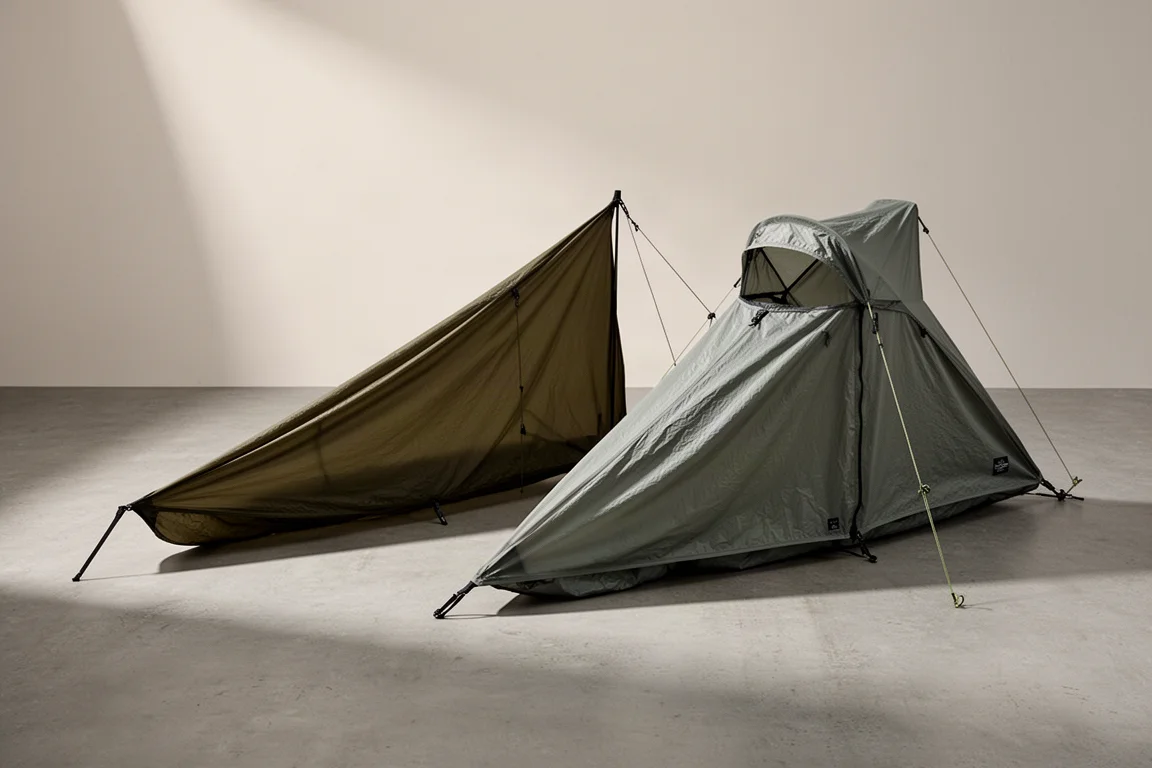
Two one-person bivvy shelters, two very different stories. The MC2 Mount Bivvie Tent comes from a company with a track record for affordable tents and unusual layouts. The Snugpak Ionosphere has been around long enough to build a reputation, and long enough for its price to drift well above what its materials justify.
Both are worth understanding before committing money to either one, because the less expensive shelter has a fundamental problem that careful pitching cannot solve. This comparison looks at measured interior space, ventilation behaviour, build quality, packed size and current value so you can judge whether either shelter belongs in your kit.
What Matters in a Bivvy Shelter
A bivvy shelter is deliberately minimal, but minimal is not the same as unusable. A few practical factors decide whether a one-person shelter works in the field.
Usable interior length comes first. External length describes the fly, not the space your body occupies, and the gap between the two can be measured in feet. Look for internal dimensions, and treat a shelter that only publishes external numbers with caution.
Foot box shape comes second. A foot box that tapers toward a point will trap a sleeping pad and force your toes into a curl, even when the overall length looks reasonable on paper.
Headroom and head position come third. What matters is the height at the exact point where your head rests, not the maximum height somewhere in the middle of the shelter.
Airflow comes fourth. In most fly-covered shelters, air enters from underneath the fly. If the fly reaches the ground, that path closes and condensation builds on the inside of the fly.
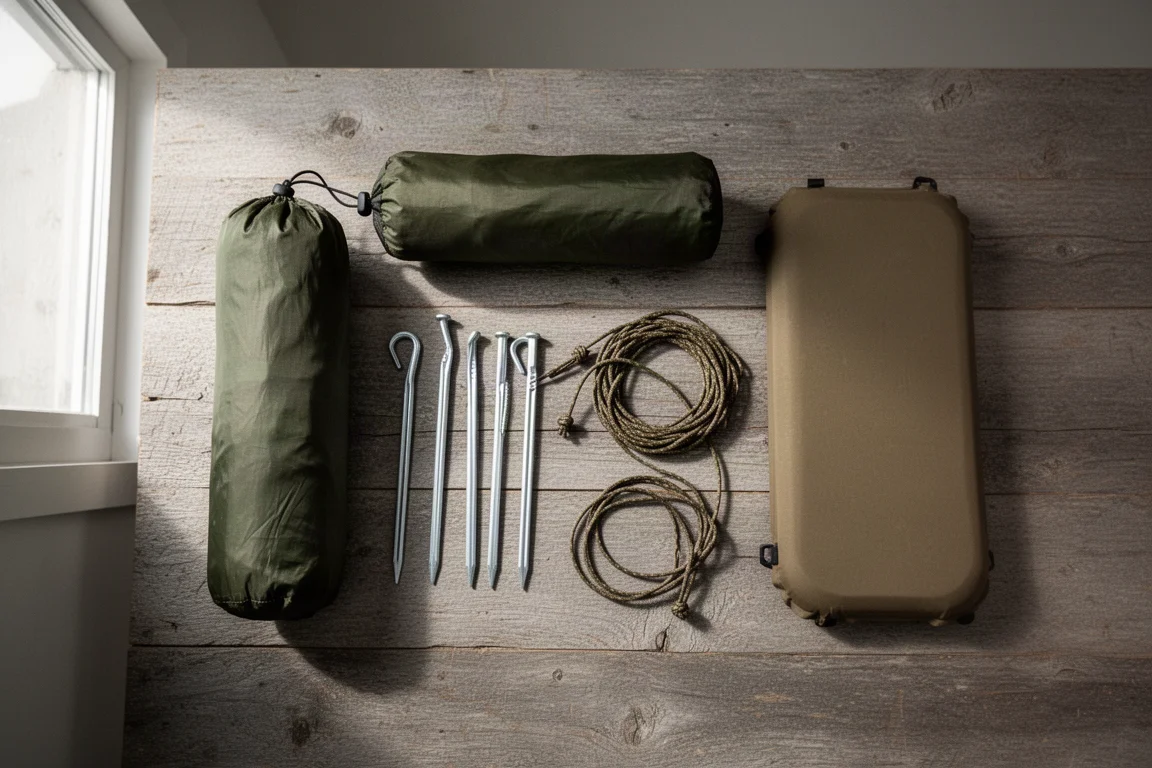
Materials and waterproof ratings matter, but they cannot rescue a shelter whose interior shape does not fit a human body. Weight, packed size and price are the last pieces of the puzzle, and they only count once the shelter is genuinely usable.
MC2 Mount Bivvie Tent: Design and Pitching
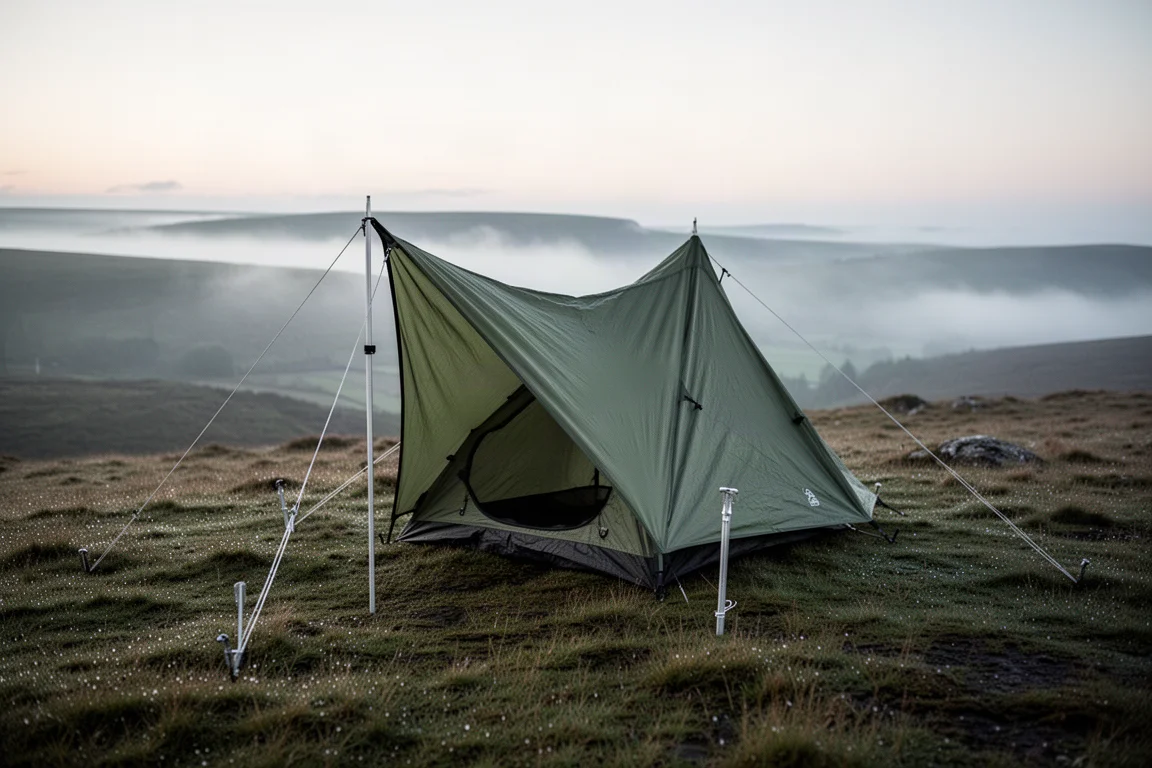
The MC2 Mount Bivvie Tent is a single-person shelter with one door and a fly-first pitch. The fly and the inner are pre-attached, so the shelter can be raised in the rain while the sleeping area stays dry. The outer fly measures roughly 8 ft long, which makes the shelter look generous in photographs.
Hardware is aluminium throughout: aluminium poles and aluminium stakes. A centre pole lifts the fabric at the foot end, and every stakeout point carries an additional adjustment layer.
In practice, that combination is difficult to manage. The extra adjustment layers slow down every correction, and getting a genuinely taut pitch is close to impossible. The cut is unusual as well, narrowing to a point at the foot before the sides flare outward again. The centre pole creates odd lines in the fly and presses the fly against the inner.
The fly is made from silnylon, which stretches once it gets wet. When it sags, the attached inner makes correction harder rather than easier, because any adjustment to the fly also disturbs the inner.
MC2 Mount Bivvie Tent: Usable Space and Ventilation
This is where the shelter falls apart. Measured usable length inside is about 63 in, or 5 ft 3 in. Maximum interior height is 27 in and maximum width is 30 in. Everything inside angles inward: toward the foot, the floor slopes down almost to a point, and at the head the profile declines sharply.
The consequences show up immediately in use. A sleeping pad catches at the foot box, toes have to curl to fit, and at the head end the mesh rests directly against the face. Anyone taller than roughly 5 ft 3 in will not fit. Even at that height, the shelter compresses the feet and the head, which makes it uncomfortable to lie in, let alone sleep in.
The dimensions published for the shelter are 98.4 in long, 49.2 in wide and 31 in high. Those are external figures, and they describe a shelter that does not exist in usable terms. Feedback left on the product listing echoes the same point, with entries describing the shelter as extremely small and noting that there is no room for feet.
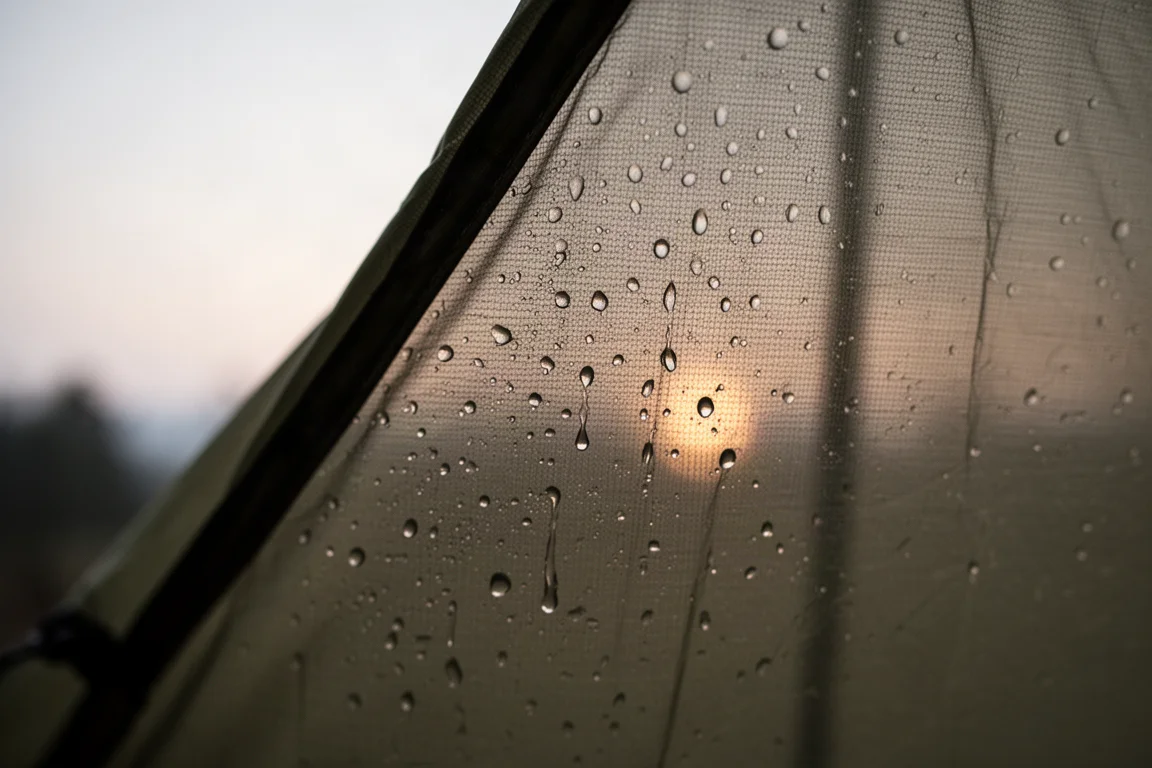
Ventilation is just as limited. Two small vents contribute very little, and the fly drops almost to the ground, so little air moves underneath. Condensation forms on the inside of the fly, and because the fly lies against the inner, that moisture transfers to the sleeping area. In wind, it comes down on the occupant.
The shelter weighs 2.5 lb and packs to 15 in by 5.5 in, both reasonable for a bivvy design. The price is $100. None of that changes the fact that the interior cannot accommodate most adults. Waterproofing was not verified in field testing, because the shelter does not fit the person it was intended for.
Build Quality and Materials
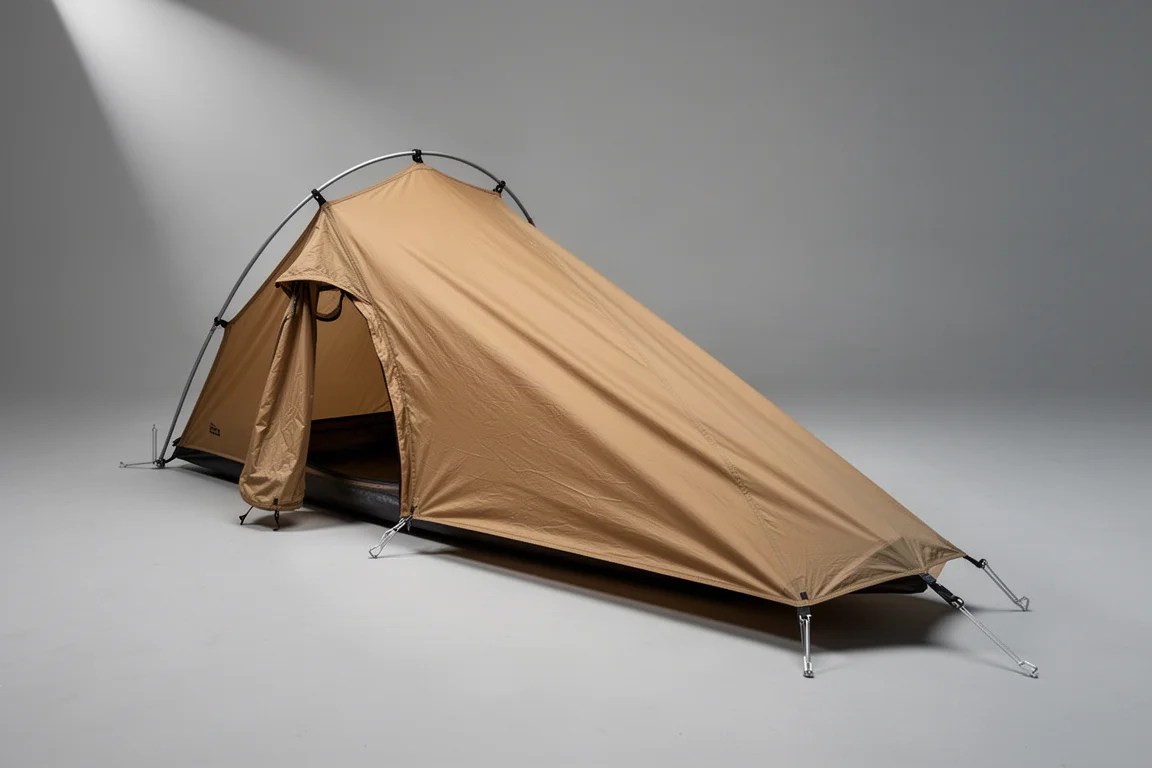
Construction quality is genuinely good. There are no loose threads, the zippers run smoothly, and the shelter is reinforced where reinforcement is needed. The fly is 20D silnylon with a 3000 mm hydrostatic head, and the floor is 210D Oxford polyester with the same 3000 mm rating. Those are high waterproof ratings on paper, and the hardware is aluminium throughout.
So this is a well-made shelter with a design that does not work. The company’s other tents have earned a strong reputation for the opposite combination: unusual layouts that function, good materials and low prices. This model breaks that pattern.
Snugpak Ionosphere: The Established Alternative
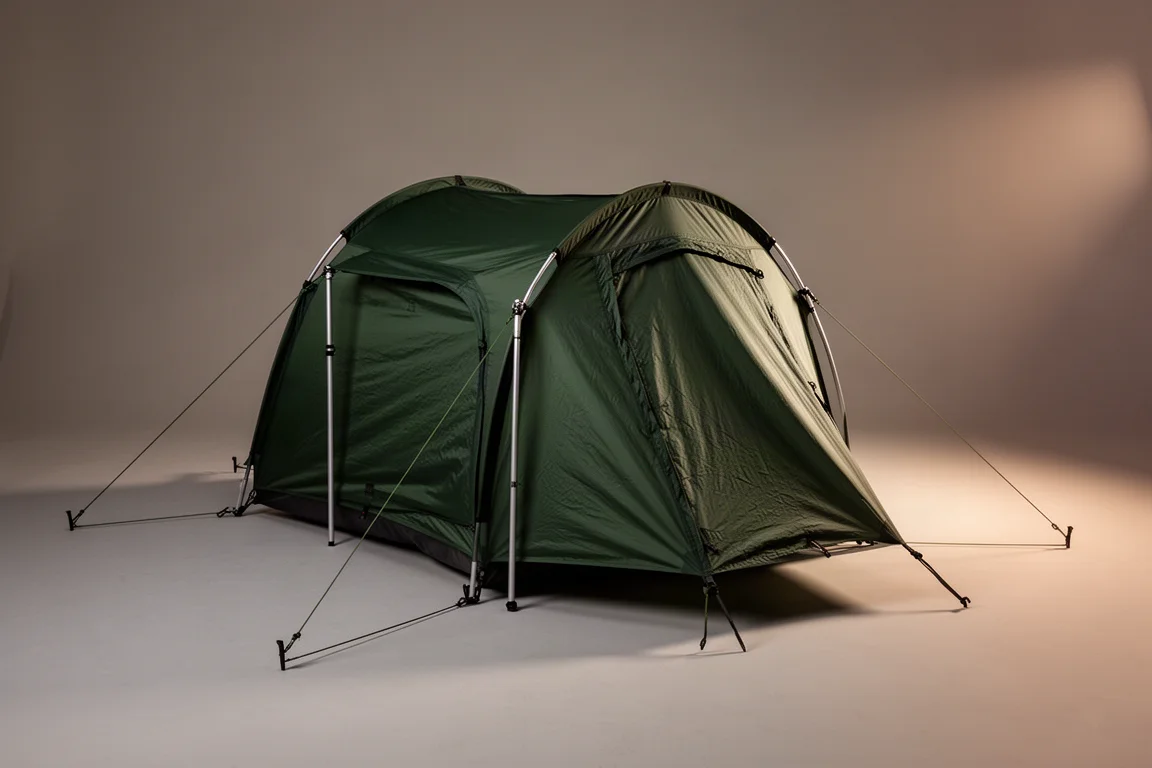
The Snugpak Ionosphere shows what the same category can look like when the shape is right. Two poles do the work: a large pole at the head end and a smaller pole at the foot, spreading the body outward and creating usable internal volume. That structure is the difference between a bivvy you can lie in and a bivvy that lies on you.
Materials are where the value question appears. The shelter is made from a very inexpensive polyester, and it originally sold for around $100. It now sits at around $300. At that price, the material specification and the price no longer line up, which makes it difficult to recommend today even though the design itself remains sound.
If you already own one, the design still holds up. If you are buying new at current pricing, the case is much weaker, and the sensible move is to compare it against shelters that offer comparable space for less money.
Who Each Shelter Suits
The MC2 Mount Bivvie Tent suits almost nobody. Its usable length and tapering profile rule out most adults, and the compression at the head and feet makes it uncomfortable even for those who technically fit. In practical terms it functions as a children’s shelter rather than a one-person backpacking bivvy.
The Snugpak Ionosphere suits buyers who want a proven two-pole bivvy shape with more usable internal volume. The catch is price: at its original price point it was an easy recommendation, and at today’s price it is not.
Buying Advice
Three habits prevent this kind of disappointment.
First, ask for internal dimensions, not external ones. The numbers that matter are usable length, usable width, and height at the head and foot positions. External figures describe the fly and tell you very little about the space your body occupies.
Second, test new shelter gear on a short local trip before relying on it. Pitch it, put your sleeping pad inside, and lie down in it. A pad that catches at the foot box is a warning sign worth taking seriously.
Third, read listing feedback for specifics rather than star ratings. Comments about interior size, foot room and condensation are far more useful than general praise.
If a shelter compresses your head or your feet, no material upgrade will fix it. Shape and usable space come first, waterproofing and weight second, and price last.
Conclusion
The MC2 Mount Bivvie Tent is well built and poorly designed: excellent construction, high waterproof ratings on paper, sensible weight and packed size, and an interior that most adults cannot use. At $100 it is not a bargain, because it does not do the job a bivvy shelter is meant to do. The manufacturer would be better served by returning to the drawing board, refining the two-pole approach that works elsewhere in this category, and correcting the published dimensions so they reflect usable interior space.
The Snugpak Ionosphere remains a sound design, but its current price of around $300 is hard to justify for a shelter built from inexpensive polyester. Buyers who want a bivvy should look for internal dimensions that genuinely fit them, ventilation that works with the fly, and a pole structure that spreads the body outward.
Further reading
Related Reviews
Camping Shelters
Alps Mountaineering Stealth 1 Bivy Review: A Waterproof Claim That Does Not Hold Up
The Alps Mountaineering Stealth 1 Bivy carries a 2,000 mm hydrostatic head rating and a waterproof claim, but sustained rain exposure and build quality concerns make it difficult to recommend.
Camping Shelters
AquaQuest Safari Hybrid 20 ft x 13 ft Tarp Review: Two Years Under a Very Large Roof
A long-term look at the AquaQuest Safari Hybrid 20 x 13 tarp, covering build quality, weather protection, setup realities, and who should buy one.
Camping Shelters
Backcountry Light Mesa 3 Hot Tent and Floor SL Tarp Review
A practical look at the Backcountry Light Mesa 3 four-season hot tent and its optional Floor SL Tarp, covering materials, stove jack design, packed weight, pricing, and the trade-offs to weigh before buying.