Aquarium Equipment
Maxspect Jump 10K DC Return Pump Review: Controllable Flow at a Friendly Price
A practical look at the Maxspect Jump 10K DC return pump, covering its 20-step controller, feed modes, tool-free maintenance, and who should consider it.
Introduction
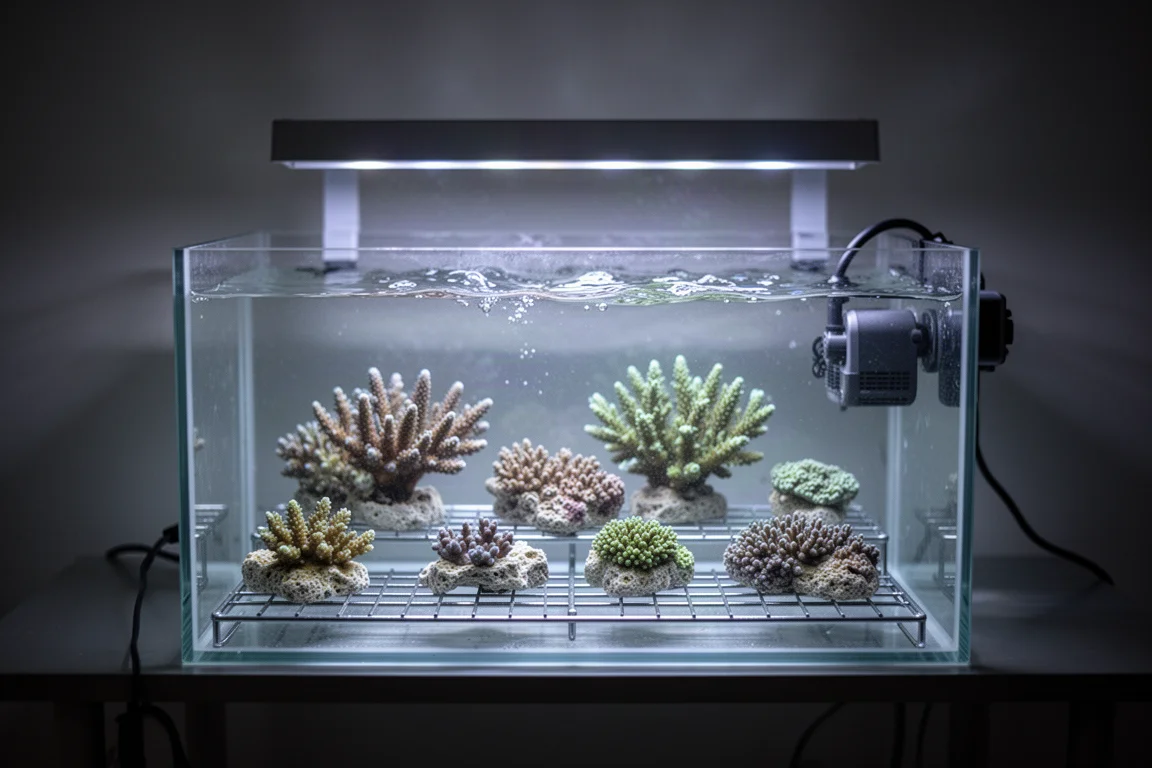
A return pump sits at the heart of an aquarium filtration system. It moves water out of the sump, through the equipment staged there, and back up into the display tank, which means it runs continuously and quietly for years at a time. The Maxspect Jump 10K is a submersible DC return pump built for exactly that role, and it brings a level of flow control that is unusual for its price bracket.
The headline numbers are straightforward. The 10K model is rated for a claimed 2,600 gallons per hour and measures roughly 8.25 inches long, 4.5 inches wide, and 3.5 inches tall. Its controller offers 20 speed settings in 5 percent increments, three feed mode durations, and two pulse modes. Maxspect also offers the Jump line in 6K, 8K, and 12K versions rated at approximately 1,600, 2,100, and 3,200 gallons per hour, so there is a size for a wide range of aquarium volumes.
For reefers who have been weighing a switch to a controllable DC pump, this is a good moment to look closely at what the Jump series actually delivers.
Who this product is for
The Jump pumps are aimed squarely at budget-conscious aquarists who still want adjustable flow. That combination is the core appeal: a DC pump with granular speed control, without moving into the price territory of premium controllable models.
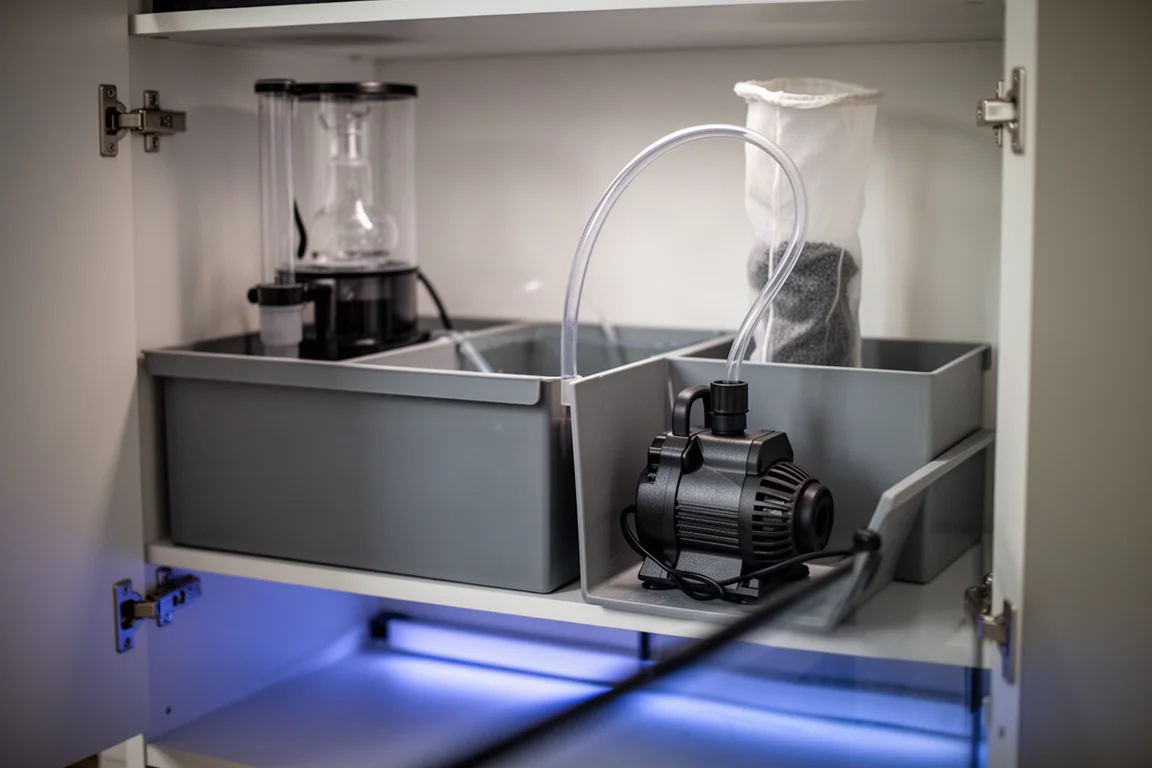
Because the pump is submersible only, it is best suited to in-sump duty as a return pump rather than as an external or inline circulation pump. Within that role, it fits a few common setups well. A main display tank with a sump is the obvious use case. So is a quarantine system or a frag tank, where an affordable, adjustable pump keeps water moving without adding much cost. Anyone maintaining a smaller secondary system will find the same logic applies.
If your goal is simply to replace a fixed-speed return pump with something you can tune to your overflow and drain design, this is the category of product to consider.
Design and Controller
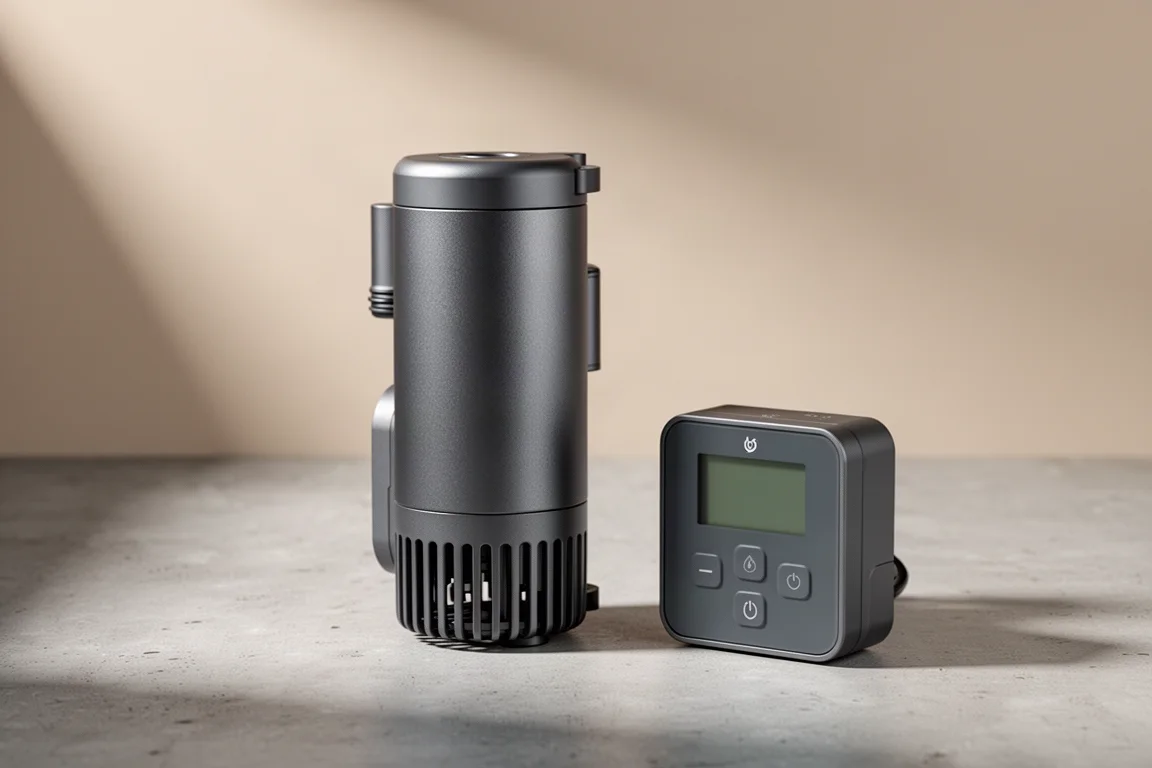
The Jump 10K does not look like a typical aquarium pump. Its housing resembles a high-output turbine, with a satin finish and a rubberized feel that gives it a distinctly different presence in the sump. The strainer is integrated into the body rather than clipped on as a separate cage, which creates the illusion of a larger pump than the actual dimensions suggest. It is a bold design, and the strainer is one of the better-looking examples of the form.
Inside the box you get the pump itself, the digital controller, barbed fittings, a power brick, a power cable, rubber feet, a mounting clip with screws, and cable management pieces. The barbed adapters cover the tubing sizes most commonly matched to each flow rating. On the 10K model, the threading also lines up with standard 1.5 inch threaded PVC fittings, so custom plumbing directly to the pump is a realistic option.
The controller is where the value shows. Twenty levels translate to 5 percent steps, with level one at 5 percent output and level 20 at full output. That is finer control than most DC pumps in this price range provide. Feed mode can be set to 10, 20, or 30 minutes by pressing the button repeatedly, which gives slow target feeders room to work. Two pulse modes are also included for varied flow, useful if the pump is ever run as added circulation.
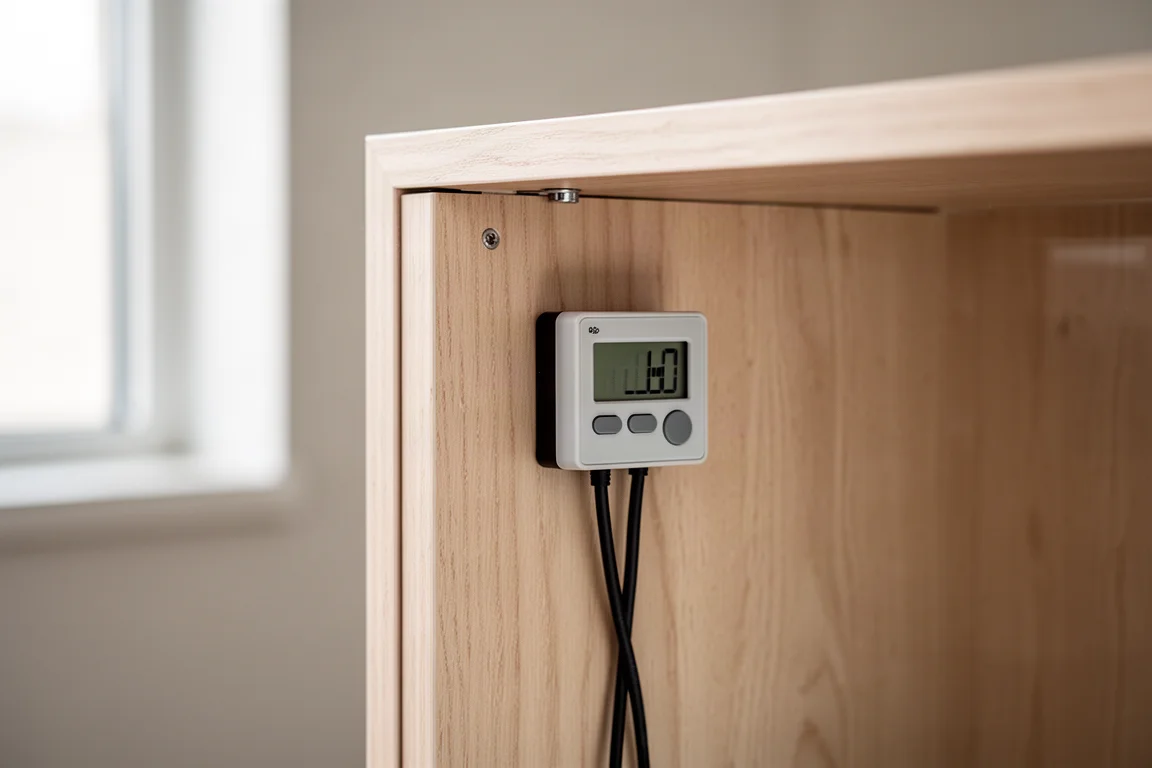
What the controller does not offer is Wi-Fi or app control. Maxspect left that out deliberately to keep the pump competitive on price. For most sump setups, a physical controller that works without a phone is a reasonable trade.
Main strengths
The strongest argument for the Jump 10K is the control scheme relative to cost. Twenty speed steps let you dial flow in to match a specific overflow, drain, or tank turnover target instead of settling for the nearest fixed setting. Feed modes of 10, 20, or 30 minutes cover the range most aquarists actually use.
Maintenance is another practical strength. The pump comes apart without tools, and reassembly is just as simple. Reaching the impeller means removing the base first, then the internal components, but nothing about the process requires special equipment or much time. For a pump that will be cleaned regularly over its service life, that matters more than it might first appear.
Finally, the fit and finish are more considered than the price point suggests. The integrated strainer, the satin and rubberized housing, and the included mounting hardware and cable management all point to a product that was designed rather than assembled from generic parts.
Things to consider before buying
There are a few honest trade-offs to weigh. The absence of Wi-Fi and app control is the most obvious one. If remote monitoring or scheduled programming from a phone is important to you, this pump will not provide it. If you prefer a physical controller, it will not feel like a loss.
The strainer fits very snugly. The first couple of removals take some force before it loosens up, which is preferable to a strainer that rattles loose in the sump but is worth expecting on day one. Accessing the impeller also requires removing the base first, so factor that into your cleaning routine.
Because the pump is submersible only, it cannot be used externally. Anyone planning an external return configuration should look elsewhere. It is also worth matching the model to your system rather than defaulting to the largest option, since the 10K is rated for a claimed 2,600 gallons per hour and may be more flow than a smaller tank needs.
Buying advice
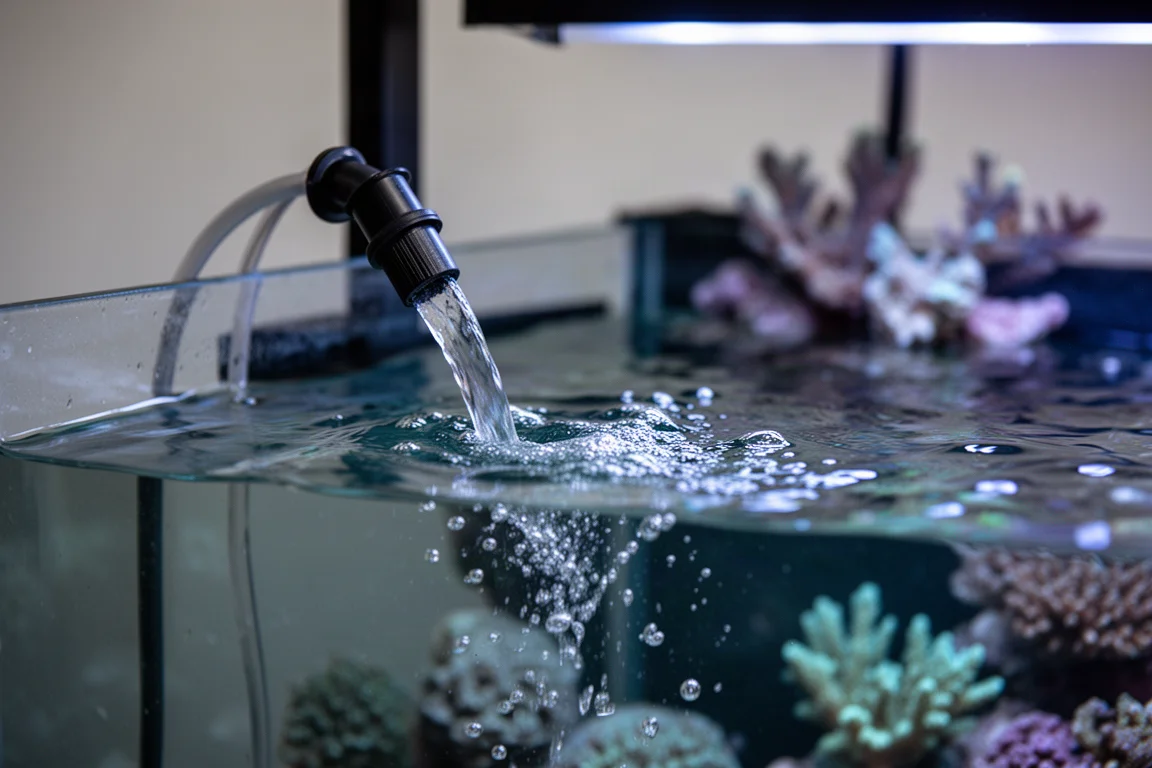
Start with tank volume and desired turnover, then pick the Jump model that lands closest to that target without oversizing. The 6K and 8K versions suit smaller and mid-sized systems, while the 10K and 12K cover larger displays. The 10K reviewed here is the sensible middle-to-upper choice for a generously sized reef tank with a sump.
Check your plumbing before ordering. The included barbed adapters handle common tubing sizes, and the 10K’s threading matches standard 1.5 inch threaded PVC, so direct plumbing is possible. Confirm which route your setup uses so you have the right fittings on hand.
Finally, be realistic about what you are buying. This is an affordable, controllable DC return pump with a solid physical controller, tool-free maintenance, and a distinctive design. It is not a Wi-Fi-enabled pump, and it is not intended to be. Judged against that brief, it is a well-rounded option for a display tank, a quarantine system, or a frag tank.
Conclusion
The Maxspect Jump 10K makes a clear case for itself. Twenty speed settings in 5 percent increments, feed modes from 10 to 30 minutes, two pulse modes, and tool-free disassembly add up to a genuinely flexible return pump at a price point that keeps it accessible. The lack of Wi-Fi control and the snug strainer are the main compromises, and both are easy to live with if a physical controller and straightforward maintenance suit the way you run your tank. For aquarists who want adjustable DC flow without a premium spend, this is worth a serious look.
Product link
View more details for Maxspect Jump 10K
This product is mentioned in the review. Check the specifications, options, and compatibility before buying.
View more details for Maxspect Jump 10KFurther reading
Related Reviews
Aquarium Equipment
Abyzz Professional DC Pumps: A100, A200, and A400 Reviewed
A closer look at three German-made DC return pumps built for large reef systems, with titanium internals, fine flow control, and a 10-year warranty.
Aquarium Equipment
AdaptiveReef Controller Accessories: Three Tactile Upgrades for Your Reef Controller
A practical look at three AdaptiveReef add-ons that put physical switches, at-a-glance status lights, and a loud alarm within arm's reach of your reef tank.
Aquarium Equipment
Adaptive Reef Controller Boards: Basic vs Deluxe for Cleaner Aquarium Gear
A practical look at the Adaptive Reef Basic and Deluxe controller boards, what each one includes, and how to choose the right size for your tank gear.