Aquarium Equipment
Maxspect Gyre Jump vs Cloud Edition: Choosing an Aquarium Flow Pump
A practical comparison of the Maxspect Gyre Jump and the Gyre Cloud Edition, covering gyre flow, mounting, controllers, and which pump suits which reef tank.
Introduction
A gyre pump moves water in a way that becomes obvious once you know what to look for: a narrow, fast-moving sheet of water crosses the entire tank, drops down the far glass, and returns across the bottom. Maxspect builds two pumps around that idea, and they sit at opposite ends of the range.
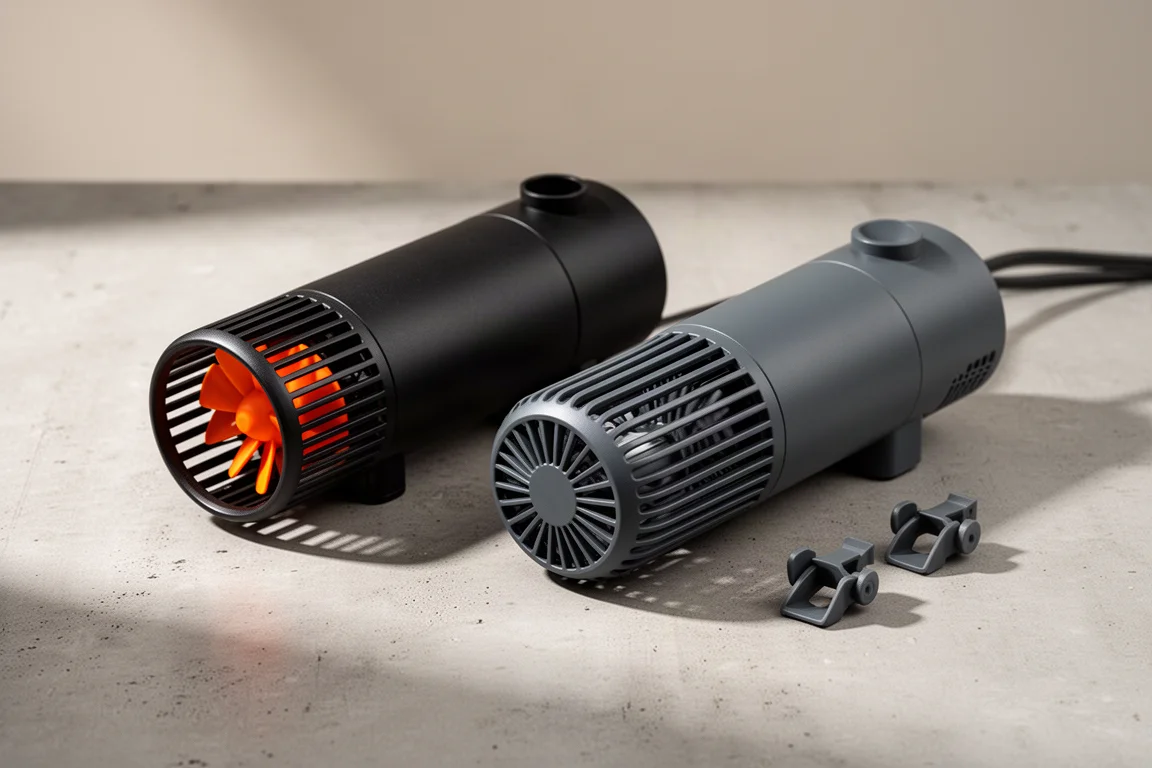
The Maxspect Gyre Jump keeps the cost as low as possible while preserving the core gyre design. The Maxspect Gyre Cloud Edition adds a larger controller, app-based scheduling, and hardware that lets you aim flow in four directions instead of two.
This guide covers what gyre flow actually does for a reef tank, what separates the two pumps, and how to decide which one is worth the money for your setup.
Why Gyre Flow Matters in a Reef Tank
A gyre pump produces a high-velocity sheet of water rather than a wide cone of turbulence. That sheet travels the full length of the tank, strikes the opposite glass, drops downward, and sweeps back along the bottom toward the pump. Because the moving sheet drags the surrounding water with it, the energy in the flow dissipates more slowly than it does with a conventional propeller pump. The result is a genuine circulation loop rather than a current that fades out somewhere in the middle of the tank.
That continuous loop solves a practical problem. Debris and uneaten food tend to collect behind the rockwork, where it sits and decays. Strong circulation lifts that material back into the water column, where it can be consumed by the animals in the tank or removed by filtration.
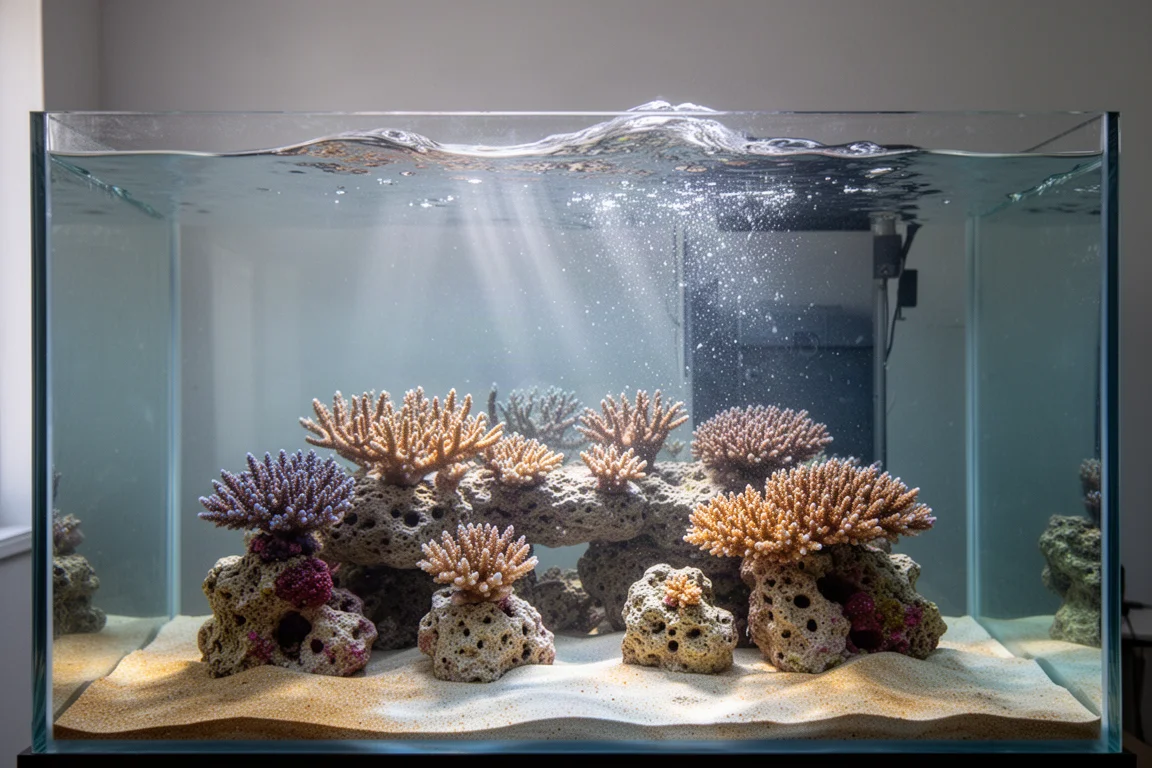
Gyre flow also addresses a lighting problem that is easy to overlook. The most intense light sits at the top layer of the tank, so corals positioned near the surface carry out the most photosynthesis and need the most flow to carry away the byproducts of that process. A gyre pump can be mounted close to the water surface and aimed outward without drawing in air vortices and blowing bubbles across the display, which is a common issue with other pump designs. Flow and light end up in the same place, which is exactly where tall, light-hungry corals need both.
Maxspect Gyre Jump: The Accessible Entry Point
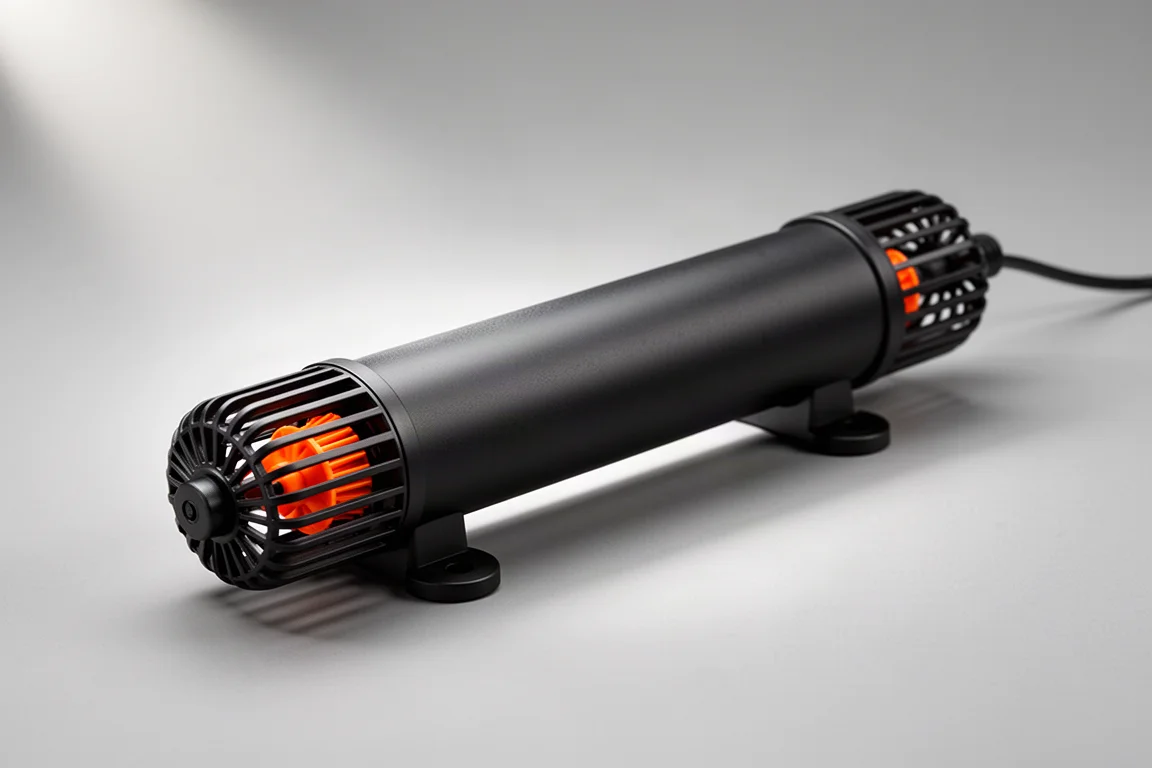
The Gyre Jump is positioned as the lowest-cost gyre pump available in North America. It keeps the price down without abandoning the core design: a single motor, two pump heads, and one cord. For anyone comparing it against running two separate powerheads, that pump-head ratio is where the value sits.
Its controller is deliberately simple. Every pump ships with an onboard controller, and you can select constant flow, gyre flow, or random flow directly on the unit, with no app and no pairing process. Most reef keepers set their flow pattern once and revisit it only when corals grow in or when they want to redirect the output, so an onboard controller with a handful of clear options covers a lot of ground.
The trade-off is that the Jump controller runs one pump only. It has no synchronized or anti-sync pairing, so two Jump pumps cannot be coordinated into an alternating gyre pattern that switches direction on a timer. Used on its own, the pump still delivers more flow than small tanks need. Owners of 25 or 50 gallon systems often run it well below full output, around 60 to 70 percent, which leaves headroom to turn it up after a tank upgrade instead of buying a new pump. The Jump also ships with orange rotors fitted, and a set of black rotors is included in the box for anyone who prefers a more neutral look behind the glass.
Maxspect Gyre Cloud Edition: Precision Flow Control
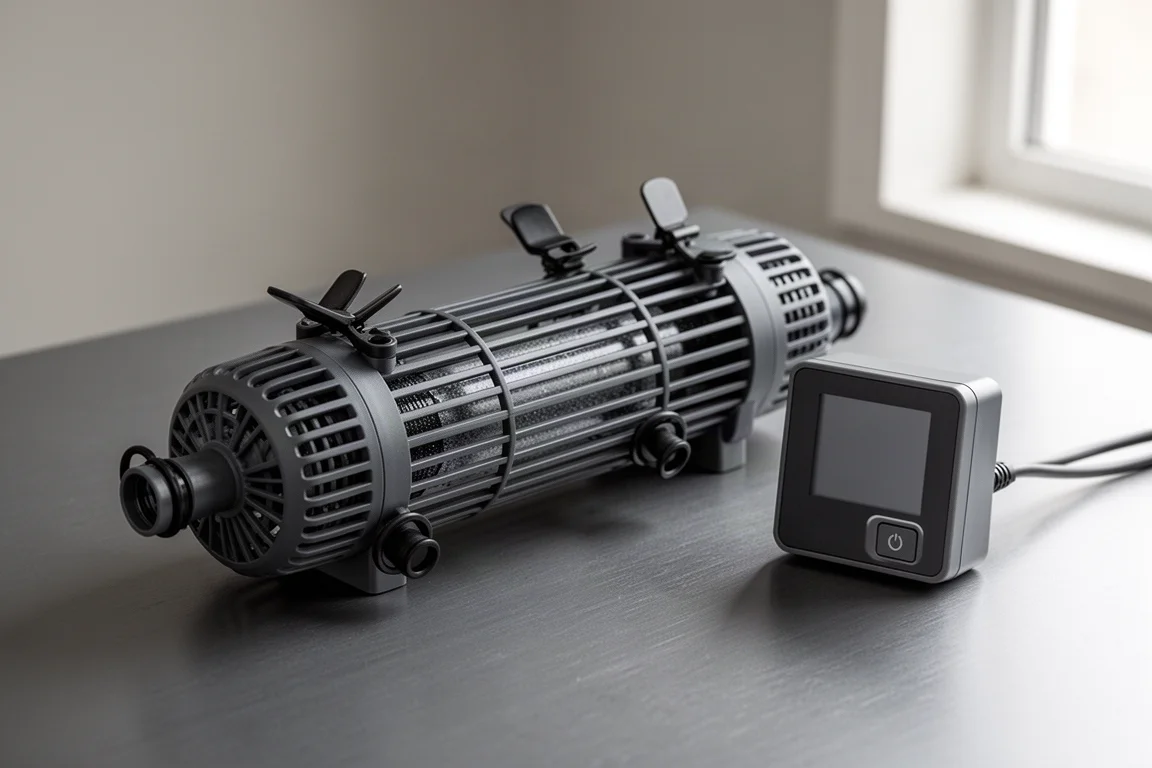
The Cloud Edition is the more advanced of the two, and the difference is clearest at the controller. It uses a 3.2 inch screen, which makes the menu readable at a glance instead of squinting at a small display packed with parameters. More than 20 preset flow patterns are available, including different intervals, random flow, and gyre flow, so you can pick a pattern and run it without programming anything yourself. That alone removes the most common complaint about gyre pumps, which is that they are complicated to set up.

For reef keepers who want to go further, the Cloud Edition supports app control. Through the app you can program individual parameters across a 24-hour loop. A typical schedule might run random flow for several hours in the morning, switch to gyre or alternating gyre flow for the afternoon, and insert a short flushing mode to lift settled debris into the water column. Anyone who wants to dial in exactly what the pump does at each point of the day can do so, and anyone who does not need that can stay with the onboard presets.
Flow Direction Hardware: Eductors, Four-Way Cages, and Diverters
Three hardware changes separate the Cloud Edition from earlier gyre designs, and together they change how the flow behaves inside the tank.
The first is a set of eductors fitted to the outlets. Eductors work on negative pressure: water is pushed out through the front, and small slits behind the outlet draw additional water in from behind, which adds roughly 10 to 15 percent more flow rate from the same pump without extra energy consumption. They also tighten the output, so the sheet of water goes exactly where you point it rather than spreading into loose turbulence around the outlet.
The second is a four-way flow cage. Earlier gyre pumps offered two directions of aim, essentially up and down on each side. The Cloud Edition doubles that to four, which matters because the output can now be split rather than concentrated. You can run the top outlet across the back of the tank, the lower outlet down behind the rockwork, and the center outlets forward into the display, all from one pump.
The third is a set of diverters, or side directors, that adjust flow horizontally as well as vertically. Earlier generations used one director per side, and the Cloud Edition uses two per side. They can be adjusted by hand, without tools, so tuning the aim is a matter of reaching in and nudging a piece until the corals respond the way you want.
Alternating Flow and Daily Scheduling
Running two gyre pumps in synchronized or anti-synchronized mode opens up a pattern that a single pump cannot reproduce. The two pumps alternate a clockwise and a counterclockwise circulation of the whole tank, switching direction every 20 or 30 seconds. Over time this builds a shifting, reversing flow rather than a fixed current in one direction.
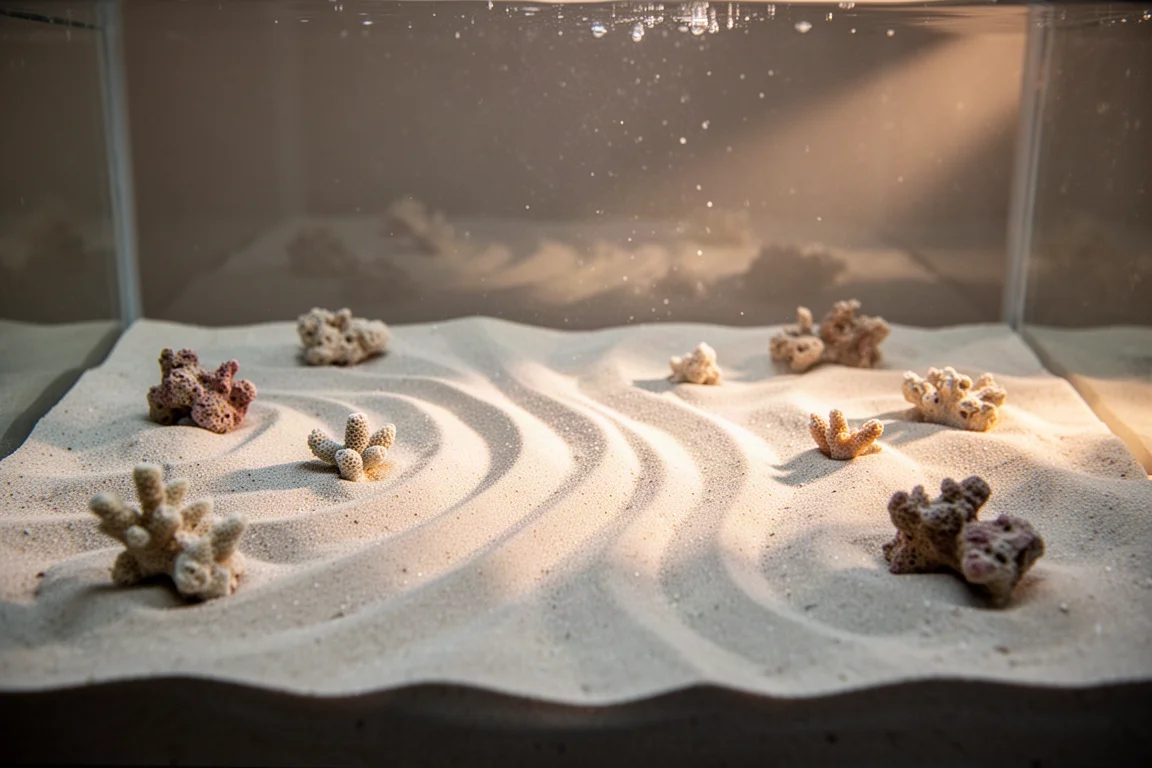
That alternating motion can have a visible effect on the substrate. In an eight-foot display tank running two gyre pumps in alternating gyre mode, the sand bed developed natural-looking ripples similar to the patterns seen on a shallow reef floor, where water pushes in, raises the level slightly, runs back out, and reverses.
Scheduling matters for a different reason. Mixed reef tanks combine corals collected from very different depths, and those corals are built for very different amounts of flow. A schedule that raises flow along with the lighting period and eases it back at night lets the tank deliver strong movement when photosynthesis is at its peak and calmer water when the light drops. The Cloud Edition app is what makes that kind of daily loop practical, with the option to add a short high-output flushing period to keep debris moving toward the filtration instead of settling.
Matching the Pump to Your Tank and Corals
Mounting the pump vertically on the back glass is the approach most reef keepers settle on, often alongside the overflow box. From that position the pump fades into the background over time, and the single cord exits above the water line rather than dangling through the display. The magnet is waterproof, so on tanks with a wide overflow box it can be mounted inside the overflow and hidden almost entirely.
That positioning also changes how much of the tank you can see. Large round powerheads mounted lower in the tank obstruct the side panes, while a gyre pump placed high on the back glass leaves the viewing panes clear.
Direction control is what makes higher output usable. Many owners never ran earlier gyre pumps at full power because the flow was simply too strong in one place. With the Cloud Edition hardware, output can be spread across four directions, so running the pump at 90 or 100 percent pushes water to the areas that need it without blasting a single coral colony. The Jump takes a simpler approach with the same underlying principle: point the sheet of water where it is needed, and keep it away from where it is not.
Buying Advice
Choose the Gyre Jump if cost is the deciding factor and you want a straightforward pump. It is the least expensive way into gyre flow, it works without an app, and its output is generous enough that you will likely run it below full power on a small or mid-size tank. The lack of multi-pump syncing is the main limitation, and it only matters if you plan to build an alternating gyre setup later.
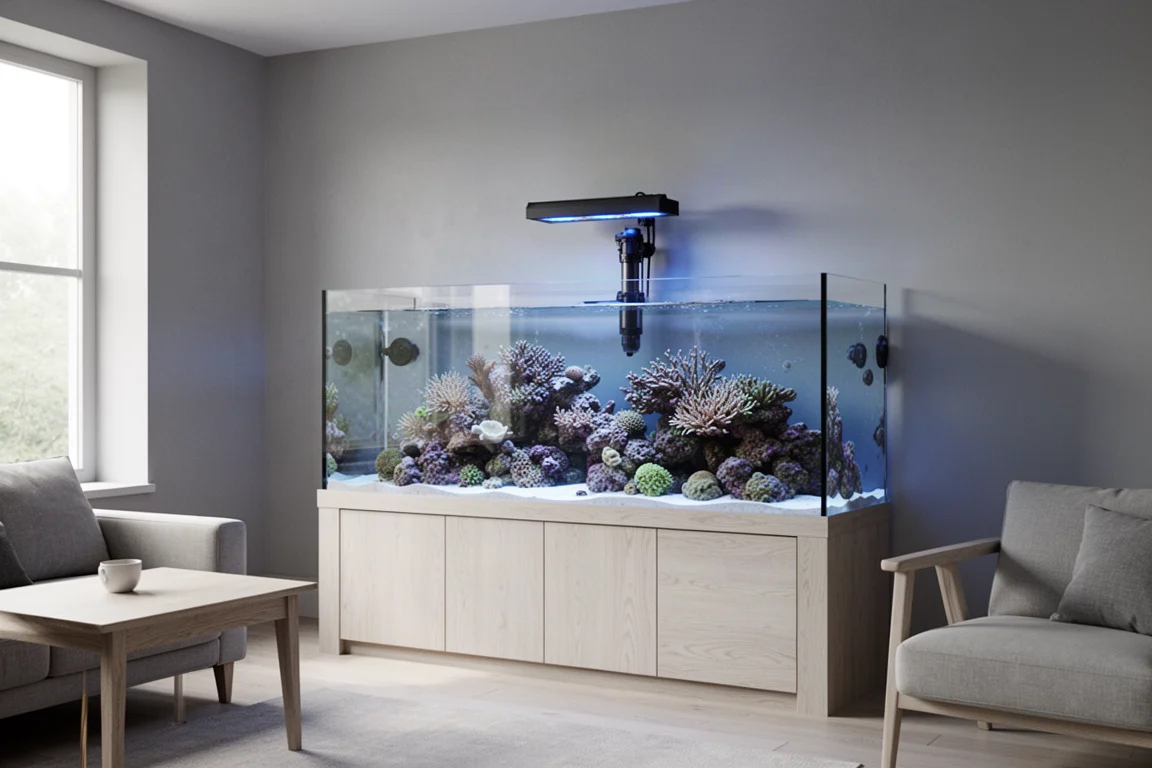
Choose the Gyre Cloud Edition if you want to control where flow goes in detail. The larger controller screen, the 20 plus preset patterns, the app-based 24-hour scheduling, the eductors, and the four-way aiming hardware all point in the same direction: getting the most usable flow out of one pump and one cord. It suits mixed tanks where different corals want very different conditions throughout the day.
Either way, the two pumps share the same core idea, so the decision comes down to how much control you need and how much you want to spend to get it.
Conclusion
The Maxspect Gyre Jump and the Maxspect Gyre Cloud Edition are built on the same principle of moving a sheet of water around the whole tank rather than firing turbulence into one spot. The Jump strips the concept back to the essentials and undercuts the rest of the market on price. The Cloud Edition keeps the price moderate while adding readable controls, preset and scheduled programming, and hardware that lets you direct flow in four directions from a single motor and a single cord. Match the pump to the tank you actually have, and either one will do the job it was designed for.
Further reading
Related Reviews
Aquarium Equipment
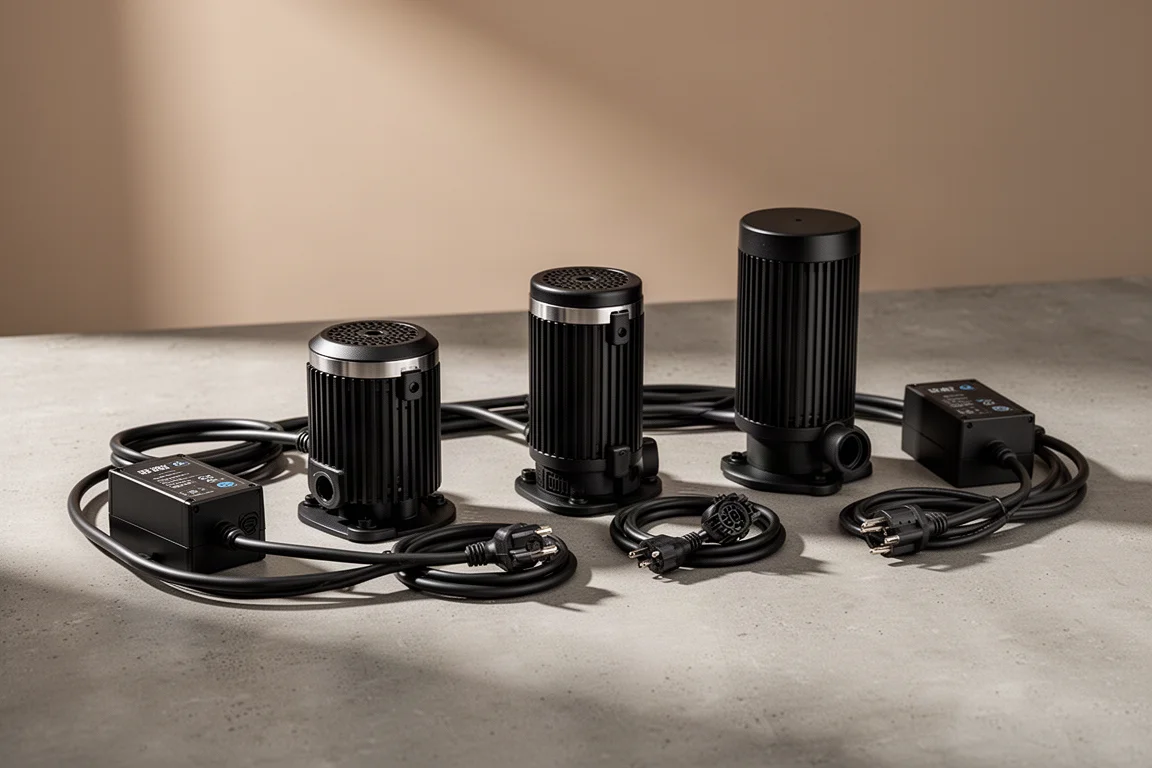
Abyzz Professional DC Pumps: A100, A200, and A400 Reviewed
A closer look at three German-made DC return pumps built for large reef systems, with titanium internals, fine flow control, and a 10-year warranty.
Aquarium Equipment
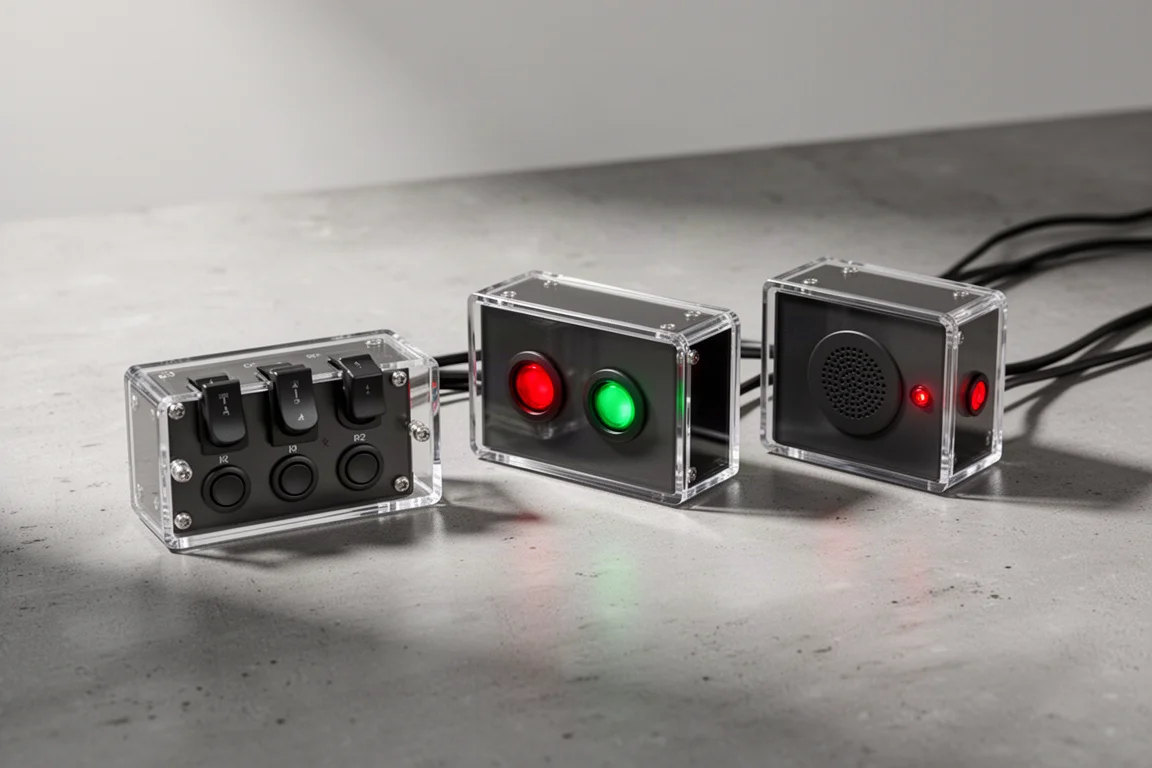
AdaptiveReef Controller Accessories: Three Tactile Upgrades for Your Reef Controller
A practical look at three AdaptiveReef add-ons that put physical switches, at-a-glance status lights, and a loud alarm within arm's reach of your reef tank.
Aquarium Equipment
Adaptive Reef Controller Boards: Basic vs Deluxe for Cleaner Aquarium Gear
A practical look at the Adaptive Reef Basic and Deluxe controller boards, what each one includes, and how to choose the right size for your tank gear.