Aquarium Equipment
Maxspect Cloud Edition Gyre Pumps: XF330, XF350 and the New Controller
A practical look at the 300 series gyre pumps, the wider flow articulation, and the Cloud Edition controller and app that now come with them.
Introduction
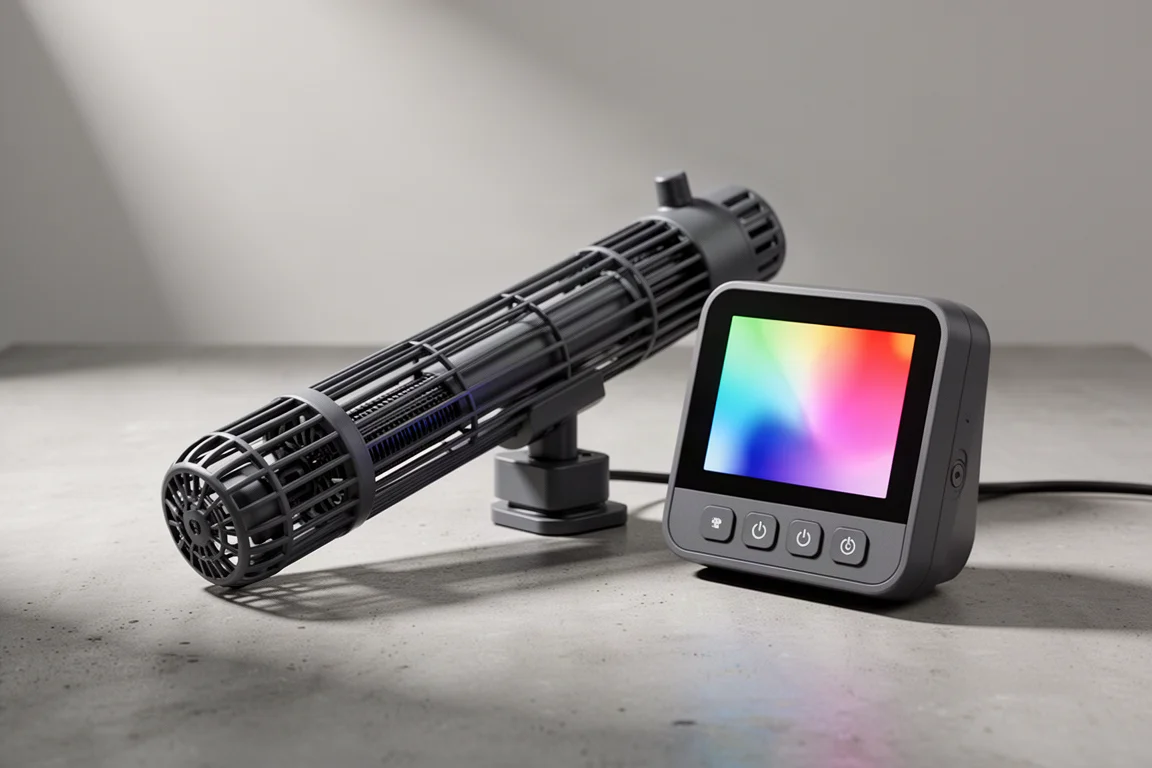
The 300 series gyre pumps from Maxspect, the XF330 and XF350, are not a reinvention of the gyre format. Maximum flow rates stay in familiar territory, dimensions are unchanged, and the same magnet strength and sine wave drive carry over from the previous generation. What has changed is how much control you have over where the water actually goes, and how quickly you can set that up.
Both pumps now arrive as Cloud Edition models, which means the new controller with its large color display, a wider set of preset flow patterns, and Synergy Cloud app control right out of the box.
What Changed With the 300 Series Gyre Pumps
Two hardware changes separate these pumps from the generation before them, and both are about flow direction.
Previously, each side of the pump could be rotated independently, which gave two points of articulation. Each side is now split into two segments, so you get four points of articulation for steering flow vertically. On top of that, the redesigned clip-on flow deflectors direct flow horizontally, and every segment has its own flow director. The result is eight points of articulation in total, letting a single pump spread water in four different directions.
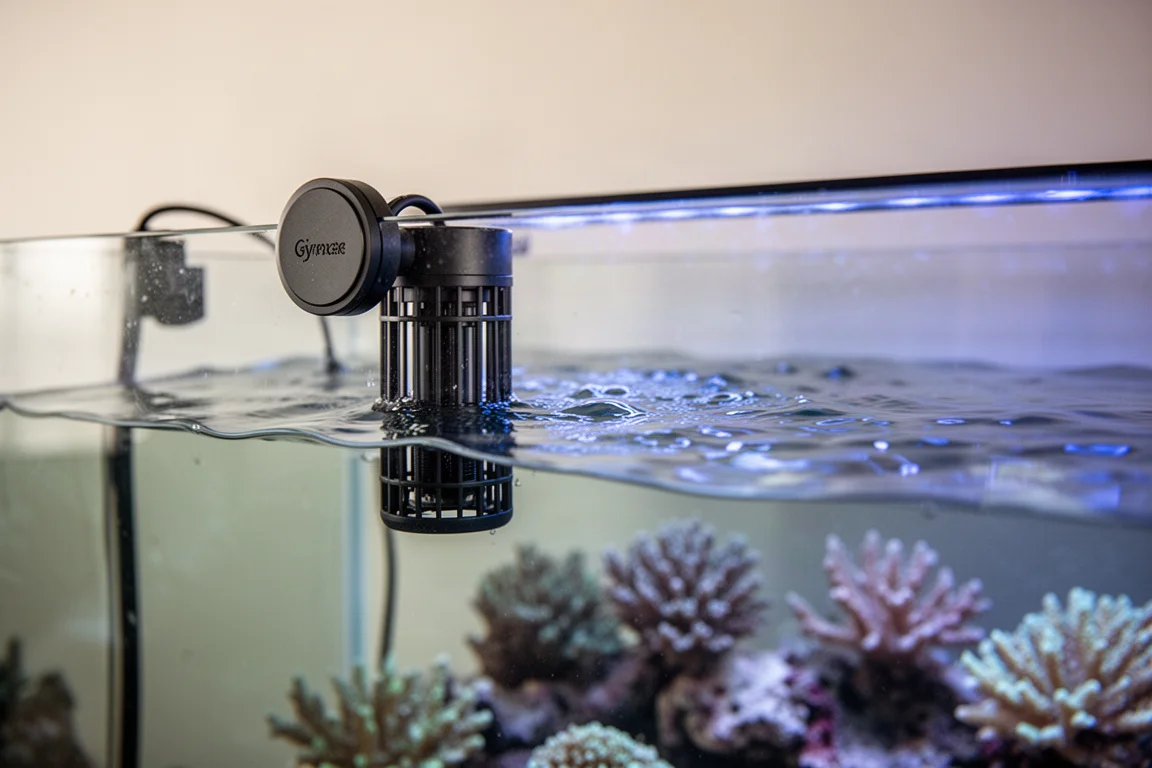
For a tank that has been relying on several fixed nozzles to cover dead spots, that extra range of movement is the difference between one pump doing the work of two and constantly re-aiming hardware that only points one way.
Flow rates remain in the same range as before, at roughly 2,350 gallons per hour for the XF330 and roughly 5,280 gallons per hour for the XF350. Both keep the same dimensions and the same magnet strength, rated for mounting on panels up to 0.8 inches and 1 inch thick, and both continue to use sine wave technology that keeps them quiet in operation.
Maxspect XF330 Gyre Pump
The XF330 is the smaller of the two, with a maximum flow rate of around 2,350 gallons per hour. It uses the same mounting hardware and quiet sine wave drive as the rest of the range, and it benefits from the full eight points of articulation described above.
Because the flow can be split across four directions, a single XF330 can cover more of a tank than its rating alone suggests. It is a sensible starting point for aquarists who want wide, adjustable movement without running two pumps at opposite ends of the glass.
Maxspect XF350 Gyre Pump
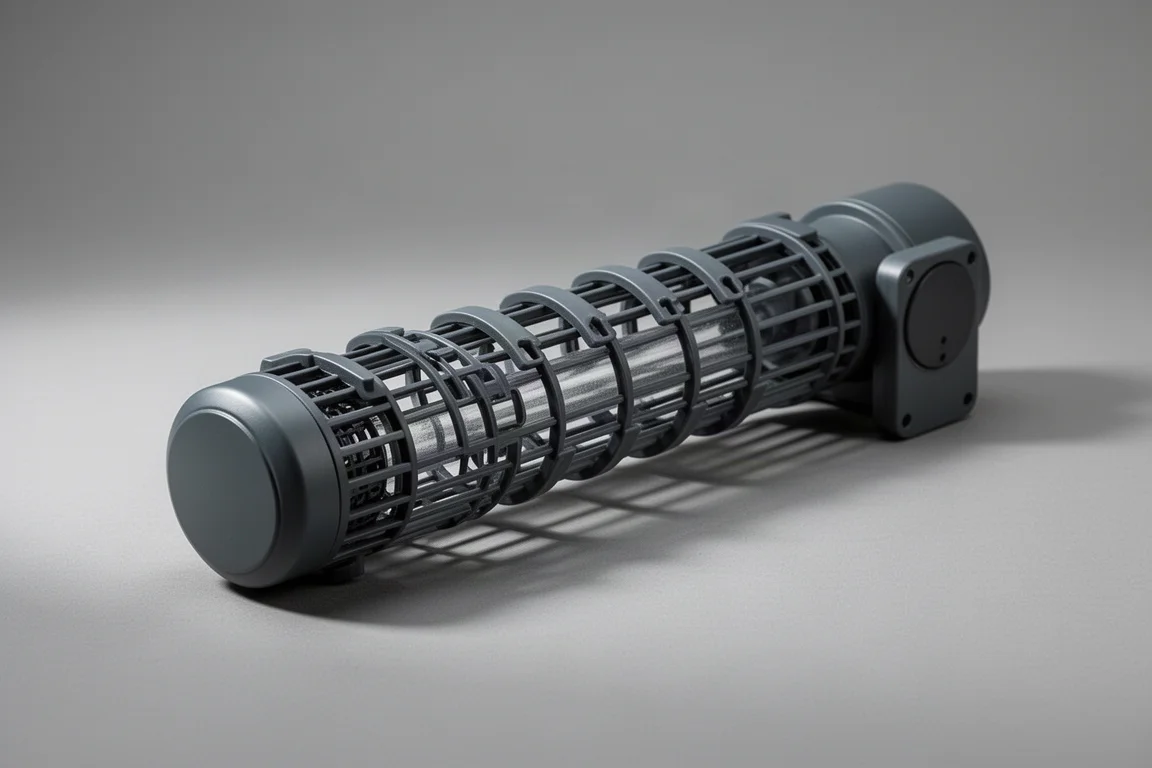
The XF350 is the higher-output option, rated for roughly 5,280 gallons per hour. The housing, magnet mount and sine wave drive carry over from the previous generation, so the practical difference between this and the XF330 comes down to how much water you need to move.
Both pumps use the same controller and the same app, and you can run any combination of the two, including one of each. Registering which pump is plugged into which port takes only a moment on the controller.
Maxspect Cloud Edition Controller
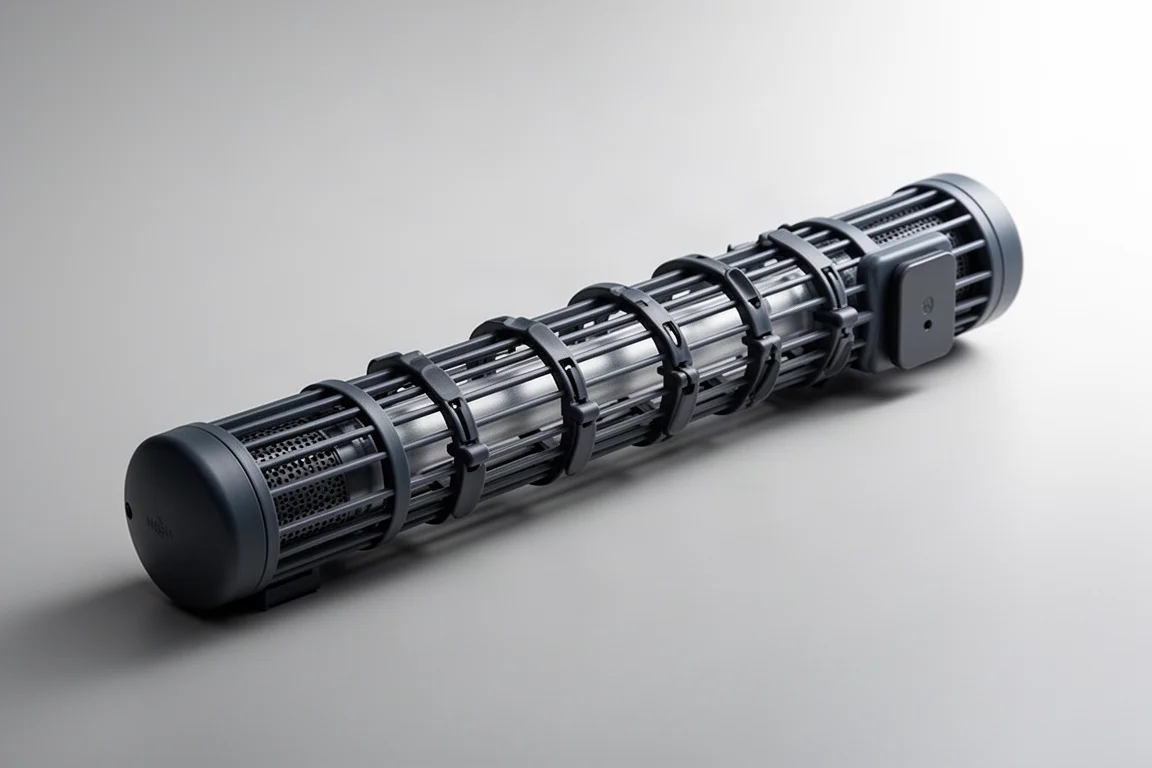
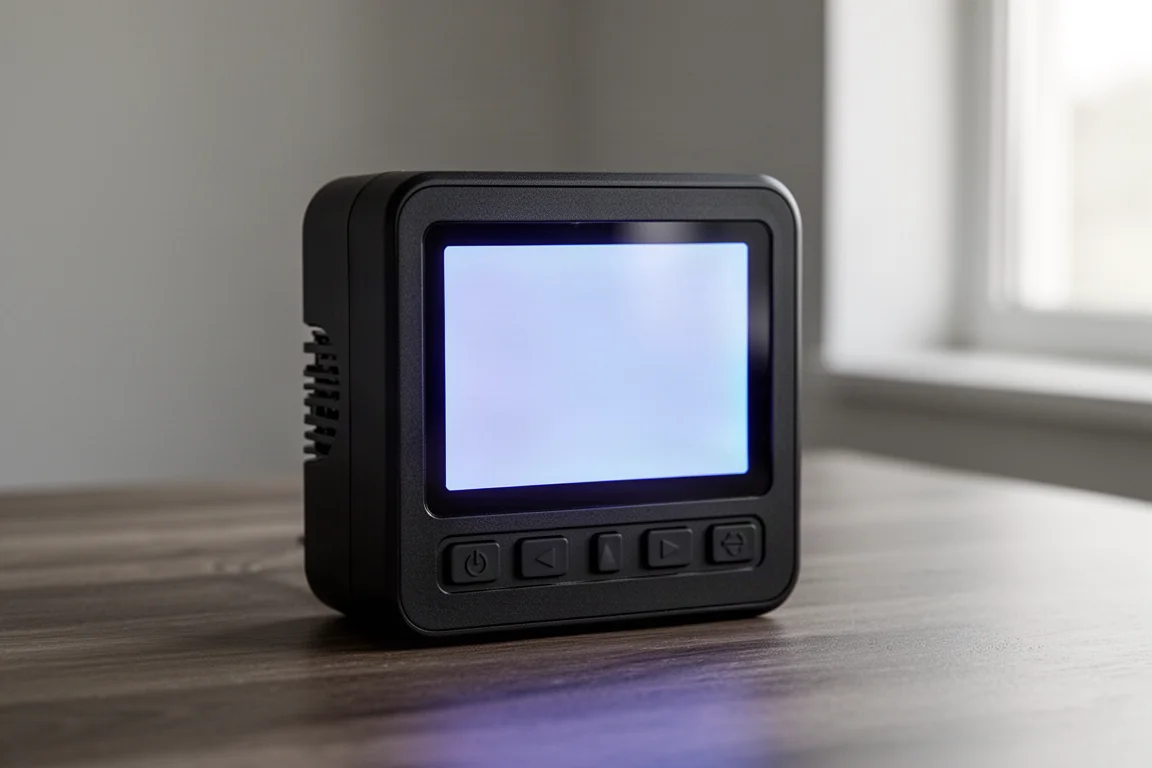
The controller is the most visible part of the update. A large color display replaces the small LCD of the previous generation, and physical buttons sit alongside it, which makes it far easier to read the current mode, the pump intensity, and any active maintenance warning at a glance. Programming is quicker too, helped by a much wider selection of presets.
Those presets cover constant pulse, advanced pulse, reverse pulse and random, with variations of each so you can choose a longer or shorter pulse pattern without building a custom profile from scratch. A 30 minute feed timer is included and can be cancelled at any time if you want feeding to finish sooner.
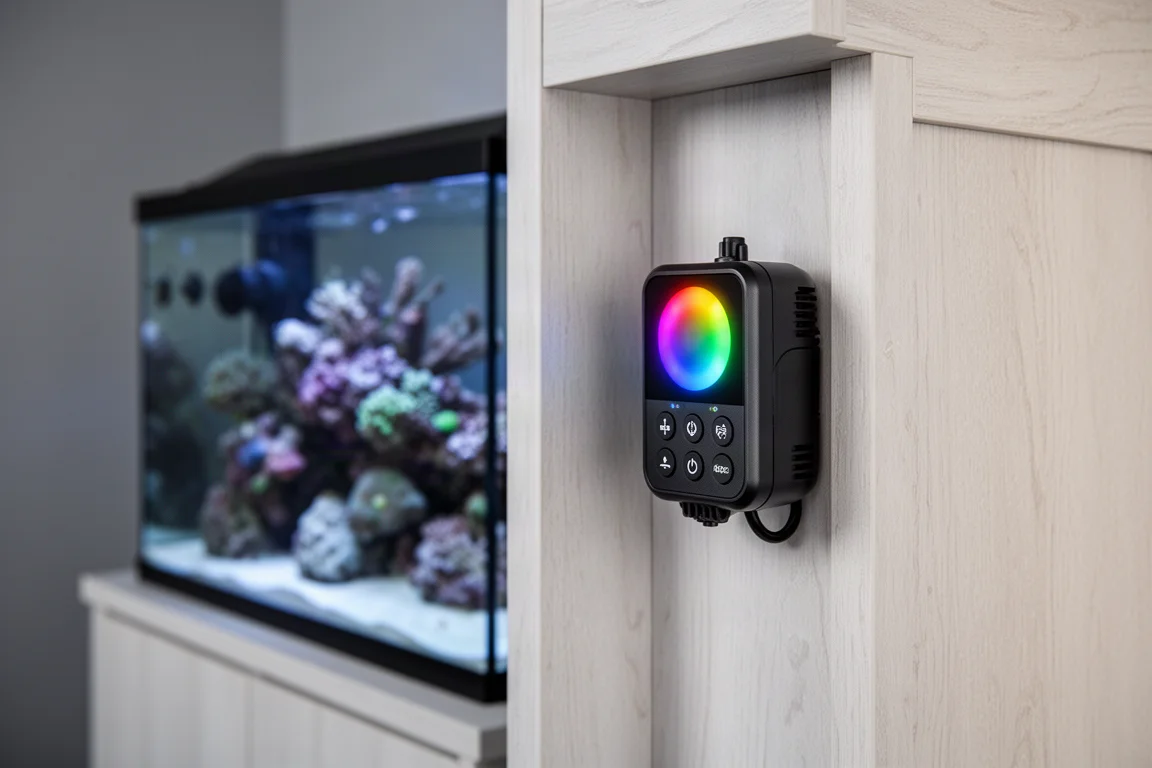
Underneath the presets, the controller keeps the essentials simple: pick a mode, set an intensity, and adjust pulse duration and length to taste. When you want to go further, the app takes over.
App Control and Preset Flow Schedules
Connecting the pumps in the Synergy Cloud app opens up a dashboard showing each pump’s status, its current manual setting, its intensity, and which part of an automated schedule it is running. Feed mode can be toggled from the app as well, with durations from five minutes up to 120 minutes in five minute increments.
Flow modes in the app cover constant pulse, gradual pulse, alternating and random. Each pump can run any of those at a set intensity with customizable pulse patterns, or you can build a schedule that mixes patterns and switches between them several times across a full 24 hours. Custom schedules can be saved and shared.
If building a schedule from scratch is not appealing, a set of presets is provided for SPS, LPS, fish only systems and more, which makes setup close to a one-tap process. A maintenance reminder also sends a notification every three months to prompt a full cleaning.
Maintenance and Long-Term Ownership
Gyre pumps ask for a little more attention than propeller-style designs because they have more parts, and that is still true here. A quick bath in citric acid every two to three weeks keeps them running smoothly with minimal effort, and a full disassembly roughly every three months handles the deeper build-up.
Maxspect has made that routine easier in two ways. Every component is labeled and color-coded, so it is obvious which part belongs on which side, and the new cage design uses shorter segments that are easier to reach into during cleaning.
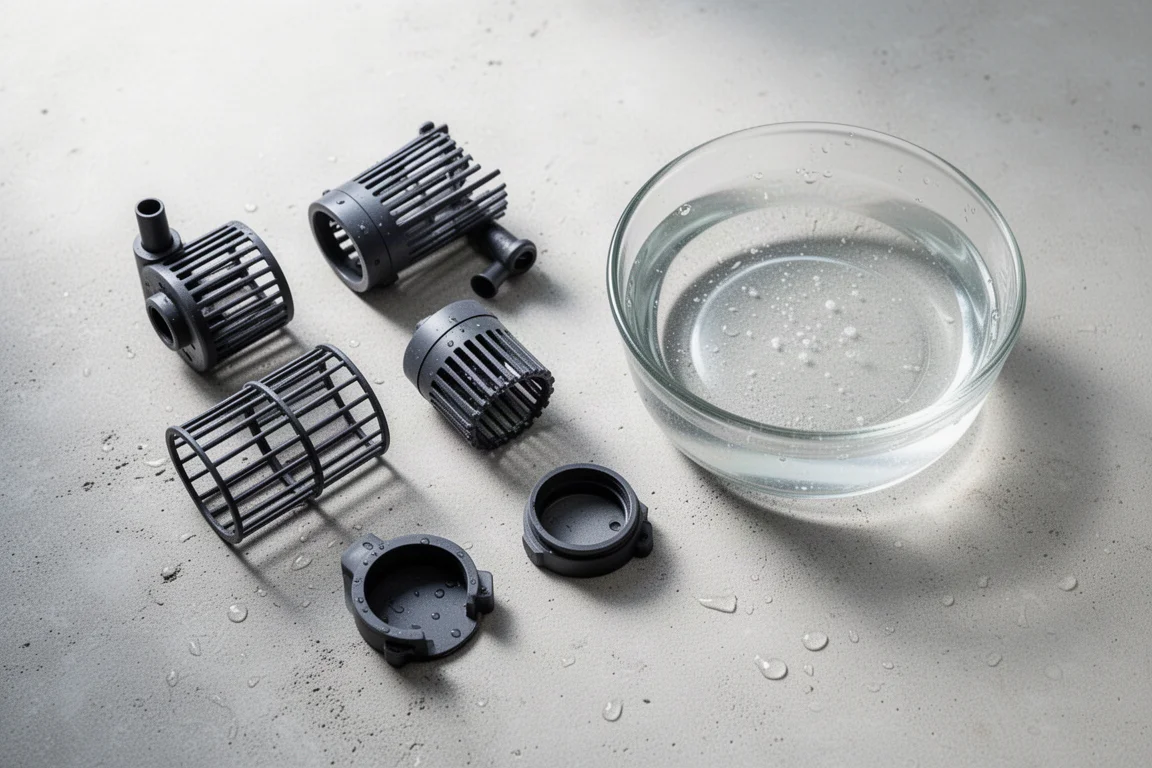
Do the math on that schedule before buying. Two to three weekly baths are quick to fold into a routine, but the quarterly teardown is real work, and it is worth knowing in advance whether you are happy to do it.
Sizing and Pump Pairing
Flow rate is only half the decision. The XF330 and XF350 share the same dimensions and mount, so the choice between them is mostly about how much water your system holds and how much movement your corals want.
Because both pumps work on the same controller, you can start with one and add another later, or run one of each on a single system. Set the pump type for each port on the controller so it knows what is connected, then let the app handle the schedule.
Buying Advice
If your priority is covering a tank with fewer fixtures, the increased articulation is the feature worth paying attention to. A single unit can now aim flow in four directions instead of two, which changes how many pumps a system actually needs.
Choose the XF330 if roughly 2,350 gallons per hour suits your tank, and step up to the XF350 if you need closer to 5,280 gallons per hour. Whichever you pick, the Cloud Edition controller and the app are part of the package, so the programming experience stays the same.
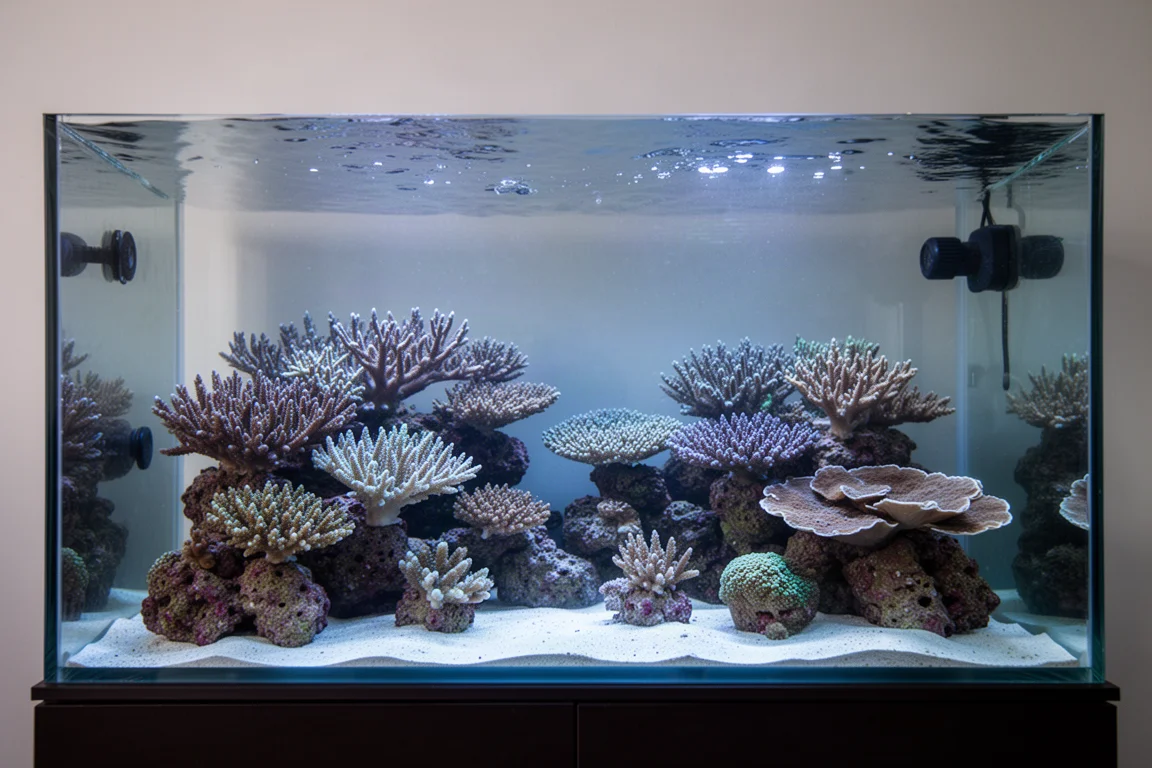
Budget for maintenance as well as hardware. The citric acid bath every two to three weeks is easy to keep up with, but the quarterly full clean is the commitment that keeps these pumps performing over the long term.
Conclusion
The 300 series gyre pumps are a control-focused update rather than a power-focused one. Flow rates, dimensions and mounting stay familiar, while eight points of articulation, a far better controller and app-based scheduling with shareable custom profiles give you more ways to shape water movement in a reef tank.
If the appeal is a gyre pump that is easier to aim, easier to program and easier to keep clean, this generation addresses all three.
Further reading
Related Reviews
Aquarium Equipment
Abyzz Professional DC Pumps: A100, A200, and A400 Reviewed
A closer look at three German-made DC return pumps built for large reef systems, with titanium internals, fine flow control, and a 10-year warranty.
Aquarium Equipment
AdaptiveReef Controller Accessories: Three Tactile Upgrades for Your Reef Controller
A practical look at three AdaptiveReef add-ons that put physical switches, at-a-glance status lights, and a loud alarm within arm's reach of your reef tank.
Aquarium Equipment
Adaptive Reef Controller Boards: Basic vs Deluxe for Cleaner Aquarium Gear
A practical look at the Adaptive Reef Basic and Deluxe controller boards, what each one includes, and how to choose the right size for your tank gear.