Aquarium Lighting
Maxspect Aquarium LED Lighting: Five Fixture Approaches Compared
A practical guide to five Maxspect lighting approaches, from the full-blue Ethereal panel to the compact Jump, the single-fixture Razor, the hybrid Recurve, and the all-in-one Dice nano kit.
Introduction
Maxspect has taken at least five distinct approaches to aquarium lighting, and the differences between them matter more than the model names suggest. A couple of these designs arrived years before the hobby was ready for them, and one or two are still waiting for a wider audience.
This guide works through each approach in turn: the Ethereal panel, the compact Jump, the single-fixture Razor, the hybrid Recurve, and the all-in-one Dice nano kit. The goal is straightforward. By the end, you should have a clear idea of which format suits the tank you actually keep.
What Maxspect Does Differently
Most LED fixtures rely on a handful of diode types, and each individual chip produces a narrow spike in the spectrum rather than the broad coverage a fluorescent tube provides. Maxspect took a different route by populating the blue channel far more densely, using chips from roughly 420 nanometers through to 500 nanometers. That range includes royal blue, a 480 nanometer cyan-blue, and a 420 nanometer violet-blue that sits between royal blue and true ultraviolet, which begins below 400 nanometers.
The practical effect is a fuller blue spectrum rather than a few sharp peaks. Corals use that light for photosynthesis, and the wider blue coverage is intended to support both growth and coloration.
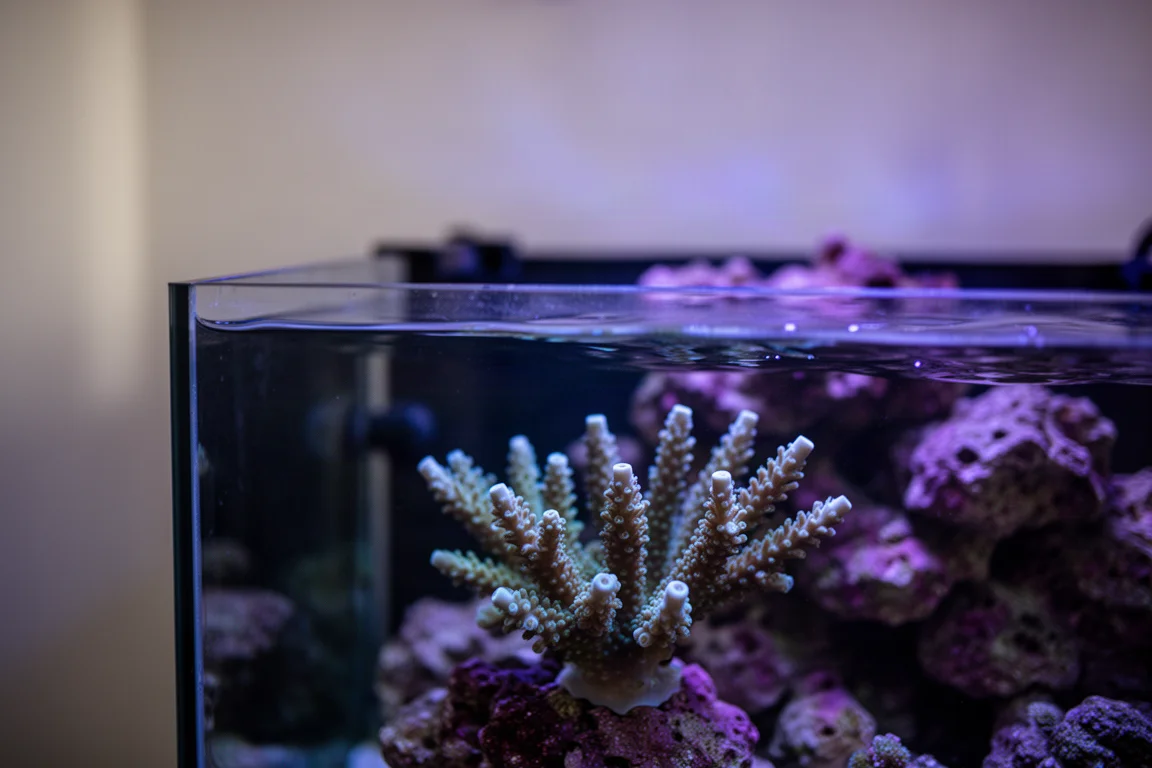
One consequence is worth understanding before you buy. The human eye is far more sensitive to green and yellow light than to blue, so a blue-heavy fixture can look dimmer over the tank than its output really is. Perceived brightness and useful light are not the same measurement, and this single point explains why several Maxspect designs were read as underpowered when they were introduced.
The same in-house thinking shows up in the hardware. Every fixture in the range includes a mounting solution in the box, and cooling is designed around the fixture itself rather than borrowed from a generic heatsink.
Maxspect Ethereal: A Full-Blue Panel
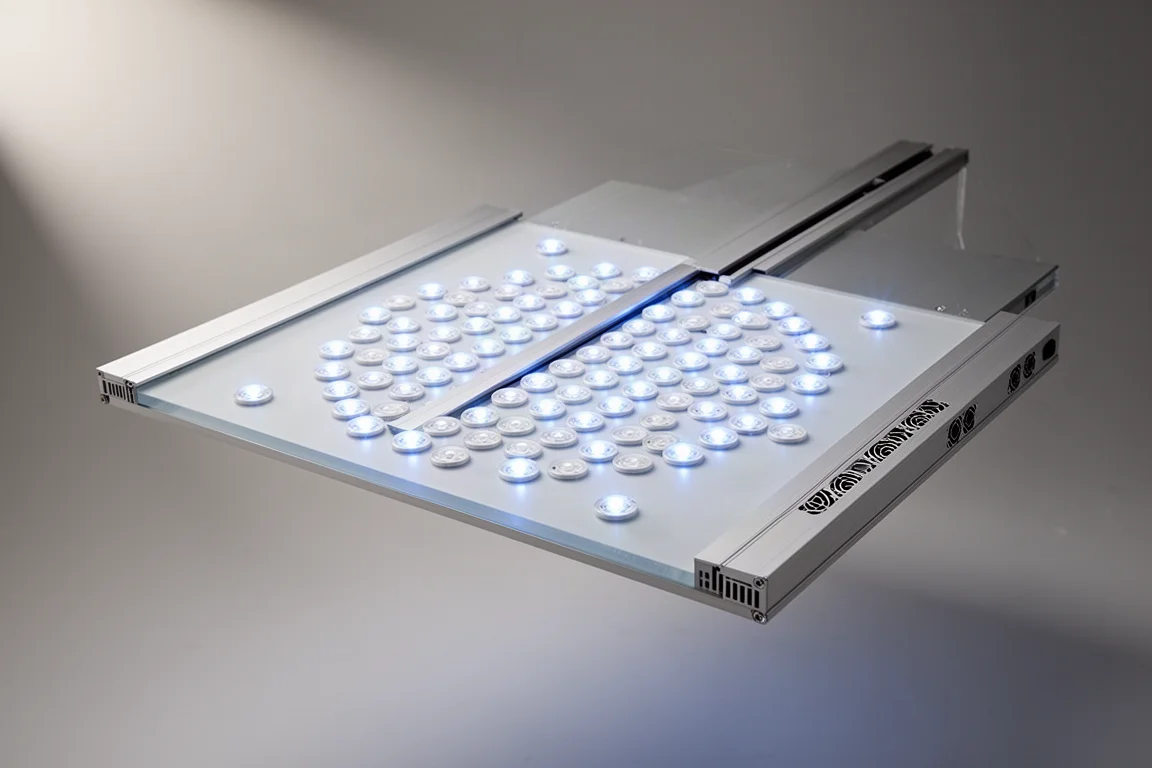
The Ethereal launched in 2015 and remains on sale across most of the world, with North America the notable exception. Its signature is the blue spectrum. It is a flat panel covered in small LED pucks arranged in a loose circular cluster, built to deliver a continuous run of blue wavelengths rather than a few dominant peaks.
The cooling design is unusual. Instead of a single heatsink sitting under the diodes, the fixture sandwiches the LEDs and circuitry between two aluminium plates, with a fan that draws air in at the top and bottom and exhausts it from the sides. The entire fixture acts as the heat exchanger, which keeps it thin without sacrificing thermal headroom.
Coral growth and coloration improvements have been observed within months of use, even though the fixture still reads as dim to the naked eye under white light.
Maxspect Jump: Compact and Cloud-Connected
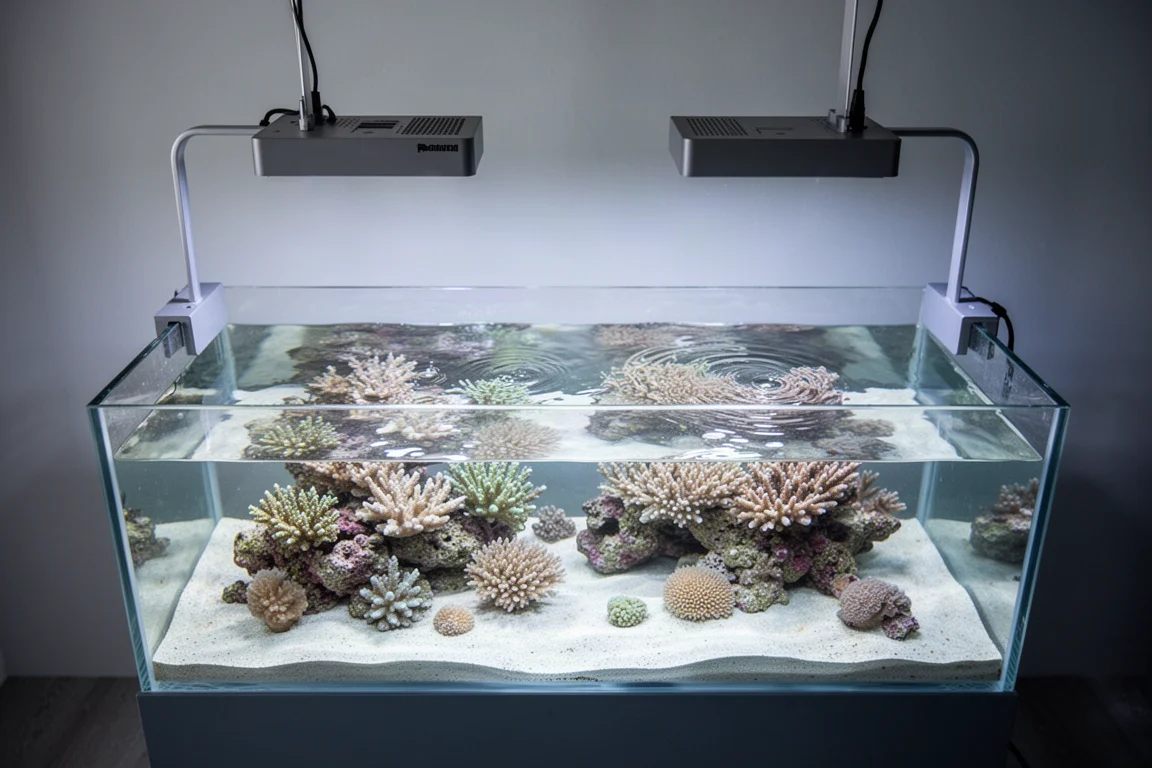
The Jump is the small sibling of the Ethereal. It runs at 65 watts, which is plenty for a small aquarium and goes further than the number suggests when several units are combined on larger tanks in the four to five foot range. The design is modular, so a soft coral, LPS, or fish-only setup can start with a single unit and scale from there.
Cloud connectivity is included out of the box, and the fixture ships with its mounting hardware and an integrated cable management clip. That last detail matters more than it sounds. Plenty of fixtures in this bracket expect you to buy a mount separately.
Two spectrum versions exist. The regular version carries more white, while the Blue version concentrates on the complete blue range. The choice comes down to what you keep and how you want it to look.
A useful way to decide: corals with strong natural pigments, such as zoanthids and many mushrooms, show their colour best under whiter light, because white contains every colour and reflects them back to your eye. Corals kept for fluorescence look their best under heavier blue. Both are legitimate goals, and they simply favour different versions of the same fixture.
Lens geometry is the other thing to know. The stock lens is fairly focused, which suits a narrower footprint better than a two foot cube, and an optional diffuser hood is available as an add-on. It serves two purposes: it softens and spreads the output, and it shields your eyes from spill light when the fixture sits at normal viewing height. The hood uses two layers of diffusion material, and you can fit one or both depending on how much spread you want against how much light you are willing to lose.
Maxspect Razor: The Single-Fixture Classic
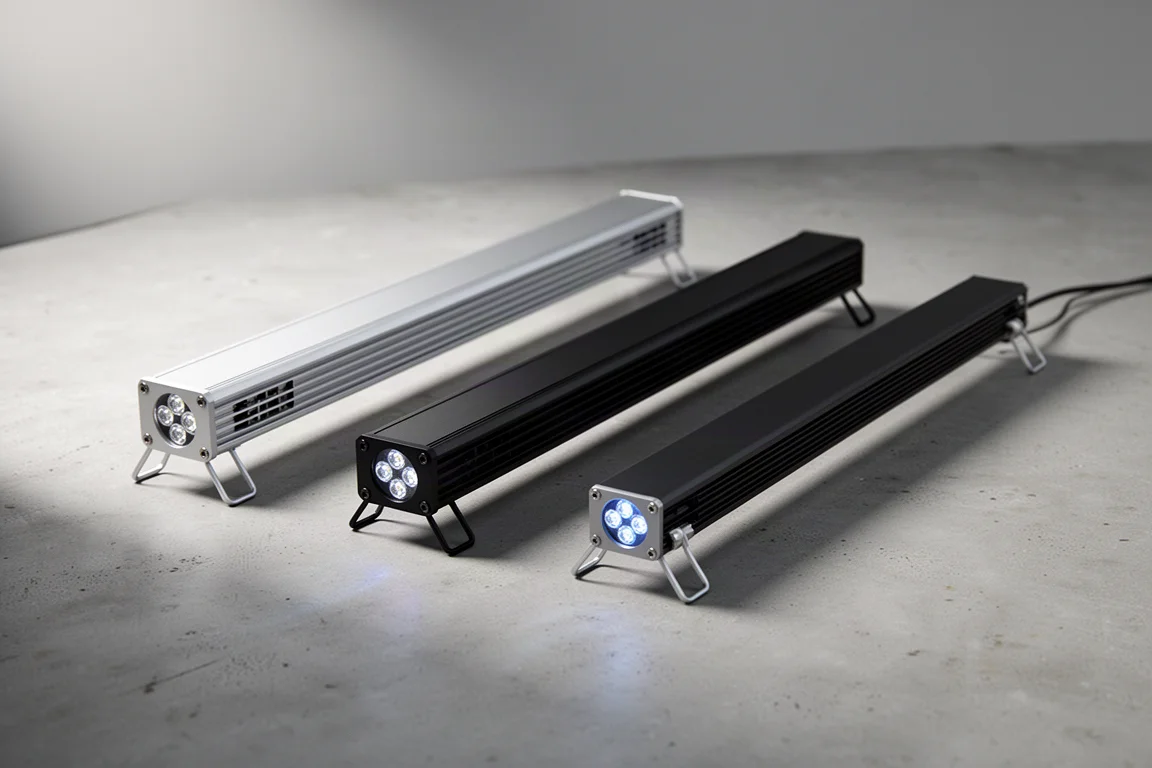
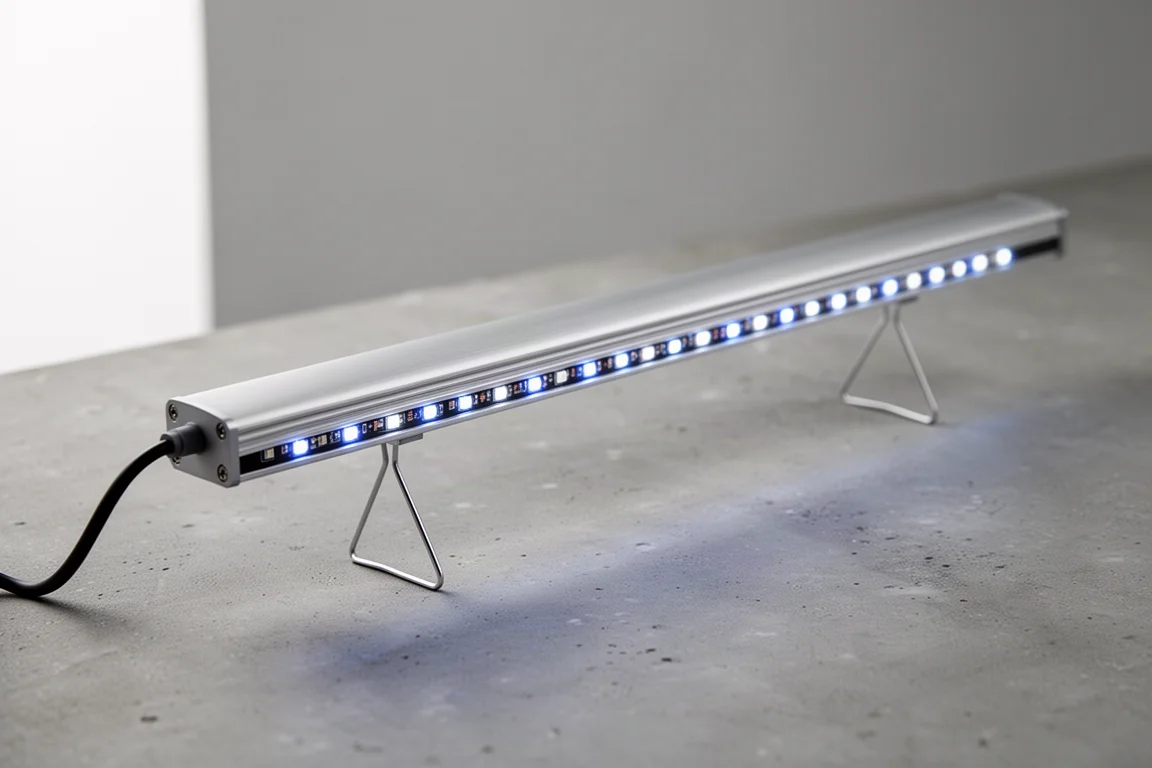
The Razor takes the opposite approach. It is one fixture spanning the tank, with onboard controls and no app required. Setup is about as simple as it gets: place the fixture, plug it in, and dial it in.
It is also the line that introduced 420 nanometer LEDs to the hobby. The first Razor is believed to be the earliest fixture to use them, and it produced a visible extra pop in coral colour well before the reason was widely understood.
The form factor is deliberately low profile. A single cord and a set of legs that clamp onto the tank edge come in the box, and suspension mounting is possible if you would rather lift the fixture clear of the water for maintenance.
That last point is the main trade-off. A full-length fixture covers a lot of the tank opening, which can make it harder to reach into the water than with a modular setup. Onboard control cuts both ways as well: without Wi-Fi or an app, the Razor encourages you to set a schedule once and leave it alone, and corals tend to respond better to stability than to constant changes. If you do want app control, it is available through an additional module that links the fixture to the app.
The line has since been trimmed from five models to three.
Maxspect Recurve: Built-In Fill Light
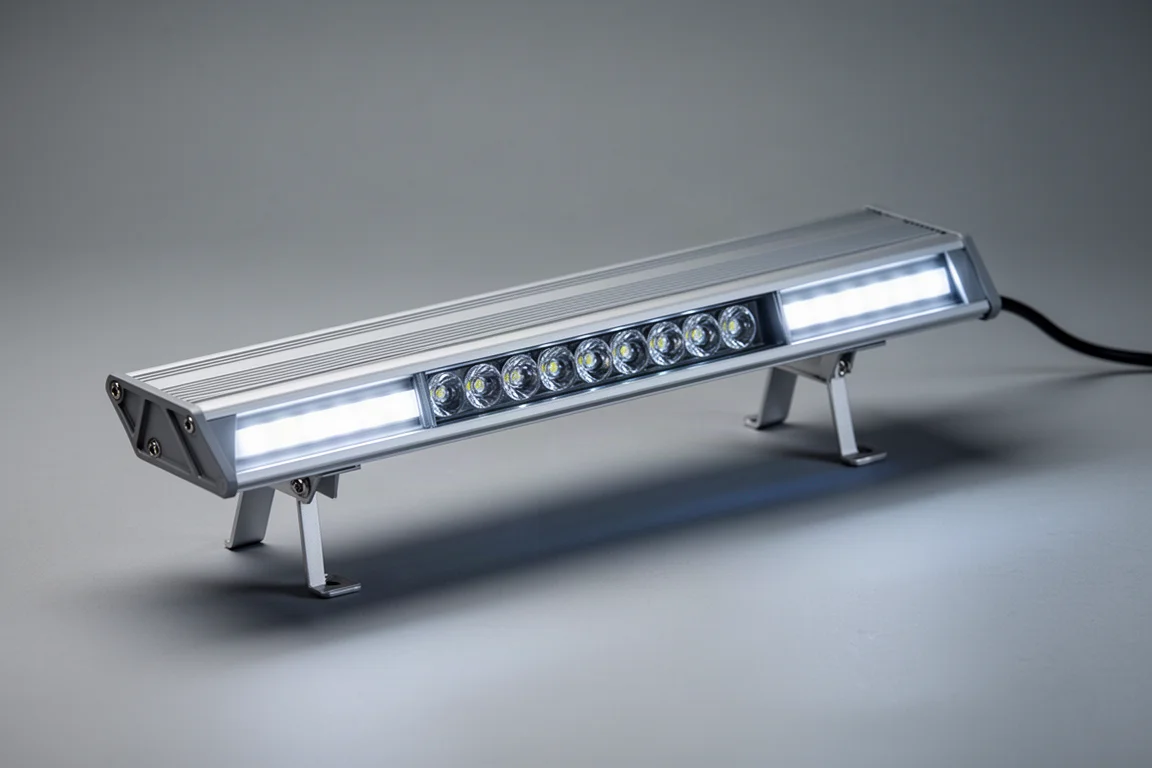
The Recurve arrived around 2016 and combined two ideas that are usually kept apart. Inside a single fixture it packs a row of modular light clusters, the same building blocks used elsewhere in the range, and adds dedicated side lights to act as fill.
The reasoning behind that fill light is straightforward. T5 tubes were prized for broad blue coverage that suited coral biology better than the narrow spikes of early LEDs. Rather than accept that as an argument for tubes, the Recurve used LEDs across a wide blue range to reproduce what made them effective.
The result is a single fixture with one cord that delivers flatter, more even coverage than a row of modules packed closely together, and the coverage can be adjusted to suit the tank. Lighting from both sides reduces shadowing across the rockwork.
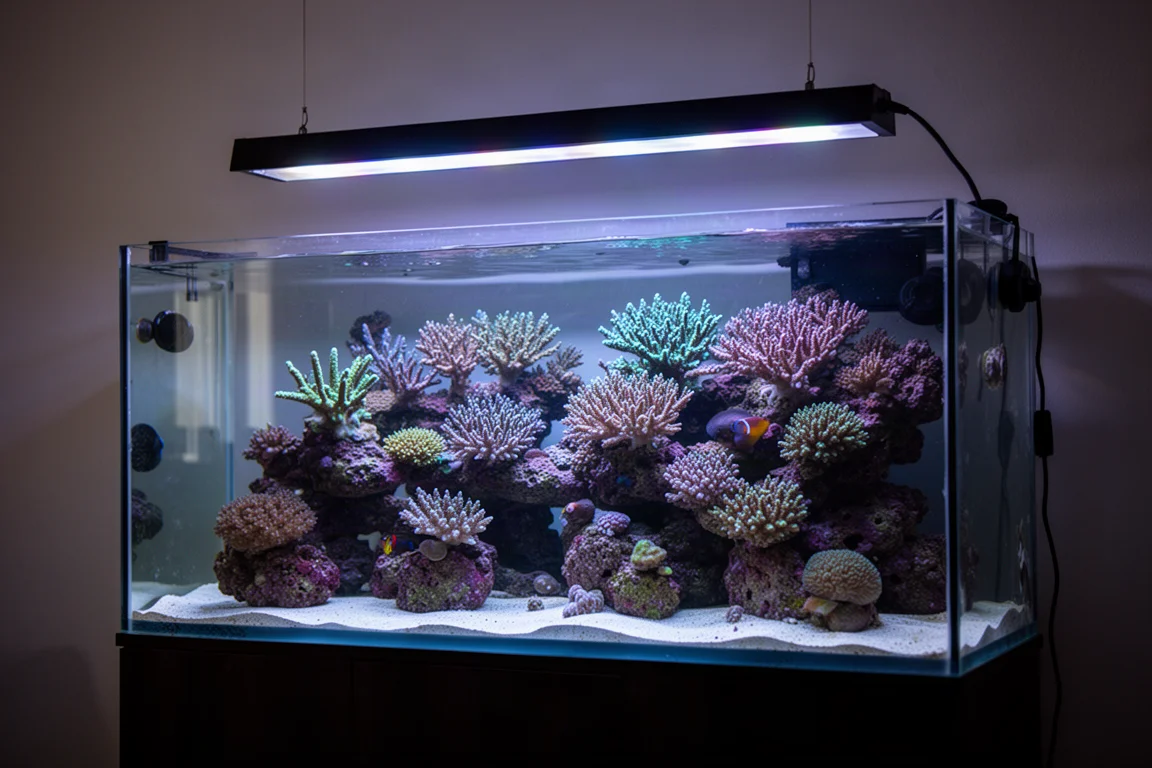
It was ahead of its time. At that point in the hobby, most keepers were reluctant to take a chance on a format that few others had tried, and they preferred the proven option. The design remains a clear illustration of how fill light from the sides changes the look of a reef tank.
Maxspect Dice: An All-In-One Nano Starting Point
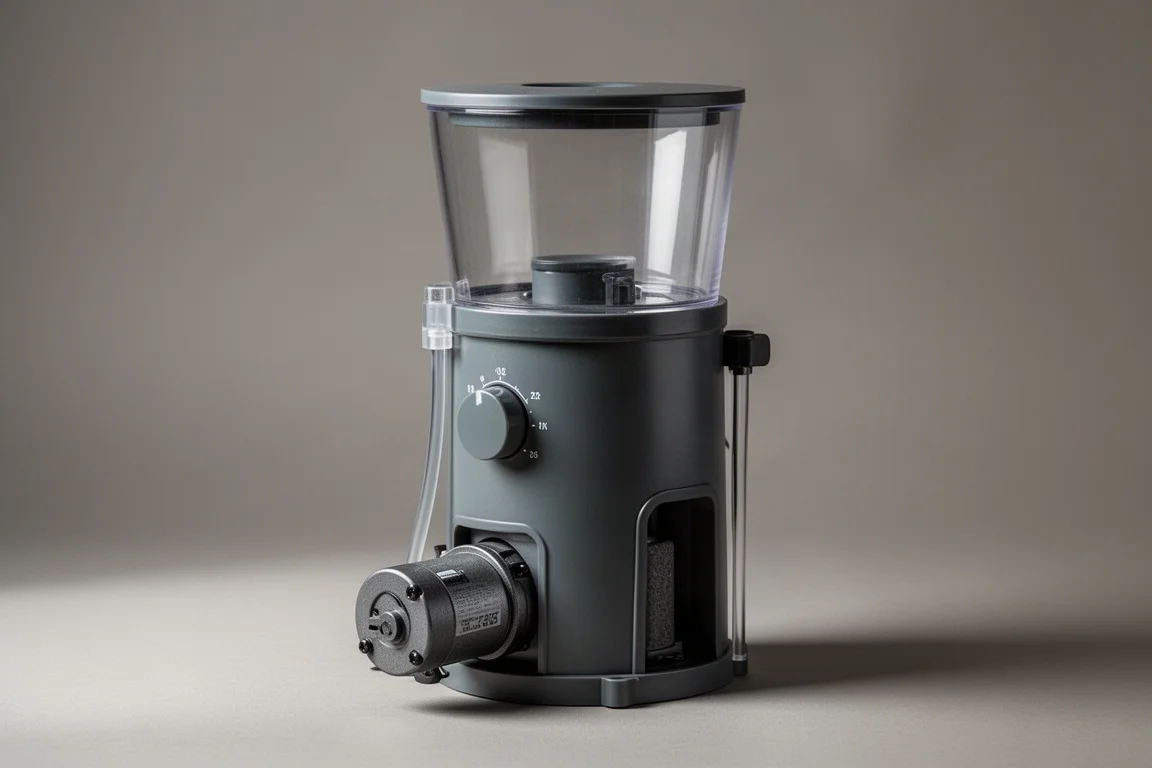
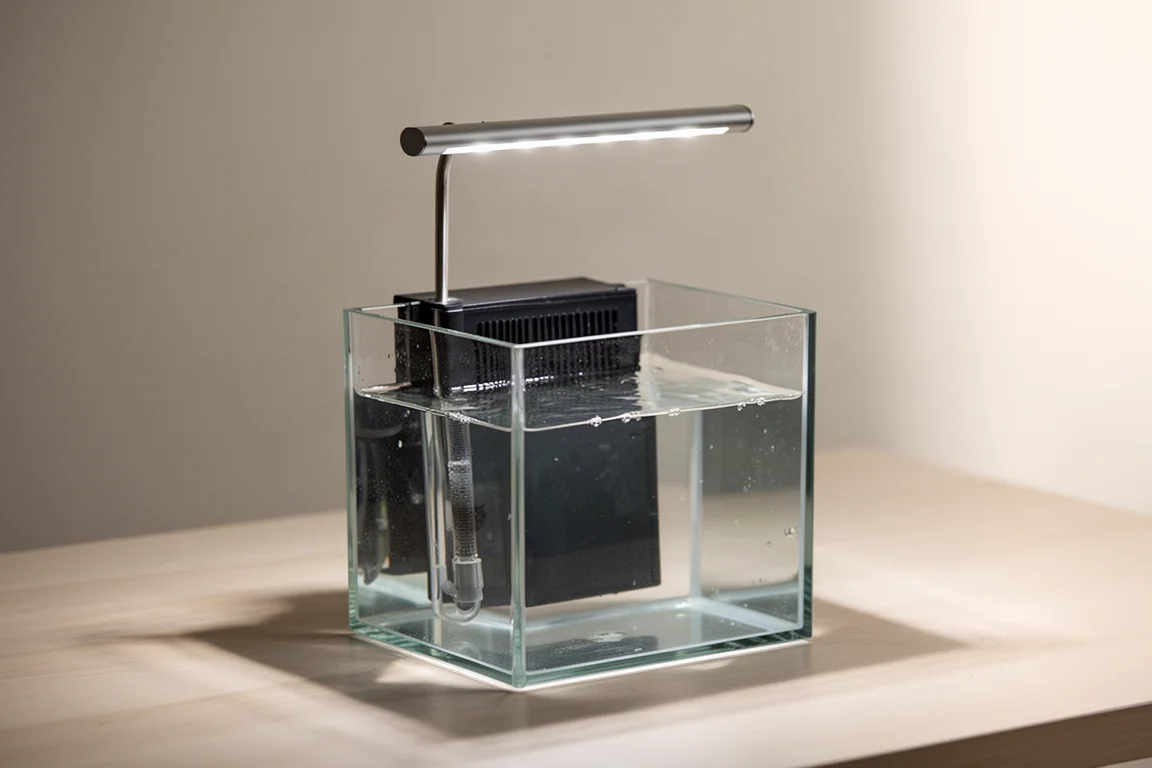
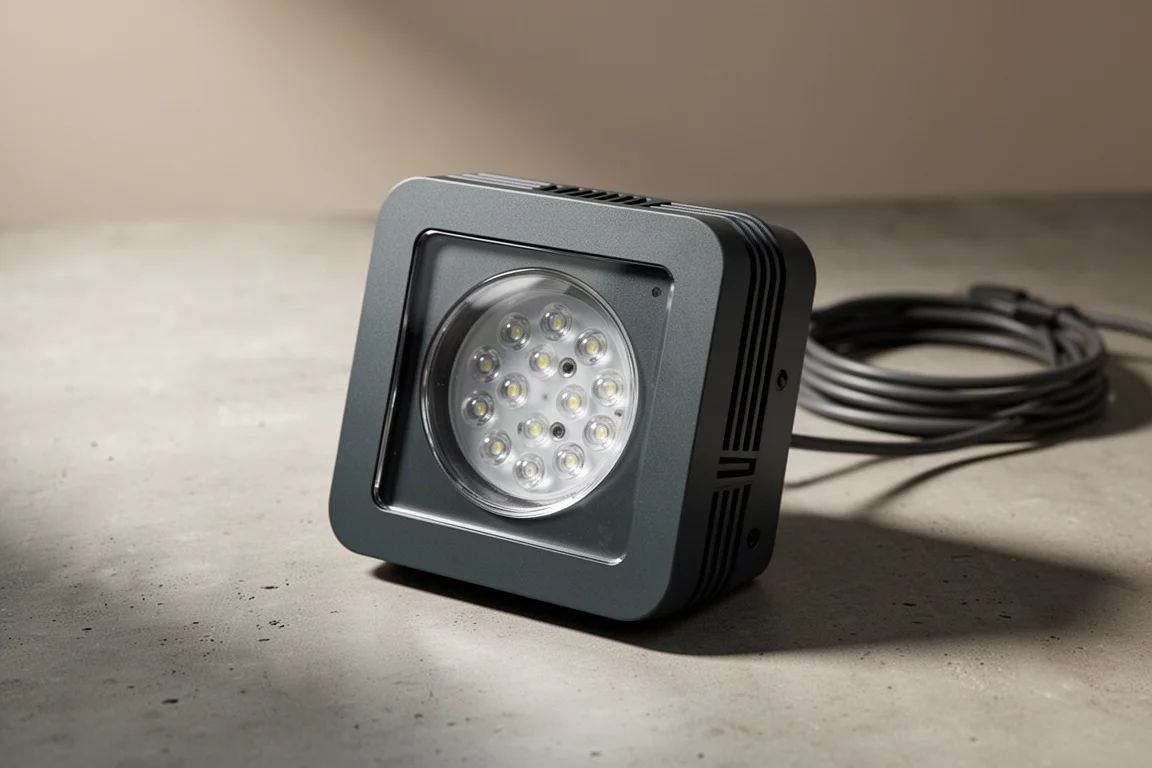
The Dice is a 12 gallon nano aquarium that arrives as a complete package, with pumps and a light included for around $350. The fixture in the box is effectively a miniature Ethereal: 30 watts, passively cooled with no fan, and offered in regular and Blue versions.
For a nano tank, that is a sensible match. A 30 watt passively cooled fixture keeps the setup quiet and simple, and the light sits in a full aluminium body rather than a plastic shell. The mount is included, and control is handled by a simple onboard controller rather than an app.
Buying Advice: Matching a Fixture to Your Tank
Start with the tank and the livestock, not the fixture. A 30 to 65 watt fixture is a good match for a nano tank, a soft coral or LPS layout, or a fish-only system with live rock. An Acropora-dominant tank is a different problem, and it is more likely to need several units than a different fixture.
Mounting deserves a moment because it is the thing most people rank first. Every fixture in this range includes a mount in the box, so easy installation is not a reason to pay more elsewhere. If spill light at eye level bothers you, the optional diffuser hood available for the Jump is worth knowing about before you order.
Control style is the next decision. Onboard control is simpler and encourages a stable schedule, while cloud and app control is genuinely useful if you travel and want to check on the tank remotely. There is no wrong answer here, only a preference.
Spectrum is the last piece. White-leaning output flatters corals with strong natural pigments, and blue-leaning output flatters fluorescence. Decide which look you are chasing, then pick the version that matches it.
Conclusion
All five approaches share the same foundation: a dense blue spectrum, cooling built around the fixture, and a mount in the box. What changes is the format. The Ethereal and Jump favour a wide blue panel and modular scaling, the Razor favours simplicity and a single clean fixture, the Recurve shows what side fill light can do, and the Dice packages a small version of that philosophy into a ready-to-run nano tank. Match the format to your tank and your routine, and any of them will serve you well.
Further reading
Related Reviews
Aquarium Lighting
AI Blade LED Lights Review: A Versatile Strip Light for Reef Tanks
A practical look at the AI Blade LED line, including the value-focused Grow spectrum, mounting options, app control and PAR performance.
Aquarium Lighting
AI Hydra 32 and Hydra 64 Setup Guide: Mounting Heights, Spacing, and Add-On Lighting
A practical reef lighting guide covering optimal mounting heights for the AI Hydra 32 and Hydra 64, spacing for even coverage, and when add-on lighting is worth it.
Aquarium Lighting
AI Prime Review: A Compact Reef Light That Grows With Your Tank
A small, modular reef aquarium LED that reaches LPS and soft coral PAR levels over a 60-gallon cube, plus the spacing, mounting height, and control habits that make it work.