Portable Power Stations
MaxOak Blue Yeti EB240 Review: A 2,400Wh Power Station for Long Off-Grid Stretches
A 2,400Wh portable power station with pure sine wave AC output, solar and AC charging, and enough capacity to run lights, fans, and small appliances for days.
Introduction
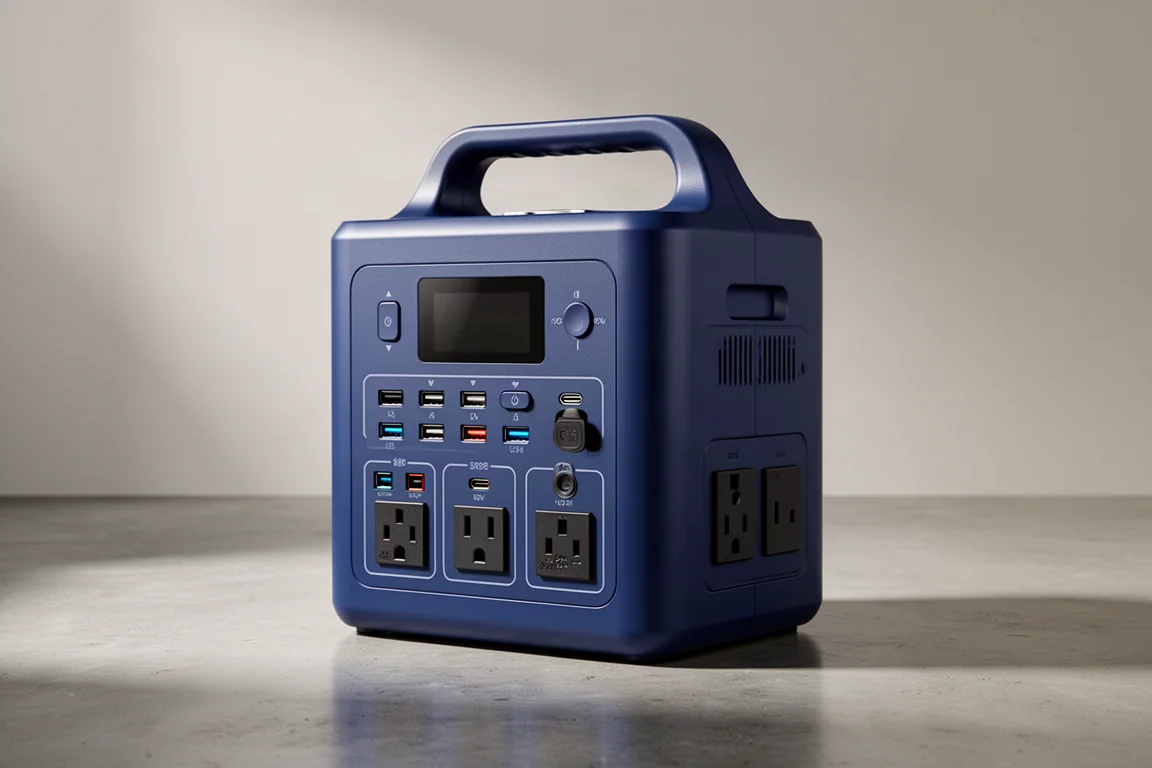
A 2,400 watt hour power station sits in a different class from the small camping batteries most people start with, and the MaxOak Blue Yeti EB240 makes that clear the moment it arrives. It uses a lithium polymer battery built from automotive cells, measures roughly 19.5 inches long, 14.5 inches tall, and 6.5 inches wide, and weighs about 48 pounds. This is equipment you position deliberately rather than carry casually.
That mix of capacity and mass defines how the unit is used in practice. It is designed for people who need serious stored energy in a single box: lighting a camp for a week, keeping phones and watches topped up, running fans through warm nights, and covering a household circuit or two when the grid drops out.
Capacity is rated at 2,400 watt hours, with a stated 87 percent of that figure available for use. The grab handle is substantial enough to handle the weight, and the fit and finish of the housing is very good.

The unit ships with the power station itself, a power brick for AC charging, an MC4 solar connector cable for attaching solar panels, a small instruction manual, and certification paperwork. The blue finish is a matter of taste; a black option would suit some buyers better, but the color is not a drawback in itself.
Who This Product Is For
The EB240 makes the most sense for three kinds of buyers.
The first is the overland and car camping crowd. Because the station is heavy and awkward to move, it works best when it lives in one place, such as the back of a truck or a dedicated corner of a basecamp. Loaded once and left in position, it becomes a quiet power source for lights, fans, and charging across a long trip.
The second is the household backup buyer. During storms and outages, this unit can run lighting, charge devices, and keep small appliances going without the noise and fumes of a fuel generator.
The third is anyone working remotely away from mains power, including people who need to charge cameras, phones, laptops, and accessories over several days without hunting for an outlet.
It is a poor fit for anyone who needs to carry power in a backpack, move the station between rooms frequently, or run appliances that demand more than 1,000 watts continuously.
Main Strengths
The headline strength is capacity per dollar. At its full retail price of about $1,900, the EB240 works out to roughly 70 cents per watt hour, which is competitive for a station of this size. Comparable large-capacity units often cost more per watt hour, and building a comparable battery system yourself tends to cost more rather than less.
Connectivity is good, if not exhaustive. The front panel carries four USB ports rated at 5 volts and 3 amps maximum, one USB-C power delivery port that tops out at 45 watts, a regulated 12 volt 9 amp DC port, and two 110 volt AC outlets. The AC outlets are pure sine wave and deliver 500 watts each for a combined 1,000 watts, with a 1,200 watt peak that can be held for about two minutes before the unit shuts down to protect itself. Pass-through charging is supported, so the station can be charged while it is powering devices.
Built-in protection covers overload, over current, overheating, low voltage, over voltage, and short circuit conditions, which covers the situations most likely to cause damage in real use. The display reports input and output, the included MC4 cable means solar panels can be connected without buying extra adapters, and charging is fast through both AC and solar inputs.
One smaller detail that matters more than it sounds: the USB ports keep running on very low draw and will not shut off, so trickle-charging devices such as watches and small accessories can continue indefinitely. Some stations cut power to low-draw devices, and this one does not.
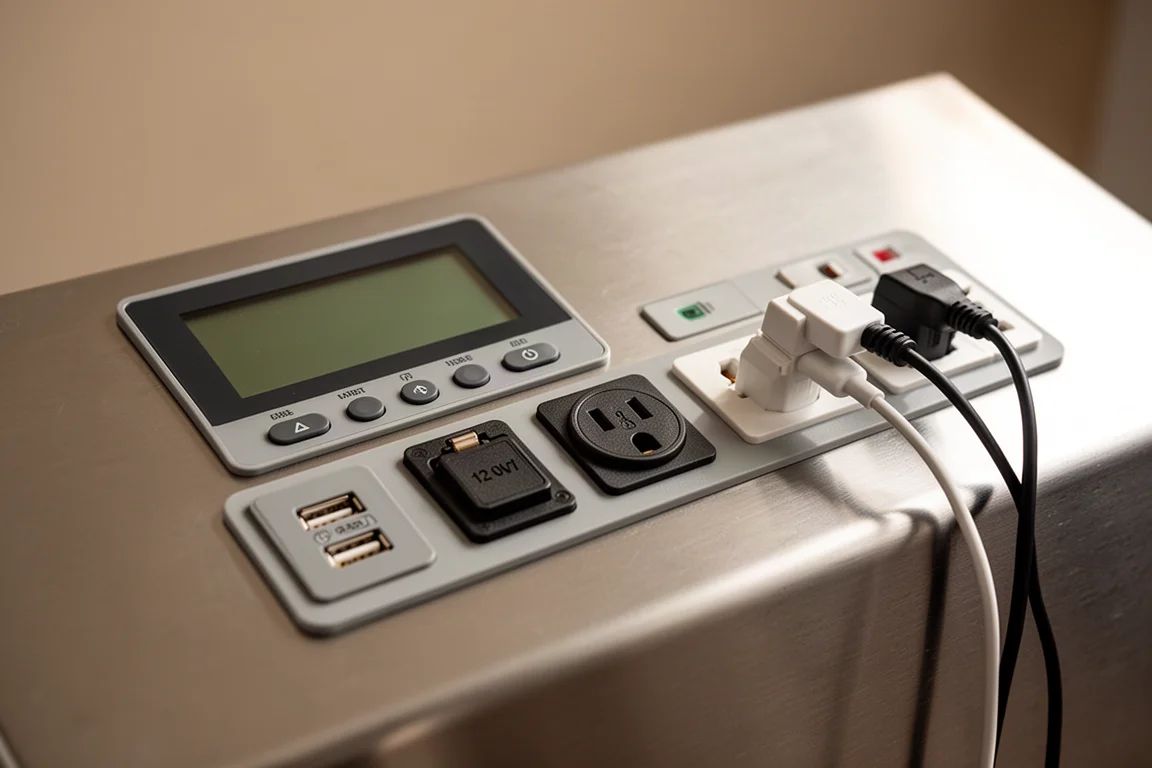
Three control buttons on the left side handle the power, DC output, and AC output, each activated with a press and hold. The battery level indicator sits alongside them, and a cooling fan handles heat management during heavier loads and charging.
Things to Consider Before Buying
Several trade-offs are worth understanding before committing to a unit this size.
The inverter rating is the most significant. A 1,000 watt continuous output with a 1,200 watt peak is modest for a 2,400 watt hour station, and anything that surges past the peak will trip the unit. Buyers running high-draw appliances should check their startup demands carefully, because a larger inverter would make far more sense at this capacity.
Weight and size are the second consideration. At roughly 48 pounds, moving the EB240 into a truck bed or up a set of stairs takes real effort. Once it is in place, the burden mostly disappears, but the initial positioning is a task.
The form factor adds a practical wrinkle. The station stands upright and can be knocked over fairly easily inside a vehicle, so laying it on its side during transport is the safer approach.
Charging flexibility is limited. The EB240 accepts AC or solar input only, with no DC charging path, which means it cannot be topped up while driving from a vehicle’s 12 volt socket. For overland use, that limitation shapes how trips are planned around the unit. The upside is the sheer capacity: it can run for a very long time between charges.
Noise is the next item. Both the station and its power brick are loud while charging, easily louder than an air conditioner or a hair dryer. In a separate room with the door closed this is manageable, but in a hotel room or a small living space it can genuinely interfere with sleep for light sleepers.
On solar, the absence of an Anderson power port and converter cables is a gap, since those accessories make panel hookups more flexible. The port count is also worth weighing: two AC outlets and a single USB-C port are on the lean side for a station of this size, and three or four AC outlets would be more appropriate.
Finally, the battery indicator uses a bar system where each bar represents roughly 20 percent. That makes it impossible to know exactly how much charge remains, and percentage readouts are far more useful. The AC output display has a related quirk: once draw drops below 30 watts, it no longer registers on screen.
Charging, Capacity, and Real-World Performance
Charging times vary considerably by input. Through AC, a full charge takes roughly 12 hours. Solar is faster when enough panel capacity is available: the unit accepts up to 500 watts of solar input and can reach full charge in about 5 hours at that level. With roughly 300 watts of panel capacity, expect around 8.5 hours. That makes solar the preferred method for anyone with the panels to support it.
The capacity is where the EB240 justifies its size. Across a week-long cross-country trip to Colorado, the station stayed in the back of a truck and powered two lights most evenings, two fans through the warmer nights, an electric blanket on one cold night, and repeated phone and smartwatch charging. It did not need to be recharged once during that week. Running a hair dryer was possible as well, staying within the output limits.

That pattern reflects what the unit does best: many small and medium loads spread across days, rather than one large appliance at a time. The same characteristics carry over to home use, where the station has handled lighting and small devices during storm-related outages, and to remote work setups where cameras, phones, and tools need charging away from mains power.
As long as total draw stays below the 1,200 watt peak, the station behaves predictably. Above that ceiling, it shuts off to protect itself, which is the behavior to plan around.
Reliability and Long-Term Use
Reliability has been a strong point. Through a full season of use in very different roles, including travel, campsite work, and emergency backup at home, the unit produced no errors and no glitches. It started and ran as expected every time.
The build quality supports that impression. The housing is well finished, the handle is sturdy enough for the weight, and the internal protections cover the failure modes that matter most. For long-term off-grid use, the main wish is a larger inverter and a higher peak rating in a future version or a different model, since the storage capacity already outpaces the output ceiling.
Buying Advice
The EB240 rewards buyers who match it to a realistic use case rather than a wish list.
If the plan is to leave the station in a vehicle, a cabin, or a corner of a home and draw from it over days, the value is strong. The cost per watt hour at full retail is competitive, the capacity is genuinely large, and building a comparable system from separate components would cost more while adding complexity. Reliability across a long stretch of varied use is the reassuring part.
If the plan involves frequent carrying, tight vehicle space, high-surge appliances, or charging from a vehicle’s DC socket while driving, this is likely the wrong unit. Those buyers are better served by a smaller, lighter station with a DC input, or by a model with a more powerful inverter.
It also pays to think about what “comparable” means. Large-capacity stations from other brands tend to sit at a higher price per watt hour, and self-built systems rarely come in cheaper once batteries, an inverter, and wiring are accounted for. On that measure alone, the EB240 is a sensible purchase for the right user.
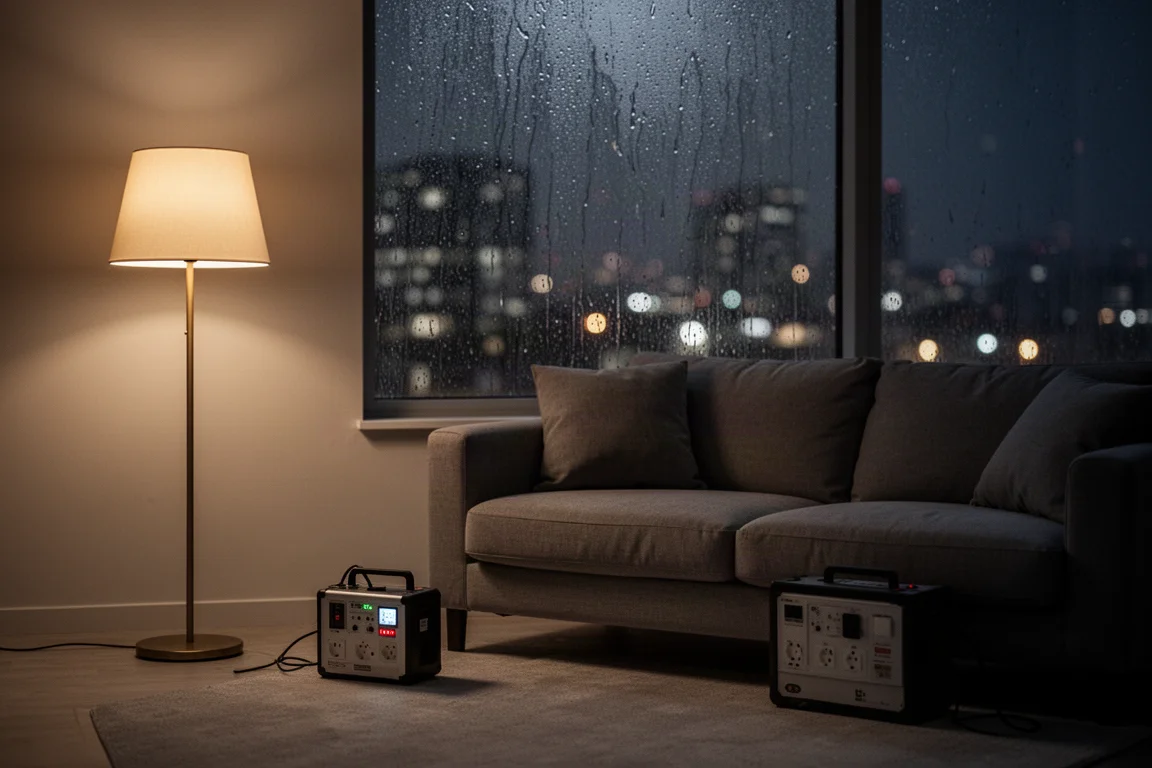
For buyers who want a single box that can carry a week of camping power or cover basic household needs during an outage, the practical decision comes down to accepting the weight, the two AC outlets, and the 1,000 watt inverter in exchange for a lot of stored energy at a fair price.
Conclusion
The MaxOak Blue Yeti EB240 is a heavy, high-capacity power station that does its best work when it stays put. Its 2,400 watt hours, pure sine wave AC output, broad protection suite, and fast solar charging make it a capable companion for overland travel, remote work, and emergency backup at home.
The trade-offs are equally clear: a 1,000 watt inverter with a 1,200 watt peak, two AC outlets, no DC charging input, a coarse bar-style battery indicator, and noticeable fan noise while charging. None of these are dealbreakers for the intended user, but each one shapes how the station should be used.
For buyers whose needs line up with what this unit does well, it is a reliable, well-finished option with strong capacity per dollar.
Product link
View more details for MaxOak Blue Yeti EB240
This product is mentioned in the review. Check the specifications, options, and compatibility before buying.
View more details for MaxOak Blue Yeti EB240Further reading
Related Reviews

Portable Power Stations
Anker SOLIX F3000 Review: A Powerful Portable Power Station With a Few Design Quirks
The Anker SOLIX F3000 delivers strong performance, fast charging, and a competitive price, but a few design choices may give you pause.

Portable Power Stations
EcoFlow Delta 3 Series: Five New Power Stations Previewed
EcoFlow expands the Delta 3 lineup with five models, from the compact Classic to the flagship Ultra Plus. Here is what each one offers.
Portable Power Stations
Oscal Power Max 6000 Review: A Large Solar Generator With Real Trade-Offs
A week of off-grid use shows what the Oscal Power Max 6000 handles well, where it falls short, and when a fuel generator still makes more sense.