Aquarium Equipment
Max C Tank System Review: Integrated Reef Gear for a Single App Setup
A closer look at the Max C Tank and the Jump gear that comes with it, from the swappable weir and the in-overflow water level valve to dual Gyre control, skimmer options, LED lighting, and a two-brick power design.
Introduction
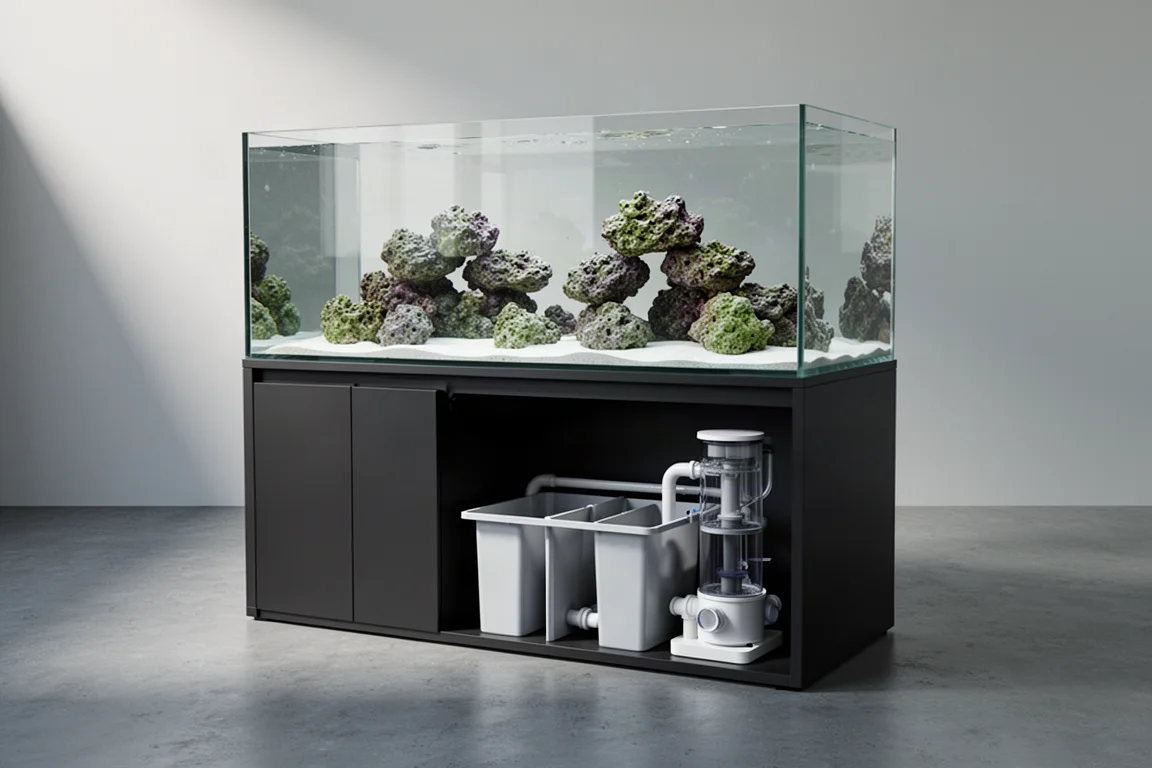
The Max C Tank is a complete reef system rather than a bare glass box. It comes with two Jump Gyre powerheads, a Jump protein skimmer, Jump LED lighting, and a turbine dual return pump, and it runs the whole set from a single controller and a single app. The tank is not yet released in the United States, and the stated plan is a North American launch in the near future, with a third-quarter window mentioned.
For reef keepers who are tired of stacking four or five controllers and a row of power bricks under the cabinet, that packaging is the real story. Each piece is worth understanding on its own, because the value of the system depends on whether the included equipment matches the way you actually run a tank.
Max C Tank: The Integrated Core of the System
The headline feature is a modular weir that lifts out and repositions. One owner may want the return water exiting to the side, another may want it coming from the front, so the weir plate pops off and drops back into whichever position suits the plumbing layout. That is an unusual amount of flexibility for an integrated tank, and it was one of the most frequently requested changes from owners.
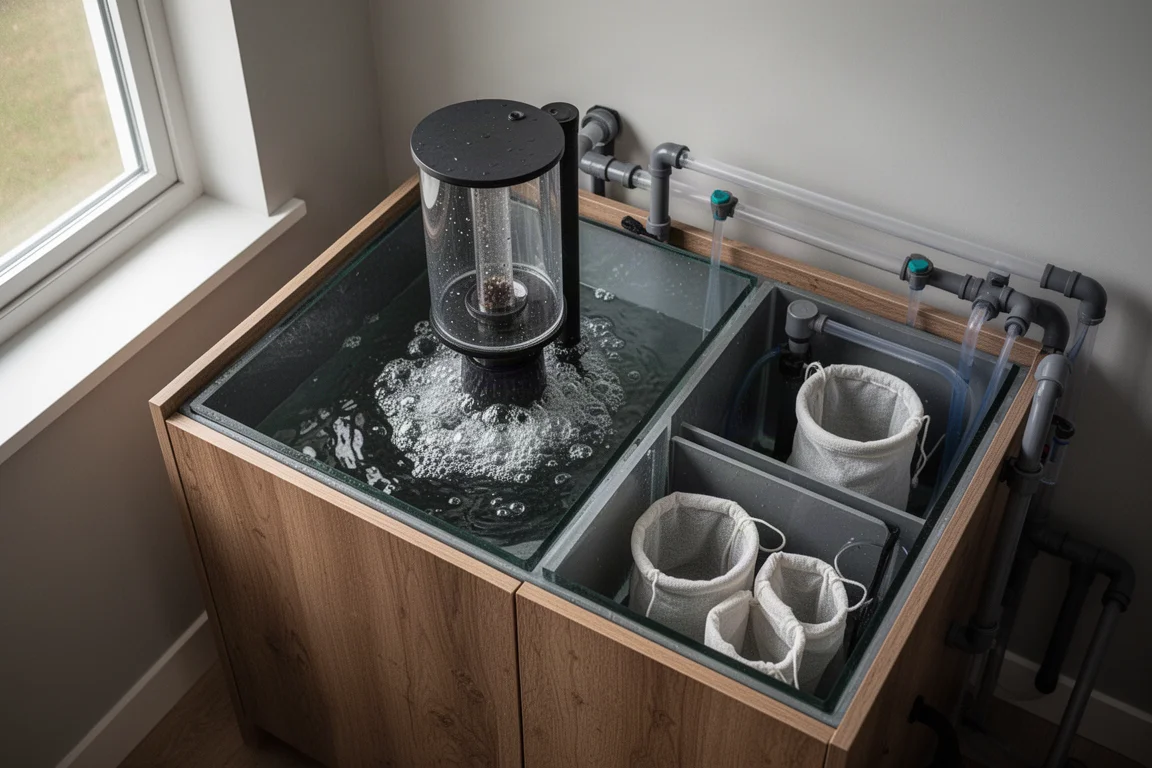
The second convenience is where the water level adjustment lives. The valve sits inside the overflow box rather than below the tank, so you can watch the water level rise or fall while your hand is on the adjustment. That removes the twist, walk around, check, repeat cycle that comes with a valve tucked under the sump.
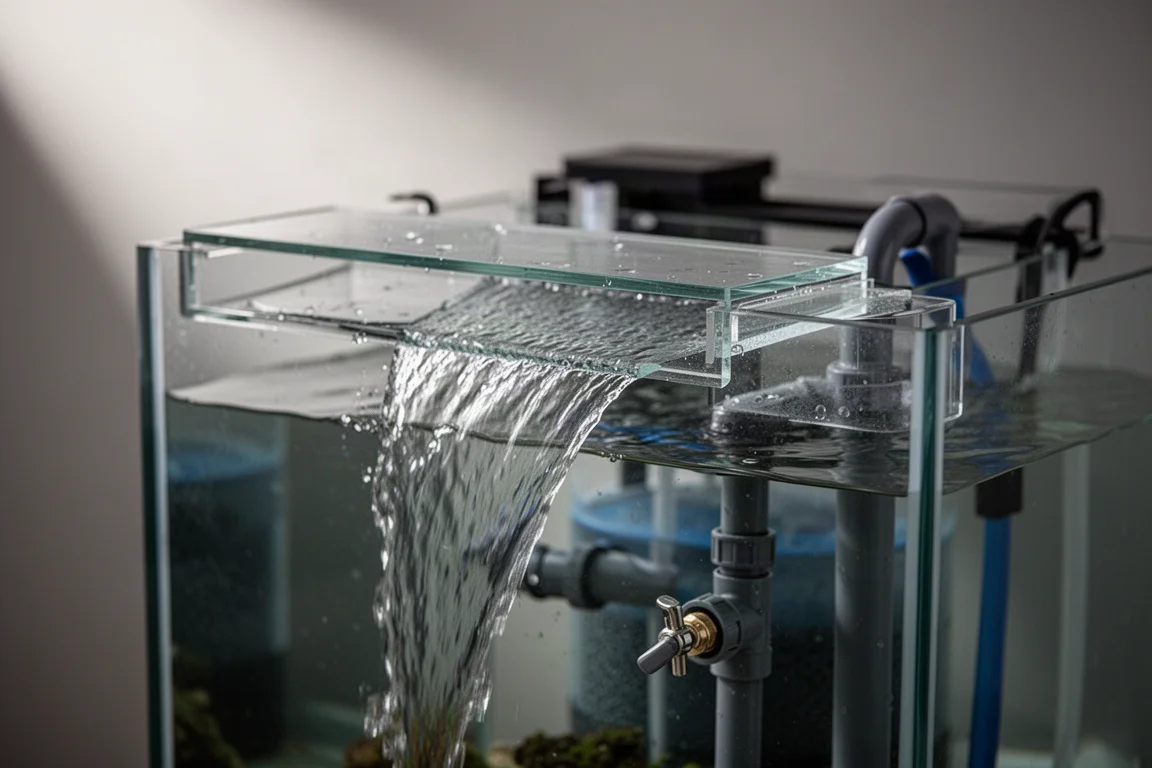
Sizes run from two foot to five foot, so the system scales from a compact setup to a larger display. The single control panel and the two-brick power design are what let the rest of the included equipment work as one system rather than a bundle of separate parts.
Jump Gyre Pumps: Two Powerheads, One Controller
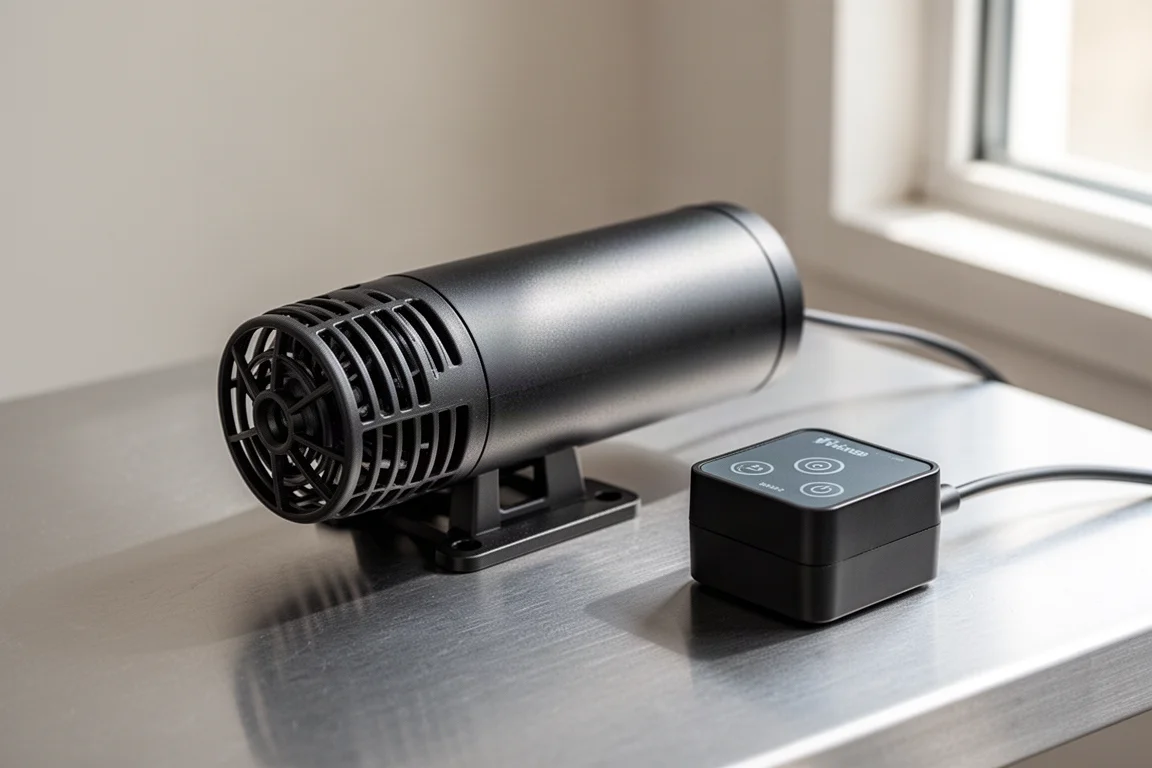
The tank ships with Jump Gyre pumps, and the integrated version changes how they are controlled. A standalone Gyre pump normally pairs with its own controller, one per pump. In this system, both Gyre pumps run from the integrated controller, so a single app manages both flow pumps together.
That matters for more than tidiness. Linked control makes it easier to set complementary flow patterns instead of tuning two independent pumps by eye, and it keeps the cabinet free of a second controller and its power supply. The Jump Gyre line is positioned as a value-focused option among gyre-style pumps, and pairing it with integrated control is what makes it interesting here.
Jump SK400 Skimmer: Built for Smaller Tank Sizes
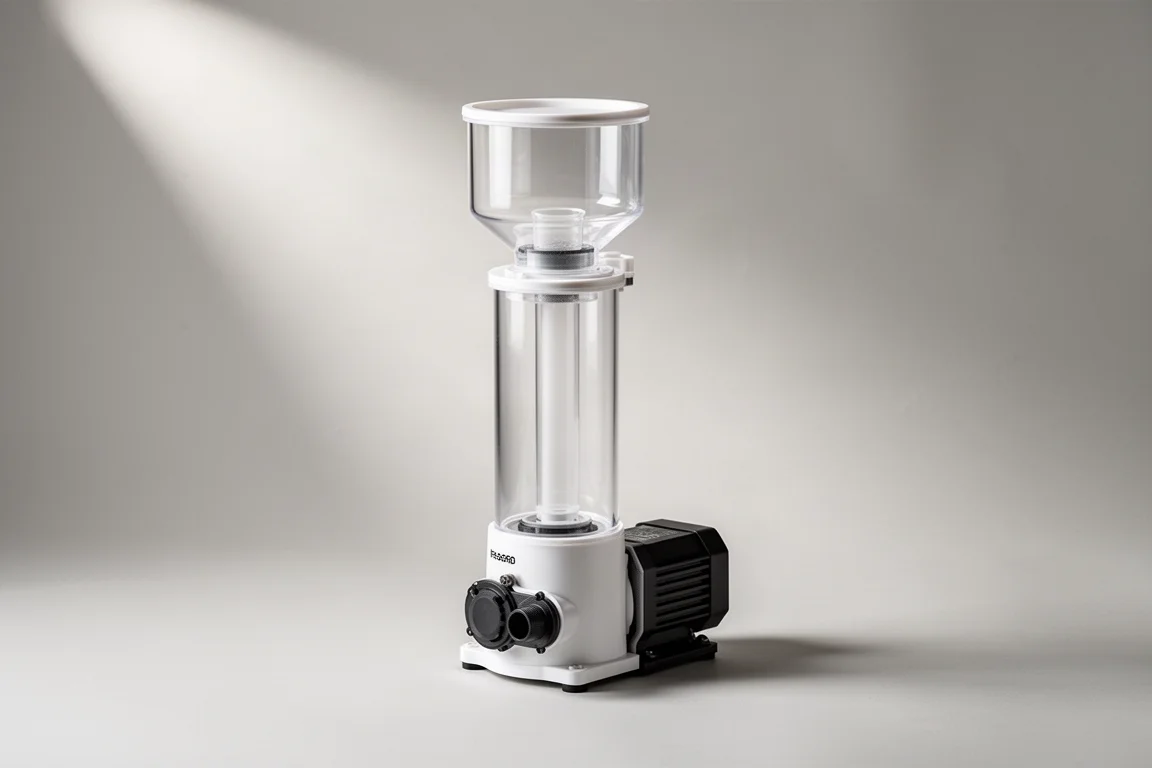
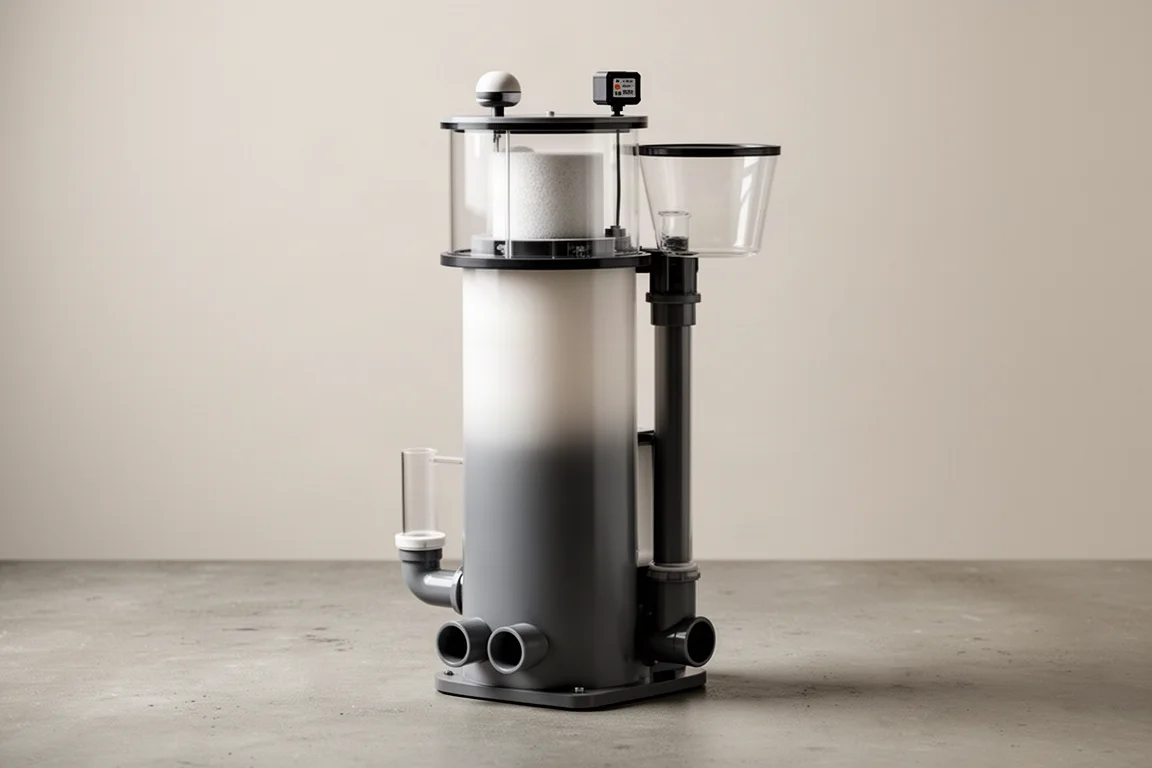
Skimmer capacity follows tank size, and the smaller configurations use the Jump SK400. Two details stand out. A float switch at the top of the collection cup shuts the skimmer down when the cup fills, which avoids a cup overflowing back into the sump. The body also has two inlet ports rather than one, feeding more foam for the pump to work with.
The skimmer is DC controllable, and a knob on the body adjusts the water level inside the unit. Construction is PVC, matching the rest of the filtration path so the parts weld into a structurally consistent assembly rather than mixing materials.
For a smaller tank, that combination of overflow protection and an adjustable water level covers the two things owners most often want to fine tune.
Jump SK800 Skimmer: More Foam for Larger Tanks
Larger sizes step up to the Jump SK800, which carries the same feature set with more capacity for bigger water volumes and heavier stocking. The float switch, the dual inlet ports, the DC pump control, and the water level knob all carry over.
The SK800 also shares the PVC construction used through the rest of the filtration path. Choosing between the two is largely a question of tank size and how heavily you plan to stock, since the rest of the experience is the same.
Jump LED Lighting: One App for the Whole Tank
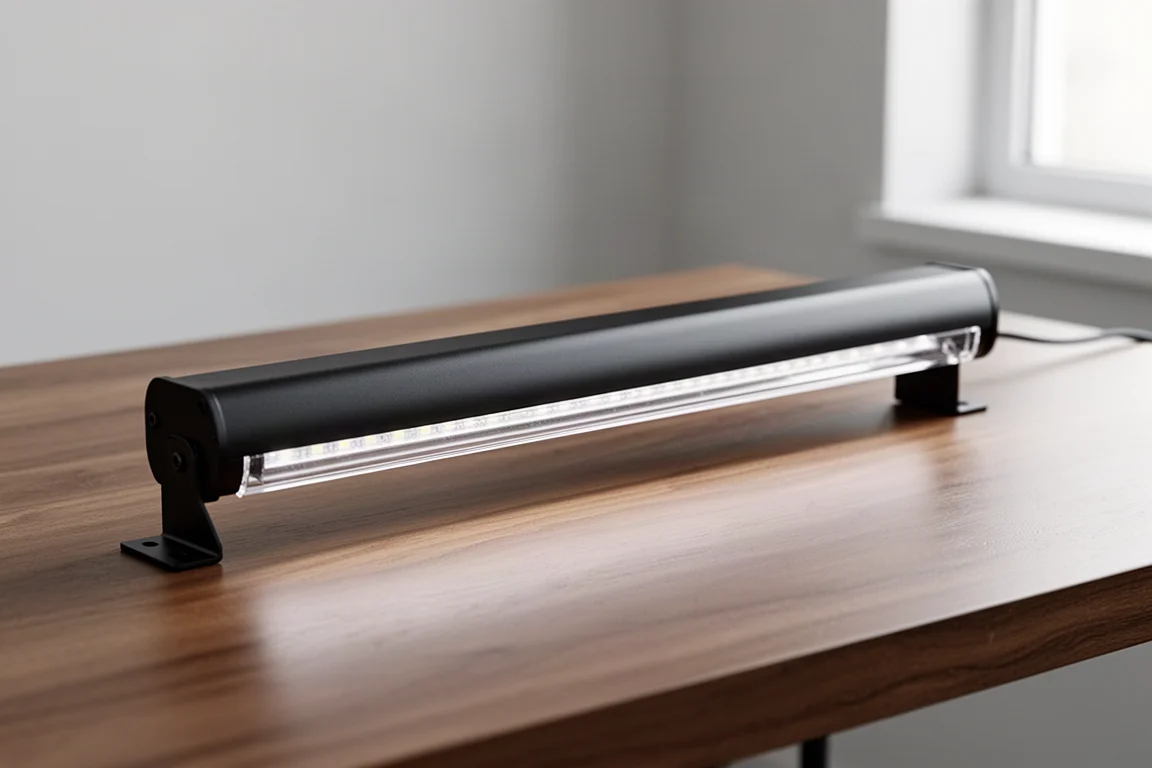
Lighting comes from Jump LED fixtures that plug into the same panel as the pumps and the return, which means light schedules, flow, and return speed all sit in one interface. The app is cloud enabled, so settings can be adjusted remotely rather than only from a device on the home network.
How many fixtures you need depends on tank size, so a five foot configuration carries more lighting than a two foot one. Because the lights share the same control layer as the rest of the system, ramping a lighting schedule and adjusting flow can both be handled from the same screen.
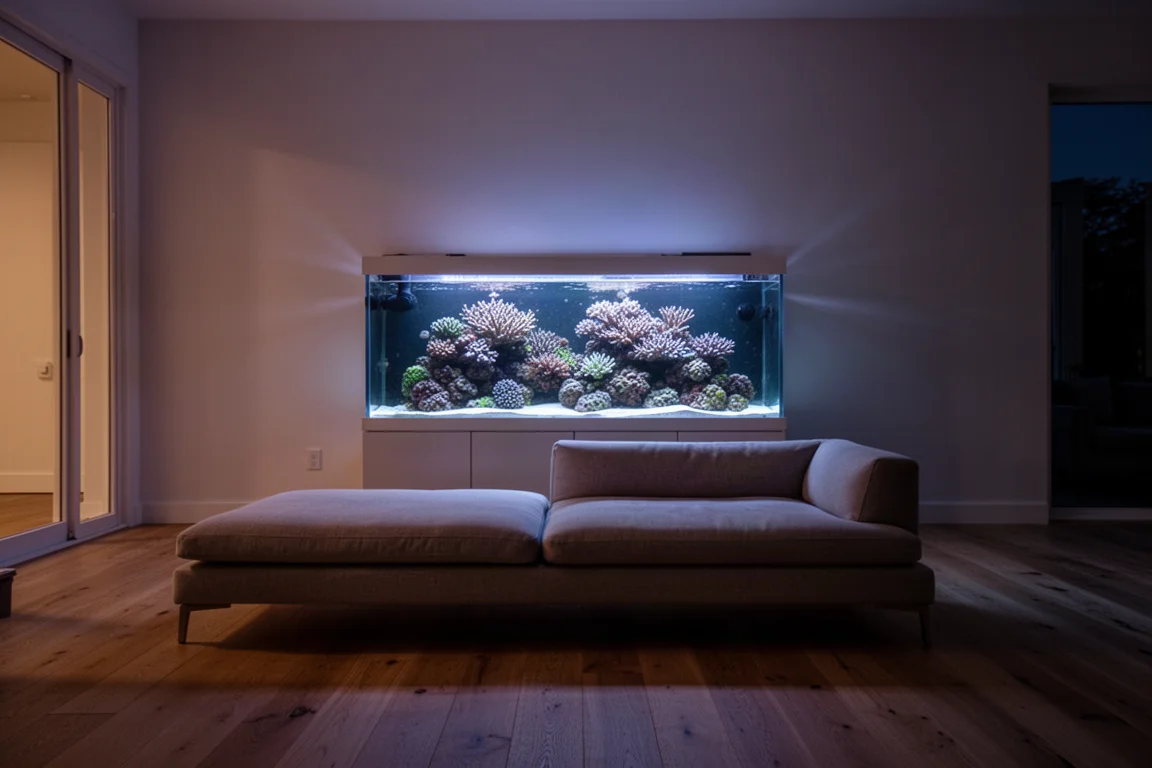
For anyone who has juggled separate apps for lights, pumps, and a return, consolidating the daily controls into one place is the practical benefit.
Plumbing, Power, and Build Details Worth Knowing
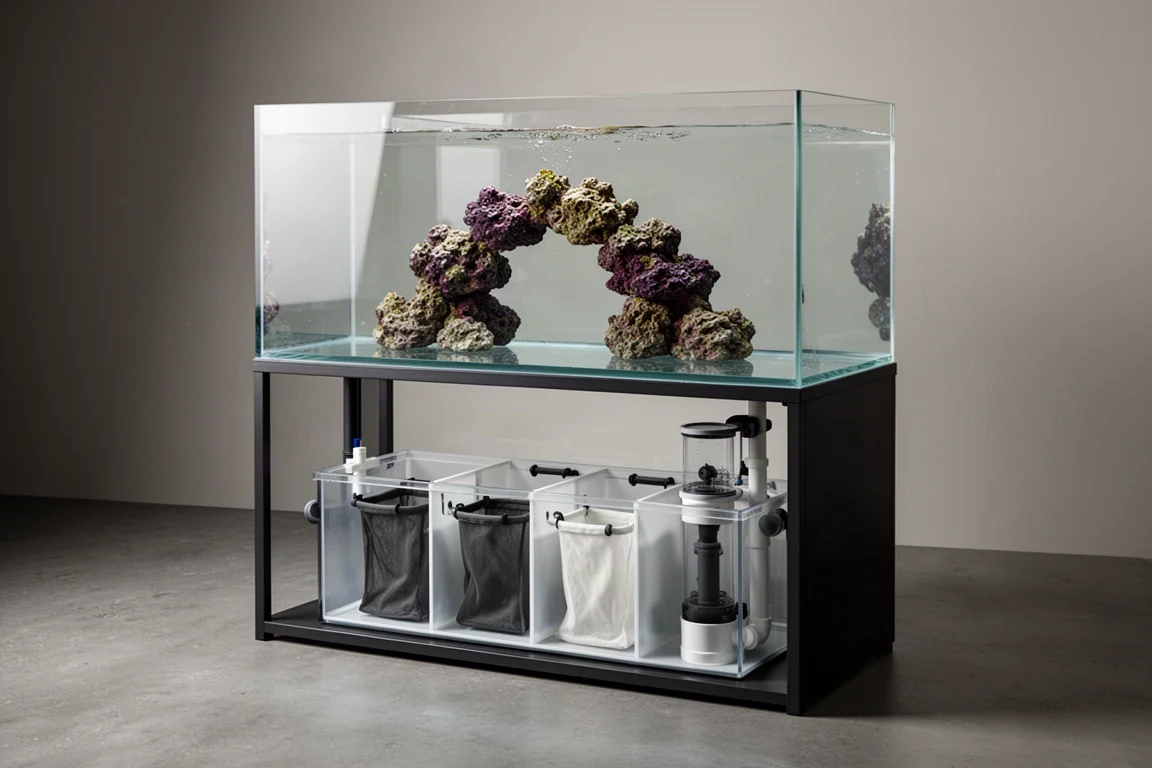
The filtration path is laid out as one continuous flow. Water drops through the filter socks, moves into the skimmer chamber, passes through a refugium chamber that can also hold reactors, and then returns to the display. Behind the skimmer sits a turbine dual return pump fed by plumbing designed specifically for it, with two return lines running up into the tank and out both sides from a single motor, rather than splitting one line and leaving one side weak.
The tank and sump are built from PVC, including clear PVC for the visible sections. The reason given for that choice is straightforward: PVC parts weld to one another, which produces a more structurally sound assembly than substituting polycarbonate or acrylic where the materials do not bond the same way.
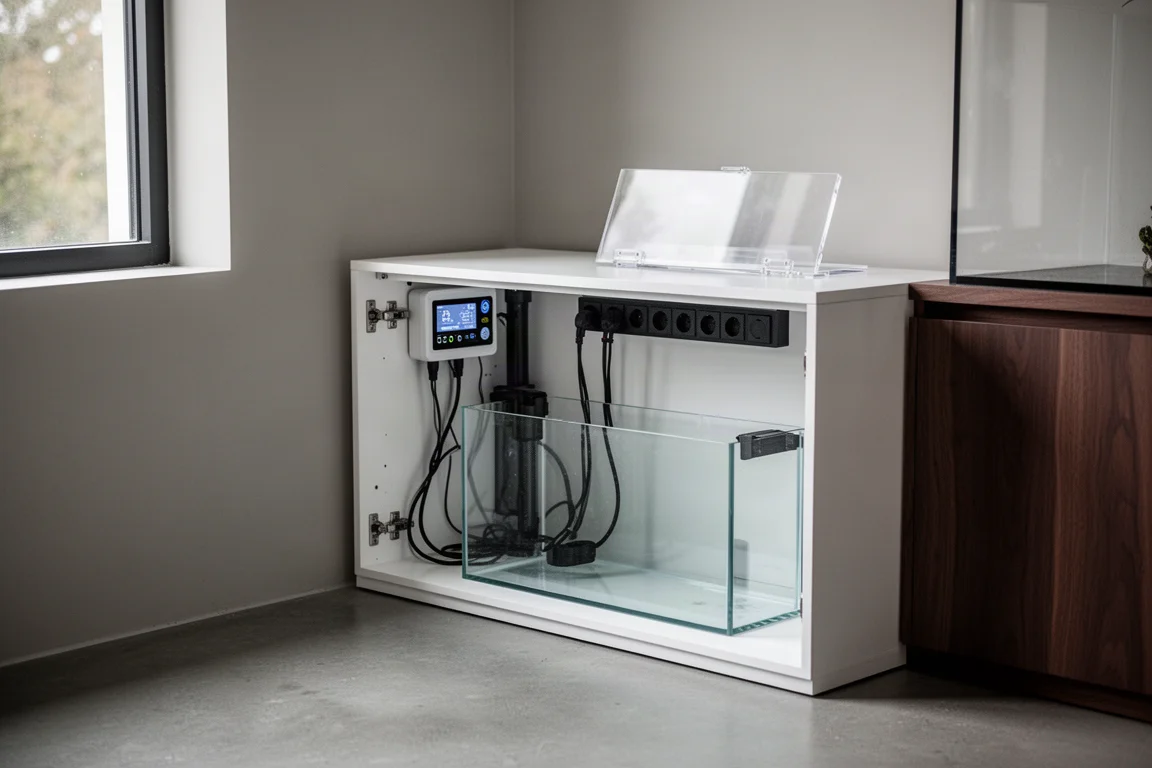
Power is consolidated into two bricks instead of the four or five that separate lights, powerheads, skimmer, and return would normally require. Two rather than one is deliberate, because it provides redundancy. If a brick fails, the second can keep the skimmer, filtration, and return pump running while a replacement is arranged. An acrylic cover sits over the ports to keep the wiring area tidy and protected.
A dedicated ATO and reservoir are in development for this tank. The design places the reservoir on top of the refugium chamber, so it uses vertical space inside the cabinet instead of taking up sump footprint.
Buying Advice: Sizing, Space, and Availability
Three decisions shape a Max C purchase. The first is tank length, since the range runs from two foot to five foot and the larger sizes carry more lighting and a bigger skimmer. The second is skimmer choice, with the SK400 covering the smaller configurations and the SK800 reserved for larger tanks. The third is placement, because an integrated system still needs cabinet space for a sump, and thinking through cable routing and maintenance access before the tank is filled saves a lot of awkward reaching later.
Availability is the other factor. The tank has not launched in the United States yet, and the stated target is a near-term North American release. If you are planning a build around one ecosystem, where lights, flow pumps, skimmer, and return share a single control layer, this is a system worth waiting for. If you prefer to mix brands or already own equipment you intend to reuse, the integrated approach matters less and the included gear becomes the deciding factor instead.
Either way, the details worth checking first are the ones that are hardest to change later: the size that fits your room, the skimmer that matches your stocking plans, and how much of the daily control you want handled in a single app.
Conclusion
The Max C Tank is at its most convincing as a package. The swappable weir, the water level valve placed where you can see it, the two-brick power design with redundancy, and one app for lights, flow, skimmer, and return all point in the same direction: fewer things to manage separately on a system that is meant to run as one.
For reef keepers who want that level of integration, the value depends on the tank size that fits and the gear that comes with it. For those who already have their own lighting and flow solutions, the individual pieces still stand on their own merits, and the Jump skimmers in particular carry features worth comparing directly.
Further reading
Related Reviews
Aquarium Equipment
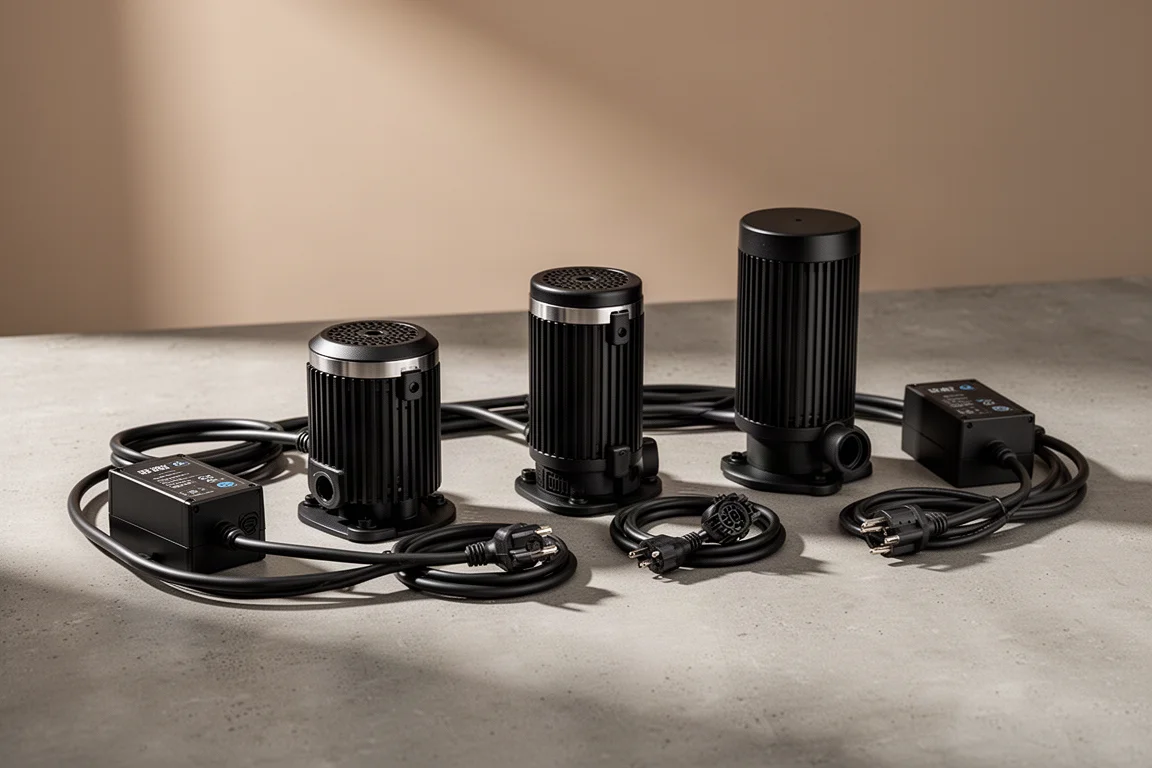
Abyzz Professional DC Pumps: A100, A200, and A400 Reviewed
A closer look at three German-made DC return pumps built for large reef systems, with titanium internals, fine flow control, and a 10-year warranty.
Aquarium Equipment
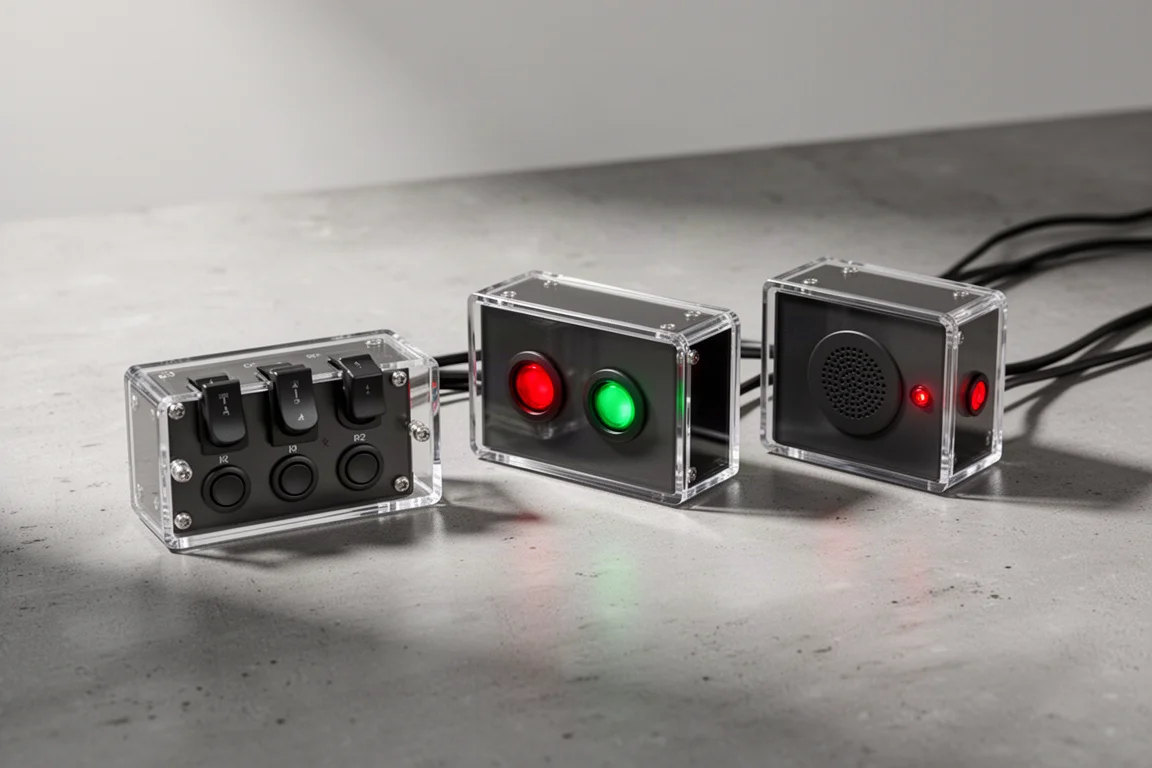
AdaptiveReef Controller Accessories: Three Tactile Upgrades for Your Reef Controller
A practical look at three AdaptiveReef add-ons that put physical switches, at-a-glance status lights, and a loud alarm within arm's reach of your reef tank.
Aquarium Equipment
Adaptive Reef Controller Boards: Basic vs Deluxe for Cleaner Aquarium Gear
A practical look at the Adaptive Reef Basic and Deluxe controller boards, what each one includes, and how to choose the right size for your tank gear.