Ski Bindings
Marker Griffin 16 M Works and Jester 16 X M Works: Inside the New Low-Stand-Height X Binding
Marker's new X binding drops toe stand height to 9 mm and rebuilds the toe as a magnesium monoblock. Here is what that changes on snow, and which skis suit it.
Introduction
A ski binding is the connection between your boot and your ski, and that connection can be helpful, neutral, or quietly working against you. The common analogy is the steering wheel of a car: it is not a question of a good wheel or a bad wheel, but of whether the input it transmits matches what the rest of the machine was built to do. A binding that suits the ski and the boot feels direct and predictable. A binding that does not can mute a ski that was designed to feel lively.
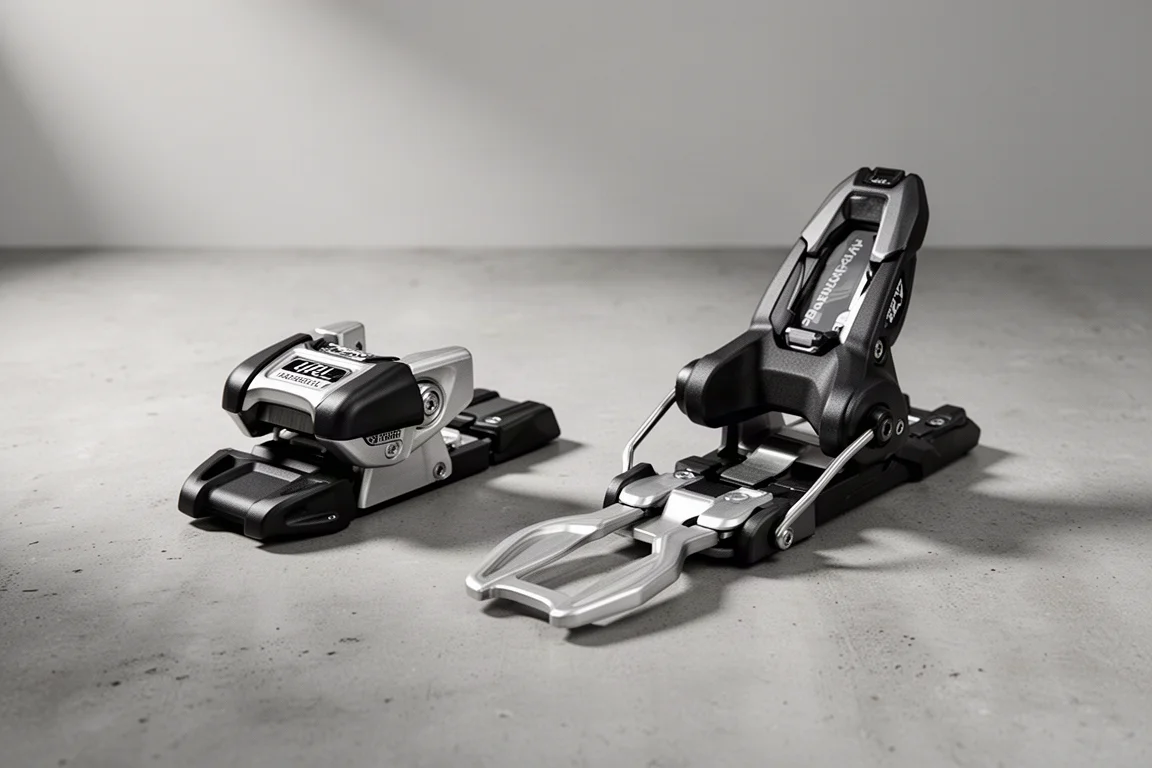
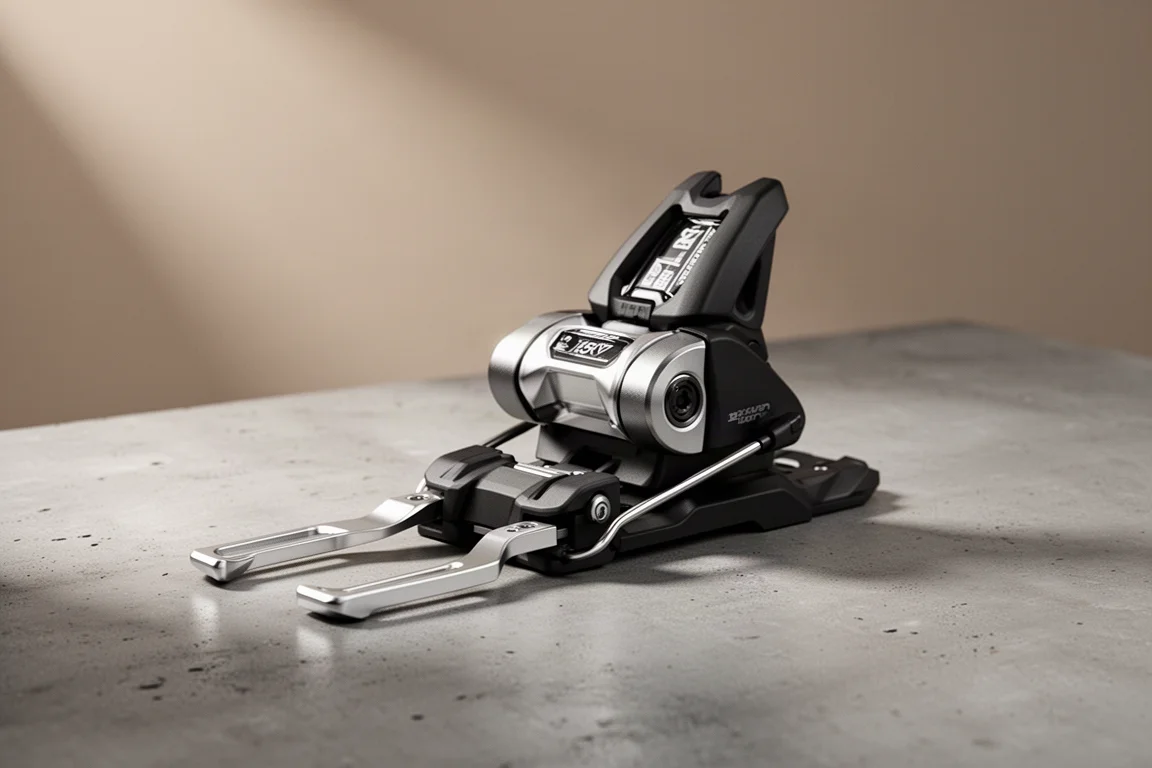
Marker’s new X binding platform targets exactly that interface, and the two models at the top of the range are the Griffin 16 M Works and the Jester 16 X M Works. Both share a toe stand height of 9 mm, a monoblock toe, magnesium construction, and a shorter mounting footprint. Together those changes add up to the biggest shift in how a binding feels underfoot that this category has seen in a long while.
What Makes the New X Binding Different
The headline number is stand height. Marker puts the industry average at roughly 19 mm and has brought the new X binding down to 9 mm at the toe, which is more than a 10 mm reduction rather than a marginal trim.
The construction behind that number matters as much as the measurement. The toe is now a single monoblock rather than an assembly of several pieces, and the binding uses magnesium components and metal sole holders instead of plastic parts. The footprint is shorter at both the toe and the heel as well, which leaves more of the ski’s forward section free to flex and build a turn without interference from a long mounting zone.
On snow, the combination shows up as quicker edge changes, an easier and more intuitive roll from edge to edge, and earlier, more precise turn initiation. Riders moving onto the X binding from a demo binding are likely to notice the contrast immediately, because demo bindings are inherently a little less precise, and a lower, stiffer interface makes that difference obvious.
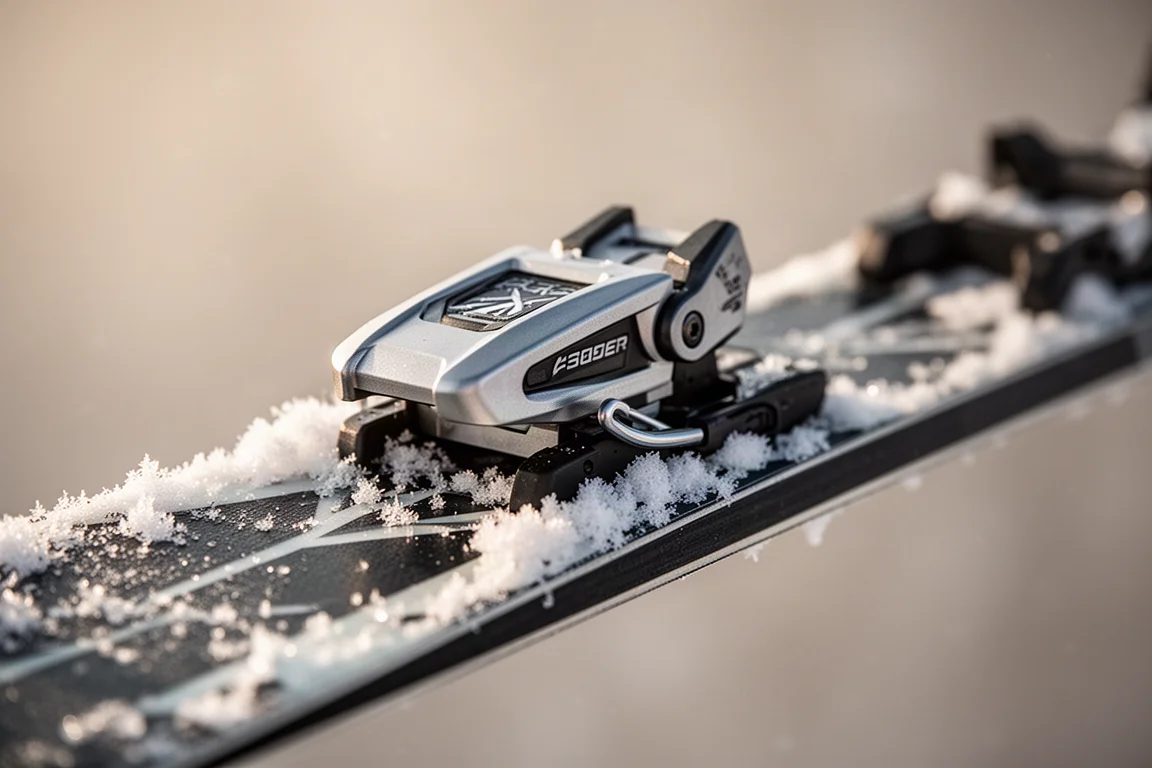
The shorter mount zone also lets the ski’s own flex character come through more clearly. On a ski with a tuned metal layup, that means the intricacies of the flex are easier to feel rather than filtered out.
Stand Height and Which Skis Suit the X Binding
Stand height is not automatically a flaw. On a narrow race ski, a raised platform prevents the boot from contacting the snow at extreme edge angles, and that is a genuine requirement. On wider skis, the risk mostly disappears. A boot sole is ISO standard at 70 mm wide, so on a ski with a mid-90s waist, booting out would require an edge angle beyond 90 degrees. Marker puts the practical lower limit for the X binding at roughly 80 mm of waist width, which brings all-mountain and freeride skis into scope, including models in the 84 to 88 mm range.
There is a conditions argument too. Firm, hardpack days are becoming more common, and a binding that rolls edge to edge quickly helps an all-mountain or freeride ski stay fun when the snow underfoot is anything but soft.
Nine millimetres is close to the floor of what is technically achievable. GripWalk boots need a defined ramp in the toe to be covered properly, and the heel needs clearance for the brake mechanism to sit underfoot. Pushing lower would compromise the brake’s ability to do its job, and the reward would be a millimetre or two at most.
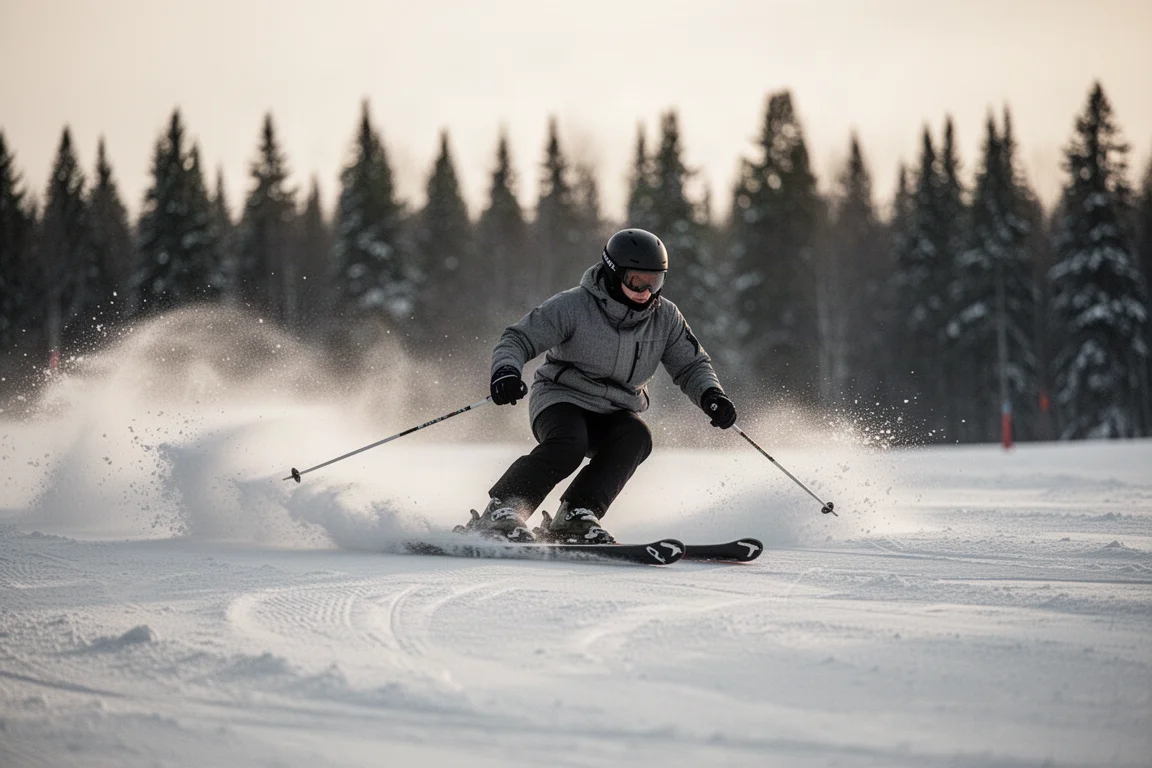
The takeaway is that the X binding is a setup decision rather than a universal upgrade. Matching it to a ski of the right width is what unlocks the feel, and pairing it with a very narrow race ski works against the reason it exists.
Marker Griffin 16 M Works
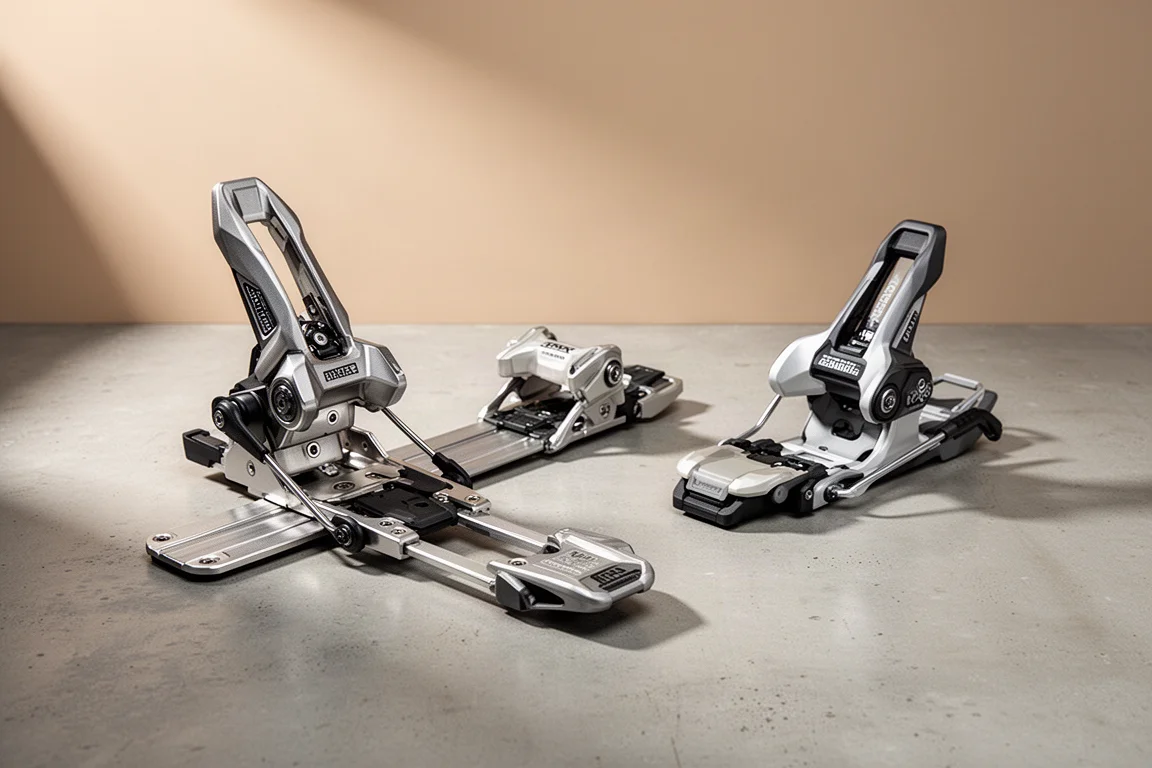
The Griffin 16 M Works is one of the two M Works models built on the new X platform, and it carries the full specification: the 9 mm toe stand height, the monoblock toe, magnesium body parts with metal sole holders, and the shortened toe and heel footprint.
M Works is the top of the range, the equivalent of a manufacturer’s maximum-performance trim. That shows up in the hand as much as on the snow. The toe piece has the solid, purpose-built feel of a proper tool, and the metal surfaces are there for directness rather than decoration.
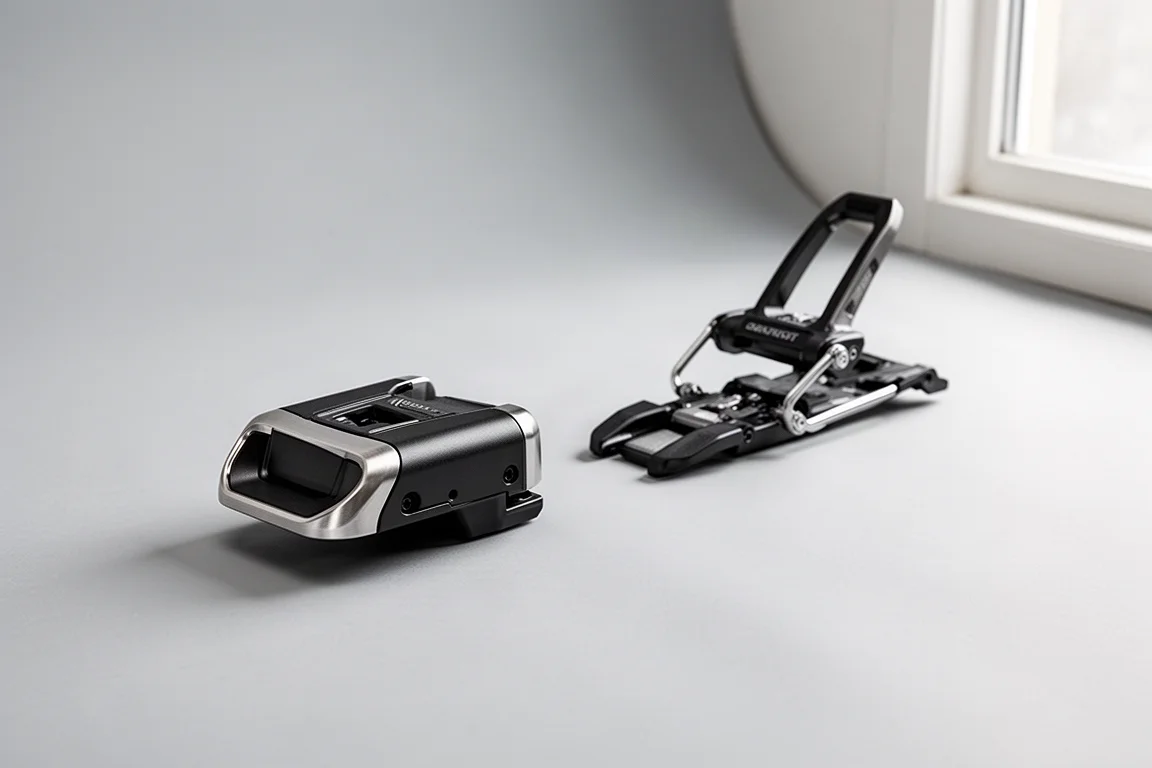
It is the version to choose when you want the most direct engagement the platform can deliver, and when the ski underneath it is a freeride, all-mountain or freestyle model in the appropriate width band.
Marker Jester 16 X M Works
The Jester 16 X M Works sits on the same platform and shares the same geometry: the 9 mm toe, the monoblock toe construction, the magnesium parts and the shorter footprint. The difference between the two M Works models comes down to the application each name serves within Marker’s line.
In drill-mounted form on a 96 mm freeride ski, the low stand height is easy to feel. The foot sits closer to the snow, turns start earlier, and the ski’s flex is less interrupted because the mounting zone is shorter than on a conventional track setup.
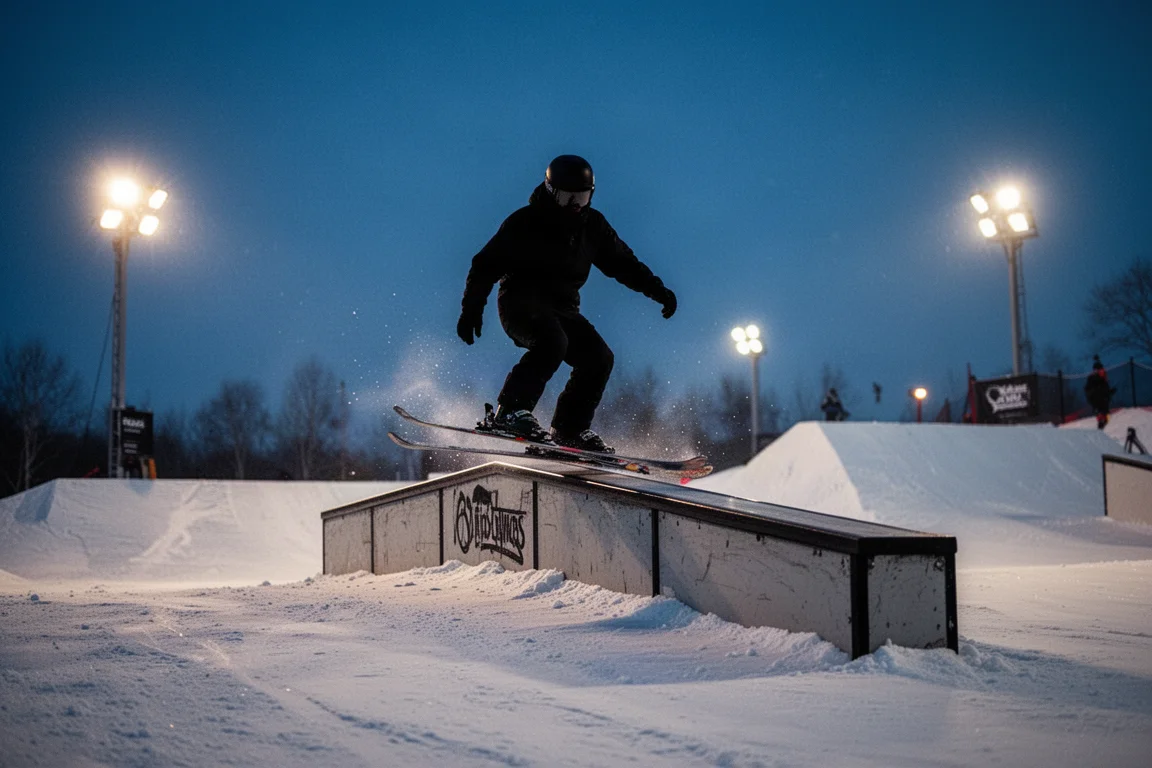
For freestyle riding, the same trait reads as natural rather than technical. Standing closer to the ski makes rails and park features feel more like an extension of the foot, which is a different sensation from the precision that shows up in a carved turn.
As with any more precise setup, the character of the ski comes through more strongly. On a powerful all-mountain ski, adding a more direct binding compounds that character, and it can take a run or two to recalibrate to it.
Delta and Ramp Angle: What Riders Should Know
Delta is the millimetre difference in height between the toe and the heel of a binding. Ramp angle is the result of that delta combined with boot sole length, which means the same binding produces different ramp angles for different boot sizes.
Marker tests with a deliberately wide spread of boot sole sizes, from roughly 270 mm up into the 330s, and tunes delta toward the middle because the customer’s boot size cannot be known in advance. Feedback deviations in testing tend to cluster by boot size, so the final setting is also influenced by ski length and by the type of skier typically found on that ski.
Ramp angle mainly influences how a turn is initiated and how intuitive that initiation feels. Marker’s bindings have become flatter than they were 20 years ago, though delta is slightly larger again than it was a decade ago. Boot choice, ski tuning and personal preference all feed into the outcome, which is why there is no single correct number and why the sensible approach is to ski the setup rather than overthink the geometry.
Buying Advice: Matching the X Binding to Your Ski
The X binding makes the most sense on freeride, all-mountain and freestyle skis from around 80 mm of waist width upward. It is not intended for narrow race skis, where stand height is doing real work against boot-out and a lower interface works against the design.
The M Works models are the highest-specification versions, with the most metal and the most direct engagement. Lower-tier versions of the same platform are expected to follow, keeping the 9 mm stand height but using less metal, which should bring the geometry to a wider range of skis and a broader set of buyers.
If you are stepping onto the X binding from a demo binding or a traditional track setup, give yourself a run or two to adjust. The added precision is the whole point, and it rewards a skier who is ready for it. Pair the binding to the ski first, then decide which tier of the platform fits your budget and your riding.
Conclusion
The Griffin 16 M Works and the Jester 16 X M Works bring a genuinely different geometry to a category that has changed slowly for years. A 9 mm toe stand height, a monoblock toe, magnesium construction and a shorter footprint add up to a connection between boot and ski that feels quicker, more intuitive and more direct. For riders on freeride, all-mountain or freestyle skis around 80 mm and wider, that is a meaningful step forward rather than a detail.
Further reading
Related Reviews
Ski Bindings
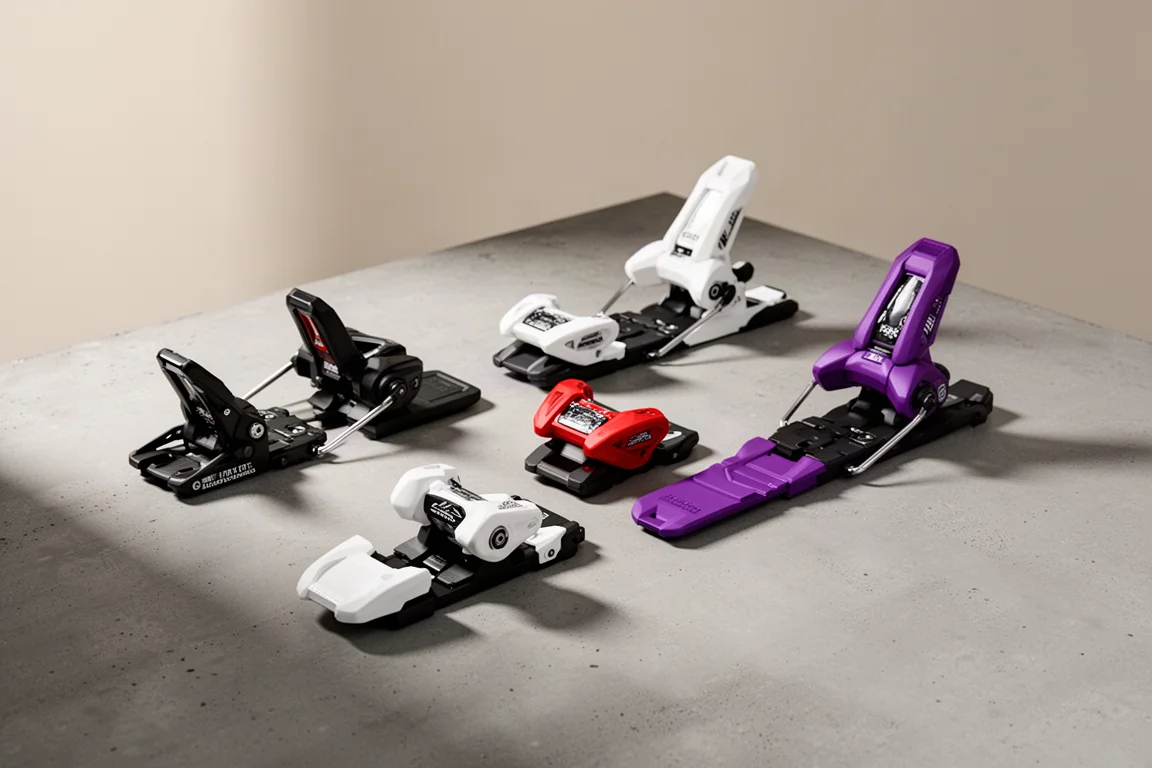
Alpine Ski Binding Comparison: Entry-Level to Elite Options
A practical guide to alpine ski bindings, covering D-range, stand height, release systems, and top options from Atomic, Marker, Tyrolia, Look, and Armada.
Ski Bindings
Look Pivot 18 vs Look SPX12: Which Look Binding Makes Sense for You?
The Look Pivot 18 is a premium metal binding built for powder and freestyle skiers, while the SPX12 remains the smarter daily-driver choice for most riders.
Ski Bindings
Look Pivot 2.0 Bindings Compared: 11, 13, 15, and 18
A practical breakdown of the Look Pivot 2.0 lineup, including what the redesigned heel changes and which model suits your weight, terrain, and release setting.