Colored Pencils
Marco Refine Pro Review: A Soft, Colorful Budget Pencil That Struggles to Justify the 'Pro' Label
A closer look at the Marco Refine Pro 100 set: soft cores, rich color laydown, great layering, but no lightfastness data to back up the professional name.
Introduction
The Marco Refine Pro 100 set arrived with a question attached: what exactly makes it “Pro” compared to the regular Marco Refine? That was the main thing worth pinning down, because in the colored pencil world, labels like Pro, Ultimate and Super get used loosely and almost never come with a published standard. For pencils, the usual benchmark for a genuine professional set is lightfastness data. If that is the measure, the Refine Pro does not clear the bar, at least not on any information currently available in English. Set that aside, though, and what remains is a surprisingly pleasant, soft, well-pigmented pencil at a friendly price point.
Packaging and Presentation
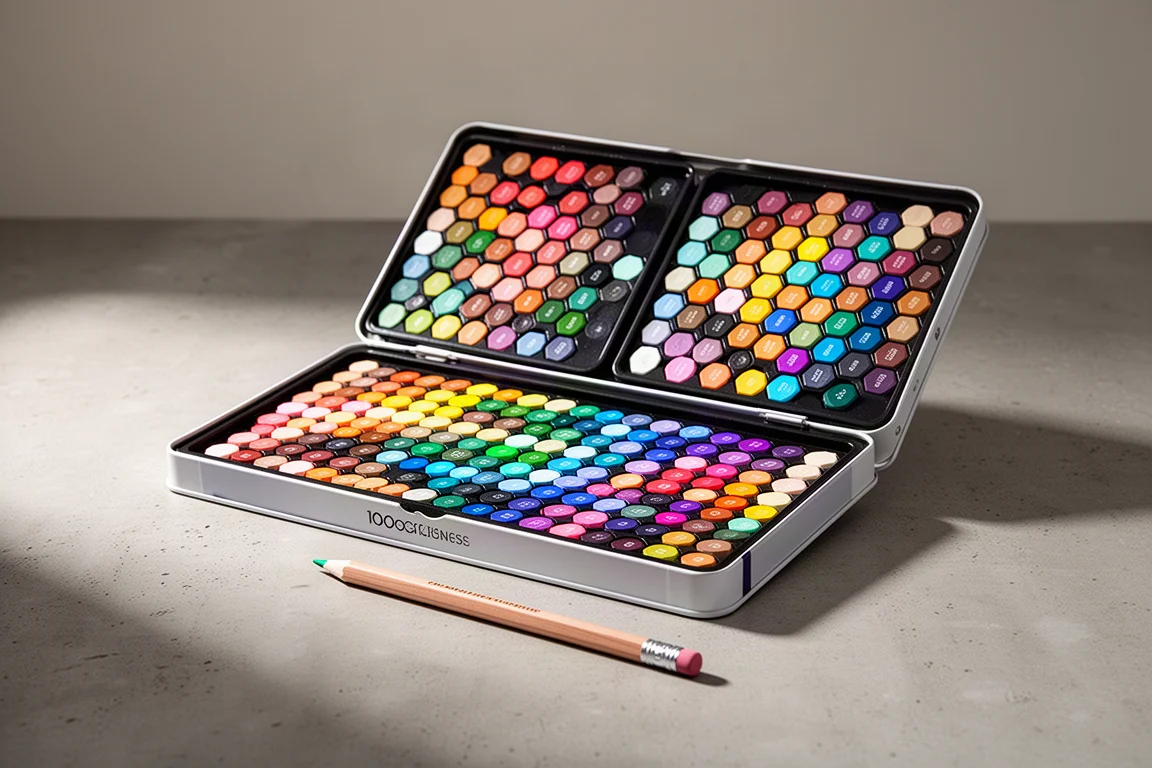
The 100 set comes in a presentation-style box with a magnetic clip along the bottom edge. Lifting it up folds the box outward and reveals two panels of pencils, fully displayed. The lid features an attractive Van Gogh style image, and the back of the box shows a color swatch of the full set, which is a helpful touch.
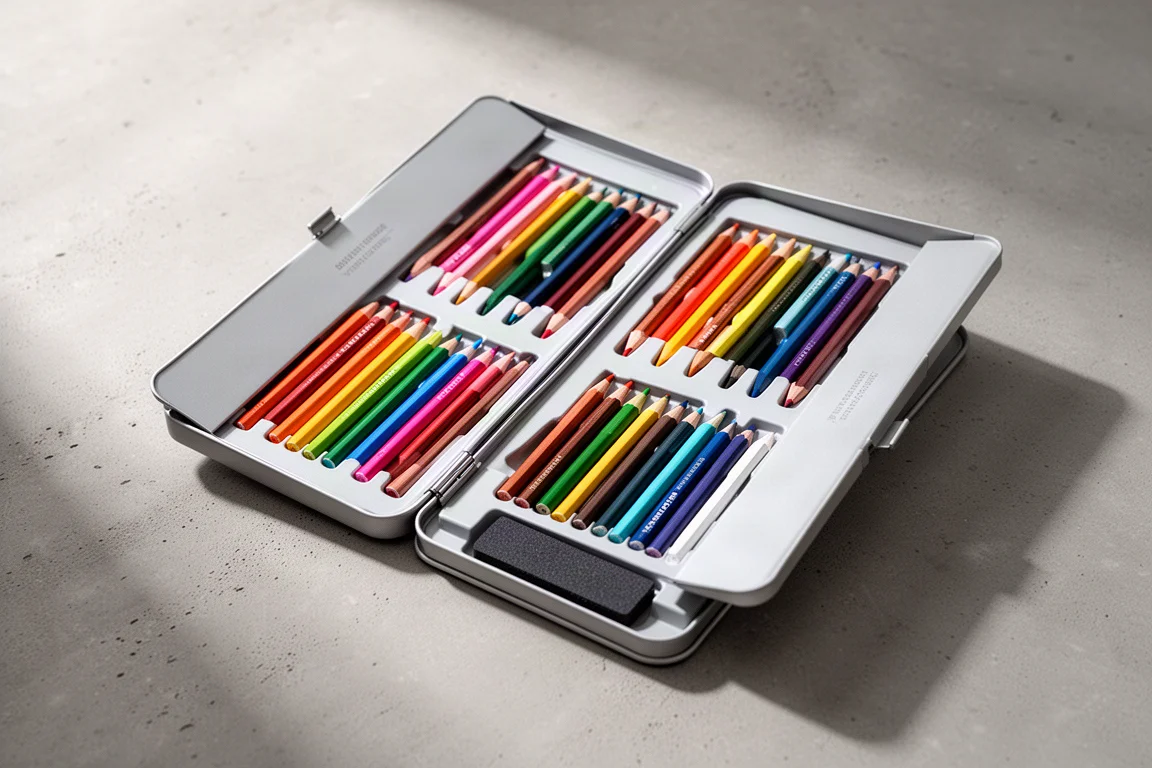
There is a practical downside, though. The pencils do not slot into individual holders. A small rubber pad at the base protects the cores when you put pencils back in, but when you lift pencils out they slide around freely, and a pencil that falls flat along the bottom is genuinely hard to retrieve without emptying the whole tray. This style of box is common among brands and works well enough for younger artists sharing a table, but for daily studio use it is less functional than a tin or a case with proper slots.
Pencil Design and Build
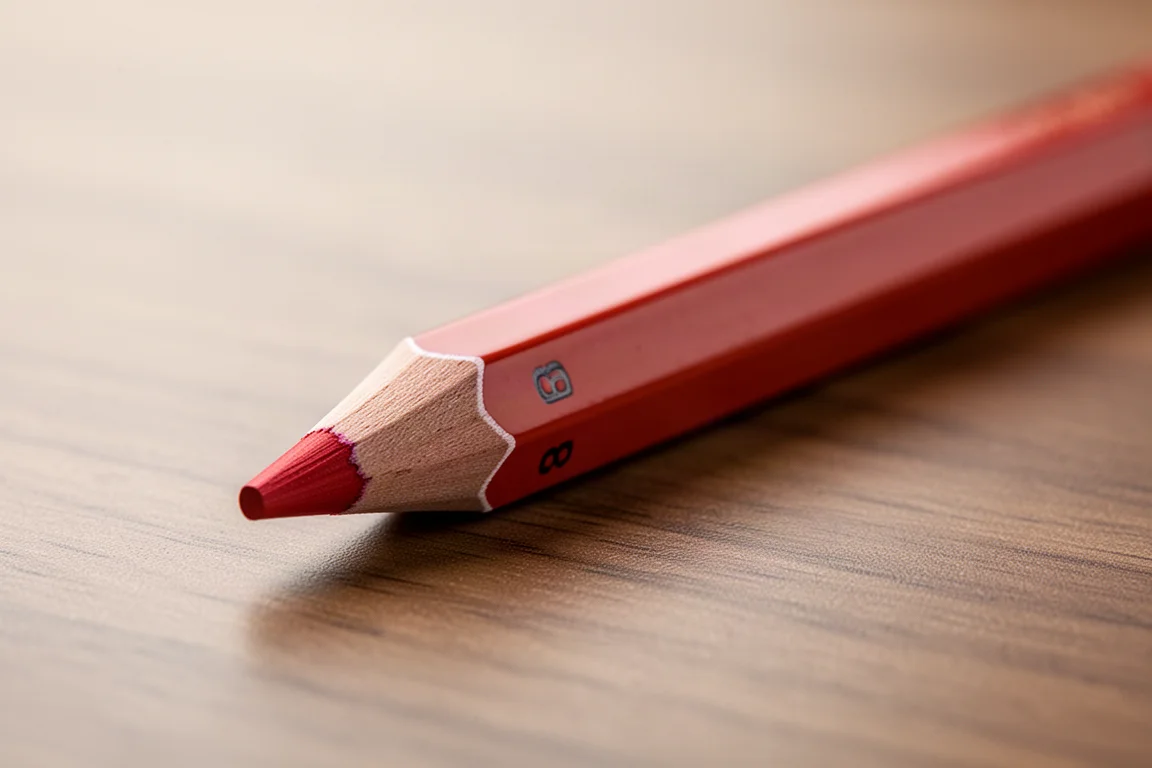
The pencil itself is a hexagonal barrel with a generous 3.5 mm core and a barrel width of 7.1 mm, which is a fairly average diameter overall. The entire barrel is lacquered the same color as the core, giving a strong visual indication of the pigment inside. The barrel is capped at the end, which protects the core on that side.
Barrel printing is minimal: the Refine Pro name, the words colored pencil, a 7100 model reference, the Marco logo, and a number on the end cap that corresponds to the core color. What is missing is any pigment name, either on the barrel, the packaging, or any English-language source found so far. Comparable brands at least publish a color chart that lets you correlate numbers to names. Here, that reference simply does not exist, which is one of the clearest signs that this set does not behave like a true professional-grade pencil on paper, figuratively speaking.
Notably, the set arrived unsorted. Unlike most sets that run through the color spectrum in order, the pencils came in an arbitrary arrangement. Once organized numerically, the palette runs from 501 (white) up to 599, ending oddly back at 500, with black at 570 followed by gold, silver and a handful of pale tones that appear to be pastel or luminous shades.
The Palette of the 100 Set
Taken on its own merits, the 100-color palette is well balanced. There is no heavy skew toward one hue family, and the tone variation within each family is thoughtfully managed. The transition from yellows into oranges, then into the reds, and back out through pinks and purples feels natural. There is a decent spread of flesh tones covering a range of skin colors, which is genuinely useful for portrait work.
The greens deserve a specific mention, especially for botanical artists: they are well chosen and varied. The aqua blues and aqua greens are also a strong area. If there is one gap, it is at the dark end of the blues; the darkest available is around 529, and a deeper indigo-style blue would have rounded the palette out better. The set also includes warm and cool grays, metallic gold and silver, and a small group of lighter pastel-style shades that sit awkwardly outside the main numerical sequence.
Layering and Blending Performance
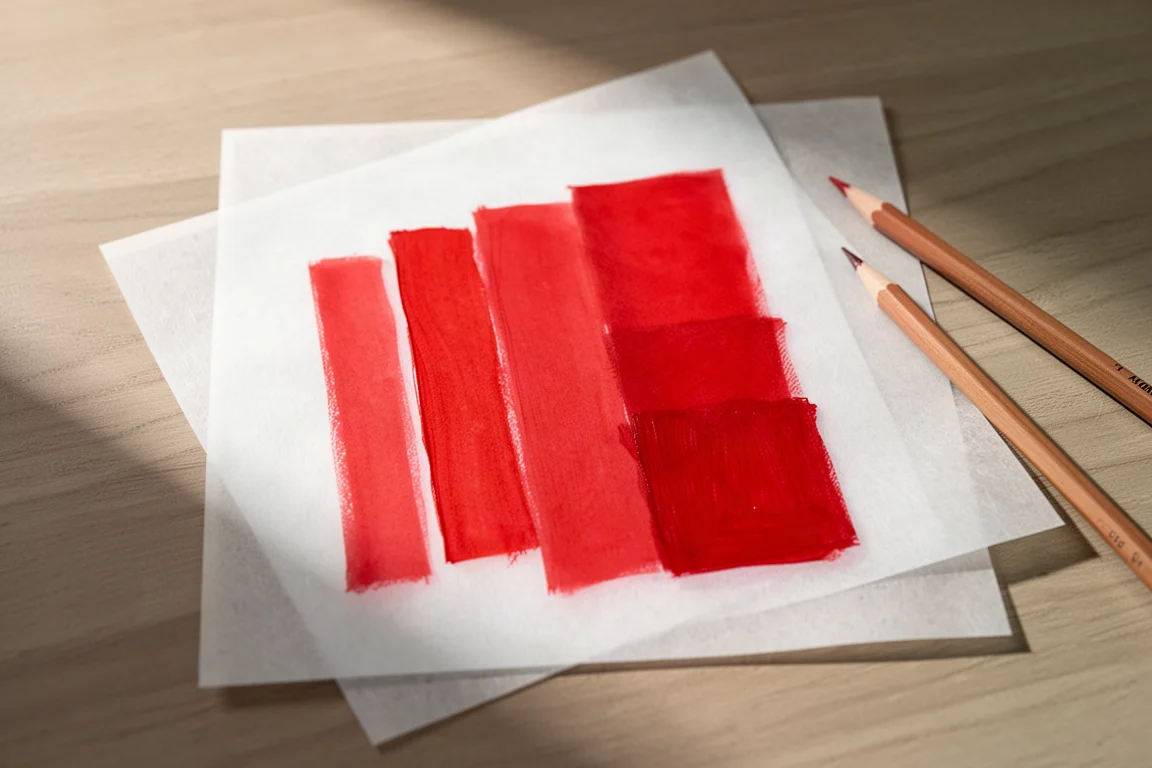
The layering test, five light layers building from a whisper of color to a solid application, shows that the Refine Pro layers well. Each pass adds visible saturation, and the final heavy application goes down smoothly and densely. This matters for artists who use odorless mineral spirits, since many recommend having four to five layers down before applying solvent.
Blending results are good across the board. Red and yellow combine into a clean orange, yellow and blue produce a pleasant green, and the blue-and-red purple, typically the hardest blend to achieve with pencils, still comes out acceptably. In direct side-by-side swatching, the Refine Pro reads slightly more pigmented than the regular Refine, and its core is noticeably softer, whereas the standard Refine has a harder barrel feel.
For artists who use odorless mineral spirits, the pencil breaks down well under solvent, which reopens the tooth of the paper and allows continued layering. Without solvent, the number of layers you can add before the tooth fills is more limited, as is the case with any wax or oil-based pencil. Those who prefer dry burnishing with a lighter color or a dedicated blending pencil will find the final layers come together nicely under added pressure.
How It Compares on Black Paper
The black paper test offers a useful read on opacity. The Refine Pro is not dramatically opaque, the yellow and white in particular, but it is somewhat more opaque than the regular Marco Refine when both are tested with the same colors. Interestingly, the color numbers are shared between the two ranges, so the same pigments can be compared directly, and the Pro reads more solid while the Refine leans more translucent.
Neither result is good or bad in itself. Some artists seek a more opaque, Prismacolor-like laydown, while others prefer the translucency of something like a Polychromos. If you lean toward an opaque, covering style of work, the Refine Pro edges closer to that camp.
Drawing Experience and Artwork
Testing was done on Strathmore 300 series Bristol vellum, with the swatch chart on Derwent hot press watercolor paper, a slightly different tooth. On the Bristol vellum, layering behaved well, and with heavier pressure on the final passes the color almost fills in painterly. The overall feel recalls Prismacolor: not quite as soft, but similar in the way heavy applications clog slightly and shed small crumbs that need wiping away with a drafting brush to avoid marks in the artwork.
The colors themselves are rich and vibrant, and the pigment laydown is bright and confident. Sharpening was trouble-free throughout, with no core breakage encountered, which is always a concern with softer cores.
What Actually Makes It “Pro”?
This is where the review comes up short, honestly and deliberately. No published lightfastness data exists for this set, and none would be expected at this price. No pigment names are provided anywhere in English, and reaching out to Marco did not produce a documented explanation of what distinguishes the Refine Pro from the regular Refine. What is objectively clear is that they are two different pencils: the Pro has a softer core and reads more pigmented. But the “Pro” title itself remains unsubstantiated by anything verifiable, and buyers who need professional credentials, particularly those selling original artwork, should treat the name with caution until the manufacturer clarifies it.
Who Should Buy It
Strip the “Pro” label out of the equation and judge the pencil on its behavior, and the picture is much simpler. This is a good pencil. The soft, rich core layers and blends well, sharpening is reliable, and the 100-color palette is genuinely well balanced. It is a natural fit for the adult coloring community, where vibrant laydown and a wide palette matter most, and for students who want a large, decent-quality set at a low price. For professional artists whose work needs to be archival or sold as originals, the absence of lightfastness information is a real limitation, and a lightfast-rated alternative remains the safer choice.
Conclusion
The Marco Refine Pro is an enjoyable, well-pigmented, soft-cored pencil set that delivers a lot of color for the money. Its weaknesses are administrative rather than artistic: no pigment names, no lightfastness data, and no published explanation for the “Pro” designation. If you want a fun, affordable 100-pencil set for coloring, studies, or student work, it earns its place. If you need archival certainty, wait for Marco to clarify the specification before committing.
Product link
View more details for Marco Refine Pro
This product is mentioned in the review. Check the specifications, options, and compatibility before buying.
View more details for Marco Refine ProFurther reading
Related Reviews
Colored Pencils
Deli Colored Pencils 72-Set Review: A Budget-Friendly Polychromos-Style Alternative?
A 72-color budget set with vibrant, saturated pigment, a thick 3.7mm core, and surprisingly good durability. Here is how the Deli colored pencils performed across swatching, blending, and solvent tests.
Colored Pencils
Derwent Chromaflow 72 Set Review: A Soft-Core Contender That Finally Makes Sense
Derwent extended Chromaflow to a 72-pencil palette, and the range finally has the depth to compete in the soft-core space. Here is what the pencils do well and where they fall short.
Colored Pencils
Phoenix Color 100 Colored Pencils Review: Genuinely Beautiful, Genuinely Good
A 100-pencil Chinese set with gorgeous layered box art and gold barrel designs that also happens to layer, blend, and dissolve surprisingly well.