Colored Pencils
Deli Colored Pencils 72-Set Review: A Budget-Friendly Polychromos-Style Alternative?
A 72-color budget set with vibrant, saturated pigment, a thick 3.7mm core, and surprisingly good durability. Here is how the Deli colored pencils performed across swatching, blending, and solvent tests.
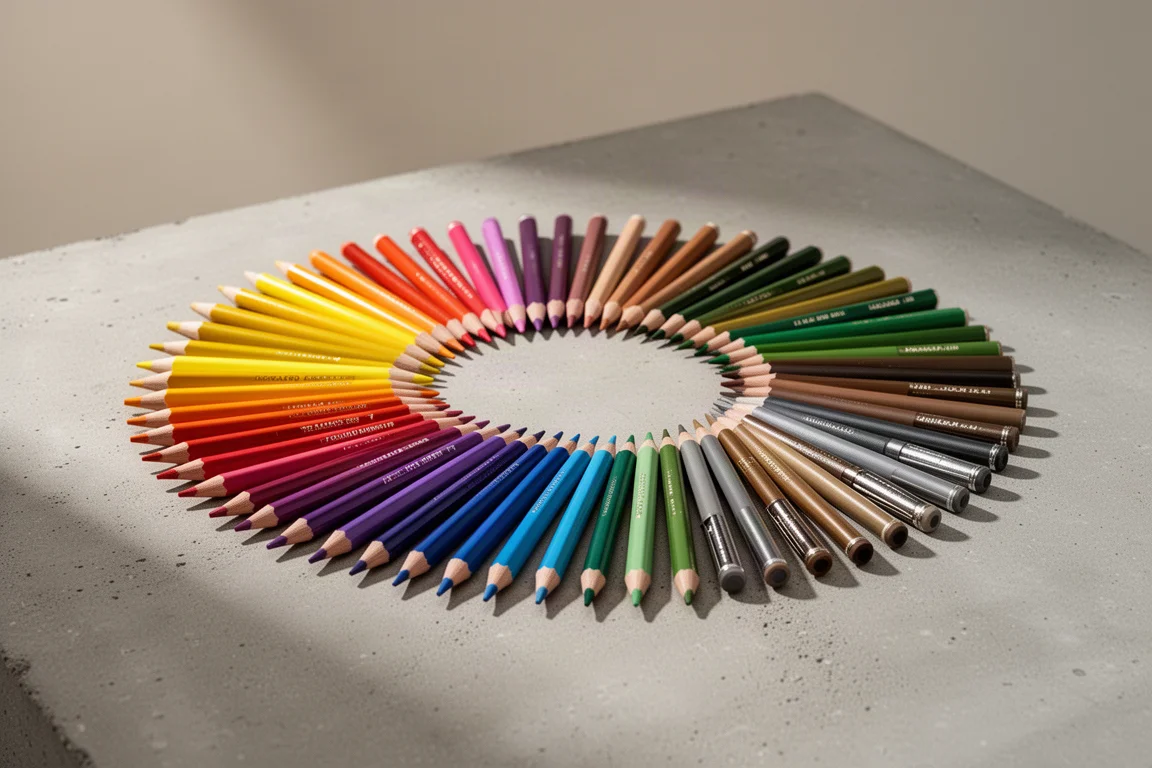
Introduction
Some budget colored pencil sets look great in a product listing and then fall apart the moment they touch a sharpener. The Deli colored pencils 72-set does not fall into that trap. Long available through international marketplaces and often described as a more affordable alternative to Faber-Castell Polychromos-style pencils, this set finally earned a full round of testing: sharpening, swatching, layering, blending, and a solvent test.
The short version: this is not a fine-art, lightfast pencil, and it does not pretend to be. But for practice, adult coloring, and creative work where the finished piece will not be sold as an original, it punches well above its price. At around £18 for 72 pencils, the value is hard to argue with.
Pencil Characteristics and Build Quality
Each pencil uses a round barrel lacquered the same color as the core, which makes visual identification of the pigment genuinely effortless. The core measures 3.7mm, a comfortably thick diameter that holds a point well, while the barrel is 7.5mm across. The barrel is printed with “Color Pencil,” a pigment number, the Deli name, and a small decorative silver band near the end, and the end caps are finished neatly.
One thing worth knowing: these pencils feel light in the hand compared with premium sets. Usually, very light pencils signal a lower-grade wood shaft and poor sharpening durability. That is where the Deli set breaks the pattern. Every single pencil in the set was sharpened on arrival to remove the transit lacquer, and not one broke, split, or splintered. All 72 sharpened cleanly to a beautiful point. That kind of consistency is rare at this price.
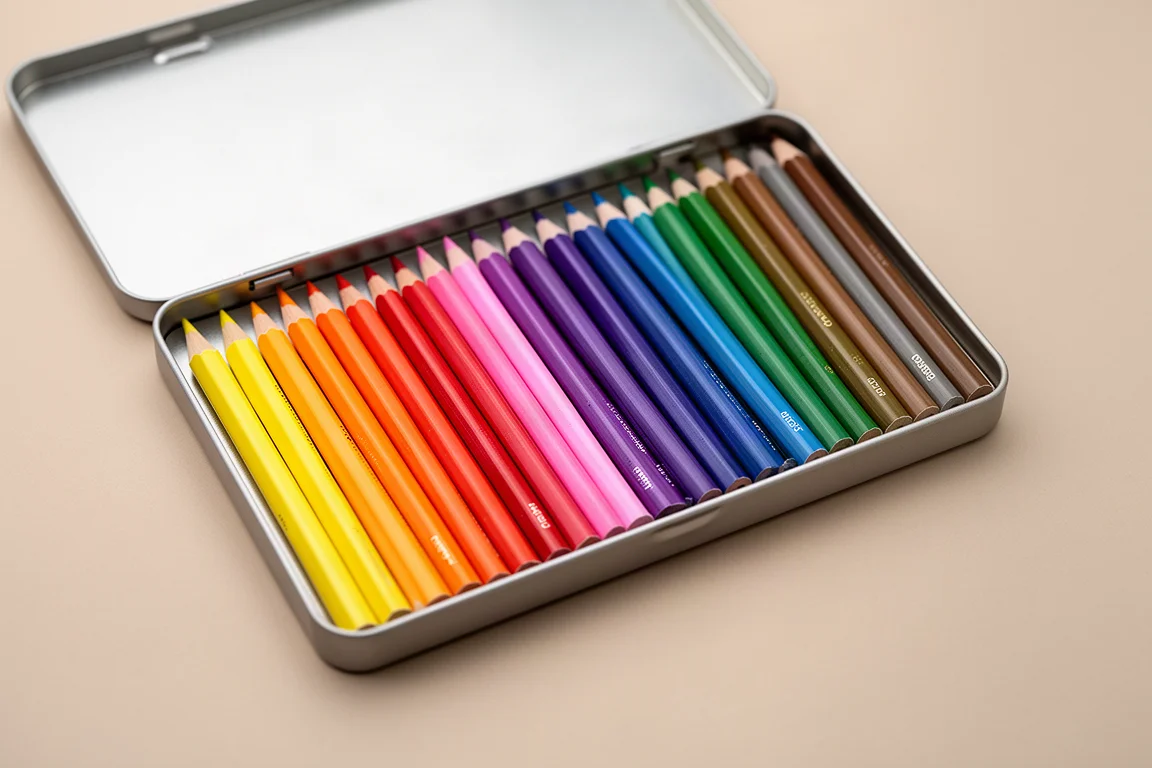
What You Get in the 72-Color Set
The color selection is well balanced across the spectrum. The range includes a strong run of yellows, peachy oranges, reds, pinks, purples, blues, and turquoise shades, plus a genuinely nice selection of greens including a couple of useful olive tones. The earth tones are a highlight of the set, with brands, raw ombers, and raw sienna-style colors that are gorgeous to work with. Toward the end of the tray you get a cool gray, warm grays, a lovely lavender-tinted gray, and two metallics: silver and gold.
There are also two blacks, and the distinction matters. Black 170 is a pure, rich black. Black 169 carries a very subtle blue tinge, which turned out to be genuinely useful in the artwork test later on.
Swatch Test on Bristol Vellum
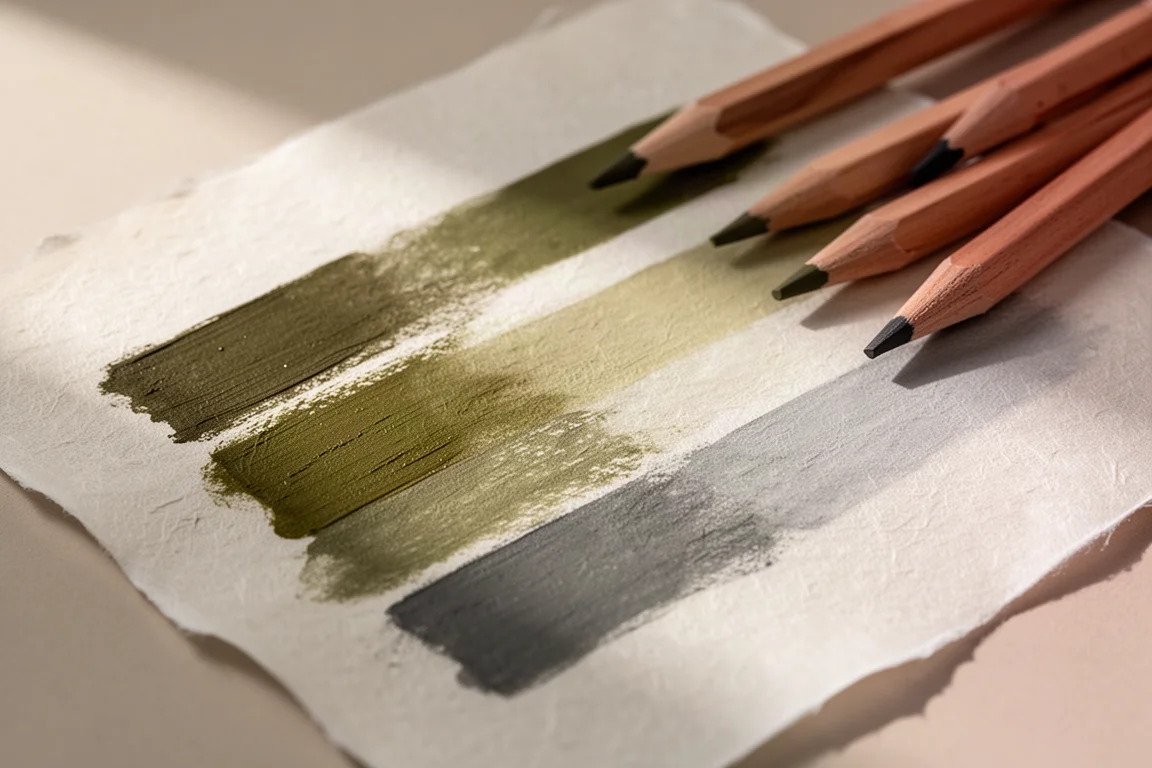
All 72 colors were swatched on Strathmore 300 series Bristol Vellum, a paper with enough tooth to grip pigment without being too rough. Each swatch used a heavy application fading into a lighter one at the bottom to show how each color gradates.
The results were consistently strong. Every color is vibrant and very saturated, with the earth tones and the olive greens standing out as particular strengths. The grays are well thought out, and the lavender gray in particular is a genuinely pleasant color to have in a budget set.
A second test focused on primary colors: five light layers followed by a heavy application. This layering test matters because it shows how much pigment the core can deliver before the paper’s tooth fills up.
Blending Performance
Blending is often where budget pencils collapse, so yellow and red were blended to see if a clean orange would emerge, yellow and blue for green, and the notoriously difficult red and blue pairing for purple. All three worked. The orange and green were clean and satisfying, and even the red-to-blue blend produced a purple that was genuinely quite nice, which is not something most budget sets can claim.
Solvent Test: How the Core Reacts to Odorless Mineral Spirits
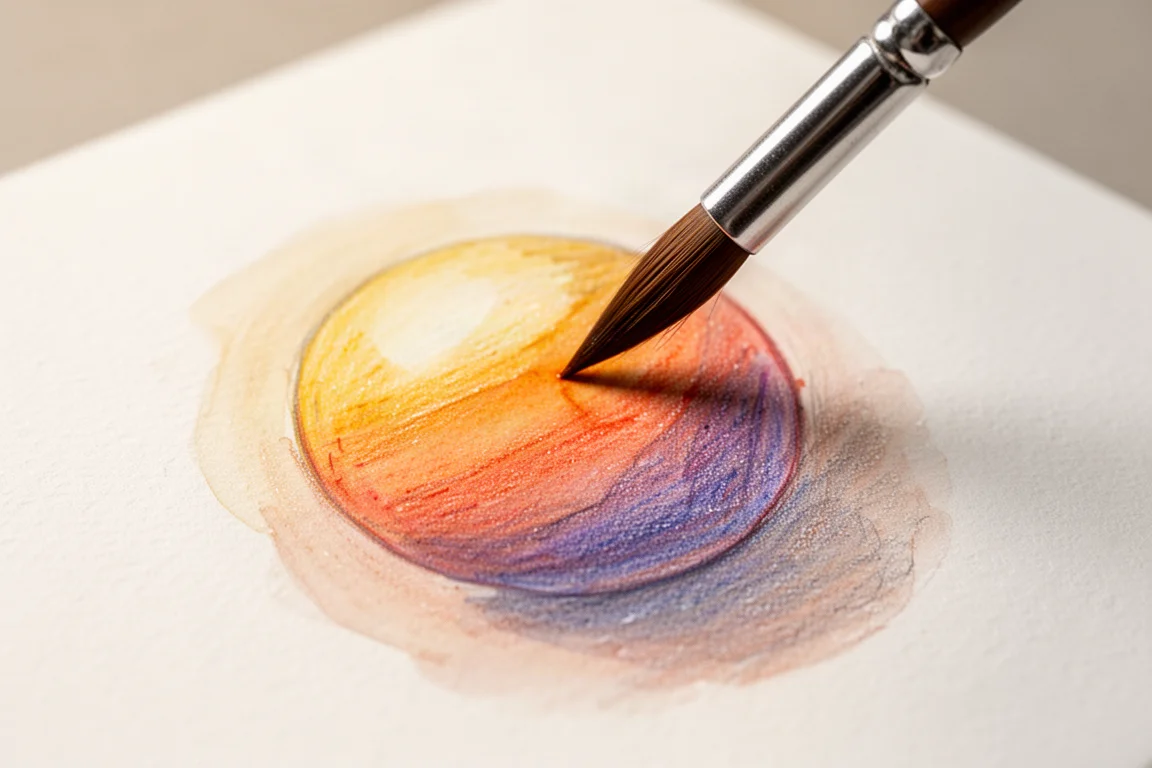
Many colored pencil artists use odorless mineral spirits to blend and re-open the tooth of the paper after several layers, so the core was tested for solvent reactivity. A layered sphere was built up first, then a small amount of odorless mineral spirits was applied with an ordinary watercolor brush, starting in the light areas to avoid dragging dark pigment upward.
The Deli core reacted beautifully. The solvent covered the white paper spaces left by the pencil layers, softened the pigment into a painterly effect, and smoothed the sphere’s gradation cleanly. After drying, the tooth of the paper would be ready for further layering, which is exactly the behavior artists expect from much more expensive pencils.
For anyone building work in multiple layers with solvent techniques, this set handles the process very well.
Core Feel: Hard Enough to Last, Soft Enough to Layer
Describing a core without leaning on the tired wax-based versus oil-based debate is tricky, because in reality every pencil core is a blend. The more useful way to describe the Deli core is by feel and wear. It is quite hard and robust: it holds up to a lot of layering before it needs sharpening, and it delivers a nice, even layer of pigment with every stroke.
At the same time, it feels soft in the hand while you work. The trick is that the core does not wear down the way a truly soft pencil would. A wear test, running a heavy application down roughly 11 centimeters of paper and comparing it with a fine-pointed light layer from a second pencil, showed how long the core lasts before a resharpen is needed. The colors stayed saturated and bright throughout, whether applied lightly or heavily.
That combination, durable core plus vivid delivery, is the strongest argument for this set.
The Butterfly Test: Real Artwork Performance
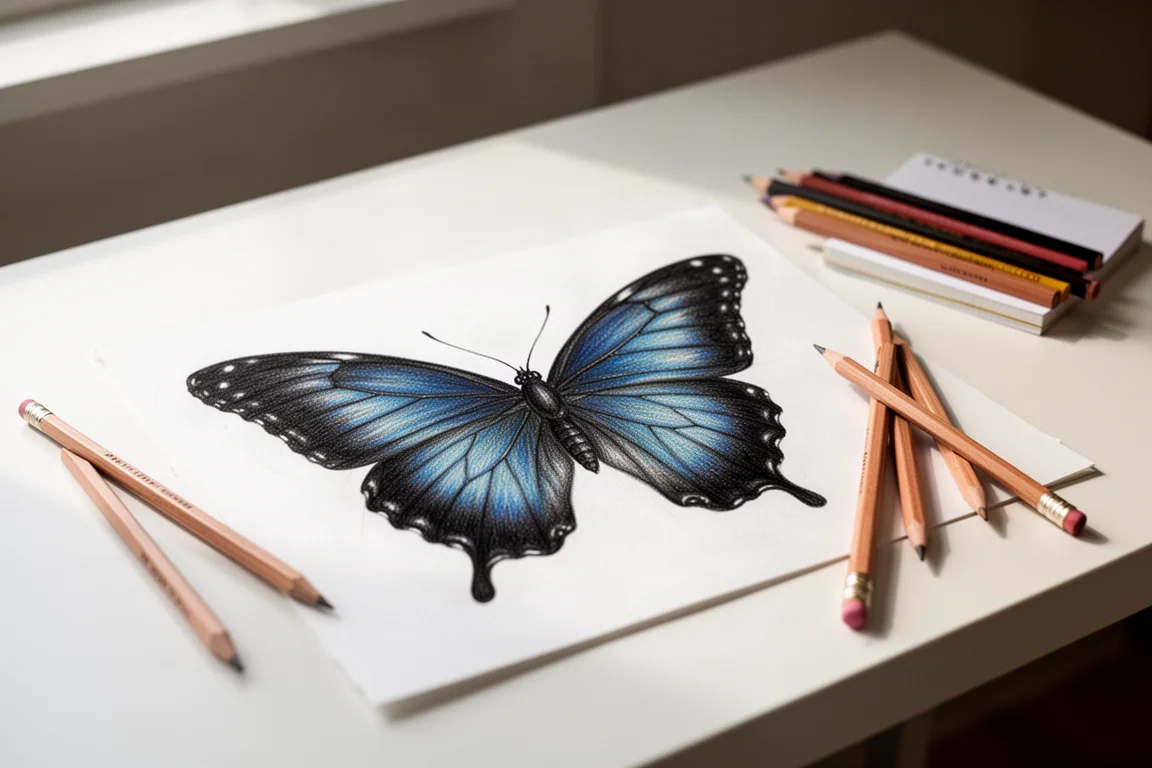
A finished butterfly drawing, done on a quality German lightfast paper pad, showed how the set behaves in a real project. The subtle blue-tinged black (169) was used as an underlayer to give the darker areas depth, with the purer black (170) layered on top. That technique is standard advice among colored pencil artists: never rely on black alone, because a colored underlayer keeps darks from looking flat.
The result was a piece with real depth. The pigments are fairly opaque, the paper took layer after layer with no issues, and the overall artwork turned out well.
Opaque or Translucent?
A test on black paper shows how the colors behave over dark grounds. This is not a pass or fail; some artists prefer translucent pencils like Faber-Castell Polychromos, while others prefer more opaque options like Caran d’Ache Luminance. The Deli set sits in the middle. There are no super opaque colors and no super translucent ones, and the colors stand up reasonably well on black paper. If you like working dark-to-light, the set will not fight you.
The Lightfast Question: Who Should and Should Not Care
Here is the honest limitation: there is no lightfastness information for these pencils, no pigment names on the barrel, and no published lightfast testing. Only numbered color codes. That matters for one specific group of people: artists selling original artwork. If a buyer expects a piece to look identical in a century, you need genuinely lightfast colors, and these are not that. Work done with this set may fade within a year or less depending on display conditions.
For everyone else, the point deserves repeating: you do not need lightfast pencils to make beautiful art. If you practice, color in adult coloring books, draw for pleasure, or give pieces away, a saturated, well-layering, solvent-friendly budget set will produce the same kind of artwork as far more expensive options. And if a finished piece does deserve a long life, there are workarounds: frame it behind UV-protective glass and keep it out of direct sunlight, or create a giclée print on archival paper with archival inks, which will hold its color far better than the original.
Buying Advice
At around £18 for 72 pencils, the Deli set is very cheap compared with other pencils of this quality level, where a 72-set would cost considerably more. It suits:
- Beginner and intermediate artists who want a big, saturated palette without a big investment
- Coloring book enthusiasts and hobby sketchers
- Artists practicing layering, blending, and solvent techniques
- Anyone who wants a large secondary set for studies and color experiments
If you sell original artwork and need certified lightfast ratings, look elsewhere. For everyone else, this set is one of the easiest budget recommendations in the category.
Conclusion
The Deli colored pencils 72-set surprises in the areas where budget pencils usually fail: sharpening durability, blending, solvent reactivity, and core longevity. Its limitations are honest ones: no lightfast data and no pigment names, which rules it out for selling originals but not for everything else. For the price, it is a genuinely satisfying set that lets you create beautiful, saturated artwork without overthinking the lightfastness debate.
Product link
View more details for Deli Colored Pencils 72-Set
This product is mentioned in the review. Check the specifications, options, and compatibility before buying.
View more details for Deli Colored Pencils 72-SetFurther reading
Related Reviews
Colored Pencils
Derwent Chromaflow 72 Set Review: A Soft-Core Contender That Finally Makes Sense
Derwent extended Chromaflow to a 72-pencil palette, and the range finally has the depth to compete in the soft-core space. Here is what the pencils do well and where they fall short.
Colored Pencils
Marco Refine Pro Review: A Soft, Colorful Budget Pencil That Struggles to Justify the 'Pro' Label
A closer look at the Marco Refine Pro 100 set: soft cores, rich color laydown, great layering, but no lightfastness data to back up the professional name.
Colored Pencils
Phoenix Color 100 Colored Pencils Review: Genuinely Beautiful, Genuinely Good
A 100-pencil Chinese set with gorgeous layered box art and gold barrel designs that also happens to layer, blend, and dissolve surprisingly well.