Power Tool Batteries
Makita XGT Tabless vs Standard Battery Packs: Which 4Ah or 5Ah Should You Buy?
A voltage-drop comparison between the new Makita XGT 4Ah tabless high output pack and the larger 5Ah standard pack, with practical buying advice.
Introduction
Tabless battery cells are quietly changing what cordless tools can do. Makita’s new XGT 4Ah tabless high output pack is the clearest example: it claims to deliver the same power as the larger 5Ah XGT pack while staying roughly the same size as the old standard 4Ah battery. That sounds almost too good, so we put both packs, plus the original 4Ah, on a power-hungry 12-inch miter saw to see how the voltage holds up under real load.
Tabless vs Standard: What Changes Inside the Pack
The key thing to understand is that amp hours describe capacity, not power output. The power a pack can deliver depends on the cells inside it, not the number printed on the label. Tabless cells reduce internal resistance, which means less heat loss and less voltage sag when a tool pushes hard.
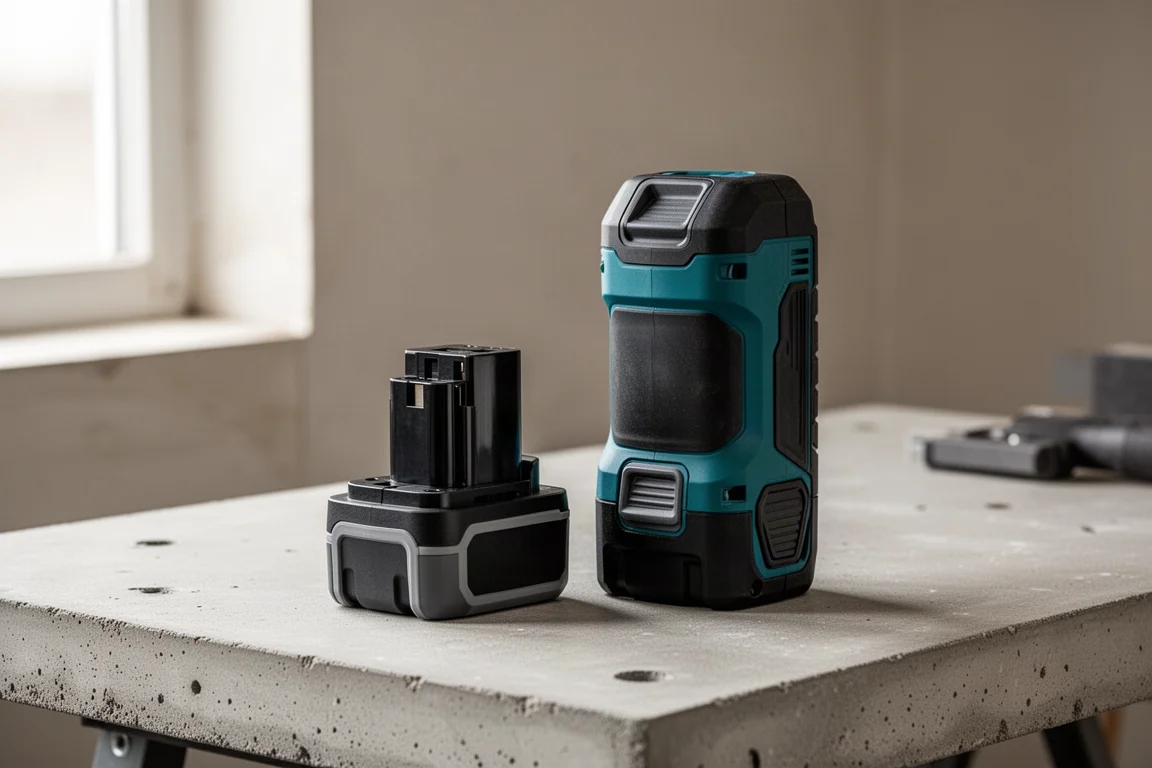
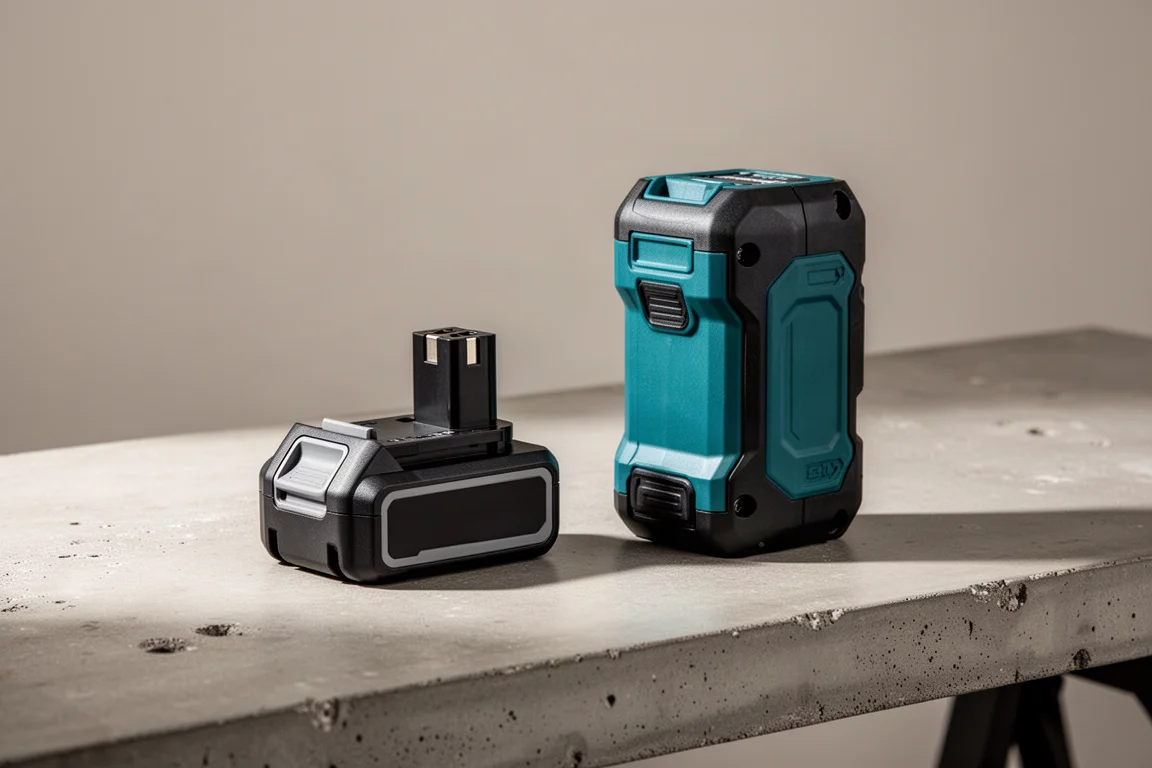
Visually, the new pack is easy to identify: it carries gray accents rather than the usual teal surrounding, marking it as a high output pack. It is also basically the same size as the old 4Ah battery, while the 5Ah XGT pack is significantly larger and heavier.
The Voltage Test: A 12-Inch Miter Saw Comparison
A big miter saw is not the ideal tool for a small 4Ah pack, but it is a consistent, repeatable load that pulls the battery down and reveals what the cells can actually deliver. The old 4Ah pack started at about 41 volts and dropped to the low 30s on the first cuts, recovering slowly between cuts. It sagged to around 31-33 volts under load.
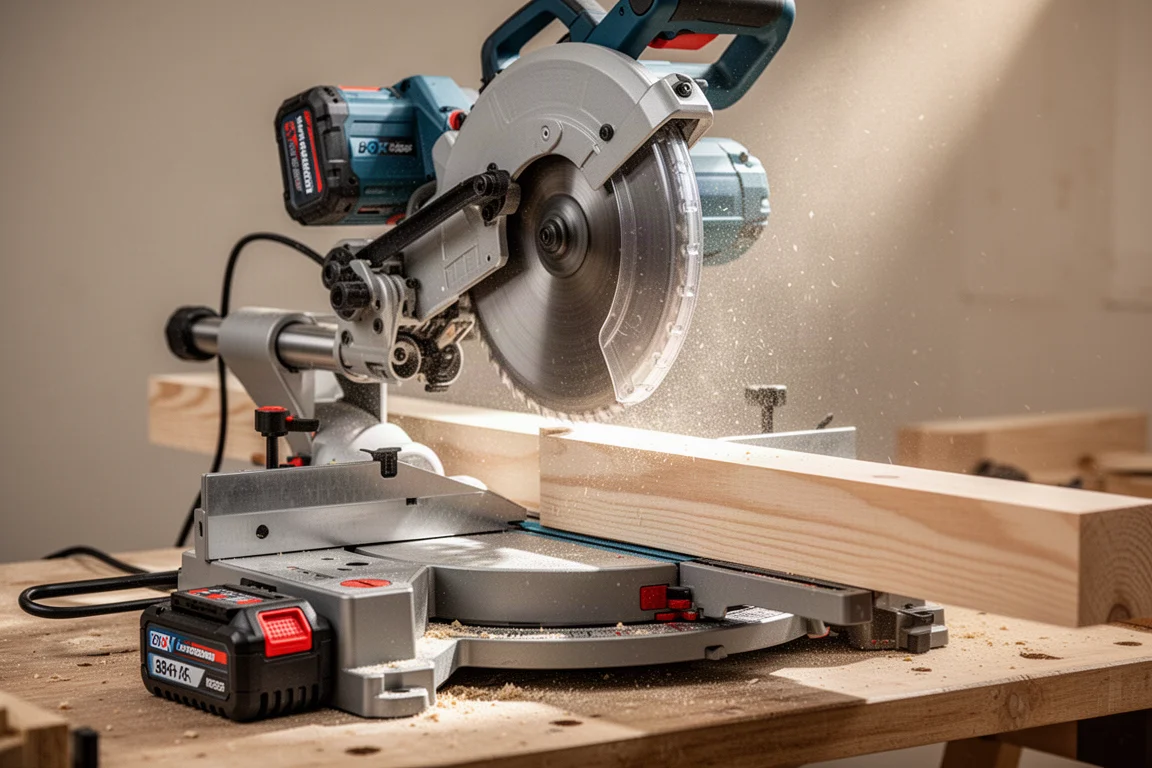
The new tabless 4Ah pack, starting at roughly the same voltage, only dropped into the 34-35 volt range, and even on faster cuts it held around 33-34 volts and recovered into the 40s almost immediately. The 5Ah pack performed basically the same as the 4Ah tabless pack, which is exactly what Makita claimed would happen.
What the Numbers Showed
Two takeaways stand out. First, all of these “40 volt max” packs are 36V nominal, so seeing the voltage drop into the mid-30s under load is normal. Marketing voltage and real-world voltage are two different numbers.
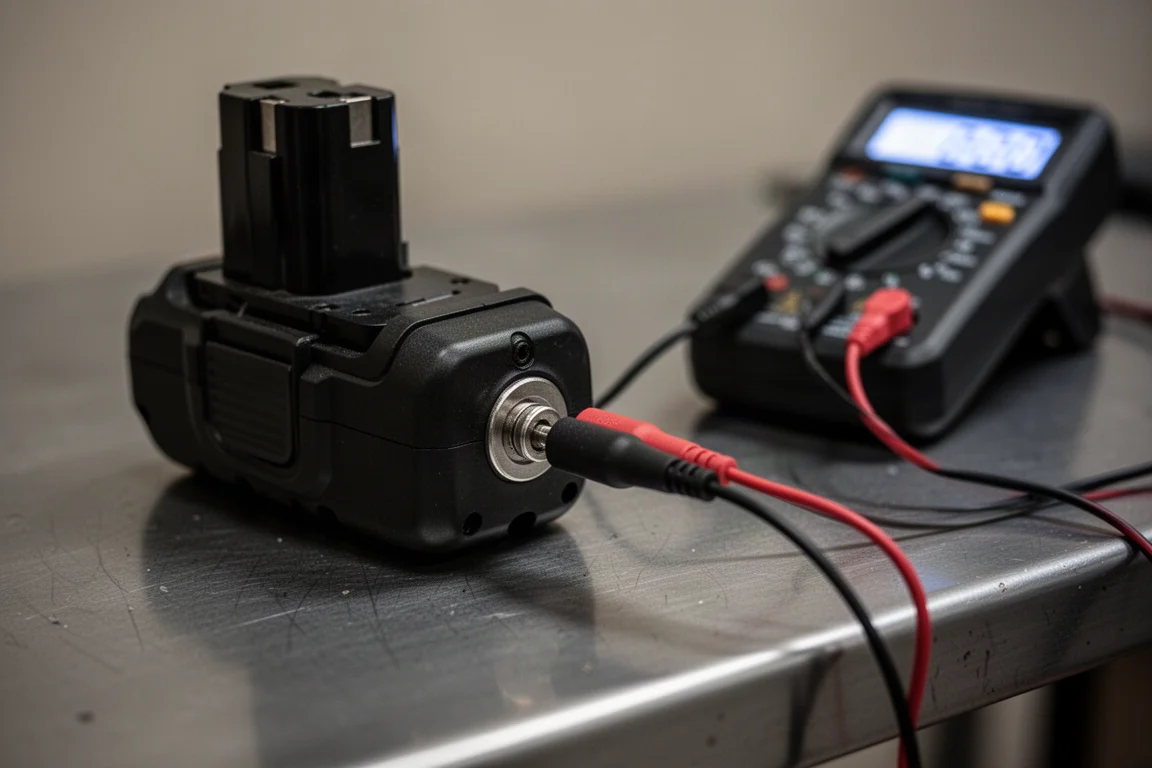
Second, the voltage sag is a good window into what happens inside the cell under load. The old 4Ah dipping to 31 volts on a big saw while the tabless 4Ah holds 33-34 volts is a meaningful difference, especially since the tabless pack does it in a smaller, lighter body.
Runtime Reality Check
Do not confuse power with runtime. Under a constant drain, the 4Ah pack will still last a little less than the 5Ah pack. If a brand suggests the tabless 4Ah matches the 5Ah in runtime, that is not what happens. The tabless pack may run slightly longer on high-drain tools because of reduced heat loss, but the 5Ah still holds more energy overall.
Which One Should You Buy
The price gap is small: the tabless 4Ah is generally within about $10 of the 5Ah pack. That leaves a simple choice.
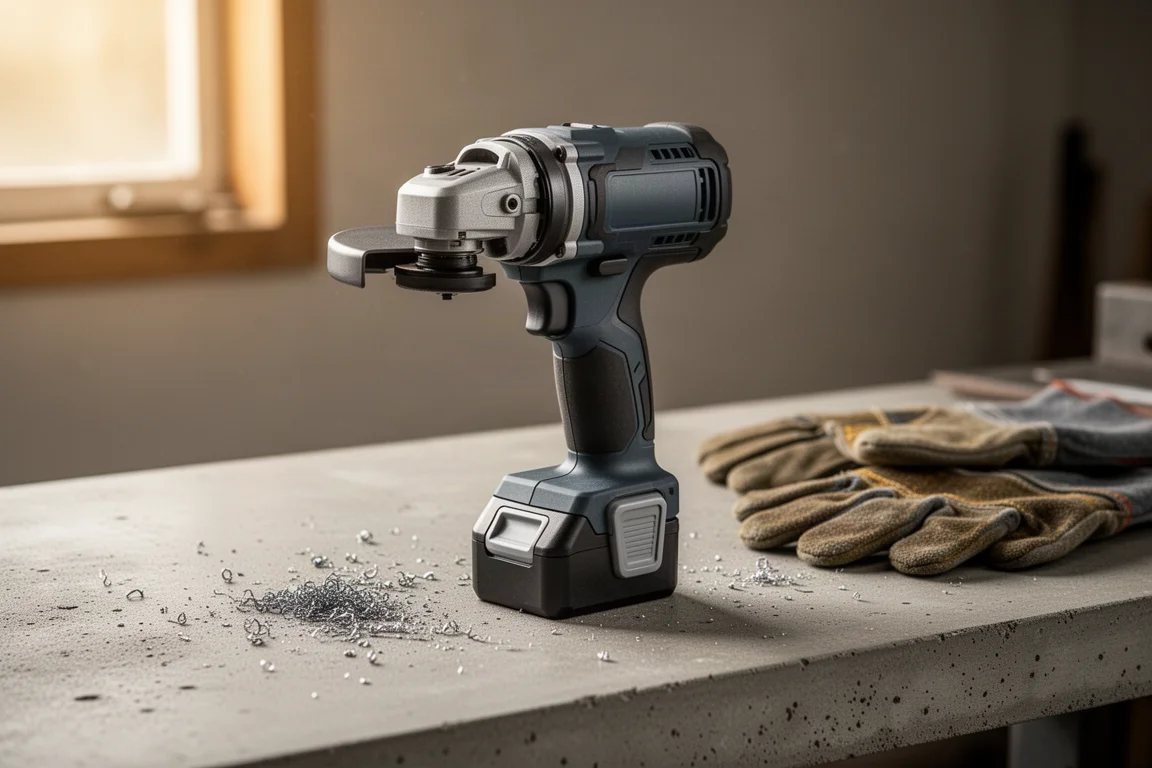
For tools like angle grinders, anything used overhead, or any situation where you want power in a light and compact pack, the 4Ah tabless is the smarter pick. It delivers the power the tool needs without the extra weight.
For large, mostly stationary tools like a miter saw, the 5Ah still makes sense. You get essentially the same performance with longer runtime, and pack size does not matter much on a saw that sits on a stand. Spending the extra $10 for more runtime is the better trade there.
Looking ahead, tabless technology is expected to scale to higher capacities, with 8Ah-class packs on the horizon. That is where this cell chemistry could really shine for large, power-hungry equipment.
Conclusion
The Makita XGT 4Ah tabless high output pack is a genuine step forward: it matches the power delivery of the larger 5Ah pack in a smaller, lighter body. It does not magically match the 5Ah’s runtime, so the right choice depends on the tool. Pick the tabless 4Ah for handheld and overhead work where weight matters, and the 5Ah for big saws where runtime wins.
Product link
View more details for Makita XGT 4Ah Tabless High Output Battery Pack
This product is mentioned in the review. Check the specifications, options, and compatibility before buying.
View more details for Makita XGT 4Ah Tabless High Output Battery PackFurther reading
Related Reviews
Power Tool Batteries
9Ah M12 Batteries Tested: Which Aftermarket Pack Is Actually Worth Buying?
We measured real capacity, voltage sag, and tool performance from four aftermarket 9Ah M12 batteries against Milwaukee's XC 5.0 High Output pack. One budget option stands out.
Power Tool Batteries
DeWalt DCBP520 5Ah PowerStack Battery Review: Big Power in a Pouch-Cell Pack
The largest PowerStack battery yet promises pouch-cell output with 5Ah of capacity. We break down its size, weight, voltage sag, and real tool performance.
Power Tool Batteries
DeWalt PowerStack 5Ah vs XR 5Ah: What a Heat Gun Runtime Test Revealed
Two DeWalt 5Ah batteries ran a DeWalt heat gun back to back. Same capacity, very different power delivery, heat, and voltage behavior.