Work Lights
Makita Battery Top Lights Review: DML817, ML001G and ML107 Compared
Makita's battery-powered top lights for the LXT, XGT and CXT platforms share a smart design, an orange glare-reducing lens and surprisingly long run times.
Introduction
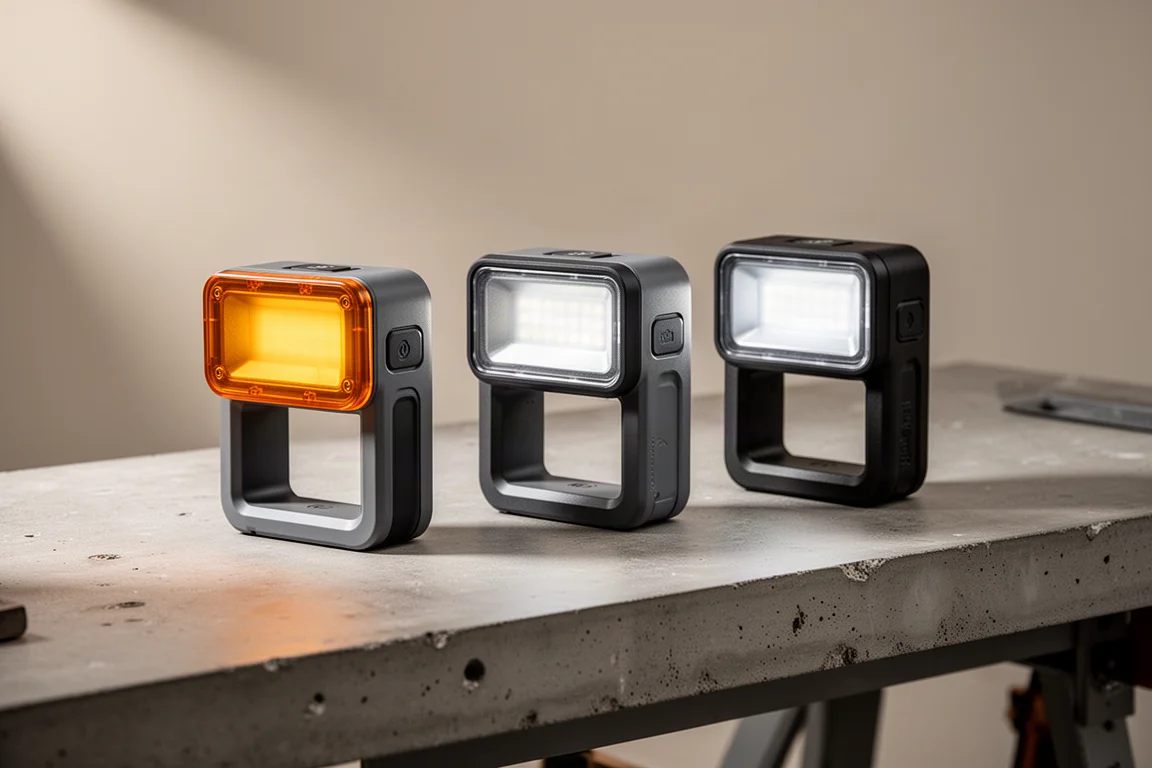
Makita has refreshed its battery-powered top light line-up across all three of its main battery platforms: the LXT 18V, the newer XGT 40V, and the CXT 12V. The first two are already available, while a CXT version exists but has not rolled out widely yet, so most buyers on the 12V platform will need to wait a little longer. This guide covers what all three share, where they differ, and which one makes the most sense for your existing battery collection.
Why the Orange Lens Makes Sense
The first thing most people notice is the orange front. Do not worry: that is a detachable lens cover that goes over the white LED face, so the light can run white or orange depending on what you need.
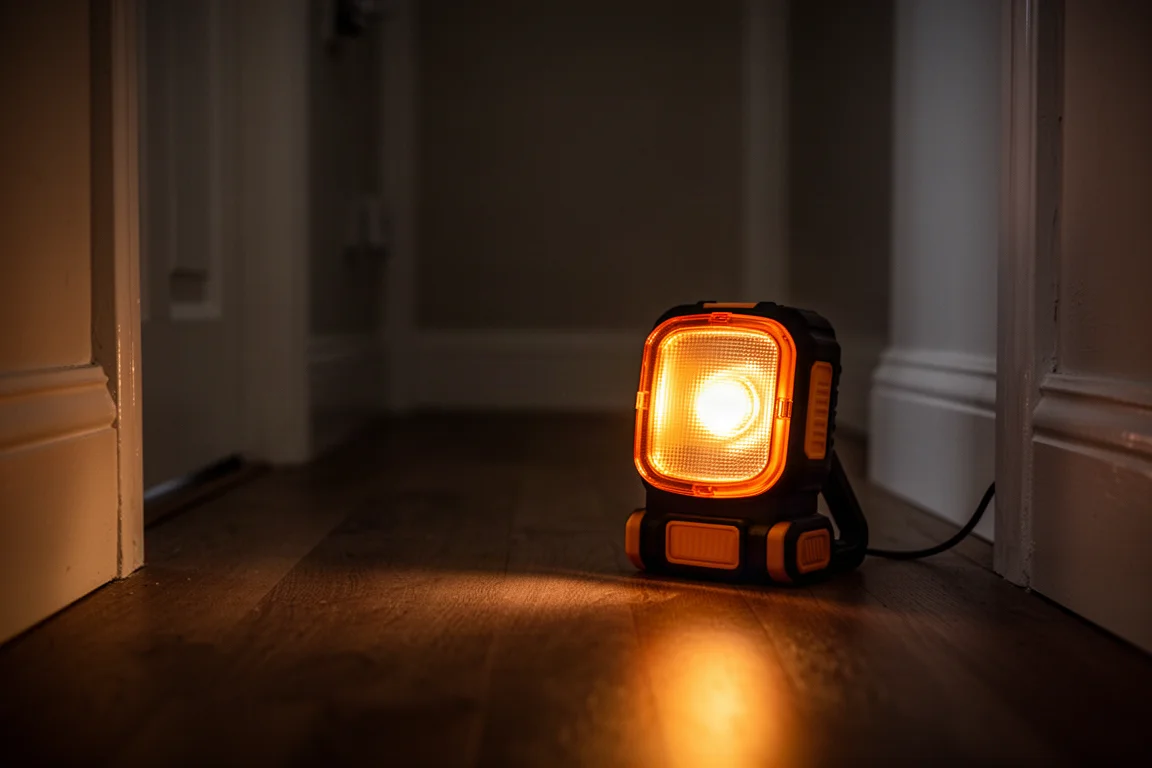
The orange cover proved genuinely useful during a power cut. Sitting on the floor in a hallway or kitchen, it gives off enough light to walk through a space safely without the harsh glare that makes you see floating coloured dots when you look directly at most LED work lights. It takes the edge off in a way that is easy to appreciate once you have used it.
One small note for careful readers: the instruction manual describes the cover as “a detachable cover to light lens part for changing light output to warm color with high relaxation effect”, which is exactly the kind of charming translation you would expect from a tool manual.
Light Output and Real-World Brightness
The LXT and XGT versions are identical in output: 300 lumens on full power with a 5000K cool white colour, split across four LEDs on the front and four on the top. Run the front only and you get 150 lumens; run the top only and you get 150 lumens as well. This lets you direct light exactly where you need it and keep it out of your eyes.
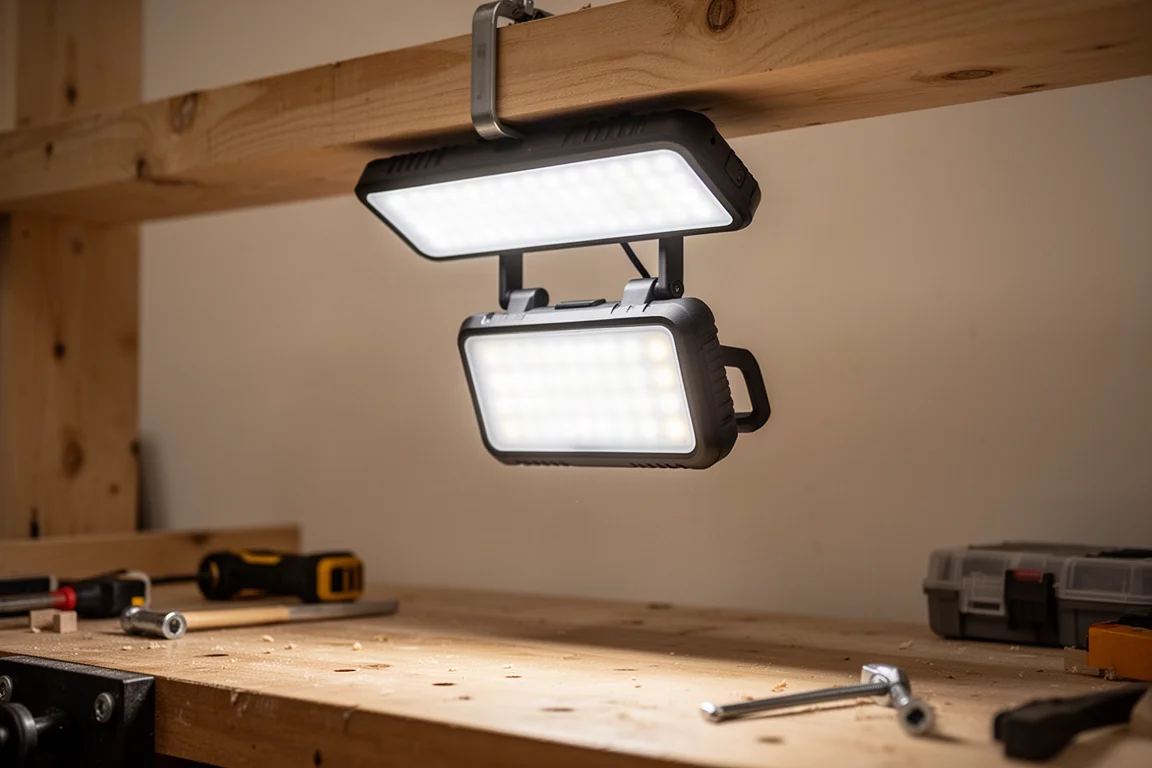
A lux meter test at one meter came in at around 130 lux with the front light alone, and around 210 lux with the light angled at 45 degrees so both the top and front panels pointed at the meter. In practice, 300 lumens is plenty for working in a roof space, under a floor, or lighting a bench from a hook about a meter up. It is not the light for fine painting work, but for most small jobs it is genuinely bright and covers several meters around you.
The CXT 12V version, model ML107 or ML107D depending on your region, is a step down at 200 lumens: 100 out the front and 100 out the top.
The Built-In USB Power Port
Every version includes a USB-A port behind a small rubber cover on the front, with a button to switch the output on and off. It runs at 5 volts with a 2.4 amp output.
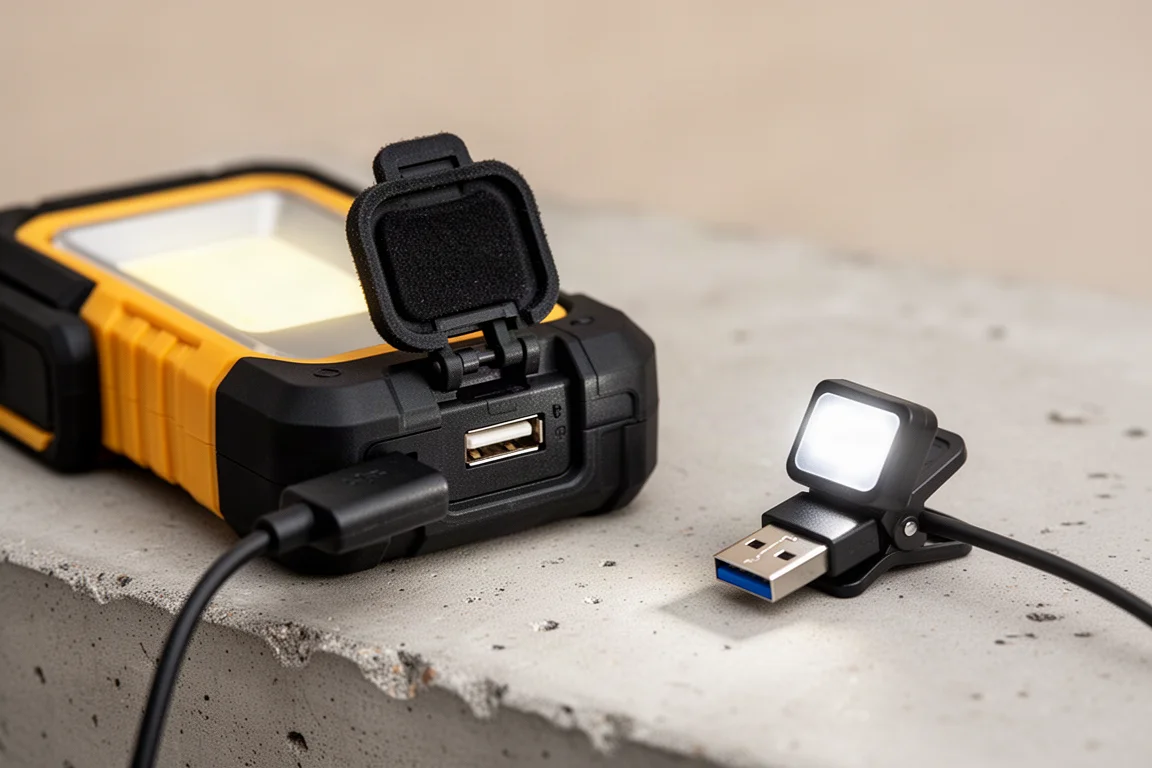
That is enough to run a small USB accessory, such as a clip-on LED light, right off the same battery. In practice it turns the top light into a compact power source for small gear, which is a nice bonus on a light you already have in your bag.
What Is Missing: A Belt Clip
The one obvious omission is a belt clip. During that power outage, clipping the light to a belt so it lit the path ahead would have been very handy. Instead, you get a strap loop on each side, and an optional strap with a hook is available for hanging the light up. If Makita had added the same slot and screw hole used on its drills and impact drivers, this would be an easy fix. As it stands, plan to hang it or set it down.
Battery Run Times Across the Platforms
This is where the platform choice matters most, because the lights themselves are identical apart from the battery that clips on the bottom.
The XGT 40V version with a 2.5Ah battery ran for around 23 hours on its low setting and around 40 hours on the high setting. With an 8Ah battery, it reached 77 hours on full power and a remarkable 132 hours running a single light surface.
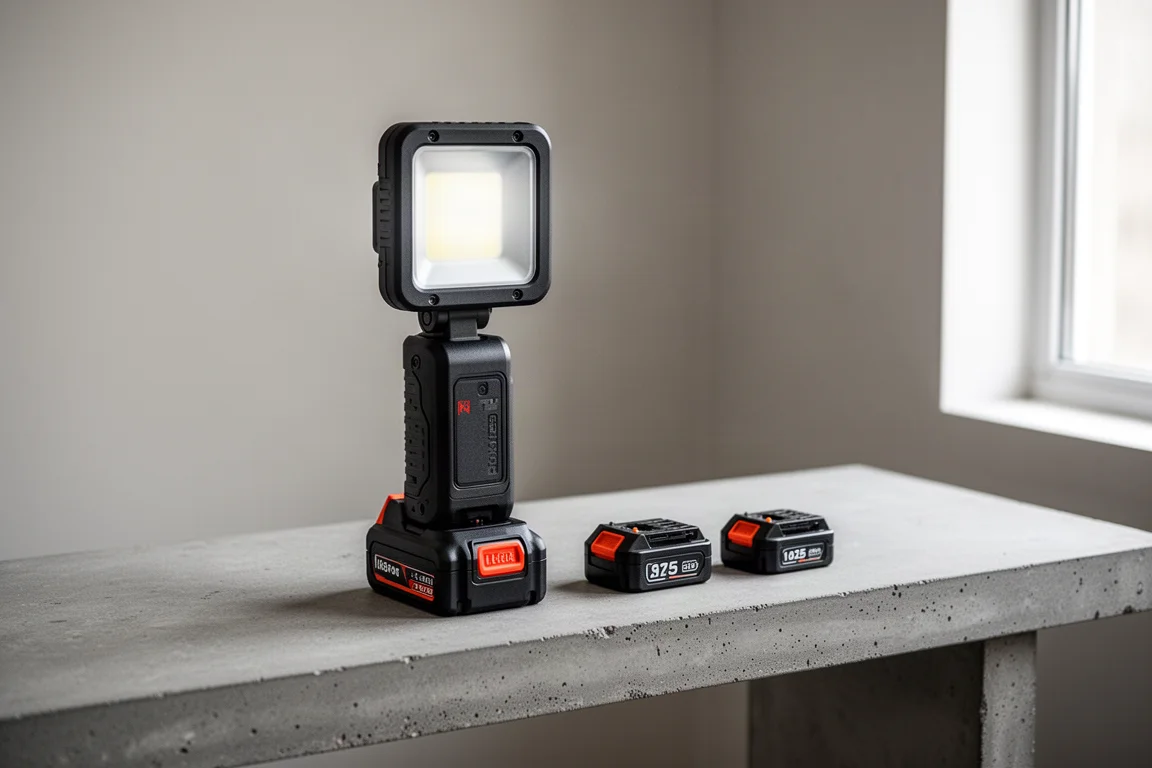
On the LXT side, a 2.5Ah battery delivered roughly 17 hours on full power and a 5Ah battery about 47 hours. With the largest 6Ah LXT battery, Makita quotes 28 hours on full power and 49 hours on a single-light mode. For reference, LXT batteries from 3Ah upward share the same physical size and weight, so a bigger battery does not make the light clumsier to handle, though the 40V high-capacity packs do add noticeable bulk underneath.
During real use, the XGT light with a 5Ah pack ran for about five hours and had not dropped a single battery bar, and the LXT equivalent ran around seven hours without dropping a bar either.
Which One Should You Buy?
The simplest answer is: buy the light that matches the battery platform you already own. There is no output advantage in choosing XGT over LXT, since both deliver the same 300 lumens. The XGT version simply makes sense if 40V is your main platform, and it pairs with the longest run times thanks to the larger high-capacity batteries.
LXT users get a very well-rounded light with excellent run times and batteries that stay compact no matter the capacity. CXT users should hold off briefly; the ML107 exists, and the model number to hunt for is ML107 or ML107D depending on region, but the wider release is still coming.
One final caveat: the orange lens cover may not ship in every region, so check with your local dealer if that feature is a deciding factor. Availability is rolling out across most markets over the coming months.
Conclusion
Makita’s new top lights are a tidy, well-thought-out addition to its battery ecosystem. They share a clever dual-direction LED design, a genuinely useful orange glare-reducing lens, a built-in 5V 2.4A USB port, and run times that will outlast most tasks many times over. The lack of a belt clip is a small missed opportunity, but with strap loops and an optional hook strap, hanging these lights up is still easy. Pick the version for your platform and you will hardly ever think about changing the battery.
Product link
View more details for Makita DML817 LXT 18V/14.4V Battery Top Light
This product is mentioned in the review. Check the specifications, options, and compatibility before buying.
View more details for Makita DML817 LXT 18V/14.4V Battery Top LightFurther reading
Related Reviews

Work Lights
Milwaukee M12 Rover Review: A Compact Work Light That Goes Where You Do
The Milwaukee M12 Rover is a compact, versatile work light with three brightness levels, multiple mounting options, and USB-C charging for your devices.
Work Lights
Best Folding Work Lights Compared: Budget Picks to Tool Truck Tough
Seven folding work lights tested for real lumen output, runtime, charging, and drop durability, from a $20 Amazon seller to Snap-on.
Work Lights
Best Hinged Work Lights: 7 Options for Aiming Light Exactly Where You Need It
From classic Maglite designs to modern dual-hinged stick lights, seven work lights that make it easy to aim a beam into tight spaces.