Power Tool Batteries
Makita 40V XGT Batteries Compared: The 8Ah Tabless BL4080H and the 4Ah BL4040F
A close look inside Makita's biggest XGT battery and its compact 4Ah sibling: same Murata tabless cells in one, different chemistry in the other, and some smart sealing details worth knowing.
Introduction
Makita’s 40V XGT range has quietly become the home of some seriously serious battery packs, and the BL4080H is the biggest and strongest of the lot: Makita’s tabless 8Ah pack, rated for up to 3,800 peak watts and 2,800 watts continuous. On paper that sounds impressive, but the more interesting question is what actually sits inside it, and whether it shares anything with the smaller BL4040F.
This article compares the two packs, explains what separates tabless cells from standard tabbed cells, and covers a few practical details about weight, sealing and tool compatibility that are worth knowing before you spend serious money on either one.
The Big Box: Makita’s Largest XGT Battery Yet
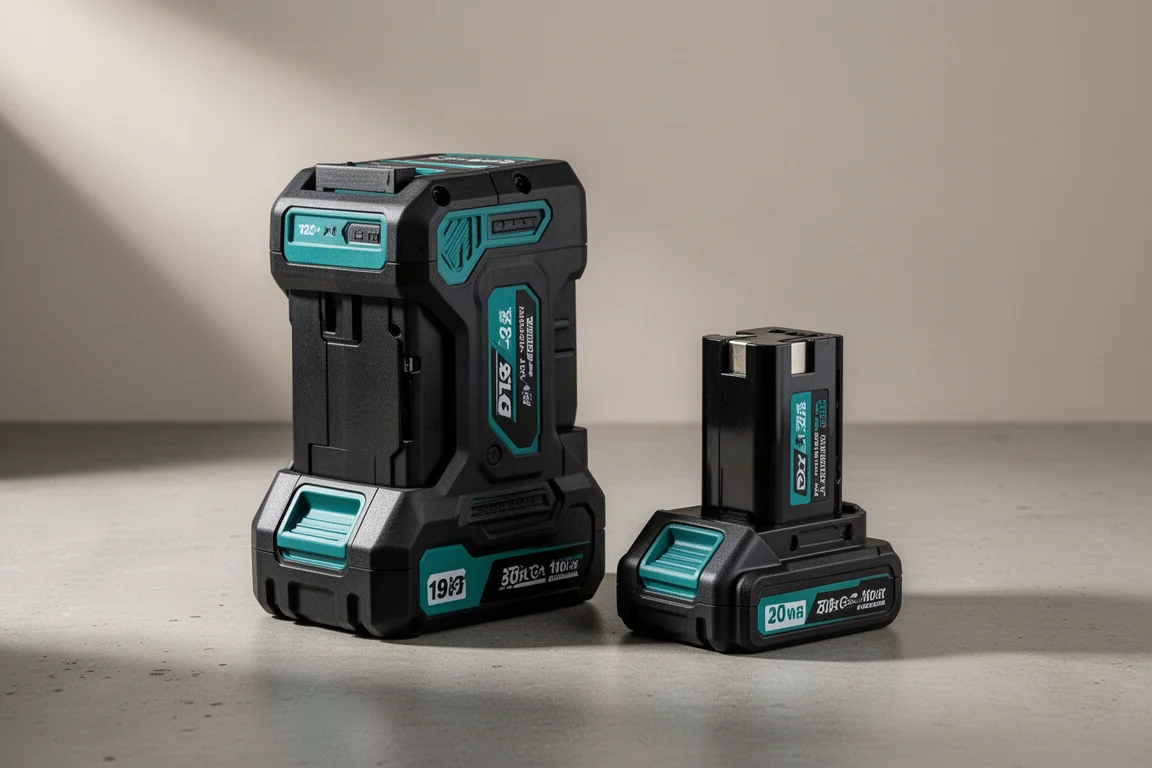
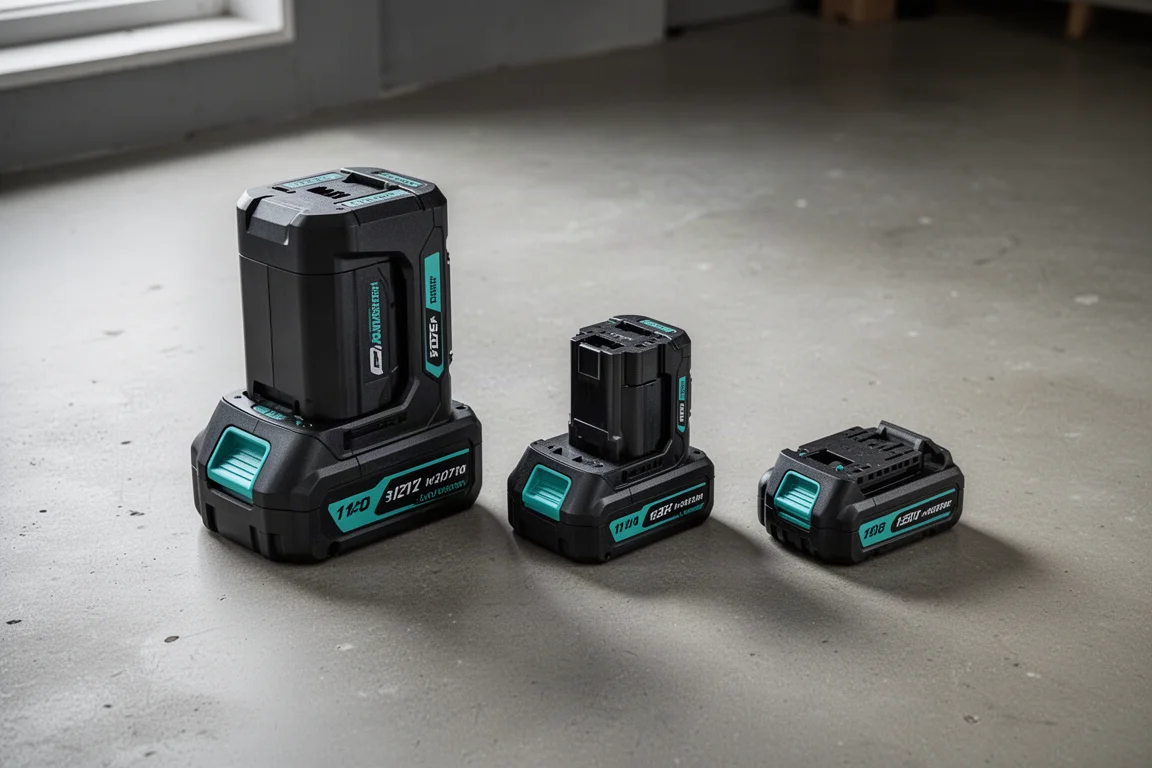
The first thing you notice about the BL4080H is the sheer size of it. The box it ships in is enormous, and next to an XGT light running a 2Ah pack, the 8Ah looks like a different class of product entirely. Line it up beside a BL4040F and even a 2.5Ah pack, and the scale difference is obvious. Both the 8Ah variants are the same physical size as each other, so there is no hidden size penalty to worry about between the standard and tabless versions.
That size comes with weight, too. The BL4080H weighs in at 1,838 grams, which is slightly lighter than the older standard 8Ah pack at 1,859 grams. Tabless cells appear to be a touch lighter, which is a small but welcome win at this size.
Inside the BL4080H: Tabless Murata Cells
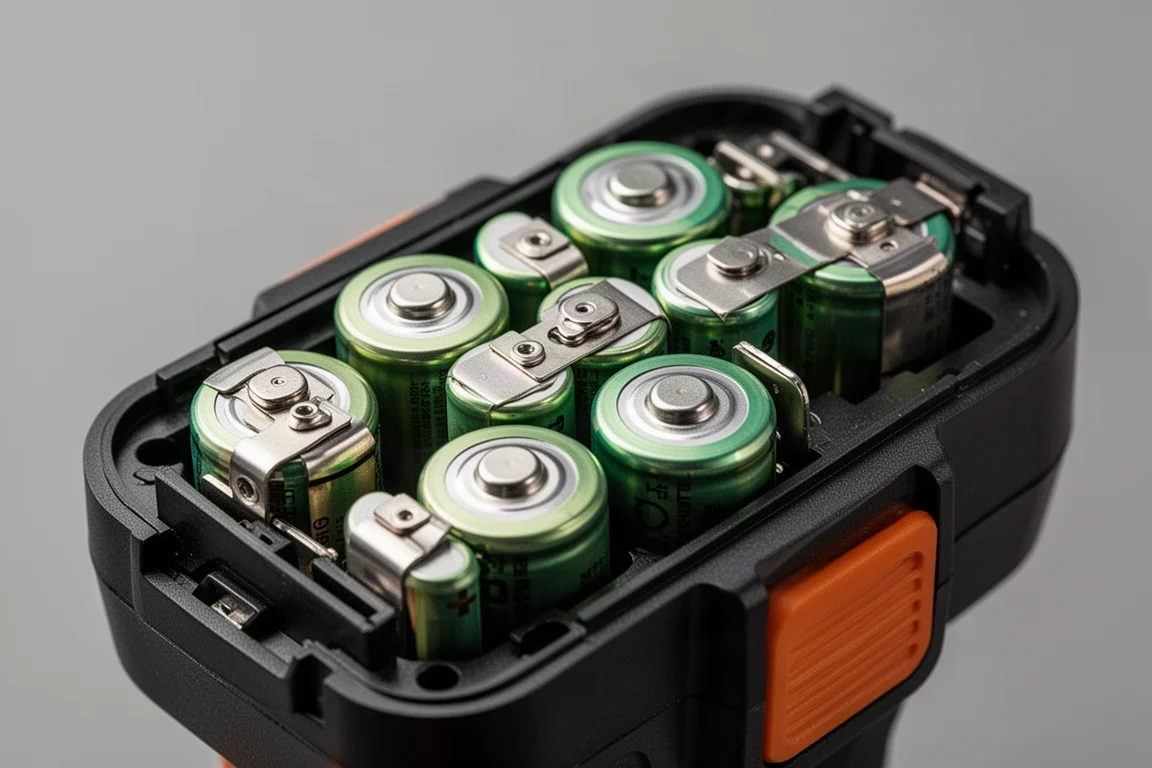
Opening the BL4080H reveals exactly what was hoped for: Murata 21700 VX40 tabless cells. The pack contains twenty cells in total, arranged as ten in series with another ten paralleled, which is how the pack reaches its 8Ah capacity. Each cell is rated at 4,000mAh, so ten cells give 4Ah and twenty give the full 8Ah.
The maths behind the 40V XGT naming is worth understanding. Cells are nominally rated at 3.6V but reach roughly 4.1V when fully charged, which is why ten cells in series give a 36V nominal pack marketed as 40V max, and freshly charged packs can actually read a little over 41V. Ten cells is the minimum for any pack in this class, which explains why no physically smaller battery exists in the range. The BL4080H simply doubles the minimum by paralleling a second ten-cell group.
For context, the older standard BL4040F uses Murata VTZ6A cells, a standard tabbed design rather than tabless. So while both packs share the Murata 21700 format, the cell construction inside them is genuinely different. There is real headroom here too: with 5,000mAh or eventually 6,000mAh tabless cells, a pack this size could reach 10Ah or even 12Ah in the future.
Electronics and Build Differences
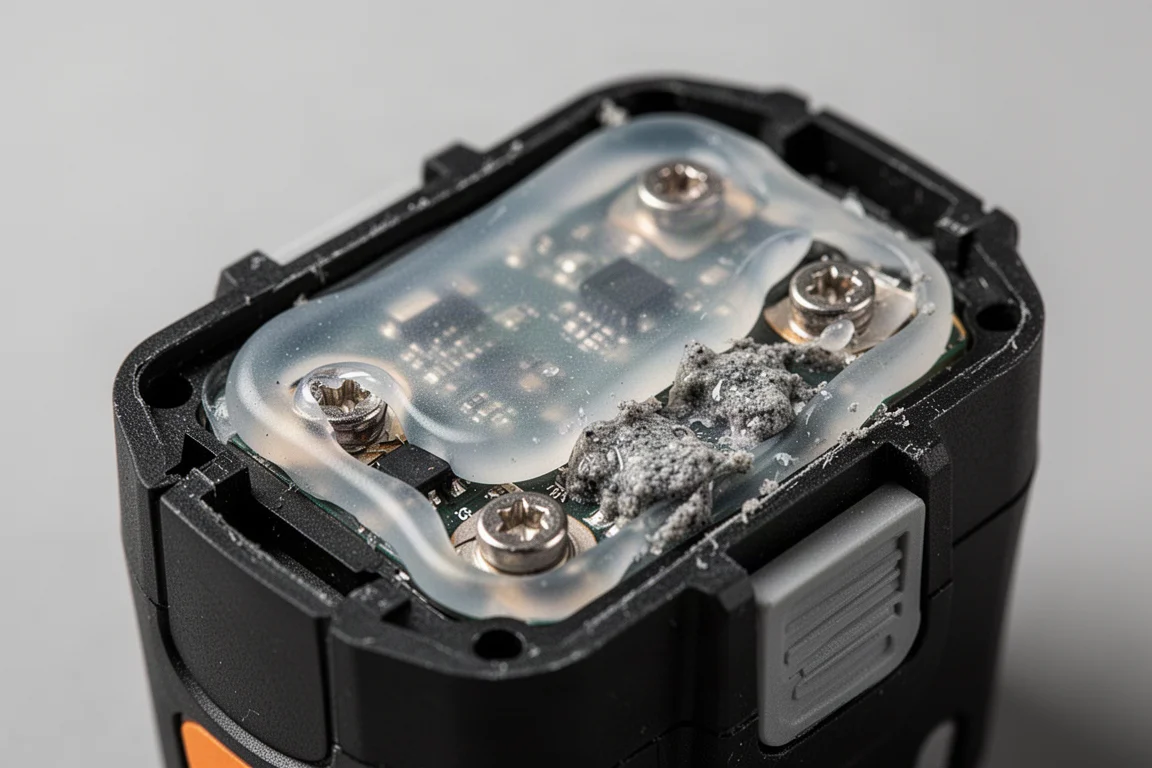
The two packs are not just different at the cell level. The BL4080H carries a very large resistive shunt that even has its own QR code printed on it, something not seen in this form on the standard pack. There is a clear silicone covering over some sections of the board, and the conductive bar in the tabless pack appears to be plain aluminium, while the equivalent bar in the standard pack is silver-finished on top but not underneath, with the chips in that area arranged differently.
One small economy note: the screws in the BL4080H have less thread than those in the older pack. The quantity, placement and Torx head size are all identical, but the threads are shorter on both the outer and internal screws.
Sealing, Grease and Vent Concerns
A lot of users worry about the big vents on these packs letting water in. Inside the BL4080H, everything under the lid is well protected: there is a thick, soft sealing layer over the components to guard against moisture and grease ingress. That said, sealing is not an invitation to abuse; dropping a battery into a bucket of water is still a bad idea.
Another detail that catches people out is the soft, greasy substance on the contacts at each end of the pack. That is factory-applied, silicone-based dielectric grease, not stray glue. The first time you slide the pack onto a tool, it pushes the grease through all the contacts, which helps maintain a good connection over time.
Rails, Compatibility and Fit
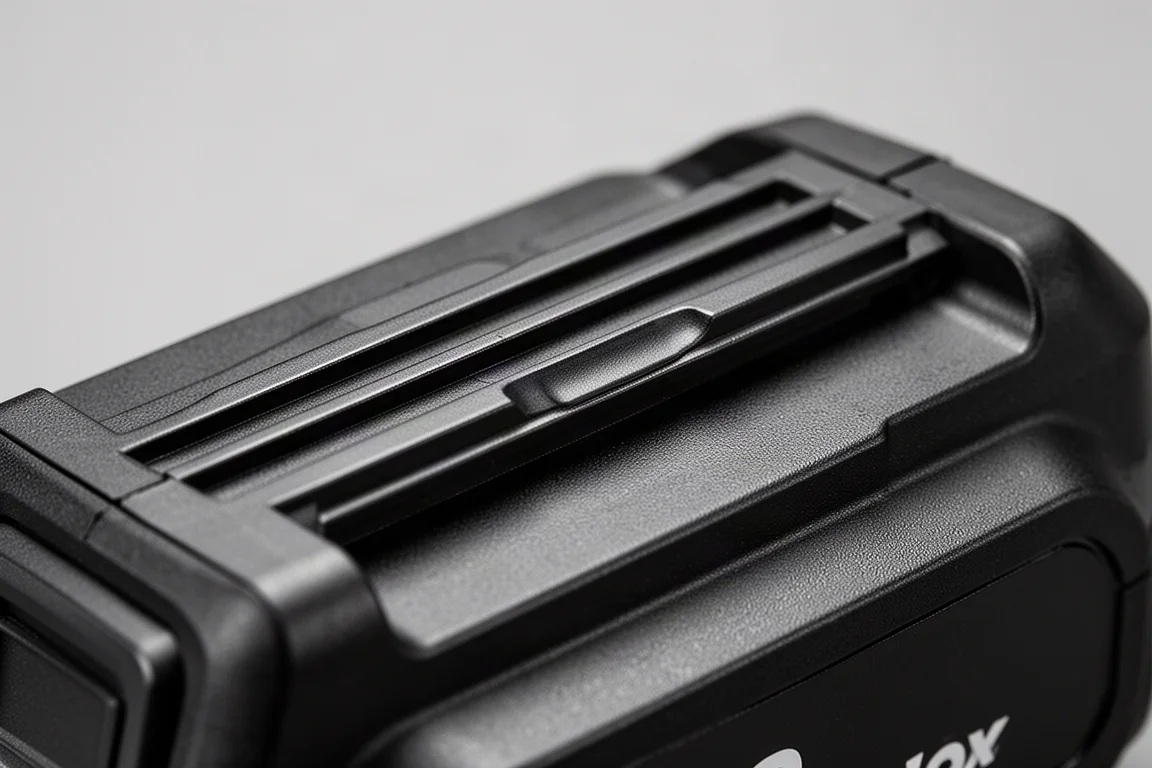
The mounting rails on the BL4080H and BL4040F look identical at first glance, but there is more going on. Comparing packs across the range shows that rail design has changed over time: older standard 4Ah packs have narrow rails, while newer versions, including the 4F and the 8Ah packs, have rails roughly twice the width. The extra width goes inward rather than outward, so the outer footprint stays the same and everything still fits the same rail system.
Inside those wider rails, some packs carry a small ridge on both sides. That ridge prevents the battery from mounting on certain tools that Makita considers unsuitable, whether because of the pack’s weight or its power output. In other words, not every XGT battery fits on every XGT tool, and the restriction is deliberate.
What You Get for the Money
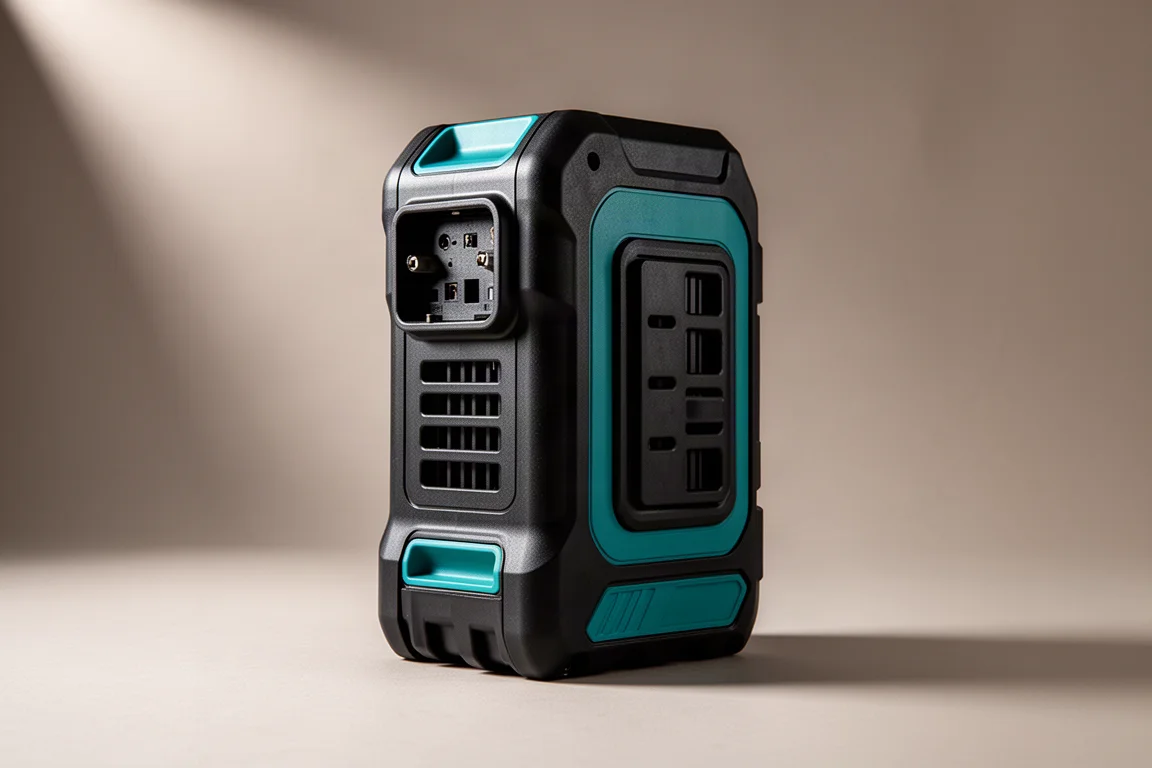
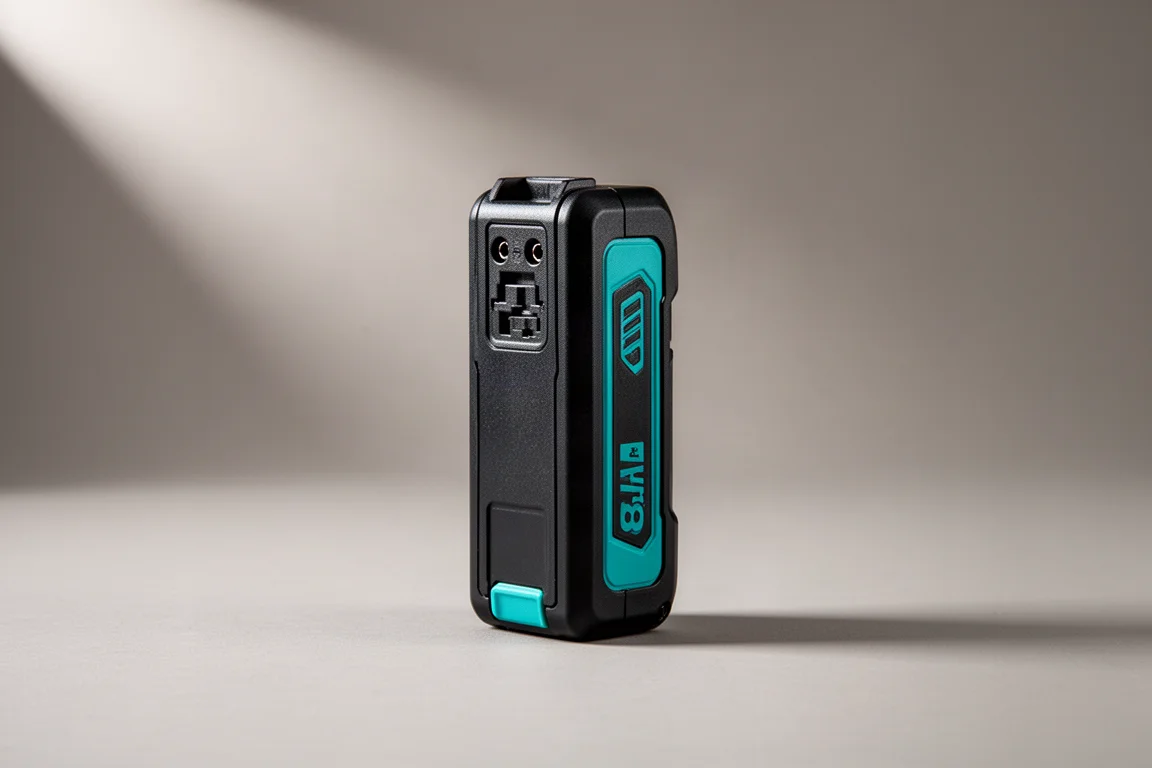
The BL4080H is not a cheap battery; at roughly $600 it sits at the very top of the range, and it is priced like the high-output pack it is. The BL4040F is the more conventional option: a compact 4Ah pack with standard Murata VTZ6A tabbed cells, well established in the range and far easier on the wallet.
Buying Advice
If you are running Makita’s most demanding XGT tools, the BL4080H is the pack that unlocks their full output, with up to 3,800 peak watts available. The tabless cell technology also means power flows through the cells more efficiently, and the pack is marginally lighter than the older 8Ah design despite matching its capacity.
If your workload is lighter, the BL4040F remains the sensible default: same form factor language, half the capacity, standard cells and a much lower price point. Both packs ship from the factory at roughly 30% charge (around 33.6V pack voltage), so expect to charge before first use.
Conclusion
The BL4080H and BL4040F turn out to be more different than they first appear. The 8Ah tabless pack uses Murata VX40 tabless cells, a large shunt with its own QR code, and better-than-expected internal sealing, while the 4Ah F pack sticks with standard VTZ6A tabbed cells. For maximum output, the tabless pack is the clear pick; for everyday XGT use at a friendlier price, the 4Ah remains hard to argue with.
Further reading
Related Reviews
Power Tool Batteries
9Ah M12 Batteries Tested: Which Aftermarket Pack Is Actually Worth Buying?
We measured real capacity, voltage sag, and tool performance from four aftermarket 9Ah M12 batteries against Milwaukee's XC 5.0 High Output pack. One budget option stands out.
Power Tool Batteries
DeWalt DCBP520 5Ah PowerStack Battery Review: Big Power in a Pouch-Cell Pack
The largest PowerStack battery yet promises pouch-cell output with 5Ah of capacity. We break down its size, weight, voltage sag, and real tool performance.
Power Tool Batteries
DeWalt PowerStack 5Ah vs XR 5Ah: What a Heat Gun Runtime Test Revealed
Two DeWalt 5Ah batteries ran a DeWalt heat gun back to back. Same capacity, very different power delivery, heat, and voltage behavior.