Speakers
Magnepan LRS Plus Review: A Compact Panel Speaker With a Big Soundstage
A close look at the Magnepan LRS Plus, including its panel design, placement and amplification demands, and how it compares with the original LRS, an older Magnepan panel, a small box speaker, and a compact subwoofer.
Introduction
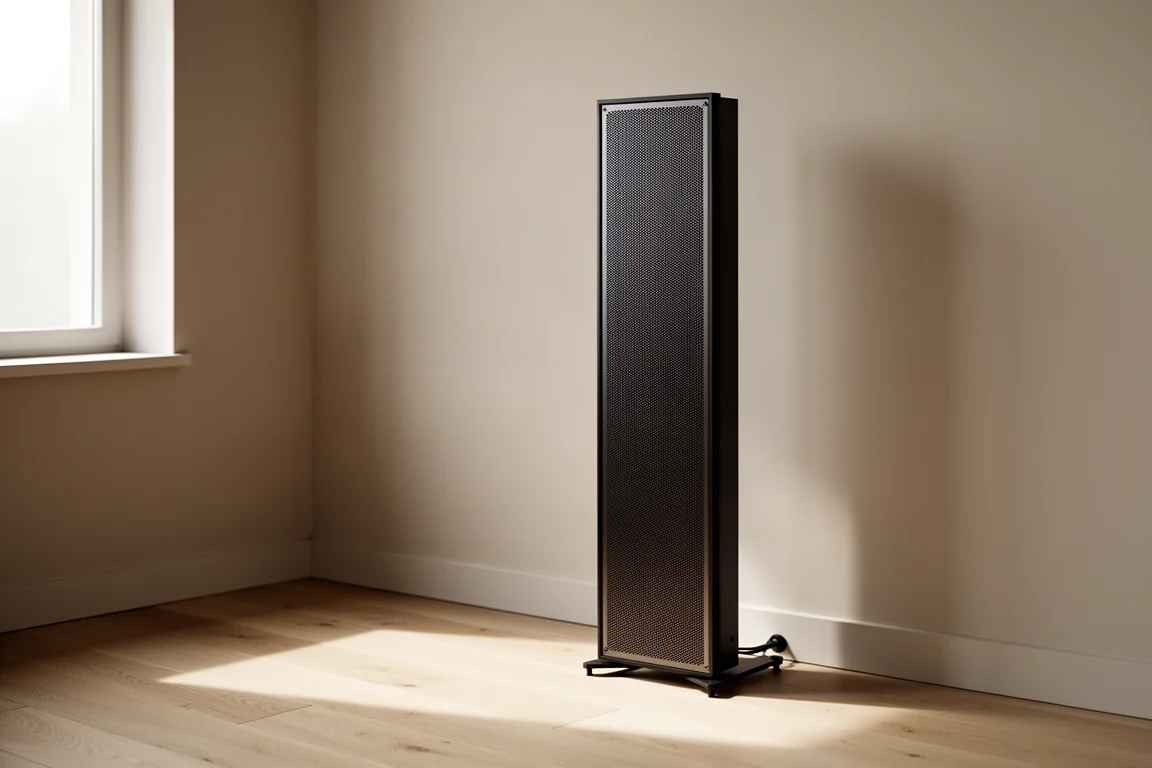
The Magnepan LRS Plus is the updated version of a small panel speaker that earned a great deal of attention when it first appeared. It sells for $995 per pair in the United States, stands roughly 51 inches tall on its supplied stand, and measures a little over an inch thick. Instead of a dome tweeter and cone woofers, it uses a single tensioned Mylar diaphragm with an extremely thin aluminum trace running across it. Part of that trace handles the treble, and the rest covers the woofer and midrange range.
Because the diaphragm radiates from the front and the back, the LRS Plus is a dipole, and that changes how it interacts with a room compared with a conventional box speaker. The result is a presentation that feels unusually tall, wide, and deep for the money, with strong center focus and solid imaging.
This article covers what the LRS Plus does well, where it asks for patience and commitment, and how it stacks up against the original LRS, an older Magnepan model, a well-known small box speaker, and a compact subwoofer.
Who the Magnepan LRS Plus Is For
The LRS Plus rewards listeners who care most about transparency, tonal nuance, and a large, dimensional soundstage. If you enjoy hearing individual instruments defined inside a big acoustic picture, this speaker is built for exactly that. It is particularly strong with acoustic material, jazz, and well-recorded vocals, where the midrange sounds beautifully balanced and the treble carries a natural shimmer rather than a mechanical edge.
It is not aimed at listeners who want visceral, chest-thumping bass. Anyone who expects a small speaker to shake the room, or who listens mostly to bass-heavy electronic music at high volume, will likely be happier with a different design.
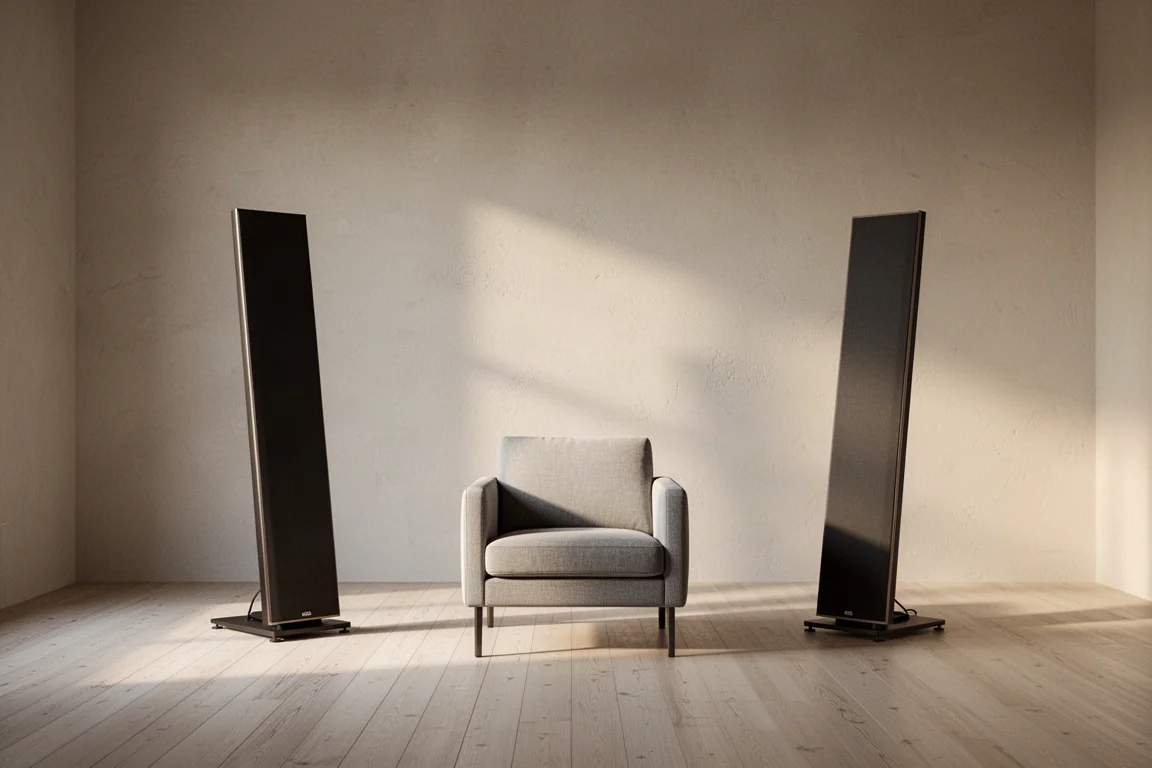
The practical profile matters as much as the sound. This is a speaker for someone willing to give it space behind it, pair it with an amplifier that is comfortable driving a four-ohm load, and accept that the last few percent of performance depends on setup.
The Panel Design and Why Placement Matters
Panel speakers like this one need room to breathe. Placing the speaker roughly three feet from the wall behind it is the practical target, two feet can work in a pinch, and four feet is better still if the room allows. Because the panels are light, a common workaround is to push them closer to the wall when the system is not in use and pull them back out for listening.
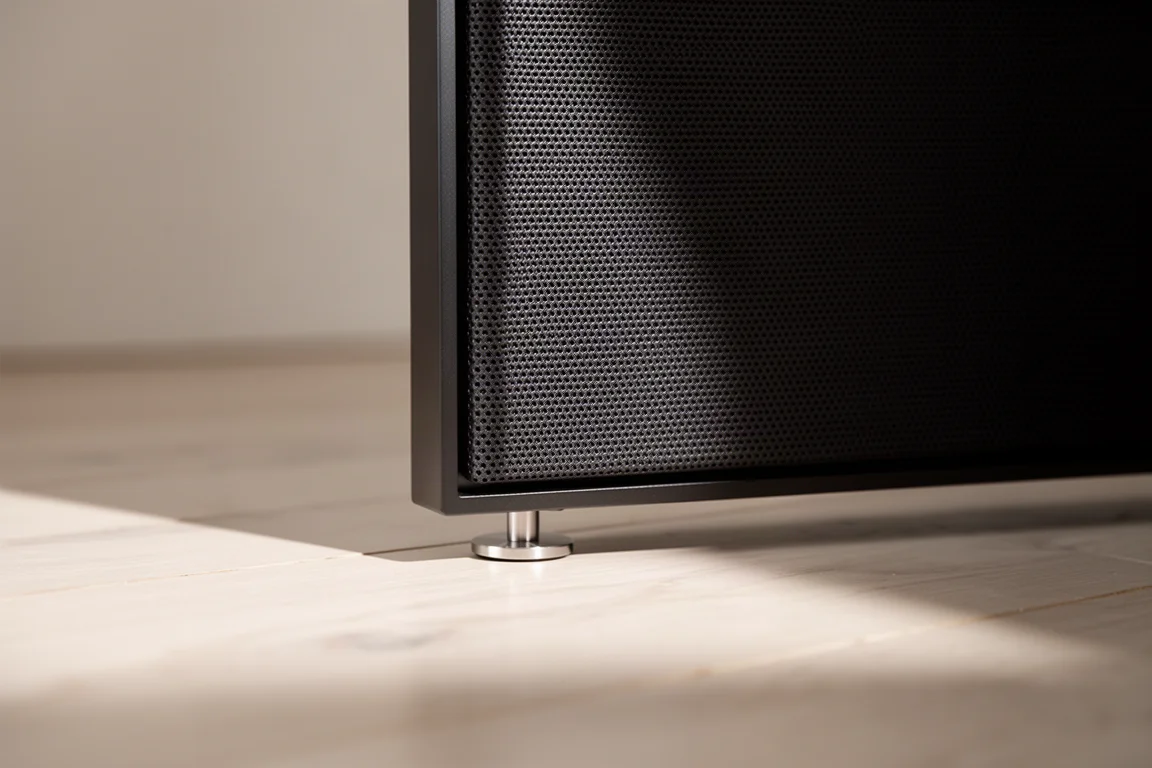
Stands are included as standard equipment, and they lean the panel back slightly so it fires a little upward. Aftermarket stands that hold the speaker a few inches higher off the floor and keep it vertical can make a substantial difference to the sound, and Magnepan also offers an upgraded stand of its own. If you already own a small Magnepan and are still using the factory stands, trying a taller, more upright option is one of the more meaningful changes you can make.
Impedance is four ohms, and the speaker is not especially sensitive, so it wants an amplifier that delivers current rather than one that only looks good on a wattage spec sheet.
Main Strengths: Transparency, Soundstage, and Tone
The clearest step forward over the original LRS is transparency. In direct comparisons, the newer speaker sounds noticeably more see-through, with a cleaner view into the recording and better definition at the bottom of its range as well. The difference is most obvious in the treble, where cymbals shimmer and sparkle with a level of detail that does not sound like a dome tweeter at work.
That clarity comes with a caveat worth stating plainly. The original LRS in those comparisons was fully broken in, while the LRS Plus was only six or seven weeks old. The newer speaker should soften and mellow somewhat as it settles, so the gap between the two will narrow over time.
Midrange tonality is where the LRS Plus is at its most convincing. On a big-band live recording, individual instruments stayed clearly separated inside a large stage, and the sense of depth and pinpoint focus held up across long listening sessions. Sparse, dynamic recordings built around acoustic guitar, bass, and drums came across as genuinely exciting, with quiet passages that made the loud ones land harder.
Setup, Amplification, and Toe-In
The LRS Plus was driven here by amplifiers rated at 50, 70, and roughly 400 watts into four ohms, which shows that power output alone is not the whole story. What matters is an amplifier that stays composed into a four-ohm load. Budget for quality rather than raw watts.
Toe-in is covered in the owner’s manual, but it also works as a tone control of sorts. Angling the panels more directly at the listening position sharpens focus and precision. Leaving them closer to parallel with the wall behind them opens up a wider, less specific stage with a slightly softer top end. There is no single correct answer, and it is easy to experiment because the panels are light.
Things to Consider Before Buying
Bass extension reaches roughly 50 Hz, which is low enough for most music but well short of what a subwoofer can do. The LRS Plus also does not deliver impact the way a box speaker with a large woofer does. It can play a dense, bass-driven electronic track without falling apart, and bass definition stays clear, but it will not produce the pounding, room-shaking sensation some listeners are looking for.
This is also a revealing speaker. Clean, well-made recordings sound wonderful. Compressed, distorted, or poorly recorded material will not be flattered, and the speaker makes no attempt to hide those flaws.

One more thing to plan for is commitment. Placement, amplification, and toe-in all shape the final result, and the LRS Plus asks for that attention before it gives its best.
How the LRS Plus Compares
Against the original LRS, the Plus version is the more transparent and more detailed speaker, with a treble that feels more alive. The original remains a lively, spacious performer, but it sounds softer and slightly duller in direct comparison.
A much older Magnepan, the SMGa from 1986, takes the opposite approach. It sounds warmer, fuller, and richer in balance, but noticeably slower. Objectively, the LRS Plus reveals more of what is in a recording, while the older model has a sweetness that is easy to fall for.
Compared with a small box speaker such as the KEF LS50 Meta, the LRS Plus is far more see-through and dramatically larger in the soundstage, thanks to its height and its front-and-back radiation. The box speaker counters with more body in the mid-bass region, roughly between 80 and 150 Hz, where the panel sounds comparatively thin. The trade-off is clear: the panel sounds like a wall of sound, while the small box sounds like a small speaker.
Adding a compact subwoofer such as the REL T0, a nine-inch acoustic suspension cube that is surprisingly powerful for its size, is straightforward. Blended carefully, it extends the bottom end and makes the LRS Plus sound like a considerably larger Magnepan. The best compliment is that it can be hard to tell whether the subwoofer is even running until deep bass appears in the music.
Buying Advice
The LRS Plus is priced at $995 per pair, and the standard LRS is $750 per pair. Buyers on the waiting list for the standard model, which has run several months long, are typically given the option to upgrade to the Plus version, so it is worth confirming the current arrangement directly with the factory before making a decision.
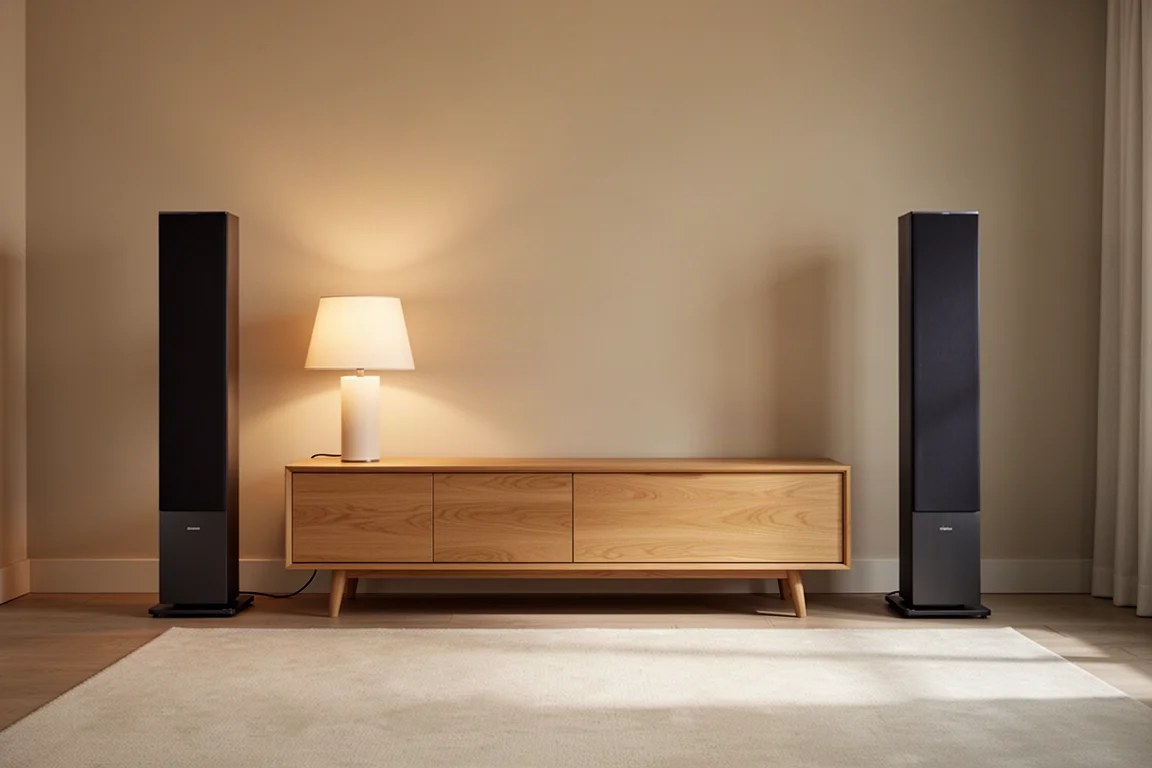
If transparency, imaging, and a tall, spacious soundstage are what you value most, the LRS Plus delivers a great deal for the money, and it is made in the United States. Pair it with a solid four-ohm-friendly amplifier, plan for a few feet of space behind the panels, and consider a compact subwoofer if you want more low-end weight. If gut-level bass impact and room-shaking output are your priorities, look at larger models in the same line or a different speaker altogether.
Conclusion
The Magnepan LRS Plus is an unusual speaker at its price. Its panel design, front-and-back radiation, and slim footprint produce a scale and clarity that most small box speakers cannot match, and its midrange is genuinely lovely. It is demanding about placement and amplification, it will not flatter poor recordings, and it does not do impact. For the right listener, those are reasonable conditions attached to a genuinely special speaker.
Product link
View more details for Magnepan LRS Plus
This product is mentioned in the review. Check the specifications, options, and compatibility before buying.
View more details for Magnepan LRS PlusFurther reading
Related Reviews
Speakers
13 Under-the-Radar Speakers Still Worth Buying
Thirteen speakers that quietly stayed in production while newer models took the spotlight, from budget bookshelf pairs to a full-size tower.
Speakers
Arendal 1528 Monitor 8 Review: A Three-Way Standmount With Serious Dynamic Headroom
A three-way standmount speaker with extremely low distortion, high output capability, and deep bass for its size, plus the setup details worth knowing before buying.
Speakers
Arendal 1723 Monitor S Review: A Compact Monitor With Serious Ambition
A close look at the Arendal 1723 Monitor S, a compact MTM monitor with a waveguide-loaded tweeter, an HDF cabinet, and flexible ported or sealed operation for music and home theater.